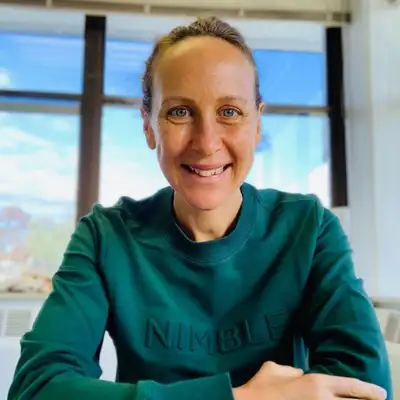
Mitochondria, Stress, and the Truth About Healing with Curtis Gillespie Sayers
00:00
Hey everyone, it's Mikki here. You're listening to Mikkipedia. This week on the podcast I speak to functional medicine practitioner Curtis Gillespie-Sayers. And we have a wide ranging and grounded conversation on chronic illness, mitochondrial health and what real healing actually requires. So Curtis Gillespie-Sayers is a health practitioner
00:25
and systems thinker specializing in mitochondrial health, nervous system regulation and recovery from chronic illness. After spending much of his early life in and out of hospital with significant respiratory and cardiometabolic complications, Curtis, whilst improving his physique through bodybuilding, also discovered the deeper truth. External fitness doesn't guarantee internal health.
00:48
So driven by a desire to understand what was happening beneath the surface, Curtis shifted his focus toward the interaction between mitochondria, the nervous system, immune signaling and environmental inputs, such as light, sleep and stress and many of the things that we discussed today. And this is what his work now centers on, helping people who feel stuck and addressing the biological signals that determine whether the body can actually heal. So Curtis takes a pragmatic
01:16
data information approach viewing tools like nutrition, supplements and peptide therapy as supportive levers rather than shortcuts and emphasizing the importance of safety, adequacy and rhythm in long term recovery. So we chat all about this and more in today's conversation and Curtis can be found at his website lifestyleempowerment.ca and that is 1E in lifestyle empowerment.
01:43
and also I got links as to where you can find Curtis in the show notes over on Instagram at funct.med.curtis Now for the first time ever my audio failed in the last 10 minutes of our conversation so we have found the sweet spot for finishing off the conversation but unfortunately we missed just a little bit right at the very end but you will still get the majority of the
02:11
health pearls that Curtis shares. Before we crack on into this conversation though I would like to remind you that the best way to support this podcast is to hit the subscribe button on your favourite podcast listening platform. That increases the visibility of Micropedia and amongst literally thousands of other podcasts out there. So more people get to hear from experts I have on the show like Curtis Gillespie-Sayer. Alright guys enjoy this conversation.
02:41
So Curtis, thank you so much for joining me on the podcast this morning. I have heard a lot of great things about you and your functional medicine practice through my good friend, Tina Horpett, who's been on the podcast as well, Carrots and Cake, and how you've really helped her with her sort of health journey. And I thought it would be just awesome to chat to you about your...
03:05
personal background, your experience, and then just touch on some of the issues you see with your clients and people you work with, and maybe some practical applications and take homes for the listeners this morning. Of course. Yeah. No, thank you for having me. I love podcasts, like being a guest on podcasts and everything. It's always a great time. So I appreciate that. And you know what? Before we kicked off, I said to you that I just really value the opportunity to chat to other practitioners, because I don't doubt that you, I mean, clearly you and I have
03:33
different backgrounds and potentially different sort of educational skill sets if you like. But I love the collaboration because we can always learn so much from chatting to other practitioners. Yeah, big time. Nice one. Kiritas, can you, like for the listeners, just give us a brief on your background in terms of both, I know, I understand you've had quite a personal journey to sort of get you to the place you are now. So maybe if you can sort of
04:00
to us about that and then also integrate the sort of educational piece. Of course, yeah. So I was born not breathing and so right away out of the womb I had problems. And obviously I don't remember this, but family tells me in and out the hospital from a young age and my earliest memories was just chronic problems, breathing problems and stomach problems and sleep problems and all sorts of issues.
04:28
you know, like when you're young, you're just complacent to it. And you just grow up with it. So you think, okay, like, that what is this what life is? Is this how I'm supposed to live? And then one thing led to another in terms of like not living the healthiest lifestyle and substance abuse and everything. And then I finally started like, okay, something needs to be checked out here. What really sparked it all was I did a sleep study. I got sent home with the device and everything. And then I got the report and it was like in
04:55
big bold letters. It's like extremely severe case of sleep apnea. And I stopped breathing 71 times an hour and my oxygen levels would drop down to 75%. So the doctors were just like flabbergasted. They're like, how have you not had some sort of issue? Obviously age is on your side, but it was yeah, like really bad. But that wasn't like the moment where it was like, okay, I really need to change my life. It was just like this awareness and I got a CPAP machine. And can I ask you Curtis at the time, like, so were you like overweight at the time?
05:24
because often it's a risk factor, I think sometimes we almost think that that is the most important risk factor. Yeah. so obviously, yeah, the inflammation and the neck circumference and stuff, I was definitely on the heavier side. If you looked at me, wouldn't think I was obese. And it's just the way my body held it, if you will. And so it just really spaced out the fat. when you do a DEXA scan and stuff like this, I technically was obese and not by BMI standards. I actually like fat.
05:52
percentages and everything. But it was a lot of neurological stuff. And because I didn't take that first breath, my airways will always be restricted. And so that's where a lot of that had come from as well. And so that's why you like, yeah, like you need this, you're gonna need a CPAT machine for the rest of your life, they told me. And so I had like ventured into the CPAT and made a huge difference. Like it really did. It made a huge difference. I am in
06:16
Advocate of these devices, but just like any sort of intervention. I don't think it should be the only thing and so That to me wasn't really the turning point the turning point was I used to work the drilling rigs like oil and I had to share a room with one of my co-workers and we were on night shifts or sleeping during the day and he was like the angriest person alive and I was like why and he's like I can't sleep because You're dying and I was like what you mean?
06:44
and he had filmed a video of it happening. And like, you know, in the movies and something when they're like, did you just see a ghost? Cause they're white. Like that's how I felt. got sick to my stomach watching myself. What looked to be dying in this video. Like I was just fighting for air for what was almost a minute and my arms were flailing. My whole chest was caving in and I just, it was like someone was choking me. Like it was like a ghost choking me. And then I, when I took that breath, it was just like the most obnoxious snoring ever.
07:14
And so that was like, oh my goodness, I was scared. That was when fear was like, no, it's not what the doctor said, that you're lucky to be alive. None of that. was like seeing that video of me dying in my sleep was like, Was this with the machine? This was without the machine. That was without the machine. Yeah. And so that was like that defining moment. so funny story, like when I worked the drilling rigs, I was very cheap. didn't want to oh pay.
07:41
because you've got this living allowance where they gave you money tax free and you put it towards like living food, et cetera. So you try to bank as much of it as you can. And so I would sleep like in a tent and stuff like that. And the one stint I was out there for like 90 days, it started off that it was so hot in there that I needed like a fan and everything. And then by the end of it, it was so cold that my machine was freezing. And so my machine froze and broke. And then that's when I ended up in the hotel room with my coworker. And so I didn't have the machine.
08:10
And then that's why we filmed it all and everything. it's stuff. Isn't that interesting? So the doctor had said to you, oh yeah, sleep apnea. you know, clearly you're smart enough to understand the implications of it, but it's not until you got that visual like, this is actually what's happening that you were like, holy crap. Yeah. It's big. Like I work with some very, very complex cases. Like cancers for sure are a big one that I find. And I find with cancer, there's like,
08:37
I find like they're the most desperate and least desperate people at the same time. They're willing to do anything in their mind, but not actually doing it, but they don't have any sort of visual representation, right? And so like, it's like, yeah, like if you could see what was actually happening inside of your body, I think more people would put more effort into getting healthier. And so that's like, you know, but what it took for me was to see that. And then I did, my best friend did pass away.
09:03
many years ago and that was also like, okay, there's no more because if I continue on that path, that's going to be me next. Was it substance abuse stuff that you were thinking of? Yeah, it was definitely substance abuse and I'll be honest, like heartbreak, right? There was a heartbreak involved and everything, but it was just like a person's inability to tolerate that because I remember in one of your bullet points, you talked about personality, right? And so yeah, I was like, okay, if I don't change my ways, I'm next. This is going to be me next.
09:33
Isn't that interesting because, know, Curtis, like we all have or know of people, like I'm thinking of family members. I'm thinking of people, you know, who have these literal, literal sort of like almost life and death moments or they're in the absolute mix of something in there, either in denial about the potential outcomes or they're so far in it, they can't see it. You know, like they're not, I don't know. I think about this a lot with
10:00
someone close to me who is so sick and is only getting worse, but is actively working against the very things that would actually help them. And it's not like these things are inaccessible to them. They're right there and they're just refusing to sort of take that step. And so you're in your head going, why on earth are you not doing this one thing? But they're just so stubborn that they won't, or they're just so far in it, they can't see that that's the not solution, but at least helping them manage it.
10:30
Well, I also look at that. spoke about this at one point about like existential crisis and identity. And a lot of people, their illness becomes their identity. And there's a fear of who am I without this illness? And a lot of people, so like I'm not mentioning any names or anything, but I worked with someone and we had a tremendous success story. But this individual discovered that, okay, here's how I put it. So when we made a post about this person progressing in a very serious case,
10:57
you know, you get a handful of people liking it and being like, hey, great work. But then you had somebody who was like on their couch eating potato chips, like, wow, like how much of a loser am I that this person is beating this disease and here I am, you know, not taking care of myself. They didn't like that. But then all of a sudden this individual discovered that if I claim that I'm getting worse and that this is going to progress into something worse than it already is, way more likes, a hundred times more likes, way more sympathy.
11:25
We're here like in it. And so it brought on that that identity of like, okay, people love me for my illness. And so that's a big thing that I find that when I work with very, I'm just going to use the term dysfunctional health, these individuals, they don't know a life outside of that, you know, and you could get into the whole amygdala conversation and like hypervillage and everything. But I think of a lot of a lot of it is that identity, existential crisis stuff where they don't know anything other than this illness. m
11:53
and they're scared of what it could be without that illness. It's so interesting and it's it's quite parallel to people who are on, who have a similar experience in fat loss. You know, they've always been in a bigger body. People know them for that identity and when, and they, in part of, and I talk to my clients and my members about that self-sabotage that can occur once this starts changing. And so,
12:18
And they're like, I don't understand it. I've lost like 10 kilos, but I can't stop myself from these self-sabotaging behaviors. And then when you sort of peel back the layers, it is exactly that. Like it's almost like they're afraid of what they're letting go of and who they're becoming. It's one part of it. I mean, there's so many other reasons for it, but that whole identity piece is a huge one. Yeah. Well, and there's also like worrying about what others think. Cause like people tend to put that in the category of like,
12:46
a negativity like, okay, like if I'm gonna get obese, I'm worried about what others are gonna think. from my own personal experience, so, so I do forgive me for wearing a hat, but I'm in the process of regrowing my hair. And it's just not flattering right now. But I used to have amazing hair, like I used to have hair like amazing hair. And I used to be like really skinny. But like I had that that very swollen belly and everything. But I ended up cutting the hair.
13:11
and growing some facial hair and putting on some muscle and people didn't even recognize me. And so there was like some people, there was a small portion that were like, we're proud of you, good for you. But there was a much, much larger portion of people who were jealous. Friendships got ruined, people attacked me, like emotionally and verbally. So there's also that to consider. And I see this a lot with relationships. If one person in the relationship begins bettering themselves, that other person becomes insecure and jealous.
13:39
And that's where some sabotaging comes from as well, because that, you know, the whole quantum energy side of things, that resonance is affecting the individual trying to better themselves when this other person doesn't want them to, their fear of loss, etc. So it's tough. It's really tough. is, you know, and I think, and I do feel like, I mean, I'm not sure how you feel about this, but I often feel that the people who are trying to sabotage, aren't even aware of their behavior. And this is like, we talk a lot about self-limiting beliefs in terms of
14:06
how we see ourselves and what we think we are capable of. But I think I don't know what the term is for what I've just described. It's not a self-limiting belief because it's you're sabotaging someone else for their success, you're just, maybe your self-limiting belief is that you don't think you're going to be worthy of the person who is changing. don't know, but you know, don't, yeah, because it's, you know, I always, it's a topic I tread quite carefully with people. I don't want to say your husband's trying to sabotage you. Whereas on the, like,
14:36
All signs are pointing to that because I wouldn't want to suggest that they were doing it on purpose, but there is just this underlying sort of behavior occurring through that fear that you talked about. And I like that you use the word fear because obviously like I'm a whole believer in spiritual side, quantum side, et cetera, but I also try to correlate that all to biology and psychology and everything. And that person is that where they're that they don't feel worthy. That's just threat detection system, right? It's just a threat detection system of the biology sensing a threat.
15:06
So they respond accordingly and then they can lash out or they can try to get you to fail or whatever sort of language to use. So it makes sense. mean, it makes sense not that it's justified, but it definitely makes sense from both a spiritual, biological, physiological, et cetera kind of way for sure. And I love that you're talking about stuff like this, Kodis, because I feel like a lot of people are sort of reticent to even consider.
15:32
anything outside of um something quite tangible, know, like, and like emotions that they're really familiar with and not think about energy and think about that sort of, you call it quantum energy. I'm curious, like, how did you get interested in that spiritual side? Because I do see it as a super important part of it, but people don't like chatting about it. They think it is woo woo and it's, you know, or it's rubbish. I don't know, whatever. How did you get interested in it?
15:56
Yeah, you hear that all the time, especially from like very educated scholars and everything that they'll say because like science needs to be replicated in a lab and everything. Even though we know something like the placebo effect is very real. And so like, someone put it, I think it might've been Tina, actually it was Tina. Tina put it really good the other day when she was kind of like promoting our thing and she was like, Curtis is in the trenches. So my belief comes from what works, but I was having a conversation today with a client and I was like,
16:24
Many people are promoting their beliefs based off what worked for them. Them, a single individual. And sure, I'm sure it was great, but usually if you are working on yourself, it's easier because you have much, like you get a lot more feedback, right? And I'm sure like you've experienced this like talking with somebody, there could be 500 things going on, but they're only going to tell you two or three of them. And not that that's their fault of their own. There could be something that they're just, not coming to the surface to
16:53
let you know this kind of feedback. So as an individual, you can really feel every second of every day of what's happening. So it's a little easier to, you know, heal yourself if you have that sort of education. But where I find belief in things is because it worked for 1000 people. then the person who because I'm a huge thing on mentors, like I think every human being that is in this type of industry should have a mentor that worked for
17:20
a thousand people for them, 10,000 people for them, right? But you don't stop at, it worked, right? You gotta figure out why, figure out why it worked. And then you kind of start diving in and you look at like the quantum side is something that I still need to get a lot more versed on before I can more confidently speak on it. I look at it as like the coherence of water, the resonance, communication that way. You walk into a room and you can get that gut feeling, don't like somebody or the situation isn't good or,
17:49
For me, in my own personal experience, personally, I used psychedelics to really help me heal. I did a couple deep journeys to bring forth things that were affecting me, and that involves ego. And when we bring up the word ego, you think cocky, confident, whatever, right, sort of person, but your ego is just a protective mechanism. I'm sure there's more to it, but the way that I've perceived it in my own experience and other clients' experiences, it's a protective mechanism. It's blocking you.
18:18
from like what really needs to come forth so you can heal. And there are certain therapies that can really bring down that ego and allow things to come to the surface. And during my journeys, things came to the surface that I had no idea were affecting me, but made perfect sense. And they just fell under that category of like spiritual and that quantum side of things. And so that's where my belief.
18:42
came from was like, okay, I'm starting to see this. So then it's like, all right, well, I'm not going to preach any of this because it's my own personal experience. So then you start working with individuals, you find types of individuals that are open to these kinds of things. You start implementing said therapies and they get the same responses or in their own way, they got those responses. And so then you just start to see like, you know, the pieces of puzzle started to fall into place. And now it's like, okay, I see this whole quantum spiritual side, but
19:10
I do believe that the mind is one of the most powerful things in the universe. Unfortunately, we use it to make TikToks, but I think if someone doesn't believe in that side of things, they cannot believe in it so much that it actually doesn't play a part. I'm a believer because the mind is so powerful. Yeah, that's super interesting, isn't it? And I can imagine that you'll have people that you connect with and you can almost read whether or not a person is going to be open to even a conversation on that level or whether they
19:40
will eventually be open to it or whether you just think, oh, that person is so not open to it. So we're going to do the much more, not conventional, but much more sort of clinical application of what you can help them with rather than sort of dive deep, I guess. Yeah, you're right. You definitely learn who you do and don't waste your energy on with those kind of things. Because there's so many people that can bring forth healing without even thinking about that.
20:09
spiritual side of things and whatnot. There's a lot of people like that. that's why I do my absolute best to never speak in absolutes. You know, everyone makes mistakes, though I might have said it many times, but I always will use maybe or it might do this or it has the potential or whatever because nothing is ever written in stone. Okay, so interesting. So my business coach is very
20:34
all about manifestation, actually. And she's not a woo-woo type person. And so I remember being not surprised, like maybe surprised, but really interested when she brought it up in one of our first meetings, several years ago. And it really spoke to me because the, I mean, the whole concept around manifestation, as I understand it, or how I view it is, you know, if you, if you
20:59
believe something is possible and you sort of put it out there in the universe, then actually all your thoughts and actions are oriented towards making it possible. That is the power of manifestation. It's not that you just magically go, oh, I want $1 million and you say that over and over and then suddenly it'll be in your bank account. It's just it has the power to direct your energy towards doing the things that make it possible.
21:24
um Which is, this is a tangent, but I did tell you Curtis, I'm very conversational. um But that's what I think about when you talk about energy and the potential power for it to be super helpful. Yeah, and like, so for anyone that isn't on that belief of things, I look at manifestation as dopamine. So manifestation is, I feel like it's working on that dopamine pathway. And so like a lot of people are the impression that dopamine is the reward neurotransmitters, the seeking.
21:51
It's what you use to seek that reward. And how I always relate that is if you're gambling, the bigger the payout, the more dopamine you're going to produce. eh so I think it's like I also use it in terms because a lot of people are familiar with individuals with bipolar or just anger issues in general. And so when you have go from one extreme to the next, that extreme moment to that calm moment was just them building dopamine. And so when I look at manifestation,
22:17
it's the act of that dopamine. so like I could, someone could entirely correct me and debate whatever, but that's how I perceive it is manifestation is dopamine. And so I do fall into that manifestation because it was like, look, I'm going to make this happen. So you get that dopamine and then that dopamine is your motivation and you just work hard to come to fruition of that manifestation. So Curtis, how did you move from, so
22:45
If I am just thinking about your own background and you had that visual representation of your health, what steps did you take to sort of go beyond that? You mentioned I'm using psychedelics as part of some healing, but anything else to get you to this point where you were like, right now I actually want to start connecting and helping others?
23:05
I think we talked about this a little bit. Or maybe you found it on my website or something. like, so when I was ready, when I was ready to put my foot forward and trying to be better, I sought out the help of a bodybuilding coach just because I was close with him and things like this. And I obviously had zero understanding and doing what we had done had helped me lose some weight, build some, the biggest thing was build confidence. Cause I think that was one of your things like, what did that do for you? It was build confidence. It was getting a taste of what could.
23:34
And I was like, I like this. uh And I don't mean just for me. I mean, I like the potential of what this could do for someone's life. And I ended up losing weight and I got rid of the CPAP machine. Of course, I still have tons of issues. I still have tons of mental problems and all that stuff. We can get into that. But I had a taste of it. So I remember approaching him very nervously because I felt like I was stepping on his toes if I started getting my own nutrition course. And he was like, no, he's like, do it. That's amazing. So I went and got...
24:04
at ISSN or something like that. Yeah, I think ISSN and I just want I think to me now it's just like I don't even use any nutritional core stuff but it's like okay it gets your foot in the door though it's that foundation and then I had my best friend at the time I was like hey you mind being a guinea pig? Do you mind doing this or whatever? And you know don't have that understanding of why the body's doing what it's doing and he lost a ton of weight. Like he lost a ton of weight and it was actually safe like you know there's a lot of
24:33
weight loss these days, that's not safe. It actually turned out, knowing what I know now that it was a safe weight loss, but he was also coming from a very poor place. So of course he's going to get a great response in weight loss and things like this and everything. But that really sparked it was like, Oh my goodness, this is fun. I like this. I'm good at it. know, whole Ben and Kruger. And so then, you you help the next person and then you help the next person. And it's interesting enough because
25:00
I just think at this moment, I was loving it so much that I was that annoying person that turned every conversation into it. And I was still on the drilling rig at this time. And I was up in what they call the dog house where all like that you monitor everything. And the consultant for the oil company was up there. It was just him and I and it was silent. I was drinking a black coffee. And I was like, how do I turn this in my head? I'm like, how do I turn this into a conversation? was like, coffee. I just said that, right? And he's like,
25:29
know, he's like, why? And then one thing led to another, he became a client, right? And so it just, was fun. Like this stuff was a lot of fun. But then, you know, so this person goes, Hey, you know, Curtis helped me lose some weight or whatever. And like, you could have the craziest disease on the planet and weight loss is still in your mind. But anyway, so it was a well, okay, well, how do I get in touch with them? So then people would approach you, and you start working with these cases, you're like, I don't know what this is. No idea what this is. And then one of my first
25:58
very complex cases was cancer. right through me, right to the wolves, right? But my perfectionist state of mind was like, I have to succeed at this. And so I did every possible research, everything I could. And then it was like, okay, well, you know, I'm sure a lot of people are going to test that research isn't always the greatest modality, you know, given control variables or lack thereof, etc.
26:22
So then it was like, okay, well, what do I do next to further my education? And that's when I started taking like functional medicine courses, genetic courses, blood chemistry, all these kinds of things, and then that started really helping, but ultimately mentors. It was people who have helped those with cancer, helped those with lupus, helped those with rheumatoid arthritis, helped those with IBD. You learn from these individuals. And then it was just this huge passion. Like I just...
26:46
I became obsessed. I still am. I'm still, to this day, obsessed, but in a much more controlled manner. It's just exciting. Yeah. I can see it, I love it. Honestly, I appreciate that passion because you need a lot of that um to enable you to help people. If you weren't passionate about it, you probably wouldn't be a very good practitioner. um Who were your mentors? Who were the people that sort of
27:13
stood out to you in your career, either now or early on in the cancer, in the autoimmune, things like that. Because I'm curious, because I may know some of the names and stuff. yeah, Austin Stout, wonderful. Austin Stout is very wonderful. I really have to give props to Blake Grove. I wouldn't really call him uh because he doesn't do mentorships, but he coached me and then I was pressuring him, like, hey, can you mentor me a lot of stuff? And so he was open to doing that kind of stuff.
27:41
So he was really great. Dr. Stuart Gillespie, no relation, but he's great mentor. Alex Kickle, Fiona Chin. So a lot of these individuals who just, a lot of times nobody's ever heard of them. Like nobody's ever heard of them. And one of the reasons why too is like something that I'm slowly discovering as my career progresses is people are hush hush for a reason when you're working with very complex illnesses. And so that's why sometimes it's hard to come across these individuals, but it's crazy just how
28:10
many, I can't imagine how many brilliant minds are out there that no one's heard of. Cause I've ran into some people, it's like I came across them. never had any idea they existed and they're just some of the most intelligent beings. It just blows my mind. Yeah, it is. It's interesting, isn't it? And, and why is it that you think these people are sort of go under the radar? it because they're using out of the box type therapies or? And, and, you know, I do find it super interesting. I, um, often I,
28:40
go to the Australasian College of Environment and Nutrition Medicine. So we have a lot of naturopaths talk, a lot of scientists talk, and they're sharing research in addition to client cases. And a lot of the research isn't necessarily clinical or clinically randomized trials. It's more preclinical. so they're applying it in their practice within the realms of what is, you
29:08
the legalities of doing so. you get, yeah, it's a lot more open-minded type therapies, which I think probably typical doctors and practitioners don't really have access to all the training in. And often it takes cutting your teeth and, you know, all legally with people in order to see whether something will work. And sometimes you have to do that with the complex cases, I guess.
29:35
See, that's a good choice of words, little legalities. So that's the thing. As soon as you become a naturopath, as soon as you get some sort of PhD, MD, whatever, you're now in this box and you have to be extremely careful because you're significantly more susceptible to being sued and things like this. That's another reason, people are like, where do you get, how do you have your knowledge or whatever? And it's like, cause I don't have to practice with inside of a box. I still have to be careful, everyone does, but I don't have to practice like a doctor can never recommend peptides.
30:04
There's no, to them, there's no studies, even though there's a ridiculous amount of studies. But anyways, so it's like, they have to practice within this box. That's like when people fault doctors and stuff, there's going to be a bad egg in every batch. It doesn't matter what doctor naturopath positions like yours and mine, there's always going to be a bad egg. But I think we also need to give doctors a little more grace, because they're only allowed to be so much. And they're just doing their job. They were just trained to diagnose and prescribe. That's exactly what they were trained to do.
30:31
100%. And I often, you I had a conversation with a family physician or general practitioner a few months ago and he's like, doctors are trained in this allopathic medicine. Like it is, it's that diagnosis and prescribe. And a lot of people are sort of up and arms saying that doctors need to get some nutrition education. And I don't disagree, but I do think maybe what doctors these days need is actually just a better referral process and to appreciate the skills and education of other practitioners. Because I get a lot of pushback from doctors who were like,
31:01
What does that nutritionist know? Like I know nothing. You know, like they know better about diet and exercise and nutrients and they just haven't learned it. Not all doctors, uh there are some excellent functional doctors out there, but it's certainly not the norm. And I think people probably need a better, they need to better acknowledge what their scope of practice is and also allow for the scope of practice of other practitioners, right?
31:29
Yeah, 100%. And that's, like you said, the whole referral thing. you know, it's, it's, I do believe a lot of people say doctors don't care. I do believe they don't care. It's just like, you know, like, you know, it's tough love, if you will, you know, your parents sometimes treat you, they treat you and you don't think it's them caring, but it is them caring because it's tough love. I think doctors are the same way. I think doctors are the same way. Like I'll never forget. So like, I remember, I don't remember the full conversation because it was many years ago.
31:55
But was to do with the sleep apnea, the doctor. And I remember him getting very upset. And he's like, you're so naive. And at the time I was like, he had every right to say that. And so I think it was like, I was trying to get some sort of prescription or something that I felt was right for me. And so like, he was just trying to look out for me because he's like, he doesn't know. And I'll do that too. Like if someone brings out, what do you think of this or whatever? want to do this. It was like, I don't know. Like this is, this is, you know, I could learn about it and stuff like this, but
32:19
And I'll dive in and realize that, it's probably not that applicable, but if a person wants to do that, it's like, I'm still gonna have a say if I don't think it's safe. And I think that's mockers too. Like they come across as rude or neglecting or close-minded. I think they're just trying to do what they feel is right.
32:39
So Curtis, I'm keen actually to have a chat to you about peptides, if you're open to it. Like I spoke to someone a couple of weeks ago and he's got a company levels, no level up, I'm sorry. And yeah, yes. And it was a great conversation. He's actually now here in New Zealand. We can't get the peptides really easily here in New Zealand. But I'm curious as to sort of your understanding of...
33:03
their applicability because I understand you use them with some of your complex cases in different areas. Are you happy to share some of your knowledge for people interested, not just, or maybe it's not even weight loss, but maybe from inflammation, from recovery, or however you might use them in practice? Yeah, for sure. I think peptides are a wonderful tool. think they can be the one that, because I'm sure you've heard this before where someone's like, I've tried everything, and then you can list like 10 things they've never heard of.
33:32
There are a lot of applications for peptides, but I always like to have this conversation first. Just like anything, there needs to be a foundation set. And if people understood what peptides really did, they would probably be more selective on how they use them. And so a lot of the times when someone is using a peptide, let's say like they're super sick and the all touted almighty BPC 157 and TB 500, right?
33:56
And everybody's in their dog has looked into that, has done that or wants to do that. It's the most common one that I could ask. And every time someone asks me that, I'm like, ah, that's so 2023, right? But it does have its applications. Like it can be wonderful. But people will get this initial response of a peptide because that's like what it's designed to do. There's fast acting responses and they're going to be like, hey, like BPC did this for me. BPC did that for me, right?
34:20
But then they're not telling you the 30 other problems they still have that BPC and TB 500 didn't touch and probably would never touch. And so there's that concept to think about, right? Because like anytime you get a drastic change, you're gonna be over the moon. It's that dopaminergic pathway, right? So it's that dopamine hit and you're like, oh yeah, so this is the greatest thing ever. As mentioned, even though you still have like 30 problems going on. But also it's important to note that peptides will either upregulate or downregulate biological pathways.
34:49
And that could be very harmful under certain context. so when you look at this, especially immune peptides, I work with a lot of Epstein-Barr virus. I see that a lot in cases and like 90, was it 90 to 95 % of the population has Epstein-Barr. You know, it tends to be very dormant. But if something makes that Epstein-Barr overly active, immune peptides can really set someone off. And I've done it myself. What are the immune peptides?
35:16
So one that really comes to mind that I see a lot of people preach, especially right now because of everybody getting sick, thymus and alpha 1. And so thymus and alpha 1 is going to be a big driver of TH1, so that intracellular viral fighting side of the immune response. And so how I explain the immune system is I look at it as a teeter-totter. there are, what is it, like seven plus different immune pathways that we currently know of. And a lot of people, they used to think TH1, TH2 dominance.
35:46
but there's like TH17, TH22, TH9, right? There's all these different immune pathways. And if you're pushing on one end, another end is gonna get suppressed. So we tend to see TH1 getting suppressed in a lot of these people, especially with something like Epstein-Barr virus, whether it's because of an immuno exhaustion or whether it's because of some co-infection, whatever sort of situation, stress, trauma, really big one, because we know trauma pushes majority of that autoimmune side, which is interleukin 6 to TH17.
36:13
And so when you look at thymus and alpha one, it's designed to go like this, to completely push you. Well, if that Epstein-Barr virus is going under the radar because your immune system is suppressed in TH1 or it's exhausted in general, and all of a sudden you kick it up, it's like it's sent people out for five months. Like they've been a wreck for five months because the immune system is just busy fighting that Epstein-Barr virus now. And like how I kind of look at that is like, it's like an old dog sleeping.
36:41
right? You come up and spook the old dog and just start biting, right? So that's what like thymus and alpha-1 can do. Now on the other hand, it's phenomenal what it can do. So I'm not trying to like talk down on thymus and alpha-1. It's just that's an example of where you need to be strategic with peptides. And what I mean by that, just because I mentioned Epstein-Barr virus, like use herbs first. Use herbs first to lower that immune load, balance some things out, then come in with something like thymus and alpha-1. And so this is also what I say.
37:11
Because once again, going back to something like BPC and TB 500, look at IBD, for example. You have so many people that are like, BPC and TB 500 cured my Crohn's or colitis. You hear that all the time. Number one, check in with them six months later. Check in with them six months later, see if they are still cured of their Crohn's and colitis. That's number one. Number two, you go deep into one of those Crohn's and colitis support groups, it did nothing for me. It did nothing for me. It did not, right? Right.
37:40
I compare that to the Amazon review. you're hearing the good news stories, but you're not really hearing all of the others that really didn't make a difference for. Exactly. And I look at it as the Amazon review. So you go on and you see a product that's like 4.7 stars and 5,000 people have rated it to equate to 4.7 stars. Well, 1 million people have bought this product. what's
38:06
5,000, what's the percentage of 5,000 of a million? Very tiny, right? And so that's one of the problems with society. We're in such a dopamine driven society that the slightest bit of hope is going to fly us over there. So we're going to jump right into things. We're going to not even think about it twice. You know, it's like, there's so many people putting on peptide courses right now that have no business in doing so. And it's just because all they did was read the mechanisms. They read the mechanisms and that was like,
38:33
my goodness, look at me, I can regurgitate what the mechanisms are of this product and sell it now, but not really understand what is actually happening or what else needs to be done. so peptides are phenomenal tools, but you also need to be careful with them when you utilize them. You sort of downplayed um TB 500 and BPC, BCP? BPC, Body Protecting Compound. There you go. Whereas I'm like,
39:01
with my hamstring tendinopathy going, maybe I need to try some of these peptides. Yes, that's for sure. That's a different case. Injury, that stuff, 100%. 100%. When we're talking disease though, that's where it becomes different, especially with like cancer and senescent cells and stuff. Like you look at BPC stimulating that angiogenesis, so the formation of new blood vessels, well that there can feed tumors. It can feed cancer cells. It can fuel these kinds of things. Now this is not...
39:28
Because then I could say that and everybody knows we all have cancer cells. It's the burden. It's like the actual burden of these things that you have to worry about. But you talk about an injury and what you just mentioned, phenomenal, phenomenal. I was doing HIIT training and I hurt my quad the one day and I went in and put an entire vial of BPC in and it didn't do anything. I meant like it did so much that it's like it never happened the next day. Oh, wow. So for injury stuff, BPC is phenomenal. But that's another thing too. You really want to think outside the box. uh
39:57
So if someone's got an injury, I'm not going to say the traditional, what the internet says, like 250 MCG, 500 MCG. I'm to have you do that whole vial maybe in one shot. I'm going to have you just blast that and hammer that BBC. Oh, this is good intel. Thank you, Curtis. And I guess this is a thing, It seems to me like you're willing to safely push boundaries to see actually what's going to work for the individual sort of.
40:25
front of you. Have you always had, I think this is a personality, must be your personality, like it's not every practitioner is going to be like that. Are you always one to sort of do that? I think I'm confident in doing that because on two accounts, right, I'm confident that I've created a foundation first. And so like we can talk more about that, but that's why I'm a big, utilize bioregulators a lot now to create that foundation. We can talk about bioregulators, but
40:48
I have the confidence, but I also have the confidence that if this goes south, majority of the time it's easy to correct it. Majority. I'm dealing with a couple of cases right now that are a little tough, but majority of the time if something goes south, sometimes it's just as simple as backing off. Or it's like, this is where people look at me in my profession, what I do, and they just automatically assume I'm anti-medication. And I'm like, no, like this morning I told a woman, I'm like, you need to go get prednisone. Like figure out how we can get prednisone.
41:17
Like we can easily get prednisone, but figure how we can get right away because she wants to go on a trip soon. And so like, I need to drive down that inflammation because said protocol has just made her too fatigued and everything. And so we utilize these medications. That's all you people ask me, what do you do? I say more integrative therapy, integrative medicine, meaning everything in my opinion anyways. But I just have that confidence that, okay, this is going to make sense, whatever happens, whether it's good or bad, I'm going to be able to understand what is happening.
41:46
because I do have that deep understanding of the mechanisms of these things in the context of that individual. So that's what makes the difference, right? Everything's nuanced. Nice one. And so you mentioned bioregulators. Do you want to chat to me a little bit about that? Yeah, of course. This is where bioregulators, okay, a lot of illness can be driven by gene silencing. And so,
42:10
What happens when we get sick, we get this infectious load, this toxic load, these stressors, this inability to resolve traumas, cetera. And that creates like cell danger responses, damages mitochondria, the list goes on and we ultimately end up with gene silencing where those genes, the DNA is getting so tightly rattled from chromatinization that it can't open up to express that gene. Just think it's gotta be loose. That gene has to be loose so that epigenetic response can occur. And so
42:39
When you look at peptides, majority of them need receptors. They have to bind to a receptor so the cell can let them in so they can do what they need to do within the cell, just like supplements and things like that. Bioregulators don't. They're so small. There's like two to four, there's cytogenes and cytomaxes. Cytogenes will be your injectable type and cytomax will be the pill type. And we can talk more that after if you want, but the cytogenes are that...
43:09
rapid, like let's act today and they go inside of that cell and they go right into that DNA and they unravel that DNA. They loosen up that DNA so you can actually express that healing gene because right now you've tightened all the healing genes and you're expressing the sick genes as I referred to them, which from a biological standpoint is very important. Your eye of a true believer, your body does not make mistakes. It's just signaling you. So if you're like activating
43:35
you know, your NF-kappa B is severely elevated and you're activating all these inflammatory genes to create inflammation. Well, there's a reason that it's doing that. Once again, I'd be careful with things like peptides, but bioregulars have this really cool homeostasis kind of mechanism where they can turn on genes for healing and balance things out. you examples? So, okay. So the biggest one that I really like to use is Livigen. So primarily for the liver.
44:05
And so what it'll do is go into those hepatocytes, so those liver cells, and it'll help open up those genes, healing the liver. We see improved detoxification with lessened immune burden, because if those, you know, whole Herc-Siemers reactions and stuff, usually that's because things are being exposed and the immune system is trying to burn them off. While Livigen does a good job of modulating and detoxing, it helps promote, we'll just say, efficient pathways, especially like in the realm of glutathione and stuff like this. So rather than, you know...
44:33
pathway, you can send it more down the glutathione pathway. It helps modulating that inflammation. It helps reducing pain because it inhibits the enzymes that break down enkephalins. So those are enkephalins or bind opioid receptors to down regulate your pain. So I've had some instances where like within one injection and individuals like, wow, my pain has subsided by like 50 % because they're just fast acting.
44:58
And so I really like Livigen, helps clear receptor sites, it has a bit of a senescence clearing protocol because that's something that probably needs to be spoken about more because nobody knows what senescence cells are. And so I really like Livigen, I'm gonna use that in practically all of my cases, all of my complex cases. Even if you're not ill, a Livigen could have a tremendous impact whose liver isn't stressed out. And so Livigen is probably the biggest one.
45:23
And then Vesugin, so Vesugin is for the blood vessels. And this is where the Russians believe that every single human should be doing some form of a blood vessel bioregulator. And so Vesugin will help decrease that endothelial inflammation. So we get better nutrient delivery, better oxygenation, and we help promote new blood vessel growth, but kind of in a more healthy manner than BPC because as mentioned,
45:50
bioregulators are more just about homeostasis is what they're about. So where peptides are going to take you past homeostasis, bioregulators are designed to bring you to that homeostasis where your body loves to thrive. And so those are big ones, those two. Curtis, are these easily available for people or are they like through practitioner? Because I don't know that many people would have heard of um these two that you've just mentioned. would you do...
46:17
You know that people go in for the IV therapies, like NAD Plus therapy, to be honest, I'm on the fence about in terms I don't know about whether it's a good idea to put a whole bunch of NAD Plus or whatever into, or NAD into your system, in these super physiological doses. But hey, it'll be interesting to know your thoughts on that actually. where do we, yeah, first, where do we get this type of, these types of products? Is it through a practitioner? I highly doubt you get them through a practitioner.
46:46
What always tell people is how many days until 2026? It's so easy to get these things, you know, and I don't promote it like five, you know, it's just for various reasons, but just know that it is easy to get these things. It's very easy to get these things. The world is changing. Like, yes, the FDA is really coming in, especially when it comes to the GLPs now.
47:05
because they're losing a lot of money, uh big pharma and all this kind of stuff. So they're really starting to put, because you can't patent a peptide, but the reason they have the patent on the GLPs is because they patented the delivery method. And so that's how they got around it. And that's why they own quote unquote the GLPs. So they're really crack. Same with SS31, because SS31 is this like pure mitochondrial healing peptide that binds to cardiolipin, which is part of the inner mitochondrial membrane and holds that together. And they're now a
47:33
proving it for certain diseases, meaning that pharmacies are able to get their hands on it now. So now they're cracking down on these kinds of things, unfortunately. But who knows? We'll see what the future holds or whatever. But anyways, tangent aside, yeah, you'd be surprised how easy they are to get. Okay. Okay. Interesting. And actually your thoughts on IV therapy, like I'm not opposed to it in some nutrients, but like if there was something pushing down a pathway, which to your point might
48:02
dysregulate other pathways or have an overabundance of growth. don't know. I understand why people do it, but I'm unsure of the sort of long-term outcomes, I guess, or even short-term outcomes. Yeah, so I take it you have not heard my rants about NAD. No, I have not. So I mentioned the word senescent cell, so we'll kind of speak on that.
48:26
The biggest thing I hear about NAD is everyone's like, love NAD. It's amazing. And then like, they never tell you how they actually feel away from NAD or after the NAD wears off where they're more exhausted and then they eventually have more problems. So NAD, I try to keep it simple and say it's your cellular currency. It's part of the electron transport chain. Like you use it to skip rocks to make that energy. So it also helps with like autophagy, apoptosis, cellular repair is very important. NAD is very, very important. But when you are
48:55
Aging, I'll say aging because that's, we'll just say aging in general because that could mean disease free. But even as aging, now you add on stress, now you add on excessive exercise, now you add on toxins and disease, you name it, right? We tend to see an upregulation of inflammation. And what happens now is that inflammation can promote things like senescent cells.
49:21
So how I explain senesce cells, some people might have heard of them as zombie cells. so take your cell, it's your home, okay? You got your home and within that home is a generator to power that home. So the mitochondria, okay? You're living in a home, you're taking care of it, cells functioning optimally, mitochondria is functioning optimally. Well, all of a sudden, whatever reason, you have to move out. Okay, let's just say whatever reason, keep it simple. So now normally when you move out, that house is gonna get bulldozed.
49:50
And so that's the autophagy, or sorry, the apoptotic process. So the cell death, and then that apoptotophagy is going to clear out, it's going to bulldoze that home. Well, what happens is these homes get boarded up and nobody's coming in to bulldoze them. So that generator is in there still running, but it's breaking down and it's starting to release these fumes. And so this is the zombie portion comes from because think of it as these fumes start getting out and they get into the neighbor's home. The neighbor's like, Oh, what is this fumes? It's toxic. Let's move out. Then all of sudden their home
50:18
is uninhabited now, its generator is supposed to break down, it starts creating fumes, goes to the next neighbors, right? So that's why they call them zombie cells, because they can infect neighboring cells. Now, what they do is they're metabolically active. So they are producing reactive oxygen species, but they are not providing you ATP. So they are non-dividing cells that are just useless to you and they're just depriving you of your resources, especially NAD. So that's one mechanism.
50:46
Other mechanism is they have this what's called SASP, senescence associated secretory phenotype. What that means is that senescence cell is creating inflammation. So if you want to get really technical, interleukin 6, interleukin 18, interleukin 1 beta, those kind of guys, that upregulates an enzyme called CD38, which that CD38 is eating up all that NAD, which is then feeding into more senescence cell production.
51:13
So these are the kind of people, like everybody after 35 is gonna have a senescent cell burden for the most part, right? Remember, senescent cells are important. They're part of growth factors, et cetera. You never wanna clear senescent cells on the child, right? Unless there's some crazy genetic disorder. But these senescent cells are feeding into nutrient depletion, inflammatory cascades, you name it, and they're causing this treatment resistance.
51:37
You have so many people that have tried everything. They've tried all the parasite protocols, they've tried all the viral bacterial, they've tried all these things, the IVs, and they're not getting any better. Exercise intolerance is a big one. When exercise makes them fatigued and they can't recover, that's a really big one. Chronic exhaustion, stuff like that. And so what happens now, if you go and you do NAD therapy with a senescence burden,
52:00
That NAD is going to go down the wrong path, especially if you have something called NNMT elevated, which is nicotinamide and methyltransferase, which is going to send it all to the senescent cells. It's going to send that NAD to the senescent cells, to the cancer cells, to the tumor cells, and it's just going to feed into these things. But when you put such a bolus dose, you're probably going to get somewhere you wanted to go. So you get that initial pick me up.
52:24
You get that energy promotion, but then all of sudden when that NAD dies off because it's all being consumed by these bad cells, you now feel worse or just the same before and you're resistant to everything. And so that's where you don't want to touch NAD unless you know you're in a good place to And I imagine so many people, like how you described someone might feel to want them to get the NAD in the first place is exactly the reason why they shouldn't probably get it.
52:54
Yeah, very well put. that's exactly it. I look at it as it's not a healing tool. And once again, remember, I try not to speak, it shouldn't be looked at as a healing tool. That does not mean it can't be a healing tool, but try to look at it as more of a longevity tool. Yeah. Get healthy first and then use it to promote longevity. nice one. Yeah, I like that. Curtis, there's so much that I could check to you about, I know, and I haven't even looked at those. What I think is the very first question.
53:22
But I'm really interested to understand more your, maybe protocol isn't the right word, but how you um talk about and how you might help clients with an overburdened stress response. Like, you know, so many people are just seem to be stuck in that sympathetic nervous system overdrive. a lot of, it's really interesting actually, because I was even thinking about this this morning with a post I thought about putting out.
53:51
haven't yet, but I will. Just the idea that despite calories, stress can absolutely impact fat loss because it shifts fuel partitioning, it changes the body's oxidative priorities. You're much more likely to um upregulate visceral fat storage even in the presence of low calories, um which I am a fan of.
54:15
I obviously consider calories in my role, but I just don't think they're the be-all and end-all that so many of these weak and macro coaches would say. It's all about calories. Well, no, it's actually not. How do you think about stress and its impact on... Well, body composition is the viewpoint that I'm thinking about, but just overall health and longevity, what are your first steps with clients in that um space? I imagine you see it a lot. Yeah, it's probably the biggest limiting factor for people is stress.
54:45
The reason being is like you are completely designed for survival. Like you will do whatever it takes to survive. And whether that means like adapting to lower calories and not freeing up, you know, adipose tissue. You mentioned like
55:01
changing to that visceral fat storage. While we look at cortisol, we say it's catabolic. I think it's better to view it as nutrient partitioning because it's catabolic to certain tissues, but then you're partitioning those nutrients to other tissues, right? It's not like it just breaks down tissue and it evaporates kind of idea. And so when you look at the whole sympathetic drive and the amygdala hypervillagens, like that stock limbic system, what the biggest thing is your body is responding as it should. That's a threat.
55:29
So whenever a threat is present, it's gonna treat it like most threats and produce inflammation. It's gonna produce inflammation. It's, know, especially if you're entering that whole cell danger response within the mitochondria where you hit that, you know, what was it, 75 or 80 % threshold or something where you're just, okay, now you're stuck in that cell danger response where you're purposely producing oxidative stress, purposely. I want to emphasize that you are purposely producing oxidative stress. You are purposely downregulating methylation.
55:59
So you're purposely turning off specific genes to conserve and you are purposely pulling back energy production. That's what people understand, right? That what's happening to you is a signal. It's not a problem. It's a signal and we're not listening to it. We're just trying to blunt that signal by throwing a bunch of antioxidants and peptides and all this kind of stuff and not listen to that signal. And so this is where stress, stress is the one where it's like, you can throw all the peptides at it. You could do all this and you're probably going to be non-responsive because you're not.
56:25
dealing with that stress or eliminating what that major stress is. Whenever we get rid of stress, right, we got to, you know, it's about increasing that manageability of that stress, but it's, they're the hardest clients by far. They're like the hardest clients by far because you become complacent to that stress. So I hear it all the time. I don't feel stressed. I'm like, well, everything else tells me otherwise, right? Everything else tells me otherwise. Your body adapted to that and it's complacent in that.
56:55
putting that in fact, like as I, I'm sorry to interrupt, but it makes me, you know, think about all of the women that I sort of work with in my programs and to so many of them have gotten to the point that gotten to where they are in life because they've literally thrived in that fight or fight scenario. Like, you know, like it's, do or die type stuff. And, and so they don't recognize how now it's working against them because it's sort of literally what got them to be as
57:24
successful if you like in life to that point. That's a challenge to change a lifetime of behavior in order to sort of rescue yourself from there though, right? Yeah, and it's a blessing and a curse, right? Like you mentioned, it's what drove them to that success and they want to live in that sympathetic dominant state because it's all they know. It's the only thing that drives them and it's because in that sympathetic state, they're living off of catecholamines, adrenaline, norepinephrine.
57:51
So when they're not in that sympathetic state, they have no energy. They're exhausted because the mitochondria is not producing healthy levels of ATP. Cortisol is being bound too much to cortisol binding globulin or it's being converted to cortisone. And so they just have no energy. So they need that sympathetic drive in order to function. That's like, you you look at theanine, for example, theanine is not designed to make you drowsy, but I've had people take as little as a hundred milligrams of theanine and become exhausted. It's because it shut down.
58:21
that whole sympathetic drive and it's showing us how poor their mitochondria are at making energy. So they have no energy to thrive off of if it's not sympathetically driven by catecholamines. And so, which if anyone that doesn't know, I just refer to those as advanced stress hormones like adrenaline and stuff like that. so it's okay, you need this sympathetic drive to be successful, but you gotta be able to metabolize it and balance it.
58:47
is how you look at that. And so that's where like, that is where I tend to use peptides like Cellink and oxytocin. And I like compounds that affect like neurons in the brain, like cerebral lysine and J147. Cause a big problem with today's society is we are very amygdala driven. And so for those that don't know, like amygdala is referred to as like your reptilian brain. So that's where you make rash decisions, fear-based decisions, emotional decisions. m
59:17
You know, this is obviously very simplified. can be much more nuanced than this. But then the free frontal cortex is that logical thought out decision and everything. And not a lot of us are really thinking with our prefrontal cortex. And so I try to help shift more towards that. okay, how can we shrink this amygdala and enlarge this prefrontal cortex so you make more logical decisions? But it also comes down to neurotransmitters. So dopamine is your healthy stress response.
59:44
As mentioned, we are in such a dopaminergic society that we are just like, we either have no resources to build dopamine or we spike so much dopamine that we have excessively elevated levels of monoamine oxidase. So, dopamine inhibition and damaged receptors. And so, we're just, the only way we can be motivated is by drinking a full cup of coffee and just spiking a chenolin, right? And so, it's, you got to work on those pathways and fix those things in order for a person to still...
01:00:11
keep that motivational drive, but not live in that sympathetic, know, imbalanced limbic system lifestyle that's slowly destroying them. And that's a tough conversation to have with people, you know, like, and I even think of myself, I was coming back from something in the weekend and I was feeling really agitated. I'm an endurance athlete, like exercises, my, it allows me to offload a lot of my agitation, et cetera, which
01:00:41
And I'm like, right now I feel really agitated, but I'd rather feel like, I don't like this wired and agitated, irritated feeling. I'd rather feel sad and exhausted actually. So exercise is going to make me feel sad and exhausted. I think I'll just do that instead. You know, then sort of live in this, even though I was tired and all the rest of it. it's, but there's familiarity in how you know your body's going to respond, even if it's not necessarily the best sort of, oh
01:01:09
end result, if you like. uh It's tough. Yeah. Well, and we're also like, we're kind of taught too, you know what mean? Like you're taught that what do they say? Sleep is for the weak, you know? if, you know, look at these guys are like, get up at 3.30 and I'm laughing because I do actually get up at 3.30 AM, but I also go to bed at 8 PM. I don't wake up at 3.30 because it's like, look at me, I do it just because I need a lot of time in the day. But I also go to bed at eight, when everyone else is going to bed at 10 or 11 kind of idea, right?
01:01:36
But you're taught that, that if you don't, if you're not burning the candles at both ends, you're not going to be a millionaire. You're not going to be a successful entrepreneur or whatever. And I think it's slowly shifting though. We're starting to, everybody's really starting to like prioritize sleep and recovery and occasional practices and stuff and whatnot. But that's, know, for the most part, that's what you are taught. You were taught to burn the candle at both ends or that does not make you successful. It's like when you see those funny memes with the biohackers or whatever, you know, where they're making fun of them, oh, good.
01:02:04
taste, but it's just like, yeah, like that's your top that if you're not doing 6000 things at once, you're not going to be successful. You know, plus there's the whole social media realm of things where you have somebody that is successful saying, like I said, I get up at 330 and this is what I do. But they're also not telling you how they're also getting to relax at this time and have a personal massage therapist and you know, like all of these kinds of things. then the flip side is the successful entrepreneur who's like,
01:02:31
you shouldn't burn the candle at both ends. You need to keep reasonable hours. And it's like, buddy, did you just forget the 20 years that you spent doing that to afford you the ability to get 10 hours sleep and up? know, like it is such a balance, isn't it? But I mean, this is why having real conversations with people is important to understand their non-negotiables about what it is that keeps them in sort of, guess, their mind in a place to want to pursue getting well.
01:03:01
ah And ensuring that those non-negotiables are also actually realistic. I talk to people about non-negotiables all the time, because I think they are important, but sometimes you have to negotiate with your things in your life if you want the best health outcomes. And that's exactly it. You got to pick your battles, if you will. got to pick your battles. once again, too, though, as someone... Because I would be a hypocrite if I said a lot of stuff to slow down, because I don't.
01:03:30
there are ways, like I mentioned, selling in oxytocin, for example, like I think every entrepreneur, well, maybe everyone realistically, but you know, should utilize selling can oxytocin in some form. And like for myself personally, I do bolus doses on the weekend to just really drive that parasympathetic nervous response. And I actually just made a post today on, um, so liquid to genuine and that was
01:03:53
there can really activate both GABA A and GABA B. So mind and body, not to mention like antioxidant production, calming immune, uh over activation. there's like modalities like that, that a person could use to kind of like, you know, further assist themselves. I said, cerebral lysine is a really big one. You know, the thing about cerebral lysine is it's hard to get good stuff. It's the only problem. uh But like when you're an entrepreneur, you have to go to these lengths. It's like we were discussing earlier, like you have to go outside of the norm.
01:04:23
if you want to, you know, in today's society, because you mentioned like that guy like 20 years, well, our toxic load was significantly lower, our stressors were different. The biggest thing though is the dopamine, right? Like how many of us are, you know, watching TV and scrolling social media at the same time, and you're just consuming so much fuel and the brain's like, no, stop this, right? And so then we have all of these dopamine issues and whatnot.
01:04:49
And then that is also what's taken away our ability to recover or, you know, not burn the candle at both ends. I'm a huge thing with dopamine. I'm very big on dopamine. I think that's a huge missing component of a lot of practices is not focusing on the dopamine aspect.
01:05:22
Hopefully you enjoyed that and if nothing else you've got a little bit more insight into how practitioners may use tools such as peptides for things beyond just your standard weight loss which isn't you know like we hear so much about DLP's but there are so many other things to consider when it comes to peptide therapy and as I said go on into Instagram and give Curtis a follow if you're interested in more insights here.
01:05:49
Next week on the podcast, I speak to one of my favorite followers on Instagram, Kelsey Johnson, otherwise known as Kelsey J Fit. Until then though, you can catch me over on Instagram threads and X a@mikkiwillidneFacebook @mikkiwillidennutrition or head to my website, mikkiwilliden.com and jump on the waiting list for Monday's matter because a new program is coming pretty quick. All right, team, enjoy the rest of your week. Thanks for being here. See you later.