Calocurb: Can Bitter Hops Replace GLP-1 Meds? with Sarah Kennedy
00:00
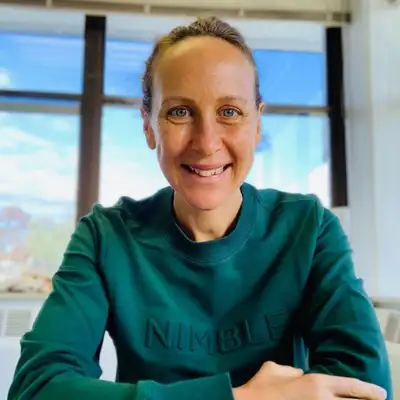
Hey everyone, it's Mikki here. You're listening to Mikkipedia and this week on the podcast, I speak to Sarah Kennedy, co-founder and CEO of CalloKurb. Sarah and I discuss the origins of the product and how emersate, which is the active ingredient, was discovered, how it works and why it's potentially better than taking a synthetic version of a GLP-1 agonist.
00:30
We also discuss how it works with your body and why it's the only product on the market that has clinical evidence behind its use in this space. Now, those of you who have heard me speak at all about products like this know that I was very skeptical of KaloKurb actually. I sort of put it alongside those patches that you can get. And in fact, did an entire mini-Mikipedia episode on
00:54
the utility or efficacy of these. Sarah was great and she really broke down the evidence and efficacy behind Calico product, how to use it, and what users should expect. And I really left the conversation feeling like this is such a sustainable approach for anyone who is either considering a GLP-1 but doesn't want to go down that route just yet, or has been on a GLP-1 and is wondering
01:21
how they come off it. think this is where CalloCube could really fill that gap. And that is what Sarah and I discuss on today's podcast. Listeners of the show also can get 10 % off a purchase of CalloCube if they do want to try it using the code, MICAPEDIA10, over at www.callocube.com. And I turn down discount codes for my people all of the time from products that I
01:50
wouldn't recommend. the fact that we have a discount code for this product and I am popping it in the show notes, hopefully will tell you a little bit about why I think this could be a game changer for so many people. So if you're interested, absolutely go along and grab some from over on their website. So Sarah Kennedy is the chief executive officer, CEO of Callow-Kerb and a commercial leader in New Zealand's biotechnology sector.
02:18
With a background in health innovation, strategy and global commercialism, Sarah has played a central role in bringing Kalecub's Propriety Bitter Hops Extract Amarasate to international markets as a natural appetite support supplement grounded in the gut-brain access research. Prior to leading Kalecub, Sarah built extensive experience across life sciences, nutraceuticals and technology-driven ventures.
02:45
working at the intersection of science translation and consumer health. She was known for her ability to bridge rigorous research with practical application, guiding multidisciplinary teams through product development, regulatory pathways, and global distribution. And under her leadership, CaliCube has expanded internationally, positioning New Zealand-derived functional ingredients and research at the forefront of evidence-informed metabolic health solutions. And I've popped a link to Sarah Kennedy's
03:15
LinkedIn page and of course I have a link to Callicurb as well in the show notes. Before we dive on into this episode guys, I'd just like to remind you that the best way to support this podcast is to hit the subscribe button on your favorite podcast listening platform. That increases the visibility of Micropedia and it makes literally thousands of other podcasts out there so more people get to hear from experts that I have on the show like Sarah Kennedy from Callicurb. Alrighty, enjoy this conversation.
03:49
Sarah Kennedy, thank you so much for joining me this morning from the beautiful Manukana. I love Manukana. And I'm excited to chat about CaloKurb. One, because anything hops related, I'm a fan of, but typically I like to drink mine, 7 % or over actually. But also because I've been aware of CaloKurb for a number of years, I would say.
04:15
I'll be honest, viewed it with some sort of a skeptical kind of eye. And when I was younger, um was into something called Chidrosan or Glucanamin. All of these products that were purported to help with weight management and reducing your absorption of carbohydrate, et cetera. So I've never really probably given enough attention to tools that could actually effectively help with weight management. And then after listening to a couple of
04:43
my favorite podcast and heard you talk about them and then when dived into the literature, pretty much sold actually. So very long preamble to say thanks so much for joining me to chat about it with my listeners. Oh, I'm delighted to be here. So Sarah, can we kick off with, I know you have talked about the origin story, but I would like you to just sort of describe that for my listeners. And also just the importance, I suppose, of
05:09
of it in relation to how reputable the research is behind it. this isn't just some sort of big pharma led, I mean, lots of people have different opinions on that uh sort of uh product, but it's sort of government derived from real sort of scientific innovation. So can you chat us through that and why it's important? Yeah, sure. can. I'm glad you've dived into the literature and all of that. um
05:39
I've been in this industry for many years and I've never seen this amount of science behind one ingredient which goes into one product. So yeah, I'm really happy to talk about it. Basically in 2009, the New Zealand government went out with a, they needed research into obesity and what could help with weight management. So they went out to all the research centers.
06:07
And remember, research in New Zealand is funded by the government. We call blue skies or primary research. So it went out and a group of very talented scientists at Plant and Food Research uh came back with a proposition. They had a hypothesis that they would find a plant-based extract that suppressed appetite. Now, why did they think that? There was some historical reasons. In times of famine,
06:36
people in the Scottish Highlands chewed very, very bitter berries. And they chewed very, bitter berries to suppress their appetite. In fact, the linden, or that hazard, is that King Charles, I think the second, used to give it to his mistress to lose weight. We're not quite sure why he didn't take it himself. and then actually, interesting, in the Kalahari Desert, tribesmen eat very, very bitter cactus, or cactus leaves.
07:05
to suppress their appetite. That was actually the origin of Houdia. And then there'd been some recent work. So they had this hypothesis they put in for a grant and they got $20 million back to explore those. So- It's significant, particularly in New Zealand, right? Like that ended in 2009. Yeah. So 2010, the grant was called Foods for Appetite Control.
07:35
So they got that back, $20 million, and that then started their research project. Well, I think it's absolutely fascinating what they did. They literally took 300 human biopsies from the gastrointestinal tract. And that meant going and hanging out in hospital and asking people if they wouldn't mind when they're having a colonoscopy or an enterooscopy.
08:04
if they'd mind giving a few cells. And of course these people had to be healthy. There was a whole lot of things, but they got 300 samples. And what they could show was we have bitter taste receptors right down through our gastrointestinal tract. And at different places, they stimulate different hormones. So when it's on your tongue, we have 25 bitter taste receptors on your tongue.
08:35
So if you eat something bitter, you'll spit them out. If it goes down to your stomach, you'll stimulate the release of ghrelin. And ghrelin is a hunger hormone. And what your body's saying is, hey, you could have eaten something toxic. Eat a whole lot more and we'll dissipate out that potential toxicity. But if it goes into your upper digestive tract, so just below your stomach,
09:01
You can't do anything. You can't spit it out. You can't vomit it out. So what it does is it stimulates the release of appetite suppressing hormones, being CCK, GLP-1, whichever I know is about, and PYY, which is a later one that it stimulates. So what it's doing is it's a secondary protective mechanism for the body because toxic
09:30
was often, or poisonous was often associated with bitter. So something that was bitter could be toxic. So what this evolutionary mechanism in your body was doing was, and it's very hard to switch on. So we'll get on to that. So they showed me a bit of taste receptors. They showed that they released different hormones at different parts of the stomach. They then built
09:59
an interopendothelial model, this human model. They tested over a thousand different extracts to see what would turn this on, or this bitter break turn it on. And not surprisingly, only two substances did, because remember, every time we ate something bitter and we stopped eating, well, you we'd have a cup of coffee and we'd stop eating. So it's a very, very highly refined
10:29
secondary mechanism. So two substances did. One was a potato oxalate, which is great, but it's poisonous. It is actually is poisonous, so you'd be thin but then. And the other one was hops. So hops bean, obviously what we use is it was used as a preservative and bittering of beer. And because they were planted food research,
10:56
They actually bred most of the hops in New Zealand. So they went on and tested another 50 hop varieties to find the one that was the most responsive. That's what they then named Amarasate. Now, I think I've said this before, but never let scientists name anything. Because Amara means Latin, it means bitter, and Sate means radiation.
11:24
They actually loved it, but no one in the world can pronounce it. the scientists are really happy with Amarasate, but no one. anyway, they did that. then, you know, it worked in the laboratory. It would work in humans. So they then took it into the first human clinical trial, which they did in association with Auckland University. This was quite a big trial because all of it was 20 healthy males.
11:54
but they had to be cathetered or blood had to be drawn from them every 20 minutes because you were measuring the hormones in the blood. So it's quite a complex clinical trial. So they gave a marasate an hour before an eat till you're full or an ad libitum lunch and a snack and then measured the hormones and the calorie intake. And what they showed was when given to humans,
12:23
So that hour before, because remember we wanted to go down into the upper duodenum and stimulate these before you start eating so you feel less hungry. They showed a 600 % increase in the release of CCK, which is a very potent appetite suppression, and in GLP-1, and a two times fold in PYY. So we're getting very high levels.
12:51
Now why that's important is you have to be 400 % above baseline to make any behavioral changes. So many things will say, I stimulate GLP-1. And you know, they do stimulate GLP-1, but not to any level. You know, they may drop glucose a bit, but they won't do it to make a behavioral change. So blueberry, they often say.
13:21
Berberine doesn't work like that, but it will, but it will drop your glucose, but it'll make no behavioral change. What they found was over this time, we got an 18 % reduction in calorie intake. So increase in these hormones and a behavioral change, which was a reduction in calorie intake. So yes, it worked and yes, it reduced calories.
13:50
So a couple of things, Sarah, I find it so fascinating chatting about this. And of course, in the explosion of GLP-1, not just the medications and their accessibility, and I'm a fan of people use of the, an appropriate use of these medications. So I absolutely am. What I do not like seeing on social media, particularly are the patches that are sold that have berberine and something else in them. And people just get a little bit hoodwinked.
14:20
but also like influences who are like, take my fruit detox, like this will increase GLP-1 and they imply that we'll have the same effect as a medication, which is just like ridiculous. But of course the average person won't know like some of the mechanisms behind with which the medications and products like CaloCurb actually work. And I think that the distinction of
14:45
how much they raised GLP-1 is huge, like 600 times. Because you're right, like food will increase GLP-1, but nowhere near to the extent of that 600 times. And I'm curious, Sarah, do we know how important it is that you get that stimulation of all of the CK and the PYY as well? Is that a powerful part of how the appetite response is?
15:13
Yes it is, very much so. what I, know, when they put out, Eli Lilly put out Zephyl, so they tried Zephytide, they're like, we still need like two, but we didn't get two epithets of presin-albumin. Well, in Calicut does three. And we've just completed and unblinded our fourth human clinical, which is just stunning. But I can't tell you about it because it's gonna be published first, but it will really relate.
15:43
to that CCK, which you know is fat burning, and to the PYY, which stimulates muscle. So we'll have to talk about it again. It's been submitted and we're aiming for a publication in April. So we can't, but it's stunning. yeah, so it is those two are really. And the Levin, you know how I said it did 600 times or 600%.
16:12
So that's twice the post-premium, twice the post-food amount. Now why that's important, as I said, because it will reduce calories. Just to give your listeners a comparison, semiglutide, which is an enzyme called Wigovie, will on average reduce calories in the real world about 25%. So we're 18%. So not as high, but getting up there.
16:41
I'm like you, I, you people say, oh, they're drugs and all the rest. I think they're incredible. You know why they're incredible? They have stopped this absolute doctrine of weight management was about willpower and diet. It is not about willpower. We are absolutely driven by our primitive brain and hormonal releases. Your appetite center,
17:09
is in your hind brain or in your primitive brain. It is telling you, it thinks you're going into a famine. If you reduce your calories by 25%, your hunger, which is ghrelin, will double over four months, which is why 99 % of diets fail, because your body is telling you, you are going into, well, your hind brain is, you're going into a famine.
17:38
So we've got this little hindbrain that sits there, we've got our forebrain over the top. But you put stress, hormones like menstrual hormones or anything like that, lack of sleep, alcohol, all of those things and the little forebrain falls off and the little hindbrain goes, we're off to eat. know, I often say to people, how often do you have hot chips at night after you've had alcohol?
18:05
And that's because his little hindbrain suddenly come in and say, you need some hot chips. so, yeah, the drugs, they took away that whole dogma of its willpower, because people used to have real anxiety about, don't have any willpower. And people that were obese, and there's so many things, there's so many complex things that go into weight, and it's not just about willpower. It is about diet.
18:33
but it's not about willpower. I agree. And that 18 % is pretty much in line with, if we're talking calories, like a modest calorie deficit, that's sort of like best practice, if you like, for a diet approach. And so if you're able to more effortlessly reduce your calories in a way that allows for a sustainable approach and habits to be built, then
18:59
I mean, it would just take a lot of the stress out of it because a lot of the people are afraid to be hungry. But this is one of the things I hear time and again is this real fear attached to hunger because to your point, so much of being hungry is almost wrapped up in this moral failure. I can't actually, like I'm not capable of doing this one thing. Whereas for so many people, they're so capable in every other areas of their life.
19:26
you know, this is the thing that does them in. So there's real narrative created around it. It's interesting because you talk about it, it's called food noise. And it's actually well documented now and you can actually document, they have a real, real live test that will document what your food noise is. But people can't focus when they've got that food noise. And one of the commonest, absolute commonest comments we get back is you've taken the noise from my head. And what we're doing is,
19:56
We're just allowing you to make healthier choices because you're not just driven by that hunger all the time. So our vision is to modernize human consumption. So we live in a modern world where we're surrounded, well in developed countries, we're surrounded by all this food which is made to be tasty, smell great, do all of this, usually highly processed. And so we're just helping you walk on by those.
20:25
So you can just make healthier choices. Yeah, nice one. Sarah, do we know, like, is there any data on how CaloCurb would impact on other things like alcohol, for example, and alcohol consumption? Well, we do get some feedback because your addiction center is right by your appetite center. They're very intertwined in your hind brain. So we do get people saying,
20:50
you know, is it normal for me not to want wine? Is it normal for me? And we're like, well, you know, that is it because your addiction center is next to your appetite center. Yeah, yeah, I wondered about that because of course you hear a lot with the GLP-1s just that it has that effect on things like motivation is in drive to do things if you're on too high a dose, but yeah, the alcohol consumption thing as well.
21:18
We haven't clinically tested it, but we get feedback on it. I would suggest it is. mean, we're doing, just listen this again, we are super stimulating the release of your own GLP1. So when you have a Wigovia or a drug, you are injecting in a synthetic hormone. So there's nothing wrong with that, but it is a synthetic hormone. And whenever you do that,
21:47
you were depressing your own natural hormone or your own endogenous. So that's also clinically published. are, of course, your hormones, your own natural hormones, they're on strike. They're like, you've brought in scab labor. I don't need to be here. I'm on strike. So they're depressed right down. So when you come off the injectables, this is why people get this intense hunger and often mom weight regain.
22:17
because they haven't restarted the gut-brain axis or that natural mechanism. Yeah. I understand that wasn't as well known about the GLP-1s or it was hard to find out that information so people weren't aware that it would shut down your own system. It's almost impossible. uh We found a paper and we're doing more work on it.
22:45
And that was done on one of the first generation GLP ones, that was luraglutide. So we would say that the higher doses would absolutely, and it's quite well known, if you take synthetic testosterone, you're going to reduce your own natural testosterone and so on like that. Yes, it is hard to find, and this is why the drug companies say you must be on it for life. So their narrative is.
23:13
you must be on it for life. We know 98 % of people stop them after a year. And it's usually because of the side effects and the cost. So we say there's three uses for calicover, well there's millions of uses, but you can use it as an alternative. If you don't want to inject yourself, you can't take the side effects. Remember the side effects are pretty hard. You know, there's 68%.
23:41
will have gastrointestinal issues, which is nausea, vomiting, constipation. So you don't object yourself. You can't take the side effects. oh It's a cost factor. the second one, interesting, that practitioners are using it. They're using it in combination. you can take a much lower dose. It's often called microdosing.
24:08
but it's really what we call a starter dose. So if you start on say, I will go over here, and it's 0.25 milligrams, you can actually stay on that instead of upping it because most people don't realize you've got to keep upping your dosage each week because your receptors are going to be less sensitive. Yeah, and I understand that's when the side effects really kick in is when you start getting those higher doses. And if you don't get the higher doses, it's not going to work. Remember it takes about a month to kick in.
24:38
So you take Pelicurb at the same time. So you're getting both exogenous and endogenous relief. So you're keeping that release going. Then the third one is when you titrate off. And I just say that's not an if, it's a must. You have to get that gut brain access working. Your little hormones have gone on holiday. They're like, yeah. So you've got to get them going. You've got to super stimulate them. So.
25:07
There's these, these usage. The other thing about Kalecube, it does work in an hour, right? So you want to always take it on an empty stomach with a glass of water because you want it to go down into that upper digestive system. You want it to bypass the stomach and go there where it's going to work to stimulate those appetite suppressing hormones. So that's the only reason we say take it an hour or an hour and a half, but always take it on an empty stomach.
25:37
It does work in an hour. And the other thing is once you know what your dosage is, that's why we have an onboarding of about a week, because probably about five to seven percent of people will need a lower dose. They're just more receptive. They have more taste receptors. ah You can come in and out of it. You don't have to take it all the time. So I find it very interesting for women with menstrual cycles. ah We did.
26:05
another human clinical and we actually did it in women. And this is quite unusual as you would know, less than 30 % of clinical trials are done in women. Basically because they have hormones. So, you know, and they're very hard. So we did one in women, which was 30 women, and we did placebo low dose, high dose. So that was 30 women. So it had to be replicated.
26:33
you know, 90 times. And it had to be done on the same time of the menstrual cycle on the same day of the week. And that was over COVID. actually, it took us about 18 months and a quarter of a million dollars. Basically, it was a 24 hour water only fast. And people took Calicurb at 16 hours and 20 hours. So the last eight
27:02
hours of a fast when you're to be your hungriest. Is that when our hunger hormones tend to be the highest? Yes, absolutely. Your body's now saying to you, you've got to eat something. So we measured hunger and craving. So in hunger, we got 100 % decrease in increased hunger. So what that means is at 24 hours, they were no more hungry than they were at 16 hours.
27:32
and that was measured against placebo. So the ones with the placebo, so they were 100 % less hungry than the ones with the placebo for the non-treatment. Then with craving, we had 120 % decrease in craving. So literally they were craving less than they were at 16 hours. They then had an eat to your full meal or an ambulatory meal and they ate 14 and a half percent less calories. So that was
28:01
four hours after the last dose. That's why we know we decrease hunger, we decrease craving, and we will last for four to six hours. so why I say fantastic in the menstrual cycle, because in the luteal phase, or what everyone calls PMS, women will eat on average 200 calories more a day. Now, the reason for that
28:31
is um your body once again, it's hormonal and it's saying, hey, you may be implanting an egg, you may be developing a thing, you put some nutrition into you, put some more nutrition into you, but of course we're not going to implant an egg every month. So, and this is why the craving for, you know, sweet things, look, it's not going to help you with your mood swings, you're still going to want to eat your partner's health, but it will help with the craving. So,
29:00
I find it fascinating, all perimenopause and menopause amazing. Yes, because I've heard you talk about this because you kicked off by saying the initial study was in men, but I knew there were studies in women, obviously. And I remember you saying that it's potentially more effective in women than men. Is that correct? Yeah, it is interesting. There's quite a bit of hypothesis around that. Why is it?
29:30
that women are more receptive to GLP-1 or the appetite suppressing hormones, they're more receptive because it's thought to protect the fetus. If you actually had a fetus and you potentially ate something toxic, your body would be saying no. So that's why they think women are more receptive. So impairing menopause and menopause, once again, it's hormonally driven. You reduce your estrogen.
29:59
which is reducing your metabolism, you're more likely to gain weight around your abdomen and you have to eat 200 calories a day. So this will just help you do that. Women go, look, I've been fine all my life. You know, I've managed it by healthy eating and exercise. I've just had menopause and purine menopause and suddenly I put on this weight and I'm pulling around my middle. What's wrong? And it's basic, it's just hormonal.
30:28
So you just, you know, it's not you just, it's hard, you have to eat less. And of course your body is fighting you the whole time. It doesn't want to eat less. It's saying, no, I'm not going to. So this just helps you with that. Yeah, that's so amazing, Sarah. know, I often, I think about that because of course at that time of life as well, like you just, little bit, just less stress resilient, you know, like you've just got so much on your plate and it does feel like,
30:58
the things are just a whole lot harder. So if there's something that can help um offset some of that, then I mean, helpful for sure. It's interesting though, I was chatting to another doctor who's very well versed in GLP-1s and Dr. Spencer Nadolski, and he's got a telehealth company and I asked if KaloKoop was a suitable substitute. And um he was like, well, oh
31:27
The data shows it works short term. Whereas what we're seeing, of course, the GLP ones, because they last a week, that was more favorable. To your mind, if they have the same effect overall, do you think they can be compared or do you think that they should be more sort of, I don't know, adjacent? I'm interested to hear your thoughts on Well, you said can be compared. We never try and compete against them. They're completely different. They're a synthetic core.
31:57
When you're injecting in a synthetic hormone, ah they've altered one little molecule on that hormone. So it lasts for seven days. So normally when you release GMP1 in your stomach, it's broken down in one to two minutes. And he's absolutely right. But we are totally focused on the gastrointestinal tract. We act, I always say to people, we act a bit like a pinball machine. There's a parasite that no one can say.
32:25
goes down in the sort of bolus in the intestinal tract and it knocks these little taste receptors. So we're releasing all the time and we're continuing to release. We're then injecting in a synthetic hormone which lasts for seven days. So it your body seven days to break it down. The only thing I'd say about that is that you have high GLP-1 levels. You know, when you're asleep, you have high GLP-1 levels for 24 hours a day.
32:54
seven days a week, which is actually you don't need them. They're high when you don't need them. Because why do you have to keep increasing your dose? Because you are saturating your receptors. So he is right. The other thing he's saying is the studies were short term. They were acute studies. However, as I said to you, the fourth human clinical was done on 150 patients. This is the largest one.
33:21
that's been done on a nutraceutical in New Zealand, 150 patients, men and women, BMI between 25 and 35, six months with a three month follow up. So I'll be able to tell you about that soon and then he will hear that as well. yes, stunning results. So yes, we've absolutely no works for appetite, hunger.
33:49
uh cravings and calorie reduction. And we know that dosily people manage their weight or lose weight with it. But this clinical is the six month one. I'm disappointed actually, because I did hear you talk about that study and that it was just wrapping up and you should have results at a certain time. But clearly it takes time to then go to the statisticians to then be able to see the actual
34:16
know, significance from that. Yes, uh I know. But it has to be published. can talk about it. know. Because it could compromise some publication. So it's gone in for publication. So now I'm for it to be published. But yeah, it is very, it's very favorable. The other thing is people saying, well, if synthetic hormones suppress my natural hormones, does teleco do the same?
34:45
No, because we're exercising. It's a bit like a muscle. I always think of it like a muscle. So we actually up-regulate your GLP-1 versus down-regulating. So we are actually improving your gut-brain access. So yes, you can come off. You can put them healthier. then people come in and out. As I said, they may get to their ideal weight, or they may feel that they're in a good space.
35:13
But then, you know, I would say coming up to a holiday season when you're going to be surrounded by great food and you still want to eat it, you just don't want to eat as much. So take it then. You know, just things like, I mean, I use it lot for traveling because we're always on planes. So plane food is terrible and airports are even worse.
35:38
and you're hungry, you're rushing, you're not going to be able to eat. So it really helps you to make healthier choices with that. Yeah, absolutely. And eating well is a skill and eating what your body needs and not more is actually a skill that people don't have in today's world. To your point, we're surrounded by great food. So you really have to learn that skill of cognitive restraint. And I talk about this all of the time with the members of my fat loss programs and clients and
36:07
And it's something that I had to learn from it have been, it almost feels like second nature to me now, it is because I've spent 30 years doing it, and having to be mindful of it. Had to be mindful well before then, but actually putting it into practice. Whereas- But what you're actually doing as well, think about it as you're being mindful about it, but you're actually probably eating slower. See, when you eat-
36:34
We all eat, we're all rushing, we're all easily digestible, we eat. And it takes 45 minutes for your digester to go into your upper intestine and then that's when your natural GLP-1 will be released and go to your head and say, hey, you've had enough, stop eating. But of course we go, whoa, whoa, eat really fast. I went to boarding school and you had to learn to eat fast as you didn't get anything to eat.
37:02
oh So, eat really fast and of course you eat too much. So that's why your mother used to say chew 10 times, you know, because you want to take it up. But by taking Calicurb an hour before, we're releasing those hormones before you eat and we're stimulating them. So we're going to tell you, you are full. That's what we tell you, you're full faster basically.
37:32
And also when people start taking it, they'll have the ability to actually understand what it is to eat less. Do you know what I mean? Like, and then understand what it's like to be in a room of food and not feel like you have to eat. And then therefore, I think their behaviors around that food will change because of the calicoob, which if they do spend some time off calicoob or however it is that they want to approach it, they've had that experience.
38:01
Evidence builds confidence. I don't know. I just feel like it could be such a good tool for people who are on other weight loss programs, like my weight loss programs, for example. It's a tool. Yeah, yeah, 100%. It's a tool in the toolkit. That's what we say, and that's why I it. We love talking to people like yourself, because if you go from 10 donuts to eight donuts, it's not going to make a lot of difference. Telecurb is a tool in the toolkit.
38:29
it needs to have diet and exercise around it. Doesn't have to be massive exercise, but you do need to have that around, know, filling in that mindful and that whole mindful eating with it. Just remember it's a tool. And I think, you know, and I've said it very often, every founder sort of has a story to why they do something. And I can honestly say, I've...
38:56
My whole life I had a love-hate relationship with food. I was on my first diet when I was 11 years old. So, you know, I love food, but I hate food. I love food and want to eat it, but eat too much, want all of that, and then I hate myself for it. And I think many people and many women understand that love-hate. So of course, and remember when we launched, this was well before Wagovi and Obzempic. So...
39:24
You know, we were really in the forefront to that. And so I was fascinated by this. And when I first started taking the first initial capsules, just loved it. And I can tell you six years later, I am now at peace with food. I really, know, it's at peace. I'm happy with it. I can eat, but I just don't need to eat so much. I don't pick.
39:52
I'm in there, but I still take Calico probably once a day, not all the time, because I intermittent fast. So I'll take mine at about nine o'clock and I won't eat till one. And I'm absolutely fine with that. So, you know, and then I'll eat less at lunch. you know, I can honestly say for me, it has changed my relationship completely with food. And for your girlfriends as well, Sarah, like, I mean, you're like a walk, must be a walking poster girl for this.
40:22
Because everyone, whenever anyone finds something that works for them, people are like, what are you doing? What is it that's working? Is that your experience as well? Well, it's really funny because we talk about it all day and so everyone at work talks about it and uses it. When people come up to you and they go, look, it really works. And of course it works. We've spent 13 million on research. I had a government lobbyist at work.
40:51
maybe the other day and he goes, look at me. I'm like, yeah, you look good. And then he's like, I've lost eight kilograms. And I'm like, that's fantastic. goes, Calico really works. I'm like, we just spent $30 million. Of course it works. But you're right. People are so surrounded by spurious, um you know, things, know, like berberine patches. And I'm like looking at them, like really? And you know, and all of these things.
41:21
to try and filter out that information is difficult. And I think, uh for us, we lead with science. We have four values in our company, and the first one is science lead. So everything we do, and of course, we're still owned by the New Zealand government. So they own the technology. So everything has to be absolutely correct and above board.
41:49
So with Science-led, our second value is customer success. So we are always thrilled about the success stories we hear. We go for simplicity and we always look at simplicity, which is why we really only focus on CaliCurve. We don't focus on any other products or giving any other advice. And we have passion with integrity because it's such a
42:17
a motive field, weight management, and they've had so much stigma around it. Everything we do must have integrity. So yes, we do talk a lot about it. Yeah. And Sarah, I mean, the science hasn't been hidden behind any closed doors over the last few years. Do you look out there? there competitors to Cali-Curb? Do you see others trying to do the same thing? I'm curious as to
42:47
other tools actually in the toolbox. I mean, this is not obviously about you promoting other tools, but what else would be similar if anything? Well, there isn't anything similar. I mean, we look around the world and we're patented. I've said that in the American way, didn't I? We're patented. We're patented in the New Zealand way. So we're patented in New Zealand, Australia, the US, and we're patented in Europe.
43:15
And as I said to you before, tested over a thousand, or the scientists tested over a thousand different extracts and only one worked. So it's a very difficult mechanism to turn on. There is one drug in phase two, think, phase two, um which is doing the same thing, stimulating the bit of taste receptors, but it's a drug. So it's a synthetic molecule. It's not a natural molecule.
43:43
If you ask me for other tools in the toolkit, I would say protein, protein, protein. You know, I'm sure you talk about that. It's my love language. uh Absolutely. And particularly, you know, for women and as you're getting older, we just do not get enough protein and try and get three amounts per day, not just do it all in your evening meal. You know, and if...
44:11
If you find it extremely difficult, go to a high quality whey protein and have it smoothie. Because protein is both A, it's good for your muscles, and B, it is satiety because it will form in your stomach and it will take longer to digest than a carbohydrate. So, and it's more just finding it difficult. I mean, I'm the egg queen, I just eat eggs. uh
44:38
It's revolting. I'm always having my boiled eggs at work. The other thing is, you I do advise and you don't have to do that strength training, you know, once again. So, fiber can be good as well. you know, tools in that. And once again, that comes back to that mindful and healthy eating. Even if you think, how do I get three lots of 20 grams of protein a day? Pretty easy. I can help with that. Yeah. That's like,
45:07
child's play really when you listen to someone like me. Look I'm super excited and I'm actually I'm very excited to like because I run fat loss programs we do we have like a fasting in those fat loss programs. Yeah and it's actually protein only fasting so they just just eat protein I know and and I think something like this would be super helpful and I don't say that lightly like I'm not someone who's just a
45:35
Charlotte and who got there recommending everything. So um yeah, I'm really excited as well for that study. So I would love to talk to you again when the results are published. That is amazing. And I know that um I've got a discount code for my listeners um to try it themselves. And I will actually be recommending it for the programs that I've got going this year. So Sarah, can you just let people know where they can find out, obviously put it in the show notes, but where they can find out more information?
46:05
Sure, it's just www.Kellicode, C-A-L-O-C-U-R-B.co.nz and all of the information and science. But you I love talking to people like you, Mickey, because it gives, you know, it's a validation to all of the science. You know, I read your prenotes and they were just fantastic. And you you absolutely, and that is a sin for me.
46:35
It just validates all of this work that we've done, having the reading, like, wow, this really is, you know. A hundred percent. And you can see that um I talked around the notes rather than like directly from the notes, because that is how I roll actually, Sarah. But I just knew that talking to you would just have a great conversation about it and give people what the information they need to know, actually. So thank you so much. You have a lovely
47:03
holiday weekend and I will put all of the links to the show notes including the discount code and I can't wait to have you back on to chat about the new research. I'm excited. Thanks, I really enjoyed it.
47:27
Okay, hopefully you enjoyed that and as I said, prior to the interview, you can get 10 % off your purchase over at Callow Curb by using the code MICAPEDIA10 and I have a link to that in the code written down over on the show notes. Next week on the podcast, I have a slightly late but always relevant conversation with one of my besties, Dr. Cliff Harvey. He is coming back onto the show next week and we're going to talk about
47:57
Some of the hottest topics, I suppose, as we see it over in Nutrition 2026. And really just as it always is with Cliff, it'll be a little like fly on the wall conversation. So that is next week. Until then though, catch me over on threads X Instagram @mikkiwilliden Facebook @mikkiwillidenNutrition. Head to my website, scroll down to the bottom, pop your name into the little box down there.
48:25
Jump on my weekly email list, that's where I share thoughts at the top of mind, recent research and other nutrition and health related news that doesn't make it over on social media. Alright guys, you have the best week, see you later.