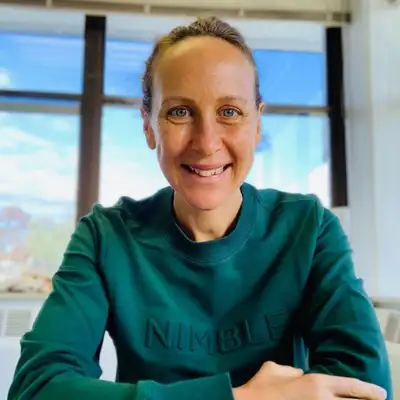
Dr Libby Weaver - Fixing Iron First: The Missing Women’s Health Piece
00:03
Hey everybody, Mikki here. You're listening to Mikkipedia and this week on the podcast, I speak to Dr. Libby Weaver about one of the most overlooked and underestimated drivers of women's health challenges. And that is iron. Dr. Libby Weaver is a nutritional biochemist, bestselling author and internationally recognized speaker who has spent decades educating both practitioners and the public on the biochemical underpinnings of fatigue, anxiety,
00:32
hormonal disruption and low resilience. In this conversation, she brings her trademark ability to connect physiology with lived experience, unpacking why she so often says, fix iron first. Together, we explore iron beyond the anemia narrative, diving into its role in neurotransmitter production, thyroid function, metabolism, perimenopause, and even ADHD. We discuss why iron deficiency remains under-recognized in teenage girls and health-conscious women alike.
01:02
how inflammation and gut health can silently impair absorption and why wide reference ranges don't always reflect optimal wellbeing. Dr. Libby also shares practical insights on testing, common absorption mistakes, and the health stories women need to stop accepting as normal. This is a grounded physiology-first discussion that reframes fatigue, anxiety, and just hormones, quote unquote.
01:25
through a biochemical lens and offers clear practical takeaways for women who want to genuinely feel well, not just told they're normal. I feel like Dr. Libby does not need any kind of bio being read about her because everyone knows Dr. Libby, she is amazing. She has been around for decades and that is not to suggest she is old, but Dr. Libby Weaver, PhD.
01:51
is a nutritional biochemist, bestselling author and internationally recognized speaker known for translating complex physiology into practical, accessible health education. With a PhD in biochemistry and more than two decades of clinical experience, she's worked with thousands of individuals from everyday woman to elite performers, helping them understand the biochemical drivers behind fatigue, anxiety, hormonal disruption and low resilience. She's the author of multiple bestselling books on women's health,
02:20
stress physiology, iron deficiency, and metabolic wellbeing, and is widely regarded for her ability to connect symptoms with underlying nutrient, hormonal, and lifestyle imbalances. Dr. Libby's work focuses on addressing root causes rather than managing symptoms in isolation, with particular expertise in iron deficiency, thyroid function, perimenopause, nervous system regulation, and the biochemical impact of modern stress. Through her education platforms,
02:48
practitioner trainings and evidence-informed formulations, she continues to advocate for a physiology-first approach to women's health, empowering women to move beyond it's just your hormones and understand what is truly happening inside their bodies. This was such an amazing conversation with Libby. I really appreciated the time she took to spend with me diving into this topic. And you can find Libby over at drlibby.com and BioBlends the
03:18
formulations that she has put together for iron, magnesium and more over at www.bioblends.com. Before we crack on into the interview though, I would like to remind you that the best way to support this podcast is to hit the subscribe button on your favorite podcast listening platform and share this conversation with someone that you know would benefit. Those are the best ways for more people to discover
03:45
Micopedia and amongst literally thousands of other podcasts out there so people can learn from the guests that I have on the show like Dr. Libby Weaver. Alright guys enjoy this conversation.
04:02
I think that you guys did an event together last year. She was just here staying at my house actually this week and she was very excited to hear that I was chatting to you. Oh, she's just one of the most super special humans on the planet, isn't she? Yes, absolutely. And so when I said I'm chatting to Libby this week, she's like, oh, this is so great. You have to ask her about teenage girls. I'm like, I absolutely will.
04:29
Well, yeah, I'm a bit obsessed. know, Libby, we were chatting about it actually, because this is a great thing with friends who are in the health space is that, and I think I imagine that you and I are around this, I think I'm a little bit younger, probably, but not by a huge amount. A couple of years, really. and, you know, there's such a focus on perimenopause and menopause health, which obviously is super important. But it's, you know, it's all about how you age and how you grow and,
04:58
the health of our teenagers, of girls, of children, is just, that's where it's all sort of set up. I mean, it's set up generations before, but what you can actually intervene with. And I think not that it's lost, but social media seems to have sort of put forth issues that makes you almost forget about, you know, a lot of other areas of life that I know you could focus on. Yeah, I wholeheartedly agree. It's really...
05:26
It's really concerning to me, to be honest, because I feel that almost anything, any new experience a woman has between the ages of about 35 and 55, there's this tendency in our culture right now to go, oh, it's perimenopause. And obviously when we say something is perimenopause, we're attributing what we're experiencing to changes in hormones. And of course that they might be responsible. But my concern, as you've just suggested, is we could be missing 4,000 other things. And if we just
05:55
treat those symptoms with hormones without actually digging in and seeing if someone is iron deficient or insulin resistant or their thyroid's underperforming, then yeah, we're going to miss all of that. And that obviously all has consequences. So yeah, I'm concerned to be honest, Nikki, the narrative that is, you know, being, I have girlfriends who send me videos saying, is it true that my brain and my bones and my face are all going to fall apart if I don't use estrogen?
06:25
That's an awfully fearful message to be suggesting that that's what will happen to women. I'm not against women using estrogen, of course. I know many women who do and they feel fantastic doing so and I know others who can't. Then of course, there's a whole group of women who don't want to go down that road and I'm all for all experiences. I think we need to make space for all experiences. But when the fear messaging out there right now is
06:55
just unacceptable to me. Yeah. Yeah. I know. I appreciate that. And I also think there's something about the, I mean, it's not, I'm not blaming it on the health system, but when you go to your GP and you've got eight minutes and you get bloods and they, they, they measure a marker. I know we're going to be talking about iron today. They measure ferritin and it comes back and they're like, you're normal. And it's not investigated further. And, and I don't, I'm not,
07:24
placing the blame on the GPs, but there is just, there's something going on that means that a lot of the fatigue, a lot of the issues that we'll be discussing today are just being not swept under the carpet, but dismissed as sort of like normalized. It's just life these days. It's true. And when there's no, um there's no sort of time, there's no space in an eight minute session to dive deeper or to inquire about what might be creating that.
07:54
and giving solutions, first of all, lifestyle-based solutions rather than just instantly throwing medication at it or allowing someone to think that this is just how my life has to be now. I'm supposed to be perpetually exhausted. That's a big concern. I agree. There's all sorts of change that's obviously needed and I don't have the answers, but I think these conversations can help.
08:18
women advocate for themselves. I agree. And I also, and this is what I love about the stuff that you put out there, Libby, like you ask questions and you bring topics to the forefront that people don't even know that they were experiencing things or even knowing what kind of question to ask the adopter. Do you know what I mean? Like if the only thing put in front of you is hormones, then you're like, well, clearly hormones are the solution to these issues. But because of your books and because of your podcasts and your information and your courses,
08:47
People know that they can do a little bit of um deeper dives themselves and then they're able to do what they can, but also take questions to their doctor. They're able to sort of at least try and have a conversation or at least, and if not with that doctor, then I know that there are doctors out there that actually do look a little bit deeper as well, right? Very much. And Miki yourself, Lara Brighton, there are many of us out there sort of, think, trying to arm people with
09:15
fresh perspective or at least questions to consider just within themselves or to have some different conversations with the health professionals who they work with. There's a crew, I think, of people, of health professionals who are like-minded in that way. um It's time because if we just hand it over to the eight-minute consultation, mean, I too feel so sorry for GPs.
09:43
trying to do their best work in such a short space of time. It's near on impossible. it's why I think also to, say this often when I am speaking, we almost need to change what we seek from our GPs. They're not trained in nutrition. So expecting them to have all of those answers. So we need to really embrace sort of an allied health perspective, which
10:08
uh It's almost like training the public to think, okay, I want to know about lifestyle first. So once I've ruled out that there's anything kind of sinister going on, which my GP helps with, and I now want to go down a lifestyle path, that's where chats with people like you are just so crucial in all of your work. Yeah, no, I totally appreciate that Libby and agree with that. you've just come to such a, you know,
10:33
a huge amount of information in the years that you've been sort of bringing information to, like the, you know, women like us. And now your focus has gone a little bit, a little bit more specific, almost reductionist actually. You've sort of, you've gone from lifestyle and burnout and things like that. Now you're sort of really sort of dialing down. And the first thing I want to chat to you about is iron. This is something which you must clearly, you must have seen a need and went, this is what we need to think about.
11:01
and it's beyond just anemia and energy. So can you chat to me about that, Libby? You're so lovely to ask. ah Yes, I'm obsessed is to put it lightly. I actually, a couple of years ago, Miki, I started writing a book that was going to be essentially about perimenopause so that I could offer some fresh perspectives on let's look at it in a really holistic kind of way. Let's look at it from a metabolic health perspective.
11:30
transition across the middle span of our life, mostly because I wanted either the women who were already in that transition to understand some other drivers, other things that could be driving what they might be experiencing and also to help women who aren't there yet to not be frightened because every second 36 year old I talk to says to me, my algorithm is filled with terrifying perimenopause reels. Is it possible for it to not
12:00
involve so much suffering? The answer is yes. uh Originally, I set out to write a book about essentially perimenopause. The first chapter was about iron deficiency. I wrote 11,000 words and didn't want to stop. started to see that iron deficiency touches everything primarily because obviously of its role in oxygen delivery to cells.
12:25
um but also its requirement for us to be able to produce thyroid hormones and convert T4 in active thyroid hormone into T3, the active one. Once I started to see that picture, I wanted to go deeper on that. The rest of the book got shoved aside and I just went really deep on iron deficiency. Obviously, it is the most common nutritional deficiency in the world.
12:48
A was published a couple of years ago in New Zealand showing that up to 55 % of adult women across the menstruation years experience some degree of iron deficiency, whether it's iron depletion, iron deficiency, or full-blown iron deficiency anemia. The stats are wild. I just felt like it was being missed. felt like the world had gone down this road of hacking health and trying to do all these
13:18
things that we really could park, we were missing basics. If you want to have an ice bath, go for it. But I started to say, you can't ice bath your way out of iron deficiency. Nothing's going to solve that. When I was still seeing patients, seeing so many women with their ferritin at the bottom end of the normal range, I would notice that once we got it higher,
13:45
and obviously other iron markers need to move as well. But when I would see a change in their iron parameters, women would just feel so much better. And it's almost like not just our energy, but it's almost like our emotional resilience improves. And so that's why I'm obsessed with it because I don't want anyone of any age from newborn babies to teenage girls to women in perimenopause and beyond living.
14:12
any longer with iron deficiency. So I just wanted to shine a light back on it. Yeah, I love that. And I love how you mentioned the resiliency thing, because particularly at this time of life, we're like, people talk about like you're sandwiched between the generations. You've got aging parents, you've got children, you've got careers, probably on the, there's a lot going on there, then you're trying to maintain relationships. And a lot of where women struggle,
14:41
that I talked to them about is that lack of resiliency. Like they're just unable to cope. um then when that happens, then they turn to other behaviors as soothing, right? And then it almost, it's a vicious cycle actually. So um yeah, and I'm not telling you anything you don't already know, but I like that focus because it really sort of resonates, I think, with a lot of people out there. This is perfectly articulated, Miki. Yeah, it's, I wrote,
15:10
It probably seemed seems a bit weird, but I put a little statement in the book that iron is forged in the hottest part of the fire. And it sounds like a nuts. But the reason that I put that little quote in there was I worry that collectively we've forgotten that we are supposed to go through hard things and it forges our character in
15:38
I think very rewarding, gratifying, uplifting ways that allow us then to contribute back to society in a much bigger way than we did before we went through the hard thing. But when we're iron deficient, we can't feel that we don't have that lived experience. There's this sense of absolute depletion. And obviously resilience is made up of so many factors, but I just think for the physical structure for the Earth suit,
16:05
I think with better iron reserves, with more kind of iron available to pop into those little red blood cells especially so that our bone marrow is getting that, I've seen it firsthand, I've experienced it firsthand, the resilience is elevated and I worry that we're missing that in the world again at the moment. Yeah, so Libby, to what extent do you think this problem with the iron deficiency, like 55%, that's quite a...
16:34
stark number really. mean, that's huge. To what extent do you think this is as a result of obviously dietary patterns, but I see when health messages are put out there that we need to reduce down red meat and uh reduce our consumption, the people they're targeting are not the ones picking up what they're putting down. are the health, we're taking those health conscious women who are already reducing a lot in their diet anyway and further reducing that.
17:03
And I've just literally probably set you up to answer a certain way, but that's what I see. I'm curious to know if this is also a thought that you've had. Very much so, Miki. there's polarization right now, obviously, in nutrition there always has been. And I wholeheartedly agree with what you've just said. the meat reduction, for my age group, obviously, so women right now got in perimenopause, they grew up in the low-fat era.
17:33
And through that time, meat was um a bit confusing. I used to meet a lot of people who then say, I feel like if I eat flesh, I gain flesh. that eating red meat was a bit wrapped up in dieting mentality, I think for women in midlife at the moment. And so when those messages come out about eat less red meat, they embrace it when they're already not having enough. I think too though, um
18:01
I know Lara talks about this beautifully. We stopped eating nose to tail and we stopped eating the whole animal as well. Obviously, when people do eat red meat, they're getting the muscle meat, which is terrific. Great, beautiful iron content there and zinc, all sorts of other things as well. But when we're not eating the brains and the heart and the spleen and all the other bits where there is so much nutrition concentrated, uh obviously, think too that that's been a shift for us as well as a
18:30
in human evolution. There are some butchers around the place who will incorporate some of those meats into their sausages or into their mince. There is a way, obviously, for us to do it. We can make pâté, which makes it all a bit more palatable. You can serve it at a dinner party and people won't think you're odd. There are ways we can do that. Obviously, that doesn't appeal to everyone. I have a phrase in my work, I want to meet people where they're at. I think there are people who
18:57
They eat in a vegan way because it's very deep in their heart and they want to be true to that and honor that and that's beautiful. But there are also people who eat that way because their friend kind of pressured them into doing it or they're doing it because they're frightened of weight gain. So it's sort of from a fear response. It's not really who they are. And I think you only know in your own heart what your own driver is. ah So, but regardless, it's, em
19:26
There is 8,000 reasons why so many women are iron deficient dietary patterns. As one of them, gut function, inflammation. are many, but dietary patterns is a big one. often, so many women just literally don't eat enough iron. Yeah. And this is a bit of a tangent actually, but you mentioned gut function. And I wonder in the work that you do, and actually what it's like in Australia with the emergence of more of these weight loss medications that people are going on to um obviously lose weight.
19:55
but also alongside it aren't getting good advice around micronutrients. And then also the medications themselves are affecting gut function in a way that makes it even harder to absorb nutrients. These are things that don't keep me up at night, but I do spend a large time wondering about the information that's out there. And I'm absolutely not opposed to the really good use cases for things like this as well. But I just, to what extent are the...
20:21
people giving the right and the good information to go around with it is something I think about a bit. Yeah, and good on you for doing that and drawing attention to that. There's not a lot, obviously, there's a massive lack of education about how to support people who choose to go down that road. uh And, know, with the change in even bio flow, you know, people need to be supported as to how to, you know, to help their body continue to do that while they're using those sorts of medications.
20:51
And there's no focus on with that reduction in appetite. You need to really make the most of what you are consuming and make sure it's really nutrient dense or you'll become deficient in all sorts of things. That education, I don't think is hugely out there. People might become aware of it and pursue it for themselves, but it's not until they're here. I've had a number of people, it's not until their hair starts falling out that they go, I better do something here. Something's not right. Yeah.
21:17
Well, your hair is absolutely gorgeous and it has always been absolutely gorgeous, Libby. Clearly you've got really good iron status. So actually, can we talk about some of the things which people might experience if they are low in iron? And then I would like to also get some sort of parameters around what is adequate iron? When is it too much and things like that? You're so gorgeous. uh
21:44
So yeah, I think the first symptom obviously is fatigue. The trouble with that, and we were sort of talking before, the trouble with that is that it's so easy when you feel tired to just think, oh, well, I'm busy, I'm stressed, I'm juggling children and aging parents and a busy work life and I'm renovating the house and I'm worried about the bigger things happening in the world and on and on it goes. So it's easy to write fatigue off. So my encouragement to people is that if the
22:14
fatigue lasts for more than two weeks and you're obviously getting sleep. It's not interrupted by getting up to little children in the night, for example, then you want to investigate why you're fatigued. Fatigue is not normal. It's feedback. So fatigue is the first one. the reason for that is, and I know you know this, Mickey, this is for your listeners. oh I get people to imagine that the body is made up of 50 trillion tiny little circles, obviously they're cells and then inside a cell is a city.
22:44
There's construction work going on and if something in that city isn't being used, all the little worker bees in there will deconstruct it. Obviously, the mitochondria are in there, creating energy. But every single circle, every single city eats food and eliminates waste. For those cities to function, oxygen is required. that's an iron attached to the hemoglobin.
23:09
oxygen gets delivered. That's one reason why energy is so compromised because the little cities that literally make up our physical structure can't work as well when that's compromised. Also too, obviously, um our red blood cells that carry the oxygen get their color from iron. They live for 120 days and there's 2 billion of them being made every single second. It's wild how quickly we
23:38
Iron is needed for all of those cells, Our iron requirements to be delivered to the bone marrow to make those new red blood cells is major. Then if we take it further, fatigue is obviously a big symptom. We also need iron to literally be able to produce our neurotransmitters. Dopamine for motivation, uh GABA for chill, for calm.
24:02
serotonin for contentment, melatonin for sleep. Iron is literally a co-factor in the creation of all of those neurotransmitters. Once we stop to think about that, it's no surprising then that so many iron deficiency symptoms are related to mood. Mickey, I worry right now that as a culture, we have this tendency when someone feels anxious to instantly go down a psychological or psychiatric road.
24:30
fantastic and needed. not saying let's not do that. It's helped gazillions of people. My worry though is that the biology, the nutrition, the physiological role of nutrition in how we feel is potentially being ignored. a study was published in 2023 called the psychiatric manifestations of iron deficiency anemia. And the researchers looked at people diagnosed with anxiety,
24:58
with depression and uh anhedonia, which is the inability to experience pleasure. And then they looked at their iron status and obviously correlation isn't causation, but the correlation was massive. certainly in clinical practice, you see that you see the effect on mood. And when I remember being at uni, obviously that's a long time ago now, but
25:23
We were taught anxiety was one of the symptoms of iron deficiency and that was before anxiety became its own psychiatric condition. So I worry that that's being missed. I particularly worry about that in teenage girls, if I can just go down a little tangent for a second. Yeah, I love it. Because of that cultural pattern, that cultural sort of way that we're operating right now. I've just seen it too many times, Mickey, to
25:51
not want to shine a light on it. It's really concerning to me that a teenage girl might say to her parents, I feel really anxious and because they love and adore her and want the best for her, the response is to sort of not just to sort of see it as I feel anxious, but to immediately go, oh, she has anxiety. And that language is a big deal to, I hear that very differently for, I feel anxious too, I have anxiety, they're very different things.
26:20
And so then the support is given and often she might be medicated and yeah, what if she's iron deficient? What if it's iron deficiency and concerns with friends at school or how she's going academic, whatever's bothering her. And I'm not for a minute saying that all anxiety is caused by iron deficiency. I'm just saying it's being missed. And so then that girl gets diagnosed with a condition and she
26:45
now believe she has a disease and she now believes she needs to rely on medication for the rest of her life. I have a big problem with that and that iron deficiency could be being missed in too many of those young girls because as we know, all different versions of dieting culture very sadly still exist and the restriction starts at younger and younger ages. It's really hard to, once you start menstruating, it's hard to meet your iron requirements when you're a robust meat and potatoes kind of eater.
27:14
versus if you're restricting in some kind of way. And obviously a lot of teenage girls restrict uh for various reasons and in using different modalities. that's a big concern for me. yeah, mood symptoms is another big one. Hair loss, heart palpitations, and then thyroid function as well. to be able to produce thyroid hormones,
27:40
thyroid peroxidase, the enzyme that allows us to do that is reliant on iron. And then also we need iron to convert inactive thyroid hormone T4 into T3, the active one. So we then can get the symptoms of a thyroid that's not working as well as it once was when we're iron deficient. So that's just scratches the surface of some of the symptoms. No, totally. you know, you just, like, I just want to touch on a couple of those things, Libby, is of course you're not
28:09
suggesting that everything is related just to iron deficiency. But again, it just speaks to the idea that we can't just rely on the GP to be able to sort of do that deep dive that we need because they're not trained. they may have learned in one lecture just the importance of iron and B12 and things like that, but that's not in the forefront of their mind when they're prescribing medications all day and that's just sort of what they do. So yeah, I think to your point,
28:37
having, and I don't even know where this needs to sit. Do you know what I mean? Like, because people don't have access, I mean, people have access to information, of course, but some people don't. And some people don't have access to the right information. I mean, this is a bigger, wider, huge conversation, but I appreciate your concern around that. And then to have that um narrative of, I've got this thing, and then to take that through their life.
29:07
You do see that a lot. I'm curious actually, Libby, when you were looking at your research, was there any link between diagnosing ADHD, for example, and an iron deficiency? Yep, yep. It's all there, Miki. And we're not talking about it. Thank you for raising it. We're not talking about it enough. It's um again, it's people go down a purely psychological or psychiatric road um when those symptoms come to light. And in adults and in children,
29:36
there's a lot of crossover with the symptoms of iron deficiency and the inability to concentrate, inability to focus, the brain fog. Yeah, so there's a lot of crossover. And I'm not saying for a second, don't get the psychological and psychiatric support you need when you go down that ADHD road, but please don't miss testing iron deficiency. if any degree of it comes up, treat it and see if you can.
30:03
I would encourage people to notice any difference they experience from better iron status. So yeah, absolutely. And so Libby, if I'm going to the doctor and I'm getting tests, like what would I look for? Like what would I ask my doctor for blood tests for? And then what numbers should I be expecting? Or wanting? Wanting is a better word, sorry. Not expecting. So I would start with encouraged.
30:32
person to start with iron studies, which is four different tests. So your serum iron, which is a reflection of your recent dietary intake and or any supplementation you've had. So it's best to stop iron supplements for four to seven days before you have a blood test to get a more accurate picture. oh So serum iron first, then that iron studies group of tests will also measure a thing called transferrin.
30:58
This is a little confusing one, I think sometimes for people to wrap their head around because transferrin is elevated in iron deficiency and iron deficiency anemia. people see that, oh, this is an iron test and it's high. I look like I have too much, but no, transferrin is a transporter that carries iron in the blood. So I get people to imagine transferrin like a taxi and its job is to pick up passengers. The passengers obviously ah units of iron.
31:26
So your body will make more taxis, it will make more transferrin in an attempt to get more iron to try to pick up more passengers. So the normal range for transferrin for adult women in New Zealand and Australian pathology labs is 2 to 3.6 grams per litre. And I like, rather than looking at just normal ranges, I rather consider optimal ranges. So I look at once transferrin goes above about 2.6,
31:54
I see that as a sign of the body seeking iron. It's started to make a few more taxis to try to obtain more iron. that once, yeah, above 2.6 for that transferrin can be a sign that your body is actually seeking more iron. Another test in that iron studies little group is called transferrin saturation. So that's how many passengers are in the taxi and then ferritin, which is iron storage. And at the moment, it's the best reflection we have of our bone marrow.
32:24
status. Ferritin is how the body stores iron. I get people to see that almost like their backup battery. If you have heavy periods or you have monthly blood loss and you're not eating enough, you've got to pull some iron out of storage so that you have enough for it to zip about and do its work.
32:49
I think a lot of women don't have a solid and a robust enough backup battery. The normal range for ferritin in New Zealand and Australian pathology labs is 20 to 220 micrograms per liter, which I love that you're raising your eyebrows because that's wild because it's so broad. In my clinical experience, and there's also literature that very much
33:16
speaks to this. Once ferritin goes below 50 micrograms per litre, there are symptoms usually associated with that. The optimal range of ferritin, I think, is 50 to 150 micrograms per litre. I like it somewhere in that range. I also get women to tune in and notice how they feel once their ferritin gets a bit higher. em It's not just energy.
33:43
The feedback I get is it's not just the energy, it's that resilience factor that we talked about earlier. That's kind of what elevates. So that's the beginning. then look at that. Obviously there are other nutrients needed for healthy iron metabolism. We need copper, need vitamin A, different B vitamins. So there's a range of, nothing in the body acts alone. So if we also know that inflammation disrupts iron absorption, we know that inflammation can falsely elevate ferritin.
34:13
So if there's some confusion just with iron studies, then we can do those additional tests. We can start to look at Cereloplasmin, which is an enzyme that carries copper. That's an okay way to sort of look at copper. We can look at CRP, which is just a stock standard way to assess some inflammation without going into specific interleukins, the inflammatory cytokines themselves. So yeah, there's additional tests that can be done, but we start with
34:40
I like to start with iron studies and just see where that's at. Oh, actually, can I quickly just say something I've seen more and more of is when we do a full blood count with those iron tests and we look at the white blood cells, if someone has elevated iosinophils, which is a type of red type of white blood cell, I suspect there's either some kind of food they're eating that they can't digest properly or what I would just generically say is
35:10
parasite infection. There's something unfavorable going on with the gut for those elevated iosinophils to be there. I learned that from a gastroenterologist in the 90s. When I see a bit of a weird pattern with iron studies, ferritin might be low, but transferrin is also low. Once the transferrin is low, that's the body saying, whoa, back, don't want more iron right now. Then I'll look at iosinophils and see if there's a parasite because the body's saying, don't
35:39
Even though the ferritin is low, the body is saying, don't want more iron right now because it's just going to feed the parasite. So we've got to do the gut work first. I want to say it's complex, but it's sort of not. There's a lot to it. And that's why working with a nutrition professional who understands all of that, yourself, Mickey, is key for people to get great outcomes. Absolutely. there is a lot of very uh
36:07
A lot of different schools of thought out there when it comes to iron isn't there. So I've chatted to someone who doesn't think any woman of sort of reproductive age should have an iron above 30 due to uh
36:23
What is that even due to? I did look it up once, more than once actually, I probably wrote about it too, but you know, can't remember. thinking that it's too high an iron is dangerous. Now I know that there is a cutoff with which iron does cause oxidative stress and damage. And we talk about that, but the 30 seemed like quite a low cutoff, but it was based on some theory that had...
36:50
something behind it. Do you know what that would be related to Libby? So there's a school of thought that it's not iron deficiency, it's copper deficiency or bioavailable copper deficiency. Thank you, yes. And so what I've seen when someone goes down that road, copper is really important. I put it as a co-factor in the product I designed. It's very important but
37:19
I've seen a lot of people tank their iron when they don't do iron. If you're not eating enough iron, we can't escape our biological requirement for it. It just doesn't act alone. I think that that school of thought is trying to prevent oxidative stress and inflammation, of course, but I do worry that people then crash their iron status when they're not focused on iron and they're just focused on copper.
37:48
We need both. We only need a tiny amount of copper. There's some suggestions at the moment that the RDI is too low. The RDI for adult women is a little bit less than a milligram per day, 0.9 milligrams per day. There's some school of thought that it's better if copper is at about one to three milligrams per day. Again, we must get it, but it's tiny compared to iron because across the menstruation news, we need 18 milligrams of iron per day. That's just to prevent deficiency. It'll be
38:18
higher if there's heavy periods. So Libby, how high is too high with ferritin? mean, optimal you set up to 150. Because I know that there are many people who may have had their full iron studies, they'll have a ferritin of like 196, 228, but then they'll look at their, saturation levels and they'll be low. how does someone make sense of those sort of numbers and what would their next step be?
38:48
So I'd be considering if saturation is low and ferritin is sort of high, like you're saying, I'd be suspicious that there's inflammation falsely elevating that ferritin. And it's where there's some terrific research being done at the moment with some new test development. it's, they're not, the tests aren't available yet in stock standard pathology. They're still only being used for research purposes to establish their credibility.
39:15
I'm very excited by what I'm seeing there because they're not dependent on inflammation. These tests are looking at iron's delivery to red blood cells, to the bone marrow, and that's what obviously is a great sign of a really healthy iron pool being distributed where it needs to go and adequate iron being available for that. Iron studies is the best we have right now, including ferritin, but I think
39:45
em There is some terrific work being done. yeah, I don't know how long it will be. It needs to hurry up in my opinion. but watch the space. Yeah, very much. So people will be listening to this. And I have got this clinically with a number of clients over the years. it doesn't matter what they do. They cannot keep their iron levels up. They just, will... um
40:10
either take supplements, don't tend to hit it, and we will talk supplements because I know that you have a very, you know, it's been really well received, your supplement, I'd love to chat to you about the formulation of that. But iron supplements don't touch it. Iron infusions only keep it up for so long. So in your experience, Libby, what's going on there and how do we sort of investigate that further? Because it doesn't seem right that the body doesn't hold iron. No. So
40:36
In those situations, I go looking at what's contributing. Is it significant iron loss? Are the periods really heavy? Is that where the focus needs to be? If we could make the periods less heavy, then that iron loss will be mitigated somewhat and the person might be able to maintain a reasonable iron status. Is it heavy loss? Is it inadequate intake? I have met lots of people over the years who
41:06
They really do think they're enough iron-rich foods, but they're nowhere near it. I've also met people who have found out they're iron-deficient and then become very, very focused on eating iron-rich foods and they've been able to really recover their status. I'll give you one example. A lady who starts work very early in the morning, she'd smash coffees to start her day and take her iron supplement in the morning.
41:35
and just have toast and whatever for brekkie. And she was so iron deficient, couldn't hold it. She switched it and went, I'm not starting the day with coffee. She started to begin her day with sardines, which are a beautiful source of iron because you eat the liver and didn't have her coffee till mid morning. And she thinks that was the biggest thing that made a massive difference. So sometimes I think when
42:04
We can't hold iron. do think some, we're not sort of saying maybe that there's still a dietary inadequacy going in or cause it's really for health. And we sort of touched on this earlier, Mickey, when someone's already really health conscious, Lara talks about this beautifully in her books, like eat for satiety. I don't meet many women who eat for satiety. They,
42:34
Yeah, so I worry that there's still not enough going in. Also, oh to touch on the absorption of it, obviously in food there's heme iron and non-heme iron and they're absorbed completely differently. With non-heme iron, the absorption is so poor.
42:56
partly because it relies on there being acid present. So that's why vitamin C, we're told to pair the non-heme iron obviously with vitamin C because it's ascorbic acid, but you could pair it with any acid. um then obviously, the non-heme iron is in the chemical form of Fe3 +, which the body can't absorb. We have to convert it to the Fe2+. Stomach acid uh is crucial for that. And I think these days with stress is not very good for our stomach acid.
43:24
I think with persistent stress hormone production, that's compromising iron absorption right from the get-go. That can be another reason why think people can't hold it because they might be eating it, but they're not absorbing it because their stomach acid pH is either too high or it's almost like a hypochlorhydria situation. That can be contributing. Then also once the
43:50
If iron finally does get down to the cells that line the small intestine, sitting on the surface of those gut cells is a, get people to visualize it like a truck. It's actually a transporter. It's called, has a name DMT1. We won't worry about the big, silly name, but the iron has to get on the back of that truck and be driven inside the cell. that iron, so firstly, there's got to be enough trucks available and those trucks.
44:17
are used for zinc absorption, calcium absorption. So a lot of our other minerals with that two plus charge use those trucks. But now the iron is inside the cell and it's on its own. we call that free iron and that free iron is what can do damage. that free iron from the non-heme iron can drive inflammation in the gut cells.
44:40
But iron is still inside the cell. It's got to get out the back door and that's why we need copper. So the copper dependent enzyme comes along and picks the iron up from the back door. So there's a lot that can go wrong there. So when someone can't hold iron, it could be related to digestion, not eating enough iron rich foods. It could be heavy period loss. There can be parasites in inverted commas taking it for their own use.
45:06
They're the sorts of things that I'd consider when someone can't hold it and also the quality of their supplement. Yeah. Okay. Before we get onto supplements, you do mention parasites and maybe it's my algorithm, but over the last couple of years, there's been a real focus on parasites, on worms, on environmental toxins, everything. But to what extent should me, here living in Auckland, be concerned that parasites are an issue for
45:34
for my gut or my ability to hold iron, albeit I don't have an issue holding iron. you know, like, is this a real concern and are the tests adequate to really know for sure if you've got parasites or not? Well, the first symptom is not pleasant to talk about, you sometimes get an itchy bottom and there's changes with your stools. Oh, go. So there are obvious signs. The tummy tends to gurgle.
46:04
You'll be lying in bed at night and it's very noisy. very, your tummy's Is that when they wake up? I've heard that. Is that when they wake up? I don't know. I feel, don't think we know that, a gurgling stomach is coupled with itchy bottom and changes in stools, coupled with tanking iron. Then I'm going to suspect a parasite.
46:29
if anti-biocinophils are elevated. So that's the picture. I think that there's a tendency right now with different people's algorithms to get hit with some pretty rando parasite kind of messages, but clinically that's how I would work it. Like in a more rational sense, that's how I'd work it out. Okay, now that is actually really helpful. As I was asking the question, I was feeling a little silly thinking surely
46:54
But equally, think other people will be wondering this as well. As they're trying to rule things out, it's helpful to know the real bare basics. Most iron supplements are like a sledgehammer to the gut that people have to take. And obviously, are sources of like, you've got the Solgard gentle iron, you've got Maltifor, apparently is easier on the gut, and there are different forms of iron that are supposed to be better than others.
47:23
How did you view the supplementation piece in the way that got you to create the product that you created? Because it's quite different from everything else. Yes, it is, I guess I call them old school supplements now. When I was still seeing patients and someone was iron deficient and they weren't eating enough iron rich foods, I'd get them to do that.
47:49
if they were already deficient, I would encourage them to also take a supplement. Around 24 milligrams a day is what has been suggested that doesn't push hepsidine too high too fast because hepsidine is a protein the liver makes that blocks iron absorption. It's like the bouncer at the stadium saying no more can come in. I would use that in a synthetic form of iron.
48:17
It was really exciting if someone's blood tests six to eight weeks later had gone up by about three to four units. That was, well, we're on the right track. How good? I had been looking bioblends, full transparency, I have a supplement company called BioBlends and I do all the formulations for that. I'd been trying and everything with BioBlends is made from food. It's not synthetic. So it's different right from the get-go. And I'd been trying to develop an iron supplement
48:46
since 2016. And I have tried so many things and I won't name them, but I did trials. So I recruited 20 women whose ferritin was less than 30 and gave them not what I ended up using, this other thing that I thought I was going to use that was made from food. And we did blood tests at day zero at four weeks and after eight weeks.
49:13
and they were given this supplement and two, there were 20 women, two women's iron status stayed round about the same and the other 18 got worse. So, and that's out there being sold and I'm not putting my name on that. It just does not work. So that's a great example of you taking the iron, but you literally can't absorb it. That took a lot of time and a lot of money. threw it all out.
49:43
back to the drawing board and I ended up finding, so in peas, sorry, to back up the bus, animals, including humans and plants store iron in ferritin. So ferritin is for visualization, imagine ferritin is a protein cage and then inside that ferritin cage can be up to 4,500 iron atoms.
50:12
all held together in a little mineral complex. an inside peas, they're very good at holding iron inside ferritin. hang on, as in like snow peas, peas? Or just normal peas? I'm eating a pea, right. Okay. When you say peas, like, this short? Like, should I know what you're talking about? The vegetable, the vegetable. The vegetable. you. Peas obviously cover
50:39
Green peas, lentils, Okay. Thank you. Botanical name, lentils, everything. Yeah. My gosh. I'm sorry. So funny. Sorry. The ferritin iron is in them, all but in small amounts. So uh a clever person, it's based on a lady's PhD and then her life's work was looking at the impact of ferritin iron from legumes, from peas on humans' blood levels.
51:08
with her, it began as a research project back in the very long time ago. This lady is now in her eighties. And I, so I started diving into her work because I had never heard of ferritin iron. It was not, I wasn't taught that at university to cut a very long story short. It's what I've put in iconic iron, my iron product, and it's extracted from organic peas and it's absorption mechanism is completely different from heme iron, non-heme iron, and also
51:38
old school iron supplements. it's very cool. So as I described earlier with non-heme iron, it's similar for old school iron supplements. So they're iron salts, what you bite the chemist. And so when we swallow those old school iron supplements, the iron and whatever it's bound to gets pulled apart in the stomach. And then that iron, that free iron is delivered to the gut cell, hops on the back of the truck, the DMT1 truck.
52:07
gets inside the cell. And because a lot of those pharmacy ones are really high dose, the gut cells can be flooded with a lot of free iron, which is highly inflammatory, which is what I think that's one reason I think a lot of people get gut related symptoms like constipation when they use those supplements. And as I said earlier, your body's still got to get the iron out of the gut cell, which relies on copper and copper isn't in those stock standard old school supplements. that big
52:34
problem and one reason why I think a lot of people are put off taking those old school iron supplements because I've had women say to me, the constipation is so bad, I'd rather be iron deficient. But with the peas, with the ferritin iron, it's completely different. So it actually, the majority of it survives degradation by stomach acid and the ferritin iron cage with the iron inside of it is delivered whole to the gut cell wall and it's absorbed via a process
53:04
called receptor-mediated endocytosis. So it's grabbed and it's taken inside the gut cell, but it's taken in whole. So the iron is still inside the ferritin cage. So the gut cell is not exposed to free iron. And I think that's part of its magnificence because that's part of why people aren't getting side effects from it. It also then isn't reliant on copper to get out of the gut cell and it's delivered to the iron pool in that form and that iron comes out there. And so then it can go off and do its work.
53:33
It sidesteps the usual iron absorption hurdles and it's very, very gentle on the gut. um The trials we did before releasing iconic iron were sensational. They blew me away. But still today, Mickey, when people write in and say, my ferritin was 17 and in two months it's now 43. That's amazing. Yeah, it moves the needle really quickly.
54:03
the difference in how people describe they feel is what drives me. I met a lady at the airport in Auckland and she was wearing a delicious big fat healthy baby. She was wearing her baby on her front and she came up to me and she shared her story. She said she'd been iron deficient all of her adult life and really wanted to get on top of it for her pregnancy, um used iconic iron and
54:31
She said her iron status actually improved in the third trimester of her pregnancy instead of falling apart because we obviously double our blood volume in that stage to create the new blood for a new baby. She said the difference in her mothering for this baby, she said it's just a completely different experience of motherhood. um It was very moving to think about the ripple effect of
55:00
just women having great iron status, you know, as new moms, cause it's, you hard. And so, yeah, it just, yeah, blows me away, Miki. That is amazing, Libby. is such a, like, I appreciate how you feel, but also like that, like to have your sort of, not life's work, it's not like, it's not over for you yet. I mean, you're like, you've got like 40 years or 50 years left, but to have,
55:29
people report that based on what you've done is that's pretty amazing. Like what a joy and what a privilege, right? To be able to do that for people. It is, um I feel like everything else was just preparation for this, Miki, if I'm honest. really what I feel like the rest of my life's work is gonna be about.
55:56
these conversations about iron so we can reach as many people as possible, you know, to help them, yeah, focus on it, just get the light shone back on it because of the difference it can make. Yeah, that's amazing, Libby. And I don't want to move you on from iron, but because, and I'm serious, you know, but I know that you've got a magnesium supplement out and there are other things that you've got sort of in the works. So what else, what's 2026 hold for you?
56:25
Well, iron, iron, iron. It's really all I want to talk about and um focus on. So, yeah, there'll be more iron-related education. That's what I really love to do. um It's tricky with teenage girls because it's a real touch point for me that
56:49
I'm not on TikTok, but maybe I'm going to have to go there. don't really think they'll listen to me. I feel like I need to find a... You need to recruit. need a teenage, a trendy, the word trendy is probably not even cool. I don't know. To find a teenage girl who kind of cares about it. Maybe she's been iron deficient and recovered and she can notice a real difference in herself. Yeah. It's connecting with teenage girls. Sometimes when I...
57:18
I'll do a speak, you know, do a talk and the mothers in the audience will come and say, can you come and speak at my daughter's school? And I've done that many times, but you forget how uncomfortable they can be when you're talking about periods and even food and they sit and twist their hair and turn around and talk to their friends. And what I realized when I'm in those situations, we so often don't care about something until we've suffered.
57:48
know, the adult women care because they love their daughters or it might be that they themselves have struggled with fertility, for example. And so they're very focused on health in an attempt to address that and help themselves more with that. So it's not until we've sort of had a heartache, I think sometimes that we do care about something. And what I find with teenage girls, they don't care. They'll say,
58:18
they literally will say to me, all my friends have anxiety. So why does that matter? Like it's not a standout thing that they think would be good to address. It's when their hair starts falling out. That's when they, they don't like that. Yeah. We can get them in, in, caring more about their food intake sometimes with the, with the hair thing. But anyway, it's, it's really tricky, but I would 2026, I would love to, it was a long winded answer. I'm sorry, Nikki. No, it's fine. oh
58:46
teenage girls. So we'll see. Well, hopefully anyone listening who has some like smart strategies can, you know, hit up your marketing team and just put them forward. Cause you're right. Like I totally right. Isn't that just so human nature? Like until we care, don't, we reason to care, we don't care really. Yeah. Yeah. And it's, um, we don't know, you know, talking to people about health.
59:12
It doesn't like young people, especially it doesn't land unless they've had an experience where they don't have it. We sort of don't appreciate it until there's a risk of it being taken away or we have had it taken away and we've had to recover from something and it's you get and that's sort of also what I mean about I guess resilience. get this deep appreciation for life itself when there's a moment where we may no longer have it and m
59:40
how wonderful that so many teenage girls have never been in that position. That's great. I don't wish them ill. So I'm trying to find ways to get them to care about addressing their iron deficiency um without them having to suffer too much. Yeah. Yeah. Nice one, Libby. And I've got to say that, I mean, you've been remarkably resilient over the years in bringing your messages out where you might've got pushback from other traditional sort of
01:00:05
circles because you just think differently and more holistically and really sort of get to the guts of what is actually important. Whereas I think a lot of the training that I did in my nutrition degree and the others, like we miss a lot of the fundamentals that actually, I guess, do make people healthy. even like, yes, iron is just one thing, but I'm just thinking back to when you first came onto the scene with um
01:00:32
rushing woman syndrome and all of that. Like you really allowed us as women, but also us as practitioners to think a bit differently about how to approach health, I suppose. So thank you for everything that you do. And it's amazing. That's very generous. Thank you. Right back at you, Miki, you change lives with what you share and how much you care. So it's just what we do. you enjoy the rest of your
01:01:00
Day, thank you Libby so much. I really appreciate it. Enjoyed this conversation. And of course I will put links to everything that you have in the show notes, can you, mean, everyone knows who you are, but please just for the one or two people listening who are like, who is this Dr. Libby? Where can people find out more from you? And of course your information and supplements, et cetera. Thanks, Miki. Yeah, my website is just drlibby.com. So my books are there and education and. m
01:01:29
thousands of free blog articles and BioBlends.com is the supplement company. So all made from food and Iconic Iron is the really special iron supplement. Amazing. Thanks so much, Libby. Thank you, Mickey.
01:01:54
Alrighty, hopefully you really enjoyed that. I loved chatting to Libby. She is just such a thoughtful, considered and exceptionally smart woman. And I've been really blessed to have been influenced by the information that she's put out there over the years. And I'm sure that you have as well. So as I said, I've popped links as to where you can find Libby and her supplements in the show notes. All right team, next week on the podcast, I have Professor Eric Reveson.
01:02:23
Really looking forward to sharing that conversation on protein and metabolism with you. Until then though, you can catch me over on Instagram, threads and X @ mikkiwilliden, Facebook @mikkiwillidenNutrition, or head to my website, mikkiwilliden.com. All right guys, you have the best week. See you later.