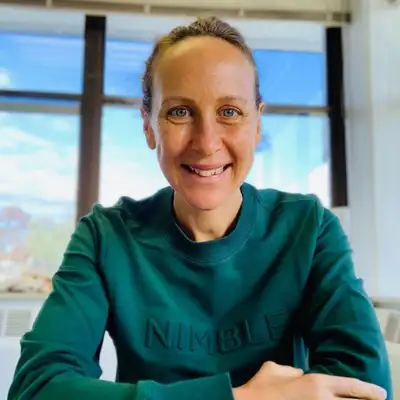
Beyond Calories: The Biology of Weight Regulation with Prof Eric Ravussin
00:00
Hey everyone, it's Mikki here. You're listening to Mikikpedia and this week on the podcast I speak to Dr. Eric Ravussin. He is one of the world's leading researchers in human metabolism, obesity and energy balance. Over several decades, Dr. Reverson's work has helped reshape how scientists think about body weight regulation, moving the conversation beyond the simplistic idea of calories in versus calories out.
00:27
to a deeper understanding of the biology that governs appetite, energy expenditure and fat storage. In this conversation, we explore the brain's role in regulating body weight, the influence of genetics and environment, and what his landmark research, including work with the Pima population and the Calorie trial, has revealed about metabolic adaptation, calorie restriction and longevity. We also discuss spontaneous physical activity, the concept of a body weight settling point,
00:57
versus setting point, and the emerging role of GLP-1 medications in obesity treatment. This is a fascinating look at the physiology of weight regulation and why maintaining weight loss is often far more complex than most people realize. I think you guys are really going to love this conversation. He was such a pleasure to chat to and he's just got so much experience and understanding in the energy metabolism space. uh
01:24
he talks about it so easily that it's certainly not just for the super geeky amongst us. um do not worry at all about that. So Dr. Eric Rabousin is an internationally recognized researcher in metabolism, obesity, and energy balance. He's associate executive director for clinical science at the Pennington Biomedical Research Center at Louisiana State University, one of the world's leading institutions for metabolic research.
01:52
For more than three decades, Dr. Reburson's work has focused on understanding the biological drivers of obesity and weight regulation, including energy expenditure, metabolic adaptation, appetite regulation, and the role of genetics in body weight. His research with the Pima population helped illuminate the powerful interaction between genetics and the environment in the development of obesity. We discussed that in today's conversation. Dr. Reburson has also been a principal investigator in the landmark Calorie.
02:22
Comprehensive Assessment of Long-Term Effects of Reducing Intake of Energy Trial, is the first long-term randomized controlled trial examining the physiological effects of sustained calorie restriction in humans, including its potential implications for metabolic health and longevity. He has authored hundreds of scientific publications and remains a leading voice in research exploring how biology, behavior, and environment interact to shape body weight and metabolic health.
02:52
So I've put a link as to where you can find Professor Reverson's faculty profile in the show notes. He's not overly active on any of the socials. So you can find out more about his research there. But before we crack on into the interview though, I would like to remind you that the best way to support Micopedia is to hit the subscribe button on your favorite podcast listening platform and share this episode with a friend.
03:19
that will increase the visibility of Micopedia and amongst literally thousands of other podcasts out there so more people get to hear from the guests that I have on the show. Alright team, enjoy this conversation with Prof Eric Rabousin.
03:36
So Eric, thank you so much for your time this morning, uh your afternoon. I really appreciate it and feel quite privileged to be able to speak with you. You're such a, if I say you're an OG in the metabolism um space, um I don't think that would be overstating it given your decades of work in this field. So thanks so much for taking the time to chat. You're welcome, my pleasure. Eric, can we sort of start with
04:06
big picture in terms of um calories, energy expenditure, and maybe even kick off with you describing how your understanding of weight regulation has evolved over your career. m If you can, give us that foundation. Yeah, I I've been involved. did my PhD in Lausanne, Switzerland, and this is where I am from.
04:32
and we built the first modern human respiratory chamber in which we measured energy expenditure in people. And at the time, you know, there was this feeling that people were gaining weight just because of a slow metabolism. of course, our first study published, I don't know, in 1981 or 78 showed that
04:59
people with obesity had higher metabolic rate and higher energy expenditure than people who are leaner. And of course, it became, I remember all the discussion we had with our colleagues from the UK. And they said, of course, the flame is brighter in people with obesity because they have a larger mass of weight and so on.
05:24
and we have to adjust for that. And then we started to measure body composition and measure basically energy expenditure adjusted for what we call fat-free mass and fat mass. And we found that on average, there was no difference between people with obesity and people being lean in term of energy expenditure when it's adjusted for body size.
05:53
in your, so that was sort of the beginning of your career, I guess, Eric. And so is this something which people misunderstand now about metabolism and weight gain, that they are bigger because their metabolism is slower? Or is there some sort of other fundamental, I suppose, um flaws in our understanding that you note that people might have?
06:17
Yeah, I think there is still a feeling that, you know, you hear a lot of people saying, you know, I gained so easily weight and this is because I have a slow metabolism. And I don't think it's really true, but uh metabolism is also a reflect of your energy intake. for example, if I tell you that nicotine
06:43
increase your energy expenditure and decrease your appetite. Smokers are weighing about three kilograms less than non-smokers on average. It's true. I studied a long time the Pima Indians in Arizona. They have the highest prevalence of type 2 diabetes and the second highest prevalence of obesity.
07:10
And we found that indeed those with lower metabolic rate or lower 24 hour energy expenditure were more likely to gain weight. But you could never attribute the magnitude of the weight gain to the defect in energy expenditure. And it means it's an indicator, but it's also associated with higher energy intake. oh
07:40
Eric, I can't remember actually if you were on this paper because I believe there were like hundreds of authors in the paper that was published maybe in 21 or 22, looking at metabolism over a lifetime showing that as metabolism increased and then sort of stay quite stable up until sort of 65. And is that, were you involved in that?
08:03
Yes, it was because this is John Speakman who collected all the data from doubly labeled water. Now, the method is not as precise as indirect calorimetry, but still, you know, there was more than 6,000 people in this study. And like you said, it went from really uh babies up to the age of 90 or above. And I think you are perfectly right. There is an increase.
08:32
and your energy metabolism is quite high uh until puberty and then it goes down slightly and then it stays mostly stable from 18 to about 55 and then decline. And this was an important study but not with the uh most precise method that you can think of. And I think that uh this is important. tells you
09:00
what is happening during the lifespan, but it doesn't tell you for each individual. Or there are other studies published from the same data set. You know, are there differences between continents? Are there differences between colder climate versus warmer climate? Are there differences between people with a higher socio-economical status? Yeah, it is interesting because, I mean, I'm thinking about, I...
09:29
as a perimenopausal woman, suppose, and a lot of my clients are in my age range, of late 40s and beyond. I think that their lived experience might suggest that they think in fact their metabolism has changed, but we know there are so many other things at life that also change at this time. So I guess I wonder to what extent do you think that it's much more of a behavioral...
09:57
sort of mechanism for why people might gain weight around this time? Or is it actually that the data we have as yet, we don't have the data to determine that sort of genetic or the sort of biological basis? Yeah, I think your energy metabolism or energy expenditure is mostly imposed by your biology or by your genetics.
10:22
But there is, course, and you took the example of this doubly labeled water results, which include physical activity. And of course, physical activity is a behavioral activity and you can choose or not choose to be more active and so on. There is also a genetic background to physical activity. anyway, I think there's a little bit of both.
10:49
I mean, genetically, uh you are predisposed to have a slower or higher metabolism, but after that, you can modulate that by your behavior. And for example, when it comes to energy expenditure by uh increasing or decreasing physical activity, of course, people don't try to decrease their physical activity, but try to increase it. Yeah, yeah. No, that makes perfect sense. And I like how you discuss.
11:17
or you mentioned the Pima Indians which you have studied extensively. Like I remember this was years ago when I used to teach at both AUT and UNITECH. Used to show a video that is a very old YouTube video actually of um the dentist, I think Dr. Western Price. Now he traveled over the continents looking at different populations to sort of determine optimal dental health. And what he found was a real shift in
11:46
populations, even one generation, and particularly here in New Zealand with the Māori population, how they were like warriors and the best example of a warrior, but in one generation because of a change in their environment, they were colonized, a lot of them moved in and um changed their physical activity habits and their diet and their whole, I guess, health outcomes really changed, which I think is a really great living example of how
12:15
environment can play such a role in health outcomes. uh Yet, of course, this isn't a randomized control trial. This was merely observational, but it was very sort of stark. I don't know if you've seen those kinds of that kind of information um that Dr. Western-Price came up Yeah, no, I've been, you know, following basically all the information regarding the impact of environment versus genetics.
12:40
And for example, you talk about these observation, and I think we have very similar observation with the Pima Indians. The one living in Arizona basically were agricultures and were cultivating the land for their food until the gold rush really or the early 1900s. And here they're
13:11
Basically, entire lifestyle changed. But I was fortunate to uncover, uh thanks to a friend, a population living in the Sierra Madre in northern Mexico, calling themselves Pima Indians. And they seems to have separated about 400 to 600 years ago, the two population, and they have about seven times less diabetes. They have 10 units less of BMI.
13:40
And I think they are healthier in general. And you have a typical example of the environment. You know, the traditional study which have been done, it's, you know, Asian uh or let's say Japanese migrating to Hawaii. uh They are already a little bit, uh you know, with a heavier weight migrating to the West Coast, to the United States. And again, you have an increase in body weight.
14:10
I think all these observational studies are important to give you some indication about the impact of environment beyond your own genetics. feels, Eric, not just feels, but it's like obesity and the sort of the, I guess, the science of weight gain and the associated health outcomes with it is just so complex. And what I notice out there is you get a lot of different, very smart people arguing
14:39
for different theories of obesity, you like, like carbohydrate insulin model versus the energy expenditure, or sorry, I guess the energy balance model of obesity. And it feels like it's so multifactorial. And I often wonder whether something like CIM, the carbohydrate insulin model, are they mutually exclusive in your opinion? Like these two models of obesity can...
15:07
they both impact on someone's risk of weight gain. Yeah, it's interesting that you bring up that because I was involved in a study uh funded by Newsy and this was uh Gary Taubes and Peter Atia basically trying to show that the culprit was not fat like everybody was claiming at the time.
15:35
that was carbohydrate and especially refined sugars. There's no question that if you increase your insulin level, and this is your carbohydrate insulin model, you have basically more storage of the calories and also a deprivation of substrate in the blood. The theory was that this uh situation would increase your appetite.
16:05
and decrease your energy expenditure. And we did this study and really could not find a major difference. But to me and to the majority of the consortium that we had, which was including Kevin Hall, Rudy Liebel, Steve Smith and myself, there is no question that dietary fat is a real culprit because of the energy density. I mean, you have nine calories in a gram of fat, have
16:34
four calories in a gram of carbohydrate. I think it's much easier uh to overeat on a high-fat diet than on a low-fat diet. The low-fat diet, by the way, was very difficult for us to have a diet, basically a ketogenic diet with the same palatability. Nutrition companies have
17:04
exploited the fact that people, are two things on which we don't compromise. It's the palatability and the cost. And they have built up, you know, this very tasty food uh with a high energy density means made with a lot of fat and refined sugar and all that. And this is to me, they are not exclusive.
17:31
uh the energy balance versus the carbohydrate insulin model, they are not exclusive. But I think that what has really changed, uh let's say over the past 50 years, was the environment. And here, you know, you don't change your genes in one generation. I mean, it takes generation and generation. You have the Maori's, I've studied the Pima Indians, and it takes generation to build up a
18:01
genetic pool, which is conducive to weight gain. And here, this is mostly the environment. And what has changed? It's nutrition, availability of food all the time, very cheap, very palatable, and less need for physical activity. Yes. Yes. And I also wonder, like, I often think of, may I ask you how old you are, Jurek?
18:26
Is that, am I allowed to ask I'm 75. Okay, that's good. You when I think about people who are like, you're around my father's age. And I wonder about, you know, people who are around that age, if you ever stop, and particularly you, because this is your job, you this is your career. I guess your life's work is looking at metabolism, looking at what affects weight gain. And I often find myself looking around a supermarket just almost like, how on earth have we got to this in terms of
18:54
the aisles of the colored boxes and the foods that are there that people are eating. And if this is my, I guess, reaction, I do wonder about people a generation older than I have who have seen an absolute um shift in the food supply and also the activity levels and the behaviors of people. Like you've had a generation of this, whereas I've just sort of seen my generation sort of go through.
19:21
I often think of it like that and I wonder whether you also think what the hell. I think exactly the same. I was raised by my grandparents and we had meals, know, three meals a day and they were all cooked and all that. And now, you know, just back from Japan yesterday, I was amazed to go in all these uh family store or Lawson or whatever they are and having all this packaged food.
19:50
some of them very, very tasty. And I think that the environment has been the major change. And if we want to reverse some of this epidemic, we have to reverse some of the environment. We cannot continue with this very cheap and palatable food being available everywhere all the time.
20:15
You know, myself being from Europe, when I moved to the States, I saw people snacking the whole day. I said, this is not good. mean, and now, you know, the only thing I have learned from my own studies, I don't eat breakfast because if I can extend the duration of fast, you know, from 12 hours to 16 hours, I think it's a good thing because you dig in your fat stores.
20:41
And there are things that you learn like this. I mean, I'm an exerciser. have exercised all my life because I got the taste when I was a young kid. uh And uh again, this is by the change in the environment that we reach this level of uh obesity around the world. some, know, Europe is always 10 years behind the states and they are 10 years behind when it comes to obesity still.
21:10
But I mean, the obesity has increased everywhere in Europe also and the lifestyle has changed. And like you said, your parents have witnessed that. Now, of course, I was born after the Second World War. There was not all this abundance of food and all these kinds of things, but the environment is a major culprit. Yeah, no, I 100 % yeah, I see it every day. Eric,
21:38
curious to know your thoughts actually, because of course, over the last month, they've had the new dietary guidelines being released in America. And I know there's a lot of different opinions about them. And I'm curious to know how you feel about maybe not necessarily the graphic or the, I don't know if you can dissociate the politics from them. I'm hoping you'd be able to, but just, what do you think of the actual general premise of the uh
22:07
the changes that have been made? Yeah, I mean, it's difficult. I'm not a nutritionist and I'm, you know, very little people pay attention to the dietary guideline, at least in the US. And this is the first message. Now, of course, I mean, there are things, you know, drink in moderation and do that in moderation.
22:35
The only thing I really liked in the new one is to reduce the size of the meals and to reduce the ingestion at each meal. And I think it makes sense. I used to say, I wanted to write a book and then title it, it's the calories stupid. And I still believe that this is really the number of calories and the lack of activity, which is the culprit. uh
23:03
rather than blaming it on this or that. And to say red meat is okay, I I eat meat. If I was a vegetarian, I would say the same thing. It's okay if you wanna eat meat. But it's just a question of being a little bit in better control of what you eat, how much you eat and how often you eat. Yeah, it's, I'm sure,
23:31
I mean, I'm not even going to ask if you're familiar with Brian Wansink, so I'm sure you are. researcher who, unfortunately, I think there was some data was manipulated and so people threw out a lot of what his findings were over the years. But I remember learning about it in my master's course, I think like 20 plus years ago, just that the, people respond when their cutlery is of different size. I mean, their crockery, what, you know, they sort of what.
23:58
size the plates are and how that might impact on how much people eat. that's, but I still think that is actually that visual distortion and how much you think you've got based on the size of your vessel, the size of your bowls, does actually play a big role in terms of how little or otherwise you eat. I know at home for me, when I use my big plate,
24:21
I have to remind myself that the amount of food I have on it is actually an appropriate amount of food because there's still quite a bit of plate left after I finished putting up quite a reasonable portion on. So, you know, the environment isn't just, to your point, what's available on the sort of shelves at the grocery store or the fast food outlets that we are exposed to, but it's sort of the stuff in our homes have also changed. Yeah, I cannot argue with that. I mean, to me,
24:51
This is what has changed and the portion size. I remember when I came to this country, mean, all you can eat and all these kinds of things, I mean, are not really good for your health in general. I think, you know, it's to attract people. But at the end of the day, I mean, you don't do them a favor. And I still think, you know, I like when I go to Brazil and, know, you
25:17
you have some of these places where you weigh your plate and you pay according to the weight. And why not? But in restaurants here, the more they put you on the plate, the better it is for most people. And I disagree with that because it's forcing yourself. Yeah, I appreciate that. Eric, can we talk about obesity as a biological disease? Obviously, the environment plays a big role in it, but
25:46
I've heard you describe that um obesity involves the brain. So are you able to explain to our listeners what the thought process is there and how the brain regulates hunger and energy expenditure and then to the body weight? Yeah, I think there is no question that all the integration of food intake and the energy expenditure are regulated by the brain.
26:16
I mean, it starts by smelling the food or seeing the food and you have this uh secretion of insulin, for example, and then swallowing the food and the digestion and getting to the gut. And you have this GLP-1 now, which has been so popular for weight loss, which is liberated in the gut, but signal in the brain. And all these signals go to the hypothalamus.
26:44
and there is an integration of these signals there, which are going to either make you stop eating or continuing eating, as well as modulating your energy expenditure by stimulating either your thyroid axis or your sympathetic nervous activity. And I think there is a strong biology behind uh food intake and survival in general.
27:12
uh Now, of course, things have changed. uh You were talking about the Maori, I'm talking about the Pima Indians. uh Some of these populations, the Pacific Islanders, there was a lot of feast and famine. There was a natural selection for genetics, which was conducive to weight gain, that the fatter babies can survive the famines and so on.
27:40
And it's not surprising that you have some population which are more susceptible to weight gain and to uh type 2 diabetes. And it's just because of their genetic background and their evolution in uh friendly or less friendly environment when it comes to food. Yeah. is there a, there's an epigenetic basis. is that what you're describing? Like the sort of
28:10
how, I guess this is environment again, but how the parents sort of grew up and their exposure to foods, does that impact on the, I'm pretty sure it does, doesn't it, impact on the risk of obesity or the thrifty genotype of the subsequent generations? Is that what you're referring to? Yeah, I mean, are both things. There is a natural selection or...
28:36
uh selective for genes which are protective against weight loss or famine or, you know, I mean, the most danger is really lack of calories rather than excess of calories. And I think there is a much stronger pressure to resist against starvation than to resist against overfeeding. And I think here,
29:05
population have been subjected to these very, very stressful periods when there is not enough food. I think that there was a natural selection for thrifty genes or a thrifty genotype. It's less evident when it comes to the other end of the scale, which is overweight and obesity.
29:32
And here the defense is much weaker, I think. And I have revised, you know, when I was studying, we were talking about the setting point. Then one of my mentor went to say, you know, a setting point is like a thermostat or your temperature, let's say 36 and a half degrees. And it's the same for everyone or your fasting glucose. But the fact that you have a set
30:00
point which is different for everybody is not a set point. It's a settling point. It means it's an interaction between your genetics and your environment. The environment does that and you have a genetics which is going to protect you more or less against weight gain. But after that, you kind of maintain this. And then came maybe more recently like 10 years ago,
30:29
uh the dual intervention point. You have an intervention point at the lower uh body weight, uh which is very strong again, but much weaker when it comes to the higher body weight. And I think uh there is uh basically a lot of validity to these different models. And I think we have to try to understand, but
30:55
the genetics basically in mice or rats show you clearly that you can derive species of mice, I mean, which are, you know, much more heavy than others. I think, you know, we are, a population, we have really a whole pool of genes and there is a variability, but you always end up to have a Gaussian
31:24
curve of body weight or BMI with some people being on the right side, on the heavy side, some people on the left side. I just got an email today from someone in Brazil saying, you you always talk about obesity, but I have been suffering all my life to try to gain some weight and I cannot gain any weight. And these are on the left side. how
31:53
curve first of all became a little bit flatter and moved to the right when it comes to BMI. Okay. And so when you say, Eric, so you're talking about the settling point of sort of body weight. So someone, so you've got an individual, there's not necessarily a set point with which their body is, for want of a better phrase, sort of most comfortable. But it's more of a settling point, like a range with which people typically sort of
32:21
sit within when it comes to body weight. So if they try and intervene at the lower end of that settling point, are there factors that sort of fight against them at that point? Like if we try and diet too much, does our body sort of respond in a way that tries um to keep you at that lower range of that settling point? I'm not sure I got the question right, but I think that
32:47
Indeed, uh if your biology is dictating that you are going to be on the low side of body weight or body mass index, it's going to be very difficult to make it go to the right, to the heavy side, or vice versa. But what I'm saying, there is much more resistance to lose the weight
33:14
when you are on the low side, then to gain the weight. once again, I think your biology is set for your life. Now you talked about epigenetics, that's another story, but that's the environment which is gonna cause you, you know, why Europeans migrating from Europe are about three or four kilograms heavier in the state. And I am heavier than I would be in Europe.
33:44
And I still have a BMI of 23 and a half or 24, but I would be 22 and a half in Europe, I'm pretty sure. But I know I just went to Japan and I had my phone and it was maybe 15,000 steps per day instead of 5,000 here if I don't go on my treadmill or run. Yeah, yeah. Now I appreciate that. Yeah, so essentially with the settling point,
34:11
most people sort of have a range and it's very easy to of tip over the higher end of that settling point, but it's much harder to sort of go below that. Yeah, I think that that's correct. And this is what John Speakman called a dual intervention point. I think it's a new theory of weight regulation. And we're trying to do studies of basically fasting
34:39
people for two or three days, depending on the study, and some people with a low body weight versus some people with a higher body weight and see how they compensate in terms of food intake. It's not very fancy food. It's liquid food over the next three days. The hypothesis is that those who are on the low side are going to
35:07
try to catch up after these two or three days of fast. But I think there is a lot of interesting studies to be done now with this new concept of the dual intervention point.
35:26
Eric, can you chat to me a little bit about metabolic adaptation? Because I know that you've been involved in the biggest loser or the research component of the biggest loser study. And then also you have your calorie study, which was again about weight loss, but it was, as I understand it, much more moderate, a long-term much more moderate sort of study. So what did these studies, I guess, tell us a little bit about metabolic adaptation?
35:55
Yeah, if you take somebody who is at their regular settling point and you try to decrease their weight, there is a resistance against this weight loss. Now you took the example of the biggest loser. We were, I think it was season 11 or something like that, and the winner lost right at 50 % of his weight.
36:24
Second was a few percent less, but anyway, 48%. And there was a tremendous uh fall in metabolic rate, which was not proportional to the weight loss or better to the loss of fat-free mass and fat mass. It was much more pronounced. Now, what was a little bit difficult to uh understand
36:49
was why six years later they were still suffering from this metabolic adaptation, i.e. a low metabolic rate for their new body size. Unfortunately, we didn't use the same equipment. The repeat was not done on the ranch in California, but it was done at Bethesda at NIH. But there was still a metabolic adaptation.
37:16
Now you read everywhere with these new uh weight management drug, mostly GLP-1 plus something else, that you have quite a lot of metabolic adaptation, which is larger than you would like to. And I think that now uh we have really to understand
37:41
We understand the weight loss, but we don't understand the weight loss maintenance phase, the physiology. And I think this is where a lot of research needs to be done. How do you compensate for this metabolic adaptation? How do you compensate for the excess craving for food and things like that? Yeah, it's interesting. I remember seeing either research, or maybe it was just commentary from other smart people talking about
38:09
You take an individual who might, two individuals, one of them might be 70, they're both 70 kilos. One of them has always been 70 kilos, but the other one has dieted their way down to 70 kilos. And that person might potentially have a I'm not sure if it's basal metabolic rate actually, or if it's just a lower overall total daily energy expenditure, in part because they had to sort of diet to get there. Is that the case, Eric? Do people who...
38:38
I mean, again, you pointed out the basal metabolic rate or resting metabolic rate. This is decreased. It means not moving, lying on the bed, fasting in the morning. You have a lower metabolic rate that you would have if you never lost weight, your 70 kilogram person versus the one who was 85 and go to 70. Now,
39:09
What is important is that you have this metabolic adaptation and you have to fight against that. Otherwise, if you don't pay attention, I mean, you would regain the weight. Now, is that symmetric on the other side? I don't think so. You have also, you increase your metabolic rate when you are overfed and we did overfeeding studies and you are burning more calories that you would think of. But
39:38
When it comes to weight loss, I think it's important to know that there is this metabolic adaptation and you have to do something in response to weight loss to counteract this metabolic adaptation. Now, your question is, you uh lost a 15 kilograms backpack when you lost, let's say, 85 to 70.
40:08
And if you move the same amount, of course, you're going to burn less calories. And there is the basal or resting metabolic rate, as well as the daily energy expenditure, which is decreased because you don't carry so much weight. Yeah, no, that makes sense. I chatted to Katia Martin, a couple of years ago, three years ago on my podcast. she's, I can't recall her lab, but they looked at metabolic adaptation, post-dieting, and then
40:37
maybe three or four weeks after when the participants were back into maintenance calories. And I remember what she found was that metabolic adaptation uh that appeared immediately post-diet phase was no longer present after these people had been eating at what was deemed their maintenance calories. so I wonder with the, let's say for example, the biggest loser study and they know that the researchers are coming and they're getting some sort of follow-up and they're like, all right, I've got to really get my
41:07
you know, try and get my stuff sorted to try and lose as much weight as possible before those researchers come in to see how good or otherwise I've been over the last six years. Did we know, and look, it's probably out there, but I can't recall whether the participants were actively dieting in the research that was conducted on them in that follow-up study, Eric?
41:32
You mean in the biggest loser? Yes, I'm sorry. Yes, in the biggest loser. The biggest loser, of course, mean, this is one of my postdocs who said, it would be fantastic to measure their metabolic rate. And we wrote to the network and they accepted, but they didn't want us to interfere with their competition, which was to lose as much weight as possible.
41:58
Of course, they were telling you that it was mostly through exercise, but if you chase a $250,000 check for the winner, you do whatever you want to lose weight, and they were starving themselves. When we started them six years later at NIH in Bethesda, now they were more in energy balance, but they were still low.
42:25
Now, who did you say you interviewed? it Martin? Yeah, Cathy Martin, yes. Yeah, okay, okay. We had a kind of uh disagreement over the procedures and we published, because she said it was a myth or something like that, and we said it was not totally a myth. I think there is a sloppiness in the way, and you know, I'm blaming myself too, not only her group there,
42:53
uh the condition in which you do the measurements while they are starving themselves, the biggest at the end, you have really the maximum that you can measure. While if you refeed the person and maintain the weight, do you still have a metabolic adaptation? We believe we do have metabolic adaptation, which is sustained. And uh she was claiming that it didn't exist.
43:23
But once again, this is just a question of how, you know, we like to do studies inpatient where we can talk to people, not counting, you know, at eight in the morning in the lab and after shoveling snow if you are in the northern country or sweating if you are in the summer in New Zealand. And I think all these factors are important to
43:52
take into account. Yeah, it's the imperfection of working with humans in normal life rather than in that controlled setting. Eric, your calorie study, as I understand it, I think, was it two years or 18 months and then a six month follow on or something like that where there was a much more moderate calorie reduction in participants. Can you describe to us what the
44:21
that particular study and also what the finding was and how it compare or contrast to the biggest loser findings and that there. Yeah, I think first of all, the calorie study was funded by the National Institute on Aging. I think that they were more interested in biomarkers of aging than just weight loss and things like that.
44:50
It was from the 1930s or 1940s. It was shown uh by McKay that uh if you calorie restrict mice or rats, they live longer and it was just survival. And then there are some studies in Wisconsin and Florida which showed that there was also some improvement in monkeys.
45:18
in term of longevity or in one study no improvement but better health span. We did the study, the first was a six-month study. It was in overweight people, but the real study was two years. Here, it was in people with normal weight with a BMI between 22.5 to 27.5.
45:47
And here, the calorie restriction measured by doubly labeled water again, ended up to be 14 % over the two years. We prescribed 25%, but again, this is not like a mice in a cage where you give 25 % less calories. You are in a free living condition, which was quite amazing that they had 14%.
46:17
And here everything was quite uh impressively improved. mean, cardiovascular risk factors. Those are secondary aging, cancer risk factors and all that. All was improved and also uh biomarkers of aging. mean, we measured uh oxidative stress in people and this was improved.
46:46
DNA damage, it was improved. And you had all these factors which were improved by caloric restriction in people who didn't suffer from obesity at normal weight. Yeah, that's super interesting. is it the effect on the mitochondria, that does it extend? I don't know. Does the calorie restriction, does it sort of help with the autophagy process? Is it mitochondrial biogenesis? Like what is the mechanism? Do we know?
47:15
and all several mechanisms I imagine are clearly at play. It was interesting because in our first six-month study, we took muscle biopsies and we measured not only mitochondrial function but the number of mitochondria. And surprisingly, when you decrease the caloric intake, there was an increase in the number uh of mitochondria.
47:43
And Gary Lenente was doing studies in rodents and also found directly that there was an increase in the number of mitochondria, mitochondrial biogenesis. Now, newer mitochondria are more efficient. They have less leakiness of their membrane and they don't produce as many reactive oxygen species.
48:11
And I think this was one of the factors, I think you put your finger on the right thing, uh showing that mitochondrial efficiency was improved and there was less production of reactive oxygen species and therefore less oxidative stress, which is one of the major characteristics of aging. therefore, like from this Eric, would you then say that
48:38
a practical take home is that we should all just eat a little of this. I wish it was possible to do that. It's not what the environment has created now. uh But yes, you know, I think these new strategies of alternate day fasting, alternate day modified fast or intermittent fasting
49:05
are all good strategies to try to get a little bit healthier. And one of the factors may be autophagy, which is increased, means you get rid of these organelles which are basically in...
49:26
being senescent and you get rid of that, you have a better mitochondrial function and less oxidative stress. And I think that all these strategies, which are not calorie restriction, which is difficult to follow, but intermittent fasting and all that are strategies which would be good to adopt for people. Yeah, I agree. um
49:52
have uh a program where we do the protein-sparing modified fast. Yeah, so protein-only days in amongst a diet that has lots of vegetables. so it's sort of like, basically like an alternate day fast, which from a, because so much of fat loss, if you like, mental. It's like psychological and how you feel when you're in a deficit. Like, of course you're going to survive being hungry, but your brain is constantly telling you you're not. So if you can.
50:22
do something to offset those messages and it's so much easier for people to actually lose weight to your point. Yeah, no, mean, that's right. I remember doing a protein modified fast. I mean, in the seventies and early eighties when George Blackburn was doing that in uh Boston, but then they were a little bit too strict at that point because they had deaths and all that. I mean, you have to be careful.
50:50
But I think if you decrease the number of calories, you have to increase the proportion of protein. And I think that this is a reasonable strategy. And now, of course, again, going back to these weight loss uh therapies, there is indication you should increase to resist against the loss of fat-free mass and skeletal muscle. You should increase your physical activity, which is painful for most people.
51:19
but increase some of your protein intake. Yeah. Eric, I'm a uh fan, if you like, of the GLP-1s for a lot of people. I think there's a really good use case for them. It was interesting though, last week I was listening to something else and someone mentioned that it's not normal or natural to have your GLP-1 hormone elevated for so long, which was a really good point actually, which I hadn't even, I mean, I'm not.
51:47
I hadn't even thought of and I thought, actually, I wonder, I know we've had 20 years of studies looking at people with type 2 diabetes and the impact of these drugs or versions of these drugs, albeit at a lower dose. What are your thoughts on the actual mechanism of having that GLP-1 hormone elevated just sort of constantly? Is there anything that you think, other than the obvious, which you mentioned, the muscle mass loss of a...
52:15
of a severe calorie deficit. Any other things that we need to sort of, I don't know, have our finger on the pulse about there? I think the beauty of, let's say, GLP-1 to start is really, this is a physiological protein or peptide and it exists. Now we still don't know all the effect of GLP-1s.
52:42
Even if we have now 20 years of use from Bayetta, from Amelin Pharmaceutical in the early 2000, 20 years of experience. But you're right, the half-life of GLP-1 is about two minutes, between one and two minutes. And what we have done now is to stabilize this molecule, and the half-life is five days. That's why you can give it once a week. And I think, but still.
53:10
it's a molecule which is meant to be in us. And I think it's much better than using small molecules on GPCR, know, uh G-couple protein uh receptors and things like that. I worked for almost three years at Eli Lilly and we were chasing only small molecules. Here, these peptides are physiologically relevant.
53:39
Now we change the kinetic of the molecule by having it lasting longer. But this is one of the signals which makes you stop eating. Yeah, I guess time will tell whether there is anything to be, I don't know, any concerns around that, I guess. I think it's interesting that after 20 years, there was not
54:08
no major red flag. Yeah, yeah, I like that. received from a journalist this morning, and I didn't read the paper, but there was a concern about hair loss. I never heard about that. But I just got a link to a paper and she's asking me if I can talk about that. I said, no, I don't know anything about hair loss except mine. Which to be fair, at 75, you know,
54:35
It's not that bad, Eric. And I guess, you know, lot of the side effects that people are bringing up like hair loss and muscle mass loss um are, you know, side effects of a severe calorie deficit. So if you do it properly with a GLP-1 and that you, you know, I know people who do it very well and they still eat good sized meals, but they've successfully lost weight, whereas they couldn't do that before.
55:03
utilizing one of these medications and they're still, so it doesn't mean that the, I guess, the side effect of low appetite doesn't mean that you have to, that you don't eat. It's just that some people, guess, that's the, um that maybe the amount that they're on is too aggressive for them or maybe they're actually just, it wasn't as much of a biological sort of need for them as it is for people who actually are successful, I don't know. Correct. Yeah, no question about that. think
55:32
To me, uh going for almost 50 years through the obesity field, I think it's very good to have access to something which is so potent and pretty safe. Let's put it this way, uh which was not the case before. mean, we have gone through a wreck of molecules which were withdrawn because of this and Valvular.
56:01
problems. I think it's very encouraging to have that. Now, should we put half of the world population on that? not going to be possible. I think that at least those who can afford or those who suffer the most in Australia or in the US or in New Zealand, they have access to those.
56:29
hopefully at a reasonable price. And now with the oral, it's going to be even more successful because there are still a lot of people who hate to inject themselves. And I guess this just really highlights obesity as a complex issue. there's not one solution, there? uh At every level, hopefully there'll be.
56:58
we'll see changes that are more favorable to being able to have a sort of normal weight rather than the norm being obesity. Although to be fair, I think that's probably several decades in the future. It's all you can really hope for. Eric, so just to finish up, what research do we have to look forward to with regards to your lab and what you're working on right now?
57:29
uh I'm starting to phase out a little bit and I have only two post-docs left and I'm still interested in mechanistic studies and basically uh looking at the uh interface between, let's say, skeletal muscle and insulin sensitivity and things like that in relationship with type 2 diabetes.
57:57
I think we have the observations when you say metabolism, I'm still intrigued why do people have higher metabolism than others? oh And it's not all thyroid axis, it's not all sympathetic nervous activity, but it's turnover of things. And I'm still very interested in mechanism underlying the physiology and this is what is intriguing me the most.
58:28
And I think the aging approach, and I was fortunate to meet Roy Walford, who was a guy who wrote the first book with Rick Weindrück on caloric restriction. And he was in the biosphere, which was a four acres uh glass bubble in Arizona, uh southeast of Phoenix.
58:58
And they became, you know, they thought that these eight people were stuck for two years, were going to be able to produce all the vegetable, the fruits and the meat that they needed. But things went south and they had pests and they didn't have the crop that they expected. And they lost all of them on average 15 % of weight.
59:28
And it was kind of ironic that Roy Wolford was the physician in this biosphere and he was the guy who was interested in caloric restriction. And he called me because I was working in Phoenix, Arizona and said, hey, uh Eric, I have submitted a grant to NIH. He didn't get funded. And they asked me to resubmit, but we are here only two years. Can we do some measurements?
59:57
And we did quite a few studies with the biospherians uh who ended up to be calorie restricted uh beyond their will because they didn't have that. And this was my entrance into the uh aging field. And since then, I've been very interested in this emphasis now on health span rather than just lifespan because
01:00:27
You know, I used to use the joke for calorie restriction. You don't live longer. It just seems longer. You need to have really a quality of life, which is as close as possible from your life term. And this is what I'm interested in working more. It's really how do you extend health span? Yeah. Eric.
01:00:57
I actually do have one last question related to that, which, and then I will let you go. I'm very grateful for your time. There are a number of supplements out there now which are absolutely in this longevity space. mean, in fact, there are protocols. There are billionaires paying $2 million a year for a protocol for going to reach immortality apparently by the age of 39. That's Brian Johnson. But are there any drugs or any supplements which
01:01:27
you might be aware of where you are more than a little interested into the sort of the clinical effects of these for longevity or health span for us. Like outside of caloric restriction, should I be taking NAD +, or getting an IV of NAD +, or having high dose vitamin C, or taking, I don't know, anything else that you've come across that you think, yeah, that would be worth it.
01:01:54
To be honest, I have been disappointed by these approaches. We were talking about mitochondrial function and biogenesis, and Sirtuin is an uh activator of mitochondrial biogenesis. They created a company called Sirtris, which was bought by GSK. They dropped the whole program.
01:02:23
Then there was resveratrol in red wine and the French paradox. And then you look at the studies from Raphael de Cabot and the equivalent of what he gave in resveratrol to their rats was like 16 liters of red wine per day. I'm a little bit, I'm not at ease with all this approach with supplement and
01:02:52
You know, I phytochemicals in general are doing good things. And ah if you can increase your consumption of colorful vegetable or fruit or things like that, I think it's a reasonable approach. myself, I'm not a very big fan of all these supplements. I think it's been used mostly for
01:03:21
business and without the rigor of let's say FDA approach for approval of a medication. You don't need that. You just need to show that this is safe and then you take astronomical doses of that and I'm not sure if we have good answers. And to be fair, as we've talked about this morning, if we just eat a little less,
01:03:50
potentially, I mean, it sounds pretty simple. This is why no one thinks it's going to work. If you literally just eat a little bit less, maybe you move a little bit more, you're in that slight calorie deficit, might spend a bit less on food as well, then actually you'll probably get more life out of the years that you've got without having to put down several hundred dollars a month on the latest longevity supplement. Totally agree. Yeah. I love it, Eric. Well,
01:04:20
Given your work in this field, as you say, 50 years, you're going to know about that. Thank you so much for your time this morning. I really appreciate it. It's been a real joy speaking to you. was a pleasure. Thank you very much. I enjoyed. How is the weather then in New Zealand right now? Terrible. The weather is terrible. It is a classic Dunedin summer day, absolutely persisting down.
01:05:03
Alrighty, hopefully you enjoyed this conversation as much as I loved bringing it to you. I feel very privileged to have the opportunity to chat to people who have been at the helm of the research in some of these most thought provoking areas of nutrition and metabolism. yeah, share it with anyone you think would be interested in understanding this area more. I'm sure so many people you know would love it. Next week on the podcast guys, we have
01:05:32
Philip Prinze back to talk about carbohydrate and their new review which he sort of talked about in our previous conversation actually so it was good that this paper was finally published and just what you know what this actually means what are the practical applications for you as an athlete. Until then though you can catch me over on Xthreads and Instagram @mikkiwilliden, Facebook @mikkiwillidenNutrition
01:06:02
or head to my website mikkiwilliden.com, scroll right down to the bottom, put your name in that little box that then gives you access to my weekly email on all things that I'm interested in. So that comes out each Monday and you'll never miss an episode either of Mikkipedia if you do that because I also highlight my weekly guests. All right guys, you have the best week. See you later.