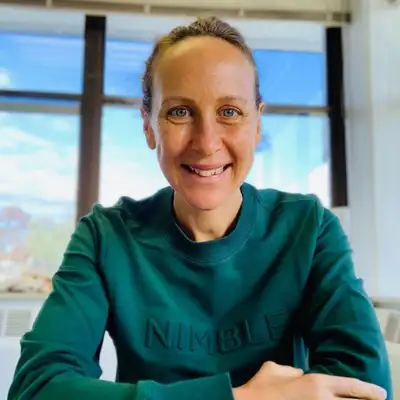
Play Your Way to Better Health and Fitness - with Darryl Edwards
00:00
Hey everybody, it's Mikki here. You're listening to Mikkipedia and this week on the podcast, I speak to Darryl Edwards, movement coach and founder of the Primal Play Method. And we chat about rethinking exercise through the lens of play, biology and human nature. In this conversation, we explore why so many adults lose their natural instinct to move and how modern structured exercise
00:30
may be missing something fundamental. Darryl shares how playful, varied movement aligns more closely with our evolutionary design and why this approach can support not just physical fitness, but brain function, resilience, and long-term health. We also discuss the psychology of movement, why enjoyment is often the key to consistency, and how play can shift our relationship with effort, discomfort, and motivation.
00:59
Along the way, we challenge reductionist thinking in health and fitness, highlighting the broader role movement plays beyond calories burned or steps counted. I loved this conversation with Daryl. It is a refreshing and thought provoking one. And it really does invite a return to movement as something instinctive, engaging and sustainable for life. And those of you listening out there who
01:25
feel inclined to move regardless, I still think you're going to get a lot of value in this conversation as we really do pull back the curtain on just the fundamental nature of movement for us as human beings. So this is for everyone. Now, Daryl Edwards has a master's degree. He is the top of the top in terms of his qualifications in the fitness space. He's a London based movement coach.
01:54
author, speaker, and founder of the Primal Play Method, an approach grounded in evolutionary biology, exercise physiology, cognitive neuroscience, and play psychology. With over 15 years of experience coaching and teaching movement, his work focuses on improving long-term adherence through practical, engaging, and sustainable activity rather than rigid exercise models. After nearly two decades in investment banking technology,
02:19
Darrell rebuilt his own health using a back-to-basics movement approach, which now underpins his work with individuals, clinicians, educators and organisations aiming to reduce sedentary behaviour and support both physical and mental wellbeing. He is a Fellow of the British Society of Lifestyle Medicine, a Chartered Fellow Physical Activity and Health Practitioner, a Diplomat Member of the Faculty of Sport and Exercise Medicine in the UK, and an ACSM Cancer Exercise Specialist.
02:47
In 2025, he received the US Play Coalition's Stephanie P. Gaste Distinguished Service Award for his contributions to promoting physical and social health through play. And in 2026, he is a keynote speaker at Playtopia, make way for play in Boston and a speaker at ESMO Breast Cancer Conference. His Ted Talk, Why Working Out Isn't Working Out,
03:14
Love that. Explores why traditional exercise often fails people and highlights the importance of enjoyable movement for long-term consistency. Now I have a link as to where you can find Darryl in the show notes and it was so great to chat to him. I came across his work when I, this was like over 10 years ago now with the Ancestral Health Society of New Zealand of which I was an exec and founding member of and we had the pleasure of being able to invite Darryl down to New Zealand
03:44
to share his method with us and with conference attendees and his sessions were always absolutely blocked out. People just loved them and I know you're gonna love this conversation. Before we crack on into it though, I would like to remind you that the best way to support this podcast is to hit the subscribe button on your favorite podcast listening platform. That increases the visibility of Micopedia and amongst literally thousands of other podcasts out there so more people get to hear from the guests that I have on the show.
04:14
like Daryl Eaglitz. Alright guys, enjoy this conversation.
04:23
Daryl, fabulous to have this opportunity to chat to you. And in fact, I was chatting to my good friend, Matt Stewart, a couple of weeks ago. He's osteo. He was also part of the Ancestral Health Society in New Zealand, which is how I came across your work. And we were just chatting about dynamic movement and movement patterns that might be super helpful as an athlete and to sort of rehab. And at the end of it,
04:52
He sent me an email and he's like, we forgot to talk about our mate Daryl, who his primal play method is just so helpful for people really getting to grips with how to move as a human in a way that really helps support function, mobility, because we were talking about it from that sort of function aspect. But of course, your primal play method does so much more than that. that like.
05:19
reminded me, because I had been meaning to, to reach out to chat to you. So thanks so much for taking the time today. Oh, you're welcome. Thanks very much for the invitation. yeah, it's wonderful to recollect my time in New Zealand during the ancestral health symposiums there. They were absolutely fantastic. And it's a shame they're no longer running. Yeah, but they were superb. Yeah. And I just remember your sessions were just sold out.
05:48
not that people had to pay in addition to them, but people could not get a place in them because they were just so popular. And with good reason as well. I think, and this is what I'm really excited to chat to you about today is the sort of the, I guess the primal play method philosophy, obviously, and then also the pillars behind them. um Darrell, can we just kick off? Because I'm sure I've heard of it before.
06:16
But I would love, like I can't recollect and I would love the listeners to know how you even developed the method to what it is today. So what really inspired you to sort of look at movement from that sort of play aspect? So I suppose it was, you know, falling in and out of love with exercise far too often. So I recognize that exercise was beneficial for my health. uh But I
06:46
realized I hated exercise more than I loved it. Um, but I loved movement. So the gym felt transactional, playful movement felt alive. It kind of resonated with me and structure training alone just didn't seem fulfilling enough. So that was the start of my journey looking into other aspects of movement that I feel could be far more.
07:16
fulfilling and engaging and enjoyable. And when I looked at my sort of history with movement, and I recall the times that movement had the most impact on my life, the first was childhood. So it was childhood play, being outside my friends, long summer days, you know, getting up to lots of mischief, playing all sorts of games, and many of those are universal, know, so game, chasing games, hiding seat games, climbing trees.
07:44
going on lengthy bike rides, lots of, you know, team sports that we would modify the rules to make them even more fun, you know, to, work in an environment that we were in. And so play was the, almost the epitome of my childhood, you know, active play, um, was epitome of my childhood. And when I tried to, to rediscover that as an adult, the closest I could, I could get to that was probably as a student.
08:13
going to bars and going to clubs and dancing all night. So this aspect of movement, which was really about joy, the essence of joy. And the Primal Play method came out of that. How could I recreate this aspect of my inner child that still responded to active play, but in adult form, satisfying and ticking all of the boxes in terms of what I wanted from fitness? oh
08:42
but in a way that made me want to sustain that practice and to do it again. So once I realised I could make that work for myself, then I wanted to understand why that was the case for one. And then secondly, I wanted to understand if I could systemise that and communicate that so that others could enjoy the private pay method as well. Yeah. That is, I think, your story of your relationship with exercise.
09:12
probably one that resonates with so many people, Daryl. Like how you describe your childhood is exactly what my childhood was like. Even though I, as I was younger, I actually was more of a bookworm than I was, you I'm a twin and for whatever reason we seem to take dual roles. Like I would do one thing, I would be the nerd and the academic and she would be the one out playing, but I still spent many hours out with my friends outside just moving.
09:42
And now of course I've developed a love for movement. And it was sort of engineered in my teenage years, I really, like how important do you think that the sort of the fundamental sort of our childhood years are at allowing us to explore play as a method of movement in a way that is legitimate? Do you know what I mean? Like, we need, do you think we need that background or do you think it's something that's sort of accessible to everyone?
10:13
Well, most of us, especially, you know, if you're a Gen Xer, which I am, know, childhood play, most of it was outdoors, free range, um know, different peer groups at different ages, sometimes intergenerational, know, sometimes, know, adults would be involved, but in the main was kids of a similar age.
10:42
playing games that were passed down from generation to generation. And it was unsupervised. It would tend to be not just that close to your home. So there would be some adventure, some free roaming. You'd be exploring the world around you. And so because of that universality of play, of childhood play, many of us can recapture that as adults if we choose to.
11:09
Unfortunately, many of us see play as something which is superfluous. It's relegated to when we have the time to do it. And I think when it comes to movement, we tend to focus on what we believe to be more serious pursuits of movement. So we turn to exercise, we turn to training, we turn to sets and reps and zone two training.
11:38
all of these technical terms, which are accessible for those who really geek out on exercise science and geek out on training, but not accessible to those who just wish their DNA to be satisfied with the benefits of physical activity and movement. So I feel because play is universal, because many of these games that I played as a child, even though we may not have a similar cultural background,
12:07
games of chase are played all over the world. You know, not just English speaking countries, you know, it's, it's, it's universal. It's, it's instinctive like dogs play chase, right? Like dogs chase after balls, right? Like dogs play fight. So, so we have these, these unique human abilities that are part of our physical development that we part of our social development that is part of childhood. And unfortunately,
12:36
society and culturally, as we get older, as we focus more on academia, as we focus more on what society expects of us, play is pushed to one side. And so we lose that playful spirit. And as adults, the only time we focus on play might be gambling, we play poker or we get drunk.
13:02
You know, we go away for weekend of debauchery and we see that as playful, but, um, but the, just the raw essence and the innocence of play, find that so difficult to access as adults. So that was my challenge, I suppose of one trying to validate the primary play method through science. So the, you know, the experience alone wasn't good enough for me. I'm like, I'm a geek. want to understand why active play.
13:29
for it throughout the lifespan is important, not just for children, but also for adults. I want to understand how humans evolved to move and what movement qualities should I be modeling in the 21st century? I want to understand how not only does movement prime us physically, but also emotionally, also cognitively, also in terms of our mental health and psychologically, I want to understand that science.
13:59
And I also want to understand how play psychology, you know, informs our options when it comes to choosing to move or not to move. so those are the, in essence, the four pillars of the primal play method, evolutionary biology, uh play psychology, cognitive neuroscience, and um exercise physiology. So the science of physical activity and exercise, the science of evolution in terms of
14:27
how humans evolved to move and the movement patterns that we're capable of doing even now in the 21st century, that hasn't changed. We just choose not to take part in those physical roles a lot of the time. Play psychology because sometimes physical activity or exercise can be a bitter medicine to swallow. it's like incredible benefits across the board, significant amount of research talking about the benefits. But we...
14:54
many of us don't want to do it. Even though we know how good it is, it's like, I still struggle. So that's why I use place psychology and then exercise, exercise physiology, science of exercise. It tells us how our cells are epigenetically adapt. There's an adaptation of occurs when we exercise as a physical stress that we learn to overcome and this and overcoming this physical stress and having this adaptation means it promotes
15:24
you know, an anti-inflammatory response, promotes, you know, disease reduction response. enables the body to be functionally stronger and to be more resilient. helps to improve our mood. It helps us to, you know, reduce levels of other stresses. So, yeah, this kind of like all singing, all dancing, you know, kind of pun intended, polypill for health, which is accessible to everyone.
15:53
But unfortunately, there are so many barriers to physical activity. This, I believe, is one solution to overcoming the main barrier to physical activity, which is the comfort of sedentary behavior. You know, the convenience that comes from, I can actually just let my device do this work for me. You know, I don't have to... the fun, the escapism. The escapism.
16:22
So digital technologies, you know, have had mean that we can socialize at a distance. You know, we, I don't have to, well, when I was young, if I want to go and see my, you know, see my friends, speak to my friends, yeah, I could pick up the phone, but it was far more fun for me to go to their home and knock the door and say, Hey, are you coming out to play? Yes. You know, um, so that would be the prime method of engagement. wouldn't be a telephone call to my friend who lived a few streets away. You know, it would be physical.
16:52
the physical work of walking to their home and then to chat. But the chatting was really about what are we going to do in terms of physical activity today? Who else are we going to invite? You know, the social aspect of movement, know, hoping the sun wouldn't go down so you could, you could stay out and play for longer. ah So, so, so yeah, so humans find it as adults find it very difficult to access the
17:20
their playful state um in its most innocent form, but the benefits are profound. And I feel that for those who find physical activity or exercise daunting or ature or painful, it's one way to access physical activity, but also for those who have no problem with the discipline that comes with having to exercise and to have a training regimen.
17:47
I find that if you're playing, you're more likely to be explorative and to be creative and to do things that you're less likely to do just through structure. So there's this element of creativity that comes from, hey, let me just try this new thing. Let me see what happens when I do this. I wonder what happens if I do that. You know, let me get out of my comfort zone.
18:15
So play allows the options for exploration that I find traditional structured exercise is less likely to offer. Yeah, no, I love that, Darryl. And I had a question about, you know, what the primal play method sort of aims to do. And you've literally just covered it in your sort of explanation there, which was awesome. What you mentioned, and I'm really interested in your understanding and in your learnings.
18:46
Why do adults lose their natural instinct to move and play? Is it just because it's conditioned out of us as we age that it's not an appropriate sort of thing to do? What are your thoughts on that? Yeah, think part of it is cultural. know, imagine very young children are encouraged, they have this instinctive drive to move, right? So they can't wait to...
19:14
to stand, to crawl, to walk, to explore, to run, you know, to climb over the, you know, the armchair, to, you know, to get into the playground. And then it comes a point in time where parents will stop encouraging their kids to move and they'll start saying, can you start moving less? You know, we've had enough, we've had enough of you like crawling now, you know, I've had enough of you doing the things that we couldn't wait.
19:44
take a video of your foot, your first walk or whatever it may be. It's like, can you just get into the high chair? Can you just stay seated? Can you now go to a place of learning where you are going to be seated all day? And so society conforms us into, you know, this sedentary state to progress through life. So we have this, the early years of where movement is probably the most important aspect of our
20:13
of our kind of pursuits, you know, as a youngster, it's like, Oh yeah, I just want to, I just want to explore the world around me, you know, by myself, then with others, I want people to have a look at me doing the physical thing. Hey mom, Hey dad, look at me doing the thing. And then it becomes, okay, whoa, whoa, whoa, whoa, slow things down, become sedentary. This is what everyone else does. This is what adults do. This is what you're going to be doing at schooling for the next, you know, 12, 13 years. And, you know, at least, um,
20:42
So I think that's what happens. And then the world around you is engineered for physical inactivity, right? We've got, you know, manual labor isn't what it was. You know, most of us have office-based jobs or we are working from home. You know, we're spending times, significant amount of times on using screens, right? So for education, for entertainment, for communication.
21:13
these really powerful devices that can do so much for us, but they keep us kind of cuddled in sedentary behavior again. So we know what the harmful impacts of sedentary behavior is on humans. um And our environment encourages that. And then on top of that, our DNA is constantly thinking about how wonderful convenience is.
21:39
So we're constantly being told, hey, take it easy. Hey, just sit down. Hey, relax. Hey, be entertained whilst being physically inactive. This feels wonderful. And it's like a slow boiling frog, right? You don't notice it in the moment. You notice it when it's too late, right? And so, yeah, I know I feel great when I...
22:04
home from work and I'm sitting in my armchair and it's like, oh, I can now finally relax. Even though I was sitting all day, even though I sat in my commute to work, even though I sat on the way back, I'm still longing for the armchair and um I'm sitting again. And then you start realizing, oh, there's some back pain. Oh, there's some other aches and pains. Oh my goodness. I'm, you know, my mental health may be impacted by this.
22:34
And so by the time you realize how harmful physical inactivity is and sedentary behavior is, then you may decide, okay, right now I need to get into shape, now I need to get into fitness. And then we choose something that may be an extreme that is not sustainable. So we choose something that we'll hope will have maximum impact.
22:57
We might do it for charity. We might do it because it's always been a, you know, on the bucket list, I need to run a marathon. That's what I'm going to do. That's what I'm going to decide to do. But again, only a few will continue on that path of physical activity and enlightenment. Most of us will stop and start. Most of us will not enjoy what we're doing. We do it because we feel we have to because of the health benefits. so I think
23:25
Unfortunately, as wonderful as exercise is, know, um most of the language around exercise, most of the, the aesthetics around exercise, most of what we see visibly about exercise, um, is really off putting to the majority of individuals. You know, many individuals don't feel they belong. You know, you see a 25 year old in incredible shape who's doing all these incredible physical feats of, of, of physical activity. And you're like, Oh, I can't do that.
23:55
I can't look like that. Maybe it's not for me. um And I think we need to have a much more open and inviting environment for people to feel it's okay, wherever they are on their journey, to join this ritual of physical activity, which is enjoyable, which is engaging, which is open. And the way I like in it is to is, well, there's two, there's probably two kind of metaphors I use, or, know, kind of
24:24
kind kind uh
24:54
because look over there. Can you see those dogs over there? Yes, I can see them. Can you see them jumping and playing and rolling around and having loads of fun? It's more fun. Me sitting here watching them. They're wanting to take part. Yeah. Right. So that's us watching sports, right? Watching ballet, watching dancers, watching the winter Olympics. Now we're, we're sedentary watching these incredible feats of physical, you know,
25:24
exertion and going, I can't do that. I don't want to do that, but it looks great. And isn't this wonderful? I can live vicariously through those individuals on the screen. So that's the first thing that I think about. The second parallel is, you know, um thinking about me as a human being and deciding, you know, I'm inspired by these individuals that I see.
25:52
in the sporting arena. um So much so that I will support the team. I will buy the shirt, the jersey, whatever. I will travel to support my team. I will spend money to watch them on screen. I may even decide to participate in that sport. You know, I love watching tennis. I'm going to take up tennis. But we don't continue on that pursuit. don't. I love.
26:21
our love for that physical activity becomes very insular and it becomes inactive again. So there's this inactive quality about the enjoyment of physical movement. yeah, so I suppose my point is that, you know, we have to re-engage with the part of ourselves that wants to do the thing. Doesn't just want to be idol spectators. And I suppose children, when I'm in my local park and I'm
26:51
playing around, I'm bear crawling, know, other adults would probably say I'm just messing around. Kids are always stopping their parents, pointing, looking, staring. They're wondering, you know, what this human being is doing, because I think it reminds them of what they want to be doing. And they can see that it's pleasurable. And I don't see kids doing that when they see people jogging.
27:21
You know, or somebody on a, or somebody on a bike, they're not like, Oh my gosh, look, look, there's somebody jogging. Isn't that amazing? But if I'm bear crawling, they're like, what, what is that man doing on the floor? Because, you know, my parents tell me to get off the floor all the time or whatever they're thinking. I have no idea what they're thinking, but the amount of content I have of kids just, just like stare, stopping and staring and just being mesmerized or wanting to copy.
27:47
that movement pattern, for me, it's just wonderful to experience. ah Oh, 100%, Daryl. And I thought of so many things as you were explaining that. And the first one is, I'm not sure what it's like in the UK, actually, but in New Zealand, it's uh changing a little bit now with some movement uh towards more, I want to say it's risky behavior. And the reason I say this is because over the years, I feel like
28:16
play as a child has actually been really restricted. It's not the way it was when we were kids. Our parents are no longer saying, come back before dinnertime, know, like just go out and they knew exactly where we were, they had an idea of who we were with and you could just ring uh one to three people, neighbors, and we would immediately be sort of tracked down. Whereas nowadays, and even in the playgrounds and the opportunity to sort of engage in play for children,
28:45
has been restricted because of safety. Now, I mentioned the risky playgrounds, and to be honest, I cannot recall what they are, but I do know a colleague of mine when I was at uh AUT University, he was exploring the idea of taking some of those guard rails off, and what does this do for a child's level? So I do wonder, and I'm hopeful that the tide
29:13
maybe shifting somewhat, but I know that there was a period of time where just this heightened anxiety that movement equals or that movement like on monkey bars or something like that uh equaled danger actually. Is that a similar case in the UK? And what do you, like, do you have thoughts on how that might affect our relationship with play as we grow older?
29:43
I mean, I think that's certainly all over the world. There were less and less opportunities for kids to have unsupervised free range play. So, and I think we're probably, you know, the second generation of sort of children who predominantly have had digital play experiences, have had play dates. m
30:12
where everything is supervised, we will take you to a location to play with a group of kids. We'll be there watching you and everything you're doing. There'll be adults making sure everything is safe and then we'll take you back home. And that was playtime. Whereas when I was a kid, play was largely unsupervised. Certainly if adults were around, they would say, there's no way you're going to be doing that. Right.
30:40
But we know that risky play has significant benefits for children. So everything from resolving conflict to building resilience, kids being better able to manage risk. So they're better able to manage risk by encountering risk, by being able to judge for themselves and risk assessing themselves. Is this a safe or unsafe behavior for me?
31:07
They look at their peers, they say, oh, when I'm 10 years old, I reckon I'll be able to do that too. Now I'm six, it's probably not for me right now. So they have the opportunity to have those experiences when they're not relying on adults to step in and to make those decisions for them. And so that research of comparing risky play to safe play leads to more bullying, leads to less social cohesion.
31:37
leads to kids, you know, fear being the kind of sort of predominant emotion around trying something new, right? So, we're aware of the harmful impacts of helicopter parenting and ensuring that, you know, health and safety is paramount to the detriment of our kids. And so, I think what's likely to happen, and again, it's evidenced, is that kids will either
32:06
seek out really harmful behaviors without almost not knowing what the risks are, because they've always been kind of cotton wooled. They've always been, everything's always been safe for them. So they haven't built any sort of internalized alarm bells around something which isn't safe. So they head straight on into the thing that isn't very, is harmful, right? That's, it's either that happens or, you know, and, you know, they're less likely to assess risk or they just don't develop.
32:36
in the skills that where the brains are developing at a faster rate than any other point in our development as humans. And we're taking in all of this information. If we don't have that opportunity at the age that we should to develop those skills, we may never develop those skills. So I think society has a lot to answer without apportioning blame. I think this is kind of a social experiment.
33:05
as to what happens when we have kids that are less active than ever before, we have kids that are more isolated than ever before, we have kids that have less autonomy than ever before, less independence than ever before, more screen time than ever before. We've got all of these than ever befores, more than ever befores in human history. And then we're wondering why our children are struggling in the way that they are.
33:35
on mass. you know, one interesting statistic, there's a couple of actually interesting ones in relation to kids is here in the UK, kids have less time outdoors than prison inmates. That's one. And that's pretty, that's pretty universal. So, so, um, in the U S there was a statistic, um, about two or three years ago that the average kid has between four to seven minutes.
34:03
of and supervised play per day. Right. So this is, don't know what my kid is doing. You know, they're just on their own outside doing their thing. They have 47 minutes of that. Another interesting statistic, which was looking at a family of four generations from 1928. So the great grandfather was eight years old to an eight year old in
34:32
in the 20, say 2018. And they basically went from great grandfather, grandfather, parents, you know, young kid, and the distance that the kid was able to travel from home and supervised. And in the 1920s, the great grandfather used to walk about 10 miles away from home, you know, was at 15, 16 kilometers to like
35:01
like a local lake and go fishing and like meet up with his friends and play around. And I think for the grandfather, it was like around six miles on average. then parents, was, you know, a couple of miles. And then I think it was, it ended up being about, I think it was 300 meters for the generation above. And then it was like 30 meters for the youngest kid. And that literally was his garden, you know, front garden, back garden and the street.
35:31
And that was it. And so this sort of like the neighborhood, the kind of landscape of play and the freedoms have been shrunk to the point where, you know, that feeling of freedom that you have as a kid and that feeling of like, oh my gosh, the world is just so vast and it's just, there's just so much that I want from this, my life because of what I can experience out there has been shut down.
35:59
And we just see on the screen. yeah, so unfortunately there are pretty significant statistics around what happens to kids who are only really stimulated by technology, not the real world. What happens to kids that have a significant play deprivation in their lives, not just physical activity, but play of all types. And now those kids have become adults. So it's...
36:26
We are seeing now what happens when those kids are becoming adults and how maladjusted they are in relation to their health and wellbeing as a consequence of that. Daryl, and you mentioned that we all know sedentary behaviour is bad for us. I might have paraphrased that, but I don't think we do. I mean, we do, and the people that we engage with do.
36:53
But I do think that, even people who are um in the health space, but maybe in the nutrition space or in a different camp, a lot of the focus and attention goes on, in that example, a lot of focus and attention goes on the importance of, I don't know, anything to do with diet and very reductionist, but the one best way to do it, and this is the thing that's going to help cardiovascular disease, type 2 diabetes.
37:23
And I wonder, I think to myself like, gosh, what about movement? Movement is medicine. Like outside of all of the diet stuff, just changes. And I know that, and you mentioned it, that one of the pillars of the primal plane method is that exercise physiology and how play uh fundamentally changes our mitochondria and enables better physiology, if you like. And I wonder.
37:53
Yeah, and I'm just, I don't know, I'm curious as to your thoughts on, I suppose, you know, even as health professionals, sometimes we don't even consider movement and play and things. Oh, I mean, for sure. I think it's almost like the Cinderella of wellbeing.
38:17
That's what I like to turn, you know, it's just like just underappreciated. You know, it kind of does a lot of the heavy lifting again, panning, tending, but it's underappreciated. Does all of the work and appreciate. So we know that exercise from everything from, know, improving insulin sensitivity, reducing the risk of insulin resistance, reducing the risk of type two diabetes, reducing the risk of cardiovascular events and cardiovascular disease exercises all over that. Just exercise independently.
38:46
of diet, any other lifestyle intervention, exercise does wonders in relation to those kind of cardio metabolic conditions alone. Significant reduction in prevention of cancer risk. It can have therapeutic benefits when it comes to cancer as well. Lots of evidence supporting that. I think what's really interesting for me, even on my journey through
39:11
becoming a fan of exercise and a fan of movement, then developing the system of movement and then wanting to further understand the importance of exercise at the lowest level possible. Now that I understand that movement is like a nutrient for the body, it impacts us steadily. It can do many of the things that other interventions are touted for.
39:41
So for instance, it can impact the gut microbiome positively. So independent of diet, right? You could have two individuals, one who, know, both diets are identical. They have a healthy microbiome based on the diet that they eat. And then you have a second individual who, as well as that, exercises and they have a higher VO2 max. So that's their, you know, higher kind of aerobic level of fitness than the other individual.
40:10
They're more likely to have a greater diversity of the gut microbiome, healthier, promoting bacteria. They're likely to have a greater volume of that health promoting bacteria, just based on that increase of uh in aerobic capacity alone. And so I try to choose like, I suppose, a property of exercise that is least well known, because you would automatically assume gut microbiome, okay, so obviously what we eat.
40:39
Right? But exercise can help there. Anti-inflammatory benefits. So exercise has an anti-inflammatory benefit based on it causing short-term inflammation. the short-term response of exercise, muscles burning, know, muscles tearing, you know, the heart and lungs adapting to physical activity leads to a uh chronic
41:06
dampening down of inflammation. So all the markers that somebody may look at like C-reactive protein, like ESR, many of our, know, homocysteine, many of our markers of inflammation, exercise helps to reduce those levels chronically, you know, so long-term benefits of that. So there's an anti-inflammatory response. We have a blood sugar lowering response. You eat a meal, you go for a walk, you have lower blood sugar levels than if you just sat down after the meal, right?
41:35
It does the same for lipids too. So if you have a meal, you go for a walk, you have lower triglycerides than the person who just sits still after the meal. So all the things that we're concerned about, that we have a go to for, we go to other health and wellbeing interventions where exercise is overlooked. And rather than me pitting it against other interventions, there's just a symbiosis. It's like,
42:04
Yes, do those other things because they're all important. But imagine if you added this additional layer of movement to support what you're trying to achieve rather than going, you know, get your sleep right first, then exercise, get your diet right first. Then you can think about exercise, you know, and it's like, no, no, no, maybe try and change all of these things at a micro level, you know, make small improvements across the board.
42:30
because you're more likely to get holistic benefits by doing that rather than going, no, no, no, there's only one thing that matters. You know, it'd be like me saying, Hey guys, don't worry about anything else. Just exercise your way out of any ailments, eat whatever you want, sleep for two hours a night. Doesn't matter. Cause as long as you exercise, exercise is going to overcome all of those maladies. Like, no, no, it's not. Um, but the good thing is, and I think it's really important for us to note pretty much
42:59
everything my body does physically, mentally, psychologically, emotionally is linked to movement. So the feel-good hormones, you know, are linked to movement. My serotonin, my dopamine, my oxytocin, like, you know, all linked, all linked to movement. So it's useful for mood, reduces the risk of anxiety and depression.
43:27
It reduces the risk of cognitive decline as you age. It improves with work performance, improves academic performance. It reduces the risk of Alzheimer's and dementia. It reduces the risk of Parkinson's and multiple sclerosis and other conditions that we feel as if, my goodness, there's nothing we can do. So I suppose, I'm not saying it's a cure all, but certainly whatever you're dealing with, whatever you're dealing with, whatever stage you are at dealing with it, physical activity,
43:55
will provide some benefit. And the dose of physical activity may need to be adjusted to suit the individual, right? um But having a personalized prescription, which I think is the future of exercise medicine, it's finding this kind of physical activity prescription, movement prescription, tailored to the individual to help assist that individual with whatever they need.
44:25
from a physical activity intervention, if that makes sense. So if you're with obesity, okay, this is the best way to program your movement to help, right? Okay, you're dealing with um a cardiovascular disease. Okay, right, you've just had a heart attack. Right, well, you're not gonna go out for uh a 5K run tomorrow, but we can get you to do something to have some rehabilitation. We can do something else in week one, you're gonna build on it in week two, six minutes down the line.
44:55
you're now going to do this. Why am I doing this? Because we want you to help to recover from the heart attack for one. And we want to help you reduce the likelihood of you getting a heart attack in future. So we can adapt and move and modulate our prescription through exercise depending on where you are in your, in your health journey. So yeah, I hope I've defended.
45:19
You did a fantastic job. 100%. And I also think, Daryl, I agree with you, having those micro goals within these different areas and maybe tackling more than once, more than one at a time can be helpful. With exercise, and this is my personal experience, I see it a lot in clients. And I work in nutrition, but I do see this a lot in my clients is that exercise builds the confidence.
45:47
and it's like an anchor behavior to a lot of these other health changes people are trying to make. when they can make small, when they have small successes and they have these small wins in exercise, they build that confidence that then sort of makes them think, well gosh, if I can do this, maybe I can, ridiculously, I can meal prep, know, or I can choose different foods to eat or something like that. So I think there's just something quite special about exercise and movement.
46:16
And maybe it is because it is in our DNA. like you, you, one of the pillars of the primal play method is evolutionary biology. You mentioned that. Um, and humans are designed to move. And I wonder whether it's that reconnection with, um, with doing something we were meant to do that sort of builds, I don't know, just seems to have a much more potent effect than changing diet. I'm not sure. Yeah. I mean, you know, the way I liken it is to
46:46
Yeah, food is really important, but how did we used to be able to obtain our food? We had to move. So, so in some respects, if I was thinking about this purely from a sort of a, I suppose, a, a sequential process and prioritizing on that basis, um, I would not have been able, you know, 10,000 years ago, if I just decided to sit in my cave and do nothing,
47:15
the likelihood is there's going to be starvation in my midst, right? Because unless your friend's going to get the food, all your food for you, that's it. No food, Daryl, right? So you're to have to get up off your backside and hunt, gather, cultivate, whatever, you know, gap, you know, to get your food. So, so, and the physical labor and the figure, you know, the kind of physical
47:43
arduous task of getting food, which wasn't a guarantee. So you might have an unsuccessful hunt. Imagine the first people who started to plant crops, you thinking about agriculture is like, oh, let's just try this seed. Oh no, it didn't work. We waited nine months for the harvest. We did all this work and nothing has come out of it. So imagine the experimentation, the different tools you'd have to make. Oh no, that poison dart didn't work. We're to have to try again. You know, imagine how many
48:11
trial and errors humans had to go through and the physical efforts to be able to go, oh my gosh, now we can have something for dinner. know what? So I think movement, because of that movement was prioritized, communication skills were prioritized. We had to learn to think better, to create solutions, to be able to tackle animals that were bigger, stronger than we were.
48:41
consider that we could also be predated. You know, we, they could attack us too. So how we need to make sure that we can, you know, we can't outrun the lion. How the hell are we going to survive? Cause we're trying to get the same sort of food sources, right? You know, so imagine the amount of the amount of brain power, cognitive efforts involved, the physical effort involved. So I think there was a priority on those aspects of our, of our traits, you know, and then food was the fuel to be able to sustain
49:11
our ability to move. And that's why I think it's symbiotic. And that's why I also feel it's a priority in my opinion, because now we can choose food first. We can pick optimal food delivery services at a click of a mouse. Oh my gosh, I know what my macros are. Here you go. I know how many calories I need. Oh my goodness. Wow, wow, wow, wow. It's all done for me. All I have to do is chew. And for some people they're like, I don't want to chew. Give me a liquid form. Just blend it down or drop.
49:41
or dehydrate it so can add some water to it. You know, so, so it can become almost so effortless that I think we lose part of the benefits I feel. Do you know what mean? And it's a bit like when you cook, you know, when you prepare your own food and sometimes I need to do that more often, you know, must confess, but when I do, it's so rewarding. The food tastes better.
50:08
You know, like not, not because you it's to your liking, but just the fact you've put that extra bit of effort into it. And so I feel that, um, that's similar to movement. You know, if you, if you're planting your crops and you've done all of the work all year long and you've had a nice harvest that whatever you planted, that's going to taste better. And not because it's probably more organic or, know, it's you, you spent more time caring for that plant.
50:37
it's because of the physical effort put in and there's more gratitude as a consequence, I suppose, you know, and, and so I feel it's the same way with physical activity. When you, when you kind of realize the gains of your health improvements because of physical activity and you realize there's a direct input, you Oh my gosh, I've done this work and, and look what's happening. And so I want to support what I'm doing there physically with all the other pillars of health.
51:06
Right. So I recognize if I don't get an adequate sleep, I'm not going to be as productive the following day. No, if I don't eat sufficient calories to be able to sustain the activity, if I'm not having sufficient protein to build the muscle, if I'm not, you know, you know, if I'm not having, you know, healthy fats to, you know, have an anti-inflammatory, you know, respond, et cetera, et cetera, et cetera. All the things that we know that are, that are, that are good for us from, and from a nutritional point of view.
51:36
If we start thinking more holistically, I think we're more likely to stack those behaviors onto each other. So I think for most people, if they join a gym, say, they're probably more likely to go, okay, I also need to consider my food and what supplements I may have to take. And, you know, I'm probably going to go to bed a bit earlier now because I have to go to gym before I start work. And, and I think if you plan that way, rather than going, and let me just get one thing done perfectly.
52:05
I think that's less likely to be sustainable long term. Yeah. Yeah. Yeah. No, I 100 % agree. Daryl, and of course, the primal play method is, is, you know, a subset of activity, obvious, is how I'm just sort of thinking it's a way for someone to be active and, and to get all of these benefits that we've just described, and you've just described so brilliantly. Is there objection from people who maybe haven't yet?
52:34
developed the habit of just movement in the traditional, well, in the conventional way, I'll say conventional. And I think about how you mentioned that people sit all day long and then they start getting sore. And in my um experience or observations of people in that situation, they're almost afraid to move because they're like, well, if I'm already sore and doing nothing, then if I'm getting down into some sort of dead bug, the way that Darryl wants me to do, or like...
53:02
isn't this just going to exacerbate my pain? like how do you overcome those objections? Cause a lot of them I feel are, they're they're fear-based. So it is a little bit of a psychological sort of barrier as much as maybe physical. I don't know. you've Yeah, that's a really good point. I mean, lots of people are dealing with pain, With physical pain, with psychological pain. And so you're just telling somebody, hey, if you do this,
53:32
you know, that's going to help. Well, actually, no, you don't understand what I'm going through. You don't understand what this feels like. So I tend to, as a, as a movement coach, I tend to provide some education around, okay, so you're, you're, you're having this pain in your joints. That's just say my knee joints are painful, you know, and it happened a long time ago. It's not like it happened a couple of days ago and it's like, well, you need to rest. Okay. You need to get some imaging done. You need to make sure there's nothing seriously wrong there, you know,
54:00
Okay, this is a long, long term injury. I don't move very much. And every time I go up the stairs, there's pain, you know, so that's why I don't exercise. Say, so it's like, well, hey, this is what happens when you move. So when you move, you're going to release some synovial fluid at the joint. What was that? It helps to lubricate the joints. Oh, okay. So that clickiness you have, that kind of irritation you have less likely to have it if you move. Tick. Okay. What else, how else will movement help? Well,
54:30
You you release things like endorphins and endorphins are like a pain reliever, like an analgesic. Like really? Yes. So it helps to alleviate pain and discomfort, not just physical, but also mental. So if you have this, like some psychological burdens and you do this thing, you're less likely to be thinking about those because of endorphins. Oh, wow. so I try and, and utilize the exercise science to say, here are some reasons to justify why.
55:00
movement will help. you avoiding discomfort is not making you feel more comfortable. Right? So maybe you need to embrace discomfort a bit and see if you, if that will be, that will help you. And I think once people get that sort of equation right, when they realize it's okay to be uncomfortable, because I know if I continue to do this, things will get better.
55:29
and I'm less likely to need the pain relief and I'm more likely to be able to sustain physical activity. And so, you know, for people who have some of the most painful conditions, like say osteoarthritis, you know, bone on bone, if I sit down, I'm in pain, if I stand, I'm in pain, if I walk, I'm in pain. Those individuals who exercise actually have less pain, less pain perception.
55:55
you know, um, not just whilst they're doing the activity, but also when they're resting from the activity. So fortunately, there's a lot of science supporting, uh, my, my sort of encouragement to those dealing with pain. It's like, it's not just my opinion, you know, this is, these are the mechanisms as to why this works, but there's a significant amount of evidence supporting this. I know it feels contrary and I know it feels counterproductive, but actually
56:22
you're more likely to receive benefit by doing this. And it's something that you, you're an active participant in. You know, imagine you do this thing, your body rewards you by giving you endorphins, you know, which leads to less pain perception. So imagine you don't have to take, you don't have to take this thing orally. You don't have to inject yourself with this thing. Your body releases these hormones to help you. Because your body, from an evolutionary point of view, again, think about that hunter.
56:52
or the gatherer, they're out all day trying to get food. You know, they're like, why am I doing this? You know what, this is so difficult. So then they have the endorphins, right? They have the success of like the dopamine hit. go, there was all that risk, all that effort. There's a reward. The reward is food. Yeah. Right. They get the endorphin rush, which is like, oh my gosh, that was so painful, so difficult, but I've forgotten about it now. I'm okay. Then they go back, they eat their food, they wake up in the morning.
57:22
And their body goes, wow, the sun's out, know, serotonin. Hey, I feel happy. Let's go and do the same thing again. So, so we have this evolutionary mechanism of what happens when we're physically active. It's uncomfortable. You get this reward, you get this pain release, you forget about how uncomfortable it was once you stop. And then you get this driver to do it again. And hopefully that can become sustainable for you. So, so that's why I lean into evolutionary.
57:52
know, biology to feel confident about why these steps and these sequences are important and why they're linked to the feel-good hormones and why we don't have to be thinking about our ancestors. We can actually access that now in the present moment. Yeah, I love that, Daryl, and I know another pillar. And maybe this is the fourth one, if we're up to four, of the neuroscience and the
58:21
brain cognition and we had a lot of our conversation was around sort of children and how the environment has changed for them over the years. But of course, we're not in our twilight years, but I believe, but this is coming and a lot of the benefits of movement is around the cognitive benefits and you mentioned the release of hormones that occur through movement. And I also think with the primal play method,
58:50
is that because it forces your brain to, you're forcing your body, not forcing, but you're getting your body to move and to adopt or to try movement patterns that are unfamiliar. We know from a scientific perspective, this is so helpful for cognition and brain function as we age. People are sitting there doing Wordle and Sudoku and things like this thinking, I'm helping my brain. And it just doesn't do anything to the same extent.
59:18
that movement does in particularly something like the primal play method I imagine. Yes, yeah, for sure. So, you know, we know that movement increases blood flow to the brain, right? So there's this like cerebral benefit of increased oxygen to the brain, to the hippocampus. It helps with brain volume, it helps with hippocampal volume, it helps us with, you know, working memory and long-term memory. It helps with cognitive function in the present. So it helps with sort of cognitive
59:47
performance, our ability to do tasks in the now. There's an up regulation of BDNF, brain derived neurotropic factor, which is termed by, I can't remember his name now, it's lost me, but he wrote John Rady. So John Rady wrote a book called Spark, and he used a term that many people use now, BDNF being like fertilizer for the brain. And so it helps to create new
01:00:17
brain cells. And so we have this ability to improve the function of the brain. We have the ability to increase the number of brain cells. We have the ability to improve neuroplasticity and synaptic plasticity. So that's the ability for the brain to kind of adapt to different challenges. And it also improves executive function. So our ability just for our brain
01:00:45
operate in the prefrontal cortex, which is makes modern humans human. It improves all of these uh options for the opportunities for the brain to do what it does well. That's why it reduces dementia risk and cognitive decline, reduces the risk of dementia because of that point. I think, as you mentioned, things like crossroad puzzles on Sudoku or learning a new language or learning to play an instrument, they all have benefits cognitively.
01:01:16
most of the studies report that they tend to help maintain cognitive function. So they slow down the decline of cognitive function as we age. But movement has the option to actually improve cognitive function. And especially when movement is improvised and doing again, doing something different, a new movement pattern.
01:01:43
a new sequence of movements, a new coordination pattern when the brain is struggling and, and, you know, motor, the motor cortex is going, what the heck are you asking me to do? So, so, so again, it's the wonderful aspect of modern technology is that we have the option to have functional MRI scans. can see what happens to the brain when we move. And there's one really good study in children of students studying, you know, like
01:02:12
hardcore studying at their desk, right, preparing for an exam. And then they have the same students who are studying, but they're going for a walk. And most people instinctively would say, intuitively would say the students who are at the desk focused on their papers are going to do better than those who go for a walk. But actually it's the other way around. And one of the reasons is when you go for a walk, the whole brain lights up.
01:02:40
So the whole brain becomes more receptive to the learning experience. And that's why some schools have play breaks. They have movement breaks in their 45-minute period of academic tuition. They will have intermittent breaks of movement because they recognize that those kids who are active frequently are more likely to retain information. They're more likely to... um
01:03:09
perform better in classrooms, they're less likely to have stress-related absences, etc. There's an overwhelming amount of uh research and evidence supporting the benefits of movement on cognitive function throughout the lifespan. So not just for children, not just for adults in terms of work-related performance and creativity, but also for older adults who unfortunately can become concerned about
01:03:39
Alzheimer's and dementia risk, and just losing the ability to dual task. And there's one really interesting aspect of the early signs of cognitive decline. And one of the tests is if you're going for a walk with someone and the person next to you will stop when they want to continue the conversation, they will stop and turn their head and...
01:04:07
and continue the conversation. And once they've finished speaking, they continue to walk. And it's because the brain starts to struggle dual tasking. So dual tasking is a cognitive task and a motor task at the same time. So walking would be a motor task, talking would be a cognitive task. And so the body, the brain just doesn't have the processing power to continue to do both. And so that's one of the earliest signs of early onset dementia.
01:04:36
And so even in the prime play method, I incorporate lots of dual tasking activities. So coordination tasks with, you know, mental calculation, you know, counting backwards, you know, like for instance, uh as one way of performing a movement pattern and to make it more confusing, but it helps the brain become more resilient at dual tasking. so yeah, there's a
01:05:04
Again, we could deep dive for forever and a day on this, but once we realize how powerful this medicine is, this movement medicine is, once we realize there's pretty much nowhere in our bodies or our minds that are not touched by physical activity and that sedentary behavior and physical activity undoes. So that's downside of sedentary behavior, unfortunately, is it will
01:05:34
and do what movement does. So for example, if you're sedentary, then your blood sugars are likely to increase just because of that. You know, your heart will become weaker just because you're sedentary, right? So you're more likely to have a heart attack. Your brain will atrophy. Your brain will become, will shrink just because you're sedentary. So the more that we can do to interrupt sedentary behavior, and that's one of the reasons why I think movement breaks, play breaks, movement snacks.
01:06:04
these kind of short bursts of movement that you keep doing throughout the day. A bit like, again, like our childhood, you'd have these brief spurts of like, hey, let's do this. Oh, no, no, no, let's do that. Let's play, change the rules. Let's go over there and let's do something different on board. Okay, let's do this. Let's try that. There's this constant like, let's just change things around to keep the stimulus going. Right. I think adults need to, need to...
01:06:33
We need to recapture some of that too. Yeah, no, I love it, Daryl. And we've spoken for over an hour and I'm mindful of your time, but I'm also mindful that we've had like, I've really enjoyed this conversation. We haven't even told people what the primal play method actually is. So can we finish up by you just describing it how do people access it? Because I came across it at a conference. Not everyone goes to conferences, I am, but so can you just sort of give us the brief?
01:07:02
Yeah, so yeah, we'll get there in the end. Yeah. So what is this primary method you're talking about? So I would say the primary method is a way of recapturing the joy of movement that we experienced. We all experience as children. um It's a combination of, you know, balance and coordination and agility and strength and endurance and moving in three dimensions and
01:07:31
using all of your limbs. know, crawling is just as important as walking. For example, it's having playing games which are, you know, either solo based games where you're constantly trying to challenge yourself in ways that are really enjoyable and engaging. They could be partner based games, they could be group based games. So that's the philosophy of the Primal Play method.
01:07:58
um This primal, natural, multi-directional movement done with curiosity and challenge. There's crawling, there's climbing, you're carrying, you're jumping, you're balancing. And it's just how humans move, even if fitness didn't exist. So imagine a world where fitness didn't exist, where exercise didn't exist, we would still move this way. So that's probably the one way to...
01:08:27
look about it. I think when you realize stillness is not the reward in life. So you go to school, you're still. You go to the theater, still, restaurant, still, being entertained, still, there's stillness everywhere. Movement should be our real reward and stillness should be an exception. And so once you flip that around,
01:08:54
and you use stillness for what it's meant for, which is restoration. It's for rest. It's for, you know, I need some downtime. Rather than that being the majority of my time, that's when I feel the balance shifts in our favor. So, yeah, and I suppose the last point is in relation to the Primal Play method. For those who are kind of like, how can that benefit me? Because I'm exercising all the time. having, you know, and I have fun doing it.
01:09:24
I don't have any issues with exercise. What I would say is play allows you to do things which may not even look efficient. They may not look aesthetically pleasing. It may be very inefficient. It may look really counterproductive. It may not seem as if it's going to be great for us aesthetically, say, but it gives us greater autonomy. It gives us greater joy.
01:09:50
It gives us skills which are outside of the skills of exercise. Traditional exercise is very good at giving us metrics, but play, an active play, can give us far more meaning and fulfillment. So that's the essence of the Primal Play method. Yeah, no, I love it, Daryl. And how do people access it? Where do they find it? And also, in addition to that, are you at any conferences in 2026 where people may come across it?
01:10:21
Yes, so the best place is my website primalplay.com. So I have three ebooks. I have lots of information and videos on how you can follow your playful path, how you can make active play something more accessible. You can find opportunities for playful movement. I have a book for adults called Animal Moves, which has a 12-week program.
01:10:48
which takes you through a lot of activities that you can do by yourself, you know, also with your family or friends. um And I have a children's picture book now called My First Animal Moves. So you can introduce your kids to ideas to get them off their tablets and off their screens and encourage them to be more, uh you know, have a more healthier, long-term, lifelong relationship with exercise. In terms of conferences, I've oh
01:11:17
I've actually got quite a few conferences that I'm Probably too many to list. So I've now, you know, I suppose I've, I don't want say I've moved out of the primal kind of paleo space and setter space, but I now do a lot of conferences that are for clinicians. So I'm fortunate now to be speaking to doctors and other healthcare professionals about how they can, they can write playful exercise prescriptions for their patients, for their clients.
01:11:44
So those are some conferences that I attend, some of them very specific disease specific, such as cancer or obesity. So I'm some of the sort of biggest conferences in the world, speaking to obesity medicine doctors or to oncologists about utilizing movement and physical activity. But I'm also attending conferences that have a play focus, like a really serious play focus.
01:12:13
Um, so there's us play coalition in, in, the U S um, and there's another conference I'll be attending called Playtopia, which I just love that name. Um, and that's, that's, utilizing play for, um, you know, actually they are early childhood education leaders and teachers, but they recognize that they don't play enough themselves. So I'm actually going to be at this conference teaching them how to play again, which is like,
01:12:43
you kind of go, how can that be? How can a nursery school teacher not know how to play? But they're so busy, you know, focusing on play for children that they forget how beneficial it is for them. So those are just a, you know, a couple of the conferences that I'm going to be involved in this year. And probably one more, which is, this is really one that I'm really passionate about is I'm honored to be asked to speak at the European society of medical oncology in Berlin in May.
01:13:13
talking about breast cancer and how exercise can be used for breast cancer as part of treatment, as part of therapy. But I'm going to be focusing not just on exercise, but on playful movements that somebody going through cancer would actually wouldn't mind doing. You know what mean? Like, you know, when they're going through something really, you know, awful treatments, very traumatic treatments in therapy. And it's like the last thing they want to do is to
01:13:41
to be thinking about physical activity, I'll be talking about some strategies where here's some ways you can get meaningful movement into your life, but have fun doing it and want to continue this practice of movement. That's wonderful, Daryl. And I know that you've been, you know, it's a real personal, it must be a real personal opportunity for you given, you know, I've heard you talk about your
01:14:09
sister before I believe. that's right. Yes, my sister. Unfortunately, my mother and father too, since my time speaking about them. yeah, cancer touches many people's lives, unfortunately. um And so I'm doing what I can to talk about movement in an evidence-based way, because there's a lot of misinformation around cancer. So I feel that I've got a lot of responsibility to
01:14:38
to help those who may not have any awareness of the options available to them and the power of movement, um even dealing with something as awful as cancer. So thanks very much for the opportunity to kind of speak about that. And yeah, I'll continue to do what I can in relation to that. I love it, Daryl. And I've really enjoyed this conversation. It was well worth getting up early on a Saturday morning for. So thank you so much for your time. you.
01:15:07
all of the links in the show notes and I hope that our paths cross at some point at another conference Darryl so I get to experience the Primal Play method as well. I hope so too. so Keep me posted if there's anything in New Zealand that I need to see. I need to head towards. Take care Darryl, thank you. Take care. Thank you Miki, take care. Bye bye.
01:15:44
Alrighty, hopefully you enjoyed that and I highly, highly recommend going out and checking out Darryl's website, particularly of course his TED Talk and the resources that are available. And if you ever get the opportunity to see Darryl or hear him speak in person, highly recommend it. He is amazing. Next week on the podcast guys, I chat to an old colleague of mine now based in Bond University, Associate Professor Justin Keough about
01:16:13
strength training and older age, way more in-depth conversation than just protects your bones. Until then though, you can catch me over on Instagram, threads and X @mikkiwilliden, Facebook @mikkiwillidenNutrition, or head to my website, @mikkiwilliden.com, scroll down to the bottom, pop your name in that box that then gets you on my weekly email list where I share a lot of my opinions, thoughts, experiences.
01:16:42
practical tools to help you in everyday life. Alright guys, you have the best week. See you later.