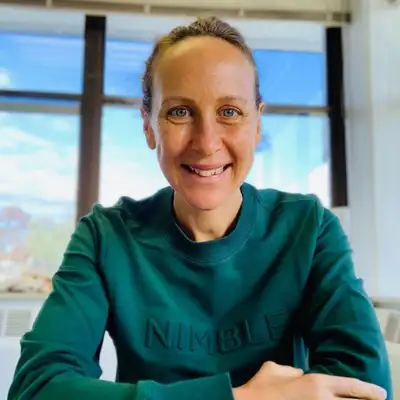
Justin Keogh- Strength Training: The Missing Key to Healthy Aging
00:00
you
00:03
Hey everyone, it's Mikki here. You're listening to Mikkipedia. This week on the podcast, I speak to Dr. Justin Keough. He's an exercise scientist and behavioral researcher, and we discuss the often underappreciated role of resistance training in healthy aging, disease prevention, and long-term independence. So in this conversation, we explore why strength may be far more than a physical attribute.
00:31
touching on its role in brain health, cardiovascular function, and overall quality of life. Justin also unpacks the evidence around resistance training and cognitive outcomes, challenges common assumptions about exercise in older adults, and discusses whether we've been too conservative in how we prescribe strength training across a lifespan. We also dive into the practical side of programming.
00:55
what actually works, what's often done poorly, and how to strike the balance between safety and meaningful stimulus, even in the later decades. Along the way, we explore psychological and behavioral shifts that occur when people regain strength, and why this may be one of the most powerful tools we have for supporting both physical and mental resiliency as we age. So I think you guys are going to love this wide-ranging evidence-informed discussion that reframes strength training not just as exercise, but as a cornerstone of lifelong health.
01:25
Dr. Justin Keough is an exercise scientist and behavioural researcher with a strong focus on translating evidence into practical strategies that improve health, function and performance. His work centres on the role of exercise, particularly resistance training, in mitigating treatment-related effects in cancer survivors, addressing psychopenia in older adults, and enhancing athletic performance across a range of populations. His sport science research spans rugby union, powerlifting, sprinting,
01:54
golf and strongman, with more recent work extending into Australian rules football and swimming. He has also developed a growing research interest in female athletes, particularly how strength and conditioning alongside movement competency can reduce the elevated risk of lower limb injury. Dr. Keogh's research is specifically relevant to aging populations, which is who we talk about today, and those affected by cancer, where he investigates how combined exercise and nutritional interventions
02:24
can improve body composition, physical function, quality of life, and potentially influence disease progression. Justin is a Fellow of the Society of Biomechanics and Sport in the Australian Association of Gerontology. He also contributes to the field through service roles on Exercise and Sports Science Australia's Sports Science Advisory Group.
02:45
the Australian Strength and Conditioning Association Conference Committee and the Psychopenia Diagnosis Taskforce Committee for the Australian and New Zealand Society of Psychopenia and Fragility Research. And fun fact, Justin and I worked together at AUT as lecturers way back, like almost 15 years ago. So it was really great to catch up with Justin on this podcast. Now I have put links as to where you can find his Bond University bio, but also
03:14
his podcast Stronger Through the Ages, which is a fantastic resource and I highly recommend it. If aging, resistance training, and independence, function, anything related in that field is of interest to you, you're gonna love his podcast. Before we crack onto this podcast though, I would like to remind you the best way to support Micopedia is to hit the subscribe button on your favorite podcast listening platform and leave a five star review.
03:42
That's what we're in the market for these days. That'll increase the visibility of Micopedia and amongst literally thousands of other podcasts out there. So more people get to hear from experts I have on the show like Dr. Justin Kehoe. All right guys, enjoy this conversation.
04:04
Yeah, it sort of feels like it's not that much different down here now. Like summers are starting to get to the point, I'm not sure if we're getting older and not tolerating it as well. But yeah, so many people just struggle to get outside in summer. Yeah. Well, that's interesting you say, you know, getting older, maybe you're not tolerating it so well. So I have to hit record, Dustin, and we're just going to kick right into.
04:30
what we're chatting about today. And I, yeah, it's a great way to do it. Just like a conversation. But things do change as we get old, right? And I do feel like some people feel that's this inevitable decline of strength, of um cognitive ability, of independence, that this is what they've got to look forward to. However, I know that you research in this space and you work with a lot of people.
04:58
who also work with people in the space and collectively, I feel like your message is different and there's a lot more control than what we potentially think we would otherwise have. Would that be right? For sure. It's a complex, I suppose, aging and like I'm, I think by the time this goes down, might've just about hit 52. It's a complex biological, sociological sort of process.
05:28
Most physical capacities um are probably like what we describe as an inverted year relationship. We start off as a child, a baby that's basically fully dependent. We can't do anything really on our own except cry and excrete um food products. um And as we get into childhood and adolescence and early adulthood, most of our capacities increase. How long those capacities can sort of stay close to that sort of um peak.
05:57
depends on a host of factors. Again, genetics obviously plays some sort of part. Our behaviors that we choose to do or our environment sort of forces us to do makes a lot of those impacts as well. So again, what is our physical activity, our dietary patterns, things that we do for mental health, what is the physical and social environments in which we live. So again, I suppose historically,
06:26
If people have lived um mining coal, um that's a terrible sort of environment for health. And even looking at some of the epidemiology evidence, like my dad um passed away many years ago, but he was a Vietnam vet. And again, you look at the epidemiology and the rate of a whole range of chronic diseases, um both sort of physical disease and also mental health, uh
06:55
like post-traumatic stress disorder and things associated with that are that much more prevalent in those sort of individuals. And again, is it exposure to Agent Orange or um some of the psychological stresses, et cetera? Not really sure. So um all of those things obviously impact um how we age. But yeah, at an individual level, we can make um choices. Not all those choices are necessarily easy to...
07:24
adhere to and that's um behavior change science and obviously nutrition and exercise being some of those behaviors. ah Some can be sort of financially driven as well. And often, I suppose, either the individual, perhaps the culture from which you come from may support more of a community focus than your individual health focus. So again, many um communities that still are quite traditional
07:54
focus more on the wellbeing of others in the community than your own wellbeing. So again, those sort of social constructs can make it difficult sometimes for individuals who are perhaps elders in their communities and respected and have many community engagements to perhaps prioritize their own health wellbeing instead of others. Yeah, it's interesting, isn't it? Like I look at, even like where I live here in Auckland, it's a newer subdivision.
08:24
And what we've got is a lot of early childcare centers and then a lot of retirement villages actually. And it appears to me that retirement villages would be a perfect setup for the likes of you and I in 20 years time to maybe move into something like that that has the sort of stepwise approach to being fully independent yet access to healthcare. And then you sort of, as you may need it, that um I guess set up changes so you may be in much more
08:53
uh dependent style sort of living. But equally, all of this is depend on the fact that on the premise that we can afford something like that. And I just, you know, I wonder at the sort of other end like socio-economic factors, like what's available to people who just don't have the means for that these days. And I feel like almost in terms of generations, I don't know, like it feels like people our parents age or
09:21
I'm not sure if your mum's still with us, but that sort of generation, I wonder what support is set up there and if it's going to look any different in 20 years time for that. And just, I don't even know if you know, but I'm just curious as if you think Yeah, there's lots of things happening there. Yeah, my mum is still with us, although connected to this.
09:45
episode, she does have advanced dementia. She's been in aged care as a consequence of that. She's still quite physically capable. um And in some ways, I think almost feel sorry for people who aren't physically capable. Yeah. Even though um many of them, because again, in aged care, many of the residents um typically go there because their physical capacity isn't um there to look after themselves or their cognitive function.
10:14
isn't at that level and perhaps sometimes both. the people on the other side of her, those who are in aged care because of physical decline, but who still are cognitively quite well functioning, um I'm sure have the flip side sort of uh poor Sylvie. She doesn't remember anything that she's just done sort of thing. So those sort of, I suppose, reasons to get into aged care. Again, some of the dementia risks
10:44
um influenced by our behaviors. They're still obviously a strong genetic component. And again, regardless, everyone has those stories of people they know around them who were super healthy, but still had physical and might've, I don't know, got multiple cirrhosis or stroke and cognitive decline. All those who did everything
11:09
apparently wrong for their health, wellbeing, but still lived in their own home, fully independent into their nineties, et cetera. But yeah, there's always exceptions to the rule. yeah, in Australia, there's a lot more, even 50 plus retirement villages now. So my kids in their infinite um wisdom, I keep saying dad, go and move into one of them. But yeah, some of them are amazing. Like my in-laws moved from Harvey Bay,
11:38
to like Logan just South of Brisbane. And the place they live at um has got multiple, is it, I think it's like something like six pickleball outdoor courts, lawn bowls, a pretty well set up gym, multiple pools with spas. They've got libraries, they've got social activities, cooking classes, like a great kitchen. um
12:04
probably a host of other things like a chook run, there's walking tracks in the facility. um And yeah, they're continuing to expand within that sort of gated community. So yeah, some of the houses are like a year old and even the oldest ones are probably less than 10. So yeah, everything is really nice. uh There's lots of social activities within the community. But as you mentioned, um for those who
12:32
perhaps have less money, uh it could still be those sort of facilities might still be out of their price range. Yeah. Yeah. It's, one of those complex things, right? That like, don't think anyone could be on like have a conversation about it and be able to provide like the, any sort of solution for that particular problem. I if they could, that would probably, that would solve a lot of what, you know, sort of aile society probably. Anyway, Justin.
13:00
Um, interesting though, um, I'm sorry to hear about your mother and I'm wondering, that what sort of sparked your interest in aged care, dementia? It was just sort of adjacent to, your research area. Yeah. Um, well, even going back to my PhD, which I started in 90, what was it? 99. Um, I was at Griffith uni and their sort of research focus was sort of in, in aging within their area.
13:31
One other student who was here ahead of me was already doing sort of resistance training for mobility like falls and function. So that was sort of off the table. A new staff member came and he was more focused on upper limb fine motor control and tremor. So I went down that path of integrating sort of motor control concepts with resistance training and aging. And that sort of sparked that interest and I could see like a real
14:01
I suppose lack of strength and conditioning type principles that we use in athletic populations being applied into the older population. And uh the time that we spent together, AUT sort of really highlighted that with the Never 12 program, whereby um again, they started quite, um started at a low level to make sure that the individuals felt comfortable in the environment. They weren't getting too much delayed onset muscle soreness. They could learn the techniques, et cetera.
14:31
But the other big thing, which was really a great learning tool there, and I think every program needs to ensure it involves is having regular touch points with those clients and adapting and progressing the program in relation to the client's goals. um And those goals can be the fully from the client. They might be partially from family members or their health professionals. um
15:00
But too often, I think in allied health and medicine, the goals of the patients are basically prescribed by the clinicians. So again, if you've got type two diabetes, um we're then looking into change the blood markers that are diagnosed as for type two diabetes. um But for many people, we know exercise has so many other benefits. So even at Bond University where I'm at the moment, we run in our program
15:30
Our students in fourth semester do like an internal personal training course for their first prac. And one of the clients um she mentioned the other day, um probably in her fifties, again, sometimes harder judge a person's age, but let's just say that. um And she signed up to the program this year because um she looks after RSPCA um animals.
15:53
and at the moment has two large dogs in her care and gets quite a few other large dogs and had a um fall type issue with them. so they lunged towards something recently and in a quite hilly environment, she's now thinking what is the risk of her going forward? So yeah, she's now signed up for, um to be a participant in our 10 week program and um
16:21
Yeah. Her goal is to be able to walk those dogs safely. asking about those goals. And again, with the Never Toll program back at AUT, it was really cool. Like again, the variation of those people's goals. But again, it was just often, it wasn't necessarily a medical goal, but it was something that they wanted to continue to do in their life or maybe something, a new goal that they wanted to do perhaps with their grandkids or something.
16:48
that they realized they didn't have the physical capacity to do at the moment. And then the exercise professionals develop a progressive plan. um And again, that plan might take six months to actually get them to it. um Could be an overseas holiday where they want to hike through the Alps or something, um like their bucket list holiday that they were saving for across their working career. um And then, yeah, you develop that program in concert with them.
17:17
um There's always little things along the way. My knee doesn't quite like that variation of a leg press or a lunge. How do we then modify that exercise to still get the benefit to their function that they want to achieve, but with minimizing any of those little niggles that we have. And even myself, I've been lifting weights. It's now getting probably close to 40 years. I had a home gym as an early teenager. um
17:44
competed in powerlifting and strong man for probably 20 something years, um almost five years in a jujitsu. So there's an accumulation of little things that I can't train the way I used to in my twenties and thirties, but I can still, um I think I can still lift some pretty heavy loads in the exercises that still, um that suit my body at this point of life. To be fair, actually, Justin, what I remember about you is in fact strong man and powerlifting.
18:14
Nothing at all about the research that you were doing at the time, which is why I was delighted to scroll through your X feed to see all of the papers you've done in your podcast, of course, in this space. But if I go back to what you were saying, you really speak to such a fundamental principle of behavior change. This person's got to want it. It's not like the clinician, it's hard being a fam being...
18:40
you know, a family member might want you to do something because they can see that it's going to help you. But if that, if, if I don't want to be doing it, like there's no way that's going to be sustainable in the longterm, which is, you know, such a fundamental piece of it. Right. And that's the real challenge, particularly, and I suppose for us in our sort of career paths, it can be even harder for us for loved ones who don't make those behavior changes.
19:10
Um, because we're so into like the evidence or seen it clinically, et cetera. Um, we live the lifestyle, know, you can live it. Yeah. Yeah. Um, and again, for some people that might actually be off putting, um, almost like in just general gym environments, um, many people go to the gym to lose weight and tone up like those general sort of goals. Um, but then most personal trainers and the ads that they put out there.
19:39
um there's abs. And again, I suppose that person who's perhaps often throughout most of their life been overweight and not overly physically active. If I put myself in their shoes, I'd probably going, has that person ever been um overweight? Have they ever struggled with their diet or exercise? How are they going to help me in that capacity? So um
20:09
I sometimes sort of wonder like in other fields as well, like maybe like drug addiction, the best counselors in those fields, people who've actually had addictions to drugs at different points of life, probably had some trauma along the way, but then have figured a way to come out the other side. So again, to some extent in our industry, for people talking about things like weight loss or whatever else the goal might be, those who've struggled with that in the past, are they got a better
20:39
understanding and empathy of those behavior change challenges and that lived experience to then share with their clients going forward. I'm not sure if we've sort of, as I'm not sure if we call it an industry, but how we can benefit from those sort of uh individuals' experience to help others in those sort of challenges. Yeah, no, I completely agree. And Justin, if we sort of
21:08
talk about dementia and brain health and exercise. Often actually aerobic exercise is often sort of paired with um cognitive function and being active is really great for your brain. People don't always think of, or it hasn't always been thought that resistance training is really important for that too. So can you sort of talk us through maybe what the relationship is between the brain and muscle and strength and what that evidence might show for?
21:38
Cognitive outcomes? Yeah. So cognitive function is not something us in the exercise science field have traditionally learnt going through undergrad. So it's something we need to learn a little bit more, but I suppose going back to just movement in general, uh movement is not something in isolation. There's a motor control concept called the action perception or perception, action, couple or cycle in that as we move, we get different sensory information.
22:07
that sensory information goes back to our brain and spinal cord, and that can then influence our subsequent movements. Or the perceptual information that we get. So again, they both influence each other. So the more movement that we have across a variety of types and in different environments is greater stimuli of sensory information going back to our brain. And one of the things as a child, all those sort of reflexes that we have as a baby,
22:36
some of those reflexes are in essence thought to be just ways in which those involuntary movements provide sensory information, which then helps the brain develop its ability to control our limbs and our muscles. So if we think of a spinal cord injury, um then those signals aren't getting to the muscles and very quickly those muscles will um reduce, they'll weaken and ultimately
23:06
Again, I used to work with Paralympic athletes in New Zealand, anyone with a spinal cord injury, sport I worked with in powerlifting. You often had individuals whose arms were multiple times bigger than their thighs because of that spinal cord injury affecting their limbs and obviously their triceps and so on getting pretty big with the bench presses that they're doing. we need to remember that the brain drives movements and a lot of that comes from sensory information.
23:35
different types of movement all have different ways they impact different brain structures. And um that traditional sort of focus of just uh cardiovascular exercise, which again is good, promotes increased blood flow, brings nutrients into the brain, perhaps remove some things that are causing issues is one of those factors that exercise is important. But particularly when we learn new complex skills, that creates new neural pathways across a whole
24:04
range of areas within the brain. And if we have to try to memorize movements, so again, starting jujitsu, particularly if you're trying to put even a simple arm bar sequence in, there's multiple phases that you have to work through to do that as a white belt. And then as you progress some, I'm purple now, almost five years into it, now it becomes a bit more like physical chess. A range of people describe that you're not likely to submit
24:32
or sweep someone off your initial movement. But like a good chess player, you go, I'm going to do this movement. They'll probably respond with movement A. I'll then do this and this and that until I get the outcome that I want. all those different movements, learning all those things are continually retraining your brain. So the brain and its structures and their functions can continue to adapt in aging. And we know that
25:00
exercise, particularly resistance and balance type training, can have great sort of neural adaptations for even conditions that were thought to be um like dementia um degenerative. So people with stroke, Parkinson's disease, children with cerebral palsy, um we can see profound both physical and some level of cognitive benefits across those sort of conditions. So
25:28
resistance and balance training or things that we do have dual tasks. So again, if you go to the gym and you're just on a knee extension machine, you can be on your phone, you can be thinking about the rest of your day and you can still do that exercise. But if you're doing like some advanced lunge type exercises where you've got to control your balance and body and space or a power clean or something like that, you've got to be cognitively switched on. You're taking on board all that sensory information, control your balance.
25:57
And particularly for most of us, have one leg that's not as well balanced as the other. That cognitive challenge is even greater in that task. doing those total body movements that challenge our body, having movements that are done in environments that are stimuli rich. So again, if your endurance activities, um sitting on a bike for two hours in your garage is sort of brain dead exercise. But if you're out mountain biking in the hills,
26:26
or hiking in the hills. Again, every step is different. So your brain is having to control how those limbs and muscles work. You're continually scanning your environment to go, is there a slippery muddy section up here in Australia? We're also checking the path for snakes and other potential risk factors.
26:49
So yeah, those outdoor activities where you're continually scanning your environments, interacting and adapting your movements. um Ball sports, dancing. So again, dancing, um we did some work in New Zealand, um is often considered a more fun activity. It's been quite well researched for older people with Parkinson's disease as well, like a range of physical and some cognitive benefits there.
27:16
Cause again, you have to interact with the music, you're interacting with other dancers, you're controlling your total body balance and position um in space. And one of the things with dementia, um which can be challenging from an exercise professional perspective, the typical way that we teach someone a movement, we give them a little bit of information about the movement. This is a leg press. It'll help you increase your leg strength to get up and down stairs or walk, et cetera, whatever. um
27:45
You then demonstrate the movement, maybe give them two or three key points, but someone with more advanced dementia, you'd have to have that conversation almost every set that you're going to work with them into the future. So how we work with those individuals, can we do movements where they can almost going back to the aerobics classes from 20, 30 years ago, that sort of mirroring the movement.
28:15
So I've seen some great EPs in Australia at different aged care facilities and what they do, they have these uh group exercise classes. So again, it's sustainable and cost effective in the aged care residences where there might be six to eight uh individuals uh mirroring the movements that the EP is actually doing or physio is doing.
28:37
Oh, nice one. it's like, it basically is an aerobics class, whatever it looks like. Yeah. So again, there'll be sit to stands, there'll be some TheraBand exercises. So they can still um strengthen those different muscle groups. So it's not just, um, all style aerobics as we used to see back in probably the nineties or whatever it was. Yeah. Yeah. Eighties maybe. Eighties, nineties. Yeah. Eighties. think you're right. Um, but yeah, if we can sort of, again, think of, um, from a, a strength-based perspective,
29:05
Many of these people can still have, um particularly early in their cognitive decline, they can still have reasonable physical function. The risk is that with that reduced cognitive function, they sometimes just get forgotten about other aspects of their life as well. In that, that group of people are just too difficult to work with. So those sort of processes can actually work really well. um But yeah, it's...
29:33
It's an added level of complexity for that exercise physiologist or physio to think about what are the ways in which we can develop and deliver in the long-term programs that are effective and that these individuals will enjoy and benefit from doing. A hundred percent. Justin, it's interesting what you say about Parkinson's because I was aware of studies looking at cycling as helping sort of Parkinson's symptoms.
30:03
So, I mean, I suppose that is just an example of an activity. I'd never really thought to even look at other types of activity and whether that would be sort of like helpful for business. Yeah. And I haven't looked at dancing in a while, but yeah, at least say 15 years ago, the dance style that was most commonly used in that group was Argentinian tango. So I'm not quite sure if there was those researchers were perhaps from that sort of region grew up with that dance and just went.
30:33
this should be great for this population or if there's something specific to that form of dance or the other dance styles that have those additional benefits or is it an easier dance style to teach with that population? But yeah, we know Parkinson's, even though most people think of Parkinson's in terms of the tremor, um they also have quite a lot of mobility issues. They have increased falls risk. They struggle with dual tasking. So again, if you're
31:02
doing a walking or a mobility task and you're asking them to count backwards in threes or recite the alphabet, that effect is much bigger. So again, for older people who still want to travel and I think for most people, like again, retirement, I'm now contemplating little thoughts of that. um More holidays, but again, that means again, in Auckland, you're going through a big airport.
31:29
If you're then going to maybe you want to visit the US, you're going to land in something like LA. Again, another monstrous airport. um What are all those other dual tasks you're doing in an airport? You're dragging your suitcases. um Other people are dragging suitcases. And if you're looking up to see the gates that you need to, you're getting a bit, oh, what's the time we got to get there? We got to hurry. Do you then walk a bit faster than is safe for you? Do you miss other people's trolleys, trip over them?
31:59
um all those extra things that add stress to the activity and puts you at increased risk of like a fall. And you really don't want to have a falls related fracture at an international airport. And for people who've had uh a risk of had falls before, they often have a fear of falling um or even people around them. And that can again, reduce the activities that they do. So even those who had uh a um financially rewarding career,
32:29
then might just be too almost scared to go ahead and do those activities when they should be enjoying those decades of retirement.
32:40
Justin, is there a window with which, you know, when thinking about like being active in older age and doing resistance training, doing these sort of dual task activities, what, is there an age with which we should all be beginning to think about these things or so is there a preventative aspect as well as a sort of treatment aspect here?
33:03
Yeah, the epidemiology data, so that's the studies that have sort of looked at thousands of people and look at behaviors that they've done or don't do and how that's associated with outcomes into the future, have shown some of those things are protective. um It's difficult to do randomized controlled trials over decades with people. So we can't definitively say that's causative. But um realistically, the evidence
33:32
for the protective and beneficial effects is still probably stronger in those with early cognitive decline than those with more advanced dementia. um And at the end of the day, the message that I suppose people like myself would say is, um if you haven't engaged in these behaviors sufficiently in your earlier life, start now. So it's the same message with bone health. Like we know you can accrue um
33:59
your maximum bone mineral density in early adulthood. So again, your adolescent childhood activities are really important there. But even if you haven't done that, and even if the change that you can make is relatively subtle in your 70s or 80s, if you compare that to people your same age who don't do that activity at that age, who are declining,
34:25
you are in essence much better off than they are because they'll continue to experience increased levels of dependence and disability and you can perhaps at least maintain that current level of function. So even if it is some level of cognitive decline, reducing the acceleration of that decline going forward. Yeah, yeah, I that makes a lot of sense. You mentioned falls and of course, psychopenia is quite a
34:53
You know, people are much more aware of this now. Um, and of course how the importance of being active from that perspective. I'm curious what tends to decline first? Like if I'm thinking about muscle mass, strength or power, and these are all in balance, I guess these are all part of the bigger picture. Like what's some, what's, yeah, what sort of first to go and why? Yeah, it can be a little bit varied. Um,
35:21
And this is some of those challenges we still have in the psych opinion space with consensus guidelines. I've been involved in things called Delphi processes where different experts get together typically 20 to 30, and we sort of write things that are most important or things we should focus on. There's always differences of opinions, but in saying that the thing that probably changes the most out of muscle mass strength and power is muscle power. And
35:49
More research is demonstrating that power, muscle power is even more predictive than strength or muscle mass per se. So is that moving the muscle, like your ability to move the muscle? that what, how would we define that? So power, if we sort of go back to like a physics or biomechanics definition is the, the muscle strength, the force that we can produce multiplied by the speed of the movements that we can produce.
36:18
So since the aging process, we do lose some muscle. We lose more, um, strength and more speed. And since that strength and speed multiply to give us power, we get even reduced power. So mathematically, if we lose, say if we get to the age of 70, we only have 50 % of the movement speed and 50 % of the force, the strength that we had at our peak, you multiply
36:47
that 0.5 by 0.5 becomes 0.25. So that is your current level of power compared to your peak power that you had in your 20s. So yeah, we can lose um that muscle power loss because it's a squared function is greater than speed or strength alone. And if we think of something like a fall and the most common fall is a trip related fall. So um
37:14
Older people um typically love grandkids or great grandkids, but they come with false risks. They leave toys on the floor. They might come up behind you um and you turn around and trip over them. Sort of like a dog can be a risk hazard as well. So if you then trip over an object, and this is where even the lunge type exercise can be a really good brisk prevention sort of exercise. What we typically do when we trip,
37:43
If I've tripped with my right leg, I then have to swing that leg really quickly forward. So the speed of that movement is really crucial. I also need a certain amount of strength to move the leg because it's a considerable part of my body weight. I then need to have enough strength in that leg when it hits the ground to sort of brace my entire body and then slow myself down, perhaps over a couple of steps to remain upright.
38:12
And that front leg, when it hits the ground after we trip is almost like that front leg in sports of a cricket fast bowler, a javelin thrower, someone throwing a ball or even kicking a ball. That stance leg that we're putting our weight through has high forces at quite fast loading rates. So again, those strengths and power characteristics and speed characteristics are all crucial. um
38:42
to us addressing that sort of trip-related fall. So older people who can do lunges, those forward lunges, et cetera, are at reduced risk of falls. And there's a really cool app that was developed in Australia by a physio called Meg Lowry called Clock Yourself. It's on the App Store. So you do stepping or even lunge patterns in a clock face. And you could have it on oh
39:09
visual so you can see it on a screen and respond to those numbers or you can do audio and listen to the number. So again, that mental component, um that dual tasking is there. You're moving a different random. can make it, um it can be just one, two, three, four, five, six. So you know what's coming or you can make it random. You can change the speed of the, those numbers popping up.
39:39
And then they also add extra movements into it, touch the ground, bicep curl, and other things as well. that can actually be a really cool sort of, and some athletes now using it in their rehab from sort of ankle type injuries or ACL rehab as well to get that sort of unpredictable movements. And if you increase the um speed of those, it becomes more like a step task.
40:06
And if you make it slower, it can be more like a lunge task. So again, you can alternate those things. So apps like that can also be really good to train those total body movements, bring in lots of sensory stimulation that then require decision-making and memory, some of those cognitive functions at the same time. Justin, I'm curious. I'm not sure that I put this in a little, um in the list of things that I sent through to you, but you people might be listening to this.
40:35
And they're like, cool, I understand I need muscle and I need to work on the power of that muscle. And they might be around our age, know, mid to late forties and beyond. um Should someone like me, for example, endurance athlete, have, you know, muscle on my frame. Do you think my priority should be to get more muscle or is it to make sure I can use the muscle that I have effectively? And do we have a number like appendicular?
41:04
lean muscle, lean mass, like what's the metric? Yeah. So I might start off the metric stuff. It's probably at the moment, it's too complicated with the appendicular muscle mass. So that's the muscle mass we have in our limbs, our arms and our legs. um Partly because it's probably easier to measure. ah But yeah, the psychopenia definitions typically use those values. One thing that's really, I suppose,
41:31
difficult to come up with, um I suppose, what numbers you should need for those muscle mass. It's so dependent on your height and your frame. So again, um the time we spent, I spent in New Zealand, um obviously the football, rugby and league are really um popular sports. um It's great to see the women's game progressing so much.
41:56
uh And if you put yourself next to um some of the women's warriors or the all blacks, um even those who are perhaps similar to you in height, and then wouldn't necessarily be that many of them, their frames are just that much more muscular. That's m even when we normalize the appendicular muscle mass to height, which is a standard way to do it, doesn't take into account that you have that endurance athlete m frame.
42:23
that was never going to accumulate huge amounts of muscle mass easily. Whereas um some sort of ethnicities like Maori or Pacifica, um just with their body structures are much more robust, they will accumulate muscle mass much easier. Whereas I suppose in Australia, our indigenous people, Aboriginal and Torres Strait Islanders don't seem to have typically those robust um sort of physique. So they
42:52
Again, wouldn't have the same level of muscle mass per height that Maori or Samoans or Tongans would typically have. and remember Elaine Rush had done some pretty cool research on BMI and um sort of body composition in Southeast Asian cultures as well, which is perhaps more your body type in terms of frames and so on. Okay. Probably more similar to then you're right. Like, Maori Pacific. Yeah. Yeah. That's good. Yeah. So that's.
43:21
So that's a real challenge of like to sort of answer the question. So I've probably gone round in circles a bit. How much skeletal mass you require depends, even though we do it per height. The other thing in New Zealand, which I found interesting was the 85 kilogram men's rugby competition. Oh, okay. Is there such a There was, there was. not sure if there still is. But yeah, looking, cause I was thinking, oh, do I, I thought about having a crack at that comp at one point.
43:51
But yeah, so then in that competition where you can't be heavier than 85, your locks who need to win the line at ball can still be like six foot five, six foot six, but they're relatively skinny, particularly compared to a regular rugby lock. And then you might have some props who might be five foot six, who are stocky guys. So their frames are very different from those locks.
44:21
So yeah, there's a host of, so random circles a little bit, but yeah, how much muscle mass, we divide it by height in that appendicular calculations, probably because it's relatively simple to do and across a population, it's relatively accurate. But again, across different ethnicities or builds, maybe not as accurate. To some extent, muscle mass, I feel is maybe the least important of all those things.
44:50
But in saying that muscle mass is still important because if you get below a certain threshold and what that threshold is, is maybe difficult to determine. Things do decelerate into decline very quickly. And muscle is also very important metabolically. So risks of type two diabetes, those sort of things. And unfortunately, if we get into hospital and we have maybe extended bed rest,
45:18
losing that muscle mass if it's already in decline is a real issue. um And unfortunately death can result. So, cocaxia that you get with advanced cancer, um some of those individuals, their muscle mass stores are so limited that, um yeah, it can be really hard to come back from that. Yeah. Okay. So, in essence then, working, doing strength-based training,
45:48
And if you've never done it before, beginning strength-based training and maintaining it whilst also including these more unilateral movements, dynamic movement patterns, and maybe throwing in some sort of tango dance class, these are our best opportunities. And I think that tango dance or that clock yourself app are developing some of those similar characteristics. And again, those two types of movement can be considered more fun as well.
46:18
So yeah, but yeah, resistance training, particularly as we age, we don't typically increase our muscle mass or our bone density to huge extents. But the changes in muscle strength and power can be huge. So even one of the studies, one of my PhD student graduates, Samantha Fien did, this is about eight years ago.
46:44
residential aged care facilities and a facility really close to Bond University or in the Gold Coast, none of them could do a sit to stand with their hands on their chest initially. So that's the way we typically assess it. So it uses total lower body strength to stand up. At the end of a 12 week intervention of twice per week exercise, so 24 sessions in total. And they had nothing more complicated than some Therabands and dumbbells that went up to four kilograms.
47:14
So super cheap program. did it in the dining room area when meals were not being served. again, Sam, she did a great job in essence, we said before, sort of leading the programs that they would follow her and sort of replicate her movements. They ended up averaging close to seven sit to stands with their hands on their chest at the end of the program. They increased their grip strength by a couple of kilograms as well.
47:41
And their walking speed increased dramatically as well. Amazing. That's so even simple things like that in aged care residences where people spend huge amounts of time sitting and lying down, not much standing, not much walking. And again, in aged care, it can be a really positive experience. Like if you've um lived in the community, perhaps your loved one has passed away or you're caring for that person. um
48:10
your social networks reduce massively. Going to an aged care facility, there can be a whole range of people we can meet and greet and interact with. But if you struggle to get out of your chair, they have to come to you and you are unable to go and say, how's it going Fred or barrel or whatever. So again, just some small increases in their leg strength to get out of chairs, increases in their walking speed, uh increases in grip strength. They can carry things.
48:40
as they walk um can make profound differences in the amount of opportunities they have to socialize and do those recreational or even just chats um that bring so much more joy to your life than being stuck in your room, either at home or in residential aged care. Justin, feel like in the sort of space of like aged care or um remaining, I guess,
49:09
fit and healthy and cognitively with it as we age. I feel like over the last 10 years, we've focused on things like Sudoku or Roodle maybe. I don't know. I don't do either of those. I've actually started doing Roodle recently and a from our poker group got me on to it. Oh, good on you. It's quite addictive. That's what I've heard, which is probably why I don't want to go near it. But then you've also got grip, like grip strength exercises. You've got dead hangs. You know, if you can hang for
49:38
over 90 seconds, you're amazing. What actually really, like what functional movements should we actually be like trying to nail at our age? And can I tell you one thing, and because I'm telling you, because I feel quite proud of myself and I feel like you'd be quite proud too, is that I've, managed just to do chin-ups and I did over, I wanted to do over 2,025 chin-ups last year. So I thought that's an average of six a day, but of course I did.
50:06
much more than that. And so I'd finished by September because actually I thought, you know, I go to the gym two or three times a week and I, and I can press up fine, but I couldn't do a chin. I can't actually do a pull up because of the shoulder. So we got a bar and I could do that. the neutral one. that's safe for most people's shoulders anyway, those closer grips. Oh, that's good to know. Um, and, but I could not do one. And I thought, you know what, what there's
50:32
the type of movements I can do aren't that functional, you know, like, so I can do these, I can lift rather heavy relative to my size on other things. If I can't lift my body weight, like it's probably not a good thing. what do you reckon? what's, kind of. Yeah. And if you go, suppose to people who do calisthenics, that's their exact premise. Like how can I move my body in a whole range of different ways? So how to move your body functionally is probably quite different to different people. um But in saying that like,
51:02
being able to do pushups is super important. Even if they're knee pushups, because one of the issues with falls, there's something called the long fall. So if you are isolated, you can have a fall. And if you're not able to stand up, you might not be able to call for help. So that's where those body alarms that are on you have sort of come from. So there's some cool research now coming up with like a floor to stand assessment.
51:31
as again, a real important marker of healthy aging. So one thing I even think we can do better in our sort of exercise prescriptions is not just exercise per se, give, you know, like on, on the incident, there's all these different influences who'll do funky movement challenges. It's like you start in this position, you're not necessarily going to give you m A, B, C, and D, but you have to get to E. So things like that, again, that you can maybe, um
52:00
practice yourself or with your clients, start them in different positions and give them a goal to get to. um So I even do something funky in class with motor control learning to sort of reinforce that concept that different people will go from A to B, but choose different ways and processes to get there. um So one thing is a no hands um burpee. So they start, I typically start them on
52:30
they're lying down on the floor, their hands behind their back. Yeah. And they have to stand up and then do a little jump. Oh, okay. Oh wow. And so different people who might have different levels of muscle strength or flexibility or different, even trunk lengths and head sizes um will do that task.
52:51
they'll, Oh, I can't do it that way. I've just face planted into the floor. uh They'll come up with different approaches. And then particularly if I make it a competition with prizes, um then some will take a few more risks and do things more powerfully than those who are perhaps doing things a bit more carefully in terms of our students. So things like that can also be really useful in terms of that sort of brain movement nexus. But again, perhaps,
53:19
again, develop those repertoire of movements that older people probably have again, reduced over time. Like the things we used to do as kids, like every day, every week would be such varied movements. But even now at our age, when was the last time you really powerfully kicked a ball or threw a ball? And if you throw a ball, particularly if you're right shoulder, are you going to like... It'll dislocate. Yeah. And that's those high speed power activities.
53:48
that we don't do and because we're not doing them, we lose those characteristics. So I've probably still maintained a good level of strength and muscle mass to some extent, though I've reduced my body weight because I didn't have to stay bulk for strong man. But I think the speed component, particularly when I'm in jujitsu against 20 year olds is different. Yeah. And you know what? Jujitsu has gotten quite popular in our age group. I won't ever do something like that because
54:17
it does frighten me, but also I don't think I'd get a lot of joy from it, you know? And at this point in my life, I'm like, if I'm doing anything, I really want to actually really like enjoy it. I think something like, um, orienteering would be quite good, you know, for, for people of our age and for kids as well. I mean, I'm awful at reading a map, but it would allow me the opportunity to sort of try and engage my brain in that way and do something that I enjoy running around with my friends. maybe that's the activity for you to do something you haven't.
54:47
felt you've done well so far, map reading, within a context where it can be an important component, something you can have a goal to get better. And if you then, gosh, get competitive at orienteering, well, obviously it's going to be an important aspect of that, or even just enjoying it with friends. Yeah, totally. Justine, something we haven't touched on, but I would really like to, is of course, cardiovascular disease and resistance training. And I guess this is another area where we've
55:17
focused a lot on cardiovascular exercise, understandably, but what does the research tell us about the importance of resistance training for cardio metabolic health? I mean, you did allude to it earlier as muscle being metabolic, but- So that's really important. So again, with things such as say type two diabetes um prevalence increasing, which is sort of associated with increased sort of body fat levels and inactivity.
55:45
that reservoir of muscle is metabolically active. helps to regulate sort of insulin, blood sugar levels, and some of the signaling um from those muscle act activations have a whole spin-off effect of cardiovascular health benefits as well. So there's definitely that, and that's what we've traditionally focused on. um However, some of the additional benefits that resistance training have
56:11
particularly for those people who struggle to have the capacity to do enough exercise for cardiovascular health benefits. So um even one of my colleagues, uh the guy I mentioned before, who was doing the PhD on aging and mobility, Dale Lovell, this is back in the mid nineties. And there's plenty of other research since then showed that older adults who only did resistance training, but started with low levels of leg strength,
56:41
improve their cardiovascular fitness as a function of leg strength training. uh Because they- say, oh yeah, I do cardio on leg day. That kind of thing. Yeah. In that if your leg strength is quite low, how long can you um cycle? How long can you walk on a treadmill or do any other aerobic exercise? So there's a certain level of muscle, mass and strength required for you to do
57:08
cardio exercise for a sufficient duration and intensity to get that cardio benefit. And it's something I sort of see in endurance triathletes. I'm not sure, like maybe again, you're more in that sort of area than me, but some, seem to be more masters triathletes who actually appear more muscular than the 20 year old um triathletes. Is it because they sort of feel they need that extra level of muscle to
57:37
go the distance. I'm not sure, but yeah, some of them seem a bit more muscular than the 20 year olds. I wonder whether it's that they're on their way to high rocks. Potentially, there's all these different spin-off sports now. Even triathlon was sort of in some ways niche like that. Sort of a sport for runners to, or at least a training approach for runners who weren't tolerating.
58:03
Running training lights. People say that triathlon is a place where runners go to die and an ultra running is where marathon runners go to die. Apparently it's just where I am. Yeah. And I'm like, that makes sense. But yeah. So those are probably some of the, um, the reasons it's important. And as you can, I suppose, um, increase that muscle mass, then your metabolic rate again can increase. We also have that increase, um,
58:32
metabolic rate post-exercise as well, which can be quite augmented with resistance training. And there's been some really cool research that's popped up a bit in media recently from the University of Sunshine Coast regarding high intensity interval training for older people having better benefits than regular steady state cardio training. So can still provide the body composition changes like muscle and fat that you're looking for, improve
59:01
cardiovascular uh fitness, but it also then has some of those muscle protective um and speed um training components that we typically lack. So one of the biggest barriers many people cite for not exercising is time and that high intensity interval training can be like a 20 minute session a couple of times a week.
59:29
that's those same cardio benefits that a typical endurance runner might go and get with their hour run. Yeah, a hundred percent. I mean, you don't get that joy that we're looking for, but you're right. We get all that cardio metabolic benefits still. And unfortunately it's the runners who get that joy from a one hour run. Most other people, if you said a one hour run, again, we don't have the physical capacity to run for an hour. Our knees, our calves, our back, whatever it's going to be.
59:58
probably give out before our, or we don't even have the lung capacity to run for more than five minutes or something. Yeah. No, Touche. Good And how to build to that point. Similar in strongman, like the average person doesn't go, I'm going to go pull a truck today. Yeah. Yeah. Good call. Good call. Tell me, Justin, lifting is beneficial for vascular function in arterial stiffness too? Yeah. Those are areas probably getting a little bit outside of my wheelhouse, but
01:00:25
So I probably won't go into huge things there, but some systematic reviews are describing some benefits in those areas. I saw that. Yeah. But yeah, I'm probably not fully on top of those areas per se, but probably the thing to think about in general is a mixture of um resistance training, probably twice a week. um Some type of um lower intensity, just general activity, walking, et cetera.
01:00:55
But again, if we can do it in those more stimulating environments where we're dual tasking, taking in sensory information and some type of hits training um is probably a nice mix for most people to sort of get into. they'll challenge um and yeah, just make sure there's some balance stuff in there as well. So even if that sort of message, it still sounds like a lot. um
01:01:20
It's less than perhaps what some of the public health guidelines will talk about by adding in other forms of exercise. Cause yeah, talking to some older people and just thinking from their perspectives, when you read some of these public health guidelines for different forms of exercise, it's almost like they'll look at it and go, wow, am I some sort of athlete trying to do all these numbers of hours per week of all these different activities? So how do we sort of, um
01:01:46
So again, when I was playing Australian football, I actually would start my leg training sessions with some sprint interval training on the bike. So like up to 10 second bouts of work that were absolute maximum intensity. um And just that speed of movement was great to increase some of the power characteristics. But again, with it, even with the warmup, I think it was less than 10 minutes.
01:02:14
Like the sort of the pump I got in the quads by the end of that and the calves was, was huge. Um, and yeah, it's cause I hadn't done really much cardio coming from strong men in Australian football, but that sprint interval training seemed to make pronounced differences in my, um, endurance capacities running around on a footy So then easily just then sliding in some regular strength stuff after that for legs, um, was, um
01:02:42
was again, it was still in that sort of our window of a training session. Yeah. Amazing. And I mean, I just think about what you said with the strength element, low level activity in a stimulating environment. And all of that says to me, like some sort of like European hiking holiday, if I'm honest, in the mountains with a big pack that you've got basically all you need right there. Yeah. That'd be amazing.
01:03:07
Yeah. And in Australia, there are now actually some programs that are now focusing on the dementia client as well. So had a really cool chat recently about a program in Melbourne called um the Age Strong Be Active program that focuses on people with dementia. So um yeah, it's sort of building on some work from the University of Canberra, a SPICE program.
01:03:35
but bringing in a few extra things as well. yeah, so there's more and more of these programs now starting to happen in Australia. But again, we're quite in early stages of it being, I suppose, mainstream. And again, the average physio or exercise physiologist is probably still a little bit uncertain of, again, perhaps some of the evidence for people with mild cognitive decline up to dementia and how they can actually put together a program that's effective.
01:04:05
will attract that demographic and keep them as clients into the long term. Yeah, no, nice one, Justin. And this is why these conversations are really great because I have practitioners listening to this podcast. addition to just, mean, anyone who listens to this podcast will probably know of someone who has been affected by some of these things that we've talked about, or they themselves feel, you know, they want to do anything they can to reduce risks. So that's super helpful.
01:04:35
Yeah, so I'll give a shout out to the physio who I chatted about that. Cheryl Warren, Cheryl with an S, she's on LinkedIn. So again, anyone interested in the Be Active program, it's kicking off in Melbourne. And again, the SPICE program from the University of Canberra, Nathan Kahoon was the lead there. Some sort of programs in Australia that are trying to focus on like a exercise,
01:05:04
component within like a slightly wider um program where it's providing support perhaps for the carers as well as the person with the cognitive decline and engaging a variety of cognitive and social activities within those programs. So to give them to help also, and this is where Be Active was really um quite focused to try to do,
01:05:32
help improve their health literacy, like the person with dementia and the carers around them. So they can make better sort of decisions going forward and can continue to um adhere to some of those behaviors. So, cause even things like food choices and so on and cooking, like one of the issues we had with my mom,
01:05:58
before she went into aged care as her cognitive decline sort of increased. We just weren't sure what she was eating every day. And if she was eating, if she'd remembered that she'd eaten. Yeah. And my mom is a tiny woman. um She's sort of fluctuated between low to higher forties kilograms. And yeah, again, we just weren't, has osteoporosis. So again, if she wasn't eating for a while, we went on top of it. And then she has a fall at home where she was living on her own.
01:06:26
what will the issues actually be there? Yeah. And I think Justin, you've just described very real um the reality for people and what they're seeing probably around them, their families and stuff like that too, for sure. Hey, I'm going to pop those names in the show notes and also your just links to research at Bond University and your ex. um
01:06:52
profile, which I, which is a lot of your research and of course your podcast. So I'll pop links there as well. Cause that's super informative and where I sort of got a lot of information before we had a chat. Justin really great to see a small, like less actually less of you than what last time I saw you. Cause I think I last saw you in your power, in your power man days. But um this has been such an insightful chat and I think lots of really great takeaways for everyone. So thank you so much for your time.
01:07:18
Awesome. Thanks so much, Mickey. Pleasure to catch up. It's been a while. m And yeah, all the best with your podcast and everything else you're doing as well. Thank you. Actually, before you go, can you just let people know what your podcast is called? Yeah, it's called Stronger Through the Ages. um We're on Spotify only at this point, maybe looking to move into the future, upgrade other locations in the future. But yeah, Stronger Through the Ages, myself and my good mate, Tim Henwood. Nice one. Awesome.
01:07:47
Thanks Justin, have a great day. All right, thanks Mickey. Talk to you later.
01:08:03
Alrighty, hopefully you enjoyed that. So great to catch up with Justin and to hear what he is doing. And I just love the way that he connected the physical with the cognitive. And you know, that's often not something that is talked about enough. I highly recommend you check out Justin's podcast Stronger Through the Ages because he and his colleagues are a wealth of information. Next week on the podcast guys, I talk to Jocelyn Whitstein.
01:08:32
all about bone health, loved this conversation and it was really like we just scratched the surface on what I'd love to chat to her about. That is next week. Until then, you can catch me over on Instagram threads and X @mikkiwilliden Facebook @mikkiwillidennutrition or head on over to my website, mikkiwilliden.com. Scroll down to the bottom, pop your name into the box that gets you on my weekly email list.
01:09:01
Alright guys, you have the best week. See you later.