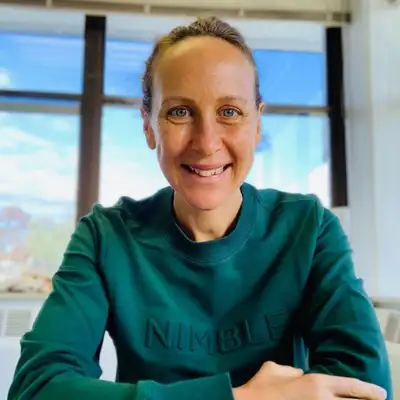
The Truth About Bone and Joint Health for Women - Dr Jocelyn Wittstein
00:00
Hey everybody, it's Mikki here. You're listening to Mikkipedia and this week on the podcast, I speak to Dr. Jocelyn Whitstein. She's orthopedic surgeon, researcher and associate professor. And we discuss all about the intersection between nutrition, metabolism and musculoskeletal health in women. With a background that uniquely bridges nutrition and medicine,
00:28
Dr. Whitstein brings a broader lens to joint bone and tendon health, moving beyond purely mechanical explanations to explore how lifestyle, dietary patterns, and metabolic health shape outcomes across a lifespan. In this conversation, we dive into why conditions like frozen shoulder disproportionately affect women in midlife, the role of estrogen and tissue resilience, and how shifts during menopause influence muscle, bone density, and injury risk.
00:57
and we also unpack the impact of protein intake on musculoskeletal integrity alongside the emerging links between insulin resistance, inflammation and joint health. And Jocelyn is super passionate about nutrition having studied it, so she's so into the lifestyle aspect of it. I found this such a refreshing conversation with an orthopaedic surgeon. So this is not only practical and thought provoking, but it
01:26
reframes menopause not just as a reproductive transition but a critical window for protecting long-term strength, mobility and resilience. For those of you unfamiliar with Dr. Whitstein, she is a practicing orthopedic surgeon, researcher and associate professor at Duke University specializing in sports medicine and the female athlete across the lifespan. She's also a former collegiate gymnast and mother of five. Her research focuses on Frozen's shoulder,
01:55
ACL injuries in female athletes in the musculoskeletal syndrome of menopause. And she's also got a book called The Complete Bone and Joint Health Plan that she co-wrote with another author, Sydney Nitschkorski. I've popped a link in the show notes as to where you can find that. It is a wealth of information. I think you guys are really going to love this conversation. And in addition to the book,
02:22
I've also put a link as to where you can find Jocelyn over at Duke University and also over on Instagram where she shares a ton of information for free. Before we crack on into this interview though, I would like to remind you that the best way to support this podcast is to hit the subscribe button, leave a five star review over on your favorite podcast listening platform that increases the visibility of Micopedia and amongst literally thousands of other podcasts out there.
02:50
so more people get to hear from the guests that I have on the show, like Dr. Jocelyn Whitstein. All right guys, enjoy the conversation.
03:01
Dosselin, thank you so much for taking time to speak to me today. And like you, as you were saying, you've just rushed in. So I appreciate, you you've got a busy schedule and of course you've just been in New Zealand, which is, think Kiwis, we often get a bit of a thrill. like, oh, people bothered to come all the way down here. So it was nice for you to just chat a little bit to me about that. So yeah, thank you so much. Thanks for having me. Yeah. And funny enough, we were co-located and we didn't even know it.
03:31
So, I mean, obviously we're going to dive into nutrition and the importance of bone health and perimenopause, menopause and beyond. And I've heard you on um Hayley Babcock's Hayley Happens Fitness podcast and a few other podcasts as well. And I love that you are as passionate about nutrition as I am. And in fact, did you originally study nutrition before you went into medicine?
03:58
Yes, when I was an undergraduate, I studied nutritional science at Cornell University in the College of Human Ecology. I thought I wanted to maybe do something more in the field of nutrition. I mean, before that, I wanted to be an archaeologist. But as my son pointed out to me, oh, that would have involved bone. So actually, that's not so far off. It's not so different. Yeah, not so different. But yeah, no, I've always loved nutrition.
04:26
from a personal health and wellbeing perspective, but also I just, I'm so glad that I studied that as an undergraduate because you don't actually get very much of that in medical school, at least not in the United States. And so I've actually leaned so much on my knowledge that I learned that I gained from undergraduate studies from really amazing professors and teachers at Cornell. ah And I've always kind of,
04:50
I would say grown that interest and I've always, any bit of nutrition that's involved in research related to orthopedics, bone and joint health, musculoskeletal health, I'm always very interested in it. So it was really nice to arrive in medical school with that kind of background knowledge. Yeah, no, I agree with you. And in fact, I remember as I was, I think I was a master's student or just out of master's, headed into a PhD, we would do some of the lectures for the medical students at Otago University here in Dunedin.
05:20
And I remember thinking, gosh, they only get about two to three hours of nutrition in their third year, and that is it. So to your point about whether or not it's just in the States that there's not lot of nutrition, I think probably it's just across the board that that's the case. so do you think that...
05:39
As you sort of went to medical school, obviously interested in orthopedics, did you have in your mind that you'd be looking at it from a nutrition lens or did it just sort of uh evolve that way because of the interest? Yeah, I think it evolved that way because of my interest, but also in the field that I happen to sub-specialize in, which is sports medicine, there's also a lot of interest in, I would say, as a means to performance, which is
06:05
that's another level of things. But of course, there's nutrition for our basic health and maintaining our bone health and reducing inflammation, our bodies, things like that. But there's a whole other layer of nutrition optimization for performance of elite level athletes. And obviously, a very small portion of the world is an elite level athlete. But I would say there's a bit more interest in the field of sports medicine than maybe some of the
06:35
other subspecialties of orthopedics and nutrition in that realm. But then the other way we think of nutrition and orthopedics is kind of in our sicker patients, our malnourished patients, we know that people who have low albumin are more prone to infection and failure of procedures and things like that. So we see it like in the elite level athlete who's trying to optimize their performance. And then we see our chronically ill patients who are
07:01
undernourished or malnourished in certain ways and how that affects their outcomes. So if you're paying attention, there's actually a lot of nutrition in all parts of orthopedics, you know, as this relates to osteoporosis and bone health as well. What is it like in terms of how the general field feels about nutrition, Jocelyn? Is it, do you feel like it's currently sort of underutilized in orthopedics? Is how you think about it, is it a um sort of a common, I suppose, approach or
07:31
Yeah, I think it's underutilized as a tool to optimize our patients' outcomes. mean, one problem with nutrition is that sometimes by the time you see a condition, uh you're at the end of many years of certain habits. It could be smoking, could be excessive alcohol intake, or it could be like dietary habits. It could be a chronic calcium or chronic vitamin D deficiency over many, many years, know, result, you know, contributing to the cumulative
07:58
bone health, for instance, that someone has later on in life. And then sometimes in the field of orthopedic surgery, we're meeting a person for the first time when they have their injury that needs to be treated. And ultimately their outcome will be affected by some of these things. Like an example would be rotator cuff tears. When someone tears their rotator cuff, we know that there are worse outcomes associated with osteoporosis or low vitamin D. Now, does everyone check a vitamin D and try to optimize it before they repair their rotator cuff?
08:27
No, could we do that? Yes. Or if someone's having a complex surgery, um do we sometimes check their albumin levels and see if they need some nutritional optimization? they need higher protein intake? Yes, we do that. So there is some optimization that happens. But I don't think um nutrition is necessarily at the forefront of the minds of many orthopedic surgeons because
08:52
A lot of times we're just sort of inheriting a condition that then sometimes on an acute timeline needs to be treated or fixed and we're maybe not gonna undo the years and years of nutritional habits. Yeah, no, I appreciate that. And I also hear the argument or the case for more nutrition in medical training. And I also, but, I'm curious as to what you think, but my general thought, I used to be very like quite for it.
09:20
But then I also am aware of the limitations of how much time do we have? How many do you need to add three years to a, which you wouldn't, but I imagine that the medical curriculum is so filled already, would it just make more sense? And this is not, I know what we're going to discuss today, but wouldn't it make more sense to have, to be working in it as I'm sure you do, like alongside people? I don't know. are lots of people. Having access to people you could refer to. which we do. Like I refer patients to,
09:50
to dietitians a lot. um Yeah, so I think it would be nice to have more than we have, although is there room for like an extensive amount of uh nutritional education? um Probably not. I also think that there is more that nutrition can do for people with, um you know, chronic orthopedic conditions than maybe some of us realize. I think there are benefits to...
10:17
know, diets that help reduce inflammation. And there's a lot of evidence for um how that might reduce joint pain. And there's a lot of evidence for uh anti-inflammatory diets for bone health. So it's just, I think that we can utilize dietary changes to um affect symptoms and outcomes. It's just maybe your surgeon's not going to do it during the visit for the problem.
10:46
Yeah. um Jocelyn, thinking about uh bone joint and tendon health, are there nutritional patterns that you repeatedly see in, let's, I like to focus on, well, women, but men is another, mean, anyone really, that are related to problems with bone joint or tendon health. So any sort of nutritional patterns, you mentioned inflammation is something, there anything else you commonly see? Yeah.
11:15
Um, I think it's hard to say like, see this problem and it's associated with this dietary pattern, you know, more than we see. Um, if we look at studies of certain dietary patterns or aspects and what they, you know, can do or achieve. Um, but, uh, in terms of, um, osteoporosis, which is obviously an extremely common condition, especially in women, um, there, there is.
11:43
there are multiple very well done studies looking at perimenopausal and menopausal women and looking at their diet in terms of em how inflammatory it is using the dietary inflammatory index, for instance, and very clearly showing reduced risk of fracture over time. And so many of the pathways that lead to osteoporosis, like breaking down a bone by osteoclast and so many of the pathways that lead to
12:13
breaking down of cartilage and joints through inflammatory cytokine pathways. You know, they're mediated by inflammation and a lot of the there's there's some commonalities to those pathways. um So ah like for example, diets that are higher in dietary fiber are going to generate more short chain fatty acids, which can lead to
12:37
intervene in some of the pathways that lead to activation of osteoclasts and breakdown of bone. But also we know that diets that generate higher levels of sort chain fatty acids have been shown to reduce joint pain and inflammation and even potentially make symptoms less for people even with rheumatoid arthritis. Even though I'm in no way advocating for people to treat their rheumatoid arthritis with a high fiber diet, they need medication.
13:04
But I think there's a lot of commonalities with inflammation as it relates to breaking down a bone and then, you know, potentially spilling over into inflammation of joints. And I have a lot of patients who will tell me, you know, if they switch to a more plant-based diet, not that you can't have lean proteins that are animal-based, like less red meat, less fried foods, less processed foods, more colorful fruits and vegetables, more fiber, some more plant-based, you know, adding in some soy, things like that, that they will
13:35
say, you know, like my joints feel better, right? And I think there is some real science behind that. Yeah, yeah, for sure. I've chatted to Mike Ormsby before who's done some research in collagen and even though it was like a small trial looked at the use of like collagen supplements, like 10 grams a day over six months for middle-aged athletes, a little bit like us, probably, and that people experience sort of less pain.
14:04
um And I often see sort of on the internet, I'm not sure if you notice this as well, that there seems to be some sort of camps that collagen is useless versus collagen is great. And I wonder whether collagen for you and what you do, is that like a common recommendation you might make or are you like, yeah, what are your thoughts? Right, you're right. There do seem to be two camps. And I think if you look at the studies on it, um I think there's enough data to say it is useful. um
14:34
um There are lot of studies on hydrolyzed collagen and joint pain, um looking at byproducts of breakdown of um cartilage itself. And there are other studies looking at um hydrolyzed collagen that contains type 1 collagen, the type that's in our bones, showing benefits for maintaining or improving bone density. eh I also think it's a very safe thing. you know, and with any study, you'll see a range of response and there's probably going to be some responders and non-responders, but
15:03
I think the data is stronger for collagen than for instance, you know, glucosamine chondroitin, which has, which that's been, you know, sold for years and they're like, you'll, if you go to a pharmacy, you'll see an entire long shelf full of variations. Right. And that doesn't have very strong evidence behind it. um So, yeah, I do think that collagen is helpful people. I use the collagen supplement and interestingly, um there, there is also as it relates to joint health.
15:32
There are some data behind, know, hydrolyzed collagen but also undenatured type 2 collagen that has some very reasonable studies behind it showing um benefits in terms of people's, know, joint pain and reduced breakdown products of uh the collagen that's the type that's in your joint surfaces. So I do think there's reasonable data behind it. think that, um yes, I'm not sure why there are two such distinct gaps. I think the data is pretty reasonable.
16:01
Yeah, I think it is too. And I do wonder whether people who are pushed back against the use of collagen are more looking at it from a muscle protein synthetic response viewpoint rather than all of the potential clinical and benefits that you just discussed. Yeah, like with the components that make up tendons, cartilage, bone. But yeah, certainly it's not a good protein source. um
16:31
even though it is technically a protein, it's not a high quality protein. So for that purpose, no, it wouldn't be a good protein source. Yeah, but don't discount it entirely. And I think we're definitely on the same page there. Jocelyn, I talked to a lot of women about osteoporosis, osteopenia, and risk factors.
16:56
particularly, I mean, you mentioned inflammation as being a dietary sort of risk factor. How much do genetics, what role does genetics play in it? Because I look at my mom, she's got osteoporosis. My Nana on my dad's side had osteoporosis, that sort of hump that you see in there. in the last time. Yes, yeah. So how much of that is inevitable, I suppose? And how much do you think or do we know can be sort of mitigated through
17:26
of the lifestyle stuff. Yeah, I mean, I think genetics, family history of osteoporosis is always considered a risk factor for osteoporosis. But I also don't know, you know, it's not like there's a very clear necessarily, you know, osteoporosis gene, right? That's clearly identified. So I think that there are lot of things that have probably changed since, you know, your mom was accumulating her bone density by the age she was 30.
17:56
like what were her vitamin D levels? What kind of calcium intake did she have? Did she do much um in the way of impact exercise uh or sports before the age of 30? Sports wasn't probably a thing for your mom. She had like five kids by the time she was 28 and was smoking. I mean, women weren't doing resistance training as much, you know, in their 30s, 40s, 50s.
18:25
Um, and so I don't know, I think environments are very different. I also think I have this theory that we're going to see this. Like, I think we have, you know, like at least the United States or something called title nine, where there was like a huge increase in the number of women participating in sports. And we know when you look at, you know, participation in youth athletics, especially those that involve impact in jumping, like soccer or, um, gymnastics, for example, that, um, people participating in those sports, you know, accumulate more
18:55
accrue more bone mass. And so when you kind of, you know, get most of your bone mass and bone density, you know, really by the time you finish adolescence, and then we kind of top out or peak at age 25 or 30. So people who are active in these impact-based activities, they're going to arrive at age 30 having accrued more bone. So there's, I think there's a large group of women that are arriving at midlife now having been athletes. And on the other hand, you know, like when I was a kid, I was
19:24
climbing trees all day or doing gymnastics. We didn't have phones or tablets. We were barely on the TV. do wonder if there's going be another wave of people arriving at adulthood. Yes. Maybe more secondary, which I don't think is going to be a good thing. But I think there are environmental factors that so much contribute to like, what is the bone mass of your crew by the time you're age 30? What are the health habits that you've then carried forward? You know, when you're an adult, are you
19:50
strength training regularly or you're participating in impact exercises, things that stimulate hip bone density, spine bone density, maintaining muscle mass. And what kind of nutrition did you have access to? And people are smoking less but vaping more using nicotine pouches more. for a while I thought smoking is going to go away, but now we have these other forms of nicotine, which is also
20:17
you poison to bone. Yeah, is it nicotine particularly is poisonous to bone? Well, there's some mixed data on this. There's a little bit of data that shows that at low levels that there may be actually not that relationship. However, um there's a lot of science behind, you know, what is, ah how nicotine can up regulate um expression of rank ligand, which is what ultimately activates osteoclasts.
20:47
and breaks down bone. And there's also evidence that nicotine increases the metabolism of estrogen. So if you metabolize estrogen faster, you know, you may have less of it. ah And that uh nicotine also, there are some evidence that it may inhibit aromatase, which is the enzyme that converts testosterone to estrogen. um women who traditionally have smoked have been really high risk for osteoporosis.
21:15
And there's some data that even female smokers have earlier menopause. So there's definitely interaction between estrogen and at least smoking, but some of that may actually come from nicotine. And now we're seeing more and more studies on the effects of nicotine on outcomes of things like orthopedic surgery, like higher risk, like nicotine, non tobacco related nicotine, was pure nicotine. In terms of risk of fractures, not healing or hardware failure or non unions, wound healing problems.
21:44
spinal fusions not fusing what we call pseudoarthrosis at twice the rate as compared to the people not using the nicotine that's not from tobacco. So there are, I believe, negative effects and mechanisms through which nicotine works, even though tobacco has more mechanisms, things like cigarette smoking, obviously, it can increase your levels of carbon monoxide and oxygenation. The nicotine itself
22:10
you know, vaso is a vasoconstrictor, can constrict small vessels and, you know, decreased oxygenation to tissue or bone. You know, the end vessels are very small. It's not a good thing. So there's a vasoconstricting effect. There's some direct mechanisms of nicotine that may at lower levels not have that clear effect, but probably at higher levels do. So I guess what I'm saying is there are so many environmental factors.
22:33
You asked me a question about genetics and we went down quite a different path. No, this is what I love. This is what I was hoping that we would do. Yeah. And I'm glad I just, I did want to clarify that because of course people often just associate, you know, just knowing we all know that we all know, surely we do. Smoking is bad for you. know, like you, know, ideally you wouldn't be smoking. Right. But then of course, to your point, there is, has been this uptick in nicotine pouches, people using nicotine gum to sort of focus and attention. have seen that.
23:03
a bit. And then of course, vaping. And I talked to Dr. Paul Reynolds about the sort of increased inflammation in the lungs through vaping and e-cigarettes. Yeah, there's chemicals with vaping. Yes. Yeah, I think I was actually really surprised to understand that people just didn't think that nicotine could be bad for you. yeah, I think I also see though, it's very addicting. And so people
23:32
certainly do I think use it for focus and attention, ah even like performance enhancement. But I do find that people get very addicted and because there's a quick release of essentially like epinephrine, I believe followed by dopamine. And so you get this kind of addictive, it's just a very addictive substance. So people can end up using actually quite a lot of nicotine. um And depending on like the concentration of um
24:01
if it's in a vapor or a pouch or whatever, there are different concentrations that can potentially be exceeding what you might be smoking through a cigarette. yeah, I think there are a lot of negative health outcomes related to nicotine that people don't recognize. um I just also think people don't realize this. Well, maybe they do realize it's incredibly addicting. I've had patients, I've had at different times, a patient who is addicted to heroin tell me it was easier for them to
24:31
quit heroin than it was nicotine. And I've had another patient say that to me about cocaine. Not that I have tons of patients on these medications, but people who have been through withdrawal from addictive substances have told me that this was the hardest thing for them to stop using was nicotine. Yeah, gosh. Yeah. So interesting. um Jocelyn, what about for women who have osteopenia? You know, I speak to a lot of women who've had this
24:59
diagnosis and they are understandably um anxious about their ability to sort of participate in physical activity for not wanting to risk breaking a bone and fracturing something. And then of course they're interested in whether or not they can reverse the condition. So as I understand it, you can actually change bone density markers. Am I right about that? Can you just sort of talk us through the risk there and what...
25:28
what's potentially helpful. Yeah. So you can improve bone density. um It doesn't inevitably continue to decline. There are changes that you can make to improve it. Now, uh what are those things that people can do? um If you're uh a menopausal woman and you have the opportunity to, or you don't have contraindications to utilizing hormone therapy uh is very, very well established that using hormone therapy that includes some systemic estradiol
25:57
um staves off that bone loss and helps you maintain or you can even gain some bone density. um The other major pillars are course exercise interventions and proper diet. Diet alone is probably not going to increase your bone density, but it's important to not contribute to the decline of your bone density. But exercise interventions are the things that can actually increase your bone density. um
26:24
The uh impact based exercises primarily will impact the hip region. And you can see minor gains in bone density through like interventions like jumping, for example, on the order of something like a 1 % improvement in your hip bone density. And then in the lumbar spine through progressive resistance training, um know, some studies showing a few percentage points of increase in uh bone density there. And it doesn't have to be the highest, most intense strength training.
26:52
We see larger returns on the investment with the higher intensity strength training as compared to moderate intensity strength training, but there are still benefits to the lower intensities at higher repetitions. And if nothing else, these things are certainly um slowing or helping you maintain the moments you have, but in many studies showing some small percentage points in gaining. ah So certainly um there is room to improve if you are
27:19
osteopenic and then starting these interventions. And to be clear, most of the studies, you know, are on this, on these interventions are looking at women who have osteopenia because we're looking to see can, if someone just has normal bone density, sure, we can look and see if we're not losing it or as rapidly. the studies, intervention studies, you're generally looking at many of them, looking at women with osteopenia, some of them even with osteoporosis and trying to uh
27:48
stop the bone loss or gain bone density back. And the classic example is the the lift more trial, but there are others that didn't involve the very high intensity strength training showing benefits as well. So it's certainly feasible and em something that people can do. If you've not been involved in physical activity in the past, it's certainly a good idea to work with someone who has
28:14
Experience in gradually increasing the load and uh making sure you're using proper form. There are various programs in different places like in Canada, osteoporosis Canada developed the bone fit program, which is for people with more like osteoporosis where you're trying to introduce exercises without putting them at risk. um But then there are more intense programs that are, you know, modeled after the LyfMor protocol. uh
28:41
There are centers in many places in the world called, you know, O'Nero centers, um, which were, you know, kind of based on the lift more protocol. There, there may be some in New Zealand. There are definitely some in, definitely some in Australia. Um, and there are physical therapists who are trained in these, these things as well. Um, but it's, I think it's really important to look at where you were starting and what previous activity level was because you can't just all of a sudden go lift super heavy. Yeah.
29:11
No, I appreciate that. And then of course, in addition to the lifting, a lot of people are getting onto weighted vests. And again, I guess maybe it's not the weighted vest themselves, but it's the claims behind the weighted vests, which some people take issue with. So from my perspective, I like multi-day, well, now I like multi-day running. I like run missions, I like longer stuff.
29:38
and I have to carry a pack when I do that anyway. But also, if I can't run because of a tendinopathy, if I can put on like a 10 kilograms on my back and go for a walk, that's actually quite good for my loading the tendon. But it's not necessarily gonna help my bone density. Is this what we understand? Right, there isn't a study that looked at, there's not a study that is like any randomized perspective looking at just use of a weighted vest and walking and does this improve your bone density.
30:07
It is more load than walking and is definitely a greater cardiovascular workout. You are using your muscles more. There's some evidence that this may, help with different parameters of balance and muscle and, you know, maybe potentially that might reduce your risk of, you know, things that would contribute to risk of falling. um I think I use it more as an elevated walk. So it's, it's more exertion for me. I do the same. Like if I'm like, if I have some,
30:33
tendonitis or something or whatever. And I just am not running. I will do that. But definitely it's like, not? um No, well, actually there is a why not. If you're someone that has knee arthritis and you've just lost 10 pounds and the 10 pounds of weight loss has finally made your knees feel better, because it does, like just 10 pounds of weight loss can really make your arthritic knee feel better. You're probably not a great candidate to put on a weighted vest because you're just like putting that 10 pounds back on you. there's always this back Very good point.
31:02
you know, how are your knees doing? It's, you don't need to walk with a weighted vest for your bone health. It's an option for cardiovascular exercises, a little bit more, you know, use of your muscles. um Now walking in and of itself, people will say, oh, walking isn't enough. you know, walking isn't helping you with your bone density, but it depends on how you define helping because there is a spectrum of doing nothing and doing something. And I have,
31:31
you know, patients and people for many reasons who like walking is what they can do or, or, you know, like maybe they can bike or walk. Now biking is absolutely no load bearing and it doesn't do anything. you're about density, it's a great cardiovascular exercise for people who are having joint problems. But like a lot of people can go walk many miles and there is a lot of data that walking is even if it's not increasing your bone density, it is reducing your risk of falling and hip fracture because you're
32:00
gaining your mobility. And the other way to look at it is even if something is just slowing your bone loss, because walking is still load bearing. And the extreme version of that, I've said this many times, would be like if you were on crutches or you're an astronaut, you just, you weren't even standing, you weren't loading at all. People who don't have gravity and weight on their legs have extremely rapid bone loss. Someone who is on crutches will lose bone in that extremity and it'll take them one or two years for the bone density. You know, you could be on crutches for
32:30
couple months and you will lose bone density in that limb just because you're simply not walking on it. So I don't like the term that walking does nothing because it's not that it does nothing. It is better than doing nothing and people who generally are people who walk more generally do have better bone density than people who don't and that's been studied. And the reduced risk of hip fractures and people who walk more regularly, you know, something coming out to about 35 minutes a day if you kind of do the numbers. uh
32:58
has been shown to dramatically reduce risk of hip fractures as compared to women who don't walk. I just think that when people think about their bone health and bone density, when they look at an intervention, they want to hear that that intervention is increasing their bone density, but there is actually benefit interventions that slow loss of bone density, because that's the natural process.
33:27
I think walking is really good with or without a vest. The vest isn't making it or breaking it though. It's probably more the walking and then the vest is like an added exertion for you. You're using your muscles a little bit more. You're going to get your heart rate up a bit more. could probably, I wouldn't be able to do like interval training with just walking, but maybe I could get my heart rate a little bit more elevated with the vest on and a hill. that's how I look at it.
33:53
I like that, that's exactly what I think as well. And to your point, often we do focus on what is the thing which is going to add. Like when we think about muscle protein synthesis, we're you know, we're wanting to sort of accrue muscle, whereas we don't really necessarily think about what can we do to slow that muscle breakdown? Which is, yeah, exactly. And to your point, bone is of course exactly the same. um Jocelyn, I'm curious, I remember, this might have been 15 or 20 years ago now, there was a huge trial. um
34:22
not Women's Health Initiative, it something else, around calcium supplements actually, and the potential danger for women um being supplemented with calcium that really then sort of made us weary about suggesting uh people take calcium supplements. As I understand it, it's not that clear cut, and in fact, calcium supplements are fine if taken with cofactors at lower doses. But please correct me if I'm wrong.
34:50
what is actually the goal with calcium supplementation? Yeah, I think there's mixed data on that. And there was some concern that like taking calcium supplements might increase risk of cardiovascular events. And there's some studies disproving that there's some studies suggesting that I think in general, um as with many things in nutrition, there is benefit to getting the nutrient from the
35:15
whole food accompanied by other nutrients. Like nothing is ever quite as good through um a supplement. And um you know, you can only absorb 500 milligrams of calcium at a time when you're eating, you know, real food, you're eating it here and there. And it's there are other co-factors in your food that might help you with absorption. um
35:39
Supplements have to be taken separated if you're gonna get all of your calcium through supplements You need to kind of break it into like two parts, you know 500 early 500 later Are you really Absorbing all of that at once I you know, I don't know um So I don't think they're totally evil. I do there is a minor concern there. I Think most people at least get some calcium in their diet. So they
36:09
I mean, it's hard to imagine diet that has like absolutely zero calcium where you would have to be taking a thousand or 1200 milligrams a day. I tell people like if you are falling short, would rather you take, this is how I look at it, I'd rather you take a supplement to not fall short than worry about a small potential side effect of your supplement.
36:33
Because essentially if you don't have enough calcium, your body will do something to get it. Your bones are the store, the bank, you know, or in your body, could do a little bit to excrete less through your kidneys. You're going to steal some from your bones, but like your, your brain and your heart and your muscles are like, your body is going to get the calcium. So if you are chronically falling short, I would rather have someone supplement their diet with even if it's partial, you know, um
37:03
And so I don't want to villainize supplements, but it's best to get it from your diet if you can, because of the nature of food sources. Yeah, for sure. And that's what I say to people as well. I think about, I'm thinking about the woman who might not or anyone who might not be able to have dairy for whatever reason, doesn't agree with them, then that's, I think that's a good use case to, to your point, have a more gentle sort of supplement regime. But of course,
37:32
Hopefully they're also open to eating salmon with bones or the little cans of salmon you can get in sardines with the bones and things like that. Yeah. I mean, you can certainly get enough calcium without dairy. I happen to like dairy, but I mean, some of my favorite sources, I love basil seeds. They have a lot of calcium. Now I do usually put them in yogurt, but you could put them in a non-dairy yogurt. ah I love.
38:01
choy, has a lot of bioavailability of calcium, cruciferous vegetables. ah can, yeah, salmon with the bones, sardines. There's no way can make myself eat a sardine. It's really good with cottage cheese. Good cottage cheese and relish. It's delicious. I think, yeah, there are certainly opportunities. um there's some really brilliant ladies that I've um
38:29
I really liked their work. don't know if you've talked to the women who founded Seen Calcium Juice, but theirs is a food-based supplement. It has um dates, almonds, and mushrooms in it, the vitamin D from mushrooms. It's food-based, so rather than it being a pill, it's a bite, and it gives you about half of your calcium for the day. Oh, that's amazing. Yeah.
38:59
So I think that's a nice option. It's a supplement, but it's still food-based. I agree. I think it's a nutraceutical maybe is what we call that. And I also like to remind people that often if we think about bone health, often the light has always been shone just on calcium, which is obviously important. But then these other things that we're talking about like resistance training, loading the bones up.
39:25
the protein and the anti-inflammatory diet. And even in the realm of nutrients, we think about calcium, but vitamin D is obviously important for calcium absorption. And a lot of people are deficient in vitamin D, especially if you live in a not very sunny climate or it's cold out here inside. And uh magnesium is a co-factor for vitamin D important for bone health.
39:53
for sort of helping to em direct calcium to our bones. then vitamin C is important for collagen, the triple helix formation. So there are all kinds of things. This is where it's nice when you're actually just eating real food um to get more out of your food than just a supplement that is giving you one thing. So, yeah.
40:18
Yeah, I agree. And in fact, I was speaking to someone after I broke a bone a couple of years ago on a hike run thing. And he reminded me that silica was also, you know, was good for bone. And I saw that silica was in beer. And I'm like, this is awesome. Craft beer has silica. It's great. I like this. This is I want to hear. Jocelyn, can we chat about frozen shoulder? And I know that you talk about this all the time.
40:47
And hopefully you don't mind you, it's something that you enjoy talking about. actually love to think about that. Oh, this is great. Because it's like, what is it about the, I'm assuming it's the perimenopausal sort of transition or something happens during that, you know, between 40 and 60. So maybe in menopause as well, that just, that affects the shoulder joint. Like what's going on? Why is this such an issue with women? Yeah, so I, you know, my,
41:14
theory is that this has to be somewhat hormonally mediated just because specifically this is really something that impacts women between the age of 40 and 60, um as well as people with diabetes and other endocrine conditions like thyroid abnormalities. And of course, diabetes is another inflammatory state and um so many endocrine abnormalities are somewhat autoimmune mediated and things like that. So um I think that um
41:37
In women though, in particular, this is usually a non-traumatic development of shoulder pain that starts out as like a lot of pain followed by onset of stiffness and then this kind of frozen state that then has to thaw out. uh there's a lot of, we know through uh basic science studies that there are estrogen receptors in the synovium, which is the lining of the joint. We're now gaining information from
42:04
basic science studies that estrogen can inhibit fibroblasts, which is a cell type that can thicken and stiffen the lining of a joint. um And then we know women who are receiving uh therapy for things like breast cancer with aromatase inhibitors, which are medications that are essentially blocking the formation of estrogen, making people estrogen deficient, that these people get a lot of shoulder pain and stiffening of the shoulder. So we've got this group of women who are typically in the perimenopause, menopausal transition, or women who are in acute estrogen.
42:34
you know, estrogen withdrawal being this group of people having this problem. We know that estrogen is an anti-inflammatory hormone for the lining of our joints and that we now know it's also a hormone that inhibits the cell type that can thicken and stiffen the lining of a joint. So when you're putting all these pieces together, it makes sense that there's probably some hormonal relationship to onset of frozen shoulder. Now, why do you get in sometimes one and then the other or not at the same time? Or why does it ever get better? You know, there's a lot of things like that. It's like,
43:04
even in menopause, women have hot flashes and night sweats, but most people don't have them forever. Like eventually your body goes through this transition and things subside. Not that you should have to go through that like menopausal hormone therapy can help with all those things, but there are a lot of things that don't stay that inflamed, you know, forever. menopause is an inflammatory state. We see elevations in inflammatory, you know, cytokines, for example. um So there could be just, I think it maybe makes
43:32
the lining of the shoulder joint is more sensitive or easily inflamed and some very minor trauma or nothing can just sort of set this off. And I think then once the cascade started, it just kind of keeps going, you know? And we can kind of break that cycle with a steroid injection. If someone has a really painful and stiffening shoulder, we can stop the inflammation, reverse the stiffening. um Sometimes it's already frozen and it has to thaw out, but... um
43:58
You know, it's an area of research that I am active in trying to understand the relationship between um the menopause transition, hormone therapy, and who gets frozen shoulder. And we're continuing to research that. I have a registry that I enroll women in through our women's health um group where I work. And uh we have some more data coming out as a follow-up of a preliminary study that we did before looking at hormone therapy as a risk factor or a protective factor for developing frozen shoulder. ah And so we're
44:27
Collecting more and more data is looking like that's the case. um I'll have uh another paper coming out soon on that. And we're also seeing a relationship between uh severity of vasomotor symptoms and shoulder pain in menopausal women. So, these things are kind of paralleling each other. uh Now, why do men not get frozen shoulder? I think men are not as dependent on estrogen. Obviously they're more...
44:56
dependent on testosterone, there are probably differences in the receptor density or sensitivity to them. But obviously women have this decline in estrogen, sharp decline in sex hormones that men don't have. And if you see frozen children in a man, it's almost always in a man who has diabetes. To the extent that if I see a man with frozen shoulder, I test them for diabetes because it's very unusual for a man to have frozen shoulder. They either typically have diabetes or a very early version of arthritis.
45:26
But in women, we see it all the time in the absence of those other things. Jocelyn, if it happens in perimenopause as well, I know we've got that decline of estrogen, but we've also got those real fluctuations that can occur. that the fluctuations that would contribute to inflammation and that imbalance, not imbalance, but just the ratio of estrogen to progesterone has changed? I think the fluctuations are
45:55
likely an issue. Women also start to have a lot of joint pain and perimenopause just in general, just frozen children, tendonitis and plantar fasciitis and dequero veins. mean, there are so many things that are a bit more common in women. And then with the cortisone injection or the steroid injection, because there are some places, is it like
46:22
Is it safe to go in the shoulder without risk of breaking down tendons or breaking down tissue? Because I know there are some considerations around where to put the injections and I just can't recall which one is it. So clearly it's safe, the shoulders. know, steroid is very effective at getting rid of inflammation and therefore pain and restoring motion, but you don't want to use it.
46:47
excessively or too much or over and over again anywhere where you're exposing your tendons to it because yeah, excessive steroid exposure isn't good for the health of the collagen in your tendons or your joint surface, frankly. mean, same thing in joints that have mild arthritis. Like if your knee is big and swollen, we can drain your knee and put a steroid injection and get rid of the effusion so you can activate your quadriceps and function.
47:08
And I think that's a reasonable time to do that. If you need a rescue, you've got a huge diffusion in your knee, but we don't want to overuse steroid injections because excessive use of steroid injections is also going to eventually sort of diminish the health and quality of the cartilage in your knee, which is already sort of struggling. So it's a balance. steroid is always a good anti-inflammatory, but it's not good for tissue to be excessively exposed to it.
47:33
In the case of frozen shoulder, feel like if you're like balancing the benefits and the risks, you know, you're going to use this sparingly, maybe one, maybe two times, but you're trying to save someone from a two year process of, you know, their shoulder being rather immobile and painful. So that's a big return on investment. And in a lot of cases, it stops the process and reverses it. And I do also refer a lot of women to, you know, my women's health partners for
47:58
discussion of or introduction of menopausal hormone therapy because they're also typically having other symptoms like hot flashes or night sweats or you other things. there's lots of time. With the referral to menopausal hormone therapy or is it is do we know that estrogen is going to help with frozen shoulder? In fact did you do a real Jocelyn was it you that said
48:23
I got the beginnings of frozen shoulder and I went straight to one of my colleagues and I said, was that you? I actually had frozen shoulder, which is very ironic because I'm a female orthopedic surgeon. studied frozen shoulder about a year ago and I had my shoulder injected and um I did go start on some transomelastrogen because I was also having like the occasional like uh night sweat and also my lipid profile was just getting a little bit.
48:49
wacky a little bit worse and we see that in menopausal transitions and um my A1c was creeping up a little bit. You you also start to see like more insulin resistance as women approach menopause. So I was like, I'm just going to go ahead and go on this as a transitional thing. um Now I don't have proof that going on estrogen therapy is going to make your frozen shoulder better, faster or not get on the other side or not come back. just
49:17
shared with you a lot of the basic science understanding I have this process and um there are other reasons to use this medication, know, like the main from an orthopedist perspective, the one of the greatest things about that is protecting your bone health over time if you're able to use it. But I think there are a lot of potential other benefits um and what needs to be better fleshed out and is being
49:44
studied still, and I am trying to study in various ways, including looking at cartilage health and menopausal women as they age is, you know, we know that there are various studies showing that menopausal hormone therapy can reduce joint pain and inflammation, but there isn't clear evidence that it's going to make you less likely to need your joint replaced later on. Or we don't have clear evidence that it makes you, you know, less likely to have progression towards arthritis. um And so we need to keep
50:14
Studying that, um know, interestingly, there was a, I think a very well done longitudinal study that they did out in Netherlands where they looked at men and women and they followed their testosterone levels over time. And every two years they would get an x-ray of their knees and ask them about their knees and how they were doing, you know, reports of knee pain. And they kind of stratified people by different testosterone levels. And women with lower testosterone levels had the lower testosterone levels in women using a female scale.
50:44
the more likely women were to develop over time and report knee pain and radiographic evidence of osteoarthritis in the knee, but not in the hand. there are certainly interactions with sex hormones in our joint health that we just don't know enough about yet, but we do know, for example, that women are much more prone to developing the arthritis than men, especially beginning at age 50. So there's something happening where women's hormone levels fall
51:13
quite rapidly at that age, whereas men's are not going through that rapid transition. Women are seeing this spike in joint pain, specifically greater risk of knee arthritis, frozen shoulder, things like this. Women's testosterone levels are also gradually declining over time. of, you know, it's not a sharp drop off with estrogen, but you get this drop in estrogen and then at the same time you're having gradual testosterone dropping off, you know, there are probably interactions, you know,
51:43
in total sort of adding up to this, you know, these differences. So I think there's like a lot more to learn about joint health and interactions with sex hormones, especially in women. um And then, you know, I'm actively studying frozen shoulder and, and, and the arthritis and, know, so we'll more to come, but uh currently, currently joint pain is not, at least the United States is not the indication for hormone therapy.
52:11
But it's something I think that many, many people experience, like upwards of 70 % of people. And then a lot of people do also, and you know, do experience reduction of those symptoms. So it's just something I think we need to continue to study. Yeah. And outside of you and your group, Jocelyn, do you know of others who are looking particularly at arthritis or other joint pains in this field or in this area or?
52:37
or actually it's just we need more research. There's nothing that you can think of. I mean, I think this is definitely an area that we can continue to research. And another area that is really ripe for more research is bone health in perimenopausal women. when we're talking about, you know, you see a lot of information about
52:59
effects of activity on people in their youth and how you can accrue more bone. And we see a lot of interventions and studies on exercise interventions for post-menopausal women, often like mid-50s and older. But what the gap I see and then I wanna work on is if you think about when women start to lose bone, if you look at bone density, it has this steep, this rapid bone loss that occurs.
53:29
that time point where we start to see rapid decline in bone density is actually starting two years before menopause. So the year before women's last menstrual cycle, that year of, you know, the two years leading up to menopause is a period of rapid bone loss. It's as rapid as the bone loss is the first two years of menopause.
53:55
So there's this kind of timeframe two years before and right after menopause where you're losing a lot of bone, something like two, two and a half percent of your bone density per year. And then it still continues to decline after that, but not at that rapid rate. But we focus a lot of our interventions on post-menopause. But sometimes by the time someone is actually menopausal or like starting
54:23
um, menopausal hormone therapy that's two years into that rapid bone loss. And so I really think there's very little data on studying kind of like that window and exercise interventions in that window. There's some data on using combined oral contraceptives for women in that window and how that can actually, um, block that bone loss that happens. But there are a lot of different therapies being used now. Um, so I think we need to learn more about how do we not
54:52
How do we prevent that bone loss that happens actually in a rapid way before menopause? So that's another area I think we need to study more. Yeah, no, that makes perfect sense. And Jocelyn, you're, and I know, I mean, like you, I'm food first, like these are, this is, you know, that's critical. Are there any supplements that you do? We talked about collagen and vitamin D. Are there any supplements that if someone comes to you, they've got like frozen?
55:20
that's to say frozen shoulder, it's an inflammatory based sort of condition. Are you recommending anything to them? Yeah, so um collagen, vitamin D, um I think as long as someone has normal liver function, there is pretty good evidence behind reduction of joint pain with tumeric. A lot of it comes from data on mild knee arthritis, but I have a lot of patients who get a lot of symptom relief with. um
55:44
tumoric supplements. Now, if you're going to stay on anything long term or, you I always tell people, make sure you share that with your doctor. There are some rear case reports of people getting abnormal liver enzymes with use of tumoric. And then not necessarily as an anti-inflammatory supplement, but creatine monohydrate is a very highly studied supplement. And I think
56:07
in terms of helping people gain and maintain bone mass alongside resistance training um does have a secondary benefit. doesn't, you know, it's just like not if you just go take creatine monohydrate, you're not going to improve your bone density. But in terms of um attempting to increase your muscle mass and strength, I think there is benefit to creatine monohydrate supplementation. So yeah, those are the ones I usually kind of discuss with people. And then if people are like not eating any fish, I think fish oil can
56:34
have some anti-inflammatory benefits. If you're someone who's eating fish regularly, it's probably not as much of a benefit to you. Yeah, no, nice one. They're all things that I talk to my people about as well. So I'm pleased that we're on the same page because you know stuff about stuff. mentioned diabetes and frozen shoulders is what you see in men.
57:02
In your view, is metabolic health then clearly something that perimenopausal women need to be on top of in order to protect bone, protect joints, et cetera? Yeah, right. mean, um yeah, know, women have um less, tend to have less insulin sensitivity in the post-menopausal state. Maintaining your muscle mass is going to help, you know, protect your metabolic health, helps you with, um you know, maintaining.
57:30
um better glucose levels, you're um going to improve your bone density by strength training. Yeah, think um maintaining muscle mass is key to metabolic health. it's just that there are some of these metabolic changes that happen as we age and definitely in menopausal um women and um maintaining muscle mass is one of the
57:58
most impactful things you can do. But people who have diabetes are more prone to arthritis, um they're more prone to osteoporosis. And obese patients are more prone to arthritis in their non, even their non-weight-bearing joints. So there's an inflammatory state associated with uh obesity uh as well. um So yeah, I think metabolic health is usually important.
58:27
Yeah, I completely agree. One final question, Jocelyn, which is quite hilarious. I actually re-looked at what I sent you through and I sent you through dozens of questions, clearly not going to get through them all. um But I am curious as to whether you see a lot of people come in who might be on a GLP-1 or if you've got any thoughts around the use of GLP-1s and bone health. Yes. So em this is really fascinating. um
58:57
I think that um with proper diet and strength training, GLP-1 medications can benefit both your bones and joints. let's just start with just joints. like our weight-bearing joints are obviously affected by excessive body weight. We know that obesity makes you more prone to arthritis and we know that weight loss alleviates symptoms of...
59:21
uh symptoms of arthritis and can slow... It's one of the few things that can... Weight loss can slow progression of arthritis. uh Now, GLP-1 receptor agonist medications, they can help weight-bearing joints through various mechanisms. One is that you can lose weight, so there's less stress on your joints, which is going to help protect your cartilage. But there are also direct pathways. are uh GLP-1 receptor... There are receptors in the lining of the knee joint.
59:48
Some of this comes from animal data, but it makes sense to me to extrapolate the sum and the possible mechanisms that might exist for actually reducing inflammation. So in the joints, um there are these receptors for GLP-1s and that then act on cells in the lining of joints. So say your knee joint, there are macrophages in the lining of the joint. um
01:00:14
activated by the GLP-1s, get this um effect on the macrophages where they release ah less inflammatory cytokines. uh And those are the messengers that lead to breakdown of cartilage and joints um and may change these macrophages from inflammatory to anti-inflammatory. So there may be an actual anti-inflammatory effect on the lining of the joint, not just um the weight loss.
01:00:41
And there was a really well done study in the New England Dental Medicine that came out in 2024 where they specifically looked at adults whose BMI was over 30 who also had knee arthritis and they randomized them to semiglutide or a placebo. And there was a 14 % weight loss in the semiglutide group, but um also significant reduction in joint pain and improvement in their uh outcome scores about the function of their knee.
01:01:09
So I don't know if we contributed that all to weight loss or multiple factors, but there's definitely, know, arthritis isn't one of the approved indications for these medications, but I see people even before they lose weight having less joint pain. I think there's a mechanism above and beyond the, just the weight loss. So now these medications also improve metabolic health and can reduce inflammation, so that may be another method of reducing inflammation. um As this relates to
01:01:38
um bone health, so osteoporosis. um There are many studies when these medications are used for diabetes, so not like the weight loss doses necessarily, people just trying to control their diabetes, that show reduced fracture risk and reduced risk of bone loss. So there's actually seems to be a protective effect. And some of that might come through the, know, the inflammatory pathways that are being um modulated. um
01:02:06
And then there's another study that was done where people were using these medications for weight loss. uh When coupled with resistance training, there was a neutral effect. There was not increased risk of uh fracture or loss of bone density, but in the absence of, if you're not coupling this with strength training, uh you can get into like sarcopenia and then that can have a negative effect on your bone health. So it seems to be like when these are used for uh treatment of diabetes, we actually see a protective effects
01:02:36
effect against fractures and bone loss. And then when they're used for weight loss, if there's significant weight loss not paired with strength training or resistance training, there can be a negative effect. But the negative effect seems to be mitigated by resistance training. And of course, diet would be important as well. So overall, I don't think they have a negative effect unless you're getting into a situation where you have loss of muscle mass, sarcopenia, you're maybe not getting adequate protein, you're not strength training. Yeah, that makes perfect sense. And I think a lot of the
01:03:04
the talk around GRP-1s and the appropriate use of them that is coupled with all of those lifestyle factors that you and I have talked about. I mean, it feels like it's a win-win, but I understand people's um hesitation around it if people just gung-ho use it and don't do the sort of concomitant lifestyle stuff. And I think the other tricky thing with these medications is they're kind of forever, it seems like forever medicating. It's very hard for people to then...
01:03:34
It's like if you have high blood pressure, you don't stop a blood pressure medication. If you have diabetes, you're going to continue to treat the diabetes. you know, so it's, um it's, they, these can be lifetime medications. And there's some other like basic science mechanisms through which GLP-1 may um
01:03:58
stimulate bone mineralization as well. There's some evidence that the GLP-1 medications can upregulate osteocalcin production. You osteocalcin is necessary for bone mineralization. And so there are some other mechanisms as well through which these medications may positively impact bone. seems like the main negative is the risk for sarcopenia. Yeah. um
01:04:25
That is, of course, can be mitigated through doing all of the things that we've discussed today and which you talk about all the time on your channel. Yeah. Lovely. Jocelyn, thank you so much for your time this afternoon. I really appreciate it. You are such a wealth of information. I could listen to you talk all day about this stuff. You're very articulate. you for having And I love the way that you're able to draw out the mechanistic stuff as well, because I'm super interested in it, as the listeners will be.
01:04:55
So can you let people know where they can find you and find out more about your studies and your research? And of course I'll pop that in the show notes as well. Yeah, so I work at Duke University. um You can find me there on the Rhythmia page. I have an Instagram account that I'm a very novice social media user, mostly nudged into it through my 20 year old daughter about a year ago. like that.
01:05:22
Yeah, so, you know, it's not very fancy. It's me on my phone wherever it's perched explaining something. But yeah, that is, um it's just my name Jocelyn underscore Whitstein underscore MD. ah And yeah, that's where you can find me. I'm mostly on there. just share, you know, health literacy information about bone and joint health. I actually just shared something yesterday about um GLP-1 medications and joints. Oh, nice one. I missed that actually. And for what it's worth.
01:05:52
And those sort of talking head videos, they're the ones that I like to see. I don't like all the of the fluff and the curated things. I actually just want the information. And I just think you do a fabulous job of putting out there. So thank you so much. Yes. But otherwise, I'm most of the time Monday through Friday, I'm at work as a super-general researcher. And then when I'm at home, I'm with my kids and uh family. And then I like
01:06:21
sharing information with people. um And if anyone is interested in the research I'm doing, um reach out to me. We're always looking if anyone wants to, know, NIH funding is harder and harder to get. So if there's anyone listening who is really fascinated in frozen shoulder, preventing progression of arthritis in women, post-traumatic arthritis after ACL tears, which we didn't even talk about, reach out to me. I'm happy to accept any support for research as well.
01:06:50
I love that, Jocelyn. You never know who is listening. there are so many things that I could have talked to you about. Hopefully at some point you'll come back on and we can of dive into it as well. Amazing. Thank you so much, Jocelyn. Thanks.
01:07:18
Alrighty, hopefully you enjoyed listening to Jocelyn as much as I enjoyed chatting to her. She's just so passionate about the lifestyle stuff and she's so generous with her information. I highly recommend that if the content resonated with you, share it with someone you know and love. Hop on onto Instagram, give her a follow or purchase her book, The Complete Bone and Joint Health Plan, help prevent and entreat osteoporosis and arthritis.
01:07:47
And I'm looking forward to a part two with Jocelyn because we really only sort of scratched the surface on many of the topics that we both love chatting about. So um I'm excited to be able to schedule that in the coming months. Next week on the podcast guys, I have a dual episode with my good friend Brandon de Cruz, whereas part one of the conversation we have is on
01:08:11
His platform, Part 2, is on Mikkipedia, so you get a double dose of both of us. All in and around maintenance of fat loss. As always, great conversation. That is next week. Until then, catch me over on Xthreads and Instagram @mikkiwilliden, Facebook @mikkiwilliden
nutrition, or head to my website, mikkiwilliden.com. Scroll right down to the bottom.
01:08:38
pop your name into the little box to get yourself on the email list. send out emails weekly on all and anything that's on my mind that week. Alright guys, you have the best week. See you later.