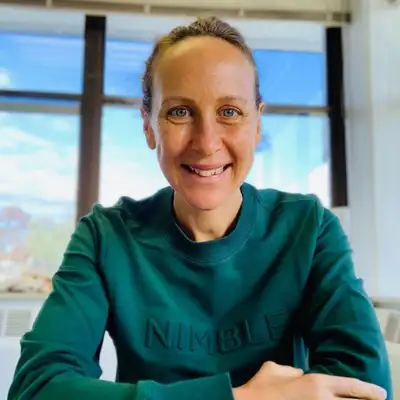
Muscle, Ageing, and the Hidden Cost of Weight Loss - with Prof. David Scott
00:00
Hey everybody, it's Mikki here. You're listening to Mikkipedia and this week on the podcast I speak to Professor David Scott. He's from Monash University. He's an expert in clinical epidemiology, particularly in muscle health, aging and body composition. So in this episode, our conversation centers on
00:26
skeletal muscle, an emerging area of metabolic health. Professor Scott unpacks why muscle mass and function are critical for healthy aging and how this becomes increasingly complex in the context of obesity, weight loss and modern treatment approaches. We explore the tension between improving metabolic health and preserving muscle, including what happens to lean mass during weight loss and why muscle quality matters as much as quantity.
00:54
We also discuss practical strategies around resistance training and protein and how these may need to shift across the lifespan. In addition to all of that, we discuss GLP-1 receptor agonists and their growing role in obesity management, examining what we know so far about their impact on muscle mass, strength, and long-term health outcomes. And we also dive into the complex issue of bringing up children in this environment and what
01:21
the environment means for their musculoskeletal health as well. this is a broad evidence-based conversation that brings muscle back to the center of the metabolic health discussion with clear takeaways for everyone who is listening to the podcast. So David Scott is a professor of clinical epidemiology at Monash University with a research focus on musculoskeletal health, aging and body composition.
01:47
His work centers on understanding and preventing age-related declines in muscle mass and function, including psychopenia and frailty. He has a particular interest in how lifestyle factors such as nutrition, physical activity and body weight influence muscle quality, strength and overall functional capacity across the lifespan. Professor Scott's research also explores the intersection of obesity and muscle health, including the concept of psychopenic obesity, which we talk about today,
02:16
as well as the effects of weight loss and emerging therapies on lean mass and physical function. His work contributes to the development of evidence-based strategies to support healthy aging, maintain independence and reduce the burden of chronic disease. And I have a link as to where you can find Professor Scott over at Monash in the show notes. I think you guys are really going to love this conversation. The more we discuss topics like this, the more they get out there.
02:45
into the ears of people who need to hear them. And speaking of that, the best way to support this podcast is to hit the subscribe button on your favorite podcast listening platform. That increases the visibility of Micopedia and amongst literally thousands of other podcasts out there. So more people get to hear from the experts that I have on the show, like Professor David Scott. All right team, enjoy this conversation.
03:13
Professor David Scott, Dave, thank you. Thank you so much for taking time with me this morning to chat about topics which I am super passionate about, uh health, weight loss, psychopenia, muscle mass, all the works. And I've seen your name around sort of that research sort of space, PubMed, et cetera, for a while. And then I saw you were doing uh a presentation at a conference I'm going to next, this year in Brisbane actually, on
03:41
Increitin pathways and muscle loss. I'm like, oh, I really want to talk to you. thanks so much for taking time this morning. No, thanks for having me. It's great to talk to you. So um can we sort of start big picture, Dave, with regards to, I suppose, your area of interest and expertise and how you got into it? And then I would love to discuss more about those Increitin pathways, GLP-1, and just your perspective and the research on that. Sure. Yeah, so.
04:09
I'm a professor at Deakin University in Melbourne. I uh started out in research with my honours all the way back in, I think, about 2006. um And I was an exercise science student. And like a lot of exercise science students at that time, I was really just focused on working with professional athletes and
04:38
I had not much interest in any other aspect of exercise science, uh but as luck would have it, the Honours project that I was assigned to was involving athletes, but young and older athletes and comparing their musculoskeletal responses to uh a bout of exercise. And it was really just through that project that I got quite interested in what happens to our muscles as we age.
05:06
started to learn about this concept of sarcopenia, which at the time was like nobody was really talking about it. It was uh a very new concept. following my honours, I was able to uh secure a PhD, uh which was more of an epidemiology focus. So I was able to go and work with some experts who were doing a big cohort study in Tasmania in Australia.
05:34
following older adults for about 10 years, looking at changes in their lean mass with Dexar and also strength and physical performance outcomes. And then looking at the associations of those changes with some of their lifestyle behaviors like physical activity and nutrition and medications and other factors. And so, yeah, my interests were...
06:00
were very muscle focused at that point, but then I finished my PhD, went on to a postdoctoral position with an endocrinologist who really, I think, opened the world of bone health and obesity to me as well. So from that sort of uh experience, I became very interested in how muscles, bones and fat interact. um as we age, what are the implications of having low
06:29
poor muscle health, poor bone health in the setting of obesity or without obesity. And I guess that's been my focus for the last 10 years or so really is understanding that, but also starting to do clinical trials, I guess, to address it. So recent studies that we've done have involved engaging older adults with obesity in exercise and nutrition programs with a focus on
06:55
helping them to lose weight, but hopefully minimizing the muscle and bone that they lose as they go. So yeah, I guess that's the sort of uh background in terms of how I got to this sort of stage of my career. Yeah, nice one, Dave. And when you talk about the intersection between like muscle health and obesity, et cetera, I've heard other people in the space.
07:21
consider this idea that it's not necessarily that people are over fat and they are, but actually the primary problem is that people are under-muscled at this age. What are your thoughts? I'm curious to know how you see it. Yeah, I think that makes some sense. think one of my issues that I push quite a lot is about thinking of particularly muscle and bone health and sarcopenia and osteoporosis as lifelong
07:51
life-course diseases in a sense, because it's really about what we can maximise as we're making our deposits in childhood, adolescence, early adulthood is going to determine how we fare later in life. um Because the reality is that we're all unfortunately going to lose a bit of muscle and a bit of bone as we age.
08:17
But if we can start from a higher point, then potentially we've got that greater reserve that will ensure that we don't fall below whatever that threshold might be that might cause us to have increased risk of disability, falls, fractures. So yeah, I definitely think that there potentially is a reserve problem in that we're maybe not building up enough earlier in life. um And so I guess, yeah, encouraging that in our younger population to help them understand that
08:46
this might be what awaits you further down the line is something that I'm quite passionate about, but also recognizing it's pretty hard to tell a 16 year old that they should be worrying about their health at 65. So it's difficult message to get across, I think. Yeah. Have you seen the movie WALL-E? I haven't actually, no. No, and it's, I haven't actually seen it either.
09:12
And I don't think I would now just because it sort of had its heyday maybe 15, 20 years ago or something. But as I understand it, and someone can correct me if I'm wrong, it is like when humans are basically just little blobs that do absolutely nothing living in environment where you don't have to do anything at all. Which it's kind of how like our modern environment is sort of set up for us if we want it to be, right? There's almost no, like in order to be active,
09:40
almost has to be this deliberate and considered decision rather than that it's just an inherent part of our lifestyle. Now, of course, there are people who have set themselves up so they can sort of integrate activity into their life. But I don't know, it's just not the way that we do things. No, think, mean, yeah, particularly like someone like myself, very desk-bound in my work. It has to be a very intentional thing to get out and do those things to
10:09
remain healthy and be physically active. um Yeah, I guess as we say, it's a obesogenic environment where things are kind of pushing us in that direction. And um yeah, the way that we, I guess, address that, there's so many social and economic levels to it that make it such a challenge. for sure. And Dave, I asked when I sent the questions over,
10:36
If you were looking at aging populations today, what might concern you most about muscle health? So I do want to ask that. And then also to your point, if you're not putting in the reserves from an early age, then that does leave someone at considerable risks. So I'd really be curious to know your thoughts on children as well, even though that might not be your primary research area. But first of all, the aging population, what concerns you most?
11:04
Yeah, I think my big concern really is that we have, you know, our, we have our medical interventions that we have available to us now have increased life expectancies to an incredible level. um And, and so we've got this population of older adults, particularly the baby boomers at the moment, who many will live into their nineties and hundreds. um
11:33
But what is the quality of life going to be like for a lot of those people if they're functionally from the age of 60 potentially already starting to have deficits and struggling with activities of daily living and starting to transition into needing assistance and eventually transitioning into needing to live in an aged care facility, for instance, which for a lot of older people, the idea of living, of being
12:01
in aged care is somewhat more of a concern than the idea of death. Most people would put independence almost ahead of mortality as kind of a priority for them. we have this risk that we're going to see people that are living for 30, 40 years of their life under some level of uh disability where they need a lot of support and aren't able to engage in the things that they want to be able to do.
12:30
I often think it's such a missed opportunity potentially that we have this group of people who may have 30 years of their post-work life or 40 years of their post-work life where they can be such an asset to society as well. Thinking of all the things, know, childcare costs these days, if more grandparents were able to carry some of that load.
12:55
more people are volunteering and contributing to society through those things. Maybe they're able to work for a bit longer and contribute economically to our society. It's not only beneficial for us as a society, obviously it's beneficial for them, keeping their cognition. We see that people who are more engaged with those types of things tend to be cognitively better for longer. So I just think...
13:21
My concern is that we're heading down a path where we're going to have a lot of people requiring a lot of care. The social and economic impacts of that is going to be a major concern, but also on the personal level for those people that really impacts a big proportion of their life that isn't really as fulfilling as maybe you would like it to be. um Then from the kids' side, I think
13:49
You know, it's a common refrain from all of us who, you know, I'm a millennial, um, and grew up in the sort of eighties and nineties in, in Tasmania. And, um, you know, I can remember having a lot of freedom as a kid and, you know, riding my bike all over the place and, and, you know, disappearing for a whole Saturday and just being told, make sure you're home by dinner time. Um, and, uh, obviously that's.
14:18
The world has changed in that and I'm a parent now and my daughter is a 12 year old now has just started to get a little bit of independence to catch the train to school. And, um, and, and that is sort of a struggle for us, you know, where, you know, where we battle with that kind of sense of letting them go. But I think we have created this environment where it's harder for kids to, be as active as what they used to be. And then there's all the other attractions for them that, that.
14:48
take them away from getting outside and doing things, um gaming and YouTube and all these other things that are distractions. And so my concern with the kids is that, we're seeing the effects now in the boomer generation, who I can only assume were a very active, outdoorsy, doing lots of things all the time, lots of sport, lots of activity. um
15:17
And so created probably as close as possible to an optimal muscle reserve by and large. um But are our kids today doing that? Because I wouldn't be convinced that they are. I know it's a struggle for me to get my daughter off the couch at the best of times. Yeah. You know, it's funny, I thought of a lot of things as you were chatting there. And if I address your last point first, like, and just...
15:44
what goes through my head. People assume because I'm a nutritionist that the kids in our house are gonna be eating amazingly and I'm gonna have these like most amazing dinners for them. And I mean, as a step mom, I mean, you sort of like one step away from having like, I guess a lot of say in a lot of things, but let me tell you, like as we were growing up, like there was nothing that my husband and I could possibly say that got the kids to eat the food. Because of course you can no longer tell the child that,
16:13
you're not going to go to bed until you finish your peas on your plate, the way we were told when we were kids. But to your point about the health span versus lifespan, right? I saw a statistic a couple of years ago that was only the UK statistic that I'd seen. And it was that women today have 20 year difference between when they die on average versus when they're healthy. So to have that 20 years disability,
16:43
It's a quarter, maybe more of your life. There are a lot of people that you're just not able to maybe do all the things that really matter for you. And I think that's a real shame. And look, obviously a proportion of it is unavoidable. And there's chronic disease and things that are not necessarily related to lifestyle and having the ability to necessarily prevent them.
17:12
I think there is a substantial amount that we can counteract and minimize. Yeah, my dad, he's 73, no, 75, and he's a cleaner. And so he still works about six hours a day actually in his job. that, so he is still relatively active. And then I make him do some squats and planks and press ups and he's quite good actually. But I do think that...
17:40
take your point, like when people reach an age where they do retire and they sort of step back from the sort of the workforce, like if someone is in a fairly active job, then I feel like I say to my dad, I'm like, but you're gonna have to just ramp that up when you retire because otherwise you're missing a lot of that activity that is just forms part of your life. like I, yeah, I think about that a lot actually. Yeah, it's a good point. It's probably not one that I'd sort of put a
18:09
a lot of thought into in terms of the different kind of work forces, but potentially a white collar workforce, they've been sitting at a desk for 40 years, but they've incorporated those lifestyle behaviors to kind of counteract that. they've started, you know, they've gone to the gym sort of regularly and embedded that into their routine. Whereas somebody who's working a quite demanding physically job, um potentially hasn't seen the need for that hasn't.
18:38
had the energy for it at the end of the day, every day. And then it becomes an actual new challenge for them to, do I replace that? Because otherwise, if I am just sitting around, I'm significantly decreasing the amount of activity that I was doing. Yeah. And even just that awareness, right? Yeah. And do you know what? As we sit here and talk about it, just think the big picture.
19:03
part of me is like, man, this is a monumental task. Like, I don't know if anyone's going to come up with a solid sort of solution, particularly as it stands now. um Dave, moving on though, like, psychopenia. So can you just remind the listeners who are unfamiliar with the term just sort of what it means and so the actual definition, then also just, guess, maybe some of the risk factors would be quite good. Yeah, sure.
19:34
You can probably think of sarcopenia in a couple of different ways because essentially we are all experiencing sarcopenia from our kind of mid thirties. um Our muscle mass and function is somewhat declining or you could argue even if you're still going to the gym and you're maintaining your muscle mass and strength, there are still deficits that are occurring in the muscle. And that's why we don't see 80 year olds winning the power lifting events at the
20:02
the Olympics and things like that because essentially the capacity of our muscle to perform declines regardless of how much we're able to do. But there is that kind of concept of sarcopenia, which is this thing that's affecting all of us. And then there is the concept of sarcopenia as a muscle disease essentially. And that's more commonly defined as um an accelerated loss of skeletal muscle mass strength
20:32
and function. So there are quite a few different definitions of sarcopenia and unfortunately, I think it's changed too often and it's caused a lot of confusion for clinicians and I don't think it's managed to kind of get into the public awareness as much as we would have liked to see. But in Australia and New Zealand, for instance, we've done some work where we
21:02
I guess, did an expert consensus process and uh asked experts, how do we define sarcopenia? What should be the way that we do it so that we have some sort of consistency in what people are doing? And um through that process, uh it was uh determined that we should follow the European Working Group on Sarcopenia's definition, which essentially encourages you to uh assess
21:29
muscle strength first. If that's lower, then you can uh assess muscle mass. um And if that's lower, then you would say that the person has confirmed sarcopenia. And then there's a physical function component that you could do tests like a gate speed test or a sit to stand test. from those, if performance is poor in those, they uh classify that as being severe sarcopenia because
21:59
sarcopenia is also causing the performance to be poor. Now there is some shifting happening with all this at the moment because there's a new global group that is reviewing the definition of sarcopenia and I think it will uh be slightly different but that's broadly what we're talking about when we talk about sarcopenia. It's the combination of poor function of the muscle with low muscle quantity.
22:28
bone and excess body fat sort of play into it? Yeah. So with bone, essentially what we see is that um muscle and bone, have a lot of uh interrelationship. There's cross talk in terms of the signaling that goes between them. And generally what we see is that people with low muscle mass will have low bone mass and vice versa. So um
22:56
we often see that people with sarcopenia will have osteoporosis. uh And obviously that can potentially be a concern that there might have increased risk of fracture um because of that. um And then with obesity, I think that's an interesting area too, because we have this issue with obesity where people with obesity generally have higher absolute muscle mass and actually higher strength.
23:26
And that seems to be a kind of a mechanical loading benefit where your muscles kind of have to respond to the amount of weight that they have to carry around and they sort of develop as a result. But at the same time, what we find is that their relative strength, so the amount of force they can reduce per unit of body weight and even per unit of muscle itself is poorer. even though
23:52
If we do, for instance, a hand grip strength with someone with obesity, we'll often see they get quite a good score, they look quite strong. If we get them to then do a gait speed test or another kind of assessment of their actual physical function, they can often be quite poor. So it does make a challenge for defining...
24:15
or diagnosing sarcopenia in people with obesity, because if we just use the definitions that we have available to us and the kind of cut points for low lean mass and low strength, most people with obesity won't meet the definition and you'll say, okay, fine, you don't have sarcopenia, off you go. And then you'll out of the room very slowly and think, was that the right decision? So there is now a concept that they call sarcopenic obesity, which provides some different
24:44
measurements and cut points that try to take into account that kind of relative deficit that those people might have and allow us to more effectively identify people with obesity who might also have poor muscle health. Yeah, you know Dave, like members of, like I understand research-wise, like the tests that are used to determine like the grip strength and the sit to stand and the gait assessment and
25:12
I mean, in the social media world, people are also hanging from a bar for X number of seconds to determine their longevity. But I wonder whether the general population might think, what does a grip test tell me about my strength? if I can grip well, I mean, you've just said what some of the limitations are with regards to body size. how are we as a general population sort of
25:40
How should we think about those assessments in terms of our own function, I suppose? Yeah, mean, grip strength is interesting because um it does seem to be a fairly um reliable predictor of long-term function. um And you can see um over time that it will identify people who um might be at increased risk for declines.
26:09
in function falls, institutionalization, other outcomes. One of the challenges with it and why I'm not a huge fan of it is that it's not very responsive to intervention. So even if, you know, we put people in the gym for 12 to 24 weeks, they're doing lots of weightlifting, mobility exercise, and we'll often find that their hand grip strength
26:39
barely improves or doesn't improve at all, but functionally they've improved substantially. So the things like the gate speed have gotten better. They sit to stand, they're doing more in the time available. So it does make it somewhat of a challenge, I think, to use grip strength and recommend it um on the population level. But unfortunately, we just don't probably have other strength tests that are
27:08
as well developed and have as much normative data behind them. I've always felt very strongly that it would be great to have uh more of a leg strength focus in some of the tests that we do. um But unfortunately, it seems that every lab is using a different device to measure legs, which makes it really hard to establish that norm and identify.
27:35
what is a normal curve for someone across their lifetime like we have for grip strength. So yeah, it does make it challenging. I think there's some really interesting self-reported tools that people can use. There's a really simple screening tool called the Sark-F instrument, which literally the initials tell you what the five questions are, but it's basically around, do you have...
28:04
uh trouble um lifting, I think, a 10 pound object. So that relates to strength. And then there's assistance with walking, difficulty climbing stairs. And then falls is another part of it. So it's simply five questions. And essentially, if someone gets a score of about four, then they will um be considered at risk for sarcopenia. And I think some of those are a little bit more of the real world.
28:34
kind of um effects. um So I quite like those. There's another tool which is a quality of life instrument that is sarcopenia specific um and that's called the sarqual and that is quite a long list of questions but asks a lot of questions that really help us to identify how is your potential lack of strength impacting on um your quality of life.
29:04
Yeah, nice one. And Dave, you mentioned muscle quality and function when we were chatting about psychopenic obesity and what determines, um I guess, psychopenia. The idea of muscle quality isn't a conversation that I hear a lot out in podcasts or in social media and often comes down to we just need to build more muscle. um
29:33
Can we chat about quality muscle? And I've got a question around fat infiltration as well and how much of a role that might play in reducing quality, or is there something that we need to think about and who's at risk? Those kind of questions. Yeah. I think it's a really important area. We um probably don't measure muscle quality.
30:01
as much as we should in a lot of studies. then I think part of the issue is that we have different definitions of what muscle quality is. A very simple approach that people use is also referred to as specific torque of the muscle. And that essentially means how much strength can you generate per unit of muscle. so that might be where someone does a leg strength test and then
30:31
normalizes the performance in that to the amount of leg lean mass that they have from a DEXA scan. And so that's, yeah, really trying to understand how, yeah, per unit of muscle, relatively, how much force are you producing. But then there's the more advanced things that start to look at, like you say, intermuscular adipose tissue, fat infiltration of the muscle. um
30:58
becomes more challenging because generally you'll need um CT or MRI to look at that. Dexa can't pick that up. um And so it's, we've got some, a lot of good cohort studies now that tell us quite a lot about that. And we've got quite a lot of interventions now that tell us that it's quite modifiable, that it will respond particularly to weight loss.
31:27
can lose weight, can um strip some of that fat from your muscles. um So I actually think that it's a really important area and one that we should focus on more. If you look at a lot of the cohort data that's available, you do tend to see that the amount of fat that somebody has in their muscles is probably as good a predictor, if not a better predictor than
31:55
just the amount of muscle or lean mass, I should say, that they have in terms of predicting a lot of outcomes. And that's been shown for things like disability and fracture. So yeah, I think that muscle quality is probably something that's overlooked and probably broadly because the lack of clarity around the definition, I think is maybe the reason for that. But...
32:23
As more technologies become available, as potentially things like CT and MRI become more affordable, I think we will start to see a much stronger focus in that space. And I think another thing that's of interest is kind of the neuromuscular component to sarcopenia as well. And we're starting to see a lot of studies now looking at using uh EMG technology, for instance, to
32:52
to actually measure what the signaling is like between the brain and muscle and showing that that's obviously deteriorating with age as well, and that that could be driving a substantial proportion of the functional declines that we see beyond just the loss of muscle mass that we see. So, Dave, when you say neuromuscular in those signals, so the muscle isn't adapting to exercise as well because the signal's not strong enough?
33:21
In the first instance, guess the deterioration in the muscle function with age is probably being driven quite a considerable amount by neuromuscular degeneration. um And then there's the potential that neuromuscular degeneration does um blunt to some extent the functional benefit that we're getting from um things like resistance training.
33:49
Although it has been demonstrated that it again is quite responsive, that if we start training, we can improve that signaling and essentially get those muscle fibers firing that are in response to the signals and generating more force. So I'd really love to discuss GOP1s with you, Dave, and it sort of fits nicely into the conversation when we're talking about, I guess, muscle quality and the
34:18
just the reality that someone who is with overweight or obesity may have a greater muscle mass, but it might not necessarily be muscle quality. And I guess the reason why I'm sort of dovetailing into GLP-1s now is because you hear a lot in literature and some places on social media, cetera, that GLP-1s cause muscle loss.
34:47
like a worrying amount of muscle loss. So I'm really curious to get your thoughts on that. um And actually just as I sort of set the scene, so obviously they're here and they're not going anywhere for better or worse. And I'm a fan of them and you the right use case. I'm absolutely, think it um could be an amazing tool. I'm curious as to just broadly speaking what your thoughts are over the overall on GLP-1s.
35:14
Yeah, I think I probably share your views. Overall, I see them as a positive for society, the economy, um for individual health. I have my concerns potentially about how they're currently being framed as potentially a lifelong treatment. Obviously, we have seen
35:44
from clinical trials that when people come off the drugs, they get a rebound in weight very quickly. And so I think a lot of the perspective from clinicians is, then they just can never come off the drugs. I guess my hope, although I'm doubtful this will ever be the case, is that we could see these drugs as facilitators for
36:14
a healthy lifestyle rather than a substitute for a healthy lifestyle. so what I mean by that is if I mean, we see it in our our research studies all the time where we have someone with obesity. Physical activity has never been their friend. They might have been the last kid picked in the sports class for the soccer team. um They never felt that they were very good at sports.
36:44
um They might've had, and then obviously from the nutrition side, they've always felt that it's a struggle not to eat, um you know, and not to eat the wrong things. um Where I see these drugs as potentially helping people to start to address those issues in a way. So if we can put someone on one of these drugs, decrease their weight substantially, we can start to say, okay, you you've
37:14
that knee pain that you were worried about when you go for a little jog or if you're um doing some weights in the gym. Hopefully that will have resolved somewhat um because of the decrease in weight that we've achieved. let's start to get you incorporating a bit of exercise into your routine. And similarly, hopefully that food noise that you deal with all the time is maybe decreased a little bit. let's make sure that we're
37:44
where getting you on the right healthy eating plan as well. And then starting to, I guess, slowly wean off the drug and letting the lifestyle take over. Now, I'm realistic that ah that won't work for everybody. But I think it's a shame if we didn't make that kind of our priority and then, yeah, didn't take that opportunity to.
38:12
really still make lifestyle the key and primary uh focus for maintaining healthy weight. So that's kind of how I feel about them. Overall positive, but we'd just like to see them maybe reframed to some extent as facilitators of uh the healthy lifestyle. And then from the muscle side, look, this is a really quickly shifting area because the first uh
38:41
clinical trials, for instance, with semaglutide came out and I'm a bit of a skeptic, but buried uh in the kind of uh results, you had to really go digging for it was this substantial decline in lean mass measured by DEXA and essentially showing that around 40 % of the total weight that was lost was lean mass.
39:10
Just to put that into perspective, if we're talking about an older adult and if you look at the kind of average age of people who are taking these drugs, they are pretty much middle-aged to older adults. We've just studied a study with about 800 GLP-1 users in Australia and the mean age is 57. So it's not a particularly young population and it covers a lot of people who are in that older age group who are starting to experience muscle declines regardless of their weight loss.
39:40
uh And so, yeah, we saw this substantial loss and it's equivalent to probably what you would see in a decade of normal aging. And that's occurring in the kind of one and a half years that they were on the drug. So this raised a lot of alarm bells, I think, for people like myself. Yes, supportive of the concept of people losing weight. It's obviously going to have
40:07
major health benefits, but what are the potential consequences if we don't intervene on that loss of lean mass? And then seeing how the drugs are often being used as well, we bring in this concept of weight cycling, which is for a lot of people, the drugs are still not fully subsidized by our public health system. people
40:37
often are paying out of pocket for these drugs. They're expensive and they hit their goal weight after maybe six months and then they stop taking the drug. But then potentially 12 months later, they've put on maybe 70, 75 % of the weight again and they say, well, I better go back on. And our concern has been, right, so when you initially took the drug, you've lost maybe seven kilos of lean mass.
41:06
you stopped taking the drug and then uh had 12 months where you regained fat and probably almost no lean mass. And then you've gone back on the drug and you're going to lose another maybe five kilos of lean mass. So it's this sort of um concerning vicious cycle of just continually losing um substantial amounts of lean mass. Now, what we're seeing
41:34
in the real world now does maybe allay some of those concerns. first of all, the concept of weight cycling, was just a recent study that showed maybe that isn't what really happens in the real world. Like it happened in the clinical trials where people were prescribed the drug and then were told to stop taking it. And then they followed them up again in 12 months to see how much weight they regained. But in the real world,
42:03
people generally don't just stop a treatment for something and then do nothing. So what showed in this recent study was that people went back on a different GLP-1, they started a lifestyle program, they might've had bariatric surgery, there was something else that was done. So um in terms of in the real world, people regaining a lot of weight, it probably maybe doesn't play out to the extent it does. So what was interesting was that
42:33
In the clinical trials, showed that people regained about 70 % of weight. In this real world study, after 12 months, people who'd stopped taking these drugs regained only about 1 % of their weight. And is this the one that you said you've just finished this is not our study. This is a different study. So the study we did was more of a survey of people's experiences and perceptions of GLP1s. And I guess just to kind of round out on the muscle side, um
43:03
What we've also seen with, uh obviously, with all these studies are generally focusing on lean mass, which is measured by DEXA. And as I sort of touched on, doesn't account for um muscle fat infiltration, connective tissues, organs. um And so what uh has recently come out in a uh separate study where they tried to look more specifically at muscle is that
43:32
Perhaps when we look at muscle definitively, the total loss is more in the range of 10 % as opposed to this 20 to 40%. And what we're seeing with the Dexalene master clients might actually be substantial decreases in the size of the liver, which might be due to reducing the fat infiltration of the liver, which is a good thing as well. So we're sort of in this...
44:01
place in the moment where we're a little bit unclear how much of a concern this is. We have a lot of people on either side um arguing pretty ferociously, the sort of people who are saying this is catastrophic, this loss of lean mass versus probably more the doctors who are prescribing the drug saying you're unnecessarily causing concern for patients. Patients are stopping taking the drugs or refusing to take the drugs because of this rhetoric around muscle.
44:31
So I think we need to probably at the moment be a little bit more um cautious in terms of what we're saying. um I think the muscle loss, regardless of how great it is, is something that we should pay attention to. And we should be encouraging people, while you're taking these drugs, let's do whatever we can to maintain as much muscle as possible.
45:01
So we don't have to be um alarmist about it and make people think this is a em real concern, but at the same time, we can encourage people, um you're going to get great benefits from these drugs, but we think you can even get better benefits if you maintain your muscle mass. Because we know muscle plays a great role and a really important role in glucose disposal. if it's someone with type 2 diabetes taking this, I can't believe that.
45:32
maintaining their amount of muscle or even increasing it whilst on the drug um couldn't even have even greater benefit than just getting the weight loss alone. Yeah, totally agree with you. And I saw there was some discussion around JLP-1's potentially improving muscle metabolism. Do you have any thoughts around that? Is that just related to that glucose disposal or?
46:01
Yeah, I think um there's that side of it. There's obviously the fat infiltration. If you're reducing that, then that's going to improve, we think, the glucose disposal aspects as well. There is some research that indicates um that the microvasculature might improve and that improves the blood flow in the muscle um and that could...
46:28
potentially again, you know, enhance the glucose uptake. So um there's a few mechanisms there. I don't think it's, it's very strongly proven in, in human trials, but uh yeah, I, I think there's, there's some evidence that the drugs could have, have some benefit for muscle. There doesn't seem to be any evidence of a kind of toxic effect of the drugs on muscle as much as they cause a substantial loss of muscle.
46:58
that seems to be wholly due to the weight loss. And it's proportional to what we would see in a caloric restriction intervention. It's just that because the amount of weight loss is so substantial, the amount of muscle loss is much greater than what you see in a typical um dietary intervention. um yeah, I think they probably
47:28
could have some minor benefits for our muscles and how they work. But I think the functional outcomes long term still remain to be seen. Some of the short term data is showing us that people are functionally better. We probably attribute that mostly to the fact that they've lost weight and they're able to move around a bit easier. I think what we'll wait to see is um
47:56
you know, maybe in the next five to 10 years, we'll start to see some long-term data, particularly in older adults, to tell us whether that functional benefit remains and how do they fare against their counterparts who weren't on the drugs, who have been aging alongside them. Yeah, you know, these are all super interesting questions. I was listening to a podcast yesterday, Dave, talking about a trial that just, I think, I mean, had finished and I think data was being released.
48:25
looking at the combination of a GLP-1 and I think it was a myostatin. And what they found was that the people who even who were on the GLP-1 and the myostatin helped preserve a lot of the muscle much more than obviously just the GLP-1. But even the people on the myostatin actually lost significant weight and had better outcomes overall. uh I'm pretty sure that was the sort of synopsis.
48:54
Yeah, think you've accurately summed it up. I haven't looked at that study in a lot of detail yet. I've been meaning to. in my to-do list. Yeah, it's a monoclonal antibody called bimigramab, which um was initially trialed as a drug for sarcopenia. So essentially to treat sarcopenia and what they found and what they found over a few trials, actually failed in its clinical trials for sarcopenia because it does have these...
49:22
wonderful benefits for increasing lean mass and even muscle mass, but it doesn't um seem to improve function in and of itself. we kind of argue with people that the problem was that they didn't do any exercise alongside and had they done that, um they probably would have seen a benefit. um like you say, it seems to have its own independent
49:50
effects on body fat and glucose handling. um This combination with uh semaglutide, I believe it was, um did seem to largely offset that muscle decline. I guess this is another reason that we maybe have to be a little bit cautious with um talking about this muscle loss as being so catastrophic because I think there are things in the pipeline.
50:20
that will potentially address it. um Again, I have my philosophical issues with these drugs that can essentially make us all look like Cristiano Ronaldo with no work whatsoever. And I worry that we might have a future where that's the case, a bunch of couch potatoes with amazing bodies. Because I think, you
50:47
the social kind of aspects of uh physical activity and healthy eating and things like that are so important beyond just the health outcomes of it. But um yeah, this might be a world that we're kind of heading towards. I completely appreciate that. And I think the way that you frame it and you're uh talking about reframing, I guess, the use of the GLP ones is exactly like that.
51:13
where I see would be the happy place to be, right? Like, to your point, like as adjacent to or giving people space to then begin, even if it's not immediately, but begin their sort of lifestyle habits that they can put in place. That is such a good point, like, you know, all end up looking like some Greek god with doing no work at all. um But to your point, like the mental health benefits of being active, like all of the things that make you a happy human.
51:42
Um, it's much more than just looking amazing. It's that, that feeling you get from, from eating well and exercising and sleeping well, like all of those things would be, um, lost if it was just about physique, guess. Not that it is. but yeah, I totally agree. uh I was talking to someone recently, I've been a runner for a long time and, I've seen the boom in running, certainly in Australia. think it's worldwide really at the moment in the last couple of years. Um, and it's.
52:12
it's so good to be out for a run now and seeing lots of people out running as well. lots of people, like I'm bit of a lone wolf with my running. don't really like to do it with anyone, but I see the people that are out socializing running and it's, you know, think those aspects of physical activity, you can't replicate that in appeal. uh And uh so, yeah, I hope that we can still really highlight the primacy of the benefits of
52:41
of being active and eating healthy, even if we do come to a point where we've somewhat overcome this, the outcomes of not doing those things with drugs. Yeah. Dave, do you have any opinions on if people were to begin a GLP-1, but it took them a bit of time to actually start implementing the lifestyle stuff? I guess, I mean, this may be your
53:10
professional opinion or it might just be your knowledge sort of informing you, but do you think it's catastrophic for someone to get on a drug, be on it for eight to 12 weeks and then begin exercising when it's much easier for them? Or do you think that right from the get go, they have to be doing it? Like, I'm curious. No, I don't see, I mean, obviously we don't have the scientific evidence to tell us. I think that's an interesting study that...
53:37
I know we've talked about and I'm sure others have talked about, and there's even this concept of almost like a pre-habilitation program where before someone goes on the drug, let's get them exercising and building up that muscle reserve before they start. But personally, I probably don't see that as maybe being that crucial. somebody, I think often they're excited to get on the drug, they're motivated to get on the drug.
54:06
If that's their starting point, then I think we should generally be supportive um whilst kind of encouraging them. Once you start to see that weight dropping off, you will hopefully feel that you could maybe start to engage a bit more in a physical activity program. um And so I think, yeah, if people were to go on the drug and have an initial period where they're just losing weight, um I don't think that should necessarily be discouraged.
54:36
OK, nice one. And to finish off, Dave, like in your lab, you mentioned like a uh survey-based study looking at the use of GLP-1s as something that, uh if you've published it, I haven't seen it. So apologies for that. Not published yet. It's literally just started the data analysis. OK, nice one. So in addition to that, what else is your lab or have you got in next couple of years coming out?
55:04
around in this topic or in this area which people are sort of hot on? certainly since COVID a lot of our work has transitioned to digital health interventions um and trying to deliver exercise nutrition programs to people in their homes via smartphone apps. We've used things like the Amazon Alexa to deliver programs to people um and so we're
55:32
Probably thinking along those lines in terms of, and this was a lot of what this survey we did about was to sort of understand people's interests in getting programs. How concerned are you about your muscle loss? And did you have a conversation with your GP when they prescribed the drug and what would be the features of a program that you might like to engage with? So that's going to inform probably what we do in terms of developing such a program. I guess, um
56:01
The reason we're taking this path is, I mean, as you would know yourself with your diet expertise, we know what the optimal approaches are largely now for improving human health. And the reality is that we can't get a large proportion of people to do that. So a lot of our focus now has really been on
56:30
not letting the perfect get away, get in the way of the good. So with our exercise programs that we're doing with people in their homes, older people in their homes, look, we know it's not going to be as effective as if they were to come to the gym and be doing squats and supervised exercise with an exercise professional. But we know it's going to be better than them sitting on the couch and doing nothing at all. And so we're really just, I guess, interested in
57:00
meeting people where they are at and giving people a range of options. um I think we're often too focused on just doing or just saying this is what works. You need to go to the gym um and have an exercise physiologist train you. And for a lot of people, that's just not of interest. They don't want to do that. yeah, um for our
57:28
kind of future work in this GLP. One space I expect that we'd be developing a kind of tailored program that allows people to exercise, get um nutrition advice uh to a smartphone app and using that in their home. And then really just trialing the effects of that, particularly on, um I think, uh their ability to transition off the medication.
57:57
and stay off the medication. Obviously the muscle and bone effects will be of interest and we'd want to measure them um as well. But I think um particularly interesting seeing can we generate a potential economic benefit by getting more people into the lifestyle um approach as opposed to staying on the drug for a long, time. Nice one, Dave. And I really like that. It's a really pragmatic
58:26
sort of approach. I think also probably listeners will appreciate your, I guess the fact that you didn't catastrophize a lot of what they're hearing around muscle loss and the potential, I guess, downsides of having to be on something forever, losing all your muscle, know, just being a bag of bones and probably not even because your bones kind of, you know, disintegrate at the same time. So that was really great.
58:55
Where can people find out more from your lab and what you guys are doing? Do you guys have a public Facebook, sorry, inter-page or internet page or anything? Look, I'm not as active on social media and the web as I should be. I um used to have a Twitter um page that I don't really use anymore, um at David Scott PhD. um
59:18
Mostly posting on LinkedIn these days actually if people want to find me then but if you want to see more about the research that we've produced, if you Google David Scott Deakin University you'll find my research profile on the Deakin University page and that shows you current projects and publications that we have. Nice one Dave, thank you. I will put links to LinkedIn and that profile page from Deakin University in
59:47
the show notes. Thank you so much for your time. really appreciate it. problem. It's been great to talk to you.
01:00:08
Alrighty, hopefully you enjoyed that conversation as much as I did and I really loved how Professor Scott not only talked about it from a research perspective, but really just from a personal experience with him as a parent and what he sees out there in amongst the general population on a day-to-day basis. So that's it for this week. Next week I have Rachel Arthur on the show to talk about micronutrients. Such an amazing conversation, you're gonna love it. Until then though, you can catch me
01:00:37
over on Instagram thread and X @mikkiwilliden Facebook @mikkiwillidennutrition or head to my website, @mikkiwilliden.com. Scroll right down to the bottom, pop your name in that little box and jump on my weekly email list. All right guys, you have the best week. See you later.