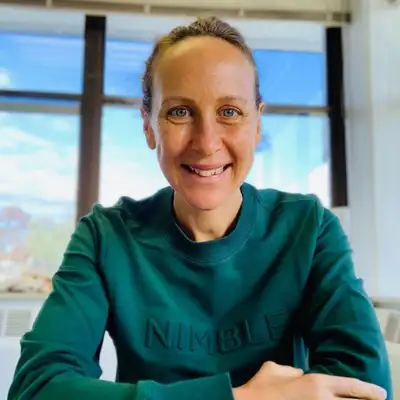
Rachel Arthur: Micronutrients Beyond the Basics: What Really Matters
00:00
Hey everybody, Mikki here. You're listening to Mikkipedia and this week on the podcast I speak to naturopath Rachel Arthur who specialises in micronutrients and their role in human health and performance. So in this conversation we take a step back from the noise around supplements and dig into what actually matters when it comes to nutrient status. So Rachel shares her perspective on how we assess
00:29
whether people are truly well nourished, why intake doesn't always reflect what the body is using, and where some common gaps can arise even in those eating a generally good diet. We explore the nuance of absorption, bioavailability, and individual requirements, along with some of the limitations of current guidelines and standard testing. We talk about how to think about supplementation, the importance of nutrient forms and interactions, and
00:58
or people pursuing fat loss or active individuals should keep in mind when it comes to optimizing micronutrient status without over complicating the process. So Rachel is a seasoned naturopath and registered nutritionist with a specialization in integrative nutrition and diagnostics. With three decades of experience spanning clinical practice and educational settings, Rachel has established herself as a leading educator in the field of nutritional medicine.
01:25
Her work is deeply rooted in evidence-based practices, contributing to renowned techs such as the award-winning Burbs of Natural Supplements, and evidence-based guide across all four editions. Rachel delivers advanced training and mentorship to a wide range of healthcare professionals, including doctors, pharmacists, dieticians, and naturopaths. Her educational initiatives, such as the popular Update in Under 30 podcast, reflect her dedication to providing practical,
01:55
actionable insights that empower clinicians to integrate nutritional strategies in their practice effectively. With a passion for integrative health and an ongoing dedication to professional development, Rachel's presentations are not only informative but also transformative, making a significant impact on the practitioners she mentors. And I will say as someone who has looked up to Rachel for multiple years now in terms of her
02:21
her knowledge and her expertise. was such a delight to be able to chat to her and she's so down to earth yet pretty no nonsense when it comes to her material. Now you can find Rachel over on RachelArthur.com.au and I've also put a link to the Nutrient Prescriber course which is where a lot of this conversation was sort of derived from. Before we crack on I would like to remind you that the best
02:48
place to support this podcast is to hit the subscribe button on your favorite podcast listening platform that increases the visibility of micipedia and amongst literally thousands of other podcasts out there so more people get to hear from experts that I have on the show like Rachel Arthur. Alright guys enjoy this conversation.
03:10
Rachel, thank you so much for taking the time this afternoon to chat to me on Wikipedia. I was just saying to you how you have been such a mentor for me over the, gosh, it is at least 10 years, if not more, since I came across your content as part of the ACHNM community. And I just really love how you, just how you think about things, but also more importantly, how you translate that into information.
03:37
that as clinicians we can use, but importantly, your clients, my clients, the general population can really use. So I'm looking forward to this conversation. That's awesome. I'm really looking forward to it too. So I guess one of the, I mean, obviously, well, it's obvious to me and you that we're talking about micronutrients today. And I talk all of the time about macros. And if you go on social media, everyone is talking about protein, carbs, fats, and
04:06
and the rest of it, which of course is important. getting what you need is more than just hitting particular numbers on the macronutrients. And then I obviously saw your um nutrient prescribing table came through my inbox and I'm definitely getting that. And I just thought the conversation around micronutrients is often missed. So Rachel, first, before we get into sort of the nuts and bolts, uh obviously you've been doing this for
04:34
I'm going to say since the beginning of time that you're not that old. But what sort of inspired you to sort of really do a deep dive into this? Or is this always what you've done? uh I have done nutrition for a very long time. I think when you got me to reflect on this question, and I get asked this a lot, I think maybe my answer keeps evolving, but I knew I was a science girl when I was at high school. And it was only when I
05:02
and I was leaning towards environmental sciences more so. And then it was only when I left school and yes, I am going to sound like such a cliche. I hitchhiked up the East Coast of Australia and I ended up in Byron Bay and this was a long time ago people. Byron Bay wasn't what it is today. And thought, oh, um everybody here is into health, healthy science. um
05:31
And then I realised that I'd spent a good part of my childhood in health food stores thanks to my mother because she made everything from scratch and she wasn't trained, but it was a value that was very strong for her and therefore was something I'd been exposed to the whole time. So I went, oh, do know what? I should probably move into health. And then particularly, I'm curious as to how you think things have evolved in terms of our understanding of
06:01
of nutrients actually. Particularly these micronutrients and things like that. My training was very different to yours. was BSc in science and nutrition. We were introduced to the micronutrients there, but we were always told, you can get everything you need from food. Supplements just end up in the urine. This is an overblown thing in order for industry to make money.
06:31
Yeah, so what do you think, Rae? Such a great question to kick off with. um I think that, I mean, you started by saying how is our understanding about nutrition evolved? And I think that for people to understand all the contradictions, because I feel for the general public, I feel for them wholeheartedly when they go, first you said this, then you said that, I don't know what I.
07:01
you know, should I be eating this? I'm confused. And I think, well, nutrition as a science is really complicated. I often quote a very famous nutritional scientist called Martin Colmeyer where he says, nutrition is a hard science. It's not for the faint hearted. And what he means by that is it is a hard science, just like physics and biology and chemistry. It relies on those sciences, as you know, Miki.
07:31
it's chemical and it's biological and it's all of those elements. And then it's something more than that. And that's where science struggles with nutrition because they go, wow, well, measuring activity of drugs, far easier. Give me a drug researcher any day, right? They go, our job is straightforward, but
08:01
because the body doesn't have a need for any medication. Oh, nutrients, the body needs nutrients. Oh, there's all these extra layers of complexity because our body is built to have our own regulatory systems for these. It is so complicated. So when you say how has nutritional science kind of evolved in our perception of nutrition, I think it's been really stopped, start.
08:30
I think in some ways it hasn't evolved at all. know we're going to talk about RDIs. They came about the origin story of amounts per day that we needed to consume per essential nutrient. That came about from the depression era when governments saw it as their responsibility to issue ration coupons that would keep people alive. They needed to do some science and work out.
08:59
nutritionally, how do we keep people alive? So in some, and shock horror, you know this, Mickey, some of those RDIs haven't changed since the 1930s. So vitamin B1 is a great example or a terrible example, whatever way you want to look at it. It hasn't changed. Others of course have. And then we have these things that just boom, like everybody's talking about NMN or everyone's talking, you know, there's these little
09:29
moments in nutritional science when something seems to evolve very quickly, but it's usually because there's a vested interest because there's money to be made. And that is one of the handicaps of nutrition always is just there's not enough money to be made in terms of micronutrients, good old fashioned regular micronutrients. Does that answer your question? It's a bit complicated, but
09:58
I think in some ways we're evolving and then we get these big giant leaps forward in innovation. Everyone goes, oh, I have to be on NMN. And I'm like, do you? And let's go back a bit. Let's get your basic nutrition right first. Yeah, nice one. And often people miss the wood for the trees, right? That's a saying, isn't it? Like they don't think about the fundamentals and whether or not they're actually sort of meeting those.
10:26
um Rachel, how you described, you know, how they figured out the RDIs. Like you would have heard of Bruce Ames in his recent, yes. I love the way that he thinks about his triage theory. And that's something else which I don't think is captured in the RDIs. you can, no, no, I didn't think so. And for those people who are unfamiliar with this, I'll pop a link in the show notes actually to some really good writing around the triage theory, which essentially discusses the
10:55
almost the silent roles that these micronutrients have in the bodies, the ones that we don't really consider. We've just sort of considered that sort of what's the first thing to go when you're deficient in something. Well, then we'll just, you know, replete you to that point without thinking about that longevity. Yeah. um I think there's so many interesting bits to that. Like I always say, there's a dirty back appendix at the back of the NHMRC document. So this is the government document.
11:25
that outlines the RDIs and the dirty appendix at the back, which is not dirty at all, of course, but you have to go right to the back to find it, starts to speak to nutrients, not in terms of minimal amounts to prevent scurvy in the case of vitamin C and rickets in the case of vitamin D, but they're called suggested dietary targets. And I'm like, wow, these shouldn't be at the back of the book. Yeah.
11:52
So we were talking about this very low bar for vitamin C. And even by the end of that document, they've lifted the bar and said, oh yes, but if you wanted to be well. Not just free of disease. That's right. But you might need more than that. I'm like, hmm, yeah. So I think there's a lot to that. And I love
12:19
I actually saw on your socials recently, you were talking about the triage theory and I don't think we talk about that enough because the idea that one nutrient uh is a concern because of one disease associated with its deficiency, that is missing the whole point. None of these nutrients work in isolation, not one of them, not one of them.
12:45
what's happening well before you get to a deficiency associated disease is your kind of one elapsing level of one is letting the rest of the team down. And so there's processes that aren't working well and there's nutrients, other nutrients that we're unable to hold onto or unable to absorb because we didn't have enough of its teammate.
13:12
So they never work in isolation and that's not really understood. Yeah, not 100%. Rachel, as I said with your, obviously the information putting out there for practitioners, you've had to go and dive deep into the literature, looking at nutrient intakes, but also of course, looking at nutrient status. What do we know about nutrient status for the general population, but just in general? Look, we don't know a great deal.
13:41
I think that we've got broad brushstrokes. One of the reasons, so broad brushstrokes of things like we know that uh nutritionally in Australia and New Zealand, we're in a better position than African countries because of food security and therefore some reciprocal rise in intakes across the board.
14:08
We know things like this. We also know, but I think one of the reasons we're very hampered about understanding the true state of people's nutrition, even at a population level, is because we've come to trust the wrong tests. again, I'm going to say again, nutrition is, I'm going to
14:39
reframe coalmire's quote, I reckon it's the hardest science. mean, black holes are one thing, Nikki, but nutrition is so hard because for example, there isn't one marker. There isn't one, I can measure the zinc in your plasma that does not necessarily reflect the zinc inside your red blood cells, does not necessarily reflect the zinc in your muscles or your, you know, we,
15:08
This idea comes from medicine that there will be one test that will tell us the whole story. It doesn't. And so when we speak to iodine status of Australians, we measure urinary iodine, all sorts of problems with that test. But we have put our confidence in it at a population level. So
15:36
It's tempting to say it's all rubbish, therefore I don't pay attention to anything. I think that would be a mistake. I think there's some important markers on there, particularly when we say, okay, this is what those urinary iodine results across a sample of Australians and New Zealanders are saying. And then that does sort of match with some dietary intake studies we've got. But as you know, there's a lot left.
16:04
to really understand about the individual sitting in front of you, who is an average and isn't represented in that sample. Yeah. So, you know, at what point do we sort of, like for anyone, I guess, given what we know about the food supply, about this life in general, can anyone just go forth in life with a food first approach and actually be optimally well, do you reckon? I don't think it's for everyone.
16:34
I think that there are clearly categories. I'm sure you have a lot of the same. So there are people that I'm like, look, if you um are restricted in your eating in some way. So a lot of people that could be for a variety of reasons, it could be by choice. We can see people take out whole food groups, multiple food groups. They go carnivore or they go vegan or they go something like that. It's not impossible, but it's
17:04
really hard. It's a full time job to remove those big food groups and stay buoyant across the board with your nutrients. Then we have individuals who uh their requirements are greater because they're not absorbing well or they're losing more. And these can be because of disease or because of drugs. So
17:31
We, PPIs are one of the most prescribed medications in, I know, both of our countries and it reduces stomach acid by 80%. There are a lot of nutrients that rely on that stomach acid for the first step in their digestion. We know that the most clear correlation with PPIs is people will be magnesium deficient, but
17:57
that is just the tip of the iceberg. There's a lot of others. So for individuals in these sort of groups, go, look, you're not going to get it out of your diet. We're going to have to give you more. Any individual with any degree and for any reason that they have that of anorexia. So that could be an eating disorder, sure, but it could be cancer. could be chronic pain. It could be another mental health issue. Any of those things. are, these are kind of
18:27
the big vulnerable groups that I think it's highly unlikely they'd manage without supplements. Yeah, I totally agree. Rachel, what about your thoughts on GLP-1s? And I'm not sure if over the course of the last year, it's just sort of exploded, or in Australia, it certainly has in New Zealand. Like, I understand that, you know, GLP-1s slow gastric emptying. Obviously, people eat far, far less than what they do.
18:56
what elements of, I guess, um taking that drug, um how would you see that influencing both, I guess, intake, but also what they can absorb? Is there any issues there that we know of that you know of? No, I haven't gone in and unpacked the effects on the absorption. What I have been concerned about principally is the lack of intake. And I...
19:25
worry deeply for people's nutrition who are taking this. And of course, we're starting to hear these case reports come to light, uh either in the scientific literature or just in our clinics. Women that have never had a fracture, but they're now on a GLP-1, just fractured. just, it was barely a fall and it was a fracture. And you go, okay, this doesn't sound good.
19:51
this concerns me about all the you are being starved of really by that dramatically reduced intake. And I just want to say I heard a wonderful interview with the head of um Dietitians Association Australia and I cannot remember her name. It was a brilliant interview and she said this is medicalised starvation, it's not new.
20:17
It's just the latest drug class that's doing it. Yeah, interesting. We used to use amphetamines, we've used all sorts of things. This is just the latest. Yeah, super interesting. um Rachel, you mentioned absorption just a few minutes ago with regards to PPIs. So obviously people can take nutrients, but they're not necessarily going to absorb them. What are some of the challenges that people might have with... How do we know that what we're taking um
20:46
actually is getting to where it needs to be? Like are there things that people need to know about or sort of signs that they're not actually getting what they think they're getting? Yeah, think, okay, em I think the most common things that impair, it's not that they block all uptake, but they impair our absorption, I think are really common things like tea. Tea is one of the most, you know, my mum,
21:14
God love her, she spent a lot of time in the health food store, but she also took all her vitamins with a cup of tea. And it was only when I went to uni 70 years later, I was like, yeah, that's not how you do it. um So think as like tea and alcohol, we mentioned PPIs, there are other medications that can interfere as well. You talked about GLP ones. I think if you have a sense,
21:42
We all increasingly have become aware of our digestion and I think that's a great thing. I think there's so much more talk out there about the gut being the center of our individual universes and being very important. I think we're all much more aware of how our digestion is operating. If there are suggestions that there's something not quite right with your gut and it really doesn't matter what that is,
22:12
could be burping, could be flatulence that seems disproportionate. It could be a really fast transit time, which means your stools are happening often, frequently, they're a little bit loose. All of those things could suggest that the time that the nutrients have, because it's a very brief time, whatever we put in our mouth.
22:37
It's only very, as you know, Mickey, a very short section of that gut that does the bulk of the absorbing. Now that's not to say your stomach doesn't pick up a little bit and your large bell doesn't. They all play a part, but it's really this small intestine and in fact, a smaller section again of the small intestine. And so it's a very brief window of opportunity as those nutrients pass that lining in the small intestine to pick it up. So if you've washed it down with a cup of tea,
23:06
or you're moving at a rate of knots because all your gastric intestinal content is just moving too fast. These sort of things would suggest that there is some degree of impairment to absorption. To answer the other question that you tied on at the end there, how might you know? I think one of the biggest things that I see is people who continue to take something
23:35
thinking, I must just need more without results. And I'm like, either the diagnosis was wrong. So this isn't a magnesium issue or this isn't a zinc issue or do know what, you do need iron, but you've got all your doors down in your gut for iron because we do that a lot if the signal is sent from other parts of our body that says it's not safe right now to pick up iron.
24:05
So there are other reasons, but if somebody has taken lots of vitamin D and their next vitamin D test isn't any better, and it's not for other reasons, then I would be like, okay, let's dig in to your ability to pick this up because that's a legitimate question. Individuals who are not absorbing fats well, won't absorb fat soluble nutrients well.
24:32
So we have to choose then to use a different form of vitamin D that they're better able to pick up in terms of calcifidol. So there are, think that's one that gets missed. think sometimes as uh individuals, even practitioners sometimes miss it. Oh, we just have to keep going with that iron or we just have to keep giving them more zinc. Like, no, you've missed something here. Yeah.
24:59
Yeah, how long should it take? There's no response. And like, how long should people wait with, and then obviously it's going to vary. Well, it's going to vary. So I guess depend on a number of things like how they know that they're deficient symptoms versus the test as well. I'd curious, I'd love to check to you about, know, best sort of ways to test some common uh differences that you might see. But how long should someone wait?
25:27
to then determine, okay, well, this isn't actually doing the job. Like, is it a matter of weeks? Should we feel better in days? Does it depend on what it is? Cheating nutrition is hard, isn't it, Lea? What are the people asking for, Anta? And we just can't. I Because let's look at two different contexts, right? um I've been treating an 80-year-old woman for nighttime muscle cramping. She came to me, she'd been on magnesium for years, and she still had...
25:57
nighttime cramping. And it wasn't that she was on a cheap and nasty bad form. She was on a good form. It wasn't that she was drinking lots of alcohol, which would, you know, make you not be able to hold on to that. You know, it looked pretty good on paper. But once I started tweaking things, I expected her within days to go cramping on and she did.
26:26
Because you're looking for an acute response to a replacion. Magnesium is an antispasmodic. I was like, oh, this is going to be quick. If once we hit the spot, it'll be quick. So that's exactly right. But let's take another example, right? Someone with an iron issue. Do I expect within days for them to feel better? Hell no. And if they do, that's wonderful, but it's placebo.
26:56
There's no way that iron has been converted to hemoglobin that has then given you any sense of more energy or fueled the mitochondria or whatever, whatever, not within days. So in the case of iron, because they're all so unique, I'm going to say we had this baseline because in this instance it would be based on
27:23
seeing their iron studies at base, which isn't a single marker, it's five markers. So I would have seen that at baseline and I would retest possibly a month, two months, because we might see something change sooner. We will see something change sooner, but I just want to give them a good run at it so that I can see more of the markers and the effect that this supplement has had on them. So it really is...
27:51
so different from one micronutrient to the next. Because to take that example all the way through, does the patient feel better at a month with that iron when the results look better? Not necessarily. Oh, interesting. Do you know what I mean? Again, that comes down to the inherent complexity of iron and what it's doing. Or let's flip that. Probably a more real world example.
28:20
And I know you would have been through this. Woman comes in. My doctor says I'm iron deficient. My doctor says I need to do something about it. OK, she is. She's got low ferritin, which means low surplus, and she's anemic. Right. So the iron deficiency has had functional consequences. She hasn't been able to make enough blood. OK, let's put her on some iron. We put her on iron. We do that retest, let's say six months, six weeks.
28:49
eight weeks. And the doctor says that ferritin is not any better. Right? But the patient feels better. Why? Because there is a hierarchy of repletion. When you are low in iron, you don't get to say where that iron goes first. It makes perfect biological sense that any iron you get will pay off your debts. Her debt was blood production.
29:19
So her ferritin might not have budged, her hemoglobin's gone up, she's feeling better. So this is probably good to follow that all the way through so people understand. It's not just a mystery. There is always an explanation about something that seems nonsensical. Like I took the iron, my results are better, I don't feel better, or I feel better but the doctor says I'm not better.
29:47
It's more complex than people understand. And is that just sort of pointing to the fact that you can't just base it on tests alone, you have to think about symptomology and the experience? What is it, about... I don't know if you'll feel free to sort of chat freely about it, but what about doctors' role in, I guess, micronutrients and the ability to test, I suppose? I mean, here in New Zealand,
30:16
GPs have 15 minutes, they don't get trained in nutrition. I don't think doctors necessarily need to be trained in nutrition actually. I think they need to be better at referring on maybe or working with rather than have a whole other thing that they need to do. But it's a challenging environment for doctors who are already pushed for time to know the intricate knowledge that you've got. Yeah, look, I agree. And I think that
30:45
Doctors feel that. A lot of doctors feel that they're between a rock and a hard place. Because if they don't recommend the iron in the iron deficient woman, if they don't recommend folate in a woman trying to conceive or calcium in a woman with osteoporosis, and yes, I'm picking on the women, there are other examples, but then they could be seen to not be doing their job, right? But if you got up,
31:15
an opportunity to have a personal conversation with those doctors and you said, how confident do you feel doing this? They'd say, no idea. Like honestly, this is not my shtick. This is not my bag. And these are like the three things we learned, you know? And so I'm going to do it because it's better than doing nothing. You and I sitting on the other end of that with that patient might be like,
31:44
Okay, that's not quite how you fix that iron issue or that calcium isn't effective for you with your osteoporosis. I agree. We all need to know what our strengths are and it wouldn't it be wonderful if doctors felt more able to say, go see Mickey, go see Rachel. And there are, I'm sure you know them. I mean, I have doctors who say to our shared patients,
32:13
They look at the results and then they go, okay, take these to Rachel because she really understands. Yeah, Yeah, for sure. Rachel, you, um I'd love to chat about the forms of different vitamins and minerals out there. People get really, clearly confused. mean, because there are like hundreds of thousands or tens of thousands of them. And I saw you actually, you did a post on iron, actually, since we're talking about iron. Like someone will go to a doctor and they'll get Ferragrad, I think, or
32:42
you know, it'll get like this huge, like 100 milligram dose because that's what it takes. And the way to fix your GI problems is to take it every other day rather than every day is the recommendation. And I understand why, you know, that they say that, but you know, how important is the form of the nutrient with regards to our ability to actually use it? Like. Really important, really important. And I guess the, um
33:13
The easy way to illustrate it is saying, well, calcium is in chalk and it's in cheese. Right? Yeah. Literally. Yeah. It's chalk or cheese. So what do we think even as untrained individuals about eating chalk? Probably not what we're designed to eat, right? Probably not the best source of calcium, but that's what we're being sold.
33:37
The predominant calcium supplements on the market are chalk. They're a form of chalk. They're calcium carbonate because it's the cheapest, highest yield, which means you can put a large amount in a swallowable tablet form. One of the sayings that I teach in my nutrient prescribers program, which the table came from is just like a little summary, is that form determines function.
34:07
So what that means is the minute you change anything about the form, what the calcium was bound to, carbonate in chalk, um often lactate in cheese or some other kind of uh organic acid or amino acid. um As soon as you change the form, you change the behavior and the function of
34:35
that micronutrient. Now that could be a small effect or it could be a massive effect. So let's go back to the NMN example because it's on such a hot topic right now. Everybody's on it. um NMN is related to vitamin B3, right? And it's being heavily marketed as the newest greatest thing in terms of kind of boosting energy and boosting performance.
35:06
It is a derivative of vitamin B3. Let's go back to our old fella, B3. It's essential, which means if you don't get enough, you'll get a disease associated with it, which we know is called pellagra. m But people could be so taken by the selling of, I've got to be on NMN. NMN m
35:36
is a form, but it has a different function from B3. can't do any of B3's other jobs. So you could literally be NMNing it to the nth degree and be B3 deficient. It's crazy, right? But I don't think we have... It's a hard one to communicate because
36:02
Nutrition is so challenging to communicate in simple ways to people. But that's showing you how dramatic form can change the function of something. As you're talking about NMN, I'm thinking about NAD +, which is intravenously, I know people who go every couple of months and get it just put in. Straight in the vein. Straight in the vein, along with...
36:30
dose vitamin C, which actually I think is pretty interesting. I mean, don't probably know enough to pass comment, but feel free to add a comment if you do. But you know, all these huge doses of these micronutrients, I mean, how does that change, I guess, what they do in the body? In my head, I'm like, there's never really a natural way, if you like, that
36:59
this would actually occur in nature. even though you're getting these huge doses to try and, I don't know, anti-aging or get a boost or whatever, like, I don't know that it can necessarily be a good thing. I think you're onto it there. I think I also often come back and ask myself, where's the precedent for this? And that's what you're really saying. Like, how would we have ever got that? Like, in that way.
37:28
Are we built for that? Now that's not to say these things don't have a place. Like I was a big advocate for IV iron when it first became an option in very specific scenarios. These are scenarios where there is a severe deficiency and there's a time sensitivity about it. So say an iron deficiency for a woman approaching the birth of her baby that we can't fix fast enough orally.
37:55
but we know if we don't fix it, there are going to be poorer outcomes for her and her baby. So, you know, there are scenarios like that, or we also use IV iron in individuals who it's not appropriate to put iron into their gut because they have a very inflamed gut, for example, in inflammatory bowel disease. But for your average Joe, it's an interesting concept because one of the
38:24
simplest things I could say, Miki, about it as a general statement is the faster you rise, the faster you fall in terms of plasma levels, because these are nutrients, not drugs. So your body is not going to just sit there and go, whoa, that's a lot of that. I guess we just have a lot of that.
38:51
your body is dynamically responsive because it is every day in charge of the regulation of those micronutrients. So when you get a huge amount of a vitamin in the blood or a mineral, your body's going to respond and go, you know what, let's show that the door. Let's get a hell of a lot of that out.
39:18
straight out, straight out into the urine or if that's its mechanism of elimination. Let's em speed up its catabolism. So the intravenous or intramuscular, I should say intramuscular vitamin D is very popular so that people might get a few injections across the ear rather than take vitamin D orally more regularly. But
39:41
We know that when you inject someone with vitamin D as part of that dynamic responsivity of the body, it will go, oh, let's change the whole way we handle vitamin D. We're gonna have less as an active form now. We're gonna speed up its breakdown and we are gonna shunt it out into the bowel faster than has ever been before. And for individuals who are getting those injections often as a strategy for preventing or treating osteoporosis,
40:11
it actually speeds up bone turnover immediately after the injection. Oh, wow. Yeah. Now it comes good after a while, but again, it's like, oh, yeah. There always has to be more broad thinking, I think, about recognizing those elements that I've just said, that our body is, it's like we always want to
40:39
outrun or outsmart regulation. We're idiots if we think we can do that. The body is going to trump us. The body is going to go, no, no, this is my domain. And you've just tried to create this artificial spike in something that, you Not going to happen. It's saying that there are no solutions, only trade-offs.
41:08
That's what I think when you are talking like that. you know, I wonder how getting such an influx and, hey, not everyone goes and does the IV of that stuff, but maybe if you're someone who is mega-dosing any particular vitamin or mineral, does that change, or how does it change that regulation in terms of our ability to sort of receive it, Rachel, like?
41:36
So it usually shuts it down. Yeah, okay. Right? Yeah. So once you've had an IV iron, your gut goes, oh, oh, we don't need to pick up any. And it goes on a long break because you have really ah loaded up because of course iron we don't have an exit door for. can't go, that was a lot out to go. We have no capacity to do that. So in the case of IV iron, you will get that dose. It'll be stored.
42:06
in a variety of tissues, but principally we'll see in your liver with your ferritin rising. But that rise in ferritin sends a signal to your gut lining that says, do you know what? Don't bother. Don't bother. Now this, you know, that's not a problem because we just got a big load in the case of iron, but it is potentially a problem with some other nutrients.
42:29
you know, do we really want to shut down magnesium uptake just because we got some magnesium intravenously because we thought that would be good in this moment. And there's this concept, of rebound deficiency. Because let's, I'll take a more classic example, which is uh zinc. Zinc has a big shut down effect in the gut when we're overexposed. And so let's say, um
42:57
Someone has intravenous zinc, which does happen, or even somebody is taking what is now outrageously considered an average dose of zinc. And I know I made the same mistake many years ago of sort of 30 milligrams per day, right? That's kind of roughly three times the RDI, which I can explain why that's a bit excessive for most of us. The point is, is that if you're taking that much every day,
43:26
or you've had intravenous zinc, your gut again will go, well, there's nothing for me to do here. Let's shut down the zinc doorways. I'm not going to pick up any zinc. Now what happens when you forget to take the zinc? I've seen it in lots of patients. I've seen it in lots of patients who come back and go,
43:49
You know, I thought I was all right on that zinc, but then I just went away and I forgot to take it with me for a few days and I just got sick straight away. I just got sick or white spots came up now and now I've got white spots. I've never had white spots on my fingernails. Oh, because we shut down uptake very quickly in response to excess, but it takes days to weeks for that gut to go, Oh, hang on. Nope. They've stopped taking it.
44:18
open up the doors. yeah, so like if someone takes something like zinc, well, you mentioned that the dose itself is the issue. Yeah, yeah, is the issue. But to your point, that's a fairly standard dose. Yeah. So, Miki, you would know that clearly I have changed in my perception and my position around this over time. Going back a million years, I did my thesis in zinc.
44:49
So it's one that's very dear to my heart. But it was only when I started doing all the research for the nutrient prescribers program, I had to take a good hard look at my prescribing practices because there was new research that said, if you don't want to shut down those gut transporters, you should not be taking that kind of dose. Anything 20 milligrams or more of zinc per day and you're shutting down.
45:19
Now, that research, which was actually conducted in Australia and I think is very good research, actually showed, and this is something that people now recognize as you said to be also the case with iron. So the reason that we skip days with iron is not just so that your gut tolerates it, it's so that you don't keep throwing iron at someone when they've closed their doors, because they will close their doors after a big dose for 24.
45:48
48 hours. Zinc's the same, but it closes its doors for longer. So zinc is not alternate day dosing. My practice is now zinc is twice a week. And the patients I've put on zinc twice a week, we never get that rebound deficiency. Oh God, I forgot a dose and now I'm in trouble. Right. And we see better if we are basing our assessment of any improvement on blood levels.
46:18
we see the blood levels get better. Whereas before when they were doing day, day, day, day, you're sort of fogging a dead horse. You're throwing too much at the gut every day and it is not going to pick up efficiently because you're basically overloading it. If you pull it back and give it that twice a week, the gut sort of wakes up and goes, okay, well there's, you I still need to do my job.
46:47
and I'm gonna absorb zinc on the days in between from your food. Yeah, okay. No, that makes perfect sense. um And you mentioned blood tests there, because of course zinc can be done via a taste test or a hair test or put your arm out or something. I don't know, but there is like a range of ways with which we can, that minerals are tested and vitamins, suppose. It's hard for consumers to know what to trust. Like I just got someone email me,
47:17
They did a hand analysis. not quite sure. I can't recall the details, but I did look at it at the time. And from that hand analysis, which was done immediately under a microscope as well, they were able to determine a number of nutrient deficiencies plus metabolic health markers and what your liver was doing and stuff like that. I'm like, it just seems, and then of course they were prescribed like about
47:43
$300 worth of supplements, which were all very good brands and very good supplements. uh But it was on the basis of this one test. And I'm like, well, did you go and get blood tests to see what your A1C was doing in your, you know, all that, you know, those kinds of markers. And she hadn't like, how do we know what to trust Rachel? Is it a nutrient by nutrient basis? It is a nutrient by nutrient basis. um I talk about
48:13
ah So again, this is my evolution. You asked about the evolution of nutritional science. I've my own evolution over 30, 40 years, 30 years, which is, I still love testing the nutrients. I still love it. ah And I understood that they were imperfect markers. I would test them the way medicine tests them, right? Because that is the largest body of evidence. So as I said, we test for zinc in the plasma.
48:43
We test for, you know, B12 using two different markers. We test iron studies like this. So there I, and the reason I don't do something funky like hair or hand or whatever is because my thesis was on this. And I know that if it didn't make it to medicine, it probably hasn't, it just hasn't got the, you know, the
49:13
validity. And I really did a deep dive into hair testing and, you know, skin and toenail and Mickey and you name it. And the taste test is no good, by the way. you know, I, so I was passionate about that and I always had caveats. I was like, well,
49:34
I'm going to use Plasma Zinc because it's the gold standard, but I know not to trust the result in this, this, this, this, this, this situation. And that list just kind of got longer, the more I read uh and the more patients I saw. And so one of the kind of places I've come to more recently is I actually have almost, I've almost gone back to paying, I have gone back.
50:04
to paying far more attention to dietary analysis than I did in the past. And the reason being is, again, it's imperfect, but I think that it paints a whole story, because remember, no nutrient works in isolation. So I get to see the whole story, the whole nutritional story about that individual. If I look closely enough,
50:33
about what they're eating. And then I couple that with the signs and symptoms, as you said, then if need be, if I will test certain markers, but always keeping in mind the caveats, and there are always caveats, even with iron studies. I mean, one of the things that I'm sure you heard me talk about is we all go, oh yeah, what's your ferritin? Now, it'll blow most people's minds that the ferritin we find in our blood
51:03
actually contains almost no iron. That blew my mind when I heard you say that. Yes, I remember hearing that. There's a whole lot of molecular chemists out there going, well, it's interesting that you measure ferritin because, and that you use this as a marker of how much iron is in the liver as in a surplus. And they're like, we get it. But I've got to say, there's a few problems with that model and ferritin, know.
51:33
And so I talk about them being slippery little suckers. They're hard, they're micronutrients are really hard to measure. So if I want to know about someone's iodine, I'm more likely to look in depth at their diet, listen to their signs and symptoms to a certain extent, and look at their TFTs. That would be their thyroid function test. They would be my major... uh
52:01
data that I'd been using to determine where the iodines are at. The urinary iodine, look, they might have already had it done, so I don't dismiss it, but that was one moment in time that reflected the last three days of intake. And there are still caveats to those results. So I, you know, and when I say caveats, it means people who the reference range doesn't apply to or the test method.
52:29
is an appropriate for and blah, blah, So that's very different, Mickey, from where I started out. I was in love with testing. I love numbers. I love data. But the deeper and deeper I got into nutritional assessment, was like, Houston, we have a problem. Yeah. Yeah. Big problem. Yeah. Yeah. I know that, Like, I love hearing you discuss that. And that triangulation of
52:53
data is absolutely crucial. even like even in our field, a detailed diet assessment is often overlooked, actually. Yeah. Yeah. And because sometimes like when you're sitting down talking to the client and you're getting them to check, you know, you're doing the best practice for getting them to tell you about their diet. it's, um they hardly even know at the time. And it's like, actually, you know, you need to
53:17
take this log and pay attention and come back to me in a week and then we can discuss this. absolutely. Rachel, you mentioned something earlier and I would love for us to finish up on this because I feel like people would have heard it and gone, Miki, you need to ask Rachel about that, the calcium and osteoporosis story. Yeah. Yeah. Because I often get asked, should I be taking a calcium supplement? I'm not having any dairy. so I'd just love to hear.
53:47
how you approach calcium and bones. Very differently. Very differently. I think the first thing is I go back to feeling empathy for the doctors because as I said, their hands are kind of tied. They weren't trained in nutrition yet they're expected to uh make recommendations around it. And the one of the three tricks they have is give calcium to people who have osteoporosis.
54:17
and the calcium they're going to reach for is the one that's on the chemist shelf that is at the cheap price, which is the chalk. I get it. If you actually read, and I keep across the directives to GPs as well, because I want to know what they're being told, that's not actually what they're being told to do.
54:38
There, and there was just an editorial on this recently in one of the big Australian medical news feeds that said calcium doesn't work in osteoporosis, which we know. Like when somebody is osteoporotic, horse is bolted. There is no evidence that giving someone more calcium is going to prevent fracture or slow deterioration, bone loss, uh bone renal loss, et cetera. However,
55:06
They say, if someone is clearly calcium deficient, like you wouldn't miss that, right? You would make sure. These guys don't know how to know if somebody's calcium deficient. Most, I've got to say, people prescribing nutrition don't actually know entirely how to work out if someone is calcium deficient. You talked about that sort of triangulation of markers. So for me to work out.
55:34
If somebody needs calcium, detailed dietary analysis can't go past it. What are they eating? Like step one, what are they eating? Admittedly, a lot of women are under consuming calcium. It is true, right? Even if I don't apply the RDI, which in the nutrient prescribers program, I totally take to town and I explain why it doesn't have the full, ah it doesn't have my backing because
56:04
There's a lot of research that says 800 per day is probably the sweet spot for I remember hearing that, yeah. Yeah. So when you, so look at the diet and then in terms of making that decision about how much calcium would help their bone health, I'm actually looking at parathyroid hormone in their bloods because this is the hormone whose whole job
56:33
is keeping our calcium balanced in our blood. And if it is high, then it is going to steal that calcium from your bones. End of story. So I'm going dietary analysis, look at the PTH, look at it in relationship to their serum calcium, see if those two in relationship, if the PTH is high, you're stealing from your bones. I need to give you calcium. Yeah, interesting. And is it and what type of calcium are you
57:01
And I guess, and I know we can do a deep dive into the types and the forms and stuff like that, but I often see calcium carbonate clearly in supplements, but also in like plant milks and things like that, like the fortified foods. absolutely the main form as a fortificant. Yeah. So, I mean- And it's not to say you don't get, you know, even if we chewed on chalk, we would get some calcium out of it. We do get some calcium from calcium carbonate. But what is
57:31
more well absorbed is calcium citrate, calcium lactate. But yeah, I tend to use calcium citrate as my preferred one. Yeah, nice one, Rachel. Hey, you know, like I had a full script for this, but I told you I'd go off script and we basically just chatted for like close to an hour. Rachel, is there anything that...
57:57
you want to add before we let people know where they can find you in terms of obviously, practically, you spend a lot of time educating people like me, which is amazing. Do you still work with, obviously you work with select clients, but is that a large part of what you do as well? Yes. Look, the biggest part, you're quite right, is educating others because I worked out that one-to-one, I could only have so much effect, but one to a hundred people in the room, I could get that message out further and wider.
58:26
but I still do offer some services to clients and patients. It's about baseline nutritional assessment, understanding people's bloods, those sort of things. Yeah, nice one. So Rachel, anything that you feel that we haven't discussed, that you were like, I really wanted to say this one last thing. If not, we can wrap it up. There's probably not one last thing.
58:54
There's not one last thing, but I would say that, um you know, I think one of your questions is what do people still not really understand about nutrition? What do they get wrong about micronutrients? I would say that they are incredibly powerful in the right hands. And I think the way that we've all been taught to use them is unfortunate in the sense that we've just sort of pushed up and pushed up in dice.
59:23
And that is not actually going to get you better results. Because as you and I have been talking about today, if you go high with one or three, then what happens to the other 17 to 20 micronutrients that were essential that they were in relationship with? Like I think that nutrition
59:46
and good prescribing is very nuanced. And I use lower doses than I've ever used before now in practice, and I get better results because I've refined that issue of how much, how often, exactly when in the day, you know, to get the optimal outcome. I love it, Rachel. Thank you. Thank you so much for taking time to chat. Can you let people know where they can find you? OK.
01:00:13
I'm kind of everywhere, as we all are. But if you want to look on socials, I'm certainly on Facebook and Instagram is Rachel Arthur Nutrition. And my website is www.rachelaarthur.com.au. I love it. And I will pop um links to um how to find you in the show notes, obviously, and uh for any practitioners listening, because I do have a ton of practitioners.
01:00:42
Listen, but this is actually not familiar territory for them because they've also come up the same path as I have. They just haven't been really exposed to this type of information before. So I really encourage you to check out Rachel's site because it is like, this is like, we didn't even touch the surface of what we could have discussed. So it's so valuable, Rachel. Thank you so much. That's awesome. Thank you so much, Miki.
01:01:19
Alrighty, hopefully you enjoyed that. As I said, it was so great to have a conversation with Rachel and really pick her brain on some of these really pertinent questions that come up in my practice. And she just has decades of experience in this field. So it's not only that she understands and knows all of the research, she knows how to practically apply it. So, you know, it's just so valuable in our space these days.
01:01:48
And again, you can find Rachel over on RachelArthur.com.au. Absolutely check out her information. All right, guys, next week on the podcast, I speak to returning guest Professor Don Lehman on the changes to the dietary guidelines in America on protein intake. And he was involved in that process. It was great to sit down and chat to Don about it. That is next week. Until then, you can find me over on
01:02:16
Instagram threads and X @mikkiwilliden Facebook @mikkiwillidennutrition or head to my website @mikkiwilliden.com, book a one-on-one call with me Alright guys, you have the best week. See you later