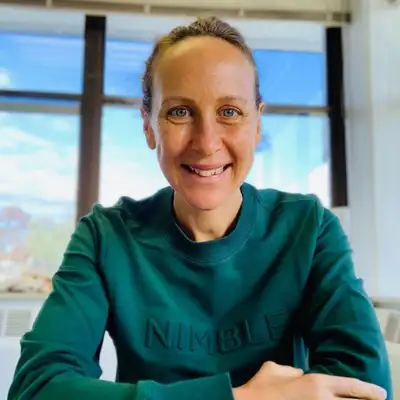
Understanding Hypermobility and EDS with Dr. Melissa Koehl
00:00
you
00:04
Hey everybody, it's Mikki here. You're listening to Mikkipedia and this week on the podcast, I speak to Dr. Melissa Koehl, physical therapist and movement specialist living with hypermobile Ehlers-Danlos syndrome or EDS, who brings both her clinical expertise and lived experience to the conversation. So in this episode, Melissa breaks down what EDS actually is in practical terms, how it shows up day to day and why so many people go years without a diagnosis.
00:34
The discussion explores the difference between being naturally flexible and having true hypermobility, along with the often overlooked symptoms like chronic pain, fatigue, and proprioceptive challenges. explains what's happening beneath the surface with joint stability and connective tissue, and why traditional approaches to exercise can sometimes do more harm than good. Melissa and I also talk about what does work for people with hypermobility.
01:02
From strength training and motor control to pacing, recovery and rebuilding trust in the body, shares a clear framework for managing hypermobility safely and effectively. We also touch on the role of muscle mass, nutrition and daily habits in supporting long-term function. So I think this is a grounded and reassuring conversation for anyone navigating a body that feels unpredictable, offering both clarity and practical direction.
01:29
Melissa is a business colleague of mine actually, which is how I got to know about her and she is amazing. She is a physical therapist with over two decades of experience specializing in hypermobility, joint pain and movement rehabilitation. She lives with hypermobile EDS herself, giving her a unique perspective on both the clinical and lived realities of the condition. Originally a nationally competitive level 10 gymnast,
01:58
Melissa's flexibility was once a strength but ultimately contributed to a series of injuries including a career ending stress fracture in her lower back. Ongoing pain led to her to explore different movement modalities including Pilates, yoga and strength and conditioning. While each offered benefits, was the integration of these approaches that proved most effective. Melissa went on to develop the Chimera Fit Method, a system that combines elements of Pilates,
02:28
yoga, strength and balance training to support people with hope and mobility, arthritis and chronic joint pain. She has been teaching this approach for over 20 years, helping individuals build strength, stability and confidence in their bodies through safe and effective movement. And I have links as to where you can find Melissa over on both Instagram and Chimera Health. And we talk a lot about the nervous system in this podcast and Melissa and I chatted offline about
02:57
utility of some of her resources for people who just need some great nervous system support as well. So absolutely check out her website if you feel that that is you. Before I crack on into the interview I would like to remind you that the best way to support this podcast is to hit the subscribe button on your favorite podcast listening platform. That increases the visibility of micipedia and amongst literally thousands of other podcasts out there. So more people get to hear from the experts that I have on the show.
03:27
like Dr Melissa Cale. Alright guys, enjoy this conversation.
03:34
Okay, Melissa Kale, lovely to have you and chat to you this morning, or my morning, your afternoon in Chicago. And I'm super excited for our conversation. You're such a wealth of information in your area of expertise and people in my community. I've had several questions uh on the basis of the fact that we were having this conversation about hypermobility, EDS, and other related
04:04
other related topics if you like. I'm really excited to be able to have you here and chat to you this morning. Yeah, wonderful. I'm excited to be here, Miki. Thank you for having me. So can we kick off, Melissa? Just I think it would be really great to get a little bit of background for you just in terms of your personal experience with hypermobility. And I say EDS because honestly, I can't even like
04:28
I'm seeing the syndrome, what that actually means in my head, but I can't even think about how to actually say the words. But can we get a little bit of your personal background, but also obviously your professional background here, and then we'll sort of kick on into it. Yeah, yeah, sure. So I'm a bendy person. So I always knew I was hypermobile from back when I was a kid. I was a gymnast, which probably was why I...
04:54
was drawn to gymnastics, lot of those things came very easily to me. And I was like the bendiest of the group of gymnasts that I was in. So I really leaned heavily into like all the things put on your head and extreme over splits. And my form was always really nice because I had the lines and all the stuff. ah So at that time, it seem to be an issue, although I did have more injuries than my counterparts, you know, pretty regularly, which, you know, came and went as
05:23
a thing and I had random things that I didn't understand at the time that now I do, like I would have dizziness after practices and GI issues and skin reactions, like just all these random things that were not debilitating at the time, but now looking back, I'm like, these are such obvious clues that I had something more going on with that. you know, so that was like my history. Eventually I ended up with like a spinal stress fracture from all the extreme hyperextension in my back that ended my
05:52
career, my gymnastics career, which was like really heartbreaking. was like, you know, this was a huge part of my life. How old were you, 14. started gymnastics when I was four and I did it like super intense until I was 14. was like 10 years and then I had to stop. And then that kind of just, you know, where I got interested in physical therapy, I had physical therapy a number of times and I was like, this is a pretty cool job. Like you get to do movement and
06:20
help people out. And so I went to PT school and then same thing in PT school, I was like the bendy is one in class, everyone would be like learning how to measure a range of motion. And then I was the like the example of like, wow, whoa, okay, that's what's that. And no one picked up on it because it really wasn't under really wasn't understood. We had like one slide in PT school about Ehlers-Danlos syndrome. And it was explained as probably like in the classical form or the vascular type. I'll talk
06:49
I don't know, but there's different types of vagus general syndrome. And so it was explained to us in the most extreme example, uh rarest forms, to be honest. So it never dawned on me or anyone else that I could have it, because it was just explained as like, OK, someone might have joint dislocations all the time and really, really, really stretchy skin. And it's genetic. And they'll probably be diagnosed with it as a kid. And just have that on your radar. You might see that at some point in your career, but probably not, because it's so rare.
07:19
So it never dawned on me that that was something that I could have possibly had. um Until I got much, like as years went by and all those like small little random things, the fatigue and the dizziness and the GI stuff started to just get worse and worse and worse, like through my 20s and 30s. And even as I started working as a PT, I really couldn't work full time in the clinic ever, because it was just too demanding. Like on my body, I would just crash, I'd have fatigue and pain.
07:47
So pretty soon into my career, I just went down to part-time. I was like, this is the only way I can do it. But I didn't understand why, why I was having such a hard time. Did you seek help? you like doctor to doctor? Were you thinking like, what on earth is wrong with me? Because I imagine as well, Melissa, given your dedication to your gymnastics, I think any kid that goes into a sport like gymnastics, it's sort of like swimming, right? You've got a personality that must be quite driven.
08:16
maybe not Taipei, I don't know, but to then be held back physically like that must have been really frustrating. it was. And I saw a lot of doctors and I know, like, again, looking back now, it's so obvious what was going on. But no one really put two and two together. There was really no answers. It would be like, I have this fatigue, I have these GI stuff, and they just kind of shrug. I was never dismissed outright, which was, I think, is nice because I think a lot of people in my community are.
08:45
blatantly told you it's absolutely nothing or you're making it up or worse. So I never had that experience, but it was just lot of like blank stares and like, like, we don't know. Hmm, that's interesting. uh So yeah, it was, was challenging. And it took me like a few, a few years, got to the point where I had to cut my hours back from work, like a lot. Like I was looking at getting even like applying for disability. Cause I'm like, I just don't know how I'm going to continue.
09:15
doing this until I finally put two and two together, like by doing my own research with all the other symptoms I was having, I finally found people talking about this. And I was like, it dawned on me that like, oh my gosh, all these other symptoms I'm having, the fatigue and the GI issues, you know, I was having pain, but it didn't make sense. Like it wasn't, didn't fit the normal like joint pain that you would have as a PT that I knew how to fix, like all this stuff. And I was like, wait a minute, is this possibly all this bendiness I've been asking about and everyone said was nothing.
09:45
could I actually have hypermobile Ehlers-Danlos syndrome? And finally I looked up the criteria and it was like plain as day, like, oh, I fit all of this. Yeah. And you mentioned, Melissa, that there are different um types of EDS. I mean, you fit the criteria for a particular version. You mentioned vascular. Like, what is it? What actually is it? Yeah, so this is an important question because you're right.
10:11
to understand how to even explain what it is is tough because there's multiple forms of Ehlers-Danlos syndrome. There's 13 types and the hypermobile type is the most common by far. It's like 90 % of all the EDS types. It's the most common, but it's the only one of the 13 types that there is not a genetic marker for that we know of yet. So all the other forms are considered rare and they do have a genetic.
10:39
that you can get blood worked on, you can get a genetic test to confirm it. Like vascular is probably the most well-known one because like medical providers will learn about that because it's the most dangerous one because it can cause laxity in the blood vessels leading to things like aneurysms, early ruptures of your organs, uh know, pretty significant. So like some, you know, various providers are pretty aware of that. And they, essentially if you are not suspected to have the vascular type, they kind of write it off as like, then,
11:09
It's rare and or doesn't really apply to me. I don't have to worry about it because it's not as big of a risk of something going wrong. uh So yeah, so there's various different types and not all of them have hypermobility as a feature either, which makes it extra confusing because it all affects different types. Well, the known types that have a genetic marker involve connective tissue.
11:35
So that usually involves joints, but there's multiple forms of connective tissue. there's like other types of disorders where like brittle cornea syndrome is one, for example, where it like mostly affects the cornea and not much else. Or the vascular type is another example, like where there is some hypermobility, but it's almost always involving just like the fingers and the toes, just peripheral and not other joints.
12:01
So there's some differences there between the different types of Ehlers-Danlos syndrome. And then there's other connective tissues disorders too that have hypermobility as a feature. So Marfan syndrome is another one people may be familiar with. People tend to be like very long, tall, lanky. It's like one clinical feature people might look for. There's another one called Louis Dietz syndrome, which has hypermobility as a feature. And these are all, again, very
12:30
These are all rare, but they have to be like ruled out essentially to get the diagnosis of hypermobile Ehlers-Danlos syndrome. It's like you have to kind of consider that those other hypermobility conditions could be going on even though they're rare. And I think that's where the diagnosis process gets a little confusing because most providers, unless they're really like in deeply in this space, they'd like do not have the wherewithal to be able to even screen appropriately for those other types to understand should they get genetic testing or not.
13:00
Getting genetic testing is really complicated because it's not readily available and there's long wait lists and all of these things. it does get confusing when it comes to the terminology. Yeah. And Melissa, obviously, I mean, I know that you've just had a significant birthday. uh Happy birthday a couple of months ago. so I wonder whether, how have you seen it, uh I guess,
13:30
criteria or the types or the knowledge around EDS, how has that changed over the last, say, I'd say 30 years, I'll ask. I don't know. Like, is it much more widely talked about? I feel like more people are more aware of it, or at least in my circles. Yeah, it's grown considerably. I think social media has the biggest impact on that because people who have these conditions aren't able to share their stories and it's getting out there much more.
13:58
The lag in medical training, medical schools, PT schools, OT schools is still pretty far behind though. There's some programs that are starting to talk about it or getting some students get exposure to it, but it really depends on the faculty also knowing about it and changing the curriculum. Because again, any of those schools are all, like the curriculum has been set for a while and it's already jam packed. So then they're like, how do we fit this in here, this whole can of worms?
14:26
lagging behind significantly. So any of the providers that are in this space that truly understand these conditions are all basically like done their own research outside of their entry level training. So it's getting there, but it's still slow. Do you feel like, that driven a little bit like you in terms of a personal experience with many that you know, Melissa? Yeah, a hundred percent. I would say like a very large percentage of the providers that specialize in this area have this condition or have it like just
14:56
I've been really had a lot of patients that had it and it really motivated them to learn more. um There's a few like really wonderful unicorn people out there because we need providers that don't have these struggles of having these kinds of bodies to be working on us. yeah, generally, true, Like, yeah, that would be great. There's a few unicorns out there, but a big chunk of them are like, hey, I have this also too. And I managed to get my health to a point where I can
15:26
help other people. That's a huge part of it. Melissa, you mentioned how there's a genetic basis to some of the less common EDS, maybe the more severe ones. Does this mean that if you present with EDS that you're not necessarily going to see it in your family? maybe if someone reflects back or talks to their parents or their aunties, are they going to also find a bendy person, which was never part of the conversation so they didn't realize? To what point might it not be genetic?
15:55
familiar at all. Yeah, that's such a good question because with hypermobile Ehlers-Danlos syndrome, that version of it and hypermobility spectrum disorder, which is an extremely similar condition. In fact, from most research standpoint, there's not much difference between the two. There's kind of like an arbitrary cutoff between the two right now. But uh long story short, they've known for those two conditions that it's familial, autosomal dominant for sure. You can see it in families.
16:24
And they've been looking for a genetic marker because they see it so clearly within the families. And they've been looking for a genetic marker. They have not yet found it. So they're starting to suspect maybe there's something else genetic within even the immune system that might be inherited that creates these conditions to make it more likely to have all of the symptoms associated with it. So they're looking at other uh potential genes or combinations of genes.
16:53
Because there's definitely a familial trait for sure with the hypermobility and the symptoms that go along with it too. yeah, it's really interesting. There's a lot of really exciting research being done in that area right now. But we don't have definitive answers yet. It's just starting to open up what might be going on and where can we start looking a little more deeper. Melissa?
17:18
So you mentioned, I mean, it sounds like a huge area and with multiple different sort of forms or types or a spectrum, how, like if someone is listening to this and they're like, I think I'm super bendy. Like what does it actually look like on a, know, what's, I guess what is considered normal and what is considered maybe you need to get this looked at? Is that a, can you help us answer that question? Oh, sure. Okay. So it is a spectrum for sure. in.
17:47
Bendiness, like having hypermobility, can be present like in one joint. If you ever met someone with a hitchhiker's thumb, right, that's like one bendy joint, right? It's like, oh, it goes really far. And that might be all they have is just that one bendy thumb and nothing else. So that's certainly possible. Or it could be multiple joints throughout your whole body. um And really what they use to...
18:10
green for this is something called the Byton scale, which anyone who's familiar with hypermobility might be familiar with that. look at, there's, cause they can, they can look at it really quickly. Like these are joints that are not complicated for a non provider to look at. They look at like your finger. Does it extend like 90 degrees or more? Like this is one, does your thumb, I don't have this one, like we make like a sock bucket. Does your thumb touch here? And each, you get a point for each side, elbow, hyper extend 10 degrees or more.
18:39
Standing forward, if you can do standing forward fold with your feet together, knees straight, palms on the floor, that's one point. Knees hyper extending more than 10 degrees is another one. So if you those all up, that's nine points. And if you have five or more, that's like meeting that criteria for the Byton score itself. So that's like a first starting point. So any of those things, once you start noticing it, you'll start seeing hypermobile knees that, you know, bend backwards all the time. Like, you'll see that. em
19:07
But the other thing that's the downside of that is like it only tests nine joints out of the 360 that we have in your body. So there's some people that don't meet that criteria, but they're like, but by the way, my head can rest on my back and my hips, you know, I can do pigeon pose all day at yoga or my shoulders go like way past 180. Like each joint has this normal range of motion and you might have above and beyond that. And like literally any joints in your body.
19:36
So really what's interesting is like in this space, because they're going to be revising the criteria this year, like for the diagnosis of hypermobile EDS and hypermobility spectrum disorder. And because that's been one of the biggest critiques of it is that that Biden score is so limited that so many people don't, they just don't quite get the key to go through the door to get the diagnosis when they're like, I do have several joints. you know, really what most people will do in this
20:06
if they're like astute enough to understand how these things work together, they'll look at the whole person, examine their body in general and be like, if you have multiple joints that are hypermobile, you maybe not just one hypermobile thumb, but you have a couple areas, maybe even your jaw, your TMJ might be hypermobile, your SI joint moves around a lot, like there's so many joints to look at, but they'll take that all into consideration and then see, are you symptomatic? Because you can be hypermobile and have, you're just bendy and you have no problems, you have no symptoms.
20:34
But what you want to know is like, you have things like pain or joint subluxations, dislocations, and then other systemic things that affect that kind of go along for the ride with these conditions that are usually immune system related things, autonomic nervous system related things, GI issues. Those are kind of like the top three. It's like mass cell issues, dysautonomia and GI problems kind of go for the ride. Is EDS, is it an autoimmune condition, Melissa? Ah.
21:03
So there's some suspicion that there might be some overlap there. It's not classified as a truly autoimmune uh condition per se, but we do see an overlap between that where there may be some autoimmunity involved. The bigger thing we see with symptomatic hypermobility in terms of the immune system response is an overactive uh mast cell response. So mast cell activation syndrome, which is a newer uh
21:32
New, you know, in medical world, it's probably, you that term's probably been around 20 plus years, but that's still kind of new. But the idea that your mast cells, which are your first line of defense for, they mostly live in like your contact areas of, they're everywhere, but like in your lungs, in your respiratory tract, in your GI tract, genitourinary tract, eyes, nose, things like that. They're like the first line of defense in the mast cells when they encounter pathogens or irritants.
22:02
they release various different mediators like histamine is the most commonly well understood one. That's where we get things like, you know, hives and seasonal allergies, things like that. So in this uh Bendy hypermobile community that over overreaction of the mast cells is super, super common. In fact, it's common in the general population too, more common than people realize, but it's even more common in the hypermobile population. And it's believed to be a huge factor in
22:31
where some of these symptoms come from. And it's super interesting. There's some theories. I don't think this would apply to everybody because there's just no way that it would. But there's some theories out there that have been individuals that weren't necessarily hypermobile. And then they ended up with a virus or an illness like long COVID, something like that. And due to either this post-viral infection and overactivity of the mast cells and the way they create
23:00
how they impact the connective tissue with all the inflammatory markers that they would release or just their overall effect on things like actually made people more hypermobile or made them hypermobile as a result of this post-immune, post-viral insult to their body. It's really super interesting. Very much a new area of research, but um yeah, there's a lot.
23:27
with the immune system and the extracellular matrix that we're just like barely starting to understand. It's like very interesting. Melissa, a couple of things. So first of all, can you tell us how is the connective tissue affected? So obviously you've got the hypermobility, it's lax, like what's going on at that tissue level? And then I guess following on from that, you mentioned that some people can be asymptomatic.
23:54
other than that. if someone's listening to this and they're like just super bendy, nothing else going on, should they worry, I suppose? You em know, just being bendy in and of itself isn't necessarily a problem. Like some people live their whole lives. They make it till there's, you know, advanced age and they just, they were bendy and maybe they have to be a little more careful because you're like, I'm more likely to sprain my ankle or something because of it. And that's, that's the end of the story. um But
24:23
If you are bendy, it should be like just on your radar that you may be predisposed to these things. So you have an eye out for those other symptoms, those other systems that can be involved. I feel like that's the bigger thing. Like not to worry like you're doomed to get these other things, like you might not. But at the first sign of like, I'm also having things like fatigue and bloating and food reactions and other allergy symptoms that just don't make sense.
24:53
if we start having those multi-systemic things, that's where you start to put those puzzle pieces together. And that's really where the issues come into play. But just being Bendy in and of itself, you may want to be mindful that there are those other systems that can get involved in symptomatic hypermobility. But if you don't have them, that's great. That's really wonderful for you. And just...
25:19
being mindful of just protecting your joints, because if they are bendy, you know, it's just like a little extra work for your muscles to control it. So there's something there, but yeah. What's happening to the connective tissue? um So, well, we know that it is like a laxity in the things like the ligaments and the joint capsules that causes the hypermobility. um But in the hypermobile EDS, hypermobility spectrum,
25:45
disorder, like what's exactly happening in the connective tissue besides that laxity that's there, that's causing all these immune reactions and the autonomic nervous system changes. That is something that's still very much new science that we have to dive into even more to even understand. Like the genetically defined types, like the vascular type, and there's one called classical and classical-like and the Brill-Corneas syndrome, all those types, they can point to exactly
26:14
where in the genetic code, which collagen type fiber is, know, it's the Col1A, uh you know, I'm butchering the name, this exact, you know, gene, that's the problem. um But with the hypermobile EDS and hypermobility spectrum, we just don't know yet what those exact genetic changes really are.
26:40
Melissa, you mentioned obviously as part of your history and it sounds to me like for a number of people who have EDS, the fatigue factor. um Can you explain, is the fatigue coming from that autonomic nervous system, um interaction, the immune, is it all of it? Yeah. Oh my gosh. Well, number one, it's super prevalent. So I just put that out there in case anyone's bendy and wondering like that they're being lazy or
27:10
just doing something wrong, because I guarantee that you're not, because you're probably the healthiest person that you know. You're doing all the things, working out, eating as healthy as possible, getting all the sleep, doing all the things, and still struggling with fatigue. It's so incredibly common. um And it's very multifactorial. So um the autonomic nervous system, part of it is huge, because if you think about just from a pure mechanical standpoint, um
27:36
If you have laxity in your tissues that causes your joints to be more bendy, your vascular tissues are also more bendy. So the veins and even lymphatics can expand, like especially they're very prone to the effects of gravity. So as we're upright, we're upright doing things, we get much more pooling in the extremities of blood and it's harder for it to get back up. So if everything's blood pooling, so you're just not getting oxygen to your brain, that in and of itself
28:06
can trigger fatigue um and also trigger things like dysautonomia, like POTS is the most well understood, probably one right now, postural orthostatic tachycardia syndrome where in response to that, your body notices your blood pressure may be starting to go down. In response, it'll just get your heart rate going really, really high and people will have an increase in their heart rate to try to compensate for that and that feels not good. Or they just legit get their blood pressure just drops and they can't recover from that. So that can be one.
28:35
one part of it. But then there's also like GI issues are extremely common. And that might have to do with like, again, like maybe the laxity in the GI tract itself makes it harder for digestion to happen properly. And if we have inflammation in your gut, that triggers a whole bunch of fatigue as well. The mast cell part of it, like if your mast cells are releasing all of the various different things that they can release, you just see your immune system is activated trying to like,
29:05
fight some invader that it's doing its, you know, trying to do its job. That alone makes, can make you very fatigued. um Knowing where your body's at in space, just trying to figure out all the time, like all the background work. That's part pretty fascinating on how much, um you know, joint position sense is off, because your joints are like, move so much more, you don't know when like, when does it stop? I don't know. So you have to like think about that a lot. So it's a of background noise in your nervous system that's kind of on guard.
29:35
all the time. So those are just a few. Yeah. Gosh. And, you know, I'm thinking about when we were, um where were we last year? Were we Austin? I can't remember. We went to see Cirque du Soleil on the water and came out of that, seeing those performers and we were like, surely all of these people are hypermobile. Would that be right? I would guess a good chunk of them. Yeah.
30:02
Yeah, for sure. So there's benefits, right? Like for all these athletes, especially like aerial, dance, gymnastics, you know, it's a benefit to be able to do those moves. But it's that, to your point, it's that management of it within the realm of your life. Well, obviously, Melissa, like I imagine there's a lot that people can do to help manage the symptoms. To your point, I mean, now, I mean,
30:29
you, I don't know about your own personal journey, but I do know a little bit about what you've been doing nutritionally. But obviously you've now got a thriving business and you talk and you contribute to the community all of the time within your space. So obviously there are things that you have done to be able to sort of to manage on a, I guess on a day to day, it must change. Can we first start with, m because I know I want to talk to you about strength training. I want to talk to you about nutrition, but actually like,
30:57
What about medications actually, Melissa? And I don't know how you feel about them, but I'm interested to know whether there's a medical route. And often people listening to this podcast and other things, they're very against medication. So I'm curious if you're happy to share your thoughts on it as well. Just because I'm genuinely interested in your, if there is a position that people take with this, I don't know. Yeah, a hundred percent. And I get where people come from, like not wanting to just throw medicine at
31:27
the first symptom as it comes by, especially if you go to a doctor or several doctors and they're like, well, nothing's really wrong. You don't have any testing to even know what medicines you would even take to begin with. So most people end up going down the route of as many natural remedies as you possibly can. Like I've got a graveyard of supplements, of things that you've tried. Like it's like a whole like closet in my house of supplements. um
31:56
But there are medications that you can take because it really, it's just, this is such a difficult condition to manage, to be totally honest, like from a strictly, like if we were to ignore medicine entirely, like there's just so much going on. And like I tried very hard to stay away from medicine too, like from when I first started, did all sorts of crazy stuff. I did raw vegan diet, I did.
32:20
You know, every like, I mean, it's no no shade. If you're raw vegan, that's working for you. Great. But like, that was intense. I was like, trying like this has to be the healthiest thing I could possibly do. Isn't it like uh that? It didn't work. So spoiler alert, it just did not help. um But yeah, I tried everything. And like, eventually, I did have to go on several medications. And like, there's everyone's a little bit different about what that's going to look like, because depending on how it influences different body systems.
32:50
things like that. But if we think about just breaking down the most common things that we see, number one is mast cell activation syndrome, like I talked about. There's a few really well tolerated medications out there that people don't even think of, but just over the counter H1, H2 blockers sometimes can be game changer. Not everyone tolerates them and maybe it's not something that's like a long term solution.
33:16
but we see like the symptoms like fatigue and even joint pain and muscle pain, which you wouldn't think of as being like a allergic reaction, which it's not, but it's, again, it's like if your mast cells are overreacting, the mast cells can live near the nerve endings in your tissues. And those H1H2 blockers, even though they're designed for like GI symptoms or respiratory symptoms, like they have effects elsewhere in the body and or they're reducing inflammation in the gut, which would then
33:44
furthermore reduces inflammation and pain kind of like that you feel generally all over. um So those are like some things that some providers in this space will lean towards, especially if you have a indication that like, okay, your joint pain isn't just because you have a tendon that's irritated. Like you also have like joint pain that kind of moves around. And then also you have this gut issue and you have the chronic sign, like there's sinus stuff going on and your bladder keeps, you know, giving you pain. Like there's definitely signs of multi-systemic.
34:14
something going on, they might treat empirically with just try over-the-counter H1H2 blocker for like a week or so and just see. And it's actually pretty surprising how effective that in and of itself can be for a number of symptoms. Sometimes it doesn't because like mast cells can release like 900 plus chemicals. Histamine is only one of them. So like it doesn't fix everything. But it might give you a window of like, OK, maybe my mast cells are doing more to my overall
34:43
presentation that I really realized you try an H1H2 blocker for a week or so and then that might lead you into like, okay, well, maybe I need to find a doctor who understands Masol that can then prescribe something that's even more comprehensive and things like that. ah So there's that. There's another medication that people may or may not know of called low-dose naltrexone, which is used. Oh yeah, I've heard of that. Yeah, that can be really helpful. It's used in
35:13
chronic pain space as well because it's essentially it's a very low dose of that naltrexone medication which naltrexone in the higher dose is used for drug uh alcohol addiction. So it blocks the opioid receptors so that you don't like if you got the super high dose so that you don't get the benefit of drinking so you don't want to drink. But a very low dose this is like 4.5 milligrams versus or less versus like 50 plus. So it's very low dose. uh
35:41
And it essentially does the same thing. It blocks the opioid receptors temporarily in a way that stimulates your brain to generate more. And that helps down-regulate pain, especially in like this kind chronic diffuse, you know, pain, know, hard to pinpoint pain, that kind of pain, reduces some of that mast cell activation, like overactivity. It helps with the dysautonomia to some degree as well. So this is a medication that's like,
36:11
Again, not a total game changer for everybody, it's really, it can be. It can be, and the side effect profile is really low. It's not nothing, but it's significantly lower for sure than any other pain medication that's on the market that's like more intense. So that's one that's used really often. It often needs to be compounded because it's, you have to go through compounding pharmacy and all these things, but that is something to.
36:40
look at if you're again struggling and wondering like, well, like I'm doing all the things, what else can I do? Um, finding someone that knows about low dose naltrexone and how to use mass cell stabilizing medications can be really, really impactful. Not just on like your things that you would think like gut issues, but like also your pain or your fatigue. That's wild. That's awesome. Cause I also feel like
37:06
There's a lot of shame around using actually medicine these days. At least I don't know whether you see that. I see that a lot with my community. obviously I don't have a lot of, not sort of as to you, but I don't have a lot of EDS hypermobile people, in whatever condition, put the condition here, people are like, I should be able to manage this myself. And so there's a real shame sort of around using it. So it's really nice to hear a professional and someone who has the condition.
37:34
talk about them in a really neutral way and positive for a lot of people. Yeah, Yeah, I feel like most of the time people, when they come to this level of understanding their body, they've already tried all the things that they can do, which you should. You just need to maximize your sleep and manage your stress and get the protein and eat the rainbow. Spend time with friends. You have to do all that stuff too. But most people that I work with, by the time they come to me, they've done all of that.
38:03
times 10 and they're just like, what else can I do? So they're ready. They're like mostly ready to try like anything at that point. Oh, that's great. That's great. Hey, I'm curious actually, you may not know this. Are there any known nutrient deficiencies or increased nutrient requirements for people with EDS or hypermobile?
38:27
Yeah, so that's an amazing question, which it was easy. Like everyone take this supplement and you'll be great. Yeah, it is very, you you're a nutritionist, so you know, it's all very individual. But there are higher protein needs for sure in this population. And I know everyone talks about protein, in the space of like muscle building and all that stuff. like protein gets a lot of attention. It's and it's not like bro science at all. It's just
38:54
It is, like if you have a connective tissue issue and you have to work harder to build muscle potentially, um it really is important to have not just the normal amount of protein, but maybe a little bit above and beyond. And many people do find that they do better with that. Again, like managing all of these symptoms, just having that building block for your connective tissue, even if it is faulty to some degree, you ultimately really need to maximize that. um
39:23
That's super, super important and really challenging because this is a population of people that struggle with GI issues and nausea and like actually eating enough food in general is sometimes really, really tough. So like they have to maybe go out of their way to make sure that they're getting adequate protein in and absorbing it. like your gut actually working well. So that's one big one. um Another one that's like really simple is vitamin C.
39:50
because it's so foundational for collagen and your connective tissue. And in terms of supplementation, not very risky. It's water-soluble. If you take too much, you might get loose stools um in general. So that tends to be one that's safe to supplement with and not be worried about. Because again, it's really critical for the connective tissue and as a mass cell stabilizer too. Oh, nice one.
40:17
Listen, what about collagen? I had someone ask me about just taking collagen. Is there a use there? Obviously, vitamin C is important. Yeah, I get that one a lot. So I do take a collagen peptide supplement, ah but it doesn't work in the way you would think. Some people would be like, well, if my collagen is faulty, my connective tissue is faulty, I'll just take more collagen, and that will replace it. And that does not work better than that. It's not how collagen works. But in this population, like I was just saying with
40:46
GI issues and absorption issues and just like the fact of getting enough food in, it's not always easy. So especially the type of amino acids that you can get from collagen peptides, they tend to be the ones that, and you know this more than I do for sure, um but like those tend to be the ones that like you would get from foods like bone broth, um those kind of like that type of food that tends to be poor, like I can't
41:16
still, my gut cannot tolerate bone broth for the life of me. It's just too triggering of my mast cell stuff. I'm working on it, but I can't. Maybe I can have a little sip. Oh my gosh, could not drink a cup of bone broth for breakfast. That would just be a mess. But I can take a collagen peptide supplement that has that same amino acid and that's fine because it's broken down enough. It's easier for me to digest.
41:45
So from that, know, so I'm kind of filling the gaps that way. So there is a place, but it's more like you're just trying to like get all of the protein, like it's just a way to get those maybe missing amino acids or to like fill out your protein for the day. For sure. you know, with, particularly with glycine, people describe it as a conditionally essential amino acid. so when you see it, like a lot of people dis collagen, collagen,
42:11
peptides because they don't help your muscles. But this is not why we're using them. uh I'm not sure, Melissa, if you know about this, but Professor Keith Barr has ... Over 10 years ago, he started publishing case studies and mechanistic trials looking at collagen peptides plus vitamin C and its ability to accelerate healing in tendons, in ligaments, and things like that. But it's never that research other than
42:39
case study reports hasn't actually graduated to clinical trials that have been published. But it's certainly when I'm talking to an ath—this is like a different population—but an athletic population and they've got an injury, and I myself as an athlete, when I get an injury, I am big on that 15 grams of collagen plus—
42:58
500 milligrams, is 50 milligrams, I'm sorry, vitamin C, a tiny, tiny amount actually. Just in case the case study reports and the mechanistic trials actually bear out in me and people I work with. So I can see the use case for it for sure. Yeah, yeah, I love that. I usually when people want to dive deep into things, because everyone that has this condition is like an expert at this point, at their own body. They've all the research. They read all the research studies.
43:28
So I will always point them if they're always wondering what else to do. I'm like, look at what the athletic world is doing. What are they doing to maximize recovery in athletes? Because even though you might not consider yourself an athlete, you should just to get through everyday life. We need to fuel and recover and treat your body with that much attention. It's not fair. Other people, whatever, eat pizza and sit on the couch and maybe go for a jog once every blue moon. And they're like, I'm fine.
43:56
You know those people that somehow are magically healthy, but without trying, we don't have that luxury. But that athletic world is really on top of a lot of that stuff that can be beneficial for this population. Because it's all about tissue healing and promoting cellular turnover. Yeah. What about um a slight tangent, but two things immediately spring to mind, like mitochondrial supplements, um maybe something like
44:25
I don't know. It's fine if you have absolutely no idea what I'm talking about, but also peptides, any use case for anything there. And I know that as a, peptides are very contentious and there's not a lot of human data. So people know that this is just us having a conversation about it. I'm just really curious as to your thoughts, Oh, sure. So the mitochondrial support, I don't know about specific supplements or any
44:52
that's out there. But if there is anything that does help that, that would be very helpful. If it does help, is because that is a huge part of like the fatigue factor, especially with like the post viral illnesses that we're seeing like the long COVID and because that's a huge there. It is a big risk factor. uh It's a percentage of people with hypermobility will develop long COVID than the regular, the non-bendy population. So anything you can do to support that can be helpful or, you know, more likely to develop.
45:22
ME-CFS, is myalgic encephalomyelitis slash chronic fatigue syndrome, the long word for that. like anything that does actually work in that space, I don't know what is been studied in terms of like the exact supplements. I don't think there is in specifically hypermobility, but it's an interesting area that I would hope, because that's, think, a big missing piece. And the peptide part of it um is interesting because GLP-1s
45:51
used at a very low dose are being used for mass cell stabilization with a good amount of success. That's interesting. So when you say low dose, this is microdosing we're discussing, not the lowest dose that you get in a... Yeah. Is that... I... I believe microdosing. Yeah, I haven't dove into it super deep yet, but there's some providers finding that they're having good luck with it.
46:19
are running into a little bit of issues sometimes if someone's already has slow digestion, so gastroparesis, which is really common with our hypermobile population. So they do get some of that. ah And I don't know what the long-term effects are. We don't know. Or if you get off of it, does it stop? Does it just come back? We don't know. But there is some interesting benefits that some people are seeing when they.
46:49
when they do that. Interesting. And is it BPC 157 or those other peptides? you familiar? you, like are people sort of asking you about that in your space? Yeah, the BPC 157, I haven't heard like that it's a slam dunk for anybody. It's one of those that like a few people here and there have taken it and found like, yeah, it helped this, didn't help that. It's a little bit of just mixed.
47:17
results from people that I've heard of and I've certainly seen no research on it yet. em I personally tried taking it myself. just like my one case and not like early on when I was probably my sickest and it seemed to do nothing. Like I think it was just already had so many layers of things that needed to be addressed that it was just like expensive and didn't do anything. But other people will find some benefit from it. So it's yeah, there's a whole.
47:46
Yeah, that one is tricky. I think if I was to use it for tendon healing, like they are kind of using that in the sports med world, I would maybe lean more towards things like PRP or uh some sort of regenerative medicine, like directly for the tissue rather than a peptide, at least just based on purely anecdotal things that I've heard. Like, you know, I've just heard a lot more benefit from that stuff. Yeah. And to your point, like it's such a
48:14
an emerging area, isn't it? Like this whole peptides thing, and it's very, it feels very gray right now. So um that sounds really reasonable to me, Melissa. Now, one thing before we move on into strength training, which is sort of the thing that I do definitely want to discuss as well, but.
48:32
Tell me about your breakfast experiment. Because I do think this is super interesting and I'm curious as to whether your experience is actually a wider experience within the EDS community. um sort of just like, tell us about this. Yeah, this kind of just happened by accident. think it comes from talking to people like you and other people in the nutrition space that for a long time have been telling me I should try this thing called breakfast. I'm like, no, I don't need to do that.
49:01
I've just historically never been a breakfast person ever since I was a teenager and was in control of what I ate mostly. I learned about coffee and I was like, well, coffee is great. That's fine. I learned about coffee. Yeah, that's all I need. then off you go, it suppresses your appetite a little bit. I just realized I'm not hungry. I got coffee, I've got energy and I can just go about my day and not worry about eating. And that just really became my habit for really all of my adult life. And now I'm 50 years old now.
49:31
and just now discovered that I should probably eat breakfast. And it started like just before the new year. just was like, okay, enough people have been telling me about breakfast and I've struggled with fatigue for so long. Like I really should do something about it. And I started like challenging myself to eat a little bit of breakfast. I think part of my other aversion to it was just that like I had so many GI issues for so long that I think even at a subconscious level I associated eating with symptoms.
49:57
with either fatigue or GI issues. So I would kind of like put off eating till the end of the day. Because then at least if I ate and it didn't agree with me, I could deal with it instead of like eating. Like it would just honestly make me nervous. Now that if I think back, I'm like, I really think I was kind of scared to eat breakfast because I didn't want to ruin my day by eating something that like, I don't even know how it's going to react. Because every food was an experiment at some point in my life was like, I don't know how this is going to go. So that is definitely a thing. But at this point, I was like, you know what, actually I figured out which foods I'd
50:26
tolerate and it's gotten much bigger than it used to be. So I think this is going to be a safe time to try this experiment. It was interesting because I certainly wasn't hungry in the morning at all, but I wasn't nauseous and that's a thing a lot of people have to deal with. But I just was like, okay, I'm just going to try and eat a small little breakfast. It doesn't have to be a huge meal, but I would just eat a little something. My typical thing that I would have would be some chicken and white rice for breakfast because I just
50:56
I don't tolerate gluten, I don't tolerate eggs, uh dairy is awful, like yogurt, nope, I can't do that. So it's like regular breakfast foods, that also was a thing that made it tricky, because I'm like, what do I even eat for breakfast? So was like, screw it, I'll just eat dinner food for breakfast and make it really simple. And I was like, oh, that's actually not as weird as I thought. So started doing that and um it wasn't as hard as I thought it would be. I just made sure to like make it really easy on myself, like rice cooker.
51:25
to make the rice and have a little bit of like prep some food that was frozen and it could heat up really quickly, really simple. um And as I started doing that, I did notice like midday, my energy definitely got better. Like everyone said that it would, it wasn't a fix. wasn't like I still struggle with various things. But as I got into it, I was like this actually, okay, this is something. And I found that I was not relying as much on my mass cell medications that I take for
51:55
Fatigue and GI stuff, didn't, or I wasn't getting as big of these crashes that sometimes I get from both the combination of autonomic nervous system and mass cell stuff. It was happening a little bit less, my energy is a little more steady throughout the day. Yeah, it was a very surprising positive for sure. And I wish I had tried it sooner. I didn't wait until I was 50.
52:22
Yeah. And you know what? And it seems pretty 101 for some people I know, but the idea of not eating breakfast foods at breakfast really is like, it's remarkable how people find that astonishing and almost like, what do you mean dinner for breakfast? Like literally like there, a huge, like big section of the population would not never have considered that. So it's great that you explored that. And to your point, like a lot of the standard breakfast foods tend to be foods that people have
52:51
with GI issues really are triggered. They're really common immunological foods. Yeah, yeah, yeah. So that you've found success through this path. And I really also loved, that you said that you didn't try and sit down to an entire three-course meal at breakfast. You just worked with your appetite. Are you now hungry in the morning? I'm curious. I'm starting to. It took like three months, at least, before even a whisper of being hungry would show up. Wow. oh
53:21
I was ready resolved myself to think it might never happen. And I was like, it's fine, I'm noticing benefits. And it never felt bad. And I always felt better after eating. And I started eating and then you kind of get a little hungry. You know, it's kind of like, like, I don't feel like working out. And then you start working out you're like, okay, this is okay. It was kind of like that kind of feeling. But yeah, I am starting to get a little hungry now. It's just, which is exciting. Yeah. So then on the working out piece, good segue just for our final.
53:49
sort of topic on this, because to your point, I think you mentioned before we hit record that we could spend 10 hours, hours and hours discussing it. But chat to me about exercise, about strength training, and about, you know, just, I guess, some common, like, what's the thought process around that kind of training for people with hypermobile EDS? Yeah, it's incredibly important. It's probably one of the best things that you can do is build muscle, have
54:18
better strength and control of your body. There are a couple of considerations though, because people hear that and then they go from zero to 100 and your body may react poorly to that. Especially if you were an athlete in the past, there's a lot of like ex athletes that remember what it's like to push yourself so hard and it's really difficult to like dial things back because your body does need a little more time to adapt and recover. Because we're more prone to having
54:45
like these after effects of exercise that you may not realize. It might feel fine during it, but afterwards, if you weren't controlling your joints well, you might get some delayed pain, so than just regular muscle soreness. You might get some, because you're like, well, it wasn't stabilizing or I was moving in a way that I didn't know until you get this like after effect. And it can also like, if you push yourself too hard, too fast, like that can be a trigger for those mast cell reactions, like just literally just moving.
55:15
which is not fair and you get this whole body flu like feeling after you work out or your autonomic nervous system, your blood pressure tanks, or you can get these after effects. uh not always if you don't, that's great, but you wanna be mindful of that and start with like lower than you think. And it is really helpful to like think of it that way and give your body that time to adapt and move slowly with control, with good form. Like all those things do really matter. There's like a lot of, you know,
55:44
talking like the PT space, I think in fitness in general too, where it's like a move away from biomechanics, which I think for is, you know, where it's kind of like that we were too focused on it for some people for so long that it's like, ah, you know, you like your body's smart, you need to move in all the ways and you don't have to be so like nitpicky about things, which I agree with in general. But also at the same time, like if your body is really, really bendy, like you do need to like pause and make sure you're moving in a
56:12
precise way and not just like throwing your body all over the place. Cause next thing you know, you're just all at end range and over stretching things and you have to like really do things well. imagine then, then, you know, a typical gym environment, you've got a lot of the machines, the machines do lot of the controlling for you. And if you're in, if the, like what I find as a non-hypermobile person, but some machines, my body doesn't fit well until it doesn't feel good. But many of the machines now are sort of,
56:42
you're able to adjust them in a way that allows you to control that movement. feels more safe. Is that the thinking? Yeah. I love machines for that reason. My only issue with them is it just takes time to get to the gym and find them. It's this whole, you have to go and have access to it. And you do at some point have to come away from the machine and move in functional ways. But as a starting point, it can be a really great.
57:10
a great way to just load your joint in a smaller range of motion and have it be more already be more controlled for you. um It can be, but you have to kind of balance it with some stability work out totally away from it. So you have the ability to control, to control stuff too. Of course. So what does it look like then, Melissa, like for people that you work with in terms of the strength based training, like what, what I guess uh are there, I mean, you mentioned obviously the sort of fundamentals, like the purpose, but
57:39
Are you able to give an example? don't know. Oh, let's see. um Well, let's see. The way I approach it, because I'm working mostly with people online. I kind of specialize in helping people figure out what they can do at home without having to go to the gym. um I, yeah, and we start a lot with very detailed stabilization exercises so that they have that control from the inside out. Not that it's required to have like
58:08
complete activation of every small muscle in your body before you ever do a squat or you ever do uh a deadlift or something. But it is incredibly helpful to have that background, to have those underlying deeper muscles that actually really control the joint at the joint level, have those as functional as possible so that when you do larger muscle group work, you have that underlying support and you're not just skipping over it. So um we do a lot of work.
58:37
initially like learning the basics of that, goes even as back as small as like learning to breathe correctly. We have to start there, right? Using your diaphragm properly, using your pelvic floor and your deep core muscles the right way, using your rotator cuff and your scapula, like having them work as a team, you know, having your neck stabilized with the deep muscles instead of just your upper trap. Like there's some like foundational pieces to that that help a ton. Cause I've just found over and over again, if we just skip it, we just go right to the
59:06
larger muscle group strength training, which in theory should activate all those little smaller muscles. A lot of times they just don't because your brain has learned to like just not use them. So you have to like take those steps to like integrate that, you know, get them to fire, get your brain to get those smaller muscles to activate properly in coordination with your other bigger movements. And then you tend to like do much better moving forward from there. And then after that, like then it just looks a lot like anyone else's.
59:34
strength training, you had to have like these foundational pieces or maybe your warmup has specific things to warm up those smaller stabilizers so that you wouldn't you go to do a larger muscle group thing. Like I might do something very specific for my low trap and my rotator cuff before I'm going to do a just a row just so I make sure that those smaller muscles are like woken up. There's some blood flow there. They're ready to help out. there any, um I don't know, uh types of shoes or sort of taping or any um
01:00:03
extra props that people with EDS or hypermobile could benefit from? Oh, a lot. Tons. Oh, really? Tons of them. Tape, yes, just try. If you feel like some area of your body is not sure where it's at, there's not much harm in trying some kinesio tape. There's plenty of videos you can find online on how to tape any area of your body. Just be mindful of your skin. Sometimes you need a barrier cream or...
01:00:30
Even things like uh milk of magnesium, let it dry on there so that your skin doesn't react to it. That might work. But tape for sure can be super helpful. It doesn't hold your joints and stop you from moving. It just gives you a little sensory feedback so your brain has better understanding about where you're at. So there's no harm in doing that. And I feel like actually there's a big misconception that if you put a brace, you put tape on, you do something like that, that you're going to instantly get weak and have all these problems.
01:00:58
But that's not really true. Especially if you're bendy, if your joints move more than they should, if you give it a little extra support so that you can actually do the exercise well and build muscle, you're going to overall be stronger and be able to control that motion better than if you didn't give it that support. So I think there's a lot of room for being a little more liberal with using bracing, taping.
01:01:23
like without as much risk. don't even have much research to back up the idea that it gives it would make you weaker. I'll say because you're yeah because you're you're PhD so you'd appreciate like the the science behind it like there's I can point to two studies off the just literally off the top of my head where they braced people with the expectation that they're going to get weaker. One was a group of teenagers with scoliosis and they gave them a very rigid back brace that they wore most of the time.
01:01:50
And within six months of wearing it, they're expecting, they're like, we're gonna see all these problems, all this extent back, they looked at back extensor, uh endurance and strength. And after the six months, it was no different, none. And that was even with a rigid brace, which we would think is like the most likely to be a problem. And then another one was a group of patients with telephemeral pain. And you can probably assume some of them were hypermobile, because if kneecaps move in too much, it hurts. It probably are hypermobile, but we don't know.
01:02:19
They didn't look at that, but they gave them a knee brace that controlled the patellar mobility and they wore it mostly like three hours a day. So most likely when they're being active. Again, same thing, expecting quad atrophy or VMO weakness and all this stuff um and didn't see any of it. So we have at least like these two studies to back that up. And certainly I have had patients that like...
01:02:43
I had one person in my entire 25 year career who like self gave herself a back brace after an injury. And then she showed up to PT 20 years later and like had never come out of it. Right. So that was, Oh wow. Yeah. That was a problem. Yeah. But there's a use case clearly what you're saying is a use case for these. Yeah. That's such a great point actually about the taping of course, cause as a runner, you know, I see a lot of people in my community who
01:03:11
have tape, et cetera. And I forget that one of the major things isn't to strap up your knee so you can use it better. It's actually get your brain to get the message that, you know, of how to sort of track properly in that proprioception. Yeah, yeah, So, yeah. mean, use it strategically. You don't want to like just slap it on and be like, I'm done, you know. Use it for a goal of I'm going to use this so can do my exercise. I can do my thing I want to do in life, you know.
01:03:40
And then eventually you often don't maybe need it as much. Yeah. And finally, Melissa, like on before we let people sort of know where they can find you and your amazing information online you share so much. It's amazing. I love it. Even, you know, for me who is not hypermobile, I find it super interesting. What about the recovery piece for people with EDS? is there, do people just need to...
01:04:04
have acceptance and patience or is there no difference in the recovery piece? Like what's your experience with people you work with and of course yourself? Oh yeah, I mean I do feel like there's more need for recovery for sure. Like you can't skip that piece, giving yourself time to rest. In fact I even try to program rest into every workout of everyone that I work with. So once we're done, very much like a yoga style at the end of every yoga practice there's a Shavasana.
01:04:31
And I will do something very similar like that, even with a strength workout. So once you're done, a little bit of cooling down, giving time for your nervous system to rest, either laying down or even laying down with your feet up so you can get the circulation back up, that any blood pooling that had happened, doing a little bit of breathing, just allowing that bit of nervous system recovery, even at that workout period is so, so helpful because that nervous system part of things that dysautonomia is so common that if we don't like purposely take time,
01:05:01
during the day or regularly to like downshift that excessive sympathetic tone, it really just gets in the way of everything. it's like, it's a non-negotiable. And it's one those things I think early in my life I would have thought was like stupid or like a waste of time. Cause like, there's laying there or resting or it can look like so many things, but like it's, you know, I've learned the hard way that it really is like something you can't ignore. You're just gonna run, you burn yourself out and run into a lot of trouble.
01:05:29
That makes a lot of sense. And for what it's worth, there is a lot of talk just in general for that um calming down of your nervous system post-exercise, regardless of who you are, to help with the digestion, to help recovery, to help just get your body back into that more neutral state. Melissa, what a wealth of information you are. Can you please share um what you actually do in your business and how you can help people and where they can find you? Oh, sure.
01:05:57
So I mostly work with people online in group setting format. Like I have got an intro to stability and pain management program called Ground Control, which is kind of like my entry point where a lot of people can learn if you're curious about the, how do I activate all these deep stabilizers or how do I put my joint back into place if it's subluxed and how do I manage pain and all of these things. So that's like my main program where a lot of people might start to work with me. And then I've got a few.
01:06:25
follow-up programs after that to enter the strength training. And I've got a membership that leads into that, like as you build into higher level uh movements and things like that. um Outside of that, I have a few DIY programs out there on my website. I've got one specifically for nervous system regulation that talks about some tools that you can use for regulating your nervous system, both from like,
01:06:51
in general perspective, but also we get into very nitty gritty things like using cranial nerve drills and specific activation or specific movements in your body that I've found have been very helpful for just very much like in a way of like very quickly making changes in your nervous system. um So all of those tools that I've found that are like helpful on the fly and then you can start to build as a sandwich together, I put them all in one program. So like all my favorite.
01:07:21
things because that can be really helpful, especially for people who are really either getting stuck, like I can't start. Even the lightest thing is just flaring me up and I'm running into all this trouble. That can be super helpful. It's having at least a few tools from that nervous system perspective to start with. Or if you're in the place where you're like, I'm not at zero, but I'm plateaued. just can't get past. I'm able to do some stuff, but I just can't get to this higher level of things. That's again where that nervous system piece can be really helpful.
01:07:52
So I've got that and I've got another like online library of like intermediate level exercise things for like, you know, kind of more for your people that might be a little bendy that are having a ton of issues with movement, but just want like all the cues on like how to exercise. so there's like a mix of those workouts. blend like strength and Pilates and yoga all in one workout. Cause those are all like my, I take my favorite parts of all of those and put them together in like a hypermobile way. So I've got a whole library of that stuff.
01:08:22
uh Amazing, Melissa. Where do we find this? Obviously, I'll put links in the show notes to where to find you and your information, but just tell people where they can connect. Oh, yeah. can find me on Instagram. It's probably the easiest way to find me, at doctor.melissa.pt. um That's probably the easiest place to find me. Perfect.
01:08:49
Through there you can find my website and my email list. send lots of nerdy stuff on my email if you like to read stuff and get all those links to the articles I want to talk about. That's awesome. Melissa, thank you so much. I really enjoyed this conversation and um I think our listeners, Bendy or not, would find this super useful, super helpful. And especially because I think a lot of what you're discussing is obviously related to hypermobile, but it's not only applicable to
01:09:19
if I'm good person I'm not I I a person to. I good I don't I'm to.
01:09:43
Okay, so hopefully you enjoyed that and she's such a wealth of information and she shares a ton of that for free over on Instagram. So I highly recommend that you go check her out. And um as I said in the introduction, her resources would support more than just people who do have hypermobile symptoms as well. And absolutely share this with someone that you know who is super bendy also.
01:10:08
Next week on the podcast guys, I talked to Dr. Brad Currier about Urolithin A or Mitre Pure, plus we'd scratch the surface on the American College of Sports medicine's recently updated position stand on resistance training of which Brad was a lead author on. So that is next week. Until then though, you can catch me over on Instagram threads or X @mikkiwilliden Facebook @mikkiwillidennutrition.
01:10:36
or head to my website @mikkiwilliden.com and book a one on one call with me. Alright guys, you have the best week. See you later.