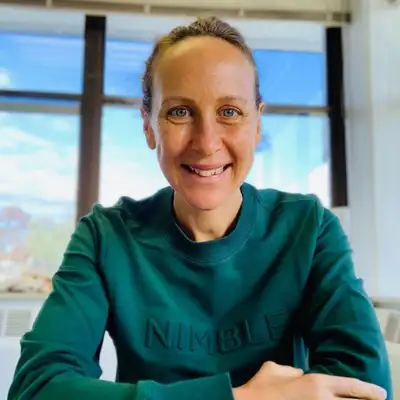
Brad Currier discusses Urolithin A and Resistance Training Guidelines
00:00
Hey everyone, it's Mikki here. You're listening to Mikkipedia and this week on the podcast I speak to Brad Currier, science lead at Timeline Nutrition and lead author of the recent American College of Sports Medicine position stand on resistance training, which was just updated. So this podcast has two different paths related to those topics here. So firstly, our conversation.
00:28
covers Urolithin A and Mitopure, which is the signature supplement from Timeline Nutrition. Brad and I explore what Urelythin A is, what it does in the body, and why it has become an area of interest for mitochondrial health and muscle function. Brad explains the proposed mechanisms, the current human evidence, and what outcomes have actually been shown to improve from cellular level changes through to potential real-world
00:57
benefits. Unbeknownst to me, this supplement has been researched for over two decades at this point. It's just become so much more popular now because it supports almost every big podcast out there. So Brad and I also discuss who may be a best fit for a supplement like Mitre Pure, which is the Urolithin A, including older adults, athletes, and those already doing the fundamentals well.
01:23
while also addressing the limitations of the current research and how to think about bias when science and industry intersect. Our conversation then shifts to resistance training, where Brad shares key takeaways from the ACSM position stand that he led, including what matters most for strength, hypertrophy, and health, and what people can probably stop overthinking.
01:46
And just so you know, it was almost two decades since that position stand was updated, the last one being in 2009. So, mean, timely is the wrong word. It was probably long overdue. So Brad gives us the key highlights to that paper. I think this was a really balanced, evidence informed conversation about mitochondrial health, supplementation, strength training, and the practical foundations that still matter most. So,
02:14
Dr. Brad Currier is the science lead at Timeline Nutrition, where his work focuses on translating emerging research on mitochondrial health into practical evidence-based applications. In particular, he has been closely involved in the science and communication around urolithin A, the active ingredient in Mitopure, and its potential role in supporting muscle function, cellular energy, and healthy aging. With a background in exercise science and resistance training research,
02:41
Brad brings a dual lens to his work, combining performance-focused insights with a broader interest in longevity and metabolic health. He has contributed to large-scale evidence, synthesis, and resistance training, helping clarify what actually matters for strength, hypertrophy, and overall health, and where the field may have overcomplicated things. At Timeline, his role sits at the intersection of that research, education, and application, helping bridge the gap between mechanistic science
03:10
clinical relevance in real world use, particularly as interest grows in interventions that support muscle and mitochondrial function across the lifespan." Now I have put links as to where you can find Brad's professional Instagram page and also where you can find him on timeline.com. So I've got timeline nutrition website as well. And then the American College of Sports Medicine position stand. I've also linked that in the show notes and that's a full text there.
03:40
Before we crack on into the interview though, I would like to remind you that the best way to support this podcast is to hit the subscribe button on your favorite podcast listening platform. That increases the visibility of Micropedia and amongst literally thousands of other podcasts out there. So more people get to hear from the guests that I have on the show, like Dr. Brad Currier. All right guys, enjoy this conversation.
04:08
get to all of it or none of it. It'll be good either way. Yeah. Hey Brad, I'm so great to chat to you this morning, your evening. really appreciate you taking the time and you've got such a great background actually with all of the timeline products uh behind you. uh So I'm super interested to chat to you about the two things that I want to chat to you about. And one of them is of course, your paper on the resistance training guidelines and of
04:37
We were just saying that you've just done a podcast on Dr. Tony Bataji's um channel and that just came out yesterday. So if we don't get too far down the rabbit hole with that, that's no problem because I don't doubt that there'll be many opportunities for people to listen to that. And of course, I really want to chat to you about Timeline, Urolithin A, Mitre Pure. It's all I hear when I jump on to listen to a podcast, every single
05:06
major podcast has them as part of their advertising, which sometimes you're sort of like, really, is it that good? So I'm actually really stoked to get to talk to the, are you the clinical science officer there? Is that what I would say? Yeah. So my role here, and thank you so much for having me really. It's a treat to be able to chat. I'm so glad we are able to connect here, especially with the time zones. It worked just perfect here.
05:34
Yeah, so at Timeline, I'm the clinical trial manager. So I oversee all of our clinical research, uh the activities in that space. I joined the company at the start of 2025. So just over a year here, been in Switzerland with the R &D team, but it's really a great place. The people make it and it's a company that was founded by scientists and physicians and that continues to be the driving.
05:59
kind of force behind it is that we're trying to figure out how we can improve people's health span. And that's really the mission is how do we live not just longer lives, but really better quality life and really being led by the science and doing so. Nice one, Brad. I'm curious actually, like when this opportunity came up, like, did you know a lot about like the product you're living in A or were you like a lot of us kind of, this is just, I'm sure you didn't think.
06:27
This is just another supplement. I'm not even sure if you can say that, but yeah, yeah, I'm curious as to your initial sort of thoughts. Yeah, well, I think it's uh fair and probably most people have that when they hear something new, you've got a friend you're out to coffee with or you're scrolling online and you see new supplement. It's rightfully so you maybe have a little bit of caution or skepticism because there seems to be a dime a dozen. so Urolithin A Mitopyr had first crossed my radar.
06:56
about midway through my PhD. um I really then, I started reading a bit more about it. There was a lot of the early clinical trials, which are already different than most supplements, but a lot of the early clinical trials were really focused on muscle. And that was my background. I did my PhD with Stu Phillips. so using muscle biopsies, stable isotopes to look at metabolism and particularly how exercise and nutrition impact.
07:25
our muscle health. So I'd come across urolytin A at that point and dove into the research at that point. And really, as I read more, you kind of realize this is unlike pretty well any supplement out there, just with one, the preclinical and almost research development program that had gone behind it where Timeline was founded, I guess it would have been 13 or 14 years before.
07:55
a product was even marketed. So Timeline's now coming up on 20 years and uh really all that work, the fact that it was high quality science, you know, published in the Nature Metabolisms, Nature Medicines, showing how this molecule works and has health benefits, but then the translation into human studies, which is ultimately what matters because who cares if we can improve the life of a mouse, we're humans and we want to do that.
08:22
But seeing the evolution of the clinical program kind of in those first couple of years really caught my eye. And so I was able to get connected with the team here at a conference, actually was at the American College of Sports Medicine Conference. We first met and had the opportunity to come over here and join the team. it really is a great spot because not only in my case, of course, the clinical research is
08:50
the primary thing to do, but there's so much opportunity to get involved in other areas. And what I've really loved is you could have a great product, you could have great data, but at the end of the day, there's so much else that goes into it actually making a difference in someone's life. And whether that be understanding the regulatory affairs, the laws in different countries, how you have to ensure this meets highest quality standards. uh
09:16
the actual communication and educating people on something. There's so much that goes into ultimately making a difference in people's lives and being able to have active involvement in that has really been, it's been terrific. Yeah, no, it absolutely sounds it. And we'll get into the, obviously the details of what Urolithin A is and what it does. I'm curious though, Brad, like, is it, how available is it sort of worldwide? I know that you can,
09:45
purchase it in the States and obviously it's us with company. Can we get it down here in New Zealand and in Australia? Yeah, so in New Zealand, and I'll double check this with our regulatory, but it was... uh So the majority of it is in the States. There's uh a few countries, so like Canada and a few others that you can buy and have it shipped to. Australia, it was, and this is where I'll double check its exact status because I know it's in process, but it has been...
10:14
proved as a food ingredient. uh So it's gone through the review process there. The actual distribution is kind of being set up now. So for the time being, I think uh the best way in New Zealand or Australia to have it shipped is to purchase it online either Amazon or the website and having it shipped. uh like I said, our regulatory and quality team are rock stars and they are
10:43
flying through all the various jurisdictions. So I'll find out the exact status of it and make sure you can get your hands on some if you'd like it. Oh, nice one, Brad. Yeah. And as I said, like I just hear it over all of the different podcast channels. So super curious of it. can you, for those unfamiliar actually, can you chat about what, I mean, I'm saying Mitre Pure as, and I'm
11:11
Meaning, think what I'm meaning is Urolithin A and you can correct me if there's anything else there that I need to, that's correct. But can you tell us sort of what does it actually do? Like why do we need, why would we want it? Absolutely. And so Urolithin A is the, a natural molecule and maybe we'll just take even a step back. kind of where timeline came out was trying to understand what, why certain foods had health benefits.
11:40
And so about 20 years ago when the company was founded, pomegranates were having their heyday and you remember the palm craze. But these health benefits that were associated with it and really what the founders were trying to do is deconstruct the pomegranate and understand what is it that's having these beneficial effects. And kind of through this process, they found urolithin A. Now, urolithin A is a postbiotic. So it's not a pre or probiotic, it's a postbiotic, meaning that it is something when we eat a food,
12:10
our gut microbiome will transform elements of that food into an entirely new molecule. So the polyphenols that are in a pomegranate, when they're consumed, the gut microflora actually transforms those into urolythin A. And originally it was thought just to be a waste product, but kind of, as I mentioned, over the decade plus of research looking at what this molecule is and the early results, I mean, it was in
12:38
improving lifespan by 50%. It was increasing strength by 10 and 30 % in these preclinical models. It was clearly having a beneficial effect. And ultimately what was identified is that it activates a process called mitophagy, which is the selective recycling of damaged mitochondria. A mitochondria, a powerhouse of the cell, his fiasco, your local high school biology student, but really what
13:06
Urolithin A is this natural molecule that improves the mitochondria of health of ourselves throughout our body. And the reason that ultimately Timeline ended up marking it as a food supplement was because the first question was, okay, Urolithin A is obviously beneficial. Can we just eat a bunch of pomegranates? Because I'm a big proponent of food first whenever possible. uh Supplements are strictly to either kind of offset a deficiency.
13:36
or when there's an added benefit, if you think of something like creatine, where there's an added benefit to what we can get beyond our diet. And so doing some clinical studies around the world, saw that the vast majority of people, over 60%, and most parts of Western developed societies, it's closer to 80 % of people, cannot produce this naturally. So when they eat a pomegranate, they don't have a healthy enough gut microbiome to convert it into urolithin A. So urolithin A is just that postbiotic.
14:06
where you can have it directly accessible. And Mitopure is a branded name of that. And really the key about the Mitopure is that it's one, well, it's the only clinically validated urolithin A, but it's also the only one more importantly with all the safety testing. So FDA grasped the review of actually looking at the quality of this ingredient and what's been used in clinical trials. um So that's kind of where urolithin A is uh the name of the molecule.
14:36
Mitopeir is the branded and quality assured uh version of it that can be used as a food supplement or cosmetic active actually. Yeah. Oh, nice one, Brad. So, mentioned preclinical and clinical trials. How strong is the evidence in the clinical trials for this? I think, because a lot of people, I think understandably, like every time you open a social media channel, you are
15:03
bombarded with, I guess it depends on what companies are targeting who, but you've got so many anti-aging, so many mitochondrial supplements. And then of course, if you're a woman of my age, it's all about hormones, the whole host of things. So how strong is the evidence in particular age groups?
15:29
for the human trials or can you sort of just describe that level of evidence? Absolutely. And as with any science or research, it's evolving. I think I mentioned it to Tony, but research is two words. It's re-inserts where we keep doing it, right? To have a better... Yeah, yeah, yeah. And so in terms of the strength of evidence, as far as supplements go, it's quite good. m But there's more to do.
15:56
Originally it was in that healthy aging space where the first few trials were in those 40, 50, 60, 70, 80 year olds. And that's where at first it was looking, okay, one, is it safe? Two, is it bioavailable? Check, check, cross the board on those. What's it actually doing at the molecular level? We see in muscle biopsies the improvement in mitochondrial energetics in these human participants.
16:24
And now it's more so running the longer form randomized placebo controlled trials to better understand its efficacy. So the first couple of trials that were done, like the first few RCTs, looking at things like muscle strength, where compared to placebo over four months, there is a 10 % improvement in that. Some clinically meaningful improvements in VO2 max or six minute walk test. Now I would say that is something that's continuing to evolve where
16:54
There's, uh it's increasingly researched. um We just kicked off the 25th clinical trial for Timeline, but now the most of the research is being done by independent investigators. um So they're not only validating the results that have been, that maybe we or others have published, but also expanding them. So uh because of mitochondria everywhere, there's the most recent paper was actually on how it kind of reverses immune aging.
17:24
in individuals. was a trial done out of Germany, uh published in Nature Aging, just at the end of 2025. uh But also the, you know, skin's our largest organ, and there's a whole line of uh topical applications that is really a growing area for us. So what I would say is that the evidence, certainly compared to 99 % of the supplements we see on Instagram as we scroll, um it's really the differentiator in terms of
17:53
how timeline approaches it and only selling clinically proven products, but also it's evolving. And that's a space where we're gonna try to continue to lead that. Yeah, nice one. And Brad, you mentioned how as a post-biotic it's created from our gut bacteria. Yet 80 % of us may not have the environment in our gut that would help support our own natural production.
18:22
How do we know? Is there a simple test that I could do to determine if that was me? Yes, there is actually that we, and we're just actually winding it down now, but it was something we had done called the Mitopure Challenge, where people could uh sign up to do this study. And what they was is we'd ship a kit with pomegranate juice and one dose of Mitopure. And you would have it where you take dry blood spot samples.
18:51
after consuming one, you wash out, comes with the whole protocol, you do it again, the dry blood spot samples go to our lab, and you can see the actual amount of urolithin A in your blood after consuming either mitopure or pomegranate juice, which is very concentrated in those polyphenols that are transformed into urolithin A. So that was the way we've had... uh
19:18
That was an actual study that we have ongoing. And I'll say stay tuned because we're working on it so people can find a way that can more readily check. But yeah, the study's looking at producers, as we call them, people who can naturally produce it. Have been done around Europe, India, US, Canada. And it is right around kind of that 70, 80 % can't produce it at all.
19:46
And even those who can, it's about six times less than they would get from the supplement. Yeah. And, you know, often, you know, people are very familiar with creatine and the fact that we produce some creatine, but actually for the requirements for muscle and potentially in brain, we need more than what we can produce and or get from the diet. Well, something like urolithin A, would you put it in the same camp bread that even people who
20:16
produce it, are they producing it at a level with which might be clinically beneficial? I think that's a great characterization and no, people who, even those who can produce it, cannot make enough. what someone who's a producer, if they were to consume pomegranate juice to get to the same level of urolithin A exposure that you would from one dose of Mitopur, you'd have to drink about a liter and a half of pomegranate juice. uh
20:45
And so that compared to two soft gels for me is a no-brainer. uh But uh it is one where it's, I would say, it's definitely one of the exceptions where supplementation is the way to unlock the power of this natural molecule. Like I said, I'm food first. My supplement shelf is extremely short. It's my multivitamin creatine.
21:12
and might appear. Yeah. Yeah. You're eating well enough. You're probably doing okay. Yeah. Nice one. Hey, I'm curious. The thing that I'm thinking of at the sort of, also, I'm sorry, the other supplement that I'm thinking of as we're talking about this is um like NR. Yes. Or I always get that nicotinamide riboside. I that's, is that right? Yeah. Is that a similar sort of?
21:41
I mean, obviously different mechanisms, but do they promise much the same outcomes? Yeah. So you're absolutely right. And as you mentioned, there's a proliferation of mitochondria focused supplements that seem to flood our inbox, social feeds, and probably spam for the most part. the key distinction is that mitophagy component.
22:09
There are a wide range of like NR, NMN, CoQ10, Urolithin A. These are all things that are looking at, you know, trying to hit the mitochondria. Some of them are trying to improve the amount of mitochondria we have. We can think of the mitochondria in kind of three phases of its life where there's mitochondrial biogenesis, which is the creation of new mitochondria.
22:33
mitochondria efficiency where fusion and fission, these mitochondria are morphing and adapting to become more efficient. That's something, that's a process where CoQ10 tries to target, but then there's always like in any cell, the accumulation or just aging of these parts of our cell uh that can increase when we're stressed or, you know, environmental factors and that clearance of damaged mitochondria is mitophagy.
22:59
And that's really where urolithin A is unique. It's the only clinically validated molecule that stimulates that recycling of dysfunctional mitochondria. So while they're all looking at the mitochondria, they try to hit different parts. And mitoPUR is really unique in that last part where it's actually the removal of damage. It's kind of like the recycling person, you know, that comes to pick up the trash from our house.
23:25
You need that otherwise you're probably going to have an unhappy roommate or partner. Yeah, totally. So what outcomes has it actually been shown to improve, Brad, if we're talking about mitophagy? Is it only in the muscle? Yeah, so not just in the muscle. On the muscle side, um as I mentioned, those first couple trials were to the muscle biopsies where you actually see the improved expression of mitochondrial genes and proteins. um
23:55
that go into the energetics of the mitochondria. So improving as those damaged mitochondria are removed from a performance standpoint, which is really what matters in that aging population, muscle strength measured on a biodex, which is where you can, you've got someone kind of strapped in, it's often used in kind of rehab type settings or in research settings to measure force output. I see that was the hamstring strength in
24:24
increasing 10 % in there. VO2 max, so how well we can consume and use oxygen for cell respiration, improving also clinically meaningful amounts, so kind of 5-10 % in that. And muscle endurance, how long we can contract our muscles before they fatigue. Those were the early trials in the muscle space, and actually probably the biggest area of, one of the biggest areas of growing research is in athletics.
24:52
And I know that's probably of interest to some of your readers, we just, last year there's a third publication of Urolythin A in an athletic, like really high level athlete population. So the three main studies was won by an independent investigator, a big weight, or a big sports science institute in China, looking at how Urolythin A when added either Urolythin A or placebo to well-trained weight lifters.
25:19
It was improving things like repetition to fatigue, performance and muscle strength. And then Louise Burke, who's just across, I say across the way, it's a long way. um They did a study with some of these elite runners and during one of the training camps, uh what they were seeing is a reduction in markers of muscle damage after these time trials. So a certain enzyme creating kinase.
25:47
was significantly reduced following the urolithin A compared to a placebo. And then one actually in Australia was in soccer players and showing kind of improved vertical jump, improved yo-yo intermittent running test. that sports area in the muscle, would say is kind of that in the healthy agent, have been the two main camps on the muscle. And like I said, there's just as many trials, if not probably more actually on the skin and immune.
26:17
because the mitochondria are everywhere, but that's kind of the crash course in what research has been done on muscle and mitopure. So are there clinically meaningful outcomes, Brad? So we're seeing these shifts in, I mean, it sounds like it with the um reduction in creating kinase, et cetera, but if, I mean, I know you don't have a crystal ball, but if someone like me took it as a middle-aged athlete, would I necessarily
26:46
feel these benefits? Yeah, so that's the important thing. Is it necessary? Just because something's statistically significant doesn't mean it's physiologically relevant. So first, guess, just kind of on the data side, would say yes. So things like the VO2 max, for example, kind of the clinically meaningful benefit that this was in an aging population, is that 3 and 1 half mls per kg per minute?
27:14
And that's where you see the reduction. There's all the epidemiological studies showing now this is the amount or above this, we see that improvement in cardiovascular disease risk. We see these improvements in blood pressure, whatever it may be. So clinically meaningful improvement in that. Another one that maybe people are familiar with is the six minute walk test. So this is where you quite literally just walk as far as you can in six minutes. And that was one where that threshold of 30 meters
27:43
a 30 meter difference is a clinically meaningful improvement, was also exceeded by the ureolithin A group compared to placebo. In terms of what you would feel when you're doing it yourself, I think obviously those are what the culmination of many individuals of data show the benefits are. And for me personally, I've actually noticed it most in that recovery, kind of in line with what uh Dr. Louise Burke's group showed where there might be some
28:12
indication of improved recovery. know, my travel lot jet lag is not as much of a factor. My recovery from training sessions, that was anecdotally where I noticed the difference. So certainly, like I said, we can make sure if you'd like to try it, you've got that we can get you some. And do you know, Brett, I think for so many of these types of supplements like
28:38
In my clinical experience, and these are anecdotes as well from clients, from friends, from people, there are certain individuals who, for CoQ10, for example, they really notice taking it. They feel quite energized from it. And as you describe how CoQ10 works, and that sort of mitochondrial efficiency, the way that you described it me of...
29:05
how they describe sort of just feeling a whole lot more energized and very sensitive to it. Whereas I never really noticed when I take Co210. I don't feel it, but my head knows that I'm taking it. I intellectually know that I'm taking something that's good for me. And I think when I chat to people about supplements, like the likes of Urolithin A, I often describe it as well. You may or may not notice.
29:33
per se, but it's actually like it's clinically doing or it's doing something in the body that is helpful. It's almost like suspension of disbelief. Yes, it is actually working. I think that's very well said where, of course, here's the clinical data. You can see what it goes when we put it to the test against a placebo over time, but the individual experience is always going to be exactly that, individual. um so some people, notice it, other people
30:02
don't at all. But I think you're exactly right. We're just knowing that, there's, know there's no harm. It's extremely safe. And there's a lot of good reason to think it is supporting our health. So to me, it's, it's a no brainer on that front where we're not doing harm and we've got the great opportunity to help. Yeah, yeah, absolutely. And any
30:27
Is there anyone that you think might not benefit from taking something like this? Yeah, so in short, no, I don't because it's been so extensively studied. The safety profile is exceptional. So no contraindications that have been identified, shown it's extremely safe. And really with something like Urolithin A, you're addressing things at that cellular level. It's not like
30:57
we're treating something where this organ system's dysfunctional. We're going even subcellular and looking at mitochondrial health. And the mitochondria make up every cell in our body, except for in blood cells. improving mitochondrial health is something that's important across the lifespan, whether we're at an athlete training with a great degree of intensity or we're at an older individual anywhere in between.
31:23
The mitochondria health is something that's so important to the functioning of pretty well every tissue in our body. So from a data standpoint, no hesitation to recommend it to any healthy adults. from, guess kind of, yeah, well, I guess that's it. Yeah, yeah, yeah. And what about any, that you mentioned that there are like a number of clinical trials
31:52
going on and have been obviously for several years. Anything, that you're particularly interested or excited about with this sort of in the next few years, couple of years with some of the clinical trials that you're involved in and setting up? Yeah, so there's a couple, like I said, yeah, we just kicked off our 25th and last year we continually as the product lines expand, everything that gets sold is backed by multiple clinical trials.
32:21
There's need for more more clinical research, which makes me happy. um But the one trial that I'm actually particularly excited about, we're calling the MITO Cancer Trial. It's being done in Germany. And this was a follow-up to that Nature Aging paper I mentioned being published a few months ago. And what was done in this trial is the first study we had generally healthy adults, randomized placebo or MITO pure.
32:51
took it for a month and we did took blood draws before and after. And we partnered with the Buck Institute of Aging in the United States to do this really deep profiling on the immune system. So actually being able to identify not just all the different immune cell populations within our immune system, but also look at things like their mitochondrial function. And what was shown in this trial was that
33:16
One, the CD8-naive T cells that decline with aging, they're the stem cell-like part of our immune system that allows us to fight a new infection. They decline with aging and they were increased with mitopyr. And what was underpinning this kind of revitalization of this immune cell population was improved mitochondria function. they were the fatty acid oxidation markers of biogenesis like
33:45
PGC-1-alpha, they were all improving in this. so what we've kept this, what actually a physician has done is wanting to extend that from not just healthy population, but a population where there's some immunocompromised uh individuals. So in this case, it's individuals who are undergoing uh standard cancer treatment for their particular case and having mitopure or placebo as an adjunct to that therapy to see if improving mitochondria health.
34:15
can help improve their outcomes at all. Amazing. And in fact, Brad, as you were talking, was thinking about how, well, I was listening, obviously, but also thinking about the post-biotic nature of urelythin A. Does it have particular benefits to the gut and in gut health at all? Yeah, that's a great question and just admittedly something that we have not studied in humans yet.
34:43
we've tried to understand to exactly what exactly in the gut, you know, make someone a producer, can this change? The shorter answer is we don't know yet. We're looking at it. um But we don't know. And I'm not going to claim to be anything of a gut microplastic expert that's defer that to the people who who actually do it. um But something that I've heard a few of the leaders in this space say is that the
35:13
The gut microbiome, it's really seeded in the first thousand days of life and it's so heavily influenced there. And throughout life, we can certainly harm it and we might be able to nudge it in positive directions, but how much something like a nutritional supplement will actually move the needle? I'm not sure. uh And so we don't know, we go get data and we're going to get some data, but we don't have an answer at this time.
35:39
Okay, no, that's a great answer actually on the basis of that. Thank you, Brad. Well, I'm really pleased to get that opportunity to chat to you about that supplement for the reasons that I've described. I've described myself as a bit of an early adopter, but also curious. So if it is available in New Zealand, then definitely something which I'm interested to have a look at.
36:04
And now I'm going to totally shift gears. Well, it will seem like totally shift gears. mean, obviously the common denominator here is you, because your paper on the exercise guidelines just came out a couple of weeks ago. And you mentioned that you were a part of Stu Phillips' lab at McMaster University, conducting your PhD in Muscle Health, et cetera. And you were also the lead author in the position stand that has just been released. Am I right? You're the lead author of that?
36:34
to the paper? Yes. Yeah. Nice one. Was that like a long time in the making? Like what's the go? It was. It was a long time. I mean, really first and foremost, shout out to every single person on that author line. It was a, it was a huge team effort. It was a big undertaking. Yeah. The project probably start to finish. It was late 2023, maybe that was coming together. So yeah, just two and a half, three years uh start to publication.
37:04
Um, but now, uh, now the exciting work starts because it's actually got the data and, um, trying to help people best understand it because it's, uh, it's a long read. Yeah, it sure is. Um, and also very good read. Now people who are listening to this will be thinking, hang on, don't we already have exercise guidelines? Like, haven't we been, they haven't changed forever. So what was the reason for.
37:32
for this publication and this sort of work, Brad? Yeah, so these are the resistance training prescription guidelines for the American College of Sports Medicine. And the reason they were updated is actually there's a few reasons. So one is that the most recent position stand on resistance training prescription was in 2009, so 17 years ago. Since then, there's been just over 30,000 publications on resistance training. So quite a bit of data and
38:01
The purpose of a position like this paper is to give professionals and individuals a summary of where the field's at. And so it's usually a leading organization or governing body saying, here's what we know about this kind of where we stand. uh And certainly over the last 17 years, there's been a lot of data that we want to make sure is considered and reflected appropriately.
38:27
in the overarching position stand on resistance training prescription. So that was a big reason for wanting to update the position stand is there's a lot of data to consider when we look at how we prescribe resistance training. In the paper, you mentioned 30,000 studies and there were over 130 reviews included. So I imagine the level of competence with
38:53
some of the recommendations must be pretty high or I guess as high as they could be given that. Yeah, it's quite high and it really depends on both the outcome and the variable that we're looking at, right? So the quality and confidence is actually something we can quantify in this procedure. And maybe for, coming off of this as old news to your listeners, but maybe for some context.
39:17
We hear about these randomized controlled trials where we have an intervention compared to a placebo or a different intervention. And that gives us an idea of if something's kind of effective or not. Is it causing a certain change? When we have a lot of randomized controlled trials, we can synthesize those in something like a meta-analysis, where we're actually combining the results of very similar trials to have even more confidence, like you say, in how does X impact Y?
39:46
What we did is called an overview of reviews. So because there's so much data on resistance training prescription, we were actually able to combine meta-analyses on these topics. So variables like how, well, just exercising versus not exercising. Things like how about uh load, how heavy is the weight we're lifting? How many times a week do we train? And about a dozen other prescription variables.
40:14
and how they impacted outcomes from muscle strength, hypertrophy, a whole swath of uh muscle function. So things like chair rise, gait speed, these were things that we were able to look at. So to your point of confidence in this kind of systematic synthesis of all this research, there are ways that you can evaluate the confidence and how much you can kind of weigh on these conclusions. For things like
40:44
actually resistance training versus no exercise. We are extremely confident. I think it's over 30,000 people in the strength recommendation alone, where if you do any form of resistance training compared to not doing anything, you're going to get stronger. So not exactly world shattering, but for you know, really the first time we've got this amassment of evidence showing that it is I you know, if I resistance train with bands or I go to the gym or I do this at home.
41:12
I will get stronger. I can have confidence in that. For some of the other variables that are less studied or some of the outcomes that are measured as much, I'm not going to think of one off the top of my head, but just for sake of example, something like a, what would be a good one? Probably, I guess, what was not studied. Maybe something like a uh rest interval. So how long do we rest between sets? How does that impact?
41:40
you know, our gate speed, that's something where we don't really have data because there's not enough trials and meta-analyses to actually have an idea. So the confidence certainly is dependent on the outcome and the variable we're looking at.
41:58
And out of, mean, to your point, it is like a large paper. What are two to three sort of big take homes could you think of that, that people, if there are any, that people either might be surprised about or actually just solidifies sort of some of what we might be hearing in social media, et cetera? Yeah, absolutely. I think the first one above all is just how you don't need a perfect
42:27
program to benefit from resistance training, you just need to show up. And that would be the biggest conclusion from this. obviously through this, yeah, we're looking at all the different ways you can tweak a program. But the most impactful, in my opinion, is when you look at someone doing resistance training, compared to not doing anything, the outcomes are incredible across the board, they get stronger, they can build muscle, they'll improve their gait speed, their physical function.
42:56
doing resistance training is so powerful. And I think it's important to keep that in mind, or I think it's important to keep in mind, the vast majority of people don't do any resistance training. It's upwards of, you can tell me what the numbers are in New Zealand, but it's about 70 % of people in North America. think Tony mentioned actually, it might be about 80 % in Australia, not sure what it is in New Zealand, but 70 % of people.
43:24
do not meet the guideline of just resistance training twice a week, 60 % of people do none at all. So the most people we encounter are doing none of this. And that biggest shift of going from nothing to something is where we see these tremendous benefits. So I think the evidence that this shows not just that resistance training is important, but the wide range of programs that we can benefit from.
43:51
something like elastic bands, like the resistant bands and the benefits that can have, or even home-based programs. These are things where practitioners and individuals can maybe feel some relief or lack of stress, where I don't need to go to a gym and get under a big barbell. There's a lot of things I can do to benefit my muscle health. And this is the, excuse me, this is the evidence kind of showing we can have confidence in that recommendation. Yeah, that is wonderful because
44:21
So many people hear that they need to do strength training or resistance training and that the only place that they can do it is the gym. And they bloody hate the gym. Like they absolutely hate it. And in fact, actually this is, how you're talking about resistance bands is also great because a lot of people actually really hate resistance training. Like, and I feel like you've probably been a lifelong athlete. I mean, you said you were, I can't remember if this was on air or off air, but you had a scholarship for golf. Like,
44:51
activity in sports and probably the gym has been a big part of your life, for a lot of your life I imagine Brad. Correct me if I'm wrong. Oh yeah, it has. I mean, I was not a talented golfer so I had to find anywhere I could to try to keep up. Oh, that's hilarious. The training was it. was definitely it. You can't have been that bad if you'd got a golf scholarship. And similar to me, I've been in a gym since I was like 13.
45:19
So it's a very familiar environment for me and doing resistance training is, know, I genuinely enjoy it as a runner, but a lot of people just, they hate it actually. Like I don't understand it to the level with which they really just really do not enjoy it. So the fact that you can get the benefits of strength training through
45:46
lot of different modalities is something probably quite reassuring for people. What about Pilates? mean, you probably don't know if you get that question a lot. I get that question a lot. What about Pilates, Brad? I would say it's better than doing nothing and sit on the couch. eh It's not the same as having resistance training by definition is exerting force against an external load. Pilates doesn't always fit that where that external load
46:16
isn't quite there. um I think to your point, though, the biggest take home is that, you know, some people just dislike resistance training. Others are scared of it. There's a lot of barriers uh to people participating in this type of training. And I love how you said that where there is good reason to be
46:41
Finding ways that we as professionals or people in this space can help others engage in it regularly. Now, while we know the participation is so low already, when people start a program, about 50 % of them, or excuse me, about one third of people will drop out. And most of those dropouts are in the first month. Like right off the start, when someone has been doing this, I think it's so, we see it's...
47:09
And for most people, never really important to think about the perfect program. But for so many people right off the bat, we need to be thinking about how do they come back? How do we make sure they come back? Because, and that enjoyment behavior change, there's so much as they build that into their daily routine that needs to be considered before we even talk about programming. For that, let's find something that they like. We have confidence that so many different things can work.
47:37
Let's find something that best suits them, their goals, their lifestyle, so that we can make this a regular part of their routine. And I think that is such an important thing with the majority of people who this is new to. Yeah. I feel like a lot of people get very stuck on the very minor details of programming, of how heavy they're lifting, how often they need to do it, whether it's
48:05
for strength or hypertrophy and not quite understanding the difference. And probably there'll be people who, because of that level of detail that they feel that they need uh to be all over, they just don't do anything. And in fact, it's actually a good reason not to do anything because it just feels so confusing for them. Yeah, absolutely. There's kind of the, maybe not.
48:31
Paralysis by analysis, but when there's such a huge amount of information Yeah, it's a very natural React response to just say well, I'm not gonna bother with any of this is clearly even these people doing it haven't figured it out Why am I gonna try to get in there and figure it and so try to have some clarity in that where You know a lot of those minute details that you're talking about They really are not gonna move the needle some of them and but most of them
49:01
is not gonna be the difference maker for most people in this world. Yeah, yeah. So, Brad, what are some, I guess, some basic fundamentals from this position stand that people should be, um should take away from it if they're just listening to this conversation, they're like, okay, so what do I What do do? Yeah, actually, what do I do? What What do do? um And not to sound like a broken record, but the first one is do something.
49:29
Yeah. That is the biggest takeaway from this is all the evidence showing that any form of this type of exercise has remarkable benefits. What I would say for people who are either working with individuals or they themselves looking to incorporate resistance training into the routine. The first question I always start with is, what's the goal? Why do we want to do this? Perhaps it is an athlete who wants to improve their 100 meter dash time.
49:59
Maybe it's a grandmother who wants to be able to get down on the floor, play with her grandkids, hold their child, whatever it might be. What's your goal? Because so often through this, we'll come back to why are we doing it? For me, that purpose-based resistance training is a huge part of the kind of retention or the compliance to a program is remembering we're doing this for a good reason, even if that's just being healthy.
50:29
What I would look at then are some of the main variables that more so tailor a program to our lifestyle. Knowing that the recommendation is we want to the foundation is at least twice a week, major muscle groups, high degree of effort. How do we do that? So I would say look at the two best times in your week that would work for you to do some form of resistance training. And second, let's look at what
51:00
we can do this with. So for some people, maybe they do have access to a gym where they can go and there's equipment or space. For others, maybe it's like, okay, can I afford these $50 resistance bands on Amazon that I can bring wherever I go, whenever I go, they fit in my backpack. Maybe it's knowing that, you know, at my point right now, I need to do body weight work. I'm completely new to this. Wall pushups might be the exercise to start.
51:29
But once you kind of know when you'll be able to, why you're doing it, when at a minimum you're going to have it and what equipment you're working with, then I think the major thing to just consider is the movements. So we can break it into upper lower. We have upper body muscles, lower body muscles. We can push and we can pull. So a push can be things like pushing away from our body, whether away from our chest or above our head. Pull, same thing.
51:59
and the lower body, it's the same, where you can be straightening our knees or bending our knees. But I think having those four quadrants, we can hit with exercises, fit in those criteria. And what I would say the most important thing is really is when we finish that session, feel like you did some work. It doesn't need to be foreign to you, but I like to use RPE or rate of perceived exertion with people, especially as they're getting used to resistance training.
52:28
If you feel like you're working at a seven out of 10, you know, kind of effort level, 10 being the max you could do, if you're working at like a seven, that's a great spot. That's fantastic. So that's, guess, individually, for me personally, how I would go about having the conversation with someone of how do we actually make this program fit your lifestyle so that it's easiest to adopt and make into a routine. Yeah. And what about take home for people?
52:58
like me, who have been resistance training for basically forever. Is there any information which um I might benefit from that might be new or might have been clarified with the position stand? Yeah. So I think in this paper, obviously, while it's targeting the generally healthy adult, is the underlying principles of a program, know, resistance training prescription.
53:27
remain the same across support. We need to have progressive overload. We're always adapting to a stimulus. But really we need to think about specificity and the principle of specificity and individualization. So specificity to me, go back to your purpose. Why are we training? Is there a certain goal in one of some of your running events that you're trying to attain? And if so, how can we specify this program to that? But then individualization, where for you,
53:57
you know, life happens, whether there's holidays coming up, things are going on with friends, family, whatever it might be. uh Knowing that how we can manipulate this program, if it's the frequency we're training a week, if it's the uh type of exercises we're doing, for you to kind of fine tune that program, I would say the principles remain the same. And just to emphasize those that when you're thinking about the one individual person, ultimately, we need to fit the
54:27
program to them because that's where it's going to be most effective. Research has all these averages and come together and we can have great insights and confidence in something like resistance training because of it. But ultimately, when we're working on with ourself or others program, we need to think about the individual and what makes the most sense for their goals and their situation. Yeah, nice one. And in terms of time spent in the gym, is there a some, I mean,
54:55
This is a ridiculous, actually I'm thinking about the question because it depends on what you do with the time, right? So you could go in there and do bicep curls and tricep dips and whatever, you know, all your small sort of accessory style exercises and not really make the most of that time. But is, was there, is there a recommendation? Is there a, is there a minimum effective dose in that regard? Yeah, great question. And in terms of a time, not an explicit minute amount, because it's, you know, in contrast to something like, uh,
55:25
cycling or even interval training where you know that you're running, you're on, you're off, you can time it out very specifically. Resistance training, it doesn't follow just the same kind of stopwatch, if you will. So what I would say the major buckets to check, like I said, are at least two days a week, major muscle groups. And with that, we see that most single and multi-set training is available. If you want to look at like the minimum
55:54
effective dose and this is just me kind of how I would interpreting the data that we have there. You know, at the bare minimum, if you can have someone doing that upper body push and pull and a lower body exercise, if you say we're going to do two to three sets of that with rest, that's maybe two minutes per set. You know, we're looking at, you know, six minutes, that's three exercises, 20 minutes, twice a week.
56:24
um Now that obviously isn't including getting to the gym or getting our bands at it, but that idea of we can have meaningful improvements with just those kind of, you know, that bare minimum and actually the minimum effective dose is an area that is actively being researched. And one we highlight in the paper, I think, if not, it is an area that's being uh actively researched and actually defining what that is.
56:52
But think if that's something kind of right off the bat, people think, you I'm going to do this for 20 minutes. It's one episode on Netflix of a sitcom, whatever. If I can do that twice a week, that'll be a great starting spot and definitely enough to start seeing that and come into your routine. Yeah. What about things like F45, Les Mills body pump? Like, do we have data? Do you have recommendations around that? Because some people love the group aspect.
57:21
of doing these more high intensity, but often, but they're like, oh no, people like that's not resistance training. That's not what we're talking about. That's not going to get you improvements. Is it still going to get them what they need? Yes. I think the, my perspective on that is actually the thing you mentioned second, which is they love it. And if we think of a friend or someone we know who's just obsessed with that CrossFit workout or whatever, how often do they miss it?
57:50
not nearly as much as someone who hates it. So I think the fact that they've found something that is so enjoyable to them with a keep coming back, that is a huge win in itself. And like anything, whether it's, you looking at your own routines, you've got these classes you like to do or and agree the group bid is huge, especially for those of us that can work with older individuals, the social component is just as big.
58:19
just as beneficial. um But having something that we're excited to do, that's more than half the battle. uh Because so often when we take, look, or working with someone who's new to resistance training, we're trying to find that. Something that they're excited to do and have as a regular part of their life. So it's important to know the limitations for sure, where, if we're doing, um if we love our spin class,
58:48
No. Okay. Is that resistance training? No. Maybe I should add in that 15 minutes of weight-bearing activity. But that's a relatively small amount if we're talking about we're already doing this class a couple of times a week. So I think knowing the limitations of what we're currently doing, but as long as we're getting that resistance component at some point, do the one you like the most. Yeah.
59:18
Nice one. And Brad, are things like F45, Les Mills classes, High Rocks, are they in Switzerland? you like, do you see a lot of the, those types There are classes. I can't say I've looked for all of those specifically here. No, I can't imagine you would. I'm trying to think, what if I walk past here? What do I see people doing? Yeah, there are group fitness classes, absolutely. And m High Rock, I'm-
59:48
almost certain there's a spot near here. um So they are around. Personally, it's not the way I go. I'm more of a loner in the gym. I like to go in and get there at five be gone by six in the morning before everyone starts in and just kind of be in my own world. That's how I like to train, but that's not forever. yeah, no, I'm with you. I'm with you with it. Like I like to, I like to do cardio, maybe with company, but
01:00:17
always on the gym floor. liked it you just want to get in and do it and sort of get out. Yeah. Exactly. Just crank it out. um like high rocks is interesting. Like a lot of people have feelings about high rocks feelings, you know, from the resistance training sort of space because they're like, Oh, this is not real resistance training. Like those, you know, burpees, those wall sets, the whatever. I'm sorry. What are they? Wall balls or, or whatever. Whereas I sort of look at it like,
01:00:46
Hi-Rox is almost the place that endurance athletes go to die. You know, lot of them, it's like everyone sort of seems to be transitioning from triathlon into Hi-Rox or running into, like, I feel like it sort of opens up, I guess, some of these movements, which they might not have otherwise done. I'm not sure. I'd like to, I'm curious if you've got an opinion. Yeah, I think it's one where if someone's getting involved with that, again, if we kind of look at the big picture.
01:01:15
Most people aren't doing anything. And so if that's for whatever what resonates for them, great, do it. For those of us who maybe are doing some sort of activity, but not high rocks or doing high rocks and nothing else, just know that, hey, is there anything in the scope of our muscular fitness and strength, our cardiovascular health, our balance? Is there anything we're not really hitting? And if so, let's try to add a little bit of that. But as long as we're kind of getting the essentials across the board, I love it.
01:01:43
Have fun. Yeah, nice one. Nice one. I love it. Hey, now, what's the go on the data for women? So, like, obviously, you're well over all of the literature. Is it as sparse as what people think it is? Are the recommendations different compared to, that of men? Like, yeah, can you just give us a summary of that area, Brad? Because a lot of people listening will be curious. Absolutely. And it's so important.
01:02:13
You know, there's progressively more people getting involved with resistance training. There's a lot more room to go, but especially in women. You do see more now training, resistance training, but there's a lot more that do nothing. And so it's such an important area because of how impactful resistance training is for our health. What do we see? Okay, first participation rates, definitely a bit lower.
01:02:42
also in older individuals. There's less people resistance training. What should we be doing? Prescription wise, no difference in the recommendations. What I would really say for female specific, uh prescription specifically with females is two things, because a couple of things I get asked often a lot about are either cycle syncing, my training program, or as I'm going through menopause. How should I be adapting my program?
01:03:12
The data and there's a lot of great work that's been done on this now and increasingly so. uh Shout out actually a colleague, Dr. Colenso Semple, who's really done some great work in this space from the physiology out to the actual adaptation side of this. There's no difference in if you train one way up certain parts of your menstrual cycle versus others. There's no...
01:03:41
there's no compelling reason to modulate your program based on a certain phase or hormone level that you have. What I will say, it's extremely important that you look at your individual self. Whether it's working with an athlete, whether it's someone who is kind of on that aging trajectory, we're going to feel different day to day. That's human. But particularly in some of these scenarios where our energy levels might not be the same.
01:04:11
we didn't sleep well, maybe we're feeling a little extra sore, we can adapt our program for that. And really, I would say if we're leaving the gym, if we can even go, it's okay if we miss a day, that's not going to make or break where we end up. But if we can adapt it where, okay, you we're going to take it bit easier today, we're going to maybe push it harder, whatever it is, whatever that individual is best suited to.
01:04:40
you've got to really tailor it to that individual. So from an evidence standpoint, no, there's no reason to manipulate your program. But I would say listen to the individual. And if you feel like I've got to cap it here, or I need to shift this to a different day, as long as that you know, kind of over the long run, that's not going to make or break where we end up. Yeah, nice one. And I think gaps in the literature, Brad, like
01:05:05
as you were looking at it, I mean, you did mention something you were like, oh, yes, how prevalent. Yeah. Yeah. So what's the, what's the go? Yeah. How prevalent in the, in the literature. So in this certainly, it's been something that females have been excluded because there was thought that these hormones would impact how they adapt and that could inflate results more and more clear that that is not the case. They kind of,
01:05:33
the variations in any of these sex hormones does not influence how much we adapt to resistance training. um But how represented are females in the literature? Increasingly so. We actually just did a, we published a study in the, or it was a network meta-analysis, kind of preceded this position stand in the British Journal of Sports Medicine. um
01:05:59
And that was one where we could actually compare the effectiveness of these different programs. And with that, we could look at if certain factors impacted the results. So things like age, things like sex. And in that, saw it was about, it was 47 or 48 % of the participants were female, which was admittedly a lot higher than I was expecting. I don't think if you look at the entirety of the literature, those were specific to the studies we had in different.
01:06:27
resistance training prescriptions, um less than half but increasing and more to be done. Yeah, absolutely. And then just across the board, like, was there anything particularly surprising for you? This is like, when you were like synthesizing all of the information and doing the writing, you're like, oh, I would have thought that this was the case, but actually, this is what we found. Like anything like that? Yeah, yeah, maybe two examples was one power training.
01:06:57
And that was how we kind of operationalize that definition in this position stand was when we do the concentric move as quick as possible. So that contracting part, whether we're standing up from a squat, pushing away from our chest, that concentric move, when that is intentionally done as fast as possible, we see that benefiting physical performance. So things like our gait speed or getting up from a chair.
01:07:26
And that has a lot of implications for aging and how we might think about working with older individuals and something that has been reflected in others uh studies and meta-analyses. Because if we think of something like fall risk, if we trip, when we go to catch ourself, it's not just a matter of strength where we need to be able to support our body, but it's an element of power. How quickly can we generate that force to catch our body? And it is something that
01:07:55
I think is increasingly appreciated how power training can be an effective tool for that healthy aging demographic particularly. I think that was one that I really like to see where I'd seen some cool work coming out of how it might be beneficial and for us to also reflect that was really neat to see. Yeah, and I think to your point, I don't think...
01:08:20
I would have thought power actually in that scenario. I'd be thinking mobility or balance or something like that, but absolutely power um would play like that. That's super interesting. Brad, just to sort of finish up, what are the biggest, I guess, unanswered questions? What is it that when you're looking at a summary of all of the information, which
01:08:50
is quite a lot, but where else would you like to see research or where is the research sort of headed? Yeah, definitely. um I guess there'd be two areas and maybe somewhat related. First is actually what we were talking about with that minimally effective dose. I really like how in some of the high intensity interval training literature, it was really seen that
01:09:16
Okay, this is beneficial compared to going out and running for 45 minutes. How long can we take it? I love that. Just where you can have that, know, show it to Marty Gabala, who's a great mentor at Mac, but one minute workout. It was incredible how you could, you know, bring that down. I always liked that. And I think there's a space for that in resistance training as we talked about. So people can have a tangible, here's the minimum. If, you know, I'm short for time, this is what I can do. uh
01:09:46
And there are studies ongoing in that space. But I think even somewhat related to that, though, is the actual adherence and behavior adoption that comes with adding resistance training to our regular life. We've talked about most people don't do any resistance training. If you walk by someone going down the street, wherever, odds are they don't do any resistance training.
01:10:13
It's a big change in lifestyle 18 to add it, even if it is just like 15 minutes once or twice a week as we're talking about. So the most effective ways to integrate this into people's lives, while it's not the physiology where we've spent our time studying, that to me is just as important a research area because that's where we're ultimately going to have a beneficial impact in people's
01:10:43
is not just knowing that resistance training is good, but having a better and better idea of how we can help people incorporate it into their regular life. Yeah, such a good call, Brad. Thank you. It's been a bit of a whirlwind really on two like quite big topics, but you've done a great job at giving us an overview for both of them. Thank you. So, Brad, I'll pop links in the show notes too, of course, timeline.
01:11:11
and the minor pure product and other related information and to the paper as well, which is open access for anyone who's interested. uh so for people who want to know more about the stuff that you're up to with.
01:11:29
Timeline bread, we can they go to find that information? Yeah, well, and thank you for having me. This has been a treat to connect in, whether it be down in New Zealand or up in Switzerland or somewhere in between, I look forward to being able to to connect in person. But yeah, for anything timeline, so on socials, I mean, timeline.com, but on socials, timeline underscore longevity. For me personally, I've just.
01:11:55
very new, less than a week to the social media game. Admittedly, it is not my default. I am very new to this space and it is not instinctive, shall we say. I'm probably closer to an 80-year-old in this body than social media. But it's such a great way to connect with people and talk about research. on Instagram, BradCurrier.phd, that's an account that I've just set up so we can share.
01:12:23
yes, what I'm doing, but also engage in conversations about research I find interesting in this exercise and nutrition space. I love it, Brad. And you know what? It's just a skill that you need to practice. I don't doubt that you're going to master this, given sort of what you've achieved to date in your career, et cetera. So um thank you so much, Brad. I've really enjoyed this chat. And enjoy the rest of your evening.
01:12:51
Well, thank you very much and have a great day. Look forward to speaking again. Thank you.
01:13:08
Hopefully you enjoyed that as much as I did. I really enjoyed talking to Brad, obviously about the Urolithin A, because it's easy to be skeptical when it just seems to come out of nowhere and almost every podcast is sponsored by them. Not us though, I think maybe I need to do something about that. So it was great to chat to someone at the helm of the research and to understand better just the years of research that's gone on.
01:13:36
behind it so um I'm super keen to see where that heads. Next week on the podcast guys I chat to Dr Matt Bernstein and we talk about metabolic psychiatry and that intersection of mental health and metabolic health. Until then though you can catch me over on Instagram threads and X @mikkiwilliden , Facebook @mikkiwillidennutrition or head to my website Mikkiwilliden.com book a one-on-one call with me there.
01:14:04
Alright guys, you have the best week. See you later.