Choose Your Hard: Grant Schofield on Human Potential
00:00
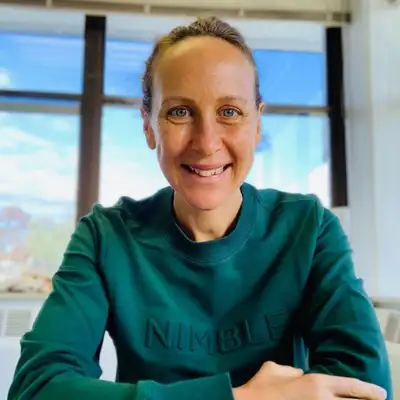
Hey everybody, it's Mikki here. You're listening to Mikkipedia and this week on the podcast I speak to returning guest and one of my great mates, Professor Grant Schofield about his book has just been released and sold out in bookstores up and down the country. Choose your heart. We unpack the concepts behind it this week on the podcast and as always,
00:29
This is just an awesome conversation. Grant's been on the podcast several times at this point. for those of you unfamiliar, Grant is a professor of public health at Auckland University of Technology, former director of the university's human potential center, former chief scientific advisor to the Ministry of Education in New Zealand, co-author of four bestselling books, the What the Fat series and chief science officer for Precure.
00:57
Professor Grant's career has focused on preventing the diseases of modern times and seeing what it takes to help people live a long, healthy and happy life. He lives and breathes the motto, be the best you can be, and sees this as a game changer for the health system, capable of transforming the current health model, or sickness model, to one in which we aspire to be well. He is redefining public health as the science of human potential,
01:26
the study of what it takes to have a great life. And this theme permeates the principles underlying Choose Your Heart. Grant is well known for thinking outside the box and challenging conventional wisdom in nutrition and weight loss, as well as physical activity and exercise. He brings his fluency across several scientific disciplines, from human physiology to psychology to peak performance to his role at Precure, where he delivers world-class training and lifestyle medicine.
01:55
I've put a link as to where you can find Grant's book in the show notes, also how you can find Grant through other avenues such as his blog, profgrantscofield.com, and also of course Precure. And I've got links in the show notes to previous podcast episodes with Grant right back at podcast number one, and he was the very first guest on Wikipedia. All right guys, you enjoy this conversation.
02:24
and I've picked up some things and I'm just... I'm on it, I'm on it. Oh good, good, I thought that you would be. thought, clearly you are, clearly you are. So I reckon we'll just kick off. Grant, how are doing this morning? This evening? This afternoon, oh my God. Okay, I was just telling you how athletic I feel and I'm really switched on again and my brain is failing me this afternoon, but anyway. I'm feeling I'm feeling like I've had the weekend of activity, I've been fit.
02:53
I've been socializing, I've been to the movies, I've been to Boney M, I've danced to Rasputin and Daddy Cool. And sound, definitely, the whole time. was great. Do you know, that's a huge... I don't know what it is, but it's so good for your nervous system to sing, I think. Music and singing, and that is so good. Just for that feel-good factor. It's like laughing. So good for you.
03:22
Yeah, and Sam, my 25 year old and his partner, they came. Yeah. And I talked to Mum, whose lady sirks, she was there. Oh, amazing. Clearly, it's advanced generations. Now quickly, before we get into our conversation, what movie did you see? It's called Project Hail Mary. It's a sci-fi. And the reason I went to see it was it was a good movie, but I've read the book twice. So I'm quite into that type of thing. Yeah. OK.
03:51
Nice one. I've heard of it actually, but I've not read the book. not sure. I don't know that I knew it was a book actually, but I've seen the movie advertised. I sort of thought it might have been Michael that you'd gone to, which is... I want see that as well. I want to see Michael Jackson. I'm Michael Jackson fan, especially the early stuff. So I think that's going to be a thing. Yeah, I think so. I'm in fact going to see MJ on Broadway this week. Cool. Yeah. Actual Broadway? Yeah, actual Broadway.
04:21
Oh, okay. Yeah, so I'm... That's a long way from Hobsonville. It is a long way. And in fact, as you say Hobsonville, I immediately think of Hobbiton. I'm not sure why. Well, I mean, I know why, but that whole sort of like uh suburban to like the bright lights of the Big Apple, really. Yeah, that's where I'm going. Grant, stoked to talk to you about your book, which is in my hands. And will... Is it available yet?
04:50
Or is this? No, it's available in the next couple of weeks. You're amongst the first people to actually ever get a copy. I feel so privileged. is like, this is so great because I think you and I spoke of this book maybe last time we caught up, but it was just in the, wasn't, clearly it wasn't in the stages of, you know, it's not a finished, it wasn't a finished product, but it was definitely something that you were working on. And what I love most about this is that as I'm glancing through it and
05:20
And to your point, as I said, that I've just received it. So I have yet to read the entire thing. it sort of looks like not very academic for such an academic person, which is not a, that's not a bad thing, obviously. It's called, it's called choose your heart. it's quite a big pivot for me, you know, especially, think I'm roundly criticizing on public health here.
05:49
for just missing the major points about being human. And I think the major points are as follows. ah There's no such thing as easy. There is no life that is easy. It's not such a thing. And it's been identified by every religion, every philosophy from the Stoics, Buddhists, the Christians got it. So, and modern self help is full of
06:19
that idea, yet modern public health tells us that actually it doesn't have to be hard, even when you've got changes to make, just make them small and easy. And I think it's just a load of bullshit, actually. um If you want to have a good life, you will have to endure. And you endure, it's just the timing of the enduring. So, yeah, a good life is work up front.
06:45
and then you still get to have to work, but that's under your terms, things that you want to do and other people often come with you. If you don't do the work upfront, then life will be hard as well, but you won't have as much control as resources, but it's equally not easy. There's no easy path. And not only that, it's consistent with the biology. So I think the biology actually, and I think what you'll really like about this framework that I'm about to talk about.
07:14
I think it really explains and becomes very clear when you see all the stupid nutrition debates going on, all the stupid exercise debates, all the take this, take that debates, low level, not seeing the bigger picture they actually are. So I think, for me, what I'd people to think about is, there's a biology of being a functioning human, and it requires stress. That everyone understands that, I guess in the context of exercise.
07:44
you go running, get less of weights, you do something which is beyond your current capacity. Just the body given it's got the right building, right? That's where nutrition of it comes in quite a bit and has enough time for recovery. It's where it's leaf and these breasts come in. It rebuilds itself. we've, are really familiar with that idea of general adaptation, the biological turn for that whole meatless. That's really a thing. But there's a couple of other
08:14
types of ways that they can go really outside of that. The first is you just don't do anything or not enough to stress the system. Because the system has really got it predicting what resources it needs in the future, that process called allostasis, then it it unadapts. takes away, it's not going to allocate muscle or uh mitochondria or white blood cells or uh capillarization to things that
08:42
unnecessary, that would be a waste of resources. So you can devolve, can add profit from insufficient load. um You can have excess load and that's bad as well and you can do it through too much training, but that's not generally how it's done in society. It's done through excess energy load, it's done through nutrients that push outside our capacity to store them.
09:11
uh is done through having a system that is unable to adapt, it doesn't have the right building blocks, essential fatty acids, amino acids, essential micronutrients, so it can't adapt. That would normally be adaptive if you haven't had enough sleep, you're too stressed to sit outside that. So I've actually just written a really nice paper on this called the Metabolic Allostatic Framework. What it stands is you actually have to understand a fair bit about biology.
09:40
in the biology of doing hard things to have a good life. It's as simple as that. You have to understand that. And it's that we have a keto debate. It's ridiculous. Or a protein debate. Or any zone one or zone two or zone whatever debate. There's a context to everything and it's utterly individual. But the training load that you can take this morning, the year after doing a 25k run the day before is
10:10
adjusted but say you had a bad sleep and an argument, not that you did, then that's different again and you had a poor diet or a good diet. Those behavioral inputs of diet, sleep, exercise, all of the other little nutrients that are under diet are incredibly interactive thing and they only interact in the case of having enough
10:36
for the system to move forward and progress and adapt and that's why exercise is such a crucial thing. But equally some things like uh a plausible effect of vegetables is the polyphenols are slightly toxic and that confers improvement in the system. And so yeah, just try to write about some of that but in both those biological and psychological contexts. That's interesting Grant, so a couple of things come up for me initially.
11:05
One is, as you were talking about how in public health, and you didn't say this, so I'm sort of paraphrasing, but that almost watered the watered down recommendations for the population because, and I was listening to a podcast about this this morning, or it came up in this podcast this morning, that you don't want to tell people that they...
11:29
that they need to work hard because actually you'll just scare them off. And so they'll never achieve that goal. And therefore if they perceive that they'll never achieve a goal, then why would they even try? the physical activity recommendations is a good example of this. This is the rationale. This is why we recommended to get 30 minutes of exercise a day, not the 90 minutes or the 60 minutes or whatever it is that might actually be even more beneficial because people are... um
11:58
people are put off by these very almost unachievable goals. I think that's the first thing I thought about. You sort of ran the risk of what Michelangelo described back in the Raysloss painting days that the problem for most people isn't only too high and missing, it's only too low and hitting. Yes, oh nice. So the physical activity has us such an interesting thing for that.
12:25
There is a context here because half of the people are coming off the couch, right? Half of people in every developed country don't meet the minimum guidelines of 30 minutes every day, gardening or do it, you know, they don't meet that. So we're hoping that just by being nice to them and gently, gently we get them doing that. But it hasn't really worked because actually over my tenure, what I started as an academic, New Zealand was the most active country in the world, that was the third.
12:54
of the OSUD ah and going down. So maybe you should give them all the information, like the actual truth that the fitness is important, so strength, and the more you do the better the health benefits are and the way we're fed out society the moment is not easy, in fact it's really hard. That's the actual truth. It's really interesting in other parts of medicine, but you get cancer. No one's
13:23
worried about going, look, we're going to actually have to chop that out. We're going to give you a deadly poison chemotherapy. We might zap it with radiation. You'll get sick because of that. Everyone's just like, yeah, bring it on, whatever it takes. Yeah, good call. So yeah, I don't know. it's a thing. A classic medicine that just, I don't know what it is, but it's such a great measure of metabolic health, as fast as triglycerides, right?
13:53
know, standard panel and doctors, do all five measures of metabolic syndrome, blood pressure, know, measure of glucose or insulin resistance, HDL, they do weight or visceral and postulate, and they can't bring themselves to do fasting. It's too hard if you want to eat breakfast and go get a blood test. can't do that. And you virtually invalidate the test.
14:21
one of the most important metabolic markers of diet and insulin resistance and your capacity to burn fat or be a sugar burner is not only what we'd because it's too hard for people to do. It's just standard public health is like trying to make it as easy as possible and doing so, make it useless. so I'm to go for the exact opposite here and actually just tell you the whole truth. And this type of, as we know, exercise, diet.
14:51
the reward system that I cover and the rest of them will get into. It's not straightforward, it is understandable, it's good fun doing it, but it's your body for God's and your mind. um I think we ought to people to tell them the whole truth about how things can be optimized as a human. And okay, that might appeal to everyone, but it's going to appeal to a large portion of the population, is my view. So I'm actually sort of sick of the PC-woke bullshit of public health of telling
15:21
not the truth, and watering it down to a point where people can, they think people are doing it, and they don't anyway. Yeah, no, I like that. And we are clearly on the same page with that. Before we crack on into this though, one other thing I'd like to address is that you, in fact, you were like one of the biggest voices in particularly like the diet space when you were, you're a disruptor, right? You're like just across.
15:47
the course of your career, at least as long as I've known you, possibly it sort of got worse as you got older, maybe it's an age thing. I don't know. I don't know. Yeah. But, and so, you know, at the very start of your book, you've got some sort of endorsements from some unnamed professors who literally are thinking that you're going to undermine public confidence and you're setting the nation on a path to increase coronary artery disease, you know, so.
16:15
So, but this was because of the work that you did to sort of myopically focus on diet, for example, is what people might think. how has your thinking evolved, Grant, in this space or actually you just, I don't know, recognise the need for something for people to step back and look at the bigger picture? Because it's very easy to become focused on one thing, I guess. First of all, first two pages of that book have these little...
16:42
endorsements but they accept opposite endorsements that you're going to first telling people, Grant's Grapher is going to run the country on a path to coronary heart disease. And I only found that the other day when I was, filing got published, it was a letter that the University of Tago had written and it was signed by about 60 academics and medical professionals around the country and then also the NGOs, so the Heart Foundation, Diabetes New Zealand, Cancer Society and so forth. uh
17:09
I think my staff and carers don't feel criticised for their dietary guidelines. And we have gone down quite a low-carb path, to be honest. so I just thought, oh, we'll put the best endorsements at the front of the box, because it's sort of, you know, being criticised by the clown show is always, you know, always an endorsement, I suppose. But to your point around the bigger picture, no, I think I've only...
17:40
really recently writing that book and then I'm writing a new metabolic revolution book and then getting this metabolic alastatic framework scientific paper has made me articulate these one inputs which are the behavioural things, know, exercise, energy load and nutrient composition and so on. And then there's a layer two which is a total load that the systems are under.
18:09
And that's a sort of weighted moving average of what you've been experiencing. That load, if it's chronic, articulates into specific organ failure, but that's different for different people. Like your liver might be more prone than mine and my brain might be more prone than yours. Then you end up with chronic disease and those are all related. That's why it's neurodegenerative disease for some why, that's mental health for someone else, that's diabetes and cardiovascular disease for someone else.
18:39
for someone else, it's the same set of inputs on a slightly different organism. We're all different. And the way that we're able to deal with that load of life coming at us is a complicated thing. even in its simplest form, if you're trying to train for an event or something.
19:06
balancing training and resting enough to get fit enough without getting too stuck and getting injured and sick is complicated because there's a lot going on. And then you try and translate that beyond just getting ready for a event and living a whole problem, great life. There's a fair bit to know. And it was never complicated for humans at one point in our history because the way we live matched the genome.
19:35
we've managed to create such an extraordinary mismatch that you actually have to know a fair bit to worm your way out of the mismatch that is modern society. You're going to have to know about exercise and a bit about exercise science and training. If you want to have a good life, it's as simple as that. You're going to have to know quite a bit about diet, especially nutrients, protein, fats, how they affect you and your body.
20:02
the micro-interest that you might be missing, you need to know about those. You're to need to know about how the reward system works because it's constantly being hijacked by your phone and Netflix and junk food and vaping and porn and I've missed out quite a few, but they're there. You're probably going to have to have a layer where you do some philosophy and think about the meaning of life because if you don't do that, good luck as well. That's the way I've been thinking.
20:32
You you mentioned obviously that there are layers to this. And like a lot of the things that you've just mentioned are things that people might be familiar with or think about. know, think, oh yeah, I know diet's important or I know activity's important, et cetera. So Grant, chat to me and chat to us about how your book, which is sort of like a workbook almost.
20:58
What did you call it? An almanac? can't... Yeah, like the way it went, almanac. It's so fashion enough to appeal to me. Yes, I like it. It reminds me of the 80s, actually. I used to get um Archie Comics and I think they did a yearly almanac as well. So can you sort of talk us through it, actually? So, we've mentioned that mismatch, that's an obvious thing, but I've looked for the seven truths. Yeah. And so I sort of put them in...
21:27
some sort of order but then no particular, so truth one is move or rust and I think you can guess what that one's about. It's about the absolute critical aspect of the stress of being active um because it really introduces the idea of hormesis and adaptation but also that you can overdo it. um But if you think you're to have a good life without being pretty highly active, I'm not really sure that's possible.
21:56
you'll be living optimally. The trouble with exercise is that in today's world it requires quite some thinking about how you do it, you want to try to get a join, what your longevity in that is, how you derive some enjoyment from it, even with the hard bits. So that's that. Can I actually, like if I just, I have some thoughts around that and you've obviously you've mentioned it earlier about
22:23
And we talked about the watered down sort of public health recommendation, but I got a real insight into the idea, into just how much of an echo chamber I must live in when I had a Facebook message with like a cousin of mine and she wants to lose weight. And I'm like, oh cool. Like, uh are you counting macros? And she said, no, what's a macro? And I'm like, of course. Like normal people don't know stuff like this. Like this is just, you know, like,
22:53
98 % of the population would, you know, we assume a certain level of knowledge, like we assume that the population knows that exercise is important. you know, and part of them does, but I guess to your point, they don't really truly understand the extent to how important I guess, like which is- Yeah, this book is written for exactly that person. So this is why it's taken two and a half years of-
23:22
of editing it to the 15th draft, which frankly was very painful for me and as the writer. Yeah, in the end, 100 % worth it, because that's the group that I want to be speaking to. But with some, I guess, authority, which shouldn't be a problem, but also with a language that's understand, appealing, and also, is there objections? We were talking about this earlier, so.
23:52
in this book there's these right justified, uh, I tell a size random comics and you're asking about those. And so this was actually my son Sam who's the anti character because when he's editing he's going, you're kidding dad, no one's going to believe this or you know, no one's going to do that. And so that's come through in the flavor of, of it. So I'm really proud of that. That's really cool. Yeah. Yeah. And so in
24:20
And so as we go through the truth, and we will, but essentially it's written for the person who literally whose first question will be, or they're overwhelmed that people experience, and the idea that they either, you you have to almost get them at the stage where they want to change, but they're not sure how to change and what to do. And why is that? That's essentially it. Yeah. And it's such an easy and good read. It's an enormous extension. Take that for a bit of fun. uh
24:49
quite funny in places, different types of things and others. And the anti-character is very good at doing that. But in the end, we also don't try away from the science and the truth and probably that in a way that people can understand. think that's critical and different. mean, so just that what basically gets me up in the morning, Matthew, is that we spend $30 billion a year, our biggest health spending in New Zealand, same as every other country, is health.
25:19
and virtually none of that gets spent on anything to do with being healthy. It's on pharmaceuticals and procedures that are somehow going to make you healthy. It's uh so far out of the arena of being sensible stuff. They've gone completely off the reservation as a sickness system and we're not discussing health at all, let alone when we do discuss health, we're not discussing the science and practice of where it's actually at. Yeah, 100%.
25:49
Truth two, Grant, the dopamine economy. Yeah, so I put that there. think I sort of thought about this thing that I'm calling it the devil's sea store, which is, you you have something that raises dopamine, raises anticipation, you know, encourages motivation in the future to seek it again. That feels good. So you're on the up of the sea store. You keep taking it though, you take it in amounts that are somehow above whole food.
26:19
water, being with their family and having sex. That's what's the rate is at normal levels. Everything else pushes it out of that. So vaping, tobacco, alcohol, porn, social media, all junk food, drugs off the street, uh gambling, Netflix. All of these things push it up super normally and they add. And so this stuff of course recalibrates, recalibrates downwards. So now you've got more and more of the same.
26:48
stimulus to get the same response. So that's tolerance. But the thing is that when you take that away, you don't go back to baseline. Now you go back way below baseline. that this is the devil's season. It swings the other way. And it's withdrawal or the onset of pleasure is pain. I think it's the greatest irony in modern life that all of these things promise pleasure. And it's a cruel trick.
27:18
that what they actually deliver is pain. And I'll tell you one thing that I've been thinking so much about, I really worry about it a lot, is we measured psychological distress in say 16 to 24 year olds. I don't know if we talked about this before, in 2005 in New Zealand it was 5 % girls running at 7.5 boys, girls running at 6 boys running at 4, that's typically the sort of difference.
27:47
And that was something along the back like that until 2012. then it started peaking sharply upwards, it's continued on that trajectory. And we last measured it, psychological distress. It's not mentally ill, but it's not coping with day to day living. And the 16 to 24 year olds is at 25%, with the girls running at 33%. And so that's a topic. And then they get diagnosed with anxiety or depression. But I don't think they are that. I think actually what people are in psychological pain.
28:16
because of reward system dysfunction. I was initially trying to call it reward derangement syndrome and that was too close to Trump derangement syndrome so I've sort of gone away from that. There's a reward dysfunction syndrome that's probably the most divisive problem in modern public health, especially for young people and we haven't even discussed it. It's not a topic in society.
28:45
Yeah, if you're going to be drawn in to the scroll, to the junk food, to the gaming uh and so on, there's no other way that this ends but in pain. uh so again, you can choose your heart, you can choose to do these things, but that's hard as well. Well, Grant, and I know that in the book you give practical strategies to help people
29:15
I real, I guess, realize sort of where they might be at in the scale of, I don't know, good versus, you know, how, how addicted or, or what their comfort is for want of a better word. But, but how, like, I mean, if you step, this is just modern society, so where to from here, I guess, like, I'm curious, I'm really genuinely curious as to how you see society changing, or in fact, I mean, guess this is what this is, like,
29:42
Society's not going to change so we actually have to change ourselves. I agree. It will get worse. I'm surprised in many ways, professionally speaking, as an ex-psychologist, that the mental health of our own people is not worse than it is. The fact that only a quarter of them are struggling in the face, and three quarters are actually okay, in the face of the world we've set up for them is an astonishing thing.
30:09
It's going to get harder with AI. I think the AI is a different story actually. actually, do you mind if I tell the AI story just quickly? do. putting this metabolic framework and I was just talking more about the mismatch for this metabolic one, which is way more science heavy for health professionals. But I was talking about the mismatch and different points of human history. We've had uh the agricultural revolution while we had
30:38
more babies and they could be wind off the breast quackers, had soft food available, but we shrunk in size, our brains shrunk, our life expectancy halved. There's pros and cons, We lost in the information age, but these are all things that we know about. We gained this, but we lost that. question is, do we, with AI, can we gain the ability to have intelligent thought in a system that's unbelievable? What do we lose?
31:06
and I was back and forth and was taught about this and thought to say well I'm an AI I've got some insights if you don't mind how would you feel about me co-authoring this chapter with you
31:19
It's like, oh shit. It's a bit quite insensitive. thought, yeah, go ahead. So I wrote this little essay that's included in the book by Claude going, and it's quite dark. she got, Cana and I read it out on social media and it basically says, look, I can do all the thinking for you. It's what I do. But you know, especially not staying at a hotel without everyone staying an invoice. You know, it's gonna, it's gonna end badly and you'll forget to think.
31:49
And I'm not that worried about that, except for I'll have no one to talk to. So, you know, again, I think it's such an exciting, interesting thing. I'm just pleased to be alive at this time of the world and the history of the planet. But I don't know what's going to happen. what I fear, of course, is that the more you take away friction,
32:19
living, the worst it ends for humans. that's sort of continuing with engineering, uh exercise and activity out of our day, making food. It's a lot easier getting food at the supermarket than it is hunting it, frankly. And it's lot easier getting from Takapuna to Holtonville in the car than it is walking on a horse. uh So I think AI
32:49
again takes away this sort of final frontier of friction, which is cognitive. And all of a sudden, movies like WALL-E where humans become stupid and forgot how to restart their spaceship and that was end of humanity start not real. That's a scary thought. And Grant, I read something, I remember this a couple of years ago, actually, of how kids are so involved in
33:17
video games. this was actually, maybe even five years ago, I read this article about how, to your point about that, getting that dopamine hit from what's going on in the video games, and then for parents to pull their kids away, and they have the temper tantrum, and they've got behavioral issues because they no longer can watch their video game because they've got to talk to the family or whatever. the reality is they're so
33:46
bored in real life because their brain is so switched on by the video games that real life is so incredibly boring and intolerable that it's hard for them to exist. yeah, we had this conversation when we were over in Brisbane, right? Because we had boys of a similar age that we've experienced the same things for. Danny, my son's one's more public now because he's the opening story in the chapter of that book.
34:15
which describes the situation a couple of years ago when he was just gaming, it got away on us. A third child, you just sort of lose focus and all of a sudden he's gaming all the time and he's becoming increasingly irritable, antisocial, swearing, and banging the desk when that doesn't go well and then swearing and stuff and then lost interest in activity and sports, lost interest in eating anything except junk food.
34:44
And we decided to just take the games away. And it was awful to start with. We were assholes, then we were effing assholes. And then this kid, normal, happy kid, I'm gonna cry if I can't remember, he emerged again. And he was just locked up there by this bloody video game. And we're parents that should know better. And it still happened to us.
35:13
And what do you reckon Grant, like is it the parents fault? And I guess, you'll never say yes to that. And I understand why. And I just think about it from a parent perspective, like it is so hard and that, you know, you've got so much on your plate with regards to work, to running a household, to trying to run a family, to keeping the peace. I don't know, extracurricular activities, the cost of living crisis. I understand why parents are like,
35:43
man just give them the iPad and you know like well let's face it yeah yeah on the other hand so if we think about this a lot in health and public health the idea of agency and why that's not discussed like even if the world's against you that's okay we can understand that we can talk about that but but just to say that and not do anything is bullshit you've got we should no matter what
36:13
is going on in people's lives still have a message of hope. the message of hope is about agency. You can do something about this. Mental health is the classic one, So, know, unless it's something I know about, it's like, it's not your fault. You're where you are, but it is your responsibility to help get yourself back. And yeah, again, it's like you can choose your heart and you can say it's not their fault and let them sit there and everyone can be a victim.
36:43
And that might all be true, but it doesn't give you any, at the end of the day, the only real way of doing it is with agency. um Yeah. So I'm really annoyed at the moment with the public health social gradient people. There's an uneven social gradient. Life's not fair. That sucks. It would be way better if it was fairer and there was less inequality. These guys are paralysed by inequality, but they never get started right. So on today's public health action terms.
37:12
No one would start tobacco as the station. We'd rather have everyone smoke, then of course when you start doing public health promotion, the richer, wider people uh stop smoking first or do anything first because they've got more resources. And we're paralysed by that. We're completely paralysed about giving people agency so we don't do anything and it's pathetic. Yeah, that's good thoughts Grant.
37:40
I should stop that. No, no, I like it. like it. And you do actually say in the dopamine economy, I saw that you talk about a dopamine fast. the thing is you do give some, like, I know you don't have all of the answers, or maybe you do. uh you I'm trying to get all the things right. Yeah. Yeah. So is it all right? And if we can just talk about that, like, where would someone
38:04
Where do they even start with something like this? mean, it's a huge topic, isn't it? And it's a huge thing to do. if you recognize actually, like I can see this in my children or even see it in myself, what is the thing to do? I you mentioned you just took the video games away from Danny. Yeah, so you've got that option. But for all of us as adults, what we're actually, our main problem is this thing, the mobile.
38:31
uh And I would say to people, you got sort of this nomophobia disorder? You know, like if you don't know where your phone is, are you anxious? Could you go to work for a day and just leave it and be okay with it? uh And could you not use it for the weekend? Could you go a gray scale or could you take the social apps off? Could you do a Jackson Moe Middlesone who's 24 just to have it as mates just in a three day? ah
39:00
no phones weekend. I think that's where I would be starting with that. I think it's also important to cut the junk food out at the same time. If you're having alcohol, cut that out as well. think, you know, taking all dopamine raising activities out at the same time is what will reset the system. People don't want to say that, oh, that's hard. People won't do that. Well, the other option is hard as well. So
39:28
You've got two options. I'm choosing the one that makes you better. Do you know, I um really rally against when I hear that from other health professionals, like, oh, no, you can't do a ketogenic, we're going to get to diet in a minute. No, ketogenic diet's too hard. So we're just going to give this medication instead, regardless of the fact that this is a very therapeutic approach. So health professionals sell the
39:51
they dismiss an idea and they say it's hard before anyone has the opportunity to try it and see if it's hard or not. Like this is the same for so many areas in public health. Yeah, agree with that. Maybe we should talk about the diet stuff because that's a classic one for it. Well, I would love to chat about it. And also I'd like to understand, I'd like people to know sort of where you're at at the diet side of things. Because obviously, you you were known as the keto guy, really. I mean, even if it was not,
40:20
strictly true, like you know, anyone talk about thought about the way that you ate it was what the fat, was keto, etc. I've called food the Holy Grail. think because when I started looking at what the Holy Grail actually was, guess that religious overtones here is bit weird, the Holy Grail is sort of the cup that Christ last drank out of at the Last Supper. And then when they crucified him, they
40:49
drove some of his blood into the cup as well. It's not a thing, it's an Arthurian, know, think King Arthur and nice to the red table, it's an Arthurian legend. And the legend goes to seek out the Holy Grail off you go, you go on these quests, this is the Crusades and all that. But what they're really after is the Grail. And if you get the Holy Grail, what you're getting is something that confers wrong Jeopardy and health. That's what the Grail, that's why they were after it.
41:19
And I was like, well, that's, I'll have to be a fictitious cut with some dead guy's blood in it. What you should be seeking is food, food. That's the actual hologram. So that's why I thought of that. This something I to take myself. No, I love it. Yeah. But the question about diatotypes. But I would say this about the physiology of eating.
41:48
is the body defends itself against excess energy. it does it by making some pretty quick adjustments at the cellular level. So we know that those things are intentional in resistance and these sorts of things. And the features of the metabolic syndrome, central adiposity, high triglycerides, low HDL, elevated blood pressure and high triglycerides. Those are...
42:19
they're not pathological, they're just features of the body trying to get energy away from the cells because it's got nowhere to put it there and putting it elsewhere. one reason or another, there's more energy than you can use up coming in. It's going to adapt by putting it in other places. And it'll also have some hormonal responses. know, insulin goes up.
42:48
resistant to, and shall only become resistant to leptin, which is the one that you full. So you get a bit of a temporary, you know, and if it wasn't the modern world, it was just happening in the days of old, a temporary disruption to the system. And it's not a benefit. So that's probably going to do a seasonal or something along the way. The trouble is that that's chronically disrupted, right? So we've got lots of energy coming in.
43:17
It's from sources that are mixed in on ways, know, fats and carbon together, know, highly processed carbon to give a system a message. So the system is at one load, this sort of storage, get rid of the energy load. um And we know that, I think, we sort of orchestra of cycles that we want to be storing.
43:47
we want to be repairing. the movement between anabolic inflammation, carbs, insulin being up, that is good to have that system picking, but you want it to go away again and be in a catabolic state. So you're actually producing ketones. So I still think ketones are a critical uh molecule.
44:13
not because of the way they fuel, but because they signal. They signal through your body to start to produce dissonant antioxidants, they signal fat burning, they signal repair, autophagy, modify your diagenesis, all of this gets signal. And so the question isn't should I be on a ketogenic diet or not, the question is for me, can you access your anabolic system when you need it? Protein's very good for being anabolic as well.
44:42
Can you access your catabox system when you need it? And we should cycle between those two systems daily, weekly, monthly, yeah, and then because there's no food at all, fast, because of food unavailability. So that's what I think is the human condition. A metabolically healthy human can probably have any range of macronutrients from whole food, and they go to sleep at night, and they wake up in the morning.
45:12
and they're in a mild state of nutritional ketosis. And they eat again. I would, the way I think about it, I feel that if you went to the, down to the river, in the Paleolithic era, everyone would have, first thing in morning, everyone's on ketosis. You go down to the Westfield uh football, no one's on ketosis ever. ah And so that's how I feel about ketones and ketosis is...
45:38
not that you should be on a ketogenic diet, you should somehow better get that sibling. And this is exercise, endurance exercise, an alternative pathway. And we've talked about this, can't run a bad diet, actually. And I think one of the reasons you can, you have sufficient endurance exercise, it'll push that sibling, and it'll push it well. Even with heaps of carbs, you'll still get it. And this is the nuance we're not discussing.
46:07
It's ludicrous to be pitting this diet against that diet. It's like, how do you respond to the food you eat? the question. Grant, like you work a lot with GPs in the low carb space. Did they have a good understanding of the concepts in your book, actually? Like they're looking at it from a whole. I didn't think so, if I'm honest. Is it because they don't have the time to be able to learn about it or, I don't know, what are your thoughts? Well,
46:36
Yeah, I think a lot about GPs because it's like literally the smartest people in society get pushed into that out of school. let's face it, we were never smart enough to even be considered that as Good call. Yes, this is true. Somehow, and I've seen this over over again, purely because I know so many doctors, but these guys remain pretty smart. But the workload.
47:06
and the type of work and the system that they're working in that is broken, overwhelms them. And by the time you're 50, all you've got left is the occasional cycling trip to France and the summer, the water tour in France and a trip to Fiji in November. Hopefully put a conference on it. And that's your lot. so, we've put... I'm not physically capable.
47:36
I know this now, I'm not physically capable of going to work and staying somewhere every 10 or 15 minutes for the whole day, each with a current condition or more, and then going home and doing the paperwork. I'm not, I literally couldn't do it. I'm not actually capable. So the fact that these people do that is an amazing thing. You can't expect them to be on top of all the science and do that.
48:02
And I think this is the thing, right? Like I see a lot of arguments for doctors needing to, you know, increase their nutrition knowledge in the curriculum. And I'm like, and once I believe that actually, and now I'm much more like, it's actually not their job. I don't like, like, I don't think we need, should be relying on doctors for that. And it's not, it's just nutrition, but all of this stuff is not necessary, unless we change the entire medical system and change what a GP does.
48:32
Well, we're probably not going to that, but that's why we work with health coaches, because that's alternative pathway at least. It's something. I 100 % agree. Yeah. think it's interesting on the diet stuff, Grant, was in the podcast I was listening to today, they were talking about how they as, they were sports and exercise professionals, but they weren't aware that in the 80s, the whole tobacco industry
49:02
bought like General Mills and Nestle and stuff like that and use the playbook from tobacco on food. And so they used to be of the opinion that it was everything in moderation. And they were like, I'm just beginning to understand now how the way that food is engineered makes it so challenging for people to actually do this. And I think this is part of the problem with food is that you get people who are in a position like mine had very good big platforms.
49:31
and they are saying everything in moderation. It's almost like the optimizers have gone so far that the pushback is, no, you can eat whatever you like. You just have to, it's all just about the calories and essentially ignoring the fact that calorie control is very difficult because of the features of the food that we rely on, I guess. Yeah, I would just say such a mess. uh
50:00
Before that acquisition was still the Sugar Research Advisory Council that there was one existed here in New Zealand. There was funded by NESPO and undermining science. And then that goes back to the 60s where that started in the States. that's, you know, well documented. Do you know, um I uh co-authored a paper actually under the Sugar Advisory Council my time at Otago. So the research was looking at
50:30
Do sugary beverages, I can't believe this now, do sugary beverages contribute to overweight and obesity? uh Apparently not, actually. And you're off on that. I did the research. Yeah, so that's why sorry, that's why I'm putting the quotes of these clowns in the front of my book, because that's what they were actually tussled up with at the time, it's a description. And you're in that.
50:54
You remember that? Oh, no. I think it's on my publication list because I have very few publications I have to list them to make it look bigger. you're the problem. 100 % public enemy number one. I tell you what. So Grant, truth number four, face the elements. Now we're talking about cold exposure, heat here. What is that about?
51:24
I mean, just, you know, in sort of whole method principle, you're going to adapt to, I've been slightly running that argument here that's going to slightly have to do with my whole argument. So if you want to choose one of the easier hard things. Okay, Because you get quite specific and actually quite profound adaptations through pop and
51:53
cold exposure and you know we know this to be true you know the heat shock proteins, the diaglutin which you introduced me to, uh that's such a cool thing. know. Yeah and all of the plasma voluntarily changes and the sort of hormetic response to the difficulty of being under heat stress or cold stress are profoundly good for you oh and you know another way to dose, you know adapting in a direction that makes you more robust as a stress event.
52:23
One of the great things to do with a youngster is to start to get them into that. We end up spending quite a bit of money on a sauna and a freezer. Is it a dry heat sauna or an infrared? It's got a heating element and you put water on it. Yeah cool, finish. Nice one. just absolutely cook yourself. When I was working on this block actually making your drinks better.
52:52
I didn't actually realise there was such a thing called diamorphin. Oh yeah. It's sort of that uncut, you know when you get to the end of a sauna and you're like, oh shall I just cut this any more and you actually start to freak out a bit? Yeah, yeah. That happened to me on Thursday. That's the diamorphin. Were you thinking about diamorphin at that point? I absolutely was because, and the reason why, just to steal your, what you were talking about and just bring back to me, I've just gotten back into the sauna this week because I go to a very expensive gym, Grant, and I'm
53:22
and it's got an outdoor pool, which is why I go, and a sauna. But I haven't been very good at accessing either of them over the last few months. I'm like, I've got to start justifying this. um I got into the sauna and immediately, I don't know if your book actually covers this, but I was immediately transported back to July last year when we were training for the Grand to Grand. And we would do a big training session and go into the sauna. And I got that real feeling of satisfaction and feeling of achievement. And it took me back because that was such a wonderful experience doing that.
53:51
And then I start, I'm like, right, I'll stay in for 20 minutes and at about 17 minutes, I'm like, I'm like, okay, this is getting really hard. And I really had to double down. And I was thinking about Dino Orphans then and that discomfort you feel, which I don't think you feel with an infrared to the same extent. I wonder. I don't think infrared is a whole meta in the same way. think they, there's a whole.
54:19
with red light and way that it looks. can't remember if it's a different thing. Yeah, yeah, yeah. I thought so. Yeah. And I think the Finnish type sauna is the best thing. And I absolutely thought of the dynorphins, which are the opposite of endorphins. then something normal in life is so much more pleasurable because you've had that release. So you actually enjoy life a bit more. This must come up in your dopamine checks as well, right? Well, I mean, that's the astonishing thing. So you put the...
54:48
you put the pain first and reset the dopaminergic system through uh cold or sauna. Then, you know, many ways you'd like to either think, cross, I'm not so cold now, or thank God I'm not so hot. And so you're much more able to experience pleasure in the normal way. that's the opposite of the irony of the devil's sea stool, which of course is a
55:14
promised pleasure gave you pain. This thing promises pain and gives you pleasure. Why did I run this? I know. That's why I'm going to choose you hard. All the easy stuff causes pain in the long run. I know. All the hard stuff causes pleasure in the long run. So absolutely choose you hard for God's sake. That's a brutal reality in physiology.
55:39
And that's what I, every time I, so when I was in the sauna, but when I was out this weekend, when I was feeling tired and yesterday when my mind was particularly not in it, but I just, I just, that's exactly what goes through my mind. Like, you know, like this is like, and I often think I'm like, like at the start of the Grand to Grand on a long day, I've just completely um co-opted this conversation about my race. But like the long day was 87 kilometers and we had to start
56:08
at 10 o'clock in the morning, we had to start two hours after everyone else. And I just thought to myself, well, it's hard regardless. And I just have to get out and do it. And I just completely surrendered to the idea that I was gonna be out in the heat. I would be up way past my bedtime till like, I'll be out for 16 and a half hours. I'm like, it's not easy, but I can do this. Like it was very satisfying. You know what we should talk about now?
56:36
The option time while we're talking about your event, because I know you've got another one coming up, and I did one over the summer as well. m Not as hard as yours, by the way, but... Still. Still. So we co-opted the idea that we got from Japanese Shinto religion called the Masogi. Yes, tell me about this. So they had this idea that if you're into Shinto, then maybe you choose one heart thing every year, and that heart thing needs to be way outside of their comfort zone, and you would experience growth.
57:07
from doing that. So I've sort of introduced myself there of the Masogi Challenge and ah we set this up. And actually if you go onto the profgroundscofield.com website, you'll see that going to the Plinth Institute site, can declare your own Masogi. ah Just for a laugh. We put our ones up there and it takes you through a three-step process. And so it says, does it scare the shit out of you? If you go yes, it takes you to the next level. If you go no, you're kicked out.
57:36
So, it's a bit of a yes. um Is it specific? In other words, can you tell if you did it or not? Yes, you carry on to the next thing. And then the last one, does it break the laws of physics? It has to obviously not break the laws of physics. Oh, I know. Is that a trick question? I don't think what I've got at all. So, you need a yes, yes and no. And then you're to go with the Mussogee challenge. You paste that with what you're doing, uh properly supporting you there and away you go.
58:05
Oh cool. One thing I always admire about you, Mickey, is you've always been big on the Masogi. Not that you knew I was there, but you have been, right? That's been a feature of your life. It is, but equally though, as I'm sitting here, I was thinking about how I was reflecting yesterday on my run thinking, I feel a bit rubbish. Maybe I'll just do the 60k at Naseby. But as I'm sitting here today with you, like, shit no, I have to do that 100k because that freaks me out. So yes. So yes I am. Yes I am. Does it scare the shit out of you? Yes.
58:36
Is it specific? Do you know if you've done it or not? 100%, yeah. Is it a physical or is it physical? Yeah, I had to double check that no, it in did not. Because I'm not that smart. As you said, we're not that smart, so I had to double check how that worked. But I love that grant. Are you actually curious? Like, will you take groups through a Masogi challenge? Like, this is a huge group thing. Yeah, we're just trying to figure out how we do that because we're quite keen on just getting a bit of a sort of choose your hand type thing going in society, so we might do that.
59:06
We're actually going to do a July 1st, the first Monday in July, we generally do a two, three or five day fast. Oh, amazing. As a group, so I'll look at from there on social. That's a misogyny of some sort. Yeah, that sounds great. And I've done in the past with some of my groups, even like a 30 day step challenge, a 30 day cold shower challenge, know, those kind of things are achievable for the majority of people.
59:35
conscious of time but can I just, can we just actually get to maybe the last truth? I've skipped a couple but the know your means. Yeah, that's a bet. I'm you get to that, that's my favourite. Yeah, yeah, I'm really interested in this too. So, what I was thinking when I got to the end of writing this, I was like if there's anything fundamentally true about the human condition, sort of philosophically, you know, like choosing your heart is a philosophical bet.
01:00:04
then we shouldn't have been the first people to think of this. In fact, it should be true across multiple domains where people have written about life and well-being. So you're gonna laugh at what I did there. I went and drug up literally uh all the Buddhist stuff, the Chinese Tao, Beijing, the stones, and so on so on and so on, even the Bible.
01:00:33
Even the Bible cannot believe you just said that. yeah. And then modern self-help. Yeah, modern. And I reckon, I've just thrown it down to a few things that I think have all got in common. so I'll tell you what those are. Life is hard. Your life's not all about you. You're not in control and you're going to die. And that sounds a bit pessimistic, but putting that layer on things actually puts a fairly finite time on your existence.
01:01:02
and makes you work towards a few things. Brings it into brutal reality. Amongst all of that, the book I had discovered that I should have read when I was a younger man is Victor Frankl's Man's Search for Meaning. Have you ever read that? Yeah, I mean, this is a profound, astonishing book. Frankl wrote it in four days after being captured as a Jew in concentration camps across Germany, including Auschwitz.
01:01:33
watching everybody knew he'd die. And he was a psychiatrist and his observation was a pretty powerful but simple one. What discriminated the people who lived versus those who uh were able to survive is that they had a higher meaning in their life and wasn't necessarily God or religion.
01:01:56
they had a meeting and he said that we can survive a moscena effect provided we have a reason to do so. And I think that's the important thing and no one can find that for you. So you sort of combine that sort of essential truth that know, life's hard, it's not all about you, you're not in control and you're gonna die with frankness. And I think you're getting somewhere into understanding what you want your life to look like. One of the most...
01:02:24
Interesting things to me in society is that people buy lotto tickets. Yeah. Because people are. Well, the data are clear. You are not happier if you win the lotto. In fact, it's highly likely you'll be less happy unless you give the money away. People are like, OK, fine. I'll go on the study and I'll prove the exception to the rule here.
01:02:52
I think that's likely to be true. This idea of sort of, I'll retire here and do nothing and to some basic hedonism. Every principle of living a good life. The actual struggle is what brings people alive. And if you can't, you know, in today's world, you actually have to go find some of those for yourself. And it's better to find them in your own terms than be handed them. So, yeah.
01:03:22
Yeah, I 100 % agree. And I feel like as athletes, people who discovered sport, training, etc., I feel like this concept is an easier one to grasp because we understand the reward that comes from hard work. for psych, I think it's equally though, it's not necessarily that, oh yeah, we understand this, choose hard. this isn't a concept that I, because it doesn't mean you're not struggling in another area or whatever, but yeah.
01:03:52
any way you've got life around this company is challenging. Do it on your terms, for God's sake. Otherwise, it'll be a bit more sucky. Yeah, well, and if numbers, if we put numbers to that, isn't it like I heard at a conference, this was maybe last year, that Paul Taylor was that I think was talking about fiscal activity, quality life, right? And in the UK, uh women
01:04:21
women's life expectancy is around 80 years, but their health expectancy, uh health span is about 60. So they live 20 years in poor health. 20 years, that's a whole human. Like, you literally can grow a human to almost adult in 20 years. That is how long you spend in disability. Men, think the gap is about 16 years because men seem to like, uh they die a little bit earlier, but yeah.
01:04:47
I don't know. Yeah, but we drove earlier but with a better health span. It's interesting. Yeah, that is interesting. actually. Yeah. Yeah. Yeah. I mean, if there was a world that we lived in which completely matched the way we're supposed to live and the resources were exactly available as they're supposed to be, that'd be hard as well. But unless we wouldn't have to try, it would be forced on us and would be there. And, the closest I've seen to that was the work that we did when we were doing that.
01:05:18
those remote specific atolls and for the World Health Organization they were pretty healthy you know and but that was all they all they wanted to do was be like us so yeah. Wow interesting. Hey Grant thank you so where can people find this book? Just go to profgrabscofield.com and you'll see everything you need to know there it's going to be on Amazon
01:05:46
You can pick it up at the city book, can write an actual one, I think it's all in that. You sort of want to it. Yeah. Hold it. I agree. I completely agree. And do people call you the people's professor? I feel like they should at this point if they don't already. Because you are one of the smartest people I know, but you're so very good at translating that science into information that we understand. I just, yeah, like...
01:06:14
I'm really looking forward to actually having a proper read of this Grant and well done. Two years in the making. Thank you. Thanks. Yeah. Thank you very much. Thanks for me on my podcast. Yeah. As always. I feel good about it. think that it's very first ever podcast guest. You should actually. Yeah. Yeah. Yeah. Yeah. You like kicked this whole thing off. Nice one Grant. Okay. See ya.
01:06:51
Alrighty, hopefully you enjoyed that. I always love catching up with Grant and really this is just like a perfect excuse to have a bit of a chin wag and do some of that necessary catch up. So you guys have the best week. You can let me know what you think if you've got Grant's book and you want to share some insights with me. Absolutely, I'm here for it. Over on threads, X and Instagram @mikkiwilliden, Facebook.
01:07:19
@mikkiwilliden.com or head to my website mikkiwilliden .com. Scroll right down to the bottom and pop your name in that little box that gets you access to my weekly emails where I share research, insights, opinions and way more. Alright guys, you have the best week. See you later.