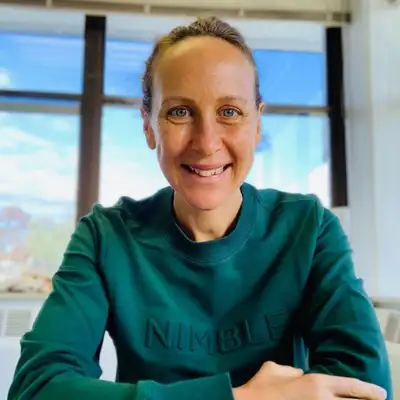
HRT, Tirzepatide and Weight Loss After Menopause with Professor Daniela Hurtado and Dr Regina Castaneda
00:03
Hey everybody, it's Mikki here. You're listening to Mikkipedia. This week on the podcast, I speak to Professor Daniela Futaro and Dr. Regina Castaneda about the interaction between hormone replacement therapy and two-zepatide. So in this conversation led by Regina, we discuss the differences that occur as a woman heads through menopause, the role at HRT at mitigating some of these changes, which you're probably well versed on now.
00:33
and the super interesting findings from their paper looking at how hormone therapy or menopausal hormone treatment might enhance the therapeutic effects of terzepatide in the post-menopausal population. And amongst all these things, we chat also about biological aging and sex-related differences and potentially what makes terzepatide a more potent weight loss medication for women as compared to men.
01:02
super interesting conversation with some of the leading researchers in this field. Firstly, Maria Daniela Hurtado or Daniela as she likes to be called. She's from Ecuador and she completed her medical degree at the Pontifical Catholic University and from there she pursued doctorate level training in physiology and pharmacology at the University of Florida with an interest in the causes of obesity.
01:30
After her doctoral training, she completed an internal medicine training at the University of Pittsburgh and endocrinology fellowship specialty training in the Mayo Clinic where she joined the staff in 2019. Daniella is part of the Mayo Clinic Precision Medicine for Obesity program which looks at developing an individualized approach to the management obesity and its complications with the goal of improving outcomes.
01:55
and she has focused her clinical and research efforts on specific populations such as perimenopausal women and breast cancer survivors. So as I said, Dr. Regina Castaneda led this conversation and she serves as a postdoctoral research fellow at the Mayo Clinic in Florida. She also is a Master of Science candidate at the Mayo Clinic College of Medicine and Science and her work centers on women's health topics including obesity, diabetes and menopause related
02:24
metabolic changes. And Dr. Castaneda's research has contributed to examining the effects of tuzepatide on weight loss in postmenopausal women and the potential influence of hormone therapy. And she is also affiliated with the Division of Endocrinology, Diabetes and Metabolism at the Mayo Clinic. So I have links to both Daniella and Regina and where you can find out more about them and their research in the show notes.
02:51
in addition to a link to the main paper that we discussed today which was centered around hormone replacement therapy and two-zepatide. So it sounds super geeky, probably is, but it's super interesting if you've got any sort of interest in women's health. Before we crack on into the interview though, I would like to remind you that the best way to support this podcast is to hit the subscribe button on your favorite podcast listening platform. That increases the visibility of Micopedia,
03:18
animates literally thousands of other podcasts out there, so more people get to hear from the guests that I have on the show, such as Professor Daniela and Dr. Regina. And if you know other people who are interested in these topics, absolutely share it with them as well. All right guys, enjoy this conversation.
03:40
Daniela and Regina, thank you so much for taking time to speak with me your afternoon, my morning, on a topic which I would have to say is just exploding on social media, as I'm sure you're aware. And not just social media, of course. If you go to PubMed, if you go to many of the news sites and the research sites that are out there, it seems like papers and uh opinion pieces.
04:07
and even some sort of meta-analyses are being released on the topic of these new weight loss drugs. And Daniela, I know that you've been working in this field for a number of years now as a, I think you're an associate professor. And I'm curious actually as to, you must be excited by the proliferation of what we're seeing. But in addition to of course the GLP-1 type medications,
04:37
There is a lot of narrative around HRT and around women and their access to it and how it may or may not sort of, or how it may help them just age better, I suppose. So your research really is at that intersection of all of the things that people are super interested in right now. So um really glad to be able to chat to you. I just want to kick off actually with
05:06
quite a broad question because this is something that I see a lot. I'm not sure how often you guys are in social media engaging, but I imagine you must see it a little bit as well. This idea of midlife weight gain for women is actually just a function of age and not necessarily hormones. know, is that what you're like, is this what you see in your research and
05:33
What does the menopause transition change, I guess, biologically for women? Like, why is this a conversation? Well, we know that chronological aging does contribute to weight gain. And in fact, weight gain during midlife is mostly related to aging. And, you know, with age, our energy expenditure declines gradually. We also see a decrease in lean mass, changes in physical activity levels.
06:00
And that's true in both men and women, but the menopause transition adds a biologically distinct and accelerated layer on top of that. We know that when estrogen declines, several things happen at once. Lean mass loss accelerates beyond what aging alone will produce. There is also a change in body composition or fat distribution. We see a shift.
06:28
from a gynote pattern, uh meaning hip and sides, to an android pattern, meaning central or abdominal fat accumulation. So after menopause, visceral fat increases, uh and there is a, there is a, that is very associated with the menopause transition. And at the same time, we know that most women experience basal marrow symptoms, such as hot flashes, night sweats, and these disrupts
06:55
or sleep, right? And disrupted sleep, this regulates hormones. So there is also that, right? And of course, if you're not sleeping well, of course, our levels of physical activity changes, right? So there is a component of aging, but also the menopause transition, because we know that estrogen has many effects in our body composition. So it's complex, it's of course a combined
07:24
effect and saying that midlife women gain weight just because they are getting older is perhaps too simplistic given the multiple layers of biological mechanisms involved in this. Yeah and I do feel that what you've just described is the lived experience of so many women that I speak to and you both must sort of come across in your research as well which is
07:53
not at odds with what a lot of other people are saying, but I guess you see quite um prominent people out again in that public facing role of social media really insisting that menopause doesn't change the landscape in terms of, guess, fat gain and aging for women. I guess what you've just suggested, said Regina, is that yes, aging is...
08:21
the mostly responsible, just regardless of sex, but there is that additional sort of layer on. And I guess, and maybe it's just a point that the research isn't there yet in terms of understanding fully the full extent of that transition. I'm not sure, but the fact that there are changes can't really be ignored, I suppose.
08:45
Yes, as you were saying, it's mainly aging, but menopause transition is associated with changes in our body composition or fat distribution. So um it's definitely an interplay between these two factors. And of course, you know, something else which is separate but related is of course chronological aging, but then also biological aging. So what's happening in our cells, what's happening
09:12
with um I guess in our bodies that is I guess distinct from the fact that we're just getting older. And I think this is something which people are more interested in now as well because there are supplements, there are protocols, people talk a lot about this sort of biological aging. Can you just explain I guess, or anything to add in terms of the difference between that chronological aging
09:42
and biological aging. And then also, I did look at a biological aging review that was published um that you're an author on. you do discuss biomarkers that people hear a lot, things like epigenetic clocks, senescence associated phenotype factors, telomere length is one that I've um talked about quite a bit in that longevity space. So can you give us a good
10:12
Let me briefly give good overview of what these markers tell us and also what they might not tell us yet as well. I'm curious. We know that chronological age is simply how many years we have been alive. The number on our driver's license, And biological age is something quite different because it's a measure of how our cells, tissues, and our molecular machinery is working. um
10:41
And what makes this fascinating in women is that menopause adds complexity. actually, in that review that you mentioned, we described that as estrogen declines. There are also changes in these biomarkers that you just uh mentioned. And we know that estrogen plays a protective role in our immune function, our vascular health, but also how stable is our DNA.
11:09
So when estrogen drops, protection changes too. um One important thing that we discussed in our review is that menopause doesn't appear to simply accelerate biological aging on its own. It also, in parallel with aging, it affects our uh biomarkers.
11:32
And the timing of menopause matters. So women who go through the menopause transition earlier, especially those before 45 years, or have surgical menopause, tend to have more signs of accelerated biological aging compared to women who reach menopause at a typical age. So that's a very important thing that we discuss in that review. And these biomarkers, they capture biological aging. uh
12:00
For example, the clonal ematopoiesis of indeterminate potential, which we call the CHIP. That refers to the process in which, as we age, some of our blood stem cells acquire mutations and begin to uh differ from those normal cells. And then the senescence-associated secretory phenotype, that's pretty much a signal of chemical distress as our cells age.
12:30
the length of our telomeres, this is pretty much uh like the plastic tips on our shoelaces that protects the end of our chromosomes. So every time a cell divides, they get a little shorter. And when they get critically short, the cells stop functioning well. So shorter length has been linked to earlier menopause.
12:56
and rare cardiovascular risk. So everything sounds very impressive and super cool, but right now the reality is that none of these markers are something that your doctor can say, okay, so your biological age is 58, then let's suggest this treatment or do things differently. The reality is that we don't have a threshold, we don't use them in clinical practice. We still need more research, right? Because a lot of these researches
13:25
predominantly male populations or mixed populations, but we need to account not only sex-based differences, but also there are changes across reproductive stages. And that's particularly what we discuss in our paper. We know that these markers may behave differently across a reproductive stage, across racial groups. So the bottom line is that they are very exciting.
13:54
very promising, these aging biomarkers. But right now, they are research instruments, not a clinical instrument we're using. The goal is to get there. The goal is to understand how more clinical. Make them understand how menopause affects these. just right now, it's still.
14:21
We're not using, we don't use them in clinical practice yet. Yeah, no, that's a really great um explanation. And Regina, I guess, would menopause hormone therapy rescue some of these biological markers or do we not know that yet? Well, we do describe, there has been some research describing that hormone therapy, particularly some uh inflammatory markers decline. um
14:51
with hormone therapy. But again, there is not a lot of research in that sense or in that area. But it's a good hypothesis. We know that estrogen acts or plays a role in our inflammatory or immune system. So particularly with the SASP factor that I was mentioning, it has been described. Perhaps there is an association there, but still too premature to draw any conclusions. Perhaps the one thing that I can add is that
15:20
Vesemotor symptoms themselves and independently of menopause can also accelerate aging. And we do know that uh menopause hormone therapy is the ideal treatment for vasomotor symptoms unless there are contraindications. So just looking at treating vasomotor symptoms um alone could have an independent effect on biological aging besides
15:50
what happens naturally with menopause, right? Yeah. Yeah. And interesting, of course, because once you treat the symptoms of those vasomotor symptoms, then potentially sleep is going to improve. And we know that sleep and then the other behaviors, Regina, you were mentioning earlier, that also can shift because of the symptoms associated. Like, I guess there's a very well-rounded or domino effect on that.
16:21
Yeah, nice one. So now you've already mentioned, Regina, obviously, like a lot of the key metabolic changes that occur with regards to energy expenditure, lean mass, visceral fat, insulin sensitivity, etc. And, and of course, what I really want to chat to you both about, or you about is the the semaglutide study and the tuzepatide study, looking at
16:50
women using these weight loss medications and the outcome, I guess, on it and how that relates to hormone therapy. So in the semagnetide study, and I will of course link these studies in the show notes for people who are interested in looking at them, women on the hormone therapy appear to lose more weight than those not on hormone therapy. so can we just get an outline of when the study was set up or
17:20
What did you expect going into the study? And if anything actually surprised you, so if we can get a brief on what the study sort of looked at and then what you found and then your overall sort of thoughts around it would be great. So as you were mentioning, estrogen has effects on our body composition, fat distribution, insulin sensitivity, our muscle mass, metabolic rate. So there...
17:48
is biological rationale and that's why our hypothesis emerged. We wanted to see if there are any different outcomes in terms of weight loss when women are using hormone therapy. So our semaglutide paper, that was the first paper that we published, and women that were using hormone therapy and using semaglutide for at least 12 months, those using hormone therapy lost about 32 % more.
18:18
weight than those not using hormone therapy. So after that study, the enterozepatide position itself as the most effective weight loss medication, most effective GLP-1 based therapy. And so we replicated the study with a larger cohort. And women in hormone therapy lost, on average, about 19 % total body weight loss.
18:46
and compared to 14 in those not using hormone therapy. So that's a 35 % greater weight loss observed in the hormone therapy users. And remember these patients were taking tercepatide for at least 12 months. So after that, we looked at the total body weight loss thresholds and the hormone therapy group was nearly four times more likely to reach more than 25 or 30 % total body weight loss.
19:14
So that's a quite large difference, right? And I mean, both of those studies are retrospective studies. So we were chart reviewing and it's not a trial, right? It's not a prospective study. So there are limitations, but in the tercep type paper, which is the recent one, we were very careful. Those groups were matched by history of diabetes, the dose of the medication.
19:41
history of use of weight loss medication in the past, and multiple factors. So after adjusting, the difference persisted. um So again, we cannot establish causality. And there is also another important thing to consider that is called the healthy user bias. Women who choose hormone therapy may be more engaged with
20:08
their health overall, they may be exercising more or uh following dietary advice more consistently, showing more to appointments. um So still, that doesn't make the finding go away. It just means that we cannot yet say with certainty how much of hormone therapy is playing a role. And that's exactly why we need a prospective trial.
20:35
But we do have some evidence and preclinical data showing a potential synergistic effect of hormone therapy with DLP1 signaling where estrogen amplifies the appetite, um the appetite, right? And kind of like suppresses these reward, food reward system. So it could be that, but it's also the fact that perhaps these women are dealing with a burden of basalmorphous symptoms or not sleeping well.
21:05
And just the fact that we are treating those symptoms with hormone therapy is now allowing them to engage in those lifestyle interventions that are still the foundation in any weight loss journey, right? So we do have several hypotheses, but again, we do need these prospective trials to understand what is the underlying mechanism and of course, confirm that these findings, right? Yeah. And do we know that um
21:31
even not even thinking about the weight loss medication, but do women on hormone therapy tend to fare better with weight loss than women who aren't on hormone therapy? we know that? I mean, hormone therapy has shown good benefits in terms of body composition. um However, still, it's not an indication. um We don't prescribe hormone therapy for weight management.
21:58
However, in those with indication, with a clinical indication of hormone therapy, there has been some positive um impacts shown. And in relation to whether they feel better or not, don't think, specifically for our studies, we do not have any uh quality of life data. Again, this was retrospective, so it would be kind of hard to extract this data. But in general, um hormone therapy improves quality of life.
22:27
And there is also already extensive evidence showing that um in relation to patient reported outcomes on quality of life, all these GLP-1s have positive effects. So the question is whether adding both is even better than just using one or the other. um I don't think there is any data in relation to that. So those are things that we are already thinking about. um Because if you continue to add medications, then you may
22:55
start to add polypharmacy, which is not always something that patients are happy about. So we need to start considering the complexity of treatment and other things that may also affect quality of life. But we don't know from our data whether um patients feel better with um only GLP-1s or if the combination of GLP-1 and uh HRT makes it, I'm sorry, menopause hormone therapy makes it better.
23:25
So were all of these women classified, obviously with, well, I say obviously, maybe not with obesity, or were there overweight women as well? Were there women with other comorbidities, type 2 diabetes? Were there any stories to tell within the different cohorts? In both studies, we included women with obesity, that means being a migrant greater than 30.
23:51
or BMI greater than 27 in the presence of adiposity-related comorbidities such as type 2 diabetes. So that's the criteria we use for both studies. And for example, in the tericepata paper, we matched our patients or groups based on the presence of these comorbidities, particularly type 2 diabetes. We know that GLP1s are more effective in those without diabetes. So for us,
24:21
it was really important to match them and have a well balanced, well balanced groups to make a fair comparison. nice. And in despite the fact that women with type 2 diabetes don't lose as much weight, they're still losing weight, right? Correct. And I think I have said uh this a couple of times now, these medications are effective across all reproductive stages for both sexes.
24:50
if you have or you don't have diabetes, but there is some difference in terms of the tall body we lost, but they are still effective across these differences. And interesting, as I understand from um the analysis, did women fear better than men with weight loss medication?
25:19
Have I got that correct? Can you repeat that? Oh, yeah. So um in the two-zepatide analysis, women appeared to lose significantly more weight than men. Yeah. Yes. So it was more effective. It appeared to be more effective for women than men using these weight loss medications. Correct. Yes. So
25:43
These are the sex-based difference that we have been observing. And multiple data has uh also showed these. uh Women are consistently losing more weight than men. And the reality is that we don't know what is the mechanism behind. But there is some compelling rationale to believe that estrogen is potentially playing a role, right? Again, as I was saying, there are some preclinical.
26:10
studies with these animal models showing that estrogen can amplify the appetite suppressing and reward reducing effect of the GLP1. So women may have a different hormonal environment that is potentially contributing to these greater weight loss that we're observing in women. But there are also other things to consider and we don't have a clear answer, but perhaps women are
26:37
engaging better with their lifestyle interventions. uh Men typically start these medications with a cardiometabolic profile that is perhaps they have more diabetes when they start a medication, their glucose is not under control, with more comorbidities compared to women. So that could also be playing a role. uh We still need to confirm the estrogen findings, although there is some rationale there.
27:05
Still the behavioral and adherence component that I was mentioning, we need to be able to confirm if that's also playing a role. And that will be, we will need a prospective study for that. We were not able to review adherence to physical activity or dietary changes. So we still need to evaluate those. But so as I'm saying, it could be the estrogen, it could be the behavioral component.
27:34
um The baseline disease burden that I'm telling you men often have higher rates of type 2 diabetes, cardiovascular disease, more weight promoting medications. it could be all of this. Yeah, interesting. Because of course in clinical practice, um it's often the reverse is true that if you've got like a married couple come to you, both of them wanting weight loss, it's not even
28:02
relative to body weight. It's both absolute and relative to body weight. Men generally will have an easier time losing weight than women, and in part because they seem less emotionally attached to food and behaviors. This is a generalization, and I know men will be listening to this and be going, hang on. But they're very good at following instructions. So if you tell a man to do XYZ,
28:31
from a behavior perspective, more often than not, they're just gonna do X, Y, Z. Whereas with women generally, not generally, oh, I am being general actually, it's just more complex. Like they're not as many women in my clinical experience. And I've been doing this for like over 25 years now. They're just not as good or not as able maybe to um do the behavioral stuff. I don't know.
28:59
as much as men tend to be if I'm going to compare them. So I thought that was a super interesting finding and really positive actually. Yes. Yeah. Yeah. Did it change, Regina? And I can't recall actually the dosing in the semaglutide or the tizepatide trial where like, do we have information on dosing and how that...
29:27
impacted on, obviously, I say obviously, but I assume people might get better results with a higher dose. is there any relationship there with the HRT as well? Well, in terms of the GLP-1 dose, we adjusted for this in the agent sex paper. So we're showing that despite the dose that you're taking, if you're a woman, you're going to lose
29:57
more weight based on that analysis. um In terms of the hormone therapy in GLP-1 paper, even though we are describing the type of uh hormone therapy they were using and the dose, we did not explore if that made a change. There is not a rationale to believe that in terms of weight loss, the dose of hormone therapy would impact. um
30:26
And Dr. Sartor correct me if I'm wrong, but that's my understanding. We don't have rationale to believe that the dose of the hormone therapy could affect your weight loss. Yes, I don't think there is any data supporting different dosages of menopause hormone therapy could have differential effect on weight loss, period. However, we do know that the type of hormone therapy
30:52
um when it comes to body composition changes, mitigation matters. Like a standard dose versus low dose is better. The type of progesterone also matters. And it's also been demonstrated that um transdermal estradiol is better than oral formulations. um So again, dosage could matter, but nothing that we know data that can objectively support this.
31:22
But since there are better composition changes with transdermal estradiol and with a standard versus low dose, one could hypothesize or argue that probably that formulation will be associated with better weight uh loss outcomes if added to GLP-1. But again, it's just a hypothesis. There is nothing that is telling us that for now.
31:50
No, um makes perfect sense. I feel like the conversation is shifting actually with regards to lean mass loss. Two years ago when these drugs came out, the major conversation or the pushback that you would see is that people are losing 40 % of their lean mass on these drugs in almost this accelerated rate compared to just an aggressive
32:19
calorie deficit alone. And I do feel like that conversation is changing. We're understanding more about lean mass and the components of it and what might be contributing to the shifts that you're seeing in populations. But just I'm curious as researchers, do you have concerns over the lean mass loss or or I guess maybe bone loss or anything like that in women of...
32:47
this age group? I'm curious to hear your thoughts, actually, just your general informed opinions. Yeah. Well, we know that with weight loss, there's always a concern of losing uh lean mass, right? And the reality is that postmenopausal women are particularly a vulnerable group because without estrogen, we know that um loss of lean mass can come along, right?
33:17
So with GLP-1, this is a concern. there uh has a lot of guidelines emphasize the resistance training, protein intake uh in our diets. And the reality is that we really wanted to, we really need a prospective study to see if there are any changes in terms of muscle loss or
33:45
um With the hormone therapy, we don't know yet if there is any difference. We hypothesize, however, given the favorable effects estrogen has in our body composition, that hormone therapy could perhaps mitigate some of these uh loss of muscle mass and perhaps favor more um visceral fat loss. ah But we still don't know, right? But Dr. Furtado will expand more on this.
34:15
What I will say is that, yes, we worry about lean mass, but we do see lean mass with absolutely all weight loss interventions. And the question is not truly about lean mass loss. The question is about whether the loss of lean mass will affect physical function. And clinically speaking, even in individuals who lose a substantial amount of lean mass, because we do measure body composition in our clinic,
34:43
In general, people will tell you that they feel more energetic, that they feel they can function better. They will tell you, I couldn't even get up to go to the mail, now I'm able to get up and go to the mail. So even though they are losing a substantial amount of lean mass, so it truly comes down to physical function. And there is limited data um in relation um to how GLP-1 based therapies affect physical function.
35:09
There was recently a study, an open-label study, one arm, it's called the semaline study, S-E-M-A-L-E-A-N. And, you know, they do some of these physical function measures, again, whether that's the ideal measure or not um is beyond the stock, but they are starting to measures, to collect some objective measures. From the patient reported outcomes,
35:34
Patients feel like better, quality of life better, they perhaps are able to move better, but objective measures are lacking. And when we are dealing with high-risk populations, those who perhaps are at high risk of developing sarcopenia, which is too lean muscle mass, this is something that needs to be investigated. So studies are being done in high-risk populations, older adults with diabetes. We currently have two ongoing trials that are actually looking
36:02
at physical function and how it relates to body composition changes when these women lose weight, again, specific in perimenopausal and postmenopausal women. So something that needs to be investigated. And even though there is uh report of lean mass loss, the question is also looking at the quality of the lean mass. Perhaps there is a significant amount of lean mass loss because
36:30
there is a decrease in uh the position in muscle which has been shown that could have adverse effects on muscle function. So I think this area needs to be investigated further and I think it is good that people are reporting how much lean mass um is being lost because we need to be aware of these things. We need to be aware that perhaps in patients with a low uh lean mass to begin with, we may need to be much more careful about the quality
36:59
of the weight loss going forward, perhaps how fast these individuals need to lose weight. We want to be perhaps much more conservative and truly emphasize on the importance of lifestyle changes, exercise and the type of exercise to mitigate any adverse event ah that could be happening in these people at higher risk. Yeah, yeah, no, nice one. That's as I understand it as well. And I'm sorry, Miki, I don't mean to interrupt, but then you were asking about bone.
37:27
And that's the other area, right? Absolutely. We know that substantial weight loss um will be associated with decreased bone mass, which again, in women who are going through menopause in whom their risk of fracture is going to go up significantly, this is something that needs to be clinically assessed. And that's something that I look at the charts often. Have you had any fractures? Have you had a bone density? Why don't we get a bone density if they are losing too much weight? um
37:56
um If I see that um there is a substantial amount of weight loss and the bone mass was already borderline low, perhaps that's the reason for me to decide to uh start preventive um therapies to avoid any additional bone mass loss. So clinically speaking, we need to be assessing this when we see patients that are at high risk of bone mass. And again, it applies to perimenopausal, post-menopausal women.
38:26
But also we need to start thinking more about older adults, men and women, right? um Or perhaps individuals with other risk factors for um osteopenia or osteoporosis. um What is really interesting is that when um this has been looked uh specifically, GLP-1s and how they affect the bone health in patients without diabetes and with diabetes.
38:54
And in patients with diabetes, there is a question about whether they may have a positive effect. um But in individuals with obesity, uh it's the opposite. So in individuals with obesity and without diabetes, uh may have a negative effect on both health, whereas in people with diabetes, specifically women at risk in this stage of their life, um there is a suggestion that they may be beneficial.
39:23
To turn this still out, I don't think we have a uh strong data supporting one or the other, but there is some data there that we can base our decisions on. Yeah, nice one. And you can only imagine that combining the weight loss medication with menopause hormone therapy is only going to be a good idea in terms of bone health. Yes. At least, you know, the addition of menopause hormone therapy may add
39:51
an extra layer of protection for your bones while you're losing weight. do either of you see claims out there about either these GLP-1 type medications or the conversation around MHT and GLPs? Do you see conversations out there or claims being made and you're like, that is completely off base or that is absolutely not what happened?
40:19
isn't what is happening. I'm just curious as to what you see in your circles or what you engage with. From the clinical perspective, think um some people may take our research out of context. um They may say, they show that GLP-1 and menopause hormone therapy is associated with better way loss than GLP-1 alone. That's it. We need to start prescribing more hormone therapy.
40:45
And again, that's not our message. Our message is that we are seeing a signal, which may be relevant, like Regina said, for women who are in that stage of their lives and they do have indications for both, for hormone therapy and for uh obesity interventions. Perhaps we need to take advantage and in those specific individuals, target both at the same time. um So I guess that's one of the things that it's very important for us
41:15
for people to understand, we are not endorsing the use of GLP-1 and hormone therapy in all women. No, that's not the message that we're trying to relay. um I guess, you know, the other um question that has been raised is in relation to testosterone. Should we start using testosterone? um Does it have any benefit in, you know, the treatment?
41:42
And we, mean, in the treatment of obesity, specifically in women, and the answer is, we don't know. I don't think there is absolutely any evidence of uh testosterone supporting weight loss outcomes in women, specifically in perimenopausal women. Yes, testosterone, you know, could have certain benefit in men, but again, this is not the case in women. As a matter of fact, testosterone therapy in women doesn't have any substantial effect on body composition.
42:11
in women when they use it around the perimenopausal transition. It may have uh benefits beyond body composition, but not an effect on body composition. Okay, that's great. Thank you, Daniela. Regina, anything to add? No, I just wanted to say going back to the muscle lean mass uh loss, that is also reassuring that the new uh medications that are coming out are considering these components. Now we have the belief
42:41
um, trial evaluating to maglutide with the magma, trying to see if this could mitigate these loss of muscle. So I think that research in general, we are cautious about these and as new therapies emerge, I think we're going to be more, um, more good therapies that help us control the loss of muscle. Yeah. Yeah.
43:10
No, that's wonderful. Thank you both so much for your time. I guess just to wrap up, you did mention some trials, Daniela, that are coming out of your laboratories. What can we expect in the next couple of years? So the couple of things that we may um report over the next couple of years relate to um
43:40
The use of these medications is specifically in midlife women. So one study will be specifically looking at the effect of terzepatide on vasomotor symptoms. We know that weight loss improves vasomotor symptoms. So we want to understand if um we can achieve substantial amount of weight loss with terzepatide uh may have even more benefits than just lifestyle alone. m So that's one of the research.
44:09
projects that we're hoping to complete over the next uh year and a half, I would say. And then um we are going to be reporting outcomes on physical function. um We are doing is a small pilot study. So we need to be mindful about that. I think these types of studies will allow us to um power larger studies that I believe will be needed. But we're going to be measuring physical function.
44:34
um We are also going to be measuring um aging biomarkers in response to these medications. And lastly, we are very interested in the overall health of women. So we are doing non-invasive vascular testing that may allow us to predict cardiovascular risk in the long term. And again, we want to see how these medications may change that. And the goal is making sure that if we um can
45:03
develop an ideal treatment for a woman who is going through this stage of life and perhaps they are having these some other symptoms. Can we have that amazing medication that can not only uh benefit these some other symptoms, but of course is going to lead to substantial amount of weight loss and may even improve the subclinical markers of heart disease and perhaps is low biological aging. That would be awesome. that would be. And Regina, anything to add?
45:31
No, mean, yeah, those studies are going to are fascinating. are, however, also doing uh there is also research gap uh in terms of the effect of GOP1 in sexual health. So we yes, so we just started uh recently the WISH study. And this is pretty much looking at the sexual health outcomes following GOP1 initiation. uh
46:00
we know that these medications are very effective. know that we know the common side effects, but as these medications, they of course, they delay gastric emptying, but we also know they suppress our appetite. And in lay words, we know that this area for brain controls are interesting, multiple things, Including uh sexual desire, right? So we are hypothesizing that even though weight loss itself is associated with better
46:30
sexual health outcomes, we are evaluating if there is any different effect in terms of the GLP-1 just because of the central nervous system mechanisms. So we're doing this study to try to understand that. Yeah, that sounds super interesting. Daniella, Regina, thank you so much for this conversation, Regina, for leading it. That was really great. And I feel like it was a really good overview of
46:59
current state of knowledge without overselling anything as well, but also sort of cautiously optimistic of um the potential benefits sort of coming in the years to come. So I will put a link in the show notes to the papers that we discussed and also the one that you mentioned, Daniela, the semiline study, I believe that was. And where can people find out more, I guess, from your research lab?
47:28
If there is a place, is there an Instagram account that we can go to? Obviously there's a website. I'm trying to get Dr. Furtado more involved in social media, but it's hard. um I'm active, at least it's a whole other profession. Yeah, a full-time job. True, actually.
47:52
I am active in LinkedIn, um I typically share our papers there. I know that Mayo Clinic sometimes posts our studies. um But we're constantly presenting at national, international conferences. um So that's where we present our data. We were recently at Endocrine Society. Our work spans beyond obesity with some of our mentors. And so yes. um
48:22
But LinkedIn is a good way of connecting. I'm personally not on any other platforms, but you can put our email as well. If people have questions, concerns, you can share our email with them. I mean, this research has been very impactful. I cannot tell you how many women have reached to us just commenting on their experience. It's like, oh, this is what happened to me.
48:51
Not losing weight, I was feeling miserably because of the hot flashes and I started hormone therapy and the weight started to come off. So things like that, have received dozens of messages like that. So it's really encouraging that our research is resonating. um Whether we um confirm our findings or not, we need to figure this out. We need to understand this better. It is important for you.
49:21
No, I love that. Thank you, Daniella. And it must be very rewarding to receive messages knowing that you're having that impact. Yes. So thank you so much, both of you. Really appreciate your time and enjoy the rest of your day. Thank you so much for having us here. Thank you, Miki. This has been awesome.
49:51
Okay, hopefully you enjoyed that conversation. I love chasing research in this space because it just appears to be exploding. And I really like to be up to the play with regards to what we know because more and more people are interested in these medications and are contacting me for support. So I just want to be able to provide the best knowledge that I can. All right, guys.
50:16
I'd just like to let you know that I'm running my Unlocking Fat Loss Success webinar that is next week Wednesday 29th of July at 12pm and 7pm New Zealand time. Click on the link in the show notes and you can register for free. Alright guys, have the best week. Catch me on X,threads and Instagram @mikkiwilliden, Facebook @mikkiwillidenNutrition or head to my website mikkiwilliden.com and
50:43
Put your name in the box to register for my free webinar. All right, guys, you have the best week. See you later.