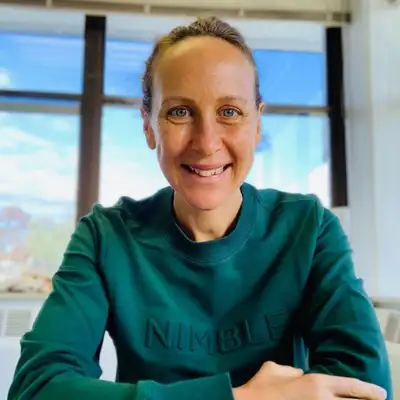
Mobility, Strength and Staying Capable as You Age with Darren Ellis
00:00
Hey everybody, it's Mikki here. You're listening to Mikkipedia and this week on the podcast I speak to returning guest Darren Ellis about movement, mobility and function as we age. As always, this is a grounding conversation that speaks to Darren's passion in the fitness world of helping us live our best, most awesome lives. And for those of you unfamiliar with Darren,
00:30
He has been on the podcast several times over the last almost six years now, and we have had conversations about fat loss, strength training, mobility, independence, resiliency, and all of those things which help us become a stronger, more independent version of ourselves. And that is essentially what our conversation today is really based around. So it's a real passion point of mine.
01:00
as you know, to help people be stronger, capable and more confident. And Darren is absolutely on the same page, which is of course why he is the brains behind the strength training component of Monday's Matter. And that's our program. We registration kicks off next week for a 10th of August start. So I thought this was the perfect opportunity to chat to Darren about some of these most important topics.
01:28
So Darren Ellis has a master's in strength and conditioning and has an aim to share what he's learned with as many people as possible, teaching them that there are no shortcuts with exercise, but that it can be achievable and even fun with good coaching and a supportive peer group. Darren is a regular contributor to a variety of popular print and web-based health and fitness magazines. He's a public speaker.
01:55
consultant to sporting organizations, businesses, universities and television. His specialties are strength training and nutrition for fitness, sport, weight loss, muscle gain and longevity. Now Darren can be found over at DarrenEllis.coach on the interweb and you can also find him on Instagram and social media at the same handle and as I said he does the strength based
02:23
component of Monday's matter, which I'm just so thrilled that he's a part of that, but he also coaches independently. And so if you wanted to connect with him either as a one-on-one kind or as part of his app, you can find him over at darrenales.coach. Before we crack on into the interview guys, I would like to remind you that the best way to support Micopedia is to hit subscribe on your favorite podcast listening platform. Give us a five star review. Why not? It will just help.
02:53
Other people find Mikipedia in amongst literally thousands of other podcasts out there. So more people get to hear from the guests that I have on the show like Darren Ellis. Alright guys, enjoy this conversation.
03:09
Darren, good morning. The listeners just missed me cracking open my, one of the things I love, Musashi energy drinks. So, don't often do it at like 9.15 in the morning. Usually it's either in the gym or maybe if I'm driving to go for a run or whatever, but I just bloody love them actually. And I'm not even gonna say it's my quote unquote guilty pleasure.
03:38
There's no guilt involved here. No, no such thing. uh this is what I The only issue for me is that this means I can't have as much coffee. So I never touched them for that reason. They taste good, but I just I've only got about the tolerance for two. Yeah. Although um congratulations listeners, I took a third one just on board a second ago for the purpose of this podcast so that I can ranch with full steam. uh
04:06
Oh, love it. Usually two is my limit. Otherwise I get just a little bit jittery. Yeah. Well, it's interesting. So I typically have a coffee when I get up in the morning alongside, I have my good green vitality. have collagen, aminos and creatine just in a little bit of drink. It's not much. It's like, I don't know, if we were counting calories, it'd be about 150. But I do enjoy that alongside coffee because actually, for whatever reason, I've lost the ability to tolerate coffee.
04:37
by itself. know not all the time, but I just feel like I need something alongside this. then because I like a good volume of coffee with breakfast, I've had to switch to decaf for that. So I go machine for my very first one, then I go plunge a decaf, which I just, like the flavor. I like the volume. I don't know. hear that. hear that. And because I generally have my caffeine before
05:04
or most of it, in fact, I do have a coffee at two o'clock post lunch, just a um single shot. I enjoy that by itself actually. But isn't it funny how tastes change and things like that? And I'm quite a fast metabolizer of caffeine. I've had my genetics done. I know that to be true. Right, right. I've always been fairly sensitive to it, I guess I sort of pioneered, it was just a running joke with the owner of a cafe that I frequented, but.
05:33
I'd go in and I'd ask for the Daz Double. And that was a quad decaf shot. Oh, yeah. Yeah, because it was a decaf, but I wanted enough to actually enjoy it. And yeah, I've started, I've actually just started buying decaf beans that I hand grind. But that's only because my other grind is full of the good stuff.
05:58
But yeah, it makes just a nice hot drink on a winter's day as well when I can't tolerate extra. I'll usually do a decaf long black after lunch. Nice one. In fact, I've spent, I would say several minutes on ChatGBT over the last couple of months asking questions like, what's worse for me at this time of night, a Coke Zero or a glass of wine? Because of course, Coke, I have a Coke Zero, like maybe, I don't know, three or four times a week.
06:26
with my little pretzels at about five o'clock. And I'm like, I wonder whether for my sleep it would be better if I just had a glass of wine. apparently CHPT tells me, and I say use only human clinical randomized trials where possible. So I try to give it those little guardrails. Nah, alcohol's worse. Oh, that's it. And I think that ties into sort of what you're saying about, it's maybe not so necessarily about taste changing, but us changing.
06:55
And I know I went through a period where I was fully on board with the idea that a couple of drinks, even I was working in a pub at the time. So it wasn't just a drink, it was two or three, was really helpful for getting to sleep. But I was also 23 years old. Yeah. And now one or two drinks, I mean, I'm not going to go Stephen Bartlett about it, but generally one or two drinks does really kind of tax me the next day.
07:24
And so it is a bit of a choice around those things. And I think it ties into sort of some of our conversations going forward today. What used to work doesn't always work now. Exercise, nutrition, other lifestyle factors, and recognizing that and making peace with it is often the first step. 100%. It's that acceptance, right? On that caffeine thing, what I find super interesting is that lot of older people in my life generally enjoy a coffee
07:54
If I think about what my mum used to love, she used to love having a coffee. Barry's mum also loves, she will have a coffee um after dinner and they swear that it doesn't affect their sleep. Albeit, in my head, I'm like, you just probably have shit sleep because you're old. Yeah, yeah. Maybe that's a different kind of acceptance is they're maybe not making the association with what could be causing it. uh
08:24
Certainly, far be it from me to try and take away someone's pleasures. uh yeah, perhaps thinking, oh, I'm not saving so well and making that connection is the key part. uh Yeah, my dad was saying he swears by it. He loved one after dinner. uh But yeah, interesting. Yeah, it is. Des, I just went through your social media feed.
08:49
So for the listeners who are unaware, and I'm sure most of you know this by now, but Daz does the functional movements slash strength piece is how I would put it for the Mondays Matter program. And of course we're kicking off another full Mondays Matter program at the beginning of August. So this is always such a great opportunity, sort of I'd say in the depths of winter, but to be fair, it's like just blasting sunny outside right now. So good. It certainly doesn't, I mean, it's cold, but it certainly doesn't feel sort of gloom and doom.
09:18
um It's always a great opportunity for us to catch up uh pre-Amondays Matter and just, I don't know, chew the fat on how we view certain things. in any way, just because you're a bit of a guru around this stuff. And I was looking at your social media and you had such an excellent post and it got quite, you know, was obviously people really appreciated it as well um about hip replacements actually. the, yeah, and the sort of
09:47
You know, how much of these types of, I don't know, they're not injuries are they? are, um what physical situations, I don't know, can't think of another way to put it, are genetically based versus environment based. Because of course, to your point, I think you said your dad's had two hip replacements. And essentially what you're doing now with your mobility and functional movement, you're just trying to avoid that as much as possible. So can we just chat a little bit about that?
10:17
Yeah, it's certainly the shape of the hip. There's a genetic component to that. And so some people are predisposed to it. But like so many things, genetics plus environment, doesn't always, it's not always a given that you're going to have the thing that your parents had or your grandparents had. 100%, you still have to often trigger the event. And it can be quite an acute thing.
10:43
But generally it's much more of a chronic long-term over the course of your life. And certainly in the case of joints, wear and tear, if you are just not built for getting down in a deep squat and you force the issue. And this is something that I've had to already, we're already on a tangent, but it's sort of related. We all had a long crossfit background where range of motion and doing things right and well were a big
11:13
tenet of the methodology. And I still adhere to that, but it can be a case of trying to jam square peg into a round hole. And the example using the squat is whether we were doing a back squat or a front squat or an overhead squat, some people lack the mobility to get to full depth. And we would then be trying to help them get there with mobility drills and various other drills. One thing we did not do was
11:44
uh, put plates under the heels, elevate the heels, which takes, the ankles out of it, but also moves center of gravity into a more favorable position and allows almost everybody to squat to a good depth because what that was doing was, was cheating. Uh, but not everybody is built the same. If you have really long femurs relative to your torso or your lower limbs, it's kind of like you're trying to hang your bum out over a cliff. Um, and, um, you're going to fall over.
12:13
if you try to squat deep. So nowadays, almost put just about everybody up on some sort of uh slant board or heel block um because, that's kind of speaking generally, that a lot of people like that mobility full stop, let alone have genetic predisposition to be a poor squatter in the first place. um So where I'm going with that is if we have issues that are potentially detrimental to our joint health,
12:43
ah We shouldn't be just going, the best in the world who can do that move. We should be trying to be like them. We should be saying, how can I adapt what I need to do for me and my situation? ah And so, that's it. If I've got the hips, the genetic lottery for hips that aren't going to like certain things, I need to be aware of that and be willing to modify if necessary. Well, that's interesting, Daz. So this came up at lunch, had some friends around for lunch.
13:11
Helen was telling me about friends of hers who did high rocks, your favorite sport. I feel like you may have changed your I don't know if you've changed your opinion, but anyway. um One of the stations of high rocks is the wall balls to squat. You've got to squat a certain um depth. She's saying her friend literally because of their hip
13:38
the way that their hips are structured or the way that um the ball and socket fit for them, they couldn't squat deep enough. They were there forever. Actually, to be fair, I cannot remember how, I don't know how they ended up playing out for that particular person, but it just came up in our conversation that they anatomically were unable to get into that squat position. You mentioned how if you don't know that you've got this genetic predisposition,
14:07
disposition, then you may be on the back foot, but how would anyone know that they had that? Unless they tried it, I guess. Yeah. so of course, it's maybe then we're saying, because it can be too easy to say if it hurts, don't do it. Because often then we are avoiding, we are avoiding some of the things we need to do. um It certainly can't hurt to improve your mobility. And one thing I do to try
14:32
sometimes to try to work around issues like squat depth is going joint by joint. So ankle drills, knee drills, hip drills separately so that we're improving the health and the range of those joints and then try to put them back together in something resembling a better squat. ah But yeah, the key is accepting kind of saying about the coffee. If you're like, I've tried this and it still doesn't seem to work for me.
14:58
then maybe it's time to try something else. And another example uh is a deadlift, you know, which is, uh a human cannot move more weight than with a deadlift. All right. I mean, we can drag a jumbo jet in our teeth and other circus tricks, but that's not lifting it off the ground. In terms of moving weight off the floor, the deadlift is the biggest, strongest lift for a human. All the records are there. And, but that means a lot of force going through the...
15:24
the body. And of course we had deadlift in many of us, like, oh, lower back, this, that, and the other. And it's not inherent that if you did lift, it's harmful to the lower back, but certainly there's stress applied to that region. Now, if you are seven foot six versus your friend is five foot four, well, the barbell is the same height off the floor. So it's a lot easier for the shorter person to get down to that than old mate who's up heads up in the clouds.
15:53
So the chances of them having a nice flat back, uh good position, taking a lot of the force through their glutes and their hammies, the prime movers versus all of it being on their low back is quite low or quite high, sorry. um So that's where we do things like a sumo start squat, which is take the feet really wide and that brings the tall guy down closer to the bar. um Is it cheating? Only if we're in a competition where they say it has to be a conventional lift like powerlifting or CrossFit. um
16:23
But that person is not like so many things. uh five foot five person can't play basketball or won't be very good at it, should I say. And the seven foot six person won't be very good at power if they're not CrossFit. um Should they never deadlift again? No, it's an important pattern. Bending over, hinging. Can we find a better way to do it? Yes, sumo deadlifts, Romanian deadlifts, maybe with dumbbells versus a barbell because we can bring the weight.
16:51
closer to our center of gravity, maybe single leg Romanian deadlifts, because then that helps the pelvis stay connected to the spine and we get less lower back stress. You know, there's a lot of other things we can do versus this blanket of this is the best exercise because it allows us to move the most load. The deadlift is king. Everyone should do this. You know, that's, that's a mistake in my eyes. A hinging bending deadlift like pattern.
17:17
It's good for everybody. And then it's like, find the one that works for you and causes you the less grief. So a couple of things from that, like I, um, I don't love deadlifts or back squats actually. So I use a Smith machine with the back squat. I have to work myself up to it. And it's often if I can, it'll be the first thing that I do. Um, because it sort of, I don't know why I feel like I'm going to injure myself. Even I don't even lift that heavy, to be honest there. And I try and work on powering myself up a bit.
17:46
faster. But the Bulgarian split squat, I'm totally fine with doing. I don't mind that one at all, actually. I wonder whether I'm not doing it properly because everyone talks about it like it's the worst exercise in the gym. I'm like, oh, I don't mind that one. Yeah. Yeah, it's funny. It's definitely got a reputation. And it's an interesting comparison. And again, something I've changed my mind on about a lot lately.
18:15
Not lately, it's been for a while, but something like a back squat, again, has technical issues and anatomical issues that might prevent you from doing it as well as other people. ah It also has a very high stimulus. It is a great exercise. And the ratio of that stimulus is also a very high fatigue. So if you did a set of really, not even heavy squats, but tough squats, so whether that's five reps or 15 reps with a load that will make you tired, you finish the squats and you kind of need to...
18:44
go have a little light out. And then the day after, you're pretty smashed as well. Maybe the day after that. Whereas if you did Smith machine squats, for people who aren't aware of it, it just positions you in a better position. Your feet are out in front a bit more. The quads and the glutes take more of the load, and the lower back takes very little of the load. You can make that set hurt more because you're in a more advantageous position. So the stimulus is high, even higher.
19:13
but the fatigue is lower. So you'll walk out of those or coming back to your Bulgarian squats, same again. We're now putting it on one leg. We're getting more range of motion and we are hitting the quad and the glute very, very high. Low back's almost no load at all. Again, very high stimulus, but, and you'd walk around kind of like, Oh, you know, straight after the set, that was pretty hot. And then the next day you'd be okay. Um, you might've saw quads, but systemically you wouldn't be as cooked.
19:43
as you would from squats. So some movements have a great stimulus, but they have an associated fatigue that might not make them the wise choice for where you are in life. So I tend to think nowadays about what can give us the best stimulus, but also not too much fatigue. And so that's where we'll do things like leg extensions to talk about quads and legs. So a hard set of leg extensions, you finish a set, feel like you could crack a couple of eggs on your quads and cook them for breakfast.
20:12
but sort of five steps away from the machine, you're already feeling better. um And so that's again, very high stimulus, but a low fatigue. So it might suit somebody who is a runner, is older, is not sleeping well, high stress, is new to exercise, that sort of thing. We don't automatically say we should default to a back squat. And I can teach anyone to back squat, but maybe that's not the right movement for them. Is that a central nervous system thing? is it?
20:41
Something to do with having to recruit so many more muscles uh or nerves or what is that? Yeah, it's pretty much it's much more of a full body movement. know, back squat or deadlift is a real full body movement. There's some theory around that the load is on your spine. So know, bar on your back, that compression has some of that nervous system fatigue. uh Axial loading is the fancy word for it.
21:11
And both back squats and dead lifts create a lot of that. And so shifting it away from the spine can sometimes be helpful. And that's the thing, because having a strong spine and muscles associated with it is important. It's just finding the right load to meet you where you're at. And there's just other ways to do it. Do you know, Darren, this is, I'm tangently off this into one of what you were discussing before about mobility. a couple of weeks ago, you'd put on your social media posts,
21:39
your mobility routine in the morning. And I looked at that and I went and I sent it to Hubster and said, this is what you need to do. And he's been doing it since actually, most days and variations of. So he uses that as inspiration to move. And what I think I said to you on that post as well, or I sent you a message afterwards saying, you know what, I've completely ignored mobility up until the last month.
22:08
Then I just, with my hips and my hamstring, I just had continual issues that seemingly weren't getting better regardless of what I've tried. And then I jumped into the Les Mills On Demand app and did the hip mobility for 15 minutes. Literally the next day it made a difference. And oh for the last month, I've been doing it five times a week and I'm running the way that I was before I started having, like I have confidence now when I go out, I can run fast because my
22:37
lack of mobility, the shortening and the tightening of my muscles was preventing me from running fast. I couldn't get that speed up without it hurting and without my muscles further shortening. And I didn't, I thought it was something that the osteo had to fix. I thought that I had to use this little TENS machine. I thought peptides might be what I need to do, but actually no, it's just plain old mobility. And I am absolutely sold on it now. Oh, interesting. And it's, know, I've been kind of like,
23:06
the mobility guy for a wee while, although I haven't made that sort of the core of what I do. But in the last two years, again, experiencing similar um things to you. And again, if I'm a mobility guy and I'm already sort of going, well, my shoes seem further away at the moment when I'm trying to put them on. I used to say that strength was the foundation, was the bottom of the pyramid. You know, that was the most important thing.
23:36
And I still rate it very, very highly. Um, but lately I've been thinking, does mobility actually come underneath that? Uh, I used to go strength, then mobility. And I'm wondering like, if the places shift and maybe it's just as we get older, but heck, doesn't matter if you're strong, if you, you still kind of groaning to get out of bed and you're, and you're struggling to put your shoes on and the toilet seems a long way down. And I do meet a lot of people who are
24:06
quite strong and capable and fit. And then we do something like getting up off the floor and it's a real struggle. You think the invisible man was sitting on them. And yeah, so I've really changed my tune on that. think it's much more important to, if you don't have the range, you can't apply the force you want, know, whether it's in daily living or the activities you love or the sport you want to play. So a couple of things with that.
24:35
with this sort of increase in this mobility. So if I'm just no longer nearly as sore as I am, uh as I used to be in everyday life, I can sit for a lot longer um without my sciatica sort of, I don't know if it is sciatica, but know, kicking in on my hamstring. um But also my balance is so much better. Like I always mean to do those balancing exercises when I'm brushing my teeth at night. Literally every single day I'm like, I'm going to do that. Every single day I forget, I have never done this.
25:04
And I've been thinking about it for a year. So I need to improve that. But when I'm putting my socks on, I use it as a balancing activity. I'm way better at doing that now. Interesting. So I just thought I'd share that just in case anyone else needed further inspiration to start. And actually, I don't think you need 15 minutes. I don't know about you, what you think Darren, but as I understand, like 30.
25:31
I've read something somewhere that 30 seconds of a particular, um not necessarily static, but maybe PNF stretching or something was actually enough for that muscle and tendon, but you might be able to speak. It can be. It can be. And yeah, I think uh the science will argue about various factors of it. But if we just speak anecdotally through experience, I would always rate.
25:56
And this is nothing against yoga, but just using it as the sort of maybe a classic and common example. uh One 60 minute yoga class a week will not get you the same mobility as splitting that into eight minutes every day. Yeah. Yeah. Nice. And I've saved you four minutes. Yeah. If I did the math correctly. You did. You did do the math correctly. So it's the consistency. So yeah, your 15 minutes is great.
26:26
It's not very long, but I get it. Sometimes it really is hard to find a 15 minute window to do mobility on top of everything else. So yeah, if we took your four 15 minute sessions and turned that into seven, 10 minutes, it'd be great. And so uh my personal is five to 10 minutes. Now, of course, I do have, I guess, above average mobility. So I certainly can maintain, at the worst, I can maintain it with such a small amount. If you are very immobile,
26:54
It could be that you could use more than that to make some decent progress. But if you're currently doing zero, then five minutes a day is going to win. You're going to make some progress from where you're currently at. yeah, that's what I'll say is like sort of one lower body, one upper body movement. Do each of those for one or two minutes and try to get that happening every day and just do the same ones.
27:19
So you don't have to think about it. Get those ones, start to notice a bit of progress and then you can do what Bass does. Use that as inspiration. What's another one I could maybe add to the mix or maybe I just swap this lower body one for another lower body one and then carry on like that for a couple of weeks. I think what I've really appreciated about the hip mobility one that we do, we've got like four or five that we go through because that's about all they've uploaded. One, the instructor is clearly
27:48
hypermobile, like she is, she puts her, puts her leg over her, like she's like on her front and she puts her leg like across her body, the other way. I'm like, okay, you're so hypermobile. Um, but interesting with that, I found exercises within there that really like grease the groove. So I'm, even on a day when I'm not doing it, even if I get into, go down and get into like a 90, 90 with my legs and do that sort of movement.
28:18
backwards and forwards, I immediately notice a shift and a change, which is so nice. And it's so easy. Yeah, you can very instinctively figure out the ones that are best for you. And then, yeah, do those ones. A note on Madam Hyperflexible, because I say that on my behalf as well, and a post I actually just did this morning, which was a bit of a
28:46
something a pretty circus tricky, you ah A, that shouldn't be something we should aspire to necessarily. That's really just, you know, it's a bit of a, we've got to play the game sometimes and get the views. But the fancy mobility drills are not how you get mobile. They are just, they're showing, they're an expression of mobility, you know. The same way that you back squat to get strong for running, the running is how you express your leg strength.
29:16
Um, so the drills don't have to look fancy to improve your mobility. It's the fancy ones though, that gets saved and, and the views and the comments, right. Cause that they look fancy, but it's very simple stretches like a 1990, um, or the down, down dog style stuff from yoga. really love, uh, some kind of lunch position. It's my go-to because it's.
29:42
It's like calves, hamstrings, low back, shoulders, all in one hit. And so yeah, those simple drills stand the test of time. So for me, it's like 1990 down dog to Cobra, something called the perfect stretch, which is kind of like a lunge with a rotation. Oh, yes, no, I like that one. Yeah. And I'm done. Those are my top three. Or maybe something squatty. I call it a monkey squat, where I sort of touch my toes and then squat down and then reverse it.
30:12
And that's it. So three or four or five stretches. I keep picking up funky stretches on the internet and saving them just like everybody else. I'm saying, oh, wow, that's pretty cool. Do you think I'd do that stretch? No. come back to, I get up at 4 AM, have a coffee and drag my bleary ass over to the corner of the carpet. The dog jumps on me and then I'll do the stretches I know, because I don't have the bandwidth to try that funky one, nor is it probably going to be that helpful for me.
30:41
You know, it's funny you say that because I do very similar things with workouts. Like I save people's workouts. I buy workout programs. I've got all of your workouts from Monday's matter and I look at them and they look amazing. Do I ever do that? No, I go into the gym every time and I do lat pull down. I do a version of bent over row. I do a version of a lunge. I do a version of a squat or a leg press. And I love doing like a rear fly.
31:09
and then do some chin-ups and pull-ups. I do literally almost the same thing every time. um But in my head, I get inspired by these other work and think, I might just have one session when I just go in and do something random, but I always default back. And I think to your point, it's the bandwidth thing. I just, it feels too effortful in the moment to do anything that I don't already know. Yeah, yeah. And funny now, cause you're like, I've basically given myself advice that you've been echoed back to me that,
31:39
when I programmed for my wife and I say, well, how was your workout today? And she's like, oh yeah, I looked at what you'd written, but I just, I did some skipping and then I did my squats and I really liked some hip thrusts. I did those today and then, and I'm like rolling my eyes. I put so much effort into your program, but yeah, I've got to accept that sometimes the bandwidth is not there for being told what to do, but to do what you know.
32:03
Yeah, but interesting though, so, I, um I have various apps that I do, you know, I love Jory Fit. We've talked about her over the years and she's really changed her programming over the years. And for whatever reason, I will continue to, to look at what she puts in the app and completely ignore it. But people love it. And people say this workout was amazing. So there are definitely people who, and we know through Monday's Meta program, there are people who always follow the exercise plan. They always follow the meal plan and they, they love someone else.
32:32
sort of setting that up for them. guess bandwidth for something, like bandwidth is different for different people. Like the effort involved is, I guess, um placed in different places, I suppose. Yeah. And it's a tough one because I get it. I still actually coach one group class a week at my local gym. It's nice to my hand in the game.
32:59
People say to me, you know, I come here because I just like being told what to do and I don't have to think about it. Um, and I kind of get my backup at that comment, even though I understand it because I really do understand it. But it's because it's a spectrum. Like, and you know, me that I, I'm sort of not anti-performance, this, this, this need for optimization and being the best, everything being the best in terms of, uh, performance versus it sort of accepting where you're actually at with life.
33:29
and trying to just do the best you can. It's often a better approach for a lot of people. But at the same time, there's maybe a slide where we've given up a little bit too much. um sacrificing some autonomy might be a mistake for people. And that's where I do personally believe that, say, a group class should be more icing on the cake than the cake of your fitness practice. Because
33:57
your, what about that shoulder niggle that you've had for five years? What about that hip mobility that seems to be slowly disappearing? What about the fact that you like to ride your mountain bike and you need aerobic fitness or, or, know, insert anything that's personal to you. What about the fact that you're only getting five hours sleep, whatever. And so just showing up to a class and not knowing what you're going to get can be, you know, well, it's, it's it's a, in a sense.
34:27
And you don't need the coach to go, Hey, we're going to hammer the legs today. And you have planned to do Hill runs for your marathon training tomorrow. That's going to set you back. It's not exactly what you need or you have any injury. And so I always say, want, I want group class because community, like we need community more than ever, right? Like after the last five, six years, but, um, yeah, I like it to be the icing on the cake on, and that you have a core practice and that could be.
34:56
I have my mobility sessions that I do in the morning and I have two strength sessions I do per week that are designed for me, or at least I've found something that I'm not pitching myself to coach you and write those programs or anything like that, or anybody, but you could find something that this looks like what I need to do. A couple of strength sessions and then I ride my motorbike or I go for a trail run on the weekends. And if I have time and the bandwidth, I'll throw in a group fitness class on Wednesday. And it doesn't even care.
35:25
get thrown at me because I've got all my boxes ticked. Yeah, no, I get it. for what it's worth, absolutely pitch away to everyone because I reckon some people wouldn't even know that you have an app, you know, like, and that people can sign up and that you do free trials for seven days and all the rest of it, and would really appreciate your expertise in designing something that provides them with that. However, devil's advocate here, what is-
35:55
What if my entire fitness rating are those classes? And that's actually just what I love. um let's say I am my age, almost 49. 49, I've got grown up kids, I'm running a business. don't want to think about it. My absolute whole fitness career is built on these classes and I wouldn't have it any other way. And I'm doing ceremony and I'm doing pump and I'm doing a spin.
36:20
I don't know, the run group from that particular gym, just thinking about my Les Mills journey and what that could look like if I was to ever sign up again. Why isn't that enough? Or is it enough actually? Yes, because good on you. Thank you for bringing that because that was a point I was going to address. You you sent me that whiteboard screenshot. ah Something is always better than nothing. Of course, that's very important to stress that. I would much rather someone just went to group classes if that was what got them there.
36:50
But it's just that spectrum I'm talking about. Don't wonder why if your goal is strength to get stronger. Don't wonder why you're not getting stronger if your classes are all hit circuits and a million burpees. uh And then you run on the weekends. Don't wonder why you're not losing body fat if you're training for high rocks.
37:19
And so you're starving and you're having to, you're having to literally fuel the workouts, right? And to stay on top of the training you're doing. Uh, but your goal is to lose weight, lose body fat. Uh, you know, that's, that's the thing. So make sure it's matching. And if it's not, you got to, then we talked acceptance earlier and you have to accept like I'm getting generally fit, generally healthy. Uh, if it's not causing me any, you know, long-term chronic aches, and niggles.
37:49
Uh, and it's, I don't have a really big goal. Like say I had a lot of body fat to lose or I really, really need to gain some muscle for my health. Um, then, then that's fine. Um, maybe it's a, uh, like a point in your life where you just need some stability. Like I can maintain this program. That's cool. I would still be like, can we have a conversation in five years about introducing some more strength training or mobility or something else?
38:18
But if that right now, that's an anchor for you and it's keeping you going, 100 % support it. I love the way that you just frame that because I feel like that is the bit because I talk to a lot of people and they really truly love their group fitness class or their crossfit workouts that they get, et cetera. And they also have goals of getting stronger and they have these other goals. And whilst we want to not
38:48
that they're almost not that people need to seek permission, often, you know, what do you think of this? And I'm like, if your goal is to just, you know, get your heart rate up, throw some things around, et cetera, awesome, do it. But if you, but to your point, if that isn't adjacent or matching their actual goal, then that's when the conversation needs to change. I think that's the bit that people sort of forget. And particularly, I see this a lot when people come into our program.
39:17
And they're like, oh, I want to get stronger. um But I still want to do this, I don't know, cycling for six days of the week or whatever. Yeah, and pull me out if I use terminology that sounds too much. I would call your nutritional program a fairly aggressive one. And so it's important to recognize that.
39:46
and say, can I follow an aggressive nutrition program and train for a marathon? And people do on your programs. Don't get me wrong. I give them guidelines. Yeah, yeah, yeah. And they have to, I don't know if compromise is the right term, but they have to think about both fueling their workouts and trying to be at a caloric intake that is supporting body composition changes. And it's tough. And that's why we know so much.
40:14
That's where we can help. But it is tough. I mean, it'd be tough for you or I to tackle that. Like it's definitely a challenge. And so you've got to factor a lot of things in. yeah, being aware of what it's the what's your why, isn't it? And go five ways down. Oh, I just want to do that. Why that? Oh, because and suddenly we get to actually it's complete. The fifth why looks completely different to the the first why. um And yeah, I do see not to knock.
40:44
your sport Mickey, but how many people, you'd know many as well, that would sign up for a marathon. Say, I'll sign up for a marathon. You're looking to improve your running performance, cardiovascular health, you enjoy running. And those are like those first wise. And then we dig down to the fifth wise, I think it might help me lose weight. And again, that's fine. But is that the right way to do it necessarily? are we addressing nutrition? What's your muscle mass like, et cetera, et cetera?
41:14
And yeah, very common. think it's happening with high rocks now as well. I sign up for high rocks. Oh yeah, you're into functional fitness, cetera, et cetera, competitive fitness. They go way down through the wise. No, but I see everyone with their shirts off and they look in great shape. Wow. They're also half your age. That's so interesting. maybe, you know, maybe I'll look like that if I do that. I mean, it's always been like that with fitness, know? it has. My pilates instructor, holy cow.
41:43
looks like Pilates is what I need to do to look like that. Yeah. No, she also strength trains or she used to strength train and eats a certain way and is genetically designed a certain way. And again, it's half your age. fall into that trap. There's that, don't know what does it mean that goes around. always sort of think about it. But if it's something along the lines of when you're 23, your diet is vodka and cigarettes and you're, you know, you looked like you were in awesome shape.
42:12
And it's just been 23. Yeah. And we forget that so often. We see, oh, that looks like this is the thing. No, that fitness influencer is 23. They could be doing anything. Do you know, I've had a, this is sort of a tangent, but on the same theme, like I've had a lot of thoughts about this. It's easy for me to not care that much about the scale when I'm running really well and I'm feeling really strong and I'm feeling really energetic, but I'm already lean.
42:41
You know, like I already, you know, my not caring about the scale is not caring that I'm up a kilo. Whereas I appreciate actually why people, why when you've got people like me going, you shouldn't worry about the scale. If you're feeling really good or, you know, your energy, your health markers are fine. Like you won't hear me say that because I don't think that that's, it's not, it's not fair. I don't know what another word is. mean, it's easy for me to say, but I'm not the one who.
43:10
may be struggling with a whole host of other, you know, I don't know, body image issues or whatever. it's, I told you it was a tangent, but this is just what I sort of thought about. Like it's an interesting one, eh? Like how much attention someone should pay to how they look versus how their body operates. Yeah. Yeah. It's a super important tangent. I really do think that's an important one because that's the current style on
43:38
social media right now is a younger and or genetically blessed influencer. I won't even call them a coach saying you don't need to do X, you need to do Y. um And it's only because it worked for them. It's an N of one. And it may not even be working for them in the sense of in 10 years, they'll be like, Oh heck, ah I don't seem to be able to stay on top of things the way I thought I was. um
44:08
And they struggle and I see it. I've seen it happen in my industry. ah And again, this is not saying I know everything. I'll be changing my mind on stuff 10 years from now as well. But the number of coaches who are younger than me, who we've had conversations and they've gone, oh, you know, when I push back on you talking about X, Y, I get it now. And they just had to turn 40 or have a child or get their first major injury.
44:37
and everything shifts and they realize that they're operating from the silo, which is their own body and their own experiences. And it's tough to, yeah, it's tough to give advice when that's all we know. Like inherently we can have our own client examples and think that we're getting an idea about stuff, but we still kind of respond from the way our own bodies react and our thoughts are on those things. And it's a, it's a real process to, uh,
45:06
Yeah, I guess it's it's a form of empathy to properly understand what people are actually dealing with. And I feel like we're in a privileged position with the access we have to people in something like Mondays Matter, for example, because you are, are sort of advising like several hundred people. And over the years, we've now had several thousand people that, and within that, you get a lot of different experiences and as people who help people.
45:35
Um, we get exposed to other people's experience too. think, I think you just, you grow a lot more as a coach and as an expert, it provides you that expert knowledge. Yes. When I was younger, I would push back on people saying, like, can, I can still remember this one guy again, when I was deep into the CrossFit methodology and, um, you know, it was about hard training. Um, and there's absolutely a place for that, but this, this one guy was like, he was, he was really into what we were doing. And then one day he said he was quitting.
46:05
And I was like, why? You love it. He's like, I do love it, but I can't handle it. I can't recover from it. I've got young kids and a stressful job and I am just beaten down all the time. And that was, I'm glad that that happened so early on. I'm I'm sorry to lose that guy. But it was like a wake up call that sometimes again, doesn't matter how much you love doing something. If your life currently doesn't allow it, you need to listen. You need to make those connections.
46:34
and adjust accordingly. And there's plenty of people who can white-knuckle their way through it for a long time, ignoring the signs, telling themselves that they just need to try harder if it's not working. But yeah, sometimes things need to adjust. Darren, are you so against, are you still, like I think maybe we talked about Hirox a year ago, what are your thoughts on it now? Have they evolved or changed? Can I, first, can I tell you how I feel about it? Yeah. Yeah.
47:03
Formulating your thoughts. I wish I could do high rocks because, and not, and just because I love the idea of it being a hard workout. I love the idea of being in that environment where you're pushed. I love the fact that it would take me probably an hour 40 and I love a hard workout that goes for ages. even like my head will always take me there, even if my body doesn't support it. then logic logically, I'll always cut it short, but you know, my mind is, is it.
47:33
It's absolutely attracted to all of that. ah However, I'm completely skillless when it comes to a ski erg. I couldn't do those. I probably could do this wall so it sits maybe those wall balls. would take me forever. Everything would take me an absolute age. um Squats, cetera. So I don't know that I will ever do it, but it attracts me a little bit the way that CrossFit does, but I would not go near CrossFit because I do not have the skill.
48:02
And guess why Pyrox has gotten popular because it is lower skill than CrossFit competition. And so the entry point is a bit easier. And it's great. I think it's been great for the general public. And it's something I had ranted about uh local CrossFit comps for a long time is the secrecy around the events and what they comprised of and the often
48:29
uh riskiness that would come about from creating some events that were designed to be a spectacle and not respecting the uh participants. We have people doing max lifts in the rain on slippery mats and things. uh That was a massive turnoff for the average person. When I was in my prime when that and other people, we loved that stuff. Yeah, dish it out. The uncertainty and the riskiness was actually an attraction.
48:58
That's pretty rare. so Hyrox is really one out for that. And so I love that. um And I've got a client doing a race this weekend, next weekend. um And so yeah, I still coach people to do it. Like I'm not anti it. But again, I guess I'm anti in the choosing it for something other than it's not. There's certainly a level of performative fitness.
49:23
where people are doing stuff to be seen to be doing it. that's, again, I don't think that's a very good why at all. Yeah, but that's your value system, right? True, true. That's my value system. Yeah. But doing it because it's a challenge and you know that facing challenges will make you a better person. That's such a great idea. I mean, I was never very competitive. I don't have this sort of kill instinct. So I did CrossFit because it helped me
49:53
foster a bit more of that. really? Because I assumed that you were very competitive because you were so successfully competitive. I just figured that that was the thing that drove you. No, never really like, yeah, I would never get the bit between my teeth kind of thing. If I was getting beaten, I would sort of roll over. Oh, that would be me too. I was exactly the same. Yeah.
50:19
So I sort of continued to compete to try to improve that aspect of my personality. Because I think, you know, like it's why we're still around, right? We ate the Neanthons or whatever, or killed them. don't know what happened, we homo sapiens won the competition. So it's very inherent in our genetics. certainly, again, we can go too far with it, losing it completely is a bad idea. So no, I...
50:47
I think things like high rocks are good. Again, just making it all of your personality may not be the right thing. But again, if you're 20, yeah, absolutely. Make your social media handle, know, Billsmith underscore high rocks and go for it. Try to get to the world champs and stuff like that. That's important, right? But doing it at 52 and then your wife becoming a high rocks widow and business suffering.
51:17
Are you projecting what would happen if you went down that road? Maybe, yeah. But again, it's finding the right approach, getting the balance right. That is funny that you say that don't make it your whole identity. I mean, I make running. Running is not my whole identity, actually, at all. I think I know runners who make running their whole identity. And I love that for them. Similarly, same with CrossFit, same with... But I think this is your, again, just to call you out.
51:47
because we're mates and I can. I think that's just your value system. And I guess the danger is, of course, if you suddenly can't do that thing, it's the same thing with if your whole identity is an all black because you're an all black, then suddenly you're injured on the sideline or you're dropped. I mean, you don't have to be a sports psychologist to understand that that's not very good for your self-worth and all the rest of it.
52:14
Yeah, you took the words right out of my mouth because that was what I was going to counter with. And we're seeing examples of it all the time of top athletes, ah you know, going off the rails, drugs, crime, ah whatever else, when the thing that was their identity dries up. And we, know at top levels, organizations are trying to implement ah education and support to help athletes transition from... uh
52:43
elite performance because it is a tough, tough thing. And so we're dealing with that. might not have, we don't have to be elite athletes to experience a form of that. So yeah, that's again, my values, but I do think if you want to make it your whole identity, um what's your plan B? Just be aware of that because yeah, one injury can change the game. And that's fine if you've, if you go, all right, what's next?
53:14
Yeah. Yeah. Interesting stuff. do um enjoy having these conversations with you, Daz, because we can, like just to the fact, we can say what's on our mind. And I mean, I don't think we're not in agreeance on this. It's just looking at slightly different perspectives, but we certainly sort of land in the same place. I'm fully in the philosophical rabbit hole with sport and exercise at the moment. m
53:45
Like I want my daughter to challenge yourself and to be adventurous and, and, and play all the things and do all the things and not be scared to climb a tree and swim out and big, big surf. But the moment she has an injury, you know, if she breaks a leg or something, I'll be beside myself. Um, and, and, and petrified every time we go down, you know, a steep trail on our motorbikes. Um, should I, should I take that away to, to reduce the risk of injury? Of course not. Um, could it, could a terrible accident happen?
54:14
I've got many clients who have broken their backs mountain biking. But if we take that away completely, a human won't flourish. We need a bit of risk. It's why we enjoy those sports in the first place. Skydiving and motor racing and bungee jumping and all that stuff is tied up to risk. So there's something about it for the human that we love that stuff. And so I think we need it to...
54:43
properly flourish, where's the sweet spot? Like I'm currently in a phase of where I've quit Jiu-Jitsu because I was getting injured all the time. Oh, interesting. many injured, more than CrossFit. ah But I really miss it. Social aspect. Again, the competitive side, which I was mentioning, I'm trying to foster and keep alive. Like literally fighting another guy is as competitive as you can get. And that was good for me, but the injuries weren't.
55:12
ah I then was weighing that up against, if I blew out a knee, I can't crawl around on the ground with my daughter. can't um pedal her to school, which I do most mornings. um And that started like overshadowing the sport. And I got the chat GPT to make up this questionnaire, like a proper psychological questionnaire with points assigned and everything to figure out like if I should quit.
55:42
or stay. And then it actually came up with a third option, which would be maybe like stay involved in the sport through coaching or something like that. And anyway, I just narrowly said I should quit. And I was already leaning towards that. But it's funny, right, some time away, now I'm thinking about getting back to it again. But trying to find a way where I can, like whether it's the frequency of time per week I train, the way I train.
56:10
ah I'm also think I need to factor more stuff into my strength training to protect me against the particular demands, which is like any sport. um And with those things in place, maybe I can manage it because again, it's important for me, but I need to give it the respect. And I think that's what I'm trying to get at is like, if I do make this decision to go back and do a risky sport, ah I need to think about the consequences. ah
56:36
make time to implement the prehab and the strengthening that I need to be safe in the sport. And also then make peace and accept if an injury happens, that that's the trade off. And again, I'm going way down the philosophical rabbit hole, but I think that as we age, those are the sort of thoughts we need to have around sport and activity. And as long as we just give them some time, that's okay. But again, blindly
57:05
embracing something or ignoring a signal and not thinking about it is the mistake. No, we're on a real tangent there. No, no. And it actually ties right back into sort of where we started around the whole mobility thing, right? And I think about that. is why 15 minutes to me still feels like 15 minutes. And for whatever reason, I'm like, oh, 15 minutes. But I know that if I am not doing that work, then I'm going to continue to be injured in the sport that I say I love. I mean...
57:34
How much, you know, like how important is it to me if I'm not willing to put this other time aside, which actually should just be part of the training. It's like nutrition, you know, it's like nutrition should be affected as part of anyone's training because it's a big part of people feeling good doing whatever they're doing. it's, you know, people, sort of loosely call it the fourth discipline of triathlon. Um, there's only, know, if you're only in a one discipline sport, it's just like some sort of like element of the sport you need to consider, but it's very, you know, not
58:05
a small percentage of people might take it seriously, but a lot of people don't really think about it. So it's not dissimilar to that, I think. Yeah, and that makes me think of something else. ah The fact that you're realizing now that to continue running well, you need to introduce mobility. I'm seeing that a uh lot with strength training at the moment.
58:33
The people I'm seeing at this gym that I'm doing some work at, honestly think the last dozen people have been the same person in the sense of they come in and they say, it's getting harder to play tennis or golf or run or hike. And I realized that I need to do strength training if I want to continue to do that. And then at same time, I also don't like the gym because I like to run or play tennis or golf.
59:02
And it's a bit like that 23-year-old influencer who looks, who has a six pack on vodka and cigarettes. We could get away with, play tennis and I run, and that seemed to work fine for me to stay fit and healthy through my 20s, 30s, 40s, and now I'm approaching 50s. And for the woman, other things coming into the mix around that time as well, suddenly...
59:29
the ability of the human body to maintain a certain level of muscle mass is declining. And it was like, thought golf was enough to be strong. And then suddenly it's not. And that's giving a lot of people a bit of a shock, a bit of a surprise. Why is golf or tennis or running getting harder now? And again, they'll push against it for a while, trying to figure out a solution. And unfortunately the solution sort of was that they weren't doing the thing they should have been doing in the first place.
59:57
But we didn't have the knowledge back then as well, I don't think. So we're sort of getting this generation coming through, realizing that strength training is an essential part of being able to still do the things you love. And that's what I say is like when they say, I don't love the gym, I say, don't really love it either. But I want to be able to do jujitsu. I want to be able to paddle board. I want to be able to crawl around and chase my daughter. I want to be able to ride my mountain bike all day. And those things require an element of strength. So I go to the gym.
01:00:24
for the minimum amount possible to allow me to do those things better and to do them for many more years into the future. Yeah, no, I love that Darren. I'm 100 % clearly on the same page. Where can people find out about your app and how to connect with you? Because like I said, I don't think enough people know that you've got this
01:00:49
amazing resource, which is pretty much you at their fingertips. And it's you at the back end of the app answering the questions, helping coach them, personalize that program to them. Similarly in the Mondays Matter program, you're the one that is answering the questions in the Facebook page. You and I doing the Zoom calls. You're helping critique, know, issues, injuries, illness, et cetera, along the way and making it fit people's lifestyles. So tell them more.
01:01:18
Everything can be found at darrenales.coach, it's website. That's also the same uh handle on Instagram. And yeah, I do a lot of uh one-on-one coaching and programming, both in person and online. And that's where we are specifically creating programs uh for you. But then, yeah, the programming app I have is, guess, both it's a low budget uh way to take advantage.
01:01:46
of the stuff that I do. And so it is a template, but it's my idea of ah what a program would look like, a strength and mobility and conditioning program that you could do forever. ah That's sort of the goal is like, what does training have to look like that you could sustain it forever? uh And so that's where you can access that. That's awesome. I mean, I guess just to that last point, you know, a lot of people push back.
01:02:15
at meal plans or exercise apps with one program for many, one to many, because they're like, but it's not individualized enough. And I've got to say, after 25 years in my industry and similar to you, I'm sure 30 years in yours, like y'all, we're not that different. We're not that different. There's a lot of overlap, a lot of the same problems. And not saying that you're not a unique snowflake and there aren't.
01:02:44
little things that we need to consider, but honestly, for the general population, it's not that different. Yeah, the stuff that I do, like when I'm doing individualized programming, I am, yeah, but where I'm, it's the same principles, where I'm offering the most assistance is when I get an email from one of the clients, he says, I'm off to San Francisco for work for a week. And he can see me a photo of the gym.
01:03:10
And I can adapt his programming to fit the gear he has access to. Or I'm off to Thailand, I have nothing. All right, here's body weight workouts to do. I'm nursing an injury, we can adjust. And so we can get specific, but the principles are always the same. Yeah. Yeah. So the workouts will always look quite similar, whether it's a template or individual. For me, it's just, I modify it individually. I love that, Darren. One last question for you. What time do you go to bed if you get up at four o'clock in the morning?
01:03:40
I don't want to get up at four o'clock in the morning. Sometimes we hear a daddy, daddy from the next room, the young daughter. And if I get up at that time, I'm up. Yeah, I get up. So whereas my wife, if she gets up, she will go back to bed for an hour or two after that. but I do try to be in bed at 830. Nice one. And yeah, that sounds very early, but it's an anticipation of the early wake. 9 or 930 would be like,
01:04:11
the sweet spot for me if I could guarantee sleep. It's really nice. No, I love it. I've got my alarm set for 4.35. I mean, this morning I just woke up at 4.20. I'm like, oh yeah, I'm awake. That's good. But I generally like to try and be in bed by nine. So I have a bit of reading time and then I sleep. Yeah, no, it's good. Early bird catches the worm. Isn't that what they say? Exactly. But I love not having to wake up to an alarm. That's definitely the win for me. So I still get up early.
01:04:39
Well, it's an alarm if my daughter's crying out, but otherwise, yeah, I'll still wake up probably pretty naturally around five, five feet. Yeah, nice. And that's great. Yeah, yeah. More of the day, more of the day to get stuff done and live your best life. Yeah, absolutely. Amazing Darren. Well, as always, appreciate your time. Thank you. And look forward to working with you in the next eight weeks or so. Not always so much fun, I can't wait.
01:05:16
Alrighty, hopefully you enjoyed that and honestly like someone said to me that this podcast was just a vehicle for me to be able to catch up with my mates and they are not wrong. When I have mates as smart as Darren, I'm always gonna want an excuse to sit down and have a conversation and the fact that you can enjoy it too is honestly, it's just amazing for me. It's such a privilege. As I said, Monday's Matter registration kicks off next week Monday.
01:05:42
for a 10 August start, can head on over to my website and find details of the program there. And if you have any questions at all about that or anything, feel free to hit me up. I'm on the socials as you know, over on Instagram threads and X @mikkiwilliden, on Facebook @mikkiwillidenNutrition, or head to my website, mikkiwilliden.com. All right guys, you have the best week. See you later.