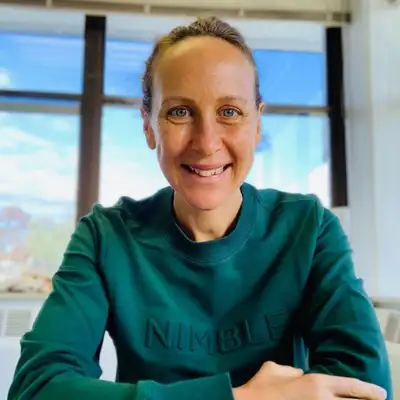
Medical Astrology: An Ancestral Lens on Health with Kira Sutherland
00:00
Hey everybody, it's Mikki here. You're listening to Mikkipedia and this week on the podcast, I speak to returning guest and my friend, Kira Sutherland about another arm of her skills and talents, and that is ancestral medicine. And we explore medical astrology through this lens. We discuss how astrology once sat within herbal medicine, food, seasonal living,
00:30
and close observation of the natural world as part of a practitioner's medical map. And this is not a conversation about newspaper horoscopes or using a birth chart to diagnose disease. Instead, Akira explains how medical astrology may be used as a constitutional and reflective framework for considering temperament, health patterns, resilience, vulnerability, and timing. We explore the roles of the four elements
00:59
relationship between planetary cycles and the body, and whether astrology can sometimes provide a language for experiences that are not easily captured by standard testing. Drawing on Kera's background in Neuropathy and Nutrition, we also examine how ancestral knowledge might complement modern healthcare without romanticising the past or abandoning scientific scrutiny. Ultimately, the conversation
01:25
draws on whether health is only about identifying what is wrong with the body, or whether it can also involve understanding the patterns the body may be expressing. I think you're really going to love this conversation guys, it is such a well-rounded, thought-provoking one, but does sit solidly within what evidence shows us is involved in health and wellbeing in general.
01:50
So for those of you unfamiliar with Kira, she is an Australian naturopath, nutritionist, herbalist, and medical astrologer. Known for her vibrant, straightforward teaching style, Kira has lectured in medical astrology within Australia, North America, and Europe. And in private practice for over 25 years, Kira combines her knowledge in natural medicine with a passion for medical astrology into a wonderful mix of mind-body medicine.
02:16
Kara's medical astrology training and mentoring programs attract hundreds of students every year from around the world, with rave reviews about her teaching style and breadth of knowledge and application. In her free time, she competes in endurance sport and skis with her family as much as possible. And Kara and I get on really well and have, and you'll see, you know, as we talk throughout our conversation, it does take a few different tangents.
02:44
But I think you're only going to find it super interesting. Before we crack on into the interview though, two things for you. One, Monday's Matter is open now for registration right through to Sunday, 9th of August. We kick off Monday, August 10th. Would love you to join us. And if you've been sitting on the fence or feeling a little bit stuck in a rut because it is winter and you're just feeling a bit down and out, come join us. Get a kickstart on your goals for the coming season.
03:13
Just eight weeks, we've got structure, guidance, support, strength, protein, we've got it all. Head to my website, mckewillidan.com, links in the show notes as well. Secondly, if you haven't already, please hit like, subscribe, and share Micropedia with people around you who'll be interested in this or any information that I share. It's a way to get Micropedia visible and amongst literally thousands of other podcasts out there. And it is.
03:42
free to do so and it helps me so much I would so appreciate it. Whilst you're at it why not leave it a five-star review. Alright team enjoy the conversation I have with Kira Sutherland.
04:00
Most naturopaths know it's the scientific community doesn't know. I think they already know I'm a naturopath, but they don't know my more alternative side. That's the frightening bit. Yeah, do you know what though, Kiera, I wonder about this because I spoke to Molly Hamill, a friend of mine on the show. I listened I think. Yeah, you did like a few months ago, right? and it's different. But again, it's just an alternative viewpoint. And I do think people now are more
04:30
Maybe it's the circles I move in or whatever, but we're just a little bit more open to thinking about things in a different way for whatever reason. I don't know. We are. We're totally more open. And you know, I was thinking about it when I agreed to this because this year has been a lot of revealing that inner, my kind of inner woo woo, whatever I do. just because...
04:56
I don't want to not be taken seriously as a scientist, right? As a clinician, because I have 30 years of, you know, like I'm so far into my career. What am I going to do? I'm trying to publish scientific papers anymore, you know, not trying to do like, you know, a PhD. What am I going to do? Well, I'm curious, Kiera, before we actually get into this whole sort of ancestral medicine topic, which I'm super excited to chat to you about.
05:22
Obviously, people know you as a naturopath and a sports nutritionist, and you are very well-steeped in science and very up-to-date and current, and you're very scientifically minded and a curious individual. What happened? No, not what happened, but how did you discover this side, I guess? Yeah. Oh my God, where do we even start?
05:49
born, you know, I was raised in San Francisco in the 70s and 80s by two scientists or mathematicians and engineers, like super sciency. But it was 70s when I was like a little girl in San Francisco, which is super alternative. So they were the genius, you know, my parents are at the beginning of my mom worked at the beginning of artificial intelligence, right? Like, like I grew up super science.
06:16
but there was also this love of nature and hiking and we weren't religious, but people around us were religious. Other people were spiritual. So I got really introduced. were, you one of my mom's best friends was massage therapist and astrologer, like an energy healer. And I just thought that was normal. She was like, this is what an aura is. These are your chakras. I was like, of course you have energy centers in your body.
06:46
sure it lines up to the nervous system. So I was never taught any blinkers, right? I was, even though my parents were quite sciencey, especially my mom, who I work with more, very open to whatever, right? So I wasn't taught to judge. I was just taught to observe or investigate. And then when I, oh my gosh.
07:09
When I went to study naturopathy, this is the real story. So I was first started kind of more dietetics and then I took a break and then I went back to university, naturopathy, which is nutrition. You're a nutritionist, a herbalist, homeopath, a bunch of stuff in Australia when you study that, because I'd moved to Australia by then. And you're learning the history, the history of medicine and the history of when natural medicine kind of veered off from modern medicine.
07:39
or when it got excluded in different time periods. But then everyone was graduating. So there's a lot of energetics to naturopathy. We talk about a vital force of your core energetics, and it's not just physical health. Naturopathy is totally based off of mental, emotional, physical, of energetic, or you could say spiritual health. Like it's the dynamic of all of those that actually make a truly healthy person, not just the physical.
08:07
But then everyone was finishing and going and studying traditional Chinese medicine, which I call TCM. Or they were studying Ayurveda, you know, part of, you know, Ayurvedic medicine. And they both, those are two systems that have incredible energetics to it. You know, TCM uses five elements, and they talk about too much heat, too much cold in the body, too much dampness, and all the meridians.
08:36
which actually I saw this week being discussed scientifically about, you know, the whole connective tissue system under the skin that science is now recognizing as another system. Can't think of what it's like, the little micro connective tissue everywhere. they're like, the whole mapping of that is the same as the meridians this week that got done. Oh, wow. And I probably shouldn't say connective tissue. I'm not quite getting the wording right, but.
09:05
Ayurveda, five elements, you got the doshas, your body types, you have, and both of those systems also use circadian rhythm, like clocks, energetic clocks, when things are better. And I was like, those are amazing. And I did do a year of Ayurvedic study just because I wanted to know it. But I was like, where's our system in the West? Like, how did we get evolved and we do all the same things?
09:31
where's our energetic system? And if you go in history, we have it with the humors and the temperaments, which was part of medicine until like the 1700s. Yeah. And that's the elements. If you go into those, it goes further back. That's the elements. And if you go further back in history, you actually get to whether we're going to call it ancestral medicine, Western ancestral medicine, or what was referred to as medical astrology. It actually is part of medicine. And I get why it's not there anymore.
10:01
how we observe nature and the universe and our energetics, it just made a lot of sense to me. So that was a very long story of how I got there. But I found it and I was like, wow, that makes sense. And I don't want to close myself off. This isn't, you know, reading a horoscope in the newspaper. This is our whole energetics and these systems and how it works. So I just I found it an interesting thing to study.
10:28
I'm not going to diagnose. I'm not a doctor. can't diagnose. It's another lens to look at humans through and their health. That's all it is for me is this beautiful lens to make me understand. I'm better in a different way. And it's interesting, isn't it? Because I think about ancestral health and evolutionary health and evolutionary biology and, looking at, I guess, health outcomes and how we've evolved over time and had, and had to
10:59
and the outcome of a rapidly changing environment and what impact that has had on our health. It's not like people who think about ancestral sort of health think that everyone needs to go back living in a cave, thinks we have to give up all of these modern sort of conveniences, but it's useful to understand, I guess, where we're at as a species based on all of those changes as well. probably that's similar. Yeah, and you have, know, I even saw
11:27
Huberman, Huberman, however I'm supposed to say that, the other day, which has been around on socials forever, you know, talking about, you know, the six doctors of healing, or I don't know what he called it, in naturopathy, we called it the seven, nature seven doctors, or nature seven healers, that's been around. And he was saying it was old, but I want to go back and say, we've been using that naturopathically forever, know, sunshine, fresh air, good food, clean water.
11:57
healthy breath, sleep, rest, exercise, I probably just named eight things, but anyway, that's health, right? If you go back, every system has that and we're so, know, all the biohacking at the moment is obsessed with those seven things. But those are the seven things we've been talking about forever that are what we need to support for good health, right? And I guess, you know,
12:27
someone's listening to this and they're like, well, this is all very interesting, what does this like, do I do? Yeah. What do you do? And what can I do with this information? Like how do those elements that you just described or even you mentioned fire, water, the elements, the elements. Yeah. Let's go to the elements. Let's go to the elements, Kiera. So, and I'm going to jump between science and more energetics here. I love it. You know,
12:55
research paper, everything we look at, there's not unlimited budgets to do research and I get it, but I love when we see research, they're like, oh, some people responded really well, other people didn't. And then science wants to go into the genetics of why some people are non-responders or responders, or if you go into chronobiology or epigenetics, not so much epigenetics, like phenotypes, right? If you take
13:25
genotype and epigenetics together, we phenotype. Of course, some people respond better to some treatments than others because we are the same bodies, but we're not the same, whether it's male, female or, you know, ectomorph, endomorph. We have different ratios within us. Before we had all those scientific words, we looked at the ratios of the elements within us and we can still look at that. Why do some people, you know, if a family gets a flu,
13:55
Why do some people end up with terrible sinus and some people it drops straight to the lungs? You know, why some weight loss suggestions, cause you and I both work in that space, you know, some people are better off exercising in the morning. Some are better off exercising in afternoon cause there are cortisol levels, but why, you know, it's not just male, female hormones. It's everything about us. So it was, I think,
14:20
looking at that, like if we go back to elements, that's just a way to, it's another symbolic way to see humans. know, fire is considered expansive or yang or traditionally we would have called it masculine. You know, and fire is hot and dry, right? That would be like heartburn, indigestion, gallbladder problems, know, fevers, fire, excess fire.
14:50
Water, the opposite, cold and wet. Dampness, things settling in. Fluids, I mean, I'm gonna jump. We know things are influenced. Fluids on the planet are influenced by certain bodies. Why aren't we influenced if we're, I don't, I can't even remember what percent we are water, but. 70 is it? I don't know, I think 60 or 70, banding about. It's probably like 68 or something crazy like that anyway.
15:19
So that's cold, it's damp, that, you know, things settle in. You know, but it also moisturizes and soothes too much heat, right? You got that opposite element. And it's just simple ways of thinking about our bodies or thinking of ways of healing, right? Air is considered warm, not hot. And it's actually considered a little bit moist, like steam or your breath.
15:49
you know, actually has moisture to it, but too much air can create a dryness or irritation. Let me back up. Fire is also about action, doing things. It's like spirit in action. Water is about your emotions. Air is about thinking, like your mental faculties, your nervous system, how things communicate in the body.
16:16
And then last element would be earth, which is about the physical, the tangible, and earth is considered cold and dry. Interesting, as you're talking about those elements, I'm reminded of work in, again, this is sort of the ancestral space, but I'm thinking about the indigenous space here in New Zealand, like the Maori population. And I've chatted a lot with someone I...
16:43
was at FZ school, he was a few years ahead of me, Ehi Heke, and he does a lot of work in getting people to understand how the earth, how the water, how the sort of sky impacts on their overall health actually. Actually, I feel like I read something on that recently. Maybe you posted something or maybe I was reading some Maori.
17:09
information. But you know, I'm from North America. So indigenous North Americans, I was very influenced by as a child with stories with the river, and they use the four elements, they use the four directions, like every ancient culture got to the elements. Some cultures use five, some use four, most of the time, the fifth element is we refer to it, some people call it quintessence, or other people call it ether. And it's like,
17:38
the original element that then birthed the other four elements. It's like space, they kind of call it, or the universe. So almost all, not all, of traditional cultures, I'm sure someone could call me out on that, but a lot of traditional cultures, it's observing the universe, right? Fire ran through the forest, you got water, you've got the cold, you've got seasons, know, it matches to seasons, matches to Celtic mythology, pagan mythology.
18:08
Norse. Yeah, everywhere we saw the same thing because we were just observing nature. And so I guess using ancestral medicine is this beautiful way. I'm still using science. I'm still using, I can't tell you how many research papers I've read in the last month. But I'm also looking at it through the lens that we are nature and influenced by everything around us. Like we get different ailments, different seasons. There's huge research on seasonal
18:37
things now, or people born at different seasons, different birth months. There's a scientist on TikTok and Instagram who's always talking about people born at different seasons are more commonly certain diseases or certain, their brains work differently or they're more prone to things, good and bad. Yeah, yeah, no, totally. And as you mentioned, a few minutes ago, Western medicine was actually
19:06
grounded in the elements, but they dropped off over time, I guess, as time evolved and the way that people thought sort of changed. Well, we reductionistic, you know, we have great scientific theory and thinking and I'm all for it. But you know, we dropped, it was faulty, right? But we didn't dissect bodies for a long time. We were dissecting animals, you know, people had to like sneak out and pull up, you know, dead bodies that were just buried.
19:36
What's that guy's name that starts with a V in Italy that was like the first guy to really map the human body. I'm sure it was mapped before then, first Vesais or I can't think of his name. You know, we didn't know stuff. We didn't know how circulation and oxygenation, you know, came together. and so of course things have evolved and we get rid of things, but sometimes whatever the term, throwing the baby out with the bathwater, some of the original
20:06
probably shouldn't have been thrown out, some of them for sure, but leaching was thrown out, that's back. That's back in a big way. There's a lot of traditional things that now make sense. Though we shouldn't have been bloodletting everybody, but there was some, we'd still bloodlet for some illnesses, right? Yeah. Kara, so can you help me understand?
20:31
Where the planets fit actually in this, you know, like, because obviously when I think about astrology, which is encompassed in part of this ancestral medicine, I'm thinking about opening up the Herald and looking at my star signs for the day. Yeah. Yeah. So chat to me about that. Yeah. So that's called Sun sign astrology. And that's more pop culture that is totally not what we are talking about, which I mean, it's fun. People love it, but that's not what I'm talking about. So when
21:00
When we're doing ancestral medical astrology, and let me back up to TCM and IRBeta both use astrology, by the way. They both have their system, Tibetan medicine. Like everybody was looking, you know, there was no light, right? We had candles or fires, but we were looking at the universe and how it was impacting us. And that's why everyone was so scared of eclipses and because everything went dark for no reason. And so with
21:28
what I'm gonna, medical astrology is actually its name. We, you know, in observing the universe, we go back thousands of years, we go to Babylonian, we go to Egyptians, the Egyptians were doing this, not just the Greeks, the Romans, like it goes way back. It's kind of birthed in the Middle East, actually. But we think of it more Greek Roman, because that's where our medicine is from as well.
21:57
So it's the idea that it is when we look at an astrologer, okay, a lot, everybody knows their sun sign or they pretend they don't know it, but they know it, right? Which you look up your date of birth and it's like, what sign? So it's a little bit hard to explain astrology, but we think of the 12 zodiac signs, know, the 12 constellations in the sky. And we were mapping that. It's a little bit more confusing than that.
22:25
but I don't want to go there because it's not to do with health. so your sun sign, which everybody knows is basically where the sun was when you were born, what part of the sky it was in. So you can actually look the day somebody is born or the exact, you actually want the exact minute somebody is born. And if you were standing on the earth and you are, and you looked up and you took a snapshot of the planets and their placements,
22:55
of the zodiac belt to an extent, not describing that very well. That's actually what it is. So the way I describe it to clients is we're looking at the blueprints of the heavens, the moment you took your first breath as you separate from your mother's body. time of birth is taken from first breath. Doesn't matter if you're a C-section, doesn't matter if you were three months early, it's when you arrived as a soul person on this planet.
23:25
sustaining yourself through your own breath. So it's like a snapshot or blueprint. And the idea is, you know, we looked at these seven visible planets, right with the naked eye, we can see out to Saturn. So we got sun, moon, Mercury, Venus, Mars, Jupiter, Saturn, and they created
23:50
energetic symbolism to go with each planet, like they gave them different rulerships of different body parts or different, but they did this through observing from hundreds, if not thousands of years, just to understand, know, it's, it's a description, it's a mythology to understand us and how we operate in nature and the universe. That's probably the best way to explain it. And it is a mythology, it's a symbolic understanding, but then so is all really.
24:18
Religion is mythology. I'm going to upset people, but huge amount of scientists that are very religious and they will be like, I'm Catholic. I believe there's heaven. I believe there's God. And I'm always as a sciencey person, really stressed. Sometimes when people find out, I'll admit that I get really stressed when people find out I have this whole alternative, really alternative sides besides the naturopathy. And I'm hearing astronauts talk about God and religion. And I'm like,
24:49
Fuck it. Yeah, yeah. guess. about the... No, you're fine. You're fine. Why have I been hiding this? I don't know. Yeah. No, I appreciate that. And it's interesting. So you're talking about... So if I think about the, you know, where the planets are, the moment that I took my first breath on Earth, because obviously, because I've had my chat done with you. Super interesting. it's... And you mentioned how the... There is the planets...
25:17
governed by different body parts, just as a way of understanding. but then also prior to that, Kerri, you did say that there are studies to show that people born in different seasons have different health outcomes, et cetera. Is that related? Oh, absolutely. Every time I follow, I can't think of what his name is. I could find it for you. I'm like, oh my god, that's these two signs. Because the signs, the sun sign, which is what we all know.
25:45
from newspapers or whatever. That's your sun sign. But then in medical astrology, the sun is about your core vitality, who you are, your energetics. The moon is more about your emotions and also how we nourish, like literally how we nourish ourselves. And it rules, it's in charge of the organs of nourishment, like the digestion, the breasts, things like that.
26:14
whereas the sun is in charge of the heart. Like it's literally your core being. And so, yeah, so the planets were given rulership over body parts, not the other way around. And the signs also have an influence over certain body parts. And it's just where we have a tendency to put our stress or more pressure, where we have a tendency to have problems. And so we kind of look at this map. And again, it's not diagnostic.
26:44
but it gives us hints as to why, you know, when a whole family gets the same virus, we all present, why do we all present with different symptoms? We can see in this map what systems are under more stress, or when we all experience the same stress, we process it into different parts of us, because we know we do that as humans, right? So it's just giving us a symbolic roadmap
27:13
to try to shortcut into what systems I need to support more about you versus me versus somebody else I'm working with. So it's not a be all twendall, it's a tiny tool that I use to kind of map people. when you then go into, you know, phenotypes, you can see how the creation of that really links.
27:39
to Ayurveda, if we study Ayurveda and the doshas and things like that. But it all, again, is that symbolic language to just look at the universe through. Sorry, that was really a roundabout. No, no, I like it. I found it really helpful too, because essentially, if people are listening to this and they're hearing that this is, it's just yet another piece of information that can help steer, I suppose,
28:07
investigation into something which you might not answers you might not get from Western medicine right and this is where this is a lot of why people do turn to things like TCM, Ayurveda.
28:19
I'm going to say natropathy as well. It falls into... My professor used to call me the white witch. You know, compliment or not. Yeah, yeah. You know, I'm already renegade as a naturopath in the sports nutrition world. Yeah, that's true. And I'm like, and if you really knew about what colour underwear I was wearing, know, with my little tie-dye underwear. Yeah, but like take something like heartburn.
28:47
Right? People experience heartburn and modern medicine is like, you have too much hydrochloric acid. You know, you have reflux, have, you know, and we give proton pump inhibitors to decrease production of acids. So that would be seen as in Chinese medicine, it would be the same probably. That's too much fire. You have a burning too much heat, too much fire. We need to cool it. That's why people like cool drinks. It's why they like coated soothing things down their throat.
29:18
Proton pump inhibitors literally decrease the fire, the digestive fire. But there's also people that get heartburn because they don't have enough hydrochloric acid and they actually need help with more. So it's like they actually have heartburn because of the fermentation, because their digestion so shit. Yeah. Or sorry, I'm using words.
29:46
it's not that there's too much acid, everything's kind of fermenting there. So it actually needs more fire. So it's just one of like, because not everything is so obvious, right? With heartburn, modern medicine is going to give you proton pump inhibitors, but that could actually exacerbate if someone doesn't have enough fire. So it's also just looking at somebody's constitut- it's a constitutional map is what it is, to maybe hinting, is this too much or too little fire?
30:16
I almost said fiber, just that. Yeah, so there's different, know, one needs cooling and soothing and one needs heating. Yeah, it's interesting. I remember I, did Ayurveda study and I know this is a bit of a tangent from, but it's the same thing. It's same thing. Yeah, we did. Maybe it was three lectures or maybe it was three hours of Ayurveda in my nutrition degree. And it was really fascinating actually. And I was, I think,
30:45
my constitution was vata or something similar. I remember knowing that I remember thinking I was supposed to stay away from salads and cold drinks. and, and, but, equally though, like, I mean, I, I gravitate often. Well, it doesn't actually depends on the day. It depends on the time, depends on so many things actually, not
31:15
Yeah, so I did have some difficulty. The seasons are going to influence that. So Vata is the two elements, ether and air. So they're the two lightest, two fastest, very dry elements. And in Ayurvedic medicine, the Doshas, which are what we're naming right now, Vata, Pitta and Kapha, which literally line up almost identical to mesomorph.
31:43
endomorph and ectomorph like it's almost identical. I mean, nothing fits perfectly, but it's literally so Vata is ectomorph, right? And we talk about ectomorph bodies as being really tall or really short, but they're the little don't don't get upset like the little bird like builds their tinier body builds. It's a lighter skeleton, not a lot of body fat or muscle there. They're skinnier.
32:12
naturally, everybody can gain weight, but they're they tend to have big brains. Very fast, like hyperactive nervous system. So they're in sympathetic dominance all the time kind of on accident, because they don't have the brawn to be the fighter, they have to be the smart tactician, because they don't have the body. So they had to become smart to be able to know to run away like they have that hyper vigilant nervous system.
32:42
because they're basically a skeleton with a high-wired nervous system and a bunch of skin wrapped around it, right? Trouble sleeping, sympathetic dominance, digestion goes down, cold or struggling digestion, right? It all fits together, and that's very Vata. So Vata needs warming, it needs...
33:05
you know, thrives in slightly moist, know, humid environments, who would love to be doing yoga and more gentle exercise, although I know you're a runner. But we, in Ayurveda, we have all three doshas within us, just like in our body, we're all three, you know, ectomorph, endomorph, mesomorph, in just different ratios. It's exactly the same thing. Yeah, it's interesting, isn't it? And I feel like
33:35
And I've talked to many clients who've gone down the route of these other systems of understanding to find solutions where they didn't have solutions, I guess, that didn't come from Western medicine. Kara, this is a really 101 question. I'm a twin and so I was born first and she was born like 10 minutes later. Yes. What happened? Well, yeah, because she is actually very different from, like we're quite different. And I would have assumed given our
34:04
proximity of where obviously where we were born and the timing that it wouldn't have been as different as what it might appear. I forgot that you're a twin. Yes. So 10 minutes. So when we're taking when we're creating a birth chart, so it's a circle with 12 pieces of a pie and all the planets are spread around the circle. And so we're reading the symbolism of what that's telling us. But when we do medical astrology, we always ask people, I need your exact time of birth, like not
34:34
not like, oh, my mom says it's about 10. I want to the minute if possible. And I want your place of birth because we actually do a calculation from longitude and latitude and what time you're born and major things change every two hours. even every hour, a lot shifts because we basically are turning the dial. You have to think of it like a clock, literally like a 12 hour clock.
35:01
and everything turns during the day. So someone born 12 hours apart on the same day, they have near similar charts, but they're literally flipped around, they're upside down to each other. So with the twin, sometimes you have things change and sometimes you don't. 10 minutes is a lot for twins actually. So things can be different. And again, this isn't the type of astrology I do, but in more what I'm going to say non-medical astrology or regular.
35:29
People often talk about twins subconsciously veer to one half of the chart and the other one takes up the other half. So they kind of focus on expressing different sections of that wheel to differentiate themselves. Oh, that's interesting. Does that make sense? Yeah, no, it does. And I do wonder where there is a difference, or may not be, when you're fraternal versus, versus, you know, the splitting of the
35:59
I even know if anybody's looked at that astrologically. mean, we know fraternal is just a sibling, right? Yeah, yeah, yeah. we just came in the same house together. yeah, it's interesting. But it's a lot of fraternals I know, this is separate to astrology, are very close, you know, as like energetically, even the male to female twins, I know there's just that unconscious connection, right?
36:28
But it's also genetics or nature versus nurture. What do you, you know, the twin studies in medicine are fascinating because there is some lineup of illness, but then there's a huge diversity when it comes to the nurture side, when they're, you know, raised apart. I feel like for us, this is a complete tangent, but this is why I wanted just to chat to you about a lot of things, you know. We have definitely become closer as we've gotten older.
36:57
because I felt like we were just so different when we were growing up. We had a lot of the same, I mean, we wore the same clothes, but we had a lot of very different interests. In fact, I'm just looking at a little picture of So you're an identical twin. No, no, no. Fraternal. Fraternal, very different, very different. Although I feel like we're getting more similar as we age actually as well in terms of how we look as well. Yeah, but it's interesting because I wonder whether
37:26
There is elements of medical astrology that can explain different health outcomes that may not be explained elsewhere, I guess. Yeah, for sure. It just gives you a great, it's an investigative tool. Like I will get, I actually do do consults where people come, but they fill out a regular medical form, right? I want to their family history. know this is not fortune telling. This is not, I'm not going to predict anything because that's very unethical.
37:56
But they come with problems. And often they're coming and they're like, you know, I know part of this, but we can't get to the reason why, or we can't figure out how to shift this or support it. So it's just, again, it's another lens to look at it. Or one of my favorite things is I can really see, depending on what's, what I, you know, what is visible in the chart, I can see the systems that truly
38:24
are in charge of, I mean, every system is in charge of our body, but the systems that take a beating in that person more so than someone else. And sometimes it's not linked to the ailments and symptoms that are showing up, but because I can see it, and then because I do understand anatomy and physiology, I can then trace back to going, oh, no, this is really coming from the nervous system, even though it's, you know.
38:51
your immune system or I mean, we know all the systems are connected anyway, but it just sometimes we can find the underlying triggers in a different way. And this is going to sound more esoteric or psychological. One of the other things is a lot of us have health issues we can do nothing about, right? We've inherited something genetically, it's manifested or you know, we've had accidents or whatever has happened and we have these ailments because
39:20
Like if we go back to the elements, you know, we have earth, which is physical, air, mental or nervous system, mind, what we think, water, which is emotions and fire, which is like action, spirit in action. We can, if someone shows up and they've got this physical ailment, they can do nothing about, we can also look at the symbolism of the chart.
39:45
emotionally, psychologically and go, well, what does that mean? You know, we're getting into the territory now of the body keeps the score emotions within the physical body, which we actually do know, we have cellular memories of things. Often we can facilitate or it's an easy way to use a symbolism of what that if I can point out where it is happening.
40:13
we can work on the emotional and the mental, what that means for them or what are they trying to learn about themselves? It just gives you a bigger scope of that whole holistic triad, we call it naturopathy of mental, emotional, spiritual health, not just physical. Yeah. Yeah. Nice one. And then if someone does come with, and you collect their medical history and they're looking for answers, there a, there are,
40:46
Does it have to do with things like, I don't know, the seasons or other cycles? Like it's interesting actually. And, Yeah. It's all about cycles. Yes. Yeah. We just heard just this week, science is showing that we have cellular memories around trauma and grief. And there's.
41:12
birthday, like, I don't want to say birthday, but when people have experience, there's anniversary grief. I don't know if that's how they said it, but like, if you experience something really traumatic or grief, every year on the same day, people often really have a big, even if they don't recognize it's the anniversary of that situation, you know, there's
41:40
cellular memory of your body trying to deal with that. And we're kind of looking at that in science at the moment, right? And again, I love when science says stuff like that, because I'm like, that's just, that's literally ancestral medicine, because we look at cycles, every, you know, your birthday, literally your birthday is your solar.
42:05
anniversary cycle. It's when the sun comes back to the exact spot it was the day you were born. You're actually celebrating astrology. We call it a solar return in astrology. Oh, nice one. The moon comes back to the same spot every 28, 29 days. We look at those cycles because health follows cycles as well, like Mars, the planet Mars, action drive, it's associated with a lot of sport, but it's also heat.
42:35
if you want to get really esoteric. It takes just over two years to go around our solar system to be back at the spot it was. And it's amazing how often people, Mars can also be about infection and inflammation. And so what we call your Mars return, which is about every two years, people often get sick. It's like a virus anniversary or
43:04
They have injuries at exactly that two year mark, slightly different, but the same. There's so many things that are cyclical like that. Like we have 24 hours, like our circadian rhythm, that's your 24 hour solar clock. We know female bodies have the lunar clock for the reproductive cycle, although it's slightly different for everyone. So every planet has a cycle like that.
43:33
and you can match every planetary timing cycle.
43:40
to the human body. you literally can't like, wait, I know you have a question, but let me do this. So Saturn, the planet Saturn rules is in charge of bones and skeleton. And we know, cause I remember Deepak Chopra always talking about this, but every cell in the human body is replaced within every seven years. Like 95 % within one year, but things that turn over slowly, but it's seven years.
44:09
for that cycle. And Saturn is related to father time, like slow. It's related to aging. It's related to, but it's related to bone. And it's the bones, it rules all the bones of the body. And it's the bones that take seven years for that turnover. it's, again, it's just, I'm not saying the planet is in charge of our health, but symbolically,
44:37
its timing connects to how our body heals and does stuff. Yeah. Molly, when I spoke to her, talked about how and about the nervous system and we were moving into a different, you can tell my lack of understanding just by the knowledge around it, right? But how certain planets are moving from, we're shifting to a different planet and it's being ruled by our nervous system or something like that. is,
45:06
Is there a link between those thoughts and Mercury being in retrograde, whatever that means, and medical astrology? are these linked? Yeah. So what Molly was talking about, because I did go back and listen to that, you know, there's... So we look at the seven, I've been talking about the seven visible planets, because that's what a lot of medical astrology is based on, because we didn't have telescopes for a long time. But the outer planets, the ones you have to can't see with the naked eye.
45:36
which are Uranus, Neptune, Pluto, if you're going to call a planet or a dwarf planet, whatever. If you knew him, you wouldn't demote him to the planet. So those move really, really slowly. And so they are very much, I don't want say generational, but they're very collective in how they influence us. So she was referring to
46:05
probably the planet Uranus, which is the higher octave of our nervous system, like the messages being sent, I would say probably also neurotransmitters. That has, that move signs every seven-ish, eight years. Planets, planets aren't, their orbits aren't circular, they're elliptical, so it's not a specific time.
46:33
That was moving into Gemini and Gemini rules the nervous system. So we have this nervous systemy planet coming into a nervous system sign. And so it kind of electrifies and speeds us all up. And if you talk to everybody over the last three or four months, they're like, I've been on high speed. I've been like higher octane. Oh my God, I'm go, go, go. need.
46:56
We need more nervous system support. So again, it's symbolically just reading the universe for what systems are going to be more under pressure. Does that make sense? No, it does. And do you know, it's like a really simple example of, and I don't know, and this is obviously related, but you mentioned before, we were going to and fro about how much of our body is actually water. And of course the moon is responsible for a lot of the tides, et cetera.
47:23
Oh my god, reproductive cycles of so many like sea animals and like, we have a lot of research on that actually. Yeah, yeah. And also about how you feel when it's a full moon and how you sleep when it's a full moon. There's research on that. No, there is. There's different melatonin production at the full moon versus the dark of the moon because the moon's light is affecting us, right? Yeah. Do you think, Kara, that
47:50
the pushback that you might receive and have you received pushback or is this your perceived fear? Okay, I suppose you've been in it long enough. don't know. Yeah, no, I've watched people's faces when they find out that I do a whole energetic medicine thing. Other people, I don't expect it and they get really excited. Like the day you were like, I know you're doing this, but I was looking.
48:17
I was like, oh, all I found was pictures with you and I'm like, what is this? Like Japan lecturing on this stuff. it's insane. There you go. My two websites. That's bad English, but easily findable. I'm very visible in both, I don't, depending on who I meet, just, you know, I don't, I've received pushback. I probably think I've received worse pushback than I have, but you know what?
48:47
I'm a practitioner and I'm a teacher and I'm not a politician and I'm not a clinical researcher and I'm a groundwork. I'm here to teach and I'm here to help people be healthier and I am not here to fight fights. think is so I try to stay out because I don't want to have to prove myself. I don't want to have to justify. We all do weird things, right?
49:16
Some of the best sports nutrition scientists I've been listening to lately keep talking about how they're Catholic and they're going to go to heaven. I'm like, what am I worried about? We all want the mythology to explain the universe and our lives. if, yeah, it's not harming anyone what I'm doing, definitely. I'm still using science when I treat people, but I'm just looking at a different map. It's like...
49:44
the blood, you know, yeah, I'm going to look at bloods and I'm going to look at evidence-based treatment. But I'm also going to look at the symbolic energetics of, you know, there's a quote, I'll have to find out who the guy is. There's a beautiful quote that says, magic is just science we don't understand yet. Yeah, nice one. Yeah, it's from like the early, early 1900s, or maybe it's 1960s. But, you know, there's so many things.
50:12
Maybe I'm jumping to natural medicine here. There's so many supplements or herbs or vitamins that used to absolutely be poo pooed. We don't have their evidence for that. We don't. We don't. It doesn't work. That's snake oil, my least favorite terminology. And there are dodgy practitioners and I'm sure somebody's going to think I'm dodgy for this, but doing this. you know, we've sat there and still used it, right? Like turmeric, curcumin.
50:42
I looked 10 years ago and there was two and a half thousand research papers on a herb, but it was about that time 10 years ago that it really got popular. And now we have probably twice as much research and everybody's talking about it. And it's moved its way from a C category of snake oil, not enough evidence to like high, high evidence for inflammation, COX-2, you know.
51:12
just because it doesn't have research. I always look at, you know, I look at things like that and, know, who actually funds research and who's got the money to fund research and a lot of these other, you know, other supplements, et cetera, are more, they're hamstrung by the lack of money that they've got to run these robust trials. And often it is, and it's the same with
51:40
You know, I was just thinking about this the other day about, it's- There's a big controversy about to happen to jump into science. Oh yeah. Peptides. I was just thinking about peptides. I you might be talking about this. So just for the listeners, if you don't know, you know, if I'm a pharmaceutical, and I think Bonner medicine is amazing.
52:04
I'm, let me just state that right now. I'm very pro modern medicine as a naturopath. This is not us or them. It's whatever works for people, right? It's fricking life saving, but you cannot patent nature. If you create something that is molecularly identical to how your body creates it or how it exists in nature, you cannot hold the patent to it for 10 or 20 years, whatever it is. And then when I hold
52:31
When a pharmaceutical, when a drug gets created, it has to be different to nature. You have to add a hydrogen or whatever, a little atomon, wherever, little amino acid. It is different to how nature makes it. You can patent it because you've created that substance. And in holding the patent, that's where the big money is in creating a drug. And that's, they spend, you know, tens of hundreds of thousands of dollars proving the drug works.
52:59
they want to make money off of it. Like drugs are medicine, but they're also business. I've no problem with that. The reason natural therapies don't have any research is you can't patent natural therapies. Like literally you can't patent it because it's nature identical. Peptides are nature identical, like sort of. of them are. Some of them, yeah. And so I was watching something or reading something yesterday about
53:29
the guy who's doing red, you know, is it Lily, Lily and. Eli Lilly? Yeah. And they're doing red eye. And then there's another one. And he's actually in the court system at the moment, trying to get through the American government and the FDA to label one of his products as not nature identical because of an amino acid chain that's slightly different, because that means he can patent it, which will be.
53:59
of millions of dollars and good on him, but I was like, oh, that's getting really interesting because we're so close to nature. It's like MHT, like I've gone really medical here. Hormone replacement, which we now call menopausal hormone therapy or whatever. The one everyone got rid of 20 years ago or got scared of was because they were all patented and they weren't nature identical, right? They had extra bits, there were more side effects or everyone got scared of stuff, also some weird research.
54:28
Whereas what's popular now is what we call the body identical or yeah, body identical, bio identical. They're not, you can't patent those. But the pharmaceutical companies realized how much they were missing out on this market that people were off paying compounded chemists to make. And now it's booming, even though it's not patentable.
54:52
So interesting. is interesting. And this is totally swayed the car. No, no, this is is totally fine. And I think the other thing with natural medicines that you that we don't have a lot of data for yet, we get by practice and the fact that we've been in in other they've been people have in practice use them for centuries is that people forget that just because they're natural, they this is another topic.
55:20
It's okay to take, they're safe. Yeah. Anything is dangerous depending on the dose. I know, I know. And that can be, and that can be where, and also how it's modified and what are you actually getting? Cause what are the regulations around? Like there's a whole host of questions come to mind with things like this, which is well off the medical astrology topic, but that's fine because it's all- I are luckily living in Australia and New Zealand where we have a really strict-
55:46
regulations around natural therapies, much stricter than a lot of other countries in the world. But yeah, yeah, until 1920, something like 70 % of modern medicine was synthesized from hers. We just forget that we totally forget it. Yeah. And I'm not saying what they've created isn't better, because some of it probably is better. And some of it's safer. Some of it might have some side, you know, like, yeah, so
56:13
Oh my God, we've gotten in so many traits. know, actually, and you mentioned peptides, so I'm curious. What are your thoughts on peptides? Kerry, you know I'm a fan because I've seen you comment on some of my posts. I really am. I'm a fan. I get very annoyed at... People can be very close-minded about others using them for weight loss, actually.
56:39
Like, you know, I did all of this hard work and now these people are getting a pill, is literally, and I'm like, but the pill is not the plan. Like they still need to do the thing. I I actually commented on peptides, GLP-1 specifically, that genre during a, I gave a lecture on metabolic health the other day in my industry. And
57:07
you know, 95 % really beautiful feedback. And then I saw some screenshots in a group that were like, I can't believe somebody, you know, a leader in whatever giving this lecture was like pro medication. Like, I signed no document as an astropath saying I was against modern medicine. I'm just, I'm like, we need to use everything, right? And we're really here teaching people health and lifestyle, right?
57:36
And I'm a huge fan. Like you and I, you've been practicing, over 30 years as a nutritionist, right? How many weight loss clients I've seen as both areas you and I work on. It is one of the hardest areas to work in because it's devastating for people who try hard and it's not just toughening up and being more.
58:03
some of the worst outcomes I've seen in weight loss are people that try the hardest because their body's working against them, their phenotype's working against them, their stress, their hormones, and it's, what they were genetically handed is not as easy as what other people were handed. I've, and I'm always curious about the really critiquey people. I'm, I'm like, you actually ever had to lose weight?
58:31
Right? Like that's another thing. Often some of the voices are that I hear the loudest are the low carb is actually because they discovered low carb and it really worked for them for weight loss. Yeah. And now they think everyone needs to go low carbon. That's the issue. And I'm like, everything works. We're all like every diet works in different ways for different people. Right. And, um, I just think they're, you know, they're genius versus what I've seen over 30 years. And the fact that it's shifting signaling and like,
59:01
now we're like, oh my God, the side effects. Yes, there are some hard side effects, but no food noise. I don't know a female alive. I'm being a little sexist there, but let's... I don't know a female alive that wouldn't love less food noise. And if you don't know what I'm talking about as food noise, you don't have it. Because the minute you hear the term food noise, you're like, oh That's what that is.
59:27
You know, or it's helping for addiction, it's helping cravings, we've got people, it's helping depression. there's always been that stigma with weight loss and drugs or medications. And it's like, you and I talked about this, but I brought this up in a lecture. I just think it's a fascinating space. And we as practitioners have so much we can do to support them on a journey that might be 50 % easier now. Who doesn't want better results? But also, why are we shaming people?
59:56
I have an issue with this because I've never heard of someone showing off who's overweight, not exercising, but has high blood pressure, right? Yes, it can be familial, genetic, the high blood pressure. Have you ever heard of someone being shamed for taking blood pressure medication? Of course not. Of course you would never do it. But we have this weird stigma around earning weight loss. Yeah, I know. I know.
01:00:25
No, I feel it too. And in fact, Kiera, I don't see it as just in the realm for people who have a huge amount of weight to lose either. I see it for people who might have eight kilos to lose, you know, and cannot do it. It's so funny because you and I are often on the exact same wavelength at the same time. I could explain it astrologically, but I won't. You and I are often probably because we're reading the same research same time.
01:00:53
I was talking about this just the other day to someone, why does it have to be reserved for 30 or 40 kilos? Because it's as hard for somebody to lose that five or seven kilos that they've never been able to lose, but they're not, you know, they're not metabolically at high risk, but, and especially, I think a really interesting area is perimenopause, postmenopause, because you have a totally different architecture of
01:01:22
how your body's storing weight and gaining weight and higher risk. why couldn't someone that needs to lose eight kilos be allowed to use something? Yeah. I know. Absolutely. I know. Quality of life, And particularly in people who have really good habits or really good habits in and around exercise and protein and all the things that we always talk about, but still can't see success.
01:01:51
that is a weight loss, essentially a weight loss resistant group, not because they might genetically or their body might be fighting really hard against them, but partly, but also they don't have the space in their brain to do one or two small things that would actually make all the difference on top of all of the 80 % they're already doing right. Yeah, and some of what those peptides or drugs are doing is giving them that last, they get to disappear that food noise or that
01:02:21
Oh God, or PCOS, is now PMOS. Oh my God, what a game changer. I actually have some clients that I haven't seen in like a decade that are divine that I'm like, I'm gonna call and see if they've realized, not that I can prescribe anything, but I'm like, I've seen them. I've seen them in tears, not have results. And you know how hard they're working. Yeah.
01:02:49
But yeah, why are we ashamed? It's that whole, you can go into it, you know, the whole what we're supposed to look, how young we're supposed to look, whatever. And yeah, there's all these other peptides people are for stuff. I don't know enough to make a lot of comments about that. What I know is the genre of GOP ones and GOP and all that. I think they're like, so fascinated that science has got down to that level of signaling and shutting things, not shutting things off, but
01:03:18
turning switches in different directions. I know. And similarly, like I'll be, it's moving so quickly as well, that keeping up with all the research is like almost like a full-time job, which is fine because this what I do. And as is what you do, very interesting. And one thing I will say, I do get very frustrated by, so there is like Callow Curb and I talked to Sarah Kennedy about Callow Curb and it does have a...
01:03:45
have a real appetite suppressant effect. Like a friend of mine, literally, we were texting and it's really helping him and a lot of clients have used it. I spoke to Sarah Kennedy. that O-A-E? O-E-A? It's hops. Oh yes. Yes. However, you get the likes of some wellness social media influencer saying that berberine is just like GLP. And then you get the Dr. Mindy Peltz is of the world saying,
01:04:13
fasting will increase your GLP and I'm like, oh my God, they're just really manipulating small fraction of the truth. The grifting. I we're looking for is extrapolating. Yes, yes and erroneously, incorrectly. I know, I know and berberine is fascinating but no, it's not.
01:04:38
It's not the same as the GLP-1 and it can be amazing for some things. There's some great research on it. It's from the Berberus vulgaris or Bearberry, Bearberry Berbery. Trying to remember the non-botanic name. But it can disturb the microbiome if you take it for too long. So there's also most naturopaths, they're either in the pro or the anti or some people won't touch it at all and other people like just short periods of time, but it's got some great research for like
01:05:07
insulin resistance and different things. yeah, and hops. There's another one, OAEOEA, that's really doing a lot with food noise as well. people feeling more full. Because we're also learning the pathways of where to work down, right? can send you a link. Yeah, the company that's just come out within Australia is like, can't keep it on the shelves. It's now their highest, it's their newest and highest selling product. I'm super interested in it. Because anything that
01:05:37
allows someone to make better decisions around what they eat and actually, you know, makes sense. I need someone to shut my brain off at night. I'm the classic, I'm good until I get home. And then, yeah, my after dinner, which I know I teach it. mean, I don't know, I could lose four kilos, but
01:06:04
Yeah, my brain at night and food is an enemy at times. You need a ninja creamy. Well, one, you should try Calicoob. think I'd super interested. Super interested to see what you think. And then get a ninja creamy. mean, honestly, that's like volume plus plus. It might work. ones that like make little like ice cream out of protein shake. that is magic. You talked about
01:06:29
You talked about what magic was before. Now that is magic. Yeah. I do have a thermomix, so I should be able to do some of that in a thermomix. Hey, Kiera, we've got to wrap this up. This has really been like a potpourri of topics, which actually is very much like the conversations we often have. We often have. We try to talk for 10 minutes, and then we're like two hours later. I know. I know. But hey.
01:06:55
I am what I will my last question is is because I know that you do courses on medical astrology and they're not just for people like me and I've bought a course and of course like my little like my DNA ancestor have not done it yet. God damn it. I do want to but clearly there's something stopping me. I don't think you could plug that in anymore. There's going to be no download for your little watch thing. No I think this is I'm keeping it as a relic.
01:07:22
I'm gonna sell it on eBay. it on eBay. Yeah, yeah. But where can people find out more about what you do, in both realms, actually? Yeah. So what most people know, what I've been on your podcast for before, NatPath supports nutrition. So that's just karasetalin.com.au, or my actual business name on Instagram is uberhealth, all one word.
01:07:47
been my business name since before Uber existed. So that's not me jumping on a bandwagon. Five years before them. So yes, but if you want to jump to my alternative side, both Instagram and my website are Astrology of Health. love it. I think it's just dot com that one, but Astrology of Health. You'll find me on Instagram. actually have a bigger following now.
01:08:16
on the astrology side, like double. And it's not, you know, like I said, it's not prediction. It's not, it's just another lens energetically to look at things and explain things through. And sometimes when you have more meaning, things just are easy. Stress is easier to deal with when you have more meaning, right? Or health or- Yeah, so many people I know follow you, like people that I connect with on a whole different round. And you know what? I also think that
01:08:45
people come to see you for both, they're getting like two for one, like without having to see a separate practitioner. I don't doubt there is It's funny because I book separate things, right? And sometimes people email me and they're like, I want to make a booking. And I'm like, which website did they come from? But I don't want to freak out a sports nutrition, really sciencey person. So I'm like, what do you want to help with? Yeah. You need to know they want Marisol nutrition or, know.
01:09:16
And I do do appointments that are just naturopathy sports nutrition. Like, yeah, but I am running a filter in the back of my mind because I get a hold of everybody's date of birth for medical reasons. But I'm not running, do I go and look if that's what they booked in for? Do I look at all the other stuff? No, because they haven't asked for that and they haven't, I don't really have permission. And it takes a lot of time. So then I do other bookings where they're like health and looking at the energetics health, but.
01:09:45
If I then look at the treatment that I give them, the majority of it's just my science-based treatment, but I've got to it through a different lens. And that's exactly what all of these different ways of doing things are, really. Just a different way of looking things. Yeah. Yeah. Love it, Kira. Thank you so much for your time. You enjoy the rest of your day. I will, I will. It'll be fun. Thanks for having me.
01:10:23
Alrighty, hopefully you enjoyed that conversation. I just love chatting to Kara and it was such a privilege to get to meet her in real life at a recent conference that I was in as well. And she did an amazing talk on metabolic health and fat loss and we're very much aligned on our principles with that. You can find Kara over on Instagram at uberhealth or astrologyofhealth who are two different pages for two different sort of areas of expertise.
01:10:53
and also over at carasutherland.com.au and astrologyofhealth.com. And we've got links to those websites in the show notes. Final reminder, jump into the show notes or head to my website, mickeywilledon.com. Sign up for Mondays Matter. This is your opportunity before we kick off into spring to really dial in your nutrition approach for fat loss in the last month of winter.
01:11:23
Alright guys, questions, comments, check in with me. I'm over on Instagram, threads and X @mikkiwilliden , Facebook @mikkiwillidenNutrition or head to my website, @mikkiwilliden.com. Would love to connect with you. Alright guys, you have the best week. See you later.