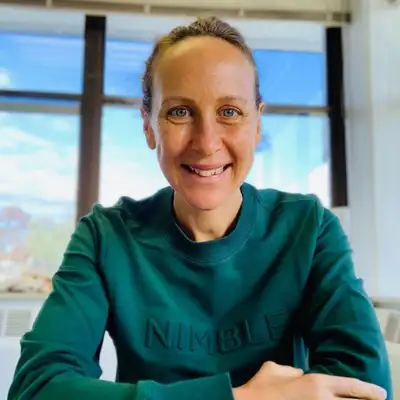
Carbs, Fat Oxidation and Finding Your Fueling Sweet Spot with Prof. Paul Laursen
00:00
Hey everybody, it's Mikki here. You're listening to Mikkipedia and this week on the podcast, I speak with returning guest and my good friend, Paul Laursen about the science of training, nutrition, and what it really means to take a personalized approach to athletic performance. So in this podcast, Paul and I explore metabolic flexibility, fat oxidation,
00:26
carbohydrate availability and how the way an athlete fuels can influence both training adaptations and performance. We discuss why there is really one nutritional strategy that works for everyone and why individual experimentation alongside good physiological principles remain so important. The conversation also covers pre-training nutrition and insulin responses.
00:49
carbohydrate loading, low carbohydrate versus high carbohydrate approaches, and how training load should influence fueling decisions. Paul shares his perspective on the growing use of continuous glucose monitors and other personal data, including where these tools can provide useful insight and where the numbers may be easy to overinterpret. And we also touch on nutrition for youth athletes, the physiological changes that occur through puberty and why fueling strategies need to evolve with both the athlete and demands of the sport.
01:19
This is, as always, a wide-ranging discussion that brings together physiology, practical nutrition, and the importance of looking beyond blanket recommendations to understand what works best for the individual. So, if you've been listening to Micropedia for any length of time, you will know that Dr. Paul Lawson has been on the show several times, and I have linked those appearances in the show notes as well. He is a world-renowned sports scientist, endurance coach, and co-founder
01:48
of both Athletica AI, which is an innovative platform leveraging artificial intelligence to optimize endurance training and also HIT Science. With a PhD in exercise physiology and years of research experience, Dr. Lawson has published extensively on topics including high-intensity interval training, endurance performance, and sports nutrition. His work bridges the gap between cutting-edge science and practical application for athletes at all levels.
02:18
So when he's not advancing endurance science, he's talking about it on his podcasts, the Athletes Compass and Training Science. And he's also often found testing his own limits in the field as an endurance athlete, embodying the principles he teaches. His unique blend of science expertise and real world experience continues to shape the way athletes from all around the world train, fuel and perform.
02:44
Alright guys, before we crack on into the interview though, I would like to remind you that the best way to support this podcast is to rate, review and subscribe on your favourite podcast listening platform. So give me 5 stars, why not? My guests are amazing. And share the show with a friend as well. Because all of these things, which cost you nothing,
03:06
really lift the visibility of Micrpedia in amongst literally thousands of other podcasts out there. So more people get to hear from the guests that I have on the show like Dr. Paul Lawson. All right guys, enjoy the convo.
03:21
Prof Paul Lawson, was thinking about actually this morning when I was swimming, I was thinking about the good old days when we were all together on the Fitter podcast. Yeah. and the Blues had a segment and Bevan and I would riff and I reckon they were like, that's when Fitter was at its absolute peak. No offence Bevan. Cause all of us were there. and, but look, here we are. We've all got out. We've all sort of like, you know, that was such a great start.
03:50
at least for me. And hopefully it allowed. That was our start, the Plues and Prof and the little segment that we had on there. was so fun, right? Yeah, it was so good. that was back when it was pretty easy to get quite good listenership because there weren't that many podcasts out there. Totally. No one was doing it, right? No one was doing it, no. And nowadays it's like every single person you ever meet has a podcast. Totally. And with that in mind,
04:20
Your training science podcast is so good, Paul. I just love it. And this week, we are talking about carbohydrate. And in fact, I talked to the Plues on Monday about his paper. This will be quite a different discussion, I think. And then just on my runs this week, I was listening to both your conversation with Jeff Rothschild and of course, with Tim and Phil.
04:49
Tim Noakes, Phil Maffetone for listeners. And I'm going to link these podcasts in the show notes. And I discovered that you had never met Phil in person before. Nope, no, no. We have an online relationship only, right? Wow, that blows my mind because you've been working with him for like, what, a decade now? It's got to be over a decade. Yeah, absolutely. I I started working with him in New Zealand, actually.
05:19
We, so with Steven Seiler and Plews, we published a study, it was related to fat oxidation and it kind of convention, it challenged conventional thinking about high intensity exercise and how much fat you burn because basically it was a group of well-trained runners and recreationally trained runners. And maybe no surprise now, but the well-trained runners, the
05:47
the big distinction when they did their interval training was that they were burning a bunch of fat compared to the recreationally trained runners. Of course, the well-trained runners are training 10 times a week, two a days, et cetera, and the recreational trained runners are training three times a week. I guess at that stage of the game, was 2014, 2015, there was really just kind of the
06:16
the conviction that if high intensity exercise was all about carbohydrates, which it still is a little bit today, but that's not what the data showed. The data showed that the thing that separated the elite from the recreationally trained was the amount of fat they could burn at high exercise intensities. So, published that work and Phil caught wind of it and he emailed me.
06:42
The crazy thing is that Phil was my hero all through life, Because he trained Mark Allen and he's written a bunch of books and stuff. Then he's emailing me out of the blue about this, which was really, really cool. He says, I've been trying to prove this all my life and you guys just did. So yeah, and it went from there. Then he actually went on to helping a bunch of New Zealand female athletes that I worked with in the triathlon program. A lot of people don't know that, he helped them.
07:12
get out of that, the whole fit but unhealthy athlete concept. The fact that you can be fit, you can have a huge VO2 max, but you can still, underlying it all, you could still be actually quite unhealthy. You've got basically a disfigured HPA axis. The only thing that really corrects that is a tightening up of your diet.
07:41
the background diet and back to where you began with the Phil and Tim podcast. That was really one of the concrete things that was said in that podcast, I remember, is just around the importance of the foundation diet. Of course, I know you're all about that, Mickey, with what it is that you do. You get that, right? A lot of these little debates and stuff that we have are...
08:08
They're just small little nuances and stuff. If you can have a real solid foundation of a real whole food quality diet, hitting all the macronutrients, man, you're off to the races, I reckon. Yeah, it was interesting that you sort of say, you know, these other little sort of tips that people have really isn't, that's not, that shouldn't be the big noise out there. But I mean, it's like your...
08:34
arguing sort of fundamental politics or religion really when you're on something like X. maybe it's just my feed, it just like comes up all the time, like these huge debates over whether or not the, what difference carbohydrate makes in terms of performance. Paul, before I kick off into some questions around that, I'm curious, like I often hear that fat oxidation is more,
09:02
is largely determined by that background diet that you discuss. However, you've just said, know, elites who are doing a lot of training, that actually their absolute fat oxidation is way higher by virtue of the training load that they've got. Does everyone agree with that? No, I don't think everyone does. that's, mean, Jeff Rothschild podcast, you mentioned, he
09:28
he definitely, he alluded to that, right? And he gave a couple of examples where, you know, just these beasts, these engines of these super well-trained individuals who can basically be doing their first ventilatory threshold can be close to 300 watts, right? And you can only do that if you've really can, you know, if you're metabolically flexible and that includes a real high level of fat oxidation. And of course, so when we look
09:58
to fundamentals of training itself. When you actually push, when your muscle fibers contract, there are, and this is another thing we talked about with the Jeff Rothschild podcast, we talked about some real important signals, AMPK, calcium, chelmodulin, kinase. These are signals that you're inducing from a physiological standpoint in your muscle fibers. And it's telling those muscle fibers, you know what, we're making more mitochondria.
10:27
And with all that, we're going to be making, we're going to be burning a lot of fat. So whatever it kind of takes to push through these strong sessions, these sessions in a quality manner, that's what you need to do. And then that kind of comes down to an individual principle, but always making sure, in my opinion, that the bulk of that input is whole food sources. And I think there's just like,
10:57
And then there's nuance after that, down to individual preference, what you can afford to eat. But you want to be low on the processed and low on the sugar in general. And then the actual macronutrient breakdown is probably not the big thing. It's the micronutrient breakdown that's probably a lot more important. And that's what you get with a whole food diet.
11:26
I absolutely agree. And it's interesting with that training thing, like I guess, you know, I often think about how these arguments are out there and it's really, I don't know, maybe, I mean, of course it's important for the elite of the elite, or those people who are at the top of the game. But of course, most of the people I speak with, they are age group athletes, you know, just like me, who do not do all of that training to help.
11:52
of induce this metabolically flexible state and therefore probably a lot more of that work is going to come from that background diet because you're just not grazing the groove nearly so much. 100 % that's exactly it. So I've had great chats about with with plues about this right we're off doing our Y-Tax ride or whatever and it's you know that was kind of the key observation that we made when we were working with a bunch of elites.
12:20
And it's almost like when you've got that elite or even sort of the well-trained individual, you've got a choice to make. If you want to do an extra five hours a week in your training and you just want to eat crap, you want to eat maccas all the time, no problem, then that's your choice. But you could also sharpen up your diet and probably have that five hours back to your life for recovery or whatever it is that you want to do.
12:50
And you're probably, we guess that you're probably gonna get to the same sort of point depending on which way you wanna do that. So yeah, you make that real choice there. Now let's back up even further and let's go down the scale to the eight to 10 hour a week athlete, or you can even go lower than that, whatever it is that you the listener are, and you're likely not 20 plus, maybe you are, but that's...
13:18
in terms of your training hours a week. But yeah, the lower you kind go down, the more that even matters even more because probably comes down to, there's a bunch of factors, but one of the hallmark ones is of course the hormone insulin, which is triggered with both stress and with carbohydrate quantities or dosages of glucose. They're all of a sudden going to get a spike in glucose. And of course you can get that from stress. Remember cortisol is a glucose
13:47
corticoid. Notice that glucose is in the family name there. It surges your glucose level. If glucose is surging in your bloodstream, insulin has to be present as well. Insulin is high, then it's telling your body that we are in the process of anabolism to build, and it blunts your fat oxidation. You can't access all of the stored fat that's within your body as well. You are
14:17
you're becoming more carbohydrate reliant and you're lowering what's called that metabolic flexibility. back to your key question there, Mickey, if you are on the low end of your weekly training hours, you really want to be focusing on whole food sources and maybe probably with a balanced blend there and being cautious on your carbohydrate quantity.
14:47
Absolutely. you know, as you talk about insulin, I'm reminded of a couple of points in both interviews when you were discussing sort of both pre-training nutrition, and of course, this is where a lot of Jeff's work sort of was involved. But of course, both Tim and Phil have looked at this data and worked with a number of people, you know, over the decades of their experiences. so I'm just
15:16
I'm curious, Paul, I guess, what are the biggest take homes for people with regards to that? Because you've just said insulin blunts fat oxidation. But what does that practically mean in terms of what should I have pre-training? And obviously, Geoff did a great job of distilling that in the podcast, but I'd love to get your summary. And then what is the importance of insulin during training, and how does that impact on what
15:46
should be having during. Sure. I think the crux of Jeff's, and again, this is in one of his many excellent studies, was that the take-home messages was that if you want to, one of the things that's going to blunt your fat oxidation during, if that matters, is if you take carbohydrate beforehand.
16:11
So that's, and that makes perfect sense, right? For the exact same reason for what I just mentioned, take a bunch of carbohydrate just before your glucose has to go up, then your insulin has to go up. So then that controls the fat oxidation, it lowers it and you have to be more reliant on carbohydrate. He also used protein in the pre-exercise meal and it had no effect, which it...
16:38
really shouldn't because it doesn't cause for a spike in glucose. If you have protein, which gets broken down into amino acids nice and slowly, so it's like a slow release. Through gluconeogenesis, it still will be providing carbohydrates, but again, that caused for a rise in your fat oxidation. That's just good information to have. One of the other nuances that we want to
17:06
be mindful of is we need energy, right? And we've talked about, you've come on our podcast before, Mickey, and you've talked about Red S and the importance of energy, the system, the body needs energy. we, and this is, you want to sometimes have something in your, to, especially if you're working hard a lot, if you're always burning a lot of calories.
17:35
we can have the situation where we want to make sure that we have enough fuel on board and we don't get that to that low energy availability, like overall energy, right? All the macronutrients can be potentially low. That also can cause for the same problem, the unhealthy athlete situation, right? Where the athlete is, has an HPA axis dysregulation because their body's in stress because it's not being fed.
18:04
And that's, so you want to make sure that we have that energy on board. So it could be the situation where you do want to have something beforehand. Then there's, as Jeff was saying, there's a lot of different preferences that are out there. So myself personally, I love training fasted. Sometimes I need something, but often if it's early enough in the morning, my preference is to do the fasted riding. I just, cause I just don't like as much in my stomach.
18:34
If I get a upset and whatnot or feel like something's in there, and that's perfectly fine. You can do that. A lot of people do. lot of riders do that. Some of his data shows that I think over 50 % of the athletes surveyed were actually like do fasted training, running and cycling. Think of the running context too, right? You wake up in the morning.
18:56
You don't always want, you know, we're gonna have jostling of the visceral lining in the stomach. And that's naturally gonna cause for potentially a bowel movement during your run, which you may not want to encounter. Whereas if you have nothing in your stomach, that can be a better situation for certain people. I'm going all over the place, Mickey, and that's I love it. Probably because there is so much nuance and so much individualness. And I always fall back to the,
19:25
take home messages is I don't think there's necessarily a right or a wrong way to do all this. I think it's important to know all the power of all the tools that are out there for you to use and for you to select the ones that make a lot of sense for you to use. No, I love that Paul. like you mentioned before, I asked you that question about how cortisol was a corticoglucoid
19:55
Oh, have I said that? I have said that one. Just when you said it backwards, threw it back. It's a glucocorticoid. Oh, I did. Glucocorticoid, yeah. A hormone. So the whole idea of fasted training can increase stress hormones, which actually can play into the suppression of fat oxidation as well. Because if it's going to, if you're doing a ton of fasted training and it's causing this additional stress that can't be resolved, then
20:25
that's the other pathway towards insulin resistance or more elevated insulin as well. Which to your point, having something, having calories like protein and fat calories pre-training will help offset that and get that body out of that sort of stress state. Absolutely, for sure. Again, contacts, I don't think every situation is like that. think that, so if your body is in the...
20:52
situation where like imagine you have you've had a big feed, big dinner, know, whatever it is that you loved eating. love personally, I love just a huge, huge steak dinner with lots of lots of edge all around it. And, you know, I go I go to sleep after that that big meal. And that that, you know, that is that's becoming part of me and anabolism is going on while I sleep. And I wake up and I probably have a good decent level after 12 hours.
21:21
since I've eaten of just energy and metabolism going on, including ketones and fat oxidation. energy is, because insulin is low and then fat oxidation is high, I'm in an environment where there's not a red ass sort of problem, at least that I'm aware of. I feel happy. Like I've got a happy HPA axis and I can just sit.
21:50
This is what I've learned myself and I can sit out there and ride three hours on the mountain and up a hill with pretty, you know, 200 plus watts. And that's no problem for me. I get home, I'm hungry as, believe me, and then I eat the house, I eat the fridge. And then I might have a nap potentially as well, but that's my context. There can also be the context where, you know,
22:20
you're not as big an eater, whatever. You eat a little bit more frequently and then maybe not as much in these large quantities. And you may need in the morning to top up your stores so that overall energy is, you feel good, right? We don't want that low energy feeling and status. And in that context, you definitely might want to have
22:47
Whatever it is, your yogurt and bananas and almonds or whatever it is that you love to kind of have that sits well with you and before you go out. Everyone's an individual. Like I would not want that in my stomach while I'm moving, but that's, I've learned that and that's me. Others would not want what I did, right? They might want to go, not want to go near a stake or do what I do. So there's just so there's, and there's no one way to sort of do it.
23:15
I think there's some fundamentals around making sure that you're not in that low energy availability, but then also being careful around just knowledge of what processed and sugar can do. If you're getting your nutrients that way, you just want to be cautious because you're not getting a solid micro dose or micronutrient dose within that.
23:43
amount of food and you're probably triggering some insulin, which you may or may not want at that time. There's a time and place for insulin, spiking all during the day, I think it's pretty well established. That's not a good thing. Yeah. I agree with you and tangent, but something really grinds my gears is when quite high profile dietitians, not Kiwi based, like international, they're big on social media, absolutely against
24:13
just general people using continuous glucose monitors. Maybe we've discussed this before in terms of them understanding how food affects them. it's so interesting to me, Paul, that there's this, it's almost like gatekeeping that knowledge. Like if you've got someone high profile saying normal people, well, normal healthy people who don't have type two diabetes should not be using continuous glucose monitor.
24:41
is almost like slamming down the lid on this possibility of someone actually understanding a lot of how the processed food or just the diet in general is actually impacting their blood sugar and their energy on a day-to-day basis. It's crazy to me just the pushback that's out there on that kind of thing. Interesting. I wasn't aware of that and that makes no sense to me. I've got an extra neighbor, Liz, right there pointing and...
25:10
Stefan, he's just, it was one of the best purchases he ever made. Just because for himself, like just the learning that he was able to grasp around different foods that affected him. And like, he'll never eat a Dairy Queen Blizzard again, he says. He went out with his daughter and they were having a celebration. Great, all that sort of thing. But he couldn't believe like the wallop of...
25:36
of the spike in glucose that he got. It was just absolutely off the chart and the alarm was beeping on his thing. It was a good example and he wouldn't have known without that. He would have had no idea, right? And then there was all the various different tweaks that he was able to do around his diet. He understood the principles. He understood that he doesn't want to be spiking his glucose all day long because that means insulin is going to be sort of
26:05
up there all day long as well. And in his context where he's a middle-aged runner that also is thinking about health and longevity and wellness, it's his choice that he wants to learn how he can be better. he deserves every single right to be able to have access to that individual knowledge.
26:33
And again, the classic study I always love when I think of continuous glucose monitors is the one where they just showed the two spikes of glucose. They were just testing out these sorts of things, and they were getting different food substances to test with and looking at the glucose spike. And they're given a cookie, and then they're given a banana. One gets the huge spike with a cookie.
27:02
the next one gets nothing. Then that same person gets the huge spike with the banana, but nothing with the cookie. So it just shows how it is so individual. Like if there's one thing that I just keep saying, right? Like it's your response to food. There's some, definitely some guidelines that are all within everything you do, Mickey, but no doubt about it also is that there's something that's very individual about the
27:29
the food that you will, or how you'll respond to the food that you consume. Yeah, no, I agree. you know, and obviously, as you just talked about with stress, it's not just food that impacts your blood sugar. It's, know, stress and sleep deprivation and things like this. This is why I think it, like, personally, it's quite a good exercise potentially for someone to do every couple of years, because you can establish a bit of a baseline.
27:55
things change, right? It really is just a snapshot of what's happening in your body at that time. So if someone was to do it, if I were to do it this year as opposed to the last time I did it might've been maybe three or four years ago, I wouldn't be surprised to see shifts. And also of course, my baseline diet has changed, just by virtue of just this evolution of habits, I suppose. just to ensure that I suppose what
28:24
what you're doing now is still in line with how you want your markets and stuff to look. Yeah. So let's talk about that. Let's talk about how our, if you don't mind, let's talk about how our diets have changed. You tell me yours and I'll tell you mine. what's your last three years or whatever. What have you kind of tinkered with and learned yourself? I think fundamentally I've always been quite low carb and in my
28:51
I say always, mean, maybe from probably my late 20s, but it wasn't labeled low carb because actually I was just restrictive across the board. So when you're restrictive across the board, it limits your opportunity to get any sort of nutrients in, right? So by default, I was going to be low carb. It's also going to be quite low fat. And my protein was pretty low too, you know? Oh geez. Yeah. And you can do it. You can do it, quote unquote.
29:21
and ignore the repercussions for quite some years. that was my diet up until 2015. At that point, I just felt a bit burnt out, Paul. I just thought, know, really got, because my hormones had just flatlined and had in fact been like that since I was 20, partly because I went on
29:48
And I don't know that I've shared this on a podcast before, but I went on the mini pill. I mean, as everyone did, you know, lot of women at 20 do. and then that both my sister and I had a similar experience where we just didn't get a monthly bleed on the mini pill. And then when I came off at 27, and I think that that probably just masked a lot of my underlying dietary habits because I had an explanation for that. Uh, and then I came off and then I just.
30:15
it didn't return. So I had that sort 10 year period of no cycle. And I've had a couple of times during that time where I wasn't able to run because of injury and I'd subsequently gained like weight, you know, five or six kilos and was also not very active. was sort of providing my body with that environment that should have allowed for my cycle to return, you know, like the energy availability on paper was there.
30:45
but my brain wasn't in there. I don't know, something about my HPA axis was still dysregulated despite the calories. then in 2016, I felt burnt out at Auckland, thought I wanted to move back to Dunedin, so kicked it back down south. And then- I remember. Yeah, you do, I know. And in fact, I had a couple of conversations with Phil.
31:13
Maffetone at the time, you were very good. You put me in contact with him, which was amazing. And he was so generous with his time. One thing I remember him saying is, have half a glass of wine an evening to help with that, like HPA access. And I'm like, I like this man. Yeah, that's great. Yeah. And so I ended up gaining about 12 kilos that year and did not run. again, for nine months, I put my body into this
31:43
uh, this energy availability state and, but still nothing happened actually. Okay. Yeah. Nothing happened. I was waiting for the happy ending. We're not there yet. We are not there yet. And in fact, what did happen is I was so depressed, Paul. Oh my God. was beyond, it was, it was horrible because my identity is, is, I mean, I'm much more than running, but activity is such a big part of who I am. Like I like,
32:12
It's how I live my life. It's the lens I see everything. And I wasn't able to participate to that extent. in fact, given a time over, I would definitely do it differently now, because I think I know more now. And I've got friends who are very well versed in sort of reversing that amenorrhea. However, then at that time, I was like, well, Dunedin's not for me.
32:41
Um, what was I thinking? Um, moved that moved back to Auckland had kept my house, thankfully. Um, didn't sell it. And one of my friends said, well, have you tried HRT? And I'm like, well, no, I have not. And so I got on HRT and, then subsequently I lost weight. Um, because of course I knew how to lose weight because I didn't, know, the restriction is, you know, second nature got back into running.
33:09
And I would say, this is very long story and I'm not sure whether you were thinking that you No, this is amazing. I love it. And so I would say probably over the last maybe five years, I've just been so much more interested in metabolism and so much more interested in hormones and so much more interested in feeling that my calories
33:38
have gotten me to a point where I have a consistent cycle now. And it's not HRT driven. It's like energy availability driven. My carbon take is a lot more. It's a higher than what it was. And what really helped me pull in this process was tracking calories because I needed evidence that I needed fuel and that I could eat. And even five years ago, I needed that. And I think it was just to help.
34:07
push back against my restrictive tendencies, which is actually just something which will probably always be a work on for me. It's just who I am. so the tracking for me, like I don't really do it now, like it's such a lot of work, but it was so helpful for me to really appreciate that I could eat a lot more than I thought I could and not.
34:36
it wouldn't like blow out into like a, you know, five kilo weight gain. this may sound odd to anyone listening going, well, she's a registered nutritionist, surely she would know this. But my nutrition coaching had never been around calories and it still isn't actually. And I don't think it's actually necessary for what the majority of population need. We don't have to track every single calorie. think it's interesting. I think you learn a lot, but I don't for the whole, like people.
35:05
don't really have time to do that kind of thing anyway. So subsequently, my diet now is a lot more driven around protein and also carbohydrates, still low by conventional standards, still probably anywhere from 150 to maybe like 250, 280, 300 on a large training day.
35:31
And I've always preferred to eat lower fat, actually. Like it's just the way that I eat. And I enjoy fat on some things like meat and stuff like that, but I happily forgo fat and dairy. Like it's no big deal to me. And then calorie wise, I probably sit at around 1900 to probably, I don't know, 28 to...
35:55
like 2800 on a big run day and then, but a super long day like my multi dates that I mean, I mean, you don't really count calories on that, you're taking in a lot of fuel before and after. So that's probably where I am. Yeah, no, that's nice. I mean, you have you've been all over the map in terms of all the different you've tested all corners of the globe in terms of the nutrition spectrum, right?
36:20
High, restrictive, not, and then tracking all along the way. And we mentioned continuous glucose monitors as one tool in the toolbox. Well, some of the nutrition apps are another tool in the toolbox for you. yeah. And do you know Julia Cassadio? Yes.
36:44
Yeah, so she's, she was my PhD student, a master's student and PhD student and worked under me at High Performance Sport New Zealand. She developed a program called Her Strength. And, you know, I think that's probably some information you would have really enjoyed having as a young person, because she's really all about that. Trying to, to, you know, educate young coaches
37:13
coaches of young women, sort of really, she really started targeting that teen, that 12 to 18, you know, age bracket. And she literally just came, just left Revelstoke here, where I live now. And she gave a large presentation to the community in the Performing Arts Center, well attended. And it was fantastic. And...
37:39
She just, you she talked about the importance of that energy availability in, for that young, young person cohort, because that's, believe where a lot of, there's a lot of changes that are going on in the female, you know, cycle and puberty, et cetera, right? Like huge changes that are going on with, with that. And, you know, you know, there's more fat that's being put on the body.
38:08
because for reproduction, everything that's supposed to happen happens, but it doesn't mean a woman is happy about that, But it's important to kind of appreciate those changes and know that the last thing you should do is start restricting that diet because of the dysfunction that it can have in the HPE axis and the gonadal axis that accompanies it that you've, you
38:37
So yeah, and then it was just with coaches, parents, and teens in the audience, she was just giving these great practical takeaways that we can all use, right? And one of them was, she, forget where she learned it from, but it was PFC. It's like when you're going to, when your PFC was protein, fats, carbohydrates, when you're going for a snack or your meal,
39:05
Do you have PFC? Do you have all the macronutrients covered? it was great. It was kind of simple, but it was something that they all got. so great presentation. And then later on, was pretty cool because my daughter, Kaya, was in the audience with her friends. And then it just happens a couple of days later, they're all over and they're making snack in the kitchen.
39:32
And I'm just, I'm racing through from one meeting to the next or whatever. And they're like, Paul, stop, look, PFC, PFC, right? And there was, but it was so cool because they all got it, right? And these are, these these teens, kind of, they got it. And they're not falling into that trap that of the restricted eating that we don't want our kids and our teens and our late twenties to go down because we know now the importance of.
39:59
of that energy availability and gaining that, right? So pretty cool. I 100 % and I feel very lucky to sort of be where I'm at now and have the understand and the personal experience and it helps me when I'm speaking to young women. I don't see that many sort of one-on-one clients anymore, but I get a lot of people who do book in who are similar to how I was.
40:28
in their 19s, 20s, sort of university age athlete wanting to sort of just make sure they've got things dialed in. And I can spot it a mile away, like the mindset mentality. And this is actually, where I feel like social media can be really helpful because there are so many amazing role models out there that you can sort of tap, like if you're in social media, then you can sort of tap into them as, because sometimes it just, it's that evidence. Evidence builds confidence. And if you can't,
40:57
yourself, if you're at that sort of beginning stage of your journey, you need to sort of build that evidence bank personally, but actually seeing it play out in other people gives you that sort of confidence to do it as well. And I feel like this is, so I'm often recommending that these people sort of tap into like their social media connections for the right type of role models and listen to podcasts with
41:25
you know, the right sort of messaging and just to help drown out the other sort of like quite loud voices that they may be hearing, which sort of puts them down that restrictive path. Totally. Yeah, yeah. It's maybe, you know, it's not known for every person out there, right? And it's like, how do you find those that you need to follow and that you should trust, right?
41:54
But yeah, I know it's very powerful. again, back to Kaya, she's a top swimmer, but she follows other top swimmers. there's some out there that are very open to sharing their exercise routines, right? And we've stolen a few gym exercises from some of the top world-class swimmers. And it's really great. it's not all bad, the social media. And certainly if it's...
42:21
it can be used for a real power. Again, another real tool. Careful of the other side too, right? Because there's, there's textures out there too. Yeah, absolutely. Now, what about you, Paul? Where are you at with your dietary approach? A little bit of history. I think it's similar. I do still appreciate, like my history is I sabotaged a little bit my HPA axis and my insulin
42:51
pathways by having too much sugar in my in my trathlon days just is it's when I look at what I did it was it was awful it disgusts me but it it was we didn't know better and The experts were telling us that's you know, you couldn't get enough carbohydrate ultimately and but too much sugar too much coca-cola was just basically basically caused me to be
43:21
a little bit like pre-diabetic, high blood pressure, starting to gain too much weight around my mid-drift. so what I've found is that the lower carbohydrate works better for me. And when I add more in, I can certainly add a little bit more carbohydrate back now after many years being low carb, but I still get a little nervous and twitchy when I have too much. Like I'm almost a little sensitive to it.
43:50
So, which to me tells me that, you know, I've recovered a little bit of my pre-diabetes and my insulin sensitivity for sure, but it's not fully back. I would say I'm almost similar to you, Mickey, where I have a big day out on the bike and I'll definitely increase my carbohydrate uptake, like more potatoes and whatnot with dinner and whatnot. But on a low exercise day where I don't have as much, then I'll keep it a little bit lower.
44:20
So I kind of drift, think probably between the 150 to 250, 300, I guess, on a big massive day out. yeah, but I've learned that kind of like you have, yeah, like a lot of listening too, right? I've talked about this on many podcasts where it's just like the art, the importance ultimately of
44:48
figuring out what your body needs and listening to its needs. I have a girl that I coach, a young 16 year old phenom runner. You'd love to meet her, And I might need to introduce you one time. But anyways, she's the big thing that we've worked on in her daily.
45:13
training process and this is what she's passionate about is listening, listening to the body and what she needs. And she did such a good job. This is like we're two weeks post a big ultra event in Tahoe that she killed. the reason why she killed it is because she caught herself. She caught herself pushing too far on one, not pushing too far, just.
45:40
basically we were at a high training load and she listened well enough to know that something was a little bit off, that there was a little bit of a niggle and she pulled back on the training. And for us type A individuals, Mickey and I know you're, you know what I'm talking, right? It's like you want to keep doing more and you always think more is better. And she, she caught it. And of course this is
46:05
This is after two years of not catching it right. So it's like, this is not an overnight, it's not an overnight success. There's been lesson after lesson after painful lesson that we've gone through. And also coupled with a, you know, she's attached to a strength and conditioning facility and she did a counter movement jump where that also was down. But it was like the full picture, her comments, her herself and the counter movement jump going 30 % down.
46:32
All of these things caught it in time and she was able to not do any more damage, just tick over and then she performed exceptionally and she was a top place finisher in this big ultra event, is cool. That is amazing and to learn those lessons young and to embed those signals and listen to that now, really set someone up for so much more success.
47:02
later on. These are lessons that we might learn in our late 30s, early 40s, which is great, but imagine knowing that at 16, 17. That's crazy. Yeah, totally. But it's the same thing. So that lesson was in the training load and how much she can handle, but it still applies also to the nutrition too. We're all participators in the process of diet nutrition.
47:31
It's really, I think there's something there also in listening and knowing what is sitting well with you and what feels right and being willing to tinker with different approaches. And then all of us are N of one experiments. So run your own experiment and really listen to how you are responding to the choices that you're being made, that you're making.
47:59
be willing to tweak and change those again. And we've talked a lot on the podcast about tools that you can use also to be that end of one experiment and quantify some of these happenings and whatnot that are in your body. That can also help you with your own end of one experiment. Yeah, absolutely. And then with regards to that in fueling, and I think I mentioned to you before we hit record that
48:26
I'd done a couple of multi-day stage races last year. We've got one, which were amazing. And in fact, this is to bring it back to the carbohydrate load and the difference between muscle glycogen and its usefulness during training and racing versus your much more sort of immediate stores. And think Marco Altini sort of talks about this too. And I love his very detailed blogs on his own journey with metabolic flexibility.
48:53
spoken to him about it, like he's amazing. I think that in, and this is not just I think, but also from my experience, I'm like, I need to up my game. And I've started to up my game in terms of fueling during training to help support that recovery for the next day that I go out. And this is an unusual practice for me because I know that I can run.
49:20
two, three hours, no big deal, no fuel on board. But that actually, my body can do that. And it's, might slow down there at the end of it, no issue, but I definitely notice a difference the next day. And I've never, before doing these sort of longer events, I've not necessarily done a huge amount of back to back to back training where you get a lot of those sort of hikes and runs and stuff under your belt.
49:49
It's certainly not at the 120 to 150 grams. I mean, I could not imagine doing that, but it's like 40 grams of carbs an hour. Actually, Paul, even with this year just being a bit of a shit show and then getting back to running, I feel like my fitness and my resiliency actually feels a bit lower during my longer runs too. I benefit from having some carbs.
50:18
at the start of a run, I'll have some protein before I go out. I've got a little premix thing that I have in protein, amino acids, collagen. It's an easy way for me to get some things in. So I've got some fuel on board, but it's sort of near the back of that two hour effort. I actually, I feel way better the next day when I'm putting in some carb, which is unusual for me because you should be able to go two hours without fueling. And I'm sure I could, but...
50:46
for whatever reason right now, just feels like I'm benefiting from doing that. Good. Well, again, if you feel like we've been talking about that, right? If you feel better by doing that, then you're doing the right thing. That's what your body needs. yeah, mean, that's another, you know, I love the work that Phil Mastone or sorry, Phil Prinze and Tim Noakes, Andrew Kutnick have done around the
51:14
the 10 grams an hour just sort of showing, like they're proving a concept around what's called the small glucose pool, your liver and your bloodstream ultimately. That's the key foundational area that needs to be protected in terms of its blood glucose content so that your brain's happy and that you move forward. But there certainly may be...
51:40
and they downplay the importance of muscle glycogen. They say that that's, you know, and that's, called that the large pool. And I think the jury is still out. There's a foundational paper that they published in Endocrine Reviews, award-winning. And, you know, I think there's still probably more work that's coming on that, but there's, they even admit too that higher doses, even these, you know,
52:07
120 plus grams an hour that are being reported, there may be physiological mechanism by which these are enhancing performance. It doesn't seem to be metabolic. In other words, it doesn't seem that the muscle itself is taking up and burning more carbohydrate that would elicit an added energy output. It shifts the fuel that's used.
52:36
That's all it sort of does. It actually burns more carbohydrate. In the past, we thought that more carbohydrate would spare more glycogen. And there's a nuance there. It's a bit of a wash ultimately. I think Plew's published a paper with some other colleagues on that concept. And there's a lot of studies that have shown a higher doses of carbs means
53:04
higher, higher, more burning of, of, of muscle glycogen, not necessarily sparing it. Jury's soloed on that. So, but again, back to you, Mickey, and on 40 grams, you're feeling good. Awesome, girl. Go and test higher as well. Maybe, maybe even go, you know. So when I was doing Ironman in the days of Plu Sub 10, I would do 50 grams an hour. So, and that was, so I mean, I was even higher than you. And that was my sort of sweet spot.
53:34
Um, and, and that was, yeah, I certainly, you know, I wasn't, I wasn't doing coconut oil on the, for, Taupo, right? I was on all the bad stuff, just, just like everyone else, right? The gels and, uh, you know, I was doing some, can during, during the bike, little like superstarts and slow release, but you know, you throw the, throw the Coke and the, and the gels at everything. Cause it's racing and it's.
54:00
It's performance at the end of the day. And maybe your gut doesn't feel great necessarily at the end of 10 hours of doing that, but who cares? It's one day in your life and you'll go back to basics after that's all said and done. Yeah. And I guess this is a thing, right? A lot of the studies, I mean, by virtue of the fact that there's studies and it would be nigh impossible to do research on the 10 hour effort.
54:27
the multi-day stage race, getting muscle biopsies at the end of every day for the athlete that's then going out and doing another 50 to 80 kilometers. The studies are about three to four hours long. That is a long time. That in of itself is an amazing feat from a science perspective to actually execute that. But that doesn't necessarily tell us
54:57
what's happening for 10 hours or what's happening over multiple days. And interesting, Paul, you know the Kokedona 250, have you heard of that race? No, I haven't. Tell me. It's a 250 mile run in Kokedona, which I can't recall where that is anymore. Somewhere in the States. It's a big running race, an ultra. Like I will never do an ultra where I can't actually sleep.
55:22
not like this one. And the overall winner was a woman and she won by an hour. I want to say Rachel Eketene, but I'm pretty sure I've got her name wrong. I did hear about that. That's cool. It is cool. And she did it on 60 grams of carbs an hour. Okay. And she worked with precision hydration very carefully across a year to dial in her nutrition, to dial in her hydration. And I personally love the pH
55:51
products. I think they're so palatable. That's what we used in our events. But yes, 60 grams of carbs an hour. And then Courtney DeWalter, and she probably, she may or may not have more, but she's always been very go-by-feel is how she of self-reported her nutrition approach. But there are, of course, people who do go like 90 to 100 grams of carbs an hour.
56:21
I mean, I don't think I've got the stomach necessarily for it. I don't think I could actually, and I could definitely train myself to have a little bit more, but I also don't necessarily think it's, I don't think it's necessary for me personally to push up to 80 to 90. Now, maybe I will. Like we've got another one coming up, as I said in February. So maybe I'll give it a bet. I've got nothing to lose other than my gut and all this content.
56:46
Yeah, I'd be careful. would be careful about doing that in competition. I would definitely practice it in training first, right? Oh, sure. Yeah, for sure. And something Pluse and I sort of talked about was the idea of, you know, training, like pushing higher in training to figure out what you can tolerate, but also recognizing that maybe on race day, you
57:11
you may only be able to get 70 % of what you've been training towards because of race day anxiety and stuff like that. So I think that's an interesting concept too, right? No, well, that's just, that's fact at the end of the day, right? So yeah. yeah, yeah, you prep as best you can for what you're going to, what you think you're going to do. And you're right. when the race actually happens.
57:38
it'll be where it'll be, right? And you'll be somewhere around the bullseye, hopefully, but it could be either side of it too. So yeah, great paper by the Plues. We're writing something similar right now, kind of an add-on to it with Nox's team. And we're leveraging out that fueled or fooled
58:03
was the title. It was an excellent title of the sports medicine piece. yeah, kudos to the Plues on that one. Yeah, no, was a really great read. Paul, I'm curious, and I'm looking at the time. I'm mindful of your time. we talk about the David Roches and the other cyclists who are almost like unicorns, who maybe this is the reason why they can take on board so much fuel without
58:29
acute immediate repercussions. mean, we don't know down the line, you 10 years time, but whatever, like these, you know, they're able to perform at that fueling level. And then of course, the counter argument is the likes of the Mark Allen's and the Jan van Berkel and the, you know, the, all the low carb is- And the blues, but I like, aren't these guys just unicorns too? You know, like, so, so when you've got people interested in low carb, seeing the super low carb
58:59
guys and they're like, well, I should be able to do it to the same extent that they can. There is just something about them as well that makes them maybe as equally as sort of outliers as the other high carbers. What do you reckon? Oh, I think that's been the focus of the podcast. Ultimately, Mickey is the individual in us. So you're right. And it's like you may be on either side of the spectrum or you might be somewhere in the middle, but it's up to you to figure out where.
59:27
where Optimal lies for you. And that's your challenge, listener. And yeah, I don't have anything more than that. I don't know the truth. And I'm not going to pretend I do. I'm just making observations just like everyone else is out there. I know what I like, because I've lived a few more years in this world. And at least I know what I like right now. But it's changing all the time.
59:53
And I loved your point about how that does indeed happen. And it should, when you just think of physiological fact that we turn all our cells over in our body about every six months from the food that we are consuming. So we are, like we're a new person every six months, relative to that turnover. So it just makes sense that you got to be on your game and keep listening to the body and keep experimenting and figuring out what is optimal for you.
01:00:23
Nice one, Paul. Well, this was, as always, such a great conversation. love having these chats with you. Mickey. I love it too. Thanks for calling me up. Oh, of course. So obviously, and I will put links to these in the show notes, there is the training science podcast in general. I'll also put a link to that. And of course, those two podcast interviews we were referring to. But then there's Athletica AI.
01:00:52
I think maybe a couple of times now. You've been on the Athlete Compass podcast with MJ and Paul with us. Yes, that's what I always associate that with Athletica AI, which is of course your training app and more than training app. It's like this whole ecosystem of learning and courses for athletes as well. Can you just give us a little...
01:01:17
In summary, brief about Atheca AI and then where people can find out more information on that particular loophole. Sure. Well, back to where we started the podcast, remember we talked about the Fitter podcast with you and Bevan. And that's where I basically, I flippantly said on a Pluse and Prof podcast, if there's any developers out there that want to come and build an AI coach with me, reach out.
01:01:43
and Stephen Brown in New Zealand was the one that did that. So it started right there and then, and he reached out. We've been building it since 2015, but ultimately it's an AI coach. It's sports science in an app and it creates an AI coach. It's built on the backbone of it is the textbook, Science and Application, High Intensity Enable Training.
01:02:09
And it just uses all the sports science principles in there to optimize your performance. The poster boy, if you go to athletica.ai, it's Luke Evans. he, unbeknownst to us, he actually won Ironman Canada using athletica. We had no idea. And so it's effective. there's actually, timely on that one too, there's this really cool slow Twitch article.
01:02:37
that just came out yesterday on Luke and his whole battle around, he talks about how he used Aflatica, but also the struggles that he's had with nutrition. just some funny stories about how he used to use maple sugar for the race and, or some maple syrup for his carbohydrate amount, which did not wind up well. And then he's gone, swung all the other way, all to low carb and finding out.
01:03:05
like how low he can kind of go. And then now he's kind of swung back to like what's working for him. But he's been all over the map and the article talks about that, is kind of cool. it's really, it's all the things we've been talking on the podcast about figuring out what works for you and going through that N01 experiment.
01:03:32
Anyways, yeah, Athletica is just an AI coach that can help you and your coach optimize your performance. We have both a coach version and an athlete version. Lots of tricks that are on there. If you've got a wearable, it's pretty useful. It's an AI version of TrainingPeaks if you use TrainingPeaks. That's what it is. Amazing. Thank you, Paul. I'll put a link to obviously all of your
01:03:56
information. But also I'll dig up that slow twitch article. It sounds like a super interesting read and I bet you people will be interested in checking that out. you might even want to interview Luke to hear. He's been on our podcast a couple of times. He's a laugh and he's just figuring out this battle himself and it's good. I love those, I will, those real world stories. Paul, thank you so much for your time. I really appreciate it. Pleasure, Mickey. Thanks for having me on. See ya.
01:04:40
Alrighty, hopefully you enjoyed that. I just love hanging out and chatting with Paul. He's just so sensible and grounded and such a brainiac in all things endurance sport related. I feel very privileged to have had that opportunity to have another chat with Paul. And as I said, I've got links as to where you can find him in the show notes. All right, guys, hope you enjoyed that one. Let me know. Catch me over on Instagram threads and X at Mickey Willard in.
01:05:10
Facebook at Micky Willard in nutrition or head to my website mickywillard.com and sign up for the recipe portal access for just 12 bucks a month you get access to over a thousand recipes and it's a constantly growing library that are there to suit your nutrition goals we've got low carb we've got higher carb we've got macro friendly we've got high protein we've got it all and that's over on mikkiwilliden.com recipe portal access
01:05:39
Right team, have the best week. See you later.