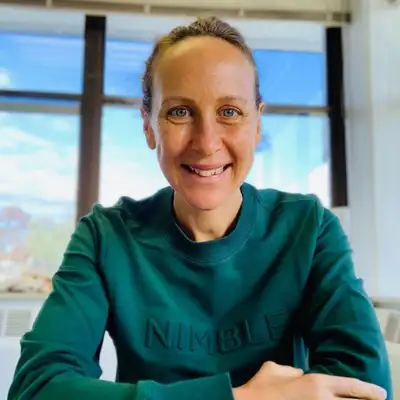
Why Fat Loss Gets Harder in Menopause with Dr. Bill Campbell
00:00
Hey everyone, it's Mikki here. You're listening to Mikkipedia and this week on the podcast, I speak to returning guest Dr. Bill Campbell, who is a leading body composition expert and researcher about weight loss resistance, hairy and postmenopausal weight gain and rapid fat loss. And this comes on the back of Bill's most recent exploration in this area, trying to solve a
00:30
puzzle that revealed itself with his wife's personal journey. we do get into a little bit of a detail there. If you've ever listened to Bill on a podcast for the last couple of years, you already know the story. And we also talk about possible solutions. And of course, his case series that has been published, looking at women who had gone on a rapid fat loss protocol and what four days of super low calories did for
00:59
their fat loss, their muscle retention and ability to keep that weight off. So this is a goodie. I really enjoyed this conversation with Bill. For those of you unfamiliar, Dr. Bill Campbell is a professor of exercise science and the director of the Performance and Physique Enhancement Lab at the University of South Florida. He has a PhD in exercise, nutrition and preventative health.
01:25
He's authored three books on sports nutrition and over 200 scientific abstracts and manuscripts focused on the topics of sports nutrition and exercise science and is previous president of the International Society of Sports Nutrition. Dr. Campbell also uses his education background to provide an informative channel on Instagram that busts myths on dieting and helps inform people on best practice tips.
01:53
to get the most out of whatever they're trying to achieve from a physique perspective. He's very informative over on Instagram, love his channel. And I have got links as to where you can find him on Instagram and also over at his website, BillCampbellPhD.com, which you can sign up to his research review, which comes out monthly. And it's just such an awesome resource. The way that he breaks down research is really next to none.
02:21
in our industry. if you've got any interest in body composition at all, this is for you. So before we crack on into the interview, I would like to remind you the best way to support this podcast is to hit the subscribe button on your favorite podcast listening platform. That increases the visibility of Micopedia and amongst literally thousands of other podcasts out there. So more people get to hear from the guests that I have on the show, like Bill Campbell, and also share it with a mate.
02:50
and leave a review if you feel so inclined. I'm all about that five star review. That would be amazing. All right guys, enjoy the conversation.
03:03
get sick of listening to you, Bill, because you've got something to say that is quite different, I think, from what a lot of other people are out there saying when it comes to fat loss. And I feel like your line of research is validating a lot of women's experiences, but we just can't see it in the literature. So welcome. Thank you for taking the time to speak to me this afternoon, your afternoon. And I'd love to dive into that with you and
03:33
your new study on diet breaks as well. Yeah, yeah, I'd be happy to talk about all of that. And I appreciate you too. I know that you're in the trenches doing this in what I say the real world. So I have a lot of respect and appreciation for you as well. So thank you for everything that you do. Nice one, Bill. And it is interesting, isn't it? Because a lot of what people rely on is data. And of course, it has to be science. It has to be studies.
04:00
randomized clinical controlled trials are gold standard in our field. But isn't it that, you know, like we don't live in a randomized controlled trial. Like we can't control every single variable. And with that means that yes, we can prove a particular mechanism, but we can't actually, you can't, I just, I don't know that the more that I have, have been in the trenches working with people, the more obvious it is to me that it's informative, but I don't think it's always instructive.
04:30
I think that's very well said. We don't live in a controlled test tube environment. But randomized controlled trials are the closest thing we can get to uncovering truth. But even then, they are very specific questions. So I agree. Yeah. And Bill, you've talked many times about your
04:58
interest in weight loss resistance and how it of emerged from your wife's own experience going through perimenopause and menopause. I, and subsequently I've heard you discuss that you receive thousands of like comments or like notes from other women, just with your presence on social media, you have access to a lot of people's experiences. Um, what is it that your wife observed or you observed and what are other people?
05:27
telling you that they observe that it's not going as expected when it comes to fat loss right now? Yeah, so in my wife's case, and I would say we experienced this together, her personally, me personally, but also professionally, because I'm a fat loss researcher. I've been studying fat loss since I was a master's student, a graduate student over 20 years ago. So I experienced it through two lenses. Just real quick for anybody who doesn't know,
05:55
My wife in her mid 40s, like 46, 47-ish, was starting to go through menopause. She didn't know it. I didn't know it. We were very ignorant about all of this. So I always say we were reactive and I don't want that to be for anyone else. I'm hoping that the work that I do can help people be proactive going forward and for my daughters as well.
06:20
But my wife had a what I would what I call a very bad. I use the word train wreck experience When she went through menopause, she gained weight Not a lot of weight, but a lot of weight for her. She's not she's fairly small framed But and again since I'm a fat loss researcher, that's something she asked me. Hey, can you help with this? I'm like, yeah, of course. I've helped in the I've helped her in the past But that I want to make two points clear
06:49
One, that was not the worst of her condition. She had other more serious issues besides weight gain bothered her, energy levels, really high levels of anxiety, not feeling like herself, energy levels were just horrible.
07:09
And she tried to, I'm assuming a lot of women do this. Again, I don't know, but she didn't want to tell me or my daughters that she was really struggling. So I didn't know. mean, I knew something was different, but didn't know. The other point I wanted to make was just because my wife had a bad experience or a lot of the women that I do communicate with to learn, not every woman does. Some women go through menopause with no problems at all. So I don't want to create a doomsday scenario where it's going to be horrible.
07:38
For some women, is like nothing changed. So I would assume that would be everyone until you experience otherwise. So I'm not trying to build up this horrible experience because it's not true for every woman. Yeah. And what had previously worked for her with regards to say her body composition? Was it just that she would dial in her calories, pay a bit more attention to, I don't know,
08:07
training or something like that and things would generally be favorable or what sort of measures did she have to take actually? If you're okay sharing, like see the experience. I'm definitely okay sharing, but more importantly, my wife has allowed me or given me permission to share because for a while she didn't. We're very private with, I'm very open about my professional life, but I never talked about my children, never talked about.
08:37
my wife, I don't think people knew I was married until I started talking about this. Because she, she said, Hey, why don't you mention this just to, know, because maybe it'll help other people. And who, as you said, the amount of other responses that I, that I received. So, um, very specifically in the past, uh, very
09:02
typical thing would be, and here's how we would operate, and I'll even give you more information. I kind of handle everything health related in our lives. My wife handles everything financial, everything with school stuff, so my wife does everything essentially. I go to work and if she wants me to research a certain medication or something, I do that. So don't have a, my wife does everything. I'm very blessed with my wife handling all of that for me.
09:30
But when it came to her, like when she wanted to lose weight in the past and she was never overweight before, but there were times where, I want to lose five or 10 pounds. So I would just say, okay, here's your macro sheet. I would typically reduce her calories by 25 % because that's what my research shows is very effective. And she would always respond. Her training would stay the same. And just to give numbers, that would usually be about
09:58
13, 1400 calories for my wife to consume to lose weight. And it was very predictable. This time when she said, hey, can you help me? I'm like, sure. We'll just roll out the same thing that always worked. Didn't work. So I kept lowering the calories and we got down to 1200 and she thinks even 1100. I probably should try to find the sheets. Cause I would always give her the sheets and then every week I'd remind her, hey, fill them in so I can.
10:27
you know, track your averages. But I think she was down to at least 1200, if not 1100. She thinks she was down to 1100 and just wasn't getting any response. So that's what triggered me to say, this is weird. Like you've always responded before. But I also, cause I had been on social media for a few years at this point, there had been other women always middle-aged who would tell me things like, Hey,
10:57
your calories in, calories out, you it's not working for me. And I just didn't pay attention because I'm like, well, it works. So I never really paid attention. And let me also, I'm not here to say that, that, that when that the energy balance equation or calories that it doesn't work, I have some caveats that I, that I'm happy to explain. So I'm not saying, oh, that's garbage. No, find an example that's not anecdotal. Cause my story is all anecdotal. It's one person.
11:27
to be my wife. that's when I'm like, professionally, I'm like, okay, my wife's struggled with this. Now I see that I'm starting to hear other women saying this. it said, I'm a fat loss researcher. I love doing this. This is what I need to research. want to research this. I'm doing that now and I'm not doing it perfectly, but I'm doing it as good as I can with the resources and abilities that I have. don't have a metabolic ward.
11:56
that would be the best scenario to do this type of research in. So to the best of my ability and resources, I'm starting to try to find out what we can uncover through the scientific method if a weight loss resistance occurs for women in menopause. Yeah, no, nice one. And, you know, it is interesting because I appreciate what you're saying, the metabolic ward, you know, to do it as, I don't know if the word precise or accurate or
12:25
I don't know what the word should be there. But also the great thing is that you're doing it in quite a translational way. And I think from how meaningful that might be to people, that might be a bit more informative about how it might actually work in the real world. Bill, I'm curious, obviously there were other, because as a clinician, I hear what you're saying. like, yeah, I understand that. I hear women say that to me a lot. And I immediately, given their sort
12:55
age and stage, I'm like, so how much of this is, you know, sleep related? How much of this is stress related? How much of this is over restriction? This is clearly not your wife, but just in the general terms, over restriction at certain times of the week to then sort of not binge, but overdo it on the weekend because of that very restrictive week. And the effort is still being put in, but
13:24
the methods that are used aren't, know, they're just not, they're either the lifestyle stuff is contributing or the way that they're doing it isn't sort of working for them. I'm sure that you would have explored all of that with your wife. Yeah, so that's the one thing I got living with her. I was able to have an understanding that she's adhering. And again, I...
13:51
even before we did this, like I just know how she eats. We eat similar things. Like I would cook the chicken breast for the week ahead and she would eat it. Well, she would only eat it for like three days. She's always convinced that chicken breast after three days is no good, but. Crazy, crazy. It's good every day. Yeah, I eat it for a whole week ahead until it's gone. But yeah, so I felt good about her adherence, but.
14:19
That is always the thing that, so I'll explain it like this. If there's a lot of women will claim, hey, I can't lose weight. So let's say there's a hundred women who say this. As blunt as I can, I don't trust most of them until they say, here's, I've tracked everything. Like, do you track? Are you missing workouts? Or do you track consistently?
14:46
So a lot of women who will say, hey, this diet isn't working, they're not even tracking their calories. So there's a lot of room for improvement there if you're not tracking. And then we have to say, okay, even if you're tracking, are you tracking accurately? Because you could be three, four, 500 calories off of what you think if you're not really specific or accurate in what you're logging. So that's an issue that comes up. to be honest, that could be
15:15
the whole thing behind weight loss resistance. The reason that I'm invested enough to do the research on this, and when I say do the research, I'm investing at least two years of my life to do this one study. It's because of my experience with my wife, but also the number of women who are registered dieticians, former bodybuilders, women who have the...
15:41
most credibility in knowing how to do these things, fitness professionals. So when they come to me and say, you know, I'll give you four years worth of macro tracking data, my meal plans, like that's, I don't want to just brush that aside as I would if someone says, I can't lose weight, but I don't track anything. Like I'm like, I, that's, can't, I'm not going to invest two years of my life.
16:10
until you can document that there's some level of an attempt at the calories inside of this. Yeah, that makes sense. And other things I look at are thyroid markers, iron intake or level, I guess, sorry, they're biomarkers there. don't know. Vitamin D can play a role. And I imagine all of this would have been like, it's all part of the sort of check sheet of
16:39
Is all of this accounted for and is all of this normal and this isn't the reason why we're not seeing any change? Yeah. And you said something about sleep deprivation, or maybe you use that word, but you said sleep. And we have a documented case, a randomized controlled trial in a metabolic ward that has clearly documented weight loss resistance.
17:09
And this is probably a good time for me to define weight loss resistance. So the way I'm defining weight loss resistance is not that a calorie deficit doesn't work. So if you reduce your calories, you will lose body fat. However, if you, let's just say the same woman, she's 35 years old, she'll lose 10 pounds at a given calorie deficit. Now she's perimenopausal with the same diet.
17:37
She's not losing 10 pounds, she's losing three pounds. Same effort, same calories. But is there something due to the menopause transition, that's what I'm researching, that's just the research question, is there something specific about this transition that's causing weight loss resistance? Now, the other hard part is, we don't know, it could just be aging, right? You can't stop aging while you go through menopause.
18:07
But nobody's ever going to be able to answer that because you can't stop aging and let menopause Go and vice versa So I'm defining weight loss resistance as the body is not responding as well as it used to in the same person So that or if in order for them to get the same amount of weight loss They have to diet more aggressively than what they used to so that's that is my way of saying
18:35
Calorie deficits still work, but the level of the deficit seems to be for some women, a lot more aggressive than what it used to be. So there's my definition. I think that's very important. I mean, clearly you've got a lot of mates in the same area. I just listened to you on Lane Norton's podcast. I've heard you on others. Like, did you like tap them on the shoulder and go, hey, what do you reckon is going on here? Like, so what are the, so.
19:04
How is your, I guess, other people in your space seeing the same thing and have that sort of research or background and sort of asking you questions or challenging you on it? And like, I'm curious as to sort of how it's being received around in your academic circles. Yeah, no, that's a very, I'm glad you asked that question. Nobody's ever asked me that before. it's, I have a pretty large network of.
19:31
coaches who work with bodybuilders and midlife women. And that network has been, the coaches have been like, this is, I see this, or I'm not able to help some women through this. This will be great. And again, this is always in confidence because everybody has to, everybody never admits this. They're like, hey, you just got to diet harder or you're not following the plan. the coaches, if they're being honest,
20:00
If they're working with this population, they all see it, they all experience it, and I think they're very frustrated that they can't help some women. I've had more criticism from other academics, like why are even, why are you investigating this? And to be fair, I've been a very outspoken proponent of calories in, calories out, historically. And I still am. you won't find one study where the researchers
20:28
prescribed a caloric deficit and the result was fat was weight loss or fat loss. You, there is no exception to that. But again, I'm, what I'm trying to do here is all of those studies have never been in a group of women who are going through menopause, who are making the claim that something is different. I'm trying to get that small population of women.
20:53
who say that what they're doing is not working like it used to. So that's never been studied before and that's who I'm trying to isolate to do this. And again, what I'm doing is a virtual study comparing their weight loss success with premenopausal women undergoing the same diet. I've had a little more criticisms from academics, more support from the fitness professionals who are in the field.
21:21
to my academics, which they seem to forget this, a scientist should challenge dogma or challenge what we believe to be true. So even in the worst case, let's say I'm gonna, and again, I would never say this, but I'm gonna prove weight loss resistance exists in this, because I don't know if it does. Like the data will, and even when I get the data, it's just one study with limitations. So I can't.
21:49
I'm not going to be like, this is absolute evidence of X, Y, or Z. And by the way, even if our data doesn't show a difference in weight loss, I'm still not going to say, all the women are making it up. I wouldn't say that either. But to these supposed scientists, I think they often forget we should be challenging current beliefs and past research.
22:18
And that's all I'm doing. Yeah. No, nice one, Bill. I 100 % agree with that. And your population is quite different as well, because you're, am I correct in thinking that you're interested in women who are maintaining a fitness lifestyle? So they're women who are doing all of the things. Yes, actually we've talked about doing all the things and still not losing weight, which is quite different from where a lot of the research sits when we look at weight loss and we like the generally.
22:48
I am generalizing untrained, but there's so much data on untrained sedentary population who are classified as overweight or obese. And that's quite different from the women that you're interested in. Yeah. And that research is very clear. That population of women and men, they're under reporting what they eat. We have data in that. The question is, are women who embrace a fitness lifestyle who are using
23:18
macro tracking apps, are they underreporting? Maybe. Probably in most cases they are, but I want to, that's the population that I'm trying to study more. Yeah. Bill, what ended up working for your wife? That's a good question. I'm going to say, well, one, hormone therapy and time. So,
23:48
We can go through, we went through multiple doctor visits, or she did, without much of my assistance early on, and nobody offered her hormone therapy. One doctor offered birth control. And then what we did was, here's how I describe it. We went to a rich person's doctor where I paid
24:17
money that my insurance didn't cover. And that first doctor prescribed her progesterone and that immediately just did this in terms of her... It just changed the trajectory of her quality of life. She was now sleeping the whole night through. She didn't have hot flashes. Her energy came back. So she was still working out during this whole time.
24:47
more dragging herself to the gym. And now she, I think she would say, wow, and I feel like myself. So that was one simple prescription that a doctor gave just progesterone. And that really helped just her quality of life. It did nothing for her weight loss. So the next thing we did was estradiol, estrogen. So she started on a point.
25:17
one milligram patch. she would, she, her doesn't make this true, doesn't make it scientific, but her experience on the patch was she got stronger. She was building more muscle than what she had been for years. Now she would say she lost a lot of muscle and that's one of my regrets. didn't, I didn't do any body composition tests on her for years. I wish we did. So, um, but the estrogen did not do anything for her body weight. Didn't cause
25:46
I don't think it caused weight gain, but it definitely didn't cause her to lose body fat. So she was on estrogen for probably, I don't know, well, she's been on it ever since. And then over the last year, the weight that she had gained, she lost. And I think that was just, I don't think it was any of the hormones she was on. I think it was just time and...
26:13
I think I know not even know for diet really changed that much. So maybe just time. So yeah, I can't point to any one thing, but it does. One of my, I don't want to say beliefs, but one of the things that I think may be true is going through perimenopause, the menopause transition. It's a very ebb and flow up and down. Things are going crazy. You might just have to weather that.
26:40
until you get to postmenopause and then things start to settle out. And we do know the research is pretty clear on the longitudinal studies that looked at this. Your body fat does plateau. It doesn't increasing. And then most recently, my wife started lower dose testosterone therapy. That's something she wanted to do for a while. She lifts weights and...
27:06
I was always like, let's make sure that everything else, I'm very conservative on this. Like, hey, let's not do this too close to starting estrogen. Let's see what the estrogen does. So yeah, she started that. I'd say it's too early for her to, I asked her a lot. She's like, nothing's changed, but it's only been few months. So, so you didn't put your wife on that aggressive protocol.
27:35
that you've talked about the dairy low calories, a lot of exercise. What was the genesis for that? Like where did you go to sort of come up with this kind of approach? Cause it was innovative. Yeah. So let me say, I asked my wife to be a subject. She didn't want to be a subject in that state. Was it just women? Did you try it yourself? You were like, okay, if I'm going to...
28:00
Yeah, I figured you would have. Yeah, yeah. Yeah, I piloted it. I piloted it. My research coordinator piloted and one of my other research, my current research coordinator. So I had three of us on my research team piloted it. Um, so yeah, let's talk about what it was and where did it come from? So it's a, well, let me start with the worst diet that anybody can do is, is a crash diet. I don't know if that's, if you use that in your culture, but
28:30
Basically starving yourself for extended periods of time. It's the worst thing. Yes, you lose weight, you lose fat while you're doing it. But when you're done with the diet, you always gain weight back. I've seen this, I've been a person just in fitness for my entire adult, almost my entire adult life. You just see it over and over and the research supports this. So being very aggressive for extended periods of time.
28:58
is not a good long-term strategy for optimizing your body composition. It never is. I asked the question, can we be aggressive for a very short period of time? And the thinking was, let's say we were very aggressive, but only long enough for the body to respond by losing fat, but not long enough where the body will cause a loss of muscle.
29:25
So in all of the published research on aggressive dieting, the subjects almost always lose a lot of muscle. And those studies that would follow them after the diet's over, that's where we see that they gain more fat back than what they had before they even started the diet. But again, those were always extended periods of time. So this time we thought, what about a very aggressive but very short term diet? What would happen?
29:55
And there was another study that was that I, I didn't steal, but I borrowed from another published study that they did very similar to our, or we mimicked what they did. It was in males with obesity. And what we did, what that protocol was, or what we ended up doing was same length four days. And for four days we had our women eat basically nothing but protein. We allowed trace carbs and fats.
30:25
We had them eat 1.6 grams per kg of protein, which for most of our women was between three and 500 calories per day of mostly just protein. In addition to doing that for four days, they would also walk six hours per day. So high volume exercise, what walking, and also the very low calories. And in the male study, they all lost fat, they maintained their muscle.
30:53
They had them come back 30 days to see if they maintained this a year later. And that study was like, wow, there was no drawbacks. So I wanted to do this in menopause aged women because of basically the theory I talked about earlier. It seems like maybe a modest moderate calorie deficit, which used to work, if that's not effective, well, what if we're very aggressive?
31:20
how will the body respond? And what I wanted, what I was hoping was that the body would respond by just catabolizing fat stores, but the diet not long enough to catabolize lean tissue stores. And that's exactly what we found. So we did a case series study. So this is not a large study. We just had nine women and we initially published preliminary data on six women.
31:48
But that was last year. And then just a few, just two months ago, we published the last three subjects that we finished. So now we have nine women. So we had, I think it's three pre-menopausal women, three perimenopausal women, and three postmenopausal No, two perimenopausal women. It's either that or four pre. But anyway, I think we had four post-menopausal women. Two were on HRT, two were not.
32:18
But we're, we just analyze this as a group. We don't have enough subjects to compare post versus pre, but we do have the pre just to, just to see what happened. Um, and the results were very similar to what we saw, what the other researchers found in the males. Um, all women lost fat, every single woman about three on average, about three pounds of fat. And we had them come back 30 days later after they were done with this.
32:47
so that we could determine, we do any harm? Did they have this increase in appetite where they started to overeat and then 30 days later, they kind of offset all of the fat loss that they got from the four days of this. at the end, bringing them back 30 days later, when they were allowed to do whatever they wanted, they maintained all of their fat loss. On average, they gained like,
33:17
0.1 kilograms of fat free mass. So I would interpret that as saying, yeah, they just maintain lean mass. They lost body fat. did comprehensive blood works. So there was no harm. Their metabolic rates were maintained. They didn't lose lean mass because normally if you go on that aggressive of a diet, that's not good for lean muscle mass.
33:44
Individually, six out of the nine women gained lean mass. Three of the women lost. Now here's something that when we publish this, I'll make a note of, but something that we didn't talk about in the published abstract. And actually it will be published. was presented in June. One of the women, and she told me she was going to do this and I didn't have the right to tell her not to. So.
34:13
The way the study was designed was we spent like, I think two or three weeks determining what their maintenance calories were. Then they did the four days of aggressive dieting. They came back the day after that, we did all their measurements, but that data is not good because they just starved themselves for four days. Then we said, okay, for the next three days, we want you to eat exactly the number of calories that we determined was your maintenance calories. So they did that for three days. Now where everything's going back to normal.
34:42
Then they came back to my lab and we did the same tests again, the body composition, metabolic rate. So that's the data that I feel good about because we don't have this big changes in water. Then for the next 30 days, they could do whatever they wanted. said, we don't care what you do. Just come back in 30 days because we wanted to test, did this very aggressive protocol.
35:08
Is it going to cause you to overeat or compensate by overeating, which is what previous research showed when you were aggressive, but those studies were all longer. This one subject said, man, I like this so much. I'm going to do it again. I'm going to do the four days again. And our protocol was you can do whatever you want. So in my head, I'm like, don't do that. But I told her, I, you know, I'm reading the thing you.
35:37
whatever you want to do, you do. That subject lost like three pounds, so over a kilogram of lean mass when she came back at one month. So she kind of ruined the group average. And that, and if we're going to be honest, that goes against the philosophy of this entire protocol. My philosophy of this is would you rather diet for a month?
36:04
Or would you rather diet for four days? Because you're going to get the same fat loss outcome, whether you diet for four weeks or four days, based on my previous fat loss research. But obviously you're going to have to be very aggressive. But the idea is the overarching philosophy is you diet aggressively quickly and you get out. And then maybe a few months go by and you diet aggressively and you get out. And again, what we've shown was the body only responds by losing body fat, not lean mass.
36:34
But if you push it and you do too much of it, we had one subject who did, she lost fat, she maintained that fat loss, but man, that second time she lost a lot of lean mass because she had now dieted eight days aggressively out of the last 37. It was too aggressive. At least that's my interpretation of her one, N size of one outcome.
37:00
Yeah, nice one. And these again, were women who typically resistance trained? Yeah, they were all resistance trained. Yeah, very fit. Fit women across the board, trying to think. I think they all track, I mean, they had to track for our study. yeah, they more than a few were like fitness professionals, like this, this is what they do for a living, like coach other women.
37:30
Yeah, it was not sedentary women, no. Resistance trained fit women. How did you find it, Bill, when you did it? Yeah, so I did the same exact protocol. One thing I thought during the four days, like, oh, this will be good. I'll walk and I'll do some work. Well, I didn't get much work done. So that's one thing. Because I like to work. I was just basically like sitting, relaxed sleeping when I wasn't walking.
38:00
So that's one thing. I was not hungry at all until the end. I thought, man, I'm going to be stuck because I love food. have a big appetite. But all of the walking, at least for me, it really surprised my appetite. So I was not preoccupied with food until the end. At the last day and the last night, I was I literally I went to a grocery store and was just walking up and down the aisles. My last hour of walking, just looking at all the food, which was weird. But that's what I did.
38:30
Um, yeah. And I lost, I didn't lose as much fat as I thought, cause I'm a larger person. thought, I'll lose a lot. Um, I can't, I don't even remember. I have my data. Um, I know the women lost, um, three pounds of fat over the seven days. They maintain the three pounds of fat. Let me make sure that's right. wrote it down. Yeah. Three pounds, 2.9 pounds, little over a kilogram that they maintained. Um, I think I lost just a little bit more than that. So not hungry. Um,
39:00
Also, after I was done, like, I don't know if I want to do this. I haven't done it since and that was like two years ago, but I do like the protocol. It's a great way to lose fat quickly and without, and I did not lose lean mass either, by the way. Yeah, interesting. Same outcome for me. Yeah. And just a couple of questions, sorry to keep you talking about it. So,
39:27
Unlimited beverages that had, were calorie free, were they restricted? I mean, I imagine you wouldn't have taken coffee away from them because that would have made them, oh you did. Yeah, we didn't want any caffeine. miserable. Trying to think, did we allow decaffeinated coffee? But no, that was a big, that was a question a lot of women had. But every woman who qualified, none of them quit. We started nine women and they all quit. So we allowed water.
39:55
sugar-free, there could be, yeah, no caffeine, basically, no caffeine. We did give them, so we test their hydration levels every night with a urine-specific gravity when it them being dehydrated, because it's a lot of walking. some of them lived in, well, they all came here from Florida, so it's hot if they did their walking outside. So we gave them a sugar-free, it was not,
40:24
calorie free, but close. was like five or 10 calories of a rehydration packet that they mixed with water. So as close to calorie free beverages that we could. yeah, there was no, I don't know. I don't remember this coming up, but I know we said no caffeinated coffee. So no coffee. Maybe if it was calorie free decaffeinated coffee, yes, because we didn't want to be,
40:53
be impacting the outcome with this. And do you think Bill, the results would have been different had they done resistance training throughout that four days versus the walking in terms of appetite or results? What do you reckon?
41:11
Yeah, I would say that the outlook for me was this is a fat loss study. I look at resistance training as an anabolic activity. And when I say anabolic, it can help maintain your lean mass. But we specifically said this is walking only for the four days. Now, as soon as the four days was over,
41:39
They had three days where they went back to maintenance calories. They could then lift weights. And of course, I'm sure they went back to lifting weights during the month before they came back. So one, I wanted to burn calories. I wanted this to be a catabolic stimulus on the body. well, so would have it been different? Yeah, I think so. Unless the resistance training would have been on top of the six hours of walking.
42:08
But then now I'm concerned about people like dropouts. Like I was very tired just doing the walking. So I don't, yeah. And we already know that they didn't lose lean mass, at least on average, they maintained all their lean mass. Um, and I know from other research taking a week or even up to two weeks off from resistance training doesn't seem to matter in terms of lean mass. So I don't think.
42:37
I don't think it would have mattered. And again, it was outside the scope of what we were looking at. We wanted to lose as much fat as possible and maintain lean mass. Yeah, that makes total sense. As soon as you said anabolic, I went, of course, walking, catabolic, calorie burn. That makes sense. Like I have a protocol. I use the protein-spearing modified fast days non-consecutively in fat loss plans for people. And similarly,
43:05
women who have said that they have tried everything in menopause, perimenopause, this is a thing that works for them. And it's by no means as aggressive as what you're describing. Calories might be eight or 900 on any given day, slightly more if they are exercising. And I do add carbohydrate in if they're exercising, just for adherence really, and so they feel good when they train or whatever. But it is a super effective method actually that
43:35
that aggressive calorie drop, that is just one day. And to your point, your protocol, yeah, it's four days, but it's just four days of a month that you might do every three months or something. And just to learn about what you do. So you will do this like once a week occasionally, or you'll do it consistently maybe like every 10 days or 20 days? So people who do it with me, they do it for sort of an eight week block.
44:04
one, two or three days of a week, Monday, Wednesday, Friday. And then they, and I also typically, I sort of build out an entire diet plan, whether or not they follow it, but it is like, it's a pretty aggressive plan because the plan itself, might, has, it's protein forward, has a lot of vegetables, et cetera, but it's still quite low calorie on those other days. And then I build in, well, I,
44:32
I don't know if it's long enough to call it a diet break, if I'm honest, Bill, because it is only three days. the last three days of every fortnight or every two weeks, they're on a diet break, which is essentially I just lift carbohydrate calories. They get a meal that I call metabolic reset meal, is where they eat whatever they like, but it's about the fact that it's about eating to feel good and not over stuffing yourself. So obviously I'm teaching them a lot about that.
45:02
eating behavior as well. And just enough to sort of motivate them to get back into the next sort of two week period. Yeah, so I like that. So yeah, and it seems like it's still aggressive, but yeah, not as aggressive. So that's awesome. And you, it seems like it's been successful for these women. So that's, that's good. That's good to hear. A hundred percent. it's, and it does actually lead into the next thing that I'd love to chat to you about. And I'm mindful of time, but it would be great to,
45:31
Before I kick on into diet breaks, that protocol, are you taking that study and expanding it to a bigger cohort? Was it just a sort of a proof of concept that actually if you drop calories low enough, you can lose weight? Like what are the next steps there? Yeah, so the next step will be to write it up the manuscript and publish it as a case series study with the nine women.
46:00
I had thought about expanding it. My team, my research team who actually does the work, they were not excited about expanding it because it's a lot of work for them because you can imagine it's a lot of testing over a short period of time and a lot of communication with their subjects. But the data were so consistent that by expanding it, I just don't know what you'd gain.
46:30
Yeah, we're not getting, at least in a case series study. Now, if we were going to do an intervention, 40 women pre-menopausal, 40 women peri- early post-menopausal, compare the two groups. But I don't think I would do that study. I don't think I would need to. think I would, the study I'm doing now is essentially that, but it's a much more practical study where it's more moderate calorie deficit.
47:00
So the plan is let's publish it. If it'll get published, I don't know, it might be a little too quirky. The other study got published in males with obesity, but we'll see. Hopefully somebody will accept it. That's right. And currently, are you enrolling in your virtual study of looking at weight loss? are you happy just to describe the sort of, yeah, the process, what that is? Yeah, so we're studying
47:27
the research question of does weight loss resistance exist in menopausal women? So we have three groups. have premenopausal women that are 40 years old and less. And by the way, everybody has to be lifting weights to get into this study and currently tracking your food so that you have that skill. We're going to compare premenopausal women to women in peri or early postmenopausal.
47:55
seven years or less since becoming menopausal. We're giving all of the women the same 25 % calorie restricted diet. I think it's 1.6 grams per kg of protein. Everybody is instructed, follow this diet, but maintain your current fitness routine. So the only intervention is the drop in calories. And what we're going to do is we spend up to four weeks determining their maintenance calories.
48:25
Then once we know that we have maintenance calories, again, up to four weeks to determine that, then we have an eight week reduction in calories. And what our main question is, is there a difference in the amount of weight loss between the women in peri and early post menopause compared to the women in pre menopause? And once that's the main question.
48:50
And then since we have all these women, we actually have a post-diet period for four weeks where we're going to compare a Mediterranean style diet or a high protein diet to see if either one of those is better at maintaining the weight loss and fat loss that occurred. So that's, that is the, the study. It's virtual, so you don't have to live here. Of course it's limited because it's body weight, not body composition.
49:19
Although we are asking women who are able to get a research grade body composition that they do that throughout the study, because we would love to have that data. But that typically a lot of women don't have access to research grade body composition assessments. So that's the study and that will be the first study that seeks to find out some information about the concept of weight loss resistance during menopause.
49:48
And why 1.6 grams of protein, Bill, as opposed to some of these higher amounts which are out there for fat loss? Yeah, so, well, one, my research or the way that I interpret the research, well, actually, it's not in how I interpret it. You're not going to find research that will report that eating more than that will build more muscle. Now, we're not giving this.
50:15
to build muscle. We're giving this to maintain lean mass. And by the way, I do recommend going above 1.6 grams per kg. Probably the most practical reason is we're just going to have people that can't adhere to higher than that. So as much as serious bodybuilding, yes, they do it easily. That's not everyone. So 1.6 grams per kg.
50:40
In my lab is what we've done historically and that has always maintained lean mass when dieting. So I feel good that we're prescribing a diet that's not going to cause a loss of lean mass. Now to be fair, we've never done this in menopause of women, but I still don't anticipate them losing lean mass. But we'll see. Well, for those that can get the body composition data, we'll be able to determine the lean versus fat mass differences.
51:08
Yeah, nice one. And is it a DEXA that you're looking for with that body composition data? DEXA is one of them. we have said you can go to a trained skinfold technician. So Bod Pod, certain BIA, so not scale based or not home based scales, but like a I don't know what's popular and where you're from, but in body here would be a Seeker. So Bod Pod.
51:37
Yes, yes. So the more the research grade BIA devices, Daxa would be the best. I think we encourage Daxa because some women can get Daxa scans. It's interesting you're looking at the Mediterranean diet post-diet phase, but I think you actually said this in your research because I subscribed to your research review, your platform, and I remember you saying that a lot of coaches say that they have success with people.
52:05
on a Mediterranean approach post-menopause? Did I remember that correctly? is so, yeah, the rationale, guess, with the Mediterranean approach. Yeah, so yeah, I did cover that in a past issue. And yeah, in my opinion, protein anchored Mediterranean style diet approach seems to be the best diet philosophy.
52:33
I might even just say for humans, but for women in menopause. I don't know if that's anything specific to—so I'll say it like this. The anecdotal evidence of when I'm speaking to coaches, it could be the anti-inflammatory effects of the diet that's causing women to lose more water weight. They're like, oh, I'm losing all this weight. Yeah, you are on the scale. I don't know if you're losing more fat.
53:02
Just in terms of the higher plant, again, I'd still say a higher protein than traditional Mediterranean diet. I think it's the best type of diet. Bill, I'm mindful of the time and I had a whole bunch of questions around the diet break study, but also we're almost up on time. So I might just park them because...
53:26
For us to be able to get into it, it's probably gonna be about 15 or 20 minutes, which is actually quite a bit longer than I think that you've got. How can people find out more if they're interested in being involved in your study? mean, social media, is that how they hit you up? Yeah, social media is the best place. My Instagram is Bill Campbell PhD, and my website is BillCampbellPhD.com.
53:52
And Mickey, I'm happy we can, I'll come back and we'll, we can have the diet break study. Amazing. another one. Thank you, Bill. I really appreciate that. And your time and just your interest in this area, because as I said at the start, a lot of women feel that they're in that place where what they used to do wasn't working. and even if it's a matter of actually just
54:19
understanding you have to dial it in a little bit more, or actually you need a more aggressive fat loss approach to sort of get what you want. At least there'll be, I don't know, it'll be a little bit clearer probably at the end of your research. So that is awesome, Bill. Thank you. Yeah. And real quick question, is that what you, is your approach, hey, I think we do, when you see success in the women who make the same claim,
54:48
Is the approach that you have found that worked is we do need to be more aggressive, more dialed in than ever before, and that seems to work. Is that correct or no? Yeah, it's a good question. And I guess I work with a broader population of not just women in fitness, but, and I have a lot of them and sort of more endurance based probably, but, you know, high rocks and that kind of thing. Okay.
55:16
And for them, it's that balance between an effective fat loss approach and then having enough calories. But, 92 % of people don't want to count calories. And I think this is the thing. practical reality is that they would probably be fine if they religiously and precisely counted calories, but they don't want to. So I guess the method that I use
55:43
means that you actually don't have to and it's effective. So yes, it's effective, but not probably because of anything. I think probably because they're able to adhere to it a little bit more. I still get them to weigh their food because that I think is an important piece of the puzzle. Yes. that's a very, once you do that a couple of times, then it's hard to forget that. It's a good education. Yeah, for sure. For sure. So, you know, it's super interesting. Yes. All right. Thank you for answering that.
56:14
Awesome. Bill, thank you so much. Enjoy the rest of your day. All right. Thank you.
56:31
Okay, hopefully you enjoyed that. Now, of course, Bill has been on the show before. That was well back in February 2022. Also a great conversation and it's certainly not going to be overlapping if you want to go back and listen to that if you haven't already. I'll pop links in the show notes to that episode as well. And as I said, I've got links as to where you can find Bill and his research review also in the show notes. All right guys, you have the best week. See you later.