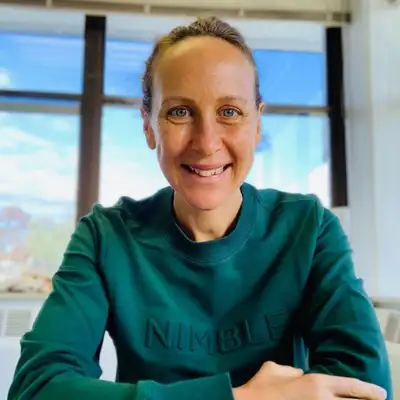
What Are Trainers For in the GLP-1 Era? with Dr Eric Helms
Hey everyone, it's Mikki here, you're listening to Mikkipedia and this week on the podcast, I speak to a returning guest and my good friend, Dr. Eric Helms, about GLP-1 medications, obesity, protein, appetite, and the role of fitness professionals in a changing weight loss landscape.
It is fair to say that if any of your interests encompass any of this, you're going to want to listen to this.
So, we discuss whether coaches and nutritionists are within their scope supporting people using GLP-1s, what obesity medicine can sometimes miss when weight loss stalls, and why reduced movement and NEAT are part of metabolic adaptation.
And Eric also challenges some common assumptions about protein and satiety, including how much protein really matters.
Outside physique sport, and why factors such as activity, food volume, fibre, texture, and eating rate may play a much bigger role.
And then we finish with a bit of a provocative question, if you like.
If weight loss can come from medication, what are trainers actually for?
So, as I said, this is just a really well-rounded conversation with Eric.
And for those of you who love listening to these types of podcasts, you're really going to get a lot from it.
I'm sure everyone is familiar with Eric.
Dr. Eric Helms is a coach, athlete, author, and educator.
He's been a trainer since the early 2000s.
He's worked in the US Air Force, commercial gyms.
He is part of 3DMJ, coaching drug-free strength and physique competitors at all levels.
And he himself is an amazing physique athlete.
Topping off a very successful year last year, with which we had a great discussion about his bodybuilding competitions in August of last year in episode 390.
And I, of course, will pop that in the show notes.
And, of course, he is a well-revered academic in his space.
He not only has multiple peer-reviewed articles in exercise science and nutrition journals,
he is also the co-founder for MassMonthly.
MassMonthly Strength and Conditioning Review.
I have a lifetime access to that.
It is such an amazing resource.
He is co-director of the Sport Research Institute New Zealand Sprints at AUT,
where he also is a senior research fellow supervising Masters and PhD students through their research journey.
And has taught undergraduate and graduate level nutrition and exercise science
and speaks internationally at academic and commercial conferences.
For fitness, nutrition, and strength and conditioning.
Honestly, this guy has it all.
And you can follow Eric on Instagram at Helms3DMJ.
You can catch him on the Iron Culture podcast.
I have a link to that in the show notes.
And also have a link to MassMonthly Research Review as well.
Before we crack on into this, guys, I would like to remind you that the best way to support this podcast
is to hit the subscribe button on your favorite podcast listening platform.
That increases the visibility of Micapedia and amongst literally thousands of other podcasts out there.
So more people get to hear from the experts that I have on the show, like Dr. Eric Helms.
All right, guys, enjoy the conversation.
I'm recording.
I'm recording immediately as soon as you jump on.
This has got to be a first.
You're so on it.
I know.
I know.
So full transparency to the listeners.
Oftentimes when Eric and I jump on a podcast,
as Eric, I think you must do with almost everyone because I hear offline, we talked about this.
We spend about 45 minutes catching up and then rush through, you know, whatever content we thought we would cover.
And then, of course, it's something completely different.
But you're on a tight time schedule because you've got some like filming going on or something this morning.
Yeah, we're doing some really cool filming here at the AT Millennium in the Sprint Labs.
So, yeah, it's pretty neat.
But I.
I only catch up, Mikki, with the podcast hosts who I love and are dear to my heart.
So it's a very few people when you are top of that list.
Well, that's lovely, Eric.
And well, in fact, we were at lunch yesterday with Holistic Performance Institute.
So I feel like we had the opportunity to do a bit of a catch up.
What I really love about those lunches is that there's just no small talk.
Like, as soon as you're in that collective group, we're immediately into the weeds on some like biochemical pathways for whatever it is that's sort of top of mind.
And it will come from a genuinely like quite a simple question.
But there are never simple answers.
No.
Yeah.
Yeah.
It's like our small talk is like sciencey nerdy stuff, which I love because it's not really small talk.
I don't do small talk, to be honest.
I do it because I'm expected to do it.
I'm the normal people in society.
So I can I can mask.
Yeah.
No, I like that you say that.
And in fact, I was thinking about that on my drive home back from the gym this morning is that I've often I mean, I don't know how this will sound, but like I hardly ever love going into situations where I were to your point.
Small talk is expected like to join a woman's running group.
And I just can't even tell you.
I'm like, oh, my.
That's the last thing I want to do.
Like, because I'll have to go along there.
And we'll have to chit chat about Love Island.
And, you know, I don't know, like all the things I'm not interested in for people.
I don't really know that.
Well, of course, my own running buddies and I, there's no small talk.
There's just like talk.
But yeah, we're not in danger of that.
Now, full transparency again, Eric, is oftentimes 99 out of 100 times I will send you and anyone that I talk to like a bullet point list of things I'm interested.
And things that I'd like to cover just so you don't feel blindsided by any particular topic.
But again, reality, it's not like we ever stick to script anyway.
So I just thought I'd just riff this morning with you on a bunch of things I've been thinking about.
I think that's perfect.
And we know each other well enough that, you know, my area of expertise and we have a good rapport.
So most of the time when podcast hosts send me that stuff, I just look at it to make sure there's nothing completely outside of my area of expertise or scope.
Let them know, hey, you're not going to get a good answer on that because I refuse to step outside of my lane and be one of those people.
So, yeah.
Well, that's great, Eric.
And you just said something about stepping out of your lane.
So this morning I saw a personal trainer talk about GLPs, actually, and say that she was accused of stepping out of her lane because she was speaking about GLPs.
And I've got some thoughts on this.
And I'm curious as to what you think.
Because after listening to obesity doctors, and this is another thing I'm curious on your take, I heard obesity doctors talk about their advice that they're giving to patients on GLPs, which has nothing to do with exercise and nutrition.
To my mind, personal trainers are absolutely within their lane to discuss that adjustment sort of treatment option alongside the medication.
Like, this is so, PTs should be talking about it.
Yeah, I think there's, obviously, there's a ton of context around this, right?
So if you have a PT who is talking about and confidently about the impact of GLPs on nutrition and exercise and what you can expect and how they interact, frankly, I mean, even if they have like a robust client list getting referred from a doctor who regularly prescribes them, what are we looking at?
Like two years of experience?
Yeah, I mean, I think it's very clear.
I mean, it's a very clear, very clear, very clear, very clear, very clear, very clear, very clear, very clear, very clear, very clear, very clear.
I mean, it's not, it's not, it's not, it's not a, it's not a, it's not a statement that's going to affect the overall impact.
Based upon the amount of timeframe where that's been quote unquote a thing.
So if that was the case, then, then, yeah, I would be like, I don't know that we necessarily fully understand like the long-term impacts or how a shift in adherence or really the stuff would operate.
But if we're talking about someone saying, hey, I would love to provide some really helpful nutrition and exercise guidance to you while you're practicing.
pursuing your health and implementing GLP ones. And I, you know, I've read up on the research,
and I think, like all successful weight loss and fat loss phases, you'd benefit from these things.
Absolutely. And, you know, I think it would be useful for someone in that space to understand
the common challenges and side effects that are coming out. And from people taking GLP ones,
like some of the potential nausea, or, you know, if someone, you know, like a lot of personal
trainers are used to the biggest issue being people controlling their appetite, and then
they work around that. And so their skill set might be something all related to trying to
passively reduce energy consumption and change behavior so that, you know, food noise is
mitigated through behavioral intervention. So they may not be used to things like,
how do I work with someone who is,
struggling to get enough food in? Or how do I increase nutrient quality while someone is eating
pretty low calorie diet? And those are relatively niche skill sets, you know. So I do think it's
important in cases like that for personal trainers to recognize maybe the gaps in their skill set.
And I think there's one thing to be even like, I'll say myself, I've never done a study on GLP
ones.
And I only know a handful of people who have used it. And I know some clinicians,
and I understand theoretically, what would make sense to do. But it's not like I have a tremendous
amount of experience working with clients who are using it. So I am operating from a space of what
makes sense. So I think there are probably certain people who have a lot of kind of in the trenches
experience, which is even more valuable right now, because we don't have this really robust,
mixed methods, you know, adverse,
event reporting, clinical practitioner experience, plus the research to say, hey,
you know, we've been seeing how these operate for 20 years, like some of the other
medications and things that we can see in the space where personal trainers operate with
doctors, like if someone is taking exogenous insulin, because they're managing type two
diabetes, right. So on one hand, I fully agree that it is absolutely the purview
of personal trainers to be discussing behavioral interventions, lifestyle changes, nutrition,
and exercise for people who are, you know, trying to improve their health, which now we just have
to see GLP-1s as something that is in the broad spectrum of the type of medications interventions
that might be prescribed when people have, you know, metabolic disease or a high risk factor for
it, such as obesity. Yeah, and I, you know, I am I'm super interested in it, because of course,
it's so, you know, as nutritionists, we need to, you know, more and more people are
accessing it, it's coming down in cost, and I want to understand better the utility of it,
not just for people who are super, super overweight, who have a lot of excess body fat,
but actually, like the woman who can't lose 10 kilos and has tried, and she's, you know, tried
for years to put into place the habits and behaviors necessary to do so, but she hasn't had
the bandwidth or the space or whatever to do it. So if this is going to help her, then I want to
alongside to ensure that she's having the best experience, and she's doing that sort of best
practice stuff. But there is, you know, there's still like quite a lot of pushback out there from,
from people who have gone low carb, from people who've gone carnivore,
for people who believe that it's just a matter of getting rid of all the ultra processed foods,
and then these people are going to successfully manage their weight. Like, I don't know, I feel
that argument is just, I don't feel like it's a very valid one at this point.
Dr. Justin Marchegiani
It's not. And you also have to kind of think about that community is full of a lot of people,
not everyone, of course, who kind of succumb to the natural fallacy. So and they and they tend to
have relative relatively, and not necessarily always unfounded, you know, kind of anti
establishment conspiratorial beliefs about the food industry, and the pharmaceutical industry,
right? I think it's pretty tenuous connection to act like it's some massive cabal that is top down,
manipulating people to be in poor health, just so that we can prescribe them more drugs and
maintain a, you know, the high carbohydrate, you know, intake guidelines that are making us all
sick. I think that's complete nonsense. But at the same time, there is robust evidence indicating
that there was top down food industry manipulation to try to
get people to have addictive like relationships with hyper palatable processed foods. So that like,
like, it's one of those things. It's like, they're not completely wrong. But at the same
time, the natural fallacy is always going to be the natural fallacy.
Yeah. And it's interesting that I know, like, I'm not totally absolutely in your wheelhouse,
and I'm talking about this stuff, but this is coming into your house. So I've been,
I got called to set up some sort of work skill to filter into my inbox, glp one related podcasts
from you know, you get very stuck into your own, you know, I've got iron culture, I've got chasing
clarity. Dr. Justin Marchegiani
I've got, I've got can't even think of Dr. Gabrielle Lyon, and they might be my three top
ones that I am Dr. Tina Moore, right? There'll be others. But these are like I'm being introduced to
other obesity docs outside, you know, the Spencer Nadolski and stuff and just how they are sort of
operating with their patients in this space. And what is really interesting, actually, Eric,
and this is another reason why I think personal trainers should sort of be across the stuff a
little bit.
Dr. Gabrielle Lyon
It's because these obesity docs are consulting with their patients on when their weight loss
stalls. And they talk a lot about metabolic adaptation. So when they have clients who
have lost, they may have lost like these people sound like they're very overweight,
like these people have lost like 60 pounds, and they've still got 100 pounds weight loss to go.
So we are talking about, you know, obesity, rather than just, you know, slightly overweight.
But the docs are saying,
oh, so they're like, oh, I'm no longer losing weight. And one person in particular said,
and I've stopped tracking my calories, I've lost 60 pounds, I decided to try and go intuitive,
stop tracking my calories, and now my weight has plateaued, I've stalled.
And the obesity docs say, oh, you just got to be careful, you're not under fueling.
If someone stops tracking their calories, is the immediate thing to you like, oh, that clearly
they're not eating enough now. And so that's why their weight loss is stalled?
Dr. Eric Clark No, I mean, the
first thing when I hear someone has stopped tracking their calories is that it's become
something that is tedious, stressful, and potentially unsustainable. And the fact that
they're looking for alternative approaches, and it's not working tells me two things.
One, that practice is something that is causing stress, and two, they haven't developed a second
skill set to replace tracking that results in an appropriate calorie deficit. And then actually,
I'll say maybe two B is that, um, their appetite levels are higher so that when they are using this
new method, um, it is not resulting in an energy deficit. So they're experiencing probably, I mean,
they certainly might be experiencing metabolic adaptation. Um, but, uh, and in fact, if they
have lost in the instance you described 60 pounds, they almost certainly are to some degree. Um, but
the data would indicate that's not necessarily the barrier. And the data would also indicate
that there is, it's even been modeled. I think Kevin Hall did this, you know, there's a proportional
increase in appetite with a proportional decrease in weight loss and how much you've sustained. So,
um, I think it's, I wouldn't be worried about under fueling per se. Um, but I wouldn't say
like, Oh, we, the solution is let's get you back tracking or you would have kept tracking,
you know, for someone who's already lost 60 pounds, like they've clearly shown
a lot of self-efficacy for the, at least the weight loss process. And now they're experiencing
a level of friction and time in that friction that is at least needing a break from that process.
And it's a great opportunity in my opinion, to learn other skills besides just tracking calories
for sure. Yeah. And I, I heard that and I immediately thought, no, no, you're just,
you're six months. Isn't a long time to, to be, have been in this weight loss period. It's not a
long time. It's not a long time. It's not a long time. It's not a long time. It's not a long time.
Long enough time for you to sort of establish habits that to your point, naturally allow you
to create that deficit. Like the tracking obviously helped that because you're very
aware of it and to your point, unsustainable, but this is, I think it's just a habit thing
going on here. This sort of started to default potentially back into habits that they weren't
aware of. And my first thing with this person would be like, well, can we at least just start
writing down what you eat? Like, are you doing that first and foremost? Um, because then that'll
just bring that awareness back and they'll see the, the peanut butter that's going into their
mouth as opposed to, you know, on their toast. And they'll see the drizzle of olive oil as opposed
to actually like weighing it out. Like just those little things that really sort of make a difference.
Of course, to your point, metabolic adaptation, um, is real, but it's just so interesting to me
how these obesity docs always come at every single, like I've now listened to several podcasts and I'm,
I'm definitely learning a lot.
As well, but I'm seeing some of the holes and just the, the fact that clearly they're not talking to
registered dietitians or nutritionists, and they're not sort of interacting with them as
well to have that sort of those other skills that we do, um, alongside their sort of medical
knowledge and stuff. Yeah. And it also may be something to do with the actual, um, commonality
of GLP-1s now that do exist and, and in practice, because,
if those are given without the behavioral support, it is very likely that someone could be, um, under
fueling, uh, quantitatively and qualitatively.
So, you know, like if you are not developing concurrently or beforehand, um, some type of understanding of what
does a high nutrient density, uh, effective weight loss diet combined with exercise look like?
Then.
you might be maintaining a set of behaviors that GLP-1 will produce some just a version of that
but less and if you're like a cardio bunny or um and you know i guess bunnies aren't necessarily
male or female i was gonna say so just a cardio rabbit you know yeah if you're just doing a whole
lot of cardio is is you know has been promoted uh on things like the biggest loser etc and not a lot
of effective resistance training and your diet is basically eat less um and then struggle to not
overeat sometimes when the restriction bothers you uh or if you just have not a great diet
and now you're just eating less of that not a great diet then absolutely um you might be running
into things that you could describe as under fueling but in the absence of someone who is
effectively dieting you know if they are stalled
in most cases then that's probably not what's going on so i i i do think that that's something
that is uh indicative of a a lack of expertise in a certain area for sure and this is just why
we need more professionals talking to each other and working together but that's it's a challenging
thing to do like if you think about the structural limitations of um how much time a clinician has
with someone and how much time a clinician has to upskill on nutrition versus finding someone who's
a referral they trust and all of those things and then the ease that a personal trainer
can potentially circumvent you know and needing to do those things well so it's tough for sure
no for sure and i you know it was the endocrinology 2026 conference i think just took
place and there was an abstract published from that showing that people on glps um in gips but
that style medication um actually a less a potentially less active than they
otherwise would be or that they were which makes total sense when you're like restricting
calories and your brain tries to conserve energy and and stuff like that and often people think
that you know once you start losing weight just you know you just get this energy and you'll just
start moving more whereas we know as i guess practitioners that actually a lot of people start
just they stop exercise not necessarily stop exercising exercising but just stop moving as
much which is another thing that isn't
often talked about in these podcasts with these obesity docs because a lot of the time they're
just trying to pull the lever of diet if anything it's diet and calories on the intake side that
they're concerned about and there's never a question on on the sort of the other side of
this dynamic equation yeah and even that i think i think that probably could be classified as
metabolic adaptation yeah or adaptive thermogenesis like those um those
reductions in uh spontaneous physical activity non-exercise physical activity um non-exercise
activity thermogenesis there's a few different very related buckets um those do occur due to
the same mechanisms that result in the the kind of the old school version or less holistic version
of metabolic adaptation we're talking about we're thinking of actual reductions in basal or resting
metabolic rate um so or reductions in the thermic effect of food right so
it's a it's a total system change and when you see people and i think this this also comes back
to like you might look at that conference abstract and ascribe it to this class of medications you
know the uh the insulin like mimetics whether it's gip glps whether it's you know one or two or
coming out to be three of these different um uh incartan hormones right so but it seems like thus
far i'm not saying in every single instance and this is still new drugs coming out and
we're still investigating them that the vast majority of the quote-unquote side effects that
we associate with these drugs are actually the side effects of successful weight loss right
um and not in all cases like i i do think there's something to be said for
understanding that we are creating a hormonal environment in the body that it normally lasts
minutes but for months at a time effectively depending on the dosing schedule drug and
how it's used and you know we think of our a very simplified version of our kind of uh system and
related to eating is is like are we rest and digest or are we you know like are we active
doing things right and we're kind of creating a 24 7 rest and digest state where our body is
always thinking it's post-absorptive and not seeking uh certain types of food for certain
reasons and now with the other
types of you know whether it's a dual or true or tri-acting uh you know medication it might be
targeting multiple different aspects of what we collectively think of as hunger um you know some
of it we think about food noise a lot but we have to think why are we seeing greater and more
consistent weight loss in some of these more experimental drugs um i want to say i'm going to
either mispronounce or forget the name of uh the ones that is i think and it's either in phase
three or phase two climate change i think it's either in phase two climate change or phase two
trials um tetratide yes yes yes you you pick your pronunciation maybe it's like uh maybe maybe
it's a commonwealth thing it's a aluminium or aluminum i don't know yeah yeah i'm going to do
a new one on my own yeah go do it yeah i don't know you do it twice right but like if you look
at that data in the higher dosage groups if you look at the number even in other um like glp1
type of drugs previously there were some
quote-unquote non-responders in the higher doses there were zero in this trial there wasn't a
single person which is incredible when you think about what we see in data and just normal
distribution and variance who at the higher doses didn't at least lose i want to say five or ten
percent of their body weight or more no one which is pretty wild and to me and i'm speculating here
i think that means it's targeting more than just food noise um you know there's some there's an
emergency there's an emergency there's an emergency there's an emergency there's an emergency
emerging understanding of what we would describe as appetite and i think we talked about this
recently i like you know there's your like energy signaling do i need more energy that's kind of
like oh i feel depleted um there's your hedonic food seeking like man i would really like this
and um and that is somewhat similar but actually distinct from what we would describe as food noise
it's like i'm constantly thinking about it distracted by it even if i don't necessarily
get a sensory signal or if i'm not like you know thinking about it would be really nice to go to
that place i like that chef and i want to have an experience you know there's
a little more agency behind hedonic food seeking even if it can be a strong enough
uh signal and contributor to why someone might be in caloric excess on a regular basis
and i think a great way to differentiate between these two uh the hedonic and the food noise thing
is is you have people who are foodies who are overweight and not and you know some of the foodies
who get the fill they like it but they can't stop focusing on the fact that there's more bread on the
table and the food is not as good as it used to be and i think that's a great way to differentiate
between these two the hedonic and the food noise thing is is you have people who are foodies who are
the plates end up clean no matter what versus the person who has their phil has their bite and i
don't really want any more bread i really hadn't it was an amazing pairing with this but now
you know the the hummus is gone or whatever the hell we're talking about so
there's these three general buckets of like hunger and that's not even considering satiety
which has a few different definitions and things in it and there are what we would describe as
both appetite stimulating hormones as well as there are uh
satiety stimulating hormones and you get so many and then we have you know ingrained behavior etc
um so i think the fact that we see some people especially we talk to clinicians and some of the
early uh earlier drugs who who don't respond uh and some people who respond really really well
tells you that obesity is a complex ideology um when we when we think about how people get there
even though it's so common and some of the people who are the most resistant to
certain types of behavioral interventions or certain approaches and why some people have
very different experiences in the behavioral realm we're seeing that to some degree even
though it's a far more successful medication anything that came prior in some of the glp-1s
but now as we're you know stacking multiple different pathways of suppression of hunger
or the stimulation of satiety we're at a point now where we can say you know what i'm pretty
confident this dosage you pull any random person
off the street who doesn't have a contraindication they can't take it and they are probably going to
lose at least 10 of their body weight at this dosage which is wild um do you know it's interesting i
i did my master's in obesity you know so i was all over the sort of obesity like literature back
like late 90s oh my gosh but anyway and i remember being just um i could not believe that the
totality of the obesity literature to be a significantly successful lifestyle intervention
in the severely obese group would lose like three kilos can you imagine having 40 kilos of weight
that you would that you would ideally like to lose and and to have lost three kilos after six
months of intensive lifestyle intervention so this is one of the reasons why i just get excited
thinking about this in terms of um people's sort of level of success done obviously you know in the
way that we talk about correctly but you know i'm like what's your what's your opinion
i mean i have to choose where i want to go because i have opinions that are are broad um
i think looping it back to the original start of this conversation of like should personal
trainers be talking about this i have always found it relatively unfortunate that 90 of our
clients in the personal training realm want to change the way they look and lose weight
and i think there is a lot of fear among people in the fitness industry
that they may not have value if weight loss is something that people can get from a pill
and i think that's some of driving some of that that kind of anti um you know weight weight loss
drug perspective that we see out there not all of it i don't even think it's necessarily the
strongest contributor but we have had trainers and um physical you know coaches for literally
thousands of years you know long before obesity
was a concern and i think there was a lot of people who saw value even in the aesthetic world
of being able to manipulate and change their body but not from a place of a lack of self-worth
but in the place to aspire to something positive and the social messaging we get of you are broken
you don't look good sometimes what gets called quote-unquote diet culture is often conflated
with the desire to
hold and sculpt your body from a more
approach versus avoidance oriented goal perspective and like there's some people who
they have a certain view of how bodybuilders might be and who bodybuilders are and what
their motivations are and some i'm not saying no bodybuilders have this perspective but
then when they actually sit down and talk to bodybuilders they see it a little differently
i would say that at least a healthy well-adjusted bodybuilder who is doing
it not just as a a mask for disordered eating or poor body image um and don't get me wrong there
are high rates of uh body image disorders and eating disorders among bodybuilders and physique
athletes generally and sometimes there's a high history of that prevalence but it then turned into
something uh more positive not always but it's it's not true that every single male competitive
bodybuilder has um you know muscle dysmorphia and it's not true uh that all of them have been
disorder
it's not true that every female competitor you know is currently battling eating disorder so
um there are absolutely transient effects of dieting that produce anorexic and bulimic and
and and binge eating disorder like effects but they are transient and they are biologically
driven it's like that's important to understand and they were present before the obesity epidemic
just read the minnesota semi-starvation study books that are out there on that but anyway
all this is to say that when i encounter someone who let's say they're operating in a space of
treating
the
clinical eating disorders or or treating clinical body image disorders uh or using things like
intuitive eating and helping people get back to a healthier relationship with their body and then
that subsequent impact on food they're often surprised that bodybuilders don't have the same
perspective right because bodybuilding in the fitness industry they're heavy related but they
often have different you know directions you might see someone who has the body of and the attention
and the behaviors and their training and nutrition of an influencer in kind of the the physique space
but they they barely spend any time on instagram so you know what i'm saying and i think that that
confuses people right like oh but there's there's literally hundreds and hundreds and hundreds of
people like that like um you know competitive physique athletes they just want to do their
sport and if they need to get a supplement sponsor to do it okay cool you know and um it's it's
actually not the norm that they cross over it's just how this could work but i really actually
want to do it and i'm not going to do it i'm going to do it i'm going to do it i'm going to do it i'm
you know physique competition and i think it's more similar to someone who loves tattoos or loves
body jewelry than it is to someone who's a chronic dieter with uh who hates their body and wants to
change it and is stuck in these loops with diet culture um and diet culture always wants to figure
out what bodybuilders are doing because they're the successful people who can create that that
shredded look and it's the kind of the extreme version of that but long before social media
long before diet culture
you had the physical culture movement of people who wanted to um pursue health strength and
fitness if you want to call that uh and it was all seen as kind of the same thing so we're talking
about the 1900s like bernard mcfadden in the states and you know there's some weird shit and
some of them did have strange relationships with food in their bodies but it wasn't a widespread
um emergence of like diet culture that i think comes from something different in other places
in society
of course there's overlap but truly what we're talking about is people who are specifically
interested in trying to achieve something and and aspire to a higher position it's
they are they're reaching for something not trying to correct fix or or hurt or harm and
that's a very different disposition to me it's like uh actually arnold said it really well in
pumping iron it's like being a sculptor except you have to use the weights for your body so it's an
art it has an artistic
endeavor to it which is a huge part of a bodybuilding so anyway all of this goes back to
saying that i think personal trainers have an opportunity now to get back to what their job
is supposed to be which is not trying to be the frontline defense against the obesity epidemic
which is something that is primarily due to our built environment the success of primates who
figured out how to create a zoo that they really like living in and not needing to seek food making
it cheaper at least in the west obviously
there's many places in the world where you know malnutrition and not getting enough food
and food scarcity is a significant issue we have you know true genocide going on right now due to
food deprivation but you know from our very very privileged perspective in the non-war-torn uh west
even people who are poor have constant access to food um at a relatively low price but the issue is
that the environment is not one that promotes nutrient density activity
ability to use our you know other aspects of of hunger and satiety to work well and and like the
food noise and the hedonic eating and those things just get totally overwhelming in this environment
so the only solution in my mind is something that is more societal scale and that's where we're at
are there downsides to it certainly but i think the personal trainer has the opportunity to help
people actually pursue fitness uh pursue wellness rather than just the the absence of disease but
promoting an overall physical activity focused lifestyle helping people find
ways to move better enjoy movements and connect with their body and their health in positive ways
and maybe even have a little more agency over making their body you know look a certain way
and the people who are attracted to physique sport generally don't struggle as much not always
but often uh with with food noise kind of taking control of their goals and and and when they do
It's because they've gotten really, really, really lean and they have this push pull. It's a ubiquitous thing in the qualitative research related to the recovery phase or the end of a contest prep where it's like they have this vision. They know exactly what they need to do to get there. But man, their social pressures to eat and their internal drive to just over consume. Even when you've been doing this for 20 years, like myself, even if my food preferences don't change, like I just want to have 10 carrots, you know, it gets ridiculous, right?
So if that wasn't there, I would just be able to purely pursue like this kind of almost observer looking at my own body from the outside.
Oh, if I eat this and put these nutrients in my kind of artistic science experiment of trying to look the way I want to and then competing in it, it would be more like that.
But of course, that's tied into the sport.
I don't want that to go away.
That's why I compete drug free.
Yeah.
But I think in the real world, there's no need for people who would like to pursue high degrees of fitness to have to deal with these things.
And they weren't present.
And we had a robust physical culture and fitness community in 1900 when people weren't struggling with it.
And people didn't actually even necessarily diet for these like physique competitions in the way we think of it today.
Yeah, yeah, yeah.
It was focused more on the physicality.
Absolutely.
Yeah.
So I think trainers are going to have an opportunity if they realize it to get back to the job of promoting health and fitness rather than being weight loss coaches.
Yeah.
Nice one, Eric.
And that was great.
And that went not at all where I thought it would go because I had no idea actually what you would say.
And also, you had no idea that I was going to be asking these questions.
But that was great.
On that, though, on – well, not on that.
On sort of thinking historically about – you know.
How we've evolved and thinking more about the food side of things.
You know, protein, obviously, huge conversation.
I mean, we've probably talked about it every single time that you've been on the podcast.
But most recently, you were an author on a paper that talked about, you know, how much protein do we actually need?
And I just want to think more broadly sort of stepping back from people who are super interested in building muscle.
Stepping back from people who are really dialed.
Into hypertrophy or whatever.
Some of the – again, the pushback that I see out there from just, quote, unquote, regular folk is that, well, my grandmother never had to worry about protein.
And she's robust and healthy at 88.
You know, why on earth do we need to think about it?
So, can we just have a – obviously, it'll be brief.
But just a chat about how much protein do we really need to worry about?
Yeah, this is so –
We're dependent upon the goal.
Like, I have – it's a funny thing.
It's like in the grand scheme of all the effect sizes that impact weight loss maintenance, weight loss.
Because we're talking about general public.
You know, preventing the loss of muscle mass or, you know, making sure that you have an appropriate level of muscle mass so that you can, you know, age well.
And, you know, not just live longer.
But most importantly, have a longer health span.
Protein is a minor player unless you're starting from a pretty low protein state, right?
So, like, you're going to see a pretty positive and reasonably moderate effect size if you're going from your 0.8 to 1.1 gram per kilogram of protein intake per day into the, you know, 1.3 to 1.5 range.
And then, you know, when I talk to bodybuilders who are maximizing everything.
And there's a lot of assumed behaviors that are already there.
So, there's fewer boxes left to tick.
And you can start talking about optimization.
Yeah, I'll try to get them into higher intakes.
And it'll depend upon their body composition and energy status, whether in the deficit maintenance or surplus.
And how that interacts with their body composition.
But I – and I try to communicate this so that they understand the difference between going from 1.6 to, you know, 2.2 is going to be –
minor in the grand scheme of things of the type of impact.
So, you know, when you're in a sport of – when it's a game of inches, to quote Al Pacino, that matters.
But when you're talking about population health, then it becomes totally different.
And when you're speaking to populations, like, for example, someone who does not have a high-quality diet and then jumps on a GLP-1, yeah, I'm going to be ringing the protein bell because they might only be eating 1,200 calories.
And if they go from not having a kind of your basic outline that you and I would say, this is what a plate should look like.
Here's a serving of lean protein.
It can be vegetarian.
It can be vegan.
It can be pescatarian.
You know, there's a lot of different things we can fit to your values, lifestyle goals, access, and preferences.
That baseline, like, degree of knowledge is just simply not there.
So now it becomes a major part of the conversation.
But then once you get there, it's kind of like, oh.
There's bigger fish to fry.
So I think if I'm speaking to someone who is looking to be healthier and primarily lose fat loss, primarily lose fat when they go through a weight loss phase and wants to improve metabolic health, I want to know where they're at.
And I think that is something that's often missing.
Because if I tell someone even what I think is a reasonable intake that will probably maximize things like 1.6 to 1.8, and then I know for sure that in all days, all states, they're going to lose weight.
And that seems easy to me because, oh, I look at population level data and most people are in the 1.5, 1.7 range anyway.
And it's just swapping out, you know, like fattier versus leaner sources to help them control their energy intake.
Cool.
But there's also plenty of people these days who have now followed alternative diets.
And they're even more represented in people who are seeking out weight loss.
So if I actually do a dietary recall with them and I find out that they're on an intermittent diet.
And they do consume protein, but only in two meals.
So they're only getting to 1.1.
Or if I find out they're heavily plant-based, but they don't really know how to effectively be heavily plant-based, and they're at 0.9, telling them to get twice that amount is potentially just going to seem like a barrier that's far too high.
And they might just go screw it.
So I think working with people, like if we know what builds self-efficacy, and it's a very consistent pattern, is you give someone a challenge.
That is challenging, but achievable.
And then you give them the support and the guidance, and you monitor over time to help them get there.
This is like, this is how everything works.
You know, like this is, you know, you build up kids in sport at a young age with success, more of a community oriented, focused, fun.
You celebrate successes.
You put them in a position where they're going to succeed.
You don't punish the mistakes.
And then they feel competent and capable.
And they can start to focus more on that extrinsic reward because they have the intrinsic motivation.
And they have.
The belief that they can succeed and they can go after a big, hairy, audacious, challenging goals.
They might fail at fail, but keep going.
But if you take someone who's at the early stage of any goal achievement and even self-identity related to it, and they don't have self-efficacy first, if you set them up to fail and they fail, there's very little resilience that's been built.
And I think unfortunately, a lot of times in sport, exercise, fitness, we, we, we don't think of resilience as a.
Trainable trait and a component to self-efficacy and self-regulation, which are easily the cornerstone of achieving quite literally anything in life that, that requires delayed satisfaction, long-term and sustained effort over time, or at least sustained habituation to the things that are going to get you there that we sometimes call quote unquote discipline, which is really just becoming part of your identity and finding a way to enjoy it or, or, or not dislike it at least and make it habitual.
Yeah.
It's interesting.
Isn't it?
Because I mean, I talk to people obviously all of the time about protein and my recommendations vary depending on who I'm talking to.
So if someone is on a GLP one and they're out there knowing and listening to the fact that they've, they should be having, you know, 1.8 to 2.2 grams per kg.
I'm like, you know what?
1.2.
Can we get you to 1.2 grams per kg body weight?
Like I'd be super happy with that.
In addition to, of course, putting.
Into place some sort of activity, at least to get that ball rolling, which to some people listening to this will seem super low and they'll be like, that is ridiculously low.
But I think in part it, well, it's at the lower bound of where the USDA sort of dietary guidelines is now.
But we also have to be realistic about how much food that they can actually eat anyway.
However, if I'm talking to someone who has come to me specifically for fat loss and they've got an appetite.
And, and, and I used to eating an amount of protein, I'm going to be trying to push that like a little bit higher.
A hundred percent.
Yeah.
And I also don't like, here's, here's an example of stuff that I actually don't know.
I do wonder.
So like, we know all of the different foods that we can try to manipulate and eating patterns to try to enhance satiety as much as possible.
And we know other behavioral things.
Like I got a checklist.
Like, I want to see what's your basic activity level.
Cause I know that.
Now, because I eat and that's what I think is going to work better when you were a T successes start to drop than they could.
Right.
In the eye of truth, I'm like, okay, that makes sense.
And that's the problem.
You don't feel part of it like you should, like you need to, you get angry like you should avoid.
You're able to do things that you can, you know, make not only stress freezing it dawns with ajakais imünd
and stuff like that.
But you are able to operate if you're not at eight K eight, just realize that a lot of food in your diet and in our admit,
foods that have a sufficient amount of micronutrients. You're also getting enough
fluids because some people with not great interoceptive awareness, they can even mistake,
you know, elements of thirst with elements of hunger. And, you know, and we do get a significant
amount of our fluids from food. So if you get someone who is quite unaware and doesn't like
a whole lot of doesn't like water or doesn't drink regularly, you know, and they might be
consuming a lot of food to get that. I mean, hard foods, texture, eating rate. And then to a much,
much lesser degree, outside of the type of food is the macronutrient composition. I mean,
people talk about protein is the most satiating macronutrient, but they're already on the wrong
page in my mind. Right? You know, like, like, who cares, which is the most satiating macronutrients,
you don't eat macronutrients, we eat meals and diets. And there are differences in different
protein foods in terms.
Of texture, taste, palatability, and micronutrient content, and then what they are eaten with.
Right. So most people eat a certain amount of food weight, as being like the one predominant
factor that influences it. Calories are a component to it, when you're in a higher energy
density scenario, or if you're in a deficit, and you're quite hungry, hungry. But I don't know the
interaction with GIPs and GLPs. Right? Interesting. Yeah. Does because some of those things get
totally overridden by the
model.
Or an environment. So if you correct, or you bring those things back, or you suppress some of those
things that are leading people to overeat, does protein, fiber, food volume, fluid or micronutrient
content, do those become magnified in their satiating effect, more along the lines of what
we see in terms of the hormonal response and mechanistic studies on appetite that are being
easily suppressed, because they don't play out in the long term, translational research on
food manipulation, when someone's taking GIPs and GLPs, I don't know, I would think there's a
reasonable possibility that effectively, protein, fiber, food hardness, or food volume, or energy
density are more effective for, you know, suppressing appetite in someone on a GIP or a GLP.
So if you give someone the recommendation to be at two grams per kilogram, and they go from eating
1200 calories to 800 calories, and it's basically just protein shakes, and that's it,
was that a good move? Or would you have preferred to have them at 1200 calories on 1.5 grams per
kilogram protein? These are questions that may be worth asking, but I don't actually know. And that
kind of goes all the way back to our original question of what is the purview of personal
trainers. And I don't think anyone necessarily has those answers on a group level. But we may
have them from clinical experience on an individual level. And I think people need to have a very
open mind to monitoring response and not just kind of going like, hey, let's do my buy my PDF GLP-1
fitness protocol, even if it's heavily based in the literature, right? You might have a reference
for everything you pull from mass, right? And you go, these are the things that, you know,
suppress appetite, here's your protein, and then we'll get all that here, cool, go for it. Now you
can be on a GLP-1, maybe, but people seem to respond quite differently. And the things that
will be a potential response to that are going to be very, very different. And I think people need
bottleneck for their health, or successful sustainability, or maximizing the amount of
fat mass that is lost and the minimal amount of lean mass might look quite different when the
rubber hits the road over time. And I think that's just not something that I hear a lot of people
talking about. Not completely. And in fact, I think I remember listening to an Iron Culture
episode a few years ago now, and you brought up a study looking particularly at protein. This is
aside from GLPs, this is just, you know, in general.
About the belief that protein was always going to be the sort of the anchor for satiety. And you
mentioned that people who are generally have a protein intake, I believe it was over 1.6.
More protein doesn't necessarily make them feel any more fuller. I mean, I think there'll be,
there's a lot of probably context there. Like, yes, if you eat more protein from chicken breast,
you'll probably get more fuller. But if it's a whey-based shake, maybe you,
don't have that same satiety because a lot of those other factors are, are not there, but I mean,
I don't know. And in fact, I think one part of that conversation, and you might not remember
this and I'm not sure why it stuck in my mind, but it was mentioned that, you know, maybe like
reducing down the amount of protein in your diet might resensitize you to the satiety effect.
Um, if I had that sort of correct. Yeah, there's, so there's research that looks at, um,
ad libitum food intake. Um, there's research that looks at hormonal response in the gut, like,
you know, appetite related hormones. Uh, and there's also research that looks at subjective
scales of satiety and fullness. And then there's research that looks at actual, like, uh, body
composition change that might be indicative of some of these ad libitum behaviors. And they,
there's signal in the noise for all of them. Um, but when we look at probably the largest scale
data, like you probably heard,
the protein leverage hypothesis, the idea that people will consume calories until they reach a
certain protein threshold. And there's actually relative consensus in the protein research
community for that, probably just because the data has been around for a while, but that point
is actually quite low. It's like 12 or 13, 13% or something. Yeah, exactly. And, but in all of the
other research that I mentioned before that last little piece, you will see signal and noise like,
um, people consuming, like,
I mean, my friends, like Anthony, you know, in writes going at three or 15 other stuff showing
the spreads were a lot, than the the comments um, I think, yeah, that's, that's relative to
what happened in the five, six or seven years of what I'm,
the the, the one that I'm following as far as like the pre-spas on release that they both
did with this information, the sigla presented and then the slide-onlets that Joe Pol
gave about my master's blood sugar, który
I had elements that you would might think were related to satiety that were higher in 2.8 grams per
them, they'll be talking about some kind of metabolic magic, but it's highly speculative.
They didn't, they didn't have them in a metabolic ward. Right. And you can look at like braise data
back in 2012, where you also see a similar effect. It's like same amount of, um, calories gain,
sorry, sorry, calorie consumed and mass gained, but a different change in body composition
to a certain degree. And that's even without resistance training. So there is a, an effect
of these high protein diets, but I think a lot of what we see in society subsumes it.
Um, you end up maybe just having a larger spacing between meals and then you eat more later
and the lab effect kind of goes away. Who knows? But, um, I think high protein diets also come
with an opportunity cost. Like if you're going to be trying to consume three grams per kilogram
of protein in a diet, that's going to have a knock-on effect on everything else you do.
And if that crowds out the calories or the intended calories that
you might have from say, uh, vegetables or fiber containing foods or higher volume foods,
that trade-off probably will be neutral or potentially even negative, uh, in terms of
what, what level of satiety you could stimulate. Um, but it's very context dependent. Um, so I think,
um, absolutely. If we were to say which protein is the most on a gram per gram basis, more satiating,
uh, sorry, which macronutrient on a gram per gram basis is most satiating,
you would say it's protein, but that, that kind of means nothing in my opinion,
in terms of actual practice, but it does influence people to make, uh, practitioner-based decisions
that I don't think are actually doing what they expect. Yeah. And, and just to, to finish up your,
to your point, absolutely. Macronutrient, yes, it is the most potentially satisfying
or satiating nutrient, but that macronutrient piece of the pie,
puzzle is just one piece of that satiety puzzle and, and potentially all these other things in a
small one. Yeah. Hey, Eric, um, I'm going to let you go because you've got filming to do. And in
fact, if anyone, like, I always love our conversations, it's just like sitting in a
room with you having these talks. And if anyone here was listening going, oh, what did they even
really talk about? Do not blame Eric. Cause he had no idea what I was going to talk to him about
today. And I really just threw at him what was on my mind. Um, I believe that most people will know
where to find it. Um, and I think it's, it's, it's, it's, it's, it's, it's, it's, it's, it's,
but just throw out a couple of handles for people to, and particularly mass, like, and yeah,
all of it actually. Cool. Yeah. The, um, one thing I will say is that you mentioned like good
conversations with clinicians and you brought up Spencer Nadolsky. So like the docs who lift
podcast is very good. I would also highly recommend barbell medicine. I think they do
fantastic job. Yeah. Austin Baraki and Jordan Fagenbaum while they focus a little more, uh,
on the, like,
like, like traditionally the musculoskeletal side of it, they've actually done a lot of really,
really good work specifically in, um, the hormonal space. So HRT for perimenopausal and
menopausal woman, as well as the huge craze of testosterone replacement therapy. And they're
also talking a lot about GLP one, uh, medications, uh, and some of the nuances of that data that's
coming out. And I think they do fantastic work. So, um, very sobering work in my opinion. And
they do a great job at being very circumspect with the evidence. So I've promoted other people
besides myself, but if you are interested in following more of my work, check out mass
research review.com. Uh, you can also follow us on Instagram at massive research review.
What the heck is mass? You're probably wondering, well, that's making applications in science
simple. Uh, and that is a monthly research review that I do with Dr. Lauren cleans a simple Dr.
Eric Trexler and Dr. Mike Zerdos. Uh, and we've been going for, uh, the better part of, uh, more
than nine years now started in 2017. So, uh, I think that's, I think that's, I think that's, I think that's
more than nine years now started in 2017 and you get access to that entire backlog and we do audio
summaries, uh, written summaries, um, and basically the latest and the greatest research that's most
applicable to people working in the health fitness nutrition sector. Um, or if you're just interested
in it as your own personal, uh, you know, for your own personal goals and you're very wanting to do
it based upon the latest evidence, but the good news is we're also all practitioners. So we
understand how it integrates, um, into, uh, practice. So
it's not just kind of divorced from reality. So yes, uh, if people are interested in that,
check it out. And if you want to follow my own personal content, which is a little more focused
on the strength and physique world, you can follow me at Helms 3d MGA on Instagram.
Wonderful. And I will say that I've been a member since 2017 of mass, and I recently committed to
lifetime membership as of last year, which I don't know why it took me so long. Um, and I was remiss
not to actually mention docs who left, which I listened to all of the time. And,
and Barbell Medicine are also excellent. So thank you for that, Eric. Thanks for your time
as always. Really loved it. It was a pleasure. Thank you for having me, Mikki.
Alrighty. Hopefully you enjoyed that. I just love picking the brains of Eric on all the topics,
which are relevant today, not just to those people who,
are interested in living a fitness lifestyle, but anyone interested in health and wellness
can really learn a lot from the research that Eric does and just his perspective on topics like the
ones that we discussed. So, um, let me know what you think. You can find me over on Instagram
threads and X at Mikki Willard in Facebook at Mikki Willard in nutrition, or head to my website,
mikkiwilliden.com. And as always guys, you have a great week and we'll catch you later.
That's it for now though. So Dusty I'm American and presente.
.
.
.
.
.
.
.
.
.
.
.
.
.
.
.
.