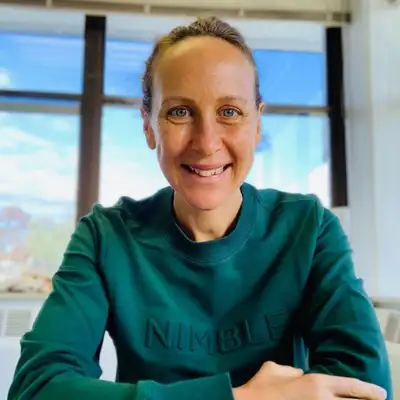
Carbohydrate Per Hour in Ultra Running: 90 vs 120 Grams with Paul Booth
Hey everybody, it's Mikki here, you're listening to Mikkipedia, and this week on the podcast, I speak to returning guest, Paul Booth, about what really drives performance in trail and ultra running.
Paul and I discuss a range of topics, including training and heat adaptation to fueling, gut tolerance and recovery.
And Paul also reflects on his own OCC race at UTMB week, where he has now completed the full set of UTMB events, and he shares his insights as well from working with his elite athletes.
Now, Paul and I spoke almost, spoke just over a year ago, actually, after the victories of Tom Evans and Ruth Croft.
And we sort of further that conversation, if you like, by digging into Paul's work, modelling race demands.
Using lab data, race files, and years of split times, and why more carbohydrate is not always better.
Paul, who is a co-author on the paper, Fueled Not Fooled, the one that I discussed with both Dr. Dan Plews, who was the lead author on that paper, and also, of course, Paul Lawson, prof.
We discuss Paul's own research, comparing 90 grams of carbohydrate versus 120 grams.
And the increase in gastrointestinal distress at higher intakes, and why many age group athletes, like us, may do well starting closer to 60 grams per hour and building only when needed.
We also discuss everyday nutrition, why recovery, timing, and protein at breakfast remain common gaps.
And Paul's views that faster ultra-performances are being driven as much by better training environments, preparation, and data, as by race day nutrition.
So, I think you guys are really going to love this conversation.
I always appreciate Paul's thoughtful and considered responses, because he is, not only is he a physiologist, but he's a nutritionist.
Like, those two things go together, really make for just a stellar combination, really.
So, Paul Booth is a sports nutritionist and exercise physiologist with a specialist focus on ultra-endurance performance.
With over 20 years of experience in academia and applied medicine.
In practice, Paul has worked extensively with elite and amateur endurance athletes to optimize fueling, recovery, and race strategies.
His research and practice center on translating laboratory findings into practical approaches that account for the individual demands of athletes in real-world competition.
As a PhD researcher, Paul's academic work investigates metabolism and nutrition in ultra-running.
And he's a runner himself, as I mentioned.
He's completed 90 ultra-marathons and over 100.
He's also led over 150 endurance events across disciplines, including trail running, cycling, Ironman, and ski mountaineering.
His combination of scientific expertise and personal experience allows him to provide grounded, evidence-based strategies tailored to the unique challenges of endurance sport.
Now, I've got links as to where you can find Paul over on Instagram at ultra.endurance.nutritionist.
And also at his website, performancegamesnutrition.com.
I've also got a link.
Link in the show notes to his previous appearance on Mikkipedia, episode 398.
All right, guys, before we crack on into it, I would like to remind you that the best way
to support Mikkipedia is to hit the subscribe button on your favorite podcast listening
platform, share this with a friend who you think would also enjoy this and other conversations,
and give me a five-star review.
That way, more people will find Mikkipedia and listen to the experts I have on the show,
get quality information that you know you can trust, as you do on the Mikkipedia podcast.
All right, guys, enjoy this conversation I have with Paul Booth.
Hey, Paul, thank you so much for taking time out this evening, particularly because you've
basically literally just landed back in the UK a couple of days ago after quite a busy
period for you.
Yeah, yeah.
So just got back from UTMB week in Chamonix, where I was working.
Racing this time, and I'm trying to have a little bit of a holiday.
Trying to do it all.
Paul, firstly, how did your race go?
Like, I was super stoked to see that you were lining up for the OCC, and then I think I
read that it was like your 94th ultra.
Is that correct?
Yeah, pretty good, actually.
I didn't win it, but it was very, very much mid-back, which was great, because that's
basically my UTMB.
My UTMB scorecard full, so all the ultra races at UTMB have completed now.
So I've done PTL, UTMB, CCC, I actually did with my wife, TDS, the old route and the new
route, and now I've done OCC as well.
So yeah, I'll never have to go back.
That sounds incredible, and I think I saw that your, what was your time in the end?
It was like 11 hours.
It's a tough course, OCC, obviously.
Off the top of my head.
I think I was predicted to be around about 10 hours 15.
I think it was just over 11, but yeah, it was a really hot day, so my legs were fine.
I could run again the next day.
It was just that the heat slowed me down a little bit, and the three weeks prior, here
in the UK, particularly in Yorkshire, the temperatures just dropped all the way down
to 14 degrees, so any heat adaptation I made over summer, I was able to run again the next
I'd lost pretty quickly over that time.
But yeah, it was a great day out.
I really enjoyed it, actually.
Your nutrition go to plan?
Yeah, pretty much.
It's interesting because, again, I can take different nutrition elements out, and there's
quite a small company in France who make nutrition products.
They make quite a lot of natural nutrition products, and they make one gel that I gave
to Tom on UTMB last year, and he said, just put one of those in.
And I found this gel in particular, it's a lime and mint flavor.
Even when it gets hot and you can't eat anything, you can still taste this.
You can still take it in.
So I took quite a lot of them.
So yeah, nutrition was great.
I stuck to, because again, I'm a mid-packer, so I knew that I could get away quite easily
with 60 grams an hour.
So basically, just a gel and a drink an hour or two gels an hour, and that worked absolutely
fine.
I was interested to have a look at what I was eating.
What other people have been doing in terms of their grams per hour.
And of course, we're going to be discussing the high-carb, I guess, movement, which we
talked about last time, but I feel like it's almost sort of evolved to maybe even another
level at this point.
But also, of course, that does compete somewhat with the almost louder, low-carb voice.
And I just really, I feel like you, it's not like you straddle both worlds, because that's
not true, actually.
But because you are sort of like the 60, the 90-gram carb guy, it's almost like you're,
you can see, you know, different perspectives.
And of course, you co-authored that paper with Dan.
But before we crack on into that, Paul, how did your athletes go this year?
Like any, like, and how did that sort of compare to maybe some other things that you'd seen
previous years?
Can we just do a little review on that?
Yeah, definitely.
Yeah.
So in the end, I had two.
I had two people in it.
Yeah, we'd done a lot of work with Ruth, Ruth Croft, who won it last year, but she had to
withdraw just before the race, unfortunately.
But yeah, we'd done quite a lot on her nutrition plan, a lot on the data, on the pacing.
So I have every confidence she would have won it and got a new course record, but it
sets it up for some drama next year now.
And then, yeah, my athletes had Meow Meow doing CCC, and she was, she was actually chasing
the course record.
But she went in actually with a little bit of an injury, with a bit of a knee injury.
So that slowed her up on some of the descents.
But again, still came third and she was still leading the race for quite a long time.
Yeah, that was a crazy one, actually, because I put in a caffeine plan for her.
And I think we were hitting maybe 600 milligrams of caffeine throughout the race.
And she was aiming initially for 11 and a half hours.
And I said, look.
A little bit later on, we might put in 300 milligrams, just on the last bolus, just to
turn down RP a little bit, turn down a little bit of pain.
And actually, later on, she was in so much pain that she got back to me.
When she came back, we checked and she'd taken about 1,000 milligrams.
Oh, my gosh.
Yeah, yeah.
Oh, my gosh.
So, like, has she got some, like, crazy caffeine clearance thing or something?
Like, that is, like, particularly.
Because she's so petite.
Yeah, exactly.
Yeah.
So, yeah, I was slightly worried.
But I think she's managed to sleep.
But I checked on her, made sure, and she was fine.
I think what I'm finding is a lot of the elites actually can handle caffeine, like, really well.
Again, it might be interesting to see, like, how caffeine is managed at rest and during exercise.
Because I've kind of pushed the caffeine doses up this year.
I've tested it out quite a lot.
I'm in training.
And actually, everyone's like, yeah, that's absolutely fine.
Feel free to push it up.
So, yeah.
So, we've gone quite heavy on that.
And it seems to work really well.
Well, isn't it interesting?
Because I often, like, I think about the practices of elite athletes.
And, of course, and I'm sure this will come up in our discussion, how that might transfer to, like, typical age groupers like me.
And I just think they're just set apart in so many ways.
Like, their ability to handle and tolerate more.
More carbohydrate, more training load.
Caffeine, clearly, is, like, another thing which potentially questions around.
Yeah.
And then I had another athlete in there, Gemma Hillier-Moses, who came 12th in the CCC.
It's interesting because she was planning to break into the top five.
And actually, her time would have, most years, would have got her into that.
It's just this year was so fast.
I mean, I think ultra has just taken a little bit of a, well, quite.
It's a big step up, actually, in terms of performance.
Also, the conditions this year were really good.
I mean, my race was the only day that really got a hot day.
But, yeah, on the Friday for both the start of UTMB and CCC, the conditions were brilliant.
There's a little bit of rain on CCC, but nothing major.
So I think that helped to speed things up.
But, again, both Miao and Gemma, I mean, we did some serious training around this and a lot of testing.
But they could both.
They could both handle, like, massive amounts of caffeine and, like, insane amounts of carbohydrates without any gut distress.
And both of them, like, said, yeah, optimally fueled all the way through.
Didn't feel jittery from a caffeine.
Didn't get any gut issues whatsoever.
Could eat gels all the way through and take on drinks.
And, again, that's kind of a key.
So we know that, like, DNFing or slowing down or dropping performance through gut issues isn't going to be an issue.
And we're really confident.
We're confident that they're going to be fueled effectively.
Hey, Paul, when you do test these athletes, and I'm curious, actually, about the testing with Ruth.
And I just want to ask you a couple of questions around that as well.
But, like, I assume you're getting in the lab and you're putting on, like, I don't know, some sort of heat pump or whatever to really push the temperature up to see how they tolerate carbohydrate in the heat or somehow mimicking altitude.
Like, is this the kind of thing that you're testing with those athletes in a lab?
Yeah.
Because going from a baseline carb that you know they tolerate to just really pushing the limits.
Like, what does that look like?
Yeah.
With Gemma, Meow, and Ruth, yeah, they've all been in a lab.
In my lab, that is, apart from Meow.
But she runs for Nike ACG, so she's been in their labs in Portland.
So I've got all the data from there, which is really, really interesting.
Yeah, so with my guys.
I mean, Tom Evans, actually.
Yeah.
He's a really good example.
We're preparing him for, well, again, we prepared him for UTMB last year.
And then this year, we're preparing him for Hard Rock.
So actually, yeah, we're doing loads in the environmental chambers.
Again, looking at carbohydrate oxidation rates at altitude, in the heat, preparing him for the heat and altitude.
Doing crazy stuff like going up to 4,000 meters and 25, 30 degrees while he's running on, like, an 8% incline.
Taking in 120 grams an hour.
So, yeah, we're sort of poking and prodding any way we could.
So, yeah, part of it is to test him to see what happens.
But also part of that is in, we'll come out of that, will that be that training prescription, pacing, intensity, and a little bit also acts as training as well to train the gut, see how he handles that.
And then again with Ruth, similar thing where we're doing a lot of oxidation testing.
We're giving her huge doses of.
And actually, we did find a point where she got, like, really, like, severe gastric issues.
And again, it's not that that's a problem.
It's just the fact that we saw that as a ceiling.
So we know where those limits are.
So we know never to go that high.
And actually, we've got quite a good tolerable range, which she can take in.
Because, of course, last year, I remember you saying that you didn't have the luxury of getting Ruth into the lab because it was just, you know, the timing didn't work.
Did your.
But you had a lot of data on it.
Did that data from last year sort of marry up with what you saw in the lab this year, Paul?
Yeah, pretty much.
And what worked on this year was, again, a lot of that data from last year was about building that nutrition plan.
Whereas this year, I've gone into it a lot deeper and probably worked for about six months on that to look at, to use all that data created in the lab, both to build that nutrition plan, but really map what she was capable of all the way through the race.
And then that could inform us about carbohydrate availability at certain points, but also give a good indication of what she was capable of doing.
So using some of the data from last year.
So it was really looking at how much she might fade in the second half in terms of fatigue or some people might say durability.
We're able to apply the data to that.
We're able to guide pace through that.
And then finally, really kind of look at more than anything, actually, where I could lower carbohydrate intake rather than increase it.
So I'm always trying to kind of push it up, but I'm also looking at those points where I can bring it down and give the gut a little bit of the rest.
So again, that worked really well.
And with Ruth, she really wants that data up to about the first half.
And then she's like, right, I'm going to see how I am.
And then I'm going to push on from core my air.
And then did the same thing for Tom for hard rock.
And then, and then meow and Gemma for CCC as well.
So, yeah, so that worked really well because it kind of gives us, I suppose, a heat map for the whole race.
So it gives the athletes some guidance to go by.
It shows the athlete actually what they're physiologically capable of doing.
And then it also gives a little bit of guidance to sort of hang everything else from.
So this year, last year was kind of going in and building that and talking the athlete through it.
This year, I also built it into an app as well.
So the crew could use it when they're out there.
We could use it with the athlete.
It was quite visual as well.
So it gave him a good idea of what was going on.
We could use that to adjust it.
So, yeah, the data side of things has taken a massive leap this year.
Is that your app, Paul?
I think I've seen screenshots of like these course profiles.
And then you've got like the carbohydrate total average per hour.
And then across the different platforms.
The profile of a course, you've got like different amounts of carbs.
Is that the app that you're talking about?
Yeah.
So what I do with that is basically build an engine for each athlete.
So into that goes tons of their fit files from previous races, from training.
And again, it's handy because a lot of the athletes are on training peaks and I can just download them.
That all goes in there.
All the lab data goes in there.
Even athletes' narratives go in there.
And then I'll scrape for every race.
I'll probably scrape about 10 years of data on that race, all the split times.
I'll basically just try and get as much data as possible, put all that in there.
And then actually that really gives us a good sense of what's going on for that race, for that athlete.
And then we can start to match that up with what we might eat on the race, the intensity.
So we're always planning ahead for that, which I think I've said previously.
And then I'll test it with the athlete in training as well to make sure.
I hope they're comfortable with that.
Yeah.
When I started seeing those little profiles pop up on social, I've seen a couple of people.
And I saw Plews had tagged you in one earlier this week as well.
This is what makes me think, like, nutrition, of course, is food.
But this is where that exercise physiology, exercise science background must just be so helpful.
You mentioned holistic maybe actually before we came on air.
But it is just so much more holistic than grams.
So carbs per hour, very static based on these traditional, like, sports guidelines, et cetera.
So much goes into it.
Yeah, and that's it.
I mean, what I'm trying to do and what I've seen is in trail and ultra running, I don't want to offend anyone,
but there's not very much sports science in there.
And with UTMB this year, what we've seen is the possibilities are huge in terms of, like,
everyone's kind of pushed the bar up a little bit in terms of intensity and what's possible,
particularly.
And through training as well.
But I just think if we get the science right, then actually we can do loads more.
So I'm always in the lab and I'm always getting athletes through.
We're producing all these numbers and athletes are going off and going, OK, great.
I've got all this data.
I'm not really sure what to do with it.
So I've been on a mission for, like, the last year to try and create something where actually we can plug that data
into something else, which they're able to take into training, into racing.
And essentially use that data rather than it just sitting there on a computer or on a spreadsheet as data.
A way someone can use that effectively across, as I say, across training, across nutrition planning,
across racing.
So coaches can use it, sport scientists, nutritionists.
So that's kind of what I'm working on.
We're also in an era now where actually being able to manage that large data sets is much easier.
So that's really started to help quite a lot.
And the fact is,
we can go out there and build apps around that as well, where previously unless you had a coding experience,
it's quite prohibitive and it would take quite a long time.
So everything's sort of sped up, particularly in the last year.
So it's just opened up a lot of new doors.
And is that, like, publicly available, Paul?
Like, can I download your app?
My app?
No, because it's all built.
So it's kind of got a back end that I use on a database that allows me to put everything on my engine.
But, yeah, I'm happy to send you a copy you can use.
Oh, you're amazing.
Very expensive to everybody else.
That is, I am not going to turn that down.
That is, although I don't, I will not suggest that I'll know immediately how to use it.
I think different people have just different types of brains, you know,
and I often, I look at the exercise physiology side and I'm like,
I don't know that I'm smart enough to quite understand this,
but I'm more than happy to give it a bash.
Thank you.
That's very generous.
Yeah, because with mine, what,
I've pre-programmed different models of feeding patterns in there as well.
So you can basically hit a button and it'll do a pre-program,
which is all based on conversations and working with different athletes
and how they prefer their nutrition.
So I've kind of modeled that already.
I've modeled different races in there,
but also it works in terms of, like, little pins as well.
So rather than kind of going into all the details,
you can quite literally click on a pin, move it,
click on it again, and I've inbuilt loads of different nutrition products in there.
So you can, it'll just come up with a list.
So you can change if it's a Morton gel to an SIS gel or a Pillar gel or a drink
or whatever they might need.
So it's actually quite simple and practical to use as well.
That sounds amazing.
I have, like, an ultra, a multi-day, the Southern Lakes Ultra again in February,
and that sounds like it's going to be super helpful, Paul.
Like, I'm quite excited by this.
Thank you.
Yeah, brilliant.
Hey, so something else I was curious about,
like, you just mentioned about how you didn't want to offend anyone,
but, you know, this area of running hadn't really been sports science oriented, really.
And I will, it is interesting you say that,
because one of my best friends is an ex-Sulliman runner.
She was in the team, like, 10, 15 years ago,
and she's a huge advocate of the sport.
And I remember her telling me, and I think she's one,
a couple of times, and I remember her telling me that, like,
on one of her major sort of runs, like,
all she ate the entire time was avocado on the run.
That's all she ate for the entire race.
Like, it just, well, I mean, I think, again, because of her ability,
she's probably got that ability to get away with a lot
because she's just so naturally talented.
Paul, do you think that the, how the pace is moving,
and how fast the times are getting is not just conditioned,
like, environmental, it's not just that it was a great day,
but is it just that everyone is sort of moving into this sort of
sports science arena and applying much more of that
to their training and racing?
Or no?
Yeah, not really.
I think there are some shifts, though.
And again, I think there's a number of different shifts,
which all kind of go.
Again, technology is part of that,
and nutrition is definitely part of that as well.
But actually, I think at the top end,
what we've seen this year in particular is,
and what I see is people just ramping up the training,
like, to, like, I think just the professional environment is improving.
So people are really going in big on the training
and really thinking about, like, the repeat bout effect,
increasing eccentric load to deal with muscle damage
from the deceptions.
Which, again, is going to result in loss of power during the race
and things like that.
So I think people have just learned to be a little bit more strategic
with how they train rather than just going out and doing lots and lots of hours.
Actually, using those hours a lot more productively.
So I just think people are understanding the environment a little bit more.
It's not to say that people haven't done that already,
but all these little different things are kind of feeding into that.
And I think when we talk about nutrition,
there's this huge focus.
There's this huge focus on, like, race nutrition and race nutrition planning.
And actually, the more I look at that,
even though this is my sort of specific area,
it's my area in my PhD,
the more I think it's less important.
And there's an over-focus on that.
Because, again, I always say to people,
look, race day is just simply an outcome of everything you've done.
If you can line up everything optimally on race day,
then you'll meet your capacity and what you're able to do.
If you over-fuel on that,
it's not going to add anything extra apart from potentially a few gut issues.
If you under-fuel, potentially you might bonk,
potentially your performance might go down.
But actually, where under-fueling is,
we're not quite sure because I see in practice a lot
that people are taking a lot less than, like, the 120 grams,
which most people are pitching almost as the norm now,
and doing amazing things and setting course records
and doing really, really well.
On what I would suggest are sensible levels of carbohydrate intakes,
which are still round about the recommendations of the ACSM.
So I think, for me, the big change really is in training.
And I think people de-emphasize nutrition around training a little bit.
So when people call me up, like, it's one of two questions usually.
It's like, can you do me a race plan?
Or can you sort my gut issues out?
Both.
Both of these things, like, most of the time, it's a yes to both
unless someone's got an underlying gut condition.
And then it would need clinical treatment,
which we can usually assess pretty quickly.
But again, all these things take time, and all of that comes around training.
So again, for me, like, a lot of the supplements I would use, like bicarb,
I might avoid that on race day quite a lot,
but I would certainly put that into training.
High carbohydrate loads, I would certainly put that into training.
And actually,
it might not go as high in racing.
And also, part of that would be my gut planning as well,
which are going pretty hard.
And so again, the better we can improve that training environment,
and we can make those adaptations hopefully limit illness and injury as well
through nutrition.
And actually, that results in super strong athletes, longevity,
and amazing race performances,
because people are able to carry these really high training loads
that kind of co-evaluate.
Which is a sort of learning to put in for athletes now.
Yeah.
It's super interesting, because I think about what people who perform
really highly in the sport, and what they do in terms of carbohydrate per hour
in training.
And I follow the roaches.
They're super high carb.
And it feels like a lot of their daily energy comes from carbohydrate
that they use through training.
And then I just wonder about,
what about the rest of the diet?
And what about actually,
and they're very high performers.
So, you know, they're like sub-elite slash elite coaches,
and possibly of made of the same sort of ilk that we were sort of discussing earlier,
rather than sort of plebs like me.
I wonder about the daily nutrition requirements,
and if we were to start prescribing super high carb every training session,
or, you know, multiple times per week during just the training session,
how that might play out in terms of other nutrients that,
that the athletes need.
Like, you still need that real, that diet that supports, you know,
muscle adaptations.
You need the micronutrients.
You need all of the things that nutritionists like assist with, I guess.
Yeah.
And this is what I've got a major issue with actually.
And again, they've sort of promoted that it's great to eat like lots of burgers and pizzas,
because it's going to, it's going to meet your energy needs and stop you getting reds.
And it's,
it's weird.
I think there's a sort of,
there's almost this reds rebound that people are going, right,
I'm an athlete.
I need to eat like tons and tons of food,
which is right.
I mean,
what we're seeing at the moment is certainly the effect most likely of people actually meeting their energy needs each day
and being able to recover much better.
And again,
we've got some speculation around this in the paper that we released a few weeks ago with Dan,
Ed and Taj.
So,
yeah,
I'll point people to kind of cheap plug for paper.
I'll point people to go out and look at that.
But yeah,
we're kind of looking at,
and I think that's one of the key things.
It's just meeting those energy needs day to day.
And potentially people weren't previously,
because what I can't quite often see is like someone might go running twice a day.
Yeah.
They might have high energy needs,
but they might weigh 52 kilos.
So all of a sudden you say,
this is how much food you need to eat each day.
And someone's like,
there's no way I can ever eat that much.
So we don't,
because it becomes overwhelming.
It becomes quite scary.
And we're trying to squeeze a lot of food in.
So actually what I notice is particularly when athletes,
when I'm doing gut training,
again,
we'll,
we'll be taking that to a hundred,
120,
sometimes even go all the way up to 140 grams.
Never do that in a race,
but I'm always trying to create a very comfortable buffer for them.
When I've done that,
and the amount of training that some of my athletes are doing each day,
actually,
when you look at the,
the amount of energy they've got left over,
they've got consistently a very normal diet for the rest of the day,
where they don't have to squeeze mountains of food in,
because actually they're meeting a lot of those energy needs through,
through those carbohydrates you're taking on,
excuse me,
during training.
And I know it's other people have said this as well.
Tim Podlagar said the same in cycling.
The fact that he's worried about recovery in the fact he's not able to get
enough recovery nutrition in outside of the,
the high carbohydrates that's going on during a training ride,
that might be five or six hours.
And so that's my issue.
Like the big thing is if someone's promoting high carb during training runs,
and then we suggest in take have burgers and pizzas,
the rest of the time to meet your engine needs,
like what about fruit and veg?
What about fiber,
healthy foods?
Straight away,
we might be finding that we've got major deficits in the diet diet there in
terms of vitamins and minerals and even iron.
So again,
some of these deficits might come through on the immune system.
It certainly could affect performance.
So for me,
I think it was a very careful balance between what people are eating in terms
of number one should be above anything else,
ensuring that you've got a healthy diet,
that you're recovering properly,
that you've got a good solid recovery protocol.
That's,
that's got a good diet and going back to those avocados.
I'm a big one for putting avocado wraps in with like lean chicken or tofu for
someone,
and rice in.
So we've got a good mix of carbohydrates of lean protein in there as fiber of
good fats as well.
Um,
cause this is going to,
is this will set somebody up more than anything else.
And the fact is that we just put in these empty empty carbs in,
let's say,
and actually it's just not very nutritious food.
It's it's very like nutrition wise,
it's very low.
So it's yeah,
we're adding the energy,
but we're taking with one hand,
one hand and giving the other or vice versa.
So I do have a major issue with that.
And I think that could ultimately lead to health issues that are going to affect
performance.
So I think it's fine to say these things,
but I do think it needs to be worked out and fully understood and audited and
accounted for each day in terms of what somebody's eating.
In your experience,
Paul did the athletes know a lot about nutrition when you come in to sort of
check to them?
Like how,
like,
or are they not clueless,
but just think,
Oh,
it's just food.
I just eat like,
what's,
what,
what's your sort of take on that?
Yeah,
some do,
some don't it's a real mix and some things we do as well.
And what I kind of see is a lot of the time for
my guys timing is the thing that goes out the window.
And so a lot of people will eat a normal diet.
That's okay.
If you were maybe just running,
like,
I don't know,
45 minutes a day,
but it's not good for professional athlete.
So the number one thing that I see all the time is timing.
So again,
people might be running twice a day.
Um,
they're not really looking after recovery properly.
So somebody again,
because I predominantly work with trail and ultra runners,
somebody might drive out to a trail,
let's say,
and then we'll go for a trail run.
We'll get in the car,
we'll drive home.
We'll get out of the car.
They'll jump in the shower and then the lead.
And actually that might be anywhere between one and two,
how two hours later.
So we've missed that,
that window of opportunity of getting that nutrition in,
in that key window of two hours.
So that's going to start to,
um,
I wouldn't necessarily say,
say impair recovery,
but actually,
uh,
it's,
it could have an effect on performance for the second session or at least
the next day.
And again,
over,
over time,
we're just dropping a little bit of performance there.
So again,
we're thinking about that,
that kind of chronic state.
So this all builds up.
So for me,
it's,
it's really putting in first and foremost,
um,
that recovery nutrition.
Everybody ever see has an issue with breakfast.
Nobody seems to take in enough protein at breakfast or any protein in at
all.
So it was that protein time and across the day,
which is really important.
And then lastly,
yeah,
certainly meeting those,
um,
energy needs throughout the day.
So a lot of people will aim to eat healthy,
but again,
that comes at the cost sometimes of meeting those nutrition needs,
um,
in terms of,
of overall energy.
So we might have a fairly good diet,
but if they're running again,
I'll see runners run up to four or five hours every day.
Um,
again,
that's just a hell of a lot of energy,
even someone who's very light.
No mates makes perfect sense.
Paul,
your,
um,
when it comes to the amount of carbohydrates,
so let's just like your,
you and Dan and I think it was an ed and someone else,
and you mentioned his name.
And I've,
I've completely forgotten it now.
It's falling out of my brain.
Yeah.
Yeah.
So your paper about the sort of,
there's no real science behind that,
um,
pushing the limits or up to the one 20 that everyone is sort of talking
about,
albeit there was one paper that had like,
they found a benefit with 120 grams an hour.
Um,
but I believe they didn't actually test the 90 that is recommended.
They just sort of tested the 16,
then tested the one 20.
Um,
yeah,
often what,
what I hear people say is,
is that actually the competitive pressure is saying that,
you know,
this might be what the science is doing,
but actually in,
in real world terms,
we're seeing benefits at that high level.
And that's why people are sort of pushing it.
And you do often hear,
particularly in sort of exercise science,
that practice sort of precedes the science.
Like where do you sit with,
with that,
I suppose,
opinion.
And,
and do you think that this is in fact,
what we'll,
what we'll see?
Uh,
yeah.
I mean,
what I see now at the moment,
particularly this year,
some of those carbohydrate intakes are coming down.
So for people,
for people who previously take 120,
140 grams this year,
I've seen them taking a hundred grams.
Um,
yeah.
And,
uh,
and I was speaking to someone a couple of years ago,
may,
uh,
who was it actually,
Alistair Brownlee.
And he suggested,
he thought that it would level out,
uh,
about a hundred grams.
And it seems to do that at the moment,
a hundred to 110.
So again,
it's becoming,
it's going much more into that practical range just because just don't think,
as we've said in the paper,
the evidence just isn't there to be honest.
And what we do see,
uh,
actually some of the evidence that is there is quite negative in terms of over
a hundred grams an hour.
Uh,
yeah,
there's a few papers where when we've tested it was kind of questions around the
methodology.
So there's a 16,
19,
120 gram paper,
two of them actually,
where actually there's no significant differences between 19 and 120 in one
paper,
but were significant differences in,
um,
GI distress.
So again,
greater GI distress at 120 grams.
So again,
for me,
that suggests that,
well,
if there's no differences between 19,
120,
but there's a difference in terms of,
I might get more good issues at 120,
then I'm definitely going to go for 90.
Um,
as you say,
there's the other paper where it's like the jump from 60 to 120.
So of course we're going to see a difference there.
Um,
cause to me,
60 is under fueling.
Um,
so I wouldn't really prescribe that a lot of the time,
but again,
in the elite field,
well,
I'm seeing all the time and I'm not going to go into names,
but like we're talking about world-class athletes.
And again,
this is in the space of trail and ultra running who are,
who are at the absolute top of the field who are doing really,
really well and just 60 grams an hour.
And again,
I wouldn't always go down to 60 grams an hour.
None of my athletes ever go that low.
The off,
like the lowest we'll go is 70 or 80 grams.
Um,
occasionally they go up to 110 grams,
but that's never for a whole race.
Um,
we're seeing amazing things happen there and even lower than that.
So it shows me for me out in terms of practice,
what's applied out in the field is I'm seeing more people do really,
really well.
On lower doses actually than those higher doses and the examples where I do
see those really high doses of 120 or above seeing people throwing up and
getting major GI issues.
So again,
it just doesn't stack up for me.
And again,
I get a little window on what happens right at the top end.
And yeah,
the evidence within the scientific literature isn't there,
but also the evidence in the,
in the field isn't there.
And it's just,
I think it's just one person left banging a drum.
At the moment for that.
And I think it's going to change quite a lot.
Well,
I was going to ask you,
you didn't mention names,
but I wondered whether you were referring to Rachel.
I always get her last name wrong.
Intrican.
That's how I say it.
She like smashed Coca-Dona by like,
I don't know,
seven at her,
her record by seven hours on 60 grams.
And then came and did the,
um,
UTMB on between 50 and 60 grams of carbon hour that she had worked out with
the precision hydration team.
Do you think that her performance,
would exponentially,
I mean,
no one will know,
but I'd like increase if,
if she also sort of just maybe like she's,
she may have room to actually push that up.
Yeah,
possibly.
I mean,
for Coca-Dona,
um,
like the pace we're going at,
it just doesn't demand it.
And this is a big thing.
And I can't speak,
I can't speak for cycling or triathlon,
but what I've seen is basically an ultra running,
like the demand just isn't there.
Even at some of the short,
long distances.
Um,
and again,
I've seen Matt through the lab work I've done as well.
Um,
and all the data,
like,
yeah,
when Ruth won UTMB,
she,
she walked half of that.
Um,
so that's it.
Like,
yeah.
Fueling just isn't the ceiling on performance basically.
Um,
and again,
I think on Coca-Dona it's a long race and that performance just doesn't
demand that much,
um,
per hour.
And I think from what I read this week after UTMB,
I'm pretty sure our average intake was about 60 grams again on UTMB.
And I've seen that with a few of our athletes as well,
who've done really well.
And yeah,
I'm friends with Dan Green who got,
uh,
the Coca-Dona record back in what year in 2026,
uh,
no,
sorry,
about 2025 last year.
And again,
it was reported he took 120 grams an hour.
So I asked him,
he said,
no,
we were just looking at what I was eating at the aid stations.
It was on nowhere near that per hour.
Again,
it was,
again,
so he was on closer to 60.
So again,
there's all these reports of people going mega high,
but,
but they're not.
And then we've got to take into account that when I'm at aid stations,
waiting for athletes,
they're coming in and chucking stuff on the table.
And there's lots of half eating gels,
half drunk bottles of like carbohydrate mix.
So even when we go in high,
they're not taking all that on.
So we've always got a discount a little bit.
Um,
they might take on a little bit of Coke,
but I drank some of the Coke at UTMB this year.
It was unreal.
It was unthinkable.
Like it was kind of,
it reminded me of,
of cheap Coca-Cola from the 1980s.
Um,
it wasn't there in many carbon in that.
So I don't think we can really add that on top.
So again,
it just doesn't stack up.
And again,
I'm not,
this is not me saying take eight,
60 grams and you'll be fine at the elite.
And I would always go higher than that.
And for me,
I try and average out somewhere between 19 or a hundred grams,
because I know that there are points where that is what that ratio is.
And it's,
it's,
it's,
it's,
it's,
it's,
it's,
it's,
it's,
it's a significant difference in the amount of carbs that there's in the
ๆ
Oh,
yeah,
that's,
it was a good question.
sup quelque chose.
for researchers, like this huge amount of time, right?
Whereas a lot of the studies that I've seen published,
they're short, they're endurance,
but that's like, you know, two hours, three hours, four hours,
like quite a lot shorter, I guess,
than what we'd see in real life.
And I do, I wonder about, okay,
how does what we found in this study,
how would that translate to like a 12-hour race
or a 16-hour race?
Like these must be things which, I mean, clearly you consider.
Yeah, definitely.
And this is what I'm trying to do in my research.
And again, it's quite a nice segue into talking about this.
But yeah, for me, like a big thing for me is like,
okay, what happens after glycogen depletion in an ultra?
You know, how does that change nutritional status
and what's needed?
How will that affect performance as well?
So again, I'm always trying to get athletes in the lab
or a study that did towards the end of last year,
which...
Delivered at ECSS conference in Switzerland last month,
which I'm happy to talk about.
Yes, please.
Which is really kind of taking ultra runs
and just trying to get them to run as long as possible
and test like carbohydrate differences.
So 90 versus 120 grams to see
if there's any difference in aspects of fatigue,
difference in pace, intensity, gut issues,
how they feel, durability, things like that.
Really to test that out as much as possible.
Really to be able to feed that back into that applied setting
so I can work with my athletes
and ensure that we're giving the optimal dose
of carbohydrates to these athletes.
And again, there's a little bit of crossover there,
certainly with triathlon and cycling as well.
But that's a major focus of what I'm doing.
So I've got one study at the moment,
which is in the lab,
following on from the last study,
where we're looking at oxidation rates,
in ultra runners between 19 and 120 grams.
And that's running at five hours on the treadmill
where we're taking bloods
and then actually we do a time trial at the end of that
to look at performance.
But that directly leads on from a study I did last year,
which was in the field, again,
with a strong set of ultra runners.
I think the average VO2 max on those was like 65.
Oh, wow.
Yeah, a couple of international runners in there,
quite a few podium finishes on UTMB races.
So a really good set of runners.
So that was basically a crossover design
in the Lake District in the UK,
where quite a lot of sort of medium technical trails
like alpine trails would be.
So this was, they were running 55K on two occasions,
one at 90 grams, one at 120.
Then they were blinded to the dose as well.
And then we mixed those groups up.
And then,
the course was over three laps.
And the end of each lap, they would come into a base.
So they would start, go through the course,
and then there'd be three timing points on the course.
So there'd be one at the top of the climb.
The second one would be
the end of a kind of a technical flat section.
And then the final one would be at the HQ,
which would be at the bottom of a descent.
So in total, nine timed segments across three laps.
And then at the end of each lap,
we'd take their RPE, we'd take their gut score,
and we'd take bloods as well.
So we could look at blood glucose, lactate as well.
We're looking at intestinal fatty acid binding protein,
look at gut damage and some other markers as well.
And then we could kind of break it down into every segment.
So then once we got all of these back,
we looked at total time.
So we compared, and sorry, I forgot to add,
we took a third group as well.
So it was two groups.
So one group would take 90 on the Thursday.
The second group would take 90 on the Saturday.
The second group would take 120.
And they would switch on the second day.
And then we put a third group who were actually our control arm.
So they would do 90 on day one and 90 on day two.
So if there was any changes in the weather or conditions,
we could look at the changes in that group.
What was great about that group is between day one and day two,
their overall time was exactly the same right down to the minute as well,
which was great.
So that fact worked really well.
So our...
Our two experimental groups,
again, there was no significant time difference in there.
I think in total was five minutes difference in time.
So again, it was non-significant.
So we weren't really looking at that as a factor.
And actually, the 90 gram group was actually five minutes faster
than the 120 gram group.
But again, that day-to-day variability,
I'm not trying to put that in a trend or anything like that,
or pitch that 90 is better.
But that was a difference.
So again, overall time, we didn't see any difference.
So again, once we started to break that data down
and look at what was going on.
So yeah, glucose, blood glucose went up.
So clearly, that 120...
And lactate went up.
So clearly, that 120 grams was getting into the blood,
particularly on the third loop.
So we could see that starting to make a difference.
But actually, once we broke down the segments,
hill climbing didn't improve.
I thought intensity might improve a little.
A little bit on the 120, no difference.
Again, there's some research out there that on the higher dose
that it's going to affect muscle damage
and that could affect performance.
So looking at that in terms of the descending,
descending speed didn't change at all.
The only place where actually I found any significant difference
was on GI distress.
So by the third loop, for everyone on the course,
this was over four hours.
So a lot of the previous research has only really gone up to two
or three hours.
And a lot of that, the modality was cycling.
A lot of people have reported and said,
well, actually, we don't really see any significant difference
between like 60 or 90 or 120 grams in GI distress.
And I thought, well, if you start to look at the ultra literature,
we quite often see, and in practice as well,
GI distress might not really start to occur until six,
eight, even 12 hours into a race.
Or it's always lurking in there.
So what I found is after four hours,
every single athlete,
got a greater amount of GI distress on the 120 grams.
So on the third loop, on the 90,
it's not to say they didn't get any gutted distress,
but it kind of rose and then sort of hit a plateau,
didn't rise anymore on the fourth loop.
I'm sorry, the third loop after four hours,
whereas actually on the 120, it continued to increase.
And that was the same for every single athlete.
So it's not that one athlete got higher GI distress.
Every single athlete got greater GI distress.
And a lot of that was,
it wasn't necessarily that nausea that we see
in a lot of what we'd see in competition.
Actually, it was upper GI distress,
which was split from nausea,
which was really looking at that accumulation
in the upper GI tract.
So again, it was simply just taking a lot more
and simply the gut putting on the brake on that,
that amount of energy.
So again, when I started to look at that
in terms of performance,
could that have been an influencing factor
on the fact that the 120 grams didn't perform as well?
So I kind of broke that into down into subgroups
and that didn't really have an effect.
Within that study,
also I put in some instructions for everyone
to do a gut training plan before that.
With that, because they're kind of taking it on themselves,
I can't really guarantee that.
So because I didn't find any differences,
and again, that was 55K,
and a lot of these athletes,
when we looked at that,
they were running at like,
roughly the first loop was about 75% of their VO2 max,
so pretty high.
By the third loop, that dropped down to about 66% to 68%.
So they're going at a pretty high intensity.
RPE on the third loop was going as high as 18 on the Borg scale.
So they weren't hanging around.
So we can't say, oh, well, actually,
it was a fact that they weren't running as intense.
So now, what I'm trying to do is to replicate,
in some ways, in the lab.
Because again, some people are going to go,
oh, well, it wasn't control, it was out of the field,
but at least it had ecological validity.
Someone's going to hit me with that stick, whatever.
So it's kind of covering both those things.
Big part of this study is every single athlete,
not only are we giving them a gut plan,
I'm giving them boxes of gels and drinks
and really hitting that hard,
going all the way up to 140 grams within that,
but giving them the tools to do that as well.
So we're looking at oxidation rates
to see if there's any difference there,
how that might affect it.
And actually, would oxidation rates affect performance in any way?
And then we're going to look at that preload
from the five hours of running at a steady state
to see how that might affect a time trial.
So again, will that reduce fatigue
going into that really intense 10K time trial
that we're putting on?
So what we're trying to do is answer some of those,
and again, through the paper we put out a few weeks ago,
I think, yeah, quite a famous influencer called us low-carb zealots.
Yeah.
And again, it's quite easy to sort of throw names around
and things like that.
And I'm certainly not a low-carb zealot
because if you look at my athletes on their races,
at times they'll go up to 110 grams an hour.
And when I sort of started all this,
I wanted to be the guy,
but discovered that 120 grams was better.
Again, another name.
I'm not a denialist.
You know, I've got the science there
and I've looked at the science
and I've looked at the data I've created.
I've looked at the science which exists out there
and the literature which is available.
And then I've also looked at that in practice
and I just cannot see so far, again, in my space,
any benefit to 120 grams over current guidelines,
which are not...
And again, I'm saying that for ultra and trail running.
I can't say the same thing for cycling and triathlon.
And again, I can't really say that for anything longer than 55K
because that's, so far, the amount of time I've taken that up to.
Paul, do these athletes get a bit of a carbo load
before going into that 55K?
Was there a bit of a protocol for standardising?
I'm sure there would have been, but just...
Yeah, so the day before,
we standardised that 8 grams per kilo,
kilogram of body weight.
And then we also feed them breakfast on that morning.
So in the late district, yeah, I booked a village hall.
So they all come down to the village hall,
sleep in a local bunkhouse.
And then in the morning,
we set them up with Rice Krispies and cornflakes and juice
and basically set them up with roughly 2 grams
per kilogram of body weight for breakfast.
We give them a little drink to drink on the start line.
And then we give them a bolus.
That's every 20 minutes there.
So the way we do that,
we give them a gel, 40 gram gel every 20 minutes.
And then we top up with a drink with either 10 grams
or 40 grams in that, on the third,
I'm sorry, on each hour.
And then there's electrolytes in that drink as well
to mask the flavour.
Yeah, no, nice one.
And so, you are working with,
obviously you mentioned like top end runners.
I don't know how you would classify someone with a,
I mean, clearly very talented with a VO2 max of like,
in the, I think you said in the 60s,
like I'm sitting here like trying to get my VO2 max
above like 47 at this point.
How would those, I guess,
how would it differ for someone who is just an age group athlete?
Like, yeah, do you think, like, do you have any thoughts on that?
Yeah, I mean, speaking as an age group athlete,
like for OCC,
I knew what my pace was and I knew,
like I knew that, like a lot of that,
I was going to be not going too hard on the uphills,
be sections where I might be walking.
I'd be hitting it hard on the downhills
to try and make up some time and I'd be running,
again, anywhere between sort of even like 9, 10k an hour
on the flats.
So I got a good idea that I could get by on 60 grams an hour.
For OCC, this was last week.
So that was my target and I didn't bonk
and I was absolutely fine and recovered really well.
I was running again the next day.
So again, for races where you know that you're not,
it's not, it's going to be, you know, you're going to race,
but it's not going to be hitting as hard
or holding that intensity as much as the elites.
I think like 60 grams of carbs is absolutely fine.
And someone came to me recently, an age group athlete,
who said, yeah, I'm getting really bad gut issues on every race.
And like my first question was how much are you taking?
Ah, 90 grams an hour.
Someone told me take 90 grams an hour.
I'm like, look, you probably don't need that.
Go out, do a race.
Let's see how you are on 60 to start with
and see if you're comfortable.
And we went and said, yeah, best race of my life.
Didn't have any GI issues.
Said, right, that's a good starting point.
And again, perhaps a year ago, I wouldn't say this
and I wouldn't go that low,
but I've just seen it so much now in practice
from age groupers, from elites.
People are doing really well on that.
Um, but again,
I would try that as a starting point.
If you're comfortable, see what you can push it up to.
You know, if you get to 90 grams,
then think about, okay,
how competitive am I going to be on this race?
Is there a point where 90 grams might actually be useful?
You know, am I going to really, really push it?
If the answer's no,
then actually just try and maintain that 60 grams
all the way around and you'll probably be fine.
That makes perfect sense.
I'm curious, like, because another,
I guess it's not an argument,
but a reason, if you like,
for really pushing those high carbohydrate.
And we actually talked about it just before
in the recovery piece.
Like, I can't imagine there would have been,
but maybe, you haven't mentioned it,
was there any difference in how those athletes pulled up
between the 90 grams of carbs an hour
and the 120 grams of carbs an hour?
Like, do we have any idea about that?
In terms of recovery?
Yeah, yeah.
Like, did they bounce back quicker?
Or not really?
Yeah, yeah, I'm not sure.
I mean, I really did want to measure that.
And I'd booked, I'd booked the village hall for a few days
to get them back to do blood tests
and counter-movement jumps and jump on force plates
and try and get in the lab to get on an isokinetic dynamometer.
But actually, I was getting athletes
from all around the country.
And to actually do it properly,
I would need to take a blood sample.
Like, ideally, you're not going to see
some of those blood markers.
Because really, peak until 48 to 72 hours later.
And to get an athlete to travel 200 miles again,
coming up from London, let's say,
into the rural Lake District,
a couple of days later,
was just too difficult.
And there was just too much going on.
So I had to limit it to
basically the variables we were looking at,
which was, first and foremost, performance.
And then secondly, gastrointestinal distress.
Again, I would,
like to look at that in another study.
Because, again, there's some good research out there
which supports that.
And I've also seen with my athletes
that, yeah, doing high-carbohydrate intakes
during the gut training period of when they're training,
which is often around the period
when they're doing a very high training load as well,
and it's a high training block.
Actually, I'm surprised at how well they bounce back
a lot of the times.
I do think that is down to that high-carbohydrate load.
But as I say, that could be,
and what the paper says,
it could be a couple of things.
It might be one of the two or both of them,
but it's certainly probably
better meeting those carbohydrate needs each day.
And potentially after training,
having a lot of carbohydrates still floating around the gut,
which is going to get resynthesized into glycogen much faster.
And then secondly,
meeting those energy needs for the day
much more closely.
Perhaps those athletes were skimping a little bit too much,
and simply just not eating enough.
And chronically, that's all going to add up and create fatigue.
And then it could also be
within-day energy balance as well across the day.
Again, hormonal regulation around that as well
could be an issue in there.
So again, there could be multiple factors.
So I certainly think we're onto something
when we start to talk about recovery.
For me at the moment,
there's only enough time in the day
to start looking at performance.
But after this, yeah, definitely.
Definitely.
I like to look at things a little bit more
around durability and certainly recovery
and even aspects of muscle damage,
which come into that.
Nice.
And that plus the caffeine study, Paul,
I feel like you'll be doing multiple PhDs
and postdocs beyond this one.
Yeah.
Yeah, postdoc would be great
because again, my ambition is to be a lifelong student.
And I'm getting there at the moment.
Yeah, nice one.
And you might not need to have to change careers
to do that.
To do that either.
Hey, Paul, it is interesting
that people talk about low-carb zealot.
I'm mindful of the time,
but I really do want to just ask a couple of,
just two other sort of areas.
And the first one is, of course,
at the same time that we're seeing
these super high-carb intakes,
we've also got research being published
talking about the utility of carbohydrate
and where our carbohydrate needs come from
during exercise and what it's required.
Is it coming?
Is it?
Is it for the brain
or is it for the muscles and the working muscles?
And that's like the notes and prints and Kootenicks
and their very good research.
And they also actually did a study,
and of course, you know this,
but just for the listeners,
showing effectively that 10 grams of carbohydrate an hour
for cycling was sufficient for performance, I believe.
And look, I'm sort of missing some details of that study.
And so, of course, on social media,
you've got a lot of the people who are in that low-carb space
saying you really don't even need 60 grams of carbs an hour
because I can get by on 10 grams.
Like, can you just check through
just some of your thoughts around that?
I've got thoughts.
Yeah, like, I've not really given it any time.
Just don't buy into it at all.
And interestingly, there should be a paper released on this soon,
but I did see it presented at the UCSS conference.
Last month from Liverpool John Moores University,
where actually they looked at cycling performance
on a range of different carbohydrate doses.
And they did actually do the 10 grams.
And actually, yeah, performance really did suffer on that.
So again, I've seen some really strong data to say
that doesn't stand up.
And in the paper, intensities weren't there.
And for me, yeah, it's about feeding that muscle.
Like, it just wouldn't stand up.
And you see it all the time where people really do,
like,
under fuel.
And you can see that.
And like, 10 grams just isn't really going to cook the mustard.
So yeah, I don't give much time into that.
I mean, a part of me does feel these studies are important
because I think, and again, I would never kind of be trying
to be detrimental about any of these studies
because I think there's a place for all.
I do think we need these types of things
to really make us think and start to challenge this.
And this is where, potentially,
some of my studies
and some of those high-carbohydrate studies come through
because it's like, okay, is there something in this?
So again, with a lot of the low-carb studies,
we've tested out some of these ideas
and realized that, yeah, it's probably not a goer.
And now, on the other side,
we're testing out some of these studies
around some of these anecdotal messages
around high-carbohydrate intakes.
So again, I never want to dismiss it completely.
But for me, yeah, I just don't think you're going to perform
anywhere near a high intensity
or certainly at an elite level taking 10 grams an hour
or even actually at an amateur level,
particularly when you're glycogen depleted.
Yeah, yeah.
And I've certainly shifted how I feel about,
you get like, I spent like 10 years in a real low-carb bias state
to have just like emerged almost like a butterfly,
you know, to being like, hang on,
this doesn't really, this doesn't really,
I don't want to really gel with what I'm actually under,
like understand to be better now.
But it's, I just think about recovery.
I think about calories.
I think about context.
And I think about the, you know,
who are we actually talking about?
I think a lot of that context is missed
when you've got the low-carb versus high-carb argument out,
not obviously in the research,
but actually just out there on social media
and what people are hearing.
Yeah, yeah, exactly.
We've got to remember, like, it's interesting
because I sort of straddle that fence of like,
oh, I'm like 80, 80 to 100 grams, yeah.
Like only a couple of years ago, that was high-carb
and people would say, oh my God, like,
don't you get, athletes get gut issues all the time,
that's crazy amounts.
Whereas now, you know, I'm being called like low-carb,
it's like, what?
Like, that is, so it's kind of weird,
but I do.
I do think that, you know,
that center ground is what people seem to naturally
kind of go into now.
And I think it's because people have tried it and go,
no, actually, I realize I'm doing just as well on that
as I am on super high-carb.
So yeah, it works for me.
Yeah, nice one.
And of course, previous low-carbers like me
who are now upping their carbs are going to more,
closer to the amounts that you're describing,
going, oh, hey, man, I'm pulling up way better in my training.
That's, what about that?
Paul, how much attention should,
we pay to glucose to fructose ratios?
Because of course, this is, and this is the last question.
And so I'm so sorry to take up more of your time.
The two to one ratio is,
has been one that everyone in our space
has been familiar with forever.
Up until, I don't know how many months ago,
the one to 0.8 ratio that, that is now being discussed.
Pillar have a new range out with their gels,
meeting that ratio.
I haven't actually looked at other gels to,
to see who else sort of fits that.
I'm not sure if it's the same for you as well,
but is this something that someone on,
let's say sort of 60 to 90 grams of carbs an hour,
should we care about that one to 0.8?
Or is it just for those who are just pushing higher?
Yeah, it's a good question.
I've thought about this and this is something
that I'm trying to test as well.
So again, yeah, for someone who's pushing higher,
in particularly higher than 90 grams an hour,
obviously we don't want to over-saturate,
so we're reducing that a little bit by adding more fructose.
So that's where that slight change in that ratio
is going to come in,
which is going to allow us to certainly get over 90 grams,
over 100, up to 120 potentially.
Again, there's some really good research
from David Rowlands like 10 years ago now,
which shows that actually that's the optimal dose.
And actually that had the best,
the best oxidation efficiency.
So that is basically how much carbohydrate is oxidized
against how much you've taken on board.
So again, that's much higher when you put it to one to 0.8.
That study was a little bit higher at 108 grams an hour.
So my question really is, yeah, would that still be the same
if it was 90 grams an hour or 80 grams an hour?
So I'm not 100% sure about that.
I think it would.
So I'm trying to test it out a little bit at the moment.
But there's a bit of me that also thinks
once you go up to 90 or just below 90,
it's probably likely not to make too much of a difference.
So again, I always use for one to 0.8
because I'm always going over 90.
And I think actually what I see,
some of the differences I would see
between that sort of 90 and 120,
and I always wonder if some of those changes
are the fact that I'm not saturating SGLT1,
which is a glucose transporter.
But I actually think we will,
we'll start to see more people just switching over
to one to 0.8
because it's just going to give people that range a little bit.
But with my athletes,
sometimes I'm quite trapped in what they can take
because we've all got nutrition sponsors
and a lot of those are two to one,
which doesn't always allow us to push higher.
So I think, yeah, if we have one to 0.8,
it'd give us a little bit more freedom.
Can't you just organize it
so this force nutrition is in the bottles of the people
that they are sponsoring?
So by yet, we're bringing in the bandit product?
I mean, isn't that just what you do?
Yeah, we do that.
Yeah, we do that quite a lot, actually.
So yeah, those bottles that you'll see on the TV,
which someone's taking in.
Yeah.
There's all sorts of different things in there
from different products.
And yeah, it's quite a wide variety.
But it's good because actually a lot of the athletes
do take on what the sponsors give them
just because it's three.
Yeah.
Also, we feel obliged.
We feel obliged as well,
which is a bit of honesty in the sport,
which is great.
Yeah.
Yeah, that is good.
And to be fair,
even if you are at levels of, say,
90 grams of carbs an hour,
it's still a lot of money
to sort of be doing the sports nutrition
as much as you need to do it.
Yeah.
Particularly if you go into doing some heavy gut training,
that's where the costs really start to rack up.
Hey, Paul, I'm mindful of the time.
So thank you so much.
It's been such an illuminating conversation.
I could talk to you for hours
because you're a real geek and it's fascinating.
I've actually been,
I've been binging almost all of your episodes
on most of the podcasts.
There's one you,
I actually, it's again,
I think this just must be my perimenopausal brain.
I cannot remember what it's called,
but you and two other coaches get on
and you guys discuss all things nutrition.
I just found it on Spotify last week and it's brilliant.
And I will pop that in the show notes for everyone.
Yeah, that's a ministry nutrition.
Yes, love it.
Called Unlocking Performance, little plug.
Yeah, because I've worked as a consultant
for ministry nutrition in Germany as well.
That's right.
I love it.
And I remember that name was cool.
Yeah.
So that's, yeah, that's really,
we go really deep in the science on that.
We don't explain much around it.
So yeah, anyone who's really interested
in the nutrition science,
yeah, that's a good one to start on.
I always have to do a lot of research,
that one.
I love it.
It's so great.
And you guys have, yeah, really in-depth conversations.
Paul, you're clearly very busy with your research
and also the athletes that you work with.
And so, but do you have room to work
with those listening to this podcast?
Like, can people like touch base with you?
Like where are you at with your,
I guess your client base?
Yeah, I mean, yeah, I've nearly wrapped up my PhD now.
So actually after Christmas,
in the new year, I'll have much more time.
But if people, I'm always looking for participants
for studies.
So if anyone wants to come and beast themselves
on a treadmill for six to seven hours,
you're welcome.
So feel free to get in touch with me about that.
If anyone's got any questions or anything,
people are always welcome to message me.
Again, sometimes a bit busy.
I don't get around to them all,
but I get some really interesting stuff.
So I'll try and get back to people as much as I can.
And then, yeah, like I say, from next year,
I'll definitely have a little bit more time
when I'll probably need to earn some money.
Nice one, Paul.
Hey, thank you so much for your time this evening.
Really appreciate it.
No problem.
Thanks a lot for the invite.
Stay with us tonight.
See you, guys.
Bye-bye.
Bye-bye.
Bye-bye.
Bye-bye.
Bye-bye.
Bye-bye.
Bye-bye.
Bye-bye.
Bye-bye.
Bye-bye.
Bye-bye.
Bye-bye.
Bye-bye.
Bye-bye.
Bye-bye.
Bye-bye.
Bye-bye.
Bye-bye.
Bye-bye.
Let me know what you thought.
I'm over on Instagram Threads and X
at Mikki Williden,
Facebook at Mikki Williden Nutrition,
or head to my website,
MickieWillardin.com,
scroll,
and I'll see you next week.
right down to the bottom and pop your name in the box.
It gets you on my email list weekly,
where you can hear my insights, science, opinions, products,
all of it coming to your inbox on a Monday.
All right, guys, you have the best week.
See you later.
I'll see you later.