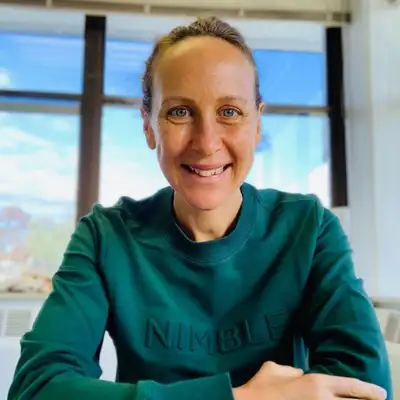
Maintenance, Metabolism & Supplements: No-Nonsense Fat Loss Talk with Brandon DaCruz
00:00
you
00:03
Hey everyone, it's Mikki here. You're listening to Mikkipedia and this week on the podcast, we've done something a little different. It's Brandon DaCruz and I, and Brandon I know is a fan favorite, so I'm super excited to chat to him. He is one of the sharpest minds in physique and performance nutrition. And what we do today is split our podcast discussion into two different parts. Half of it is on Brandon's channel, Chasing Clarity.
00:31
And half of it is over here on Mikkipedia. So we sourced questions and topics from our respective social media audiences. Part one of this conversation you will find over on the Chasing Clarity Health and Fitness podcast. And I have a link to that in the show notes. I'm sure that you are already listening to that show anyway. Part two is what you'll hear today on Micopedia. So the topics that we chat about are the
01:00
habits of successful dieters, the most effective ways to improve insulin sensitivity, accounting for training calories in a maintenance phase, top supplements from a health perspective, and the transition to weight maintenance without gaining excess fat, and way more. So you will get the first few topics on Brandon's show, Chasing Clarity, and then you get to listen to the second half of that over here today on Micropedia.
01:29
I you're really going to enjoy this conversation because it's a lot of riffing and I absolutely loved it. For those of you unfamiliar with Brandon, and I'd be pretty surprised if you are, this is his seventh appearance on a Mikipedia podcast. He is an online nutrition and physique coach and sports nutritionist. He's also a national level MPC physique competitor and an internationally published fitness model who's written articles and filmed educational content for publications like Men's Fitness Magazine and Bodybuilding.com.
01:58
But importantly, know, Brandon has spent over 13 years working within the sports nutrition and fitness industries and has coached every type of client including Olympia level professional men's physique competitors, college athletes, MMA fighters, CrossFit competitors, and lifestyle clients just like you and I. He believes in blending what's been proven in research with his own anecdotal and first hand in the trenches experience to improve body composition, optimize performance and enhance health.
02:28
in order to help his clients achieve their goals, whether that be building muscle, losing body fat, increasing performance, and or optimizing health and longevity. And this is what he refers to as his health centric coaching model, as he believes that improving one's health is a cornerstone to optimizing their physical goals. So you can find Brandon at his website, BrandondeCruz.com or on Instagram at BrandondeCruz.
02:56
I mentioned his Chasing Clarity podcast where you will get the first half of this conversation. And if you are interested in coaching from Brandon, you can absolutely reach out at BrandonDacruz at gmail.com. Before we crack on into this interview though, I would like to remind you that the best way to support this podcast is to hit the subscribe button on your favorite podcast listing platform, share it with a friend, leave a five-star rating. That would be amazing. And that would increase the visibility
03:25
of Micopedia, and amongst literally thousands of other podcasts out there, so more people get to hear from the guests that I have on the show, like my mate Brandon D'Cruz. Alright guys, enjoy.
03:42
Brandon, always great to have a conversation with you. I always actually make myself laugh because for whatever reason, the lighting in Dunedin is always terrible. And I'm jumping on a podcast with one of the best looking guys in the industry. I appreciate you. It always makes me... Okay, so as I explained in the introduction, uh you and I, this is part two of our conversation. And in fact, for the first part, people can go along and listen to Chasing Clarity. Of course, as I said, that is going to be in the show notes.
04:12
I'm really excited to discuss with you some of the questions that I got from my audience in relation to how you feel about these areas. And they're quite different actually from the ones that you got from your audience. So I think this will be another really great listening for people. Yeah, I can't wait. I always love comparing and tracing the questions that we're able to get because we have crossover in terms of our audience. I know that anytime I bring you on, my audience loves you.
04:38
And I would hope the same thing could be said about your audience. And we've always had such great conversations, but it's interesting how we speak to different people, different audiences, and we attract some of the same people, but often a lot of different types of people. So our questions are completely different, but it keeps it interesting. And I hope that in either case, we're able to provide value for our collective audience. Yeah, absolutely, Brendan. So the first question I'm going to pose to you, and I'll let you take the reins. And then if there's anything that I think I can add to the um
05:07
no doubt comprehensive answer that you'll be giving. I will of course do that. firstly, it's about training calories actually. And this is one that I get a lot, probably because a lot of my audience is endurance based and they've got the wearables, the power meters telling them how many calories or kilojoules they burned in a single session. And whilst I know that your expertise isn't in the endurance space, I think that just your thought process around it will be interesting for people because to your point, a lot of crossover, not even, you know, maybe
05:37
60 % of my audience is not an endurance athlete, so they're going to get value anyway. So the first question, how do you account for training calories in a maintenance phase if someone is doing a lot of activity? And the question is, do you eat back training calories? And if so, how do you determine how much? So how do you deal with that aspect of energy expenditure,
06:03
Yes. So, I'm transitioning a client into a maintenance phase or what I will usually refer to as a holding phase, I'm going to hold their training and activity level steady first and foremost. So, that means if we just finished a fat loss phase or a lean building phase and now we're aiming to maintain, I'm not going to adjust their training or their activity levels right off the bat. So, I see that.
06:23
as caveat because we're not going to see their activity levels increasing and concomitantly their energy expenditure levels increase. I'm really a big advocate and a believer in taking an isolated approach where I adjust their nutrition in a strategic fashion to refine their maintenance, which is a range, which we have to acknowledge. Maintenance is a range, it's not a static number, and that's going to take several weeks to nail. So, I do not believe in the whole, you know, if you were to ask me and this was part of the question, the whole eating back mentality, I don't think that that's effective.
06:53
nor is it a good one to get into. think that there's a lot of dichotomous viewpoints on that, but also I just seem to go really south in practice. I think that this really stems in and you alluded to this, and this is what I was thinking when you sent these questions over. I think a lot of people will consider that because that was a feature on like MyFitnessPal and then a lot of individuals, especially in 2026, are now using activity trackers and they're using them.
07:18
in several aspects, but a lot of times when I have conversations with new clients that I'm working with or individuals within the space, they're really putting a lot of stock into the calorie expenditure aspect of those wearables. And what I would really love to get across to your audience as well as like anyone that I have a conversation with about this is that the literature shows that commercially available fitness trackers have a very large degree of inaccuracy when it comes to estimating calorie expenditure levels.
07:44
fairly good with resting heart rate. They're very good with steps. But when it comes to the actual plotting them against actual metabolic cards and things that are actually measuring energy expenditure, they're horrendous. for example, one study found that some of the most popular brands of activity trackers, including the Apple Watch and the Fitbit, had errors in the estimation of energy expenditure, aka calories burned, ranging from 27 to 93%. So, basically, if you were to be doing a workout and one of these devices says that you burned 600 calories per set,
08:13
during that balance of exercise, you probably actually burn between 300 to 450 calories. And this is why so many people who use the eating back calories approach, failed to actually maintain their fat loss and the leaner body composition that they gained during that fat loss phase as they put too much stock into this data. And this inadvertently puts them into a surplus multiple times a week when they're training. However, what I would say is that I'm going to use this titration method of getting someone back up to maintenance and making sure that it's actually their new maintenance post-diet.
08:43
But from there, what I like to do to ensure that I'm accounting for the changes in energy expenditure on a training day versus a non-training day is I use what I refer to as an undulating calorie cycle. And what I do with the undulating calorie cycle is I have a greater calorie intake and especially a greater carb intake on training days as compared to non-training days. So clients will be eating more on training days so they're well-fueled to push their performance and recover properly. But I'm making adjustments on a check-in by check-in basis, looking at their data across the course of a week.
09:12
rather than having them focus on what each day's inaccurate like Apple Watch calorie burn estimation tells them. So, it's not about hyperfixating or hyperfocusing on one singular data point and what, you know, I wear an Apple Watch, I have an Aura, I will tell you if I was to pull up the and I've done this many times, the energy expenditure calculations from either one – from both of them compared to one another are often off by 300 to 400 calories and they're on the same hand. So, we have to realize and I'm sure that they're overestimating at that.
09:41
And so I don't think that it's an effective or an advantageous approach when you're trying to get back to maintenance to use a method of eating back calories that has such a high degree of inaccuracy. And I 100 % agree with you and I'm really aware of that research as well. And one thing I like to, I also consider is of course that, you know, a wearable or
10:06
an estimation can never account for the individual and their efficiency in an exercise. If I've got a novice runner and they're doing a uh 5K, they're likely, the fact that they're new to it means that they may very well burn more energy than expected because their body's not used to that method of training. Whereas if I'm going to go out and do a 5K, even if we had very similar
10:34
if not identical, let's just say muscle mass and body weight, et cetera, like I'm going to be much more efficient, my body's very used to running, I'm not going to be burning as many calories. So there's just so much room for error. And it's a constant conversation that I'm having with endurance coaches about that energy expenditure piece and how to equate to it. And to your point, and I think you alluded to this quite well, is that you're checking data across days and across weeks and you're...
11:02
you're assessing not only the most important thing is, you know, is this person able to maintain their weight based on the numbers that you're giving them? So I think that's a really important piece of the puzzle. Yeah. Nice one, Brandon. So the next question is, what are your top supplements for someone from a health perspective and why? And I'll tackle this one first and we'll see sort of if and where we might differ on this, which
11:31
I mean, I don't think that these will be unfamiliar to most people listening to us because I do talk a lot about these a lot of the time on social media. But one of my first supplements which I love people taking is an essential fatty acid because of the benefits with regards to inflammation, vascular flow, brain health, a whole host of things. And from what we know about maintaining a good omega-3 fatty acid index,
11:59
with our blood work, which you can get measured and actually relatively easily now. So I like a really good quality essential fatty acid, a fish oil, or if someone is plant-based, I go for an algae supplement. I know Nordic Naturals does one and I myself take Pella Performance. And actually this is even if someone does have, you know, salmon a few times a week. I still like their baseline EFAs to just to be a little bit uh higher.
12:29
So that would be my first one. Magnesium, think, to my mind is super important as well. And yes, you can absolutely get magnesium in your diet, uh but I don't think it's to the extent with which it once was, just given the changes in soil and the changes in food processing. And I do like magnesium glycinate.
12:54
or magnesium citrate actually, and the blends of magnesium are good. The amino acid chelates are also very good. People often talk about magnesium 3 and 8 because it crosses the blood-brain barrier. And often when I'm talking about magnesium, I'm talking about it in the context of calming someone down and preparing them for sleep. And interestingly, when I took Mag 3 and 8, it just made me really alert. And it wasn't even, and I've heard this from a few people now actually,
13:21
So was definitely an effect of that supplement. ah But I do like a magnesium. I do like a powder for most people if they can tolerate it. And um I don't know, I typically just go for 300 milligrams sort of start from there. I like creatine for most people. Not everyone tolerates it though. And I do get quite a few women saying to me that particularly in their luteal phase, they do notice really a shift in... um
13:50
an unfavorable shift with regards to like breast tenderness and bloating and water retention that isn't actually, um that isn't related to just a transition onto creatine. for some, I do know there are some people that don't tolerate it, but if you do tolerate it, then I really like creatine for most people. Creatine monohydrate is the standard um
14:19
I'm curious as to your thoughts on CreaPure actually, Brandon. So, I'd like you to sort of riff on that a little bit if you've got any thoughts on that. But to my mind, what I will say is most of the studies looking at creatine have actually been in just creatine monohydrate. Yes. So, we just have to realize that CreaPure is just a patented and a trademarked version of creatine monohydrate and generally CreaPure comes out in Germany. So, what you would see, if you were to see on a label, I know that at one time,
14:48
nutrition was using Creapure, they're paying for that patented trademarked addition of that creatine and that's just holding a higher standard in terms of the actual quality standard of that. It's the same thing. There's another patented ingredient that we're both familiar with. The compound is beta-alanine, but the trademarked addition is carnesine. That's just a good indication if you're looking for a product or a combination product that is of high
15:18
high quality, you can often look for these trademarked ingredients because they're guaranteed from the company that produces them that they're efficacious, that they meet label claims. Now, the issue here is if you were to use a multi ingredient product, and I speak on this because I did work for supplement companies for a very long period of time, 10 plus years I formulated supplements. If I put CreaPure into one of my products, that doesn't guarantee that every single other ingredient is up to stuff. So it really is on an ingredient by ingredient basis. But yes, I'm 100 %
15:47
backed behind creatine from an ATP regeneration perspective of performance, a strength output. Even there's some data that looks at helping with sleep deprivation and just helping with essentially offsetting the impairment in performance and energy from sleep impairment. I think that creatine, especially creatine monohydrate, which has the most literature behind it, is something that I'm going put in my health stack and my performance stack and it's something I've been using. It's actually the only supplement that I've used.
16:17
on a daily basis for 20 plus years. So like I've been using this for quite a long period of time because it's got such great efficacious and effective research behind it. It's such an evidence-based product. But when it really comes down to it, as long as you have a brand that you trust, and a lot of times brands will provide third-party testing, which means that an independent lab tested its products for its contents. If you're able to get a third-party independent testing, I'll give you an example from the seeds. I used to work for a company called NutriBio.
16:45
Labs, they do third-party testing on all their products, meaning it's outsourced to another company that has no dog in the race. They are testing this independently and then they're posting the results on a website. Well, they do not use CreaPure in their products. They have before in other products that they have. But a lot of times, it's just straight CreaT-Monohydrate. But I know that I can pull up the lot number and actually scan it on a device, either it be an app or on their website, and I see that it's 99.9 % purity. So it's the same.
17:13
product or the same quality that CreaPure would be, but I'm not paying for that increased price of the trademark ingredient itself. Yeah. It's super interesting. One last thing, and I'll throw it over to you after I talk about vitamin D, Brandon, and this is particularly important for people who live in New Zealand and Australia where during wintertime, and not even wintertime, it's quite early on, I think, and even autumn, is that the sun does not have the strength in the UVB rays to allow us to
17:43
synthesize vitamin D when we're outside. And if we think about how we are outside, lot of the time we are putting on sunscreen because of the high potential risk of sunburn, we're covering up. And I'm not suggesting that these things are unimportant, albeit sun is important as well. But certainly from a vitamin D perspective, many people are low vitamin D. And when you get your labs tested in New Zealand and Australia,
18:09
a reference range sort of given as to what is considered optimal and that is from 50, I'm going to say nanomoles and unfortunately I could be quite wrong, might be millimoles. Anyway, the units of 50 to 150 is being optimal but actually when I'm talking and listening to vitamin D experts they're saying 100 to 150 might be considered optimal and I think that aligns with maybe 80 nanograms
18:38
whatever the units are in America or North America. So Yeah, it's usually the range is 30 to 100, and you really want to be around over 75 or 80. Yeah. Yeah, cool. Okay. So, that's – yeah, those – the units that I've just mentioned, all the numbers align with what they might be in North America. And you're not going to get that just through sun alone. in New Zealand, we've got these weird rules where we're not able to purchase a vitamin D supplement that's over
19:08
1,000 international units. There's been a lot of talk in that there was historically a lot of talk about vitamin D toxicity, actually, and this is where one of these regulations came in. And it really is quite outdated, and it has yet to be revised, and is unlikely to be so. But I tend to like 4,000 5,000 international units. I do like people getting tested, getting the vitamin D tested, but it's not a cheap...
19:34
It's not overly expensive, but if you're doing it a couple of times a year, if cost of living has just gone up, that's not necessarily something that anyone can run and just go and do. So I suggest that people, in New Zealand, to purchase one from iHerb. And it always seems to come in, and I get Michael's naturopathic version. I do get a vitamin D still with a vitamin K2. I get a D3 with a K2 added.
20:02
You know, I was, because I know there's a lot of, I guess, preclinical and mechanistic data to suggest we do require that vitamin K2. However, I might be wrong. And I'm really curious as to your thoughts because Dr. Tony Bataji chatted to a vitamin D expert who was pretty much like, that's not really that important. And I'm curious as to your thoughts, Brandon. Yes, so just from my experience having worked in the supplement industry, we always used to fortify essentially a vitamin D, especially if it was higher dose.
20:30
with K2 so that there was a ratio of generally if a supplement was 5,000 IUs, we would have 125 to 150 micrograms, I believe, of vitamin K2. And that was just to ensure there was not like calcification with vitamin D. I couldn't be outdated on that. I would have to definitely go back and listen to the podcast itself. But as far as any of the literature that I looked into, when I worked in that industry and I was looking into that in a much more in-depth fashion,
20:58
it was shown to be efficacious to use both in conjunction. Now, I will say that that was for a certain parameter. always used or we always formulated higher dose vitamin D supplementation for those that were deficient. And so, we're looking at a 5,000 IU dose as compared to say in your country, in your case, it'd be a 1,000 IU. I don't know if we would have used the vitamin K2 with that low of a dose. Yeah. Okay. Super interesting. And I'm unsure as well and I really want to have a – and I haven't really done my due diligence either and sort of looked more
21:27
closely at the literature. That's my recommendations have come from other mentors in the past that I've followed and really valued their expertise. And then I will, the one last one I want to mention before handing it over to you, Brandon, is I'm a big fan of collagen, actually. I take collagen daily. run 10 grams a day. I like Mike Ormsby's research looking at its... um
21:54
its potential benefit for middle-aged athletes who have joint or knee pain, particularly osteoarthritis. And I am sold on, I mean, there's a lot of really good data around collagen for skin, hair and nails actually. And I mean, that's always gonna be helpful as we age. And also I'm really interested in Professor Keith Barr's work looking at that wound healing acceleration and the potential for helping with
22:24
with ligaments and tendons as well. And so if I'm using collagen just typically on a daily, I'm just sort of putting 10 grams in with my little stack of a greens powder and some aminos, et cetera. If I've got a specific injury focus though, I'm putting in about 15 grams. I'm having it with a little bit of vitamin C and I'm doing it about 60 minutes before I then go and do some work.
22:50
that also includes the area of sort of potential injury, potential injury actually. So the 60 minutes should allow for those amino acids to sort of peak in the bloodstream and then you're working that area, albeit in a rehabilitation sort of setting, but you're getting that blood flow to that area, which is how I understand you should do it to help with that sort of, I guess, either accelerated healing or not delaying healing, whichever one that sort of looks like.
23:19
um So those would be my top, Brendan. What else do you have to add? Yes. So I had pretty much all the ones that you had except collagen. And the one additional one, so my number five on this list, so besides vitamin D, magnesium, omega-3 supplementation, uh creatine. The last one that I had was actually L-thionine. So just for the audience, L-thionine is an amino acid that's found in green tea, which I'm a huge fan of first and foremost. And it essentially promotes relaxation without sedation.
23:49
And I find this to be a really beneficial supplement for mental health as it can reduce stress and anxiety. And from a health perspective, I use it for stress regulation and nervous system support, especially for the high performers I work with who are very synthetically dominant and overstimulated. I also use it in conjunction with, you know, I track a lot of data with both myself and my clientele. And there's some individuals that I work with that they tend to be caffeine heads. Like they love their caffeine, they love their coffee, but it's almost too...
24:18
It's not that they're in excess in terms of a thousand milligrams per day, but they're also noticing some side effects, not only from a sleep perspective. So, really uh dial in the timing in terms of utilizing it much earlier in the day, but they'll notice that it gives them the energy that they want. They love the effect. They love the habit and the ritual of having coffee early in the day, but they might get a little bit jittery. And one thing that has been shown to be incredibly effective is pairing L-L-P-N-E with caffeine.
24:44
that could be in the form of coffee. Essentially, what it does is it helps you dial in the focus, decrease something like the shakiness that happens with caffeine or the racing mind. It really can help from a cognitive perspective. That is something I like using early in the day, but I also like using it, say, later in the evening as uh part of a down regulation uh routine that I put with clientele where there's a lot of nervous system. uh
25:08
regulation activities that I have been doing. That can be breath work like four, seven, eight breathing. That could be uh a mindfulness meditation, things to shift them out. And I do this very specifically with the high performers, the high achievers that I work with that run businesses or that are corporate executives. A lot of times what I notice is their stress from the early part of the day essentially extends throughout their evening. They can't get their mind. And this is something I've been guilty of myself. So I utilize these routines, this supplementation myself.
25:33
But a lot of times what I'm having conversations with clients about is that they're having an impairment in sleep because things that occurred throughout the course of that day are still running. There's run over in third night where they're ruminating their thinking. So I like utilizing both some lifestyle habits and routines that they can do that are cost free. But I also utilize LTE during that just to get them in a more calm state, get some GABA signaling and really shift them out of that sympathetic state into a parasympathetic state.
26:00
Nice one Brandon. do have a couple of follow up questions if it's alright. uh One, what is your opinion on greens powders?
26:10
Oh my gosh, think I rendered you speechless. How is this possible? So, greens powders, it's really gonna be on a need by need basis. Really, when it comes down to it, I don't like the concept. And I'll explain why I say this. I think that a lot of people need to focus on a food first, but not food only approach. And what I mean by that is we should be looking to have as replete, as nutrient replete of a diet as possible from your actual food components.
26:38
One of the objections I would have to greens powders, and I'm just going to say from my practical experience working as a coach the last 16 years, a lot of individuals that I see that I get intake forms from or that I have consultations with that use green powders, it's on a reliance basis. They say they don't like vegetables or they don't like fruits, and they think that it's comparable. There is a food matrix that cannot be replaced by any greens powder on the planet. I don't care if you go to AG1, which has very poor debt on it. That's one thing I have an issue with.
27:07
where I have a lot of clientele that they have the means. So, it's not like it's putting them into debt, but at the same time, it's a frivolous expense that isn't yielding them the return on investment that they've been advertised from their favorite podcasters. So, I'll leave it at that. But these are products that have very small dosages a lot of times of proprietary blends. So, I like using if someone is going to use a greens powder, it's in response to travel. They're on the road, so we pack that because they're not going to be able to have fresh produce on.
27:36
but I don't like it to be a foundational component of their supplement plan or their nutrition plan because a lot of times that serves the place of replacing the fruits and vegetables. I've just had so many conversations where I've had people with greens and reds powders in their plan, but they also have fruits and vegetables. Just week after week after week, the fruits and vegetables go either wayside and their excuse or their rationale is, I had the greens and reds powders. It's like, that's not
28:04
adequate replacement that's just adding to. So I'd rather just not have them in most clients' plans and just really focus on the foundational fruits, greens, uh fruits, vegetables, greens, and really focusing on getting that from a food-first perspective. Yeah. No, and that's no surprises to me at all. I love the good green vitality from New Zest, but I also enjoy plenty of fruits and vegetables in my diet. I use it more as sort of a broad-spectrum multivitamin, which it...
28:33
Good friend, Harvey is a sort of co-creator of the product and he's very well- they actually have, I will say this, it's not that I'm backtracking, but I will say that I was at a presentation last year for the SNA. It was a sports nutritionist conference and I got to meet Cliff in person, which was an honor. I also had Eric Helms there and we were sitting out in the audience. That was one of the only supplements I've ever seen Eric Helms take and he uses good green vitality. I also looked at the profile because he was sitting next to me and it is a very stacked profile. What I will say, unfortunately in the States and in company from the supplement industry,
29:02
nine out of 10 Greens products on the market in America are highly underdosed. They're mostly proprietary blends, and they quote research which doesn't actually substantiate the claims that they're making. And that's an issue I have from an intellectual integrity perspective. Yeah. No, absolutely. I completely uh appreciate that after just reviewing several of these back of the packets. Is this worth the money? And I'm looking at it going, it really isn't. And if it's okay with you, Brendan, I do have one more supplement question for Let's do it.
29:31
It's a lot of people are now bombarded with things like Urolithin A, so Mitre Pure, um NAD +, TrueNidogen, all of these much more, I guess, expensive supplements. And there is some data for them in the maybe preclinical space or they're very small human clinical trials. Or to your point earlier, they are advertised in some of the biggest podcasts that people are listening to. And of course, I'm getting a lot of people who are wondering whether it's worth the
30:00
$300 a month to really buy into these supplements. So what are your, I'm curious to your thoughts around these products as a role, I guess. Yeah. So my broad-based perspective on this is I actually like being a late adopter to a lot of these things. And what I mean by that is I want a stack of evidence that shows their efficacy, especially from supplementation perspective, because I'm going tell you this very objectively. spent
30:28
10 plus years in the supplement industry. It was something I truly loved, I believed in. I was very fortunate. I worked for evidence-based companies that we had research reviews on the products that we utilize. The brand that I spent the most amount of time that I was alluding to previously, it's NeutraVal Labs. They have an in-house uh manufacturing facility. The quality is impeccable. And I say that as someone that left that industry many years ago and I have no financial ties to them. uh So I was able to do supplementation right, but I'm going to tell you this personally and then also professionally.
30:57
There are very few supplements that are really worth your money except in very specific use cases. So for instance, there's great evidence on berberine. We look at berberine compared to metformin and very similar outcomes in terms of the improvements in insulin sensitivity and glycemic control. But that is a specific use case for someone that is dealing with either dysregulation of blood sugar or insulin resistance. The same thing can be said about some of these edgier supplementation. However, my one issue or my drawback or hesitancy
31:25
is that the data isn't there. So a few of the supplements that you like, True Niagen and some of these NAD plus supplements, I looked at their evidence about two years ago when a specific longevity influence from the space was really pushing them hard. And that always is uh very curious. I'm kind of a skeptic naturally. And I think that that's what's made me so curious about so many topics. And I dive deep and I want to know for myself, I'm seeking the truth. And that's why my show is called Chasing Clarity, that there's really what I'm after and what I'm also trying to distill for my audience. And
31:53
When I looked at the data, now mind you, I'm not up to date on these specific things, but there was at that time no clinical trials, especially no randomized controlled trials in humans. So that was a red flag to say the least. And even the ones that I have seen, I hate to say this, but there is a lot of...
32:12
I guess funding? No, I don't see embellishment. There is embellishment in some industry. I'm not going to lie about that. There was a specific researcher that's been cast out of the industry. was actually a ketogenic diet researcher, but he's done some horrendous studies on H and B being the same as dienyl. And that was something that blew up in his face about 10 years ago. It's not the same embellishment. What it is is that there are a lot of people look at funding and they really specifically, you know, focus in on nutrition and that there are conflicts of interest. And I'm not here to dispute that or say that that exists because I know some
32:42
Some of best people I know are researchers and they need funding sources because they're studying hypertrophy or nutrition for fat loss or things that aren't really disease prevention. They're not studying sarcopenia and obesity. They're studying lean people getting leaner or uh normal weight people trying to gain muscle and they need a funding source. So I'm not trying to dispute that or really step on their toes with that. But in this health industry, there has been a lot of high predisposition towards companies funding their own research and then the results often
33:10
look much better than they do later on. So that's why I say, I like being a late adopter to a lot of these things. I want really a nice stack of evidence that I can go back and rely on and look through and then suggest something to a clientele. So oftentimes when I tell clients are, is this treating a specific need or use case that this isn't just something that you're chasing because it sounds sexy on a podcast? Is this a specific use case that you need? Do you know for a specific fact that you have mitochondrial dysfunction? Like, do you know that you have
33:40
an inflammatory issue, we can look at your labs for that and things of that sort. And not jumping on every single supplement because what I really do see is a lot of people that have a very short time life in fitness. And the reason for that is not only because they haven't really dialed in their habits, behaviors, and really built a foundation, but they've also often gotten chewed up and spit out by supplements, by the latest fad diets. They've done a lot of investing, especially from a financial perspective, and they expect a lot of return on investment, especially if they're spending $300, $400 a month.
34:09
They're not getting that, they're not seeing results, they're not actually experiencing anything and they feel ripped off and it kind of discourages them from the entire rest of the fitness industry, which I don't like seeing. Yeah, no, that's awesome, Brendan, really comprehensive and you raise some really good points around some of these supplements, which we've got heightened curiosity around them because our favorite podcasters are advertising them.
34:36
Brandon, next question is actually quite personal to you. So it's about your own rapid fat loss phase, which you and I discussed on our podcast. And of course, I've seen many social media posts and I've heard you talk about it on other podcasts. People are wondering how you transitioned into maintenance without gaining excess fat. I guess this speaks to, and of course, I'd love for you to talk about your own experience, but I know of course you'll likely draw on your experience with the...
35:03
the many hundreds of clients you also work with here. What does that process look like for you? Yeah. So in my own specific case, I have to say this. I collect a ton of data. I do this every single year and I have essentially a Rolodex of information available to me. throughout the course of the fat loss phase that I just completed this past summer, I collected a ton of data throughout that time. And when it was time to exit the diet and get back to maintenance, I analyzed that data to calculate my average rate of loss across the course of the phase.
35:33
And then was able to back calculate the net deficit I was in. I also have data on all 15 props that I've done in the past. And I have a lot of historical data on myself and how I've gone about exiting fat loss fees in the past, which I use as reference points. And the reason that I'm saying that and why I find that to be important is I have traveled many different methods in terms of exiting fat loss fees, exiting photo shoot props, exiting contest props. And there have been...
35:57
methods and strategies that I've utilized that were very efficacious, were very effective, and were a success. And then I've also had phases that were not. And so with full transparency, I love learning from my own mistakes. And I often utilize the data that I've collected, the experiences that I have, and the mistakes I've made to be able to change the trajectory and the decisions and the approach that I take with my clientele because if I can save someone from making the same mistakes that I made in my past,
36:23
I love doing so. I don't think that we all have to learn through our own mistakes. I think that for certain people, ah that is a valuable process if they can take lessons from them. But for many of the people that I work with, they're busy, they're not fitness professionals. Fitness is a hobby and something that they want to get better at and improve upon, but they're not really willing to take as a calculative approach or really track that or really try to learn from the process. A lot of times what happens is if they do fail, they feel more discouragement. And instead of trying to take lessons away from that, it ends up
36:51
causing them to be discouraged and disgruntled. So with my perspective, I'm really trying to take the mistakes I've made, the mistakes I've seen other people make, and then really create the best and most appropriate method that is principle-based. And I say that because I have certain principles that I utilize for these phases, but it's always specified to the individual. So what I did this past fat loss phase was I analyzed that data and I calculated my net deficit across the course of the phase. And then I added that deficit amount.
37:20
as a calorie increase to my baseline fat loss diet. So, an easy way to describe this or to envision this is say I was in a 500-calorie deficit throughout the course of my fat loss phase. I would simply assume that my theoretical maintenance was 500 calories more. So, that's what I would do. And I would usually do this. So, I'll speak about what I would do in the past and then what I actually did for this phase. I would usually make that calorie increase, that substantial calorie increase through the addition of both carbs and protein. But if you remember
37:47
From our conversation about this, I use a very high protein intake approach, this fast-fowl's phase. So, I was eating no less than 1.5 grams per pound of body weight per day and I even had protein hyperfeed days where I was eating two grams of protein per pound of body weight. So, I didn't think that a bump in protein was appropriate or would be beneficial. So, what I did was I made the initial calorie increase all from carbs as I felt that macronutrient would benefit me most from a training performance perspective, a recovery, and a biofeedback perspective.
38:15
And then I wrote that adjustment out for two weeks where I kept every single variable of my program the exact same meaning. I used the same food sources, just larger portions of carbs. I did not adjust any of my supplementation. I kept my training, my cardio, the exact same and I monitored my body weight, my body composition, my biofeedback and step count over those two weeks. Now, although my plan was initially to get right back to maintenance, that first bump resulted in upregulation in need. So, what a lot of people don't realize is
38:44
Oftentimes during a phallus phase, we suffer from metabolic adaptations, which downregulate energy expenditure. But metabolic adaptation, or more appropriately termed adaptive thermogenesis, happens both going into a deficit and then going back up to maintenance and into a surplus. So what ended up happening was when I made that initial adjustment, which I believe at that time it was 375 to 400 calories, when I made that initial adjustment in carbs, my step count actually increased.
39:10
and my body weight decreased. So I made another increase in food. I had to be adaptive to this process. And I continued this process until I not only got back up to my previous body weight, but I exceeded it by a few pounds. As I knew with the higher amount of carbs, my body weight shouldn't be higher at maintenance due to fuller glycogen source, more food residue in the gut, and carrying more water from the storage of glycogen. And it wasn't until I reached that point that I strategically started to reduce my cardio to lower my energy expenditure levels. And then I...
39:37
My goal was actually not to just stay at maintenance. I know for lot of people and a lot of clients that I work with, they want to just be at maintenance. But for me in particular, I wanted to get into a slight surplus as the goal wasn't just get back to maintenance and stop there. My goal was to get into a slight surplus as I was very, very lean at the end of the last fat loss phase I did. And I would not be able to maintain that low level body fat without suffering consequences. And for me, that's going to look like hormonal perturbations on that down regulations, especially from thyroid perspective. And then I also suffer with very poor sleep.
40:06
And so the goal was really to slowly and steadily gain body weight back and body fat back to a level which my body operates best at. But at the same time, I was increasing calories and carbohydrates to feel better performance and to put myself in the best position to gain lean mass because I didn't want to just gain exclusively fat mass. So was trying to keep a good P ratio. Meaning I was trying to for the pounds that I was increased, I was trying to make sure it was
40:29
majority of the lead mass, but I was also gaining some fat mass just to restore myself from a physiological standpoint. Yeah, nice one, Brandon. And I guess this does lead into the final question actually, which we'll have time to discuss, which is this concept of reverse dieting. And I talk to my audience about this all of the time, not because I talk about it a lot at all, actually. It's certainly not my area of, you know, I certainly don't work with a ton of people on reverse dieting, but I think because it's a concept out there on social media that almost has this
40:59
almost like unicorn type reputation. Someone goes from 1400 calories to then in about, I don't know, a year's time being able to eat 2800 calories and yet they're still losing weight. I mean, this is an extreme example, but often in social media, we see the extremes. This promise of reverse dieting, allowing someone to restore calories, um even
41:26
beyond what their projected maintenance is, yet they are leaner than what they have been. So can you speak at all to that?
41:34
I will say when it comes to the topic of reverse dieting, my thoughts on this concept have changed drastically over the years. That's due to how other coaches in this industry have utilized this approach. If you were asking me three four years ago my thoughts on reverse dieting, I think that I would have been more favorable in my response to this. I also was under a different interpretation. When I really realized what other people were claiming and then also doing,
42:00
conflicted with me from a physiological understanding and a physiological underpinnings oh perspective. I've always been very interested in the topic of diet-induced metabolic adaptation. These adaptations include downregulations in hormones and total daily energy expenditure. We see that when we're in a deficit and we're losing body fat, every component of our total daily energy expenditure, which people colloquially will refer to as like our metabolism, they downregulate to decrease our calorie burn and conserve energy.
42:28
So, this includes our BMR which decreases because we're a lighter, leaner individual, but there's also an adaptive component to this which exceeds the down regulation we expect to see based on body weight loss alone. We also see a decrease in our thermocavet to feeding because if you think about it just logically, if you're eating less calories per day, you're going to burn less total calories through the process of digestion, assimilation, and metabolism. And then, we also see a downturning or a down regulation in our exercise activity thermodynamics.
42:56
and our non-exercise activity thermogenesis because we become more efficient from a mitochondrial perspective. So, we burn less calories for every movement or every form of exercise we do from a bicep curl to walking to cardio and we also on the neat side, we subconsciously move less, we slouch more and we tend to down regulate energy expenditure precipitously from a non-exercise activity perspective.
43:19
I was always interested in this topic, if you were to go back and you could look at my name and look at the reverse dieting and you could hear me talk about this and realize I'm talking about it in a different context than other people will talk about it now. I see that because when I used to and you could see posts of me doing with clients and I'm not making those same claims, but when I used to use reverse diet phases with my clients, I did so by getting them right back up to maintenance right after we'd finished the fat loss phase itself. That would include a large increase in food right off the bat because I knew
43:49
that in order to start the process of reversing these metabolic adaptations, I needed to get the backup to maintenance. Now, where my thoughts and my perspective on this change was actually on a podcast. So a few years ago, I was invited on like a coaching roundtable discussion. The topic was reverse dieting. And when I was on the podcast and was with other coaches I respected, I realized that, you know, I was essentially informed that the majority of coaches out there were reverse dieting their clients in a fashion where they were making very, very small adjustments in food.
44:17
they were only bumping carbs by say 5 10 grams a week or fat by 2 to 5 grams a week. I remember being dumbfounded on the podcast to be honest with you, Mickey. I try to hold it back because I was trying to fight the writing reflex, but I remember just being like, this makes no sense. It made no sense to me physiologically because the adjustments they were making averaged a 40 calorie increase per week. Let's say that
44:39
a client is in a 400 calorie deficit at the end of a fat loss phase. That means that with these other coaching systems and methodology and the reverse diets that these people were taking them through, they would essentially be in a deficit for 10 additional weeks until they got to maintenance. And because they were in a deficit that entire time, they would have never reversed any of the metabolic adaptations that they had sustained or induced through the fat loss process until week 11 of that reverse diet. there was no wonder why people were saying, oh, I'm increasing food and they're not gaining weight. And my client is
45:07
11 weeks post-show or post-diet and they have gained nothing. They've actually lost weight. They're still on a deficit. So, yeah, they're still going to lose weight. So, now, what I do, the approach I take to post-diet is what I call a metabolic restoration phase. And my goal with clients is get them right back to maintenance after we finish the phallus phase so we can start to reverse the metabolic, the hormonal, and the mitochondrial efficiency adaptations that come from being in an energy deficit for a prolonged period of time. And I want to make sure that we're able to increase their total daily energy expenditure
45:37
which has been suppressed during the diet because when you have a suppression in total daily energy expenditure, it suppresses your maintenance calorie intake. So, I want to be able to expand the horizons from maintenance calorie intake. And by going back up to maintenance and working on reversing these adaptations immediately, it puts you in a better position and more optimal state for your next goal-specific phase because a lot of times what ends up happening is if you were to eat long-gap and this is what was happening when I started having consultations and interacting with people that were doing these extended reverse diets, say that you dieted for 16 weeks.
46:06
then you did this very, very slow steady 10 carb or 5 carb increase for 11 weeks post or 10 weeks post. You didn't just have a 16-week diet. You had a 26-week diet. So, a lot of people, either burned out or on the opposite end of the spectrum, during the reverse diet itself, these titrations and calories were so small that they could not actually hit them. It would end up in this essentially binge or strict pattern where they had such low calorie increases that they would stay on plan for a few days a week and they'd stay on that deficit. Then, they would
46:35
on the weekends veer off track and binge eat and then they would gain weight. So in either case, it was a very suboptimal approach, not only from the efficacy perspective in terms of like practical perspective and an adherence standpoint, but it was also just physiologically incorrect in terms of like you have someone in an extended deficit and they're still metabolically adapted, but you're bragging about what you're doing in terms of their calories when you still have them in deficit. let's be very transparent about what's going on.
47:02
know, the easiest way to say that would be, hey, this client didn't gain weight because they kept them in a smaller deficit. Yeah. Yeah. Yeah. Super interesting, Brandon. I feel like there is a lot of what you do see in terms of out there on social media who, for people who are selling reverse dieting, it is a lot of exactly that. these, they're still in a deficit. They may be eating a tonne more calories, uh yet they're still not quite hit their maintenance sort of target yet. And I guess this is the...
47:31
This is the wild, wild west when it comes to macro coaching. Just because someone's a macro coach and they have these terms and they utilize these methods with their clients doesn't necessarily mean they're so au fait with what's going on under the hood. Yeah. I don't mean to sound judgmental, but I think that the one aspect, absolutely, Miki, you know me personally, I absolutely love the fitness and tree. I gave up a very successful career to do this full time.
48:00
I'm someone that is deeply enthralled and passionate about health, fitness, nutrition, training, all things. This is an obsession for me, to be honest with you. This is why I've devoted 20-plus years training, 16-plus years working in the trenches with people. I've never left the in the trenches coaching perspective. Even when had a corporate career and I was the head of a massive company, it did not matter. I still had clients. I was still in the trenches, still personally training people, and especially still working with people online. The one aspect about this industry that I'm disappointed in
48:28
is how low the bear to entry has become and how many people have entered this space. This is not me passing judgment like I'm better than someone, but I put in the years, I put in the work and I've educated myself to the nth degree to be able to serve people to the best of my ability. There's many people that have gotten into this industry because they think that it will provide them with whether it be financial security or some people just delusionally think it's going to be wealth. It's such a disappointing thing because I remember when I first
48:56
transition to online coaching because I was going to the corporate world and I could no longer serve clients in person. I literally needed a transition. So I did it online. And I remember thinking this was early, it was January of 2013. And I knew that there was, I thought that there was no future in this. Every person that I told that I was doing online coaching used to just like scoff at it because that wasn't really an industry. It wasn't something you can make any money with. But I did it because I was passionate and I did it because I had education. wanted to empower people through that education. And there's so many people that are in this space now.
49:25
that have really taken on the role of a coach without really embracing the responsibility that we have as nutrition and fitness professionals to really lead people from the front, to educate them, to provide them with informed consent, and to very honestly and transparently communicate the goals of a phase, the goals of what we're doing, and both the physiological consequences as well as the safeguard that we're going to put in place to ensure their
49:52
doing things in the most effective way possible for their goals and ensuring that if you're going to put someone through a fat loss process, because that is their goal, that you're going to have the knowledge, the skills, and the methodology to be able to reverse those adaptations. I know that anytime, you know, I've prepped a lot of competitors, that is the deepest degree of metabolic adaptation you're ever going to see. But I know what to do on the other side, on the flip side. I know how to get them out of that. I know how to restore hormones, to restore energy availability. I know how to make sure to see improvements in lab work. And a lot of times there's people.
50:22
they're essentially presenting information and making it sound sexy and they're better at marketing than they are at their craft. And I think that that's just one aspect of this industry. I love this to death, but it's disappointing when people misconstrue and misrepresent data, especially in something reverse. Because to be completely transparent with you, we have no literature on reverse diet at all. Not one. We can look at overfeeding literature. We can look at maintenance literature. There's actually, Canyon Martins has a great study. I know you had her on at one point where she looked at the difference in
50:51
essentially a total daily energy expenditure between a deficit for an extended period of time and then going four weeks back to maintenance and it reversed the metabolic adaptation, at least from a BMR perspective. it was essentially, this is one of the studies where they said that metabolic adaptation is an illusion because it's only seen in an active deficit. But there's so many people that are misrepresenting these things, first and foremost, and then using strategies like, hey, I'm getting you out of a phallus phase, but you're actually just continuing to prolong your phallus phase. So I just think that that's a disingenuine approach. And that's why I've really
51:19
very much remove myself from the terminology. If you look, there's podcasts I did probably up to 10 podcasts on reverse dieting early on, so early 2020s. And it wasn't until that round table that I had to take a step back and say, I think they're wrong for how they're using it, but I've been using this term incorrectly because this is not what I'm doing. people are maybe misinterpreting that and think I'm promoting that same five and 10 carb approach, 10 carb increase approach, and I'm not. I'm going to transfer. I'm going to be the one that makes a change. I'm going to utilize different terminology. I'm going be very specific with my communication of these concepts.
51:49
and make sure that I'm actually putting out information that is both relevant and that is accurate. Yeah, no, that was a great analysis of that. Thank you, Brandon. And certainly, it's very obvious when we look at your social media or when we're going to Chasing Clarity or when people are listening to you on other podcasts, including on Wikipedia, that you were very well thought out. You really examine, I guess, what you're doing and the reasons why and also have such a good uh
52:18
baseline understanding of what's going on, is through your experience and your reading and your research, which shows up in the way that you show up in the industry every single day. I appreciate that. So Brandon, I think we're done on time, actually. so for listeners who have, and I'm sure, I mean, I always love our conversations. So I know that people would have gotten a lot of value from this one. If you haven't already, absolutely go to Chasing Clarity and
52:47
You'll see that part one was conducted on Brandon's channel, and this is part two of our conversation. I've been lucky enough to spend the last almost two hours chatting to you, which is amazing. Brandon, please remind people where in fact they can find you and if you are currently taking clients. Absolutely. First and foremost, the number one thing that I do and love doing is coaching people individually. If you have any inquiries about high-level coaching, feel free to reach out to me. The best place to do so is through my email.
53:15
which is BDacruzFitness at gmail.com. Secondarily, if you guys like daily content and just someone with a fresh perspective, that's going to be no bullshit. uh Find me on Instagram at BrandonDacruzUnderSquare. then third, if you're into podcasts, I'm sure you are because you're listening to Mika-pedia, which is...
53:32
podcast that I used to dream to be on and it's such a pleasure to be able to come on quite frequently with Mickey. So, if you guys are interested in podcasts, you'd like deep dives especially, please feel free to check out my podcast which is available on Spotify or iTunes and it's entitled, The Chase and Clarity Health and Fitness Podcast. Mickey, I want to thank you again for not only joining me on my show, but being willing to do this. I always enjoy our conversations. I
53:54
You are such a curious mind. You bring out the best in me, but also I love your insights. I love your feedback and I love being able to ask you questions. And this is something that I was genuinely looking forward to. So, I so appreciate you being in the time. You're more than welcome, Brandon. So, thank you so much. And I look forward to our next one.
54:23
Hey, hopefully you enjoyed that. I always love catching up with him and I'm already planning on some sort of topic that I can get him back on and we can do a deep dive because he is just such a wealth of information. All right guys, you have the best week and I look forward to seeing you next week. Hit me up, tell me what you thought of this. I'm over on Instagram threads and X @mikkiwilliden . Feel free to tag me in the podcast and Brandon. Always love that and sharing that.
54:53
head to Facebook @mikkiwillidennutrition or over on my website @mikkiwilliden.com or call one-on-one call with me. All right guys, you have the best week. See ya.