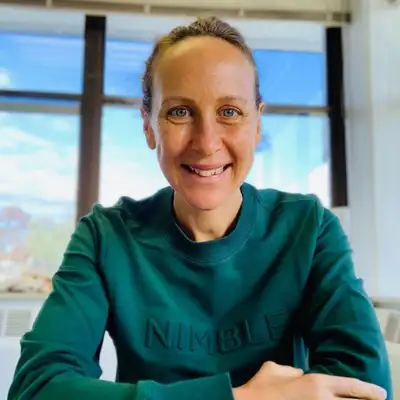
Dr Robert Kushner on GLP-1s, appetite biology and coming off the drug
Sign up to my fatloss in the festive season webinar here. https://www.mikkiwilliden.com/fatloss-in-the-festive-season-2026
Save 20% on all Nuzest Products WORLDWIDE with the code MIKKIPEDIA at www.nuzest.co.nz, www.nuzest.com.au or www.nuzest.com
Curranz Supplement: Use code MIKKIPEDIA to get 20% off your first order - go to www.curranz.co.nz or www.curranz.co.uk to order yours
NZ listeners - save 10% off Calocurb by using the code Mikkipedia10 at www.calocurb.co.nz
Save 20% on all Nuzest Products WORLDWIDE with the code MIKKIPEDIA at www.nuzest.co.nz, www.nuzest.com.au or www.nuzest.com
Curranz Supplement: Use code MIKKIPEDIA to get 20% off your first order - go to www.curranz.co.nz or www.curranz.co.uk to order yours
NZ listeners - save 10% off Calocurb by using the code Mikkipedia10 at www.calocurb.co.nz
Episode Summary
This week Mikki talks with Dr Robert Kushner, an obesity medicine physician, educator and researcher with over four decades in the field. He is Professor Emeritus at Northwestern University Feinberg School of Medicine, a founder and the first chair of the American Board of Obesity Medicine, and a past president of The Obesity Society. He was also the corresponding author on the STEP 1 semaglutide trial published in the New England Journal of Medicine in 2021, and sat on the steering committee for SELECT — so he has watched this field from the inside, before and after GLP-1 receptor agonists arrived.
The conversation traces what clinicians actually understood about obesity in the 1980s and 90s, Bob's own leptin trial and why it did not deliver, and how reframing obesity as a biological disease led researchers to the gut hormones. From there it moves into the practical territory: how the clinical conversation has shifted from counting calories to diet quality, which side effects are real and which are social media noise, what happens to muscle mass and physical function, how dose escalation should actually work, why hunger returning is not the same as weight regain, and what the evidence says about stopping. Bob is careful throughout to separate what the trials show from what is still unknown, which makes this a useful listen whether you work with clients on these medications or are weighing them up yourself.
Key Topics
- What clinicians believed about obesity three decades ago — excess body fat was known to cause system-wide harm, but the mechanisms, and appetite dysregulation in particular, were not understood, and weight regain after lifestyle intervention was already expected
- Bob's own leptin trial in the 1990s, published in JAMA, and why leptin turned out to be a useful biological signal rather than a treatment — it defends against weight loss but was never built to stop overeating
- The STEP 1 result and why it changed the field: 15% average weight loss at 68 weeks against a previous benchmark of 6–9%, with a third of participants losing 20%
- How the clinical conversation shifted from quantity to quality — when the medication does the heavy lifting, the questions become whether someone is eating enough, staying hydrated and getting sufficient protein, rather than how to control cravings
- Which side effects are real and which are overstated: GI effects are the genuine shared profile and can be substantially reduced through diet during dose escalation, while hair thinning and facial fat loss follow large weight loss by any route
- Muscle mass, sarcopenia and the groups who need watching, alongside the consistent finding that physical function and quality of life improve in trials — possibly because fatty infiltration of muscle resolves
- Dose escalation in the real world versus the trial protocol, and why there are still no pretreatment predictors of who will respond
- Why appetite drifting back is normal and not a failure — Bob's framing of restored appetite regulation at a lower body weight, with "the amplitude smaller than it was before"
- Benefits beyond weight loss, including SELECT's 20% reduction in cardiovascular events on top of standard care, plus sleep apnoea, knee osteoarthritis, MASH and psoriasis — driven both by weight loss and by independent mechanisms
- Cost and access, microdosing, extending the interval between injections, and where bariatric surgery still fits
Chapters
00:00 Introduction
05:13 Obesity medicine before GLP-1s
13:34 Gut hormones and the STEP 1 result
21:00 From calorie counting to diet quality
25:00 Side effects and social media myths
29:54 Muscle mass, function and exercise
35:08 Dose escalation and who responds
40:30 When hunger comes back
46:37 Stopping the drug, cost and access
52:24 Benefits beyond weight loss
57:37 Long-term safety and microdosing
1:01:10 Coming off, surgery and what's next
05:13 Obesity medicine before GLP-1s
13:34 Gut hormones and the STEP 1 result
21:00 From calorie counting to diet quality
25:00 Side effects and social media myths
29:54 Muscle mass, function and exercise
35:08 Dose escalation and who responds
40:30 When hunger comes back
46:37 Stopping the drug, cost and access
52:24 Benefits beyond weight loss
57:37 Long-term safety and microdosing
1:01:10 Coming off, surgery and what's next
Guest / Resources
Dr Robert Kushner
- Professor Emeritus, Northwestern University Feinberg School of Medicine
- Founder and first chair of the American Board of Obesity Medicine
- Past president of The Obesity Society
- Author or editor of 15 books, 56 book chapters and 230 original and review articles
- Website: drrobertkushner.com
Books
- Six Factors to Fit: Weight Loss that Works for You! — written for the patient
- Patient-Centered Weight Management: The Six Factor Professional Program and Toolkit — written for the clinician
Trials and studies discussed
- STEP 1 — once-weekly subcutaneous semaglutide, New England Journal of Medicine, 2021. 1,961 adults, 68 weeks, ~15% average weight loss. Bob was the corresponding author
- STEP 1 extension — the off-treatment follow-up showing weight regain after stopping
- SELECT — semaglutide versus placebo in 17,000 people with obesity or overweight and pre-existing cardiovascular disease but no diabetes, over nearly four years. A 20% reduction in second heart attack, stroke or cardiovascular death, on top of standard care. Bob sat on the steering committee
- SURMOUNT-1 extension — participants with pre-diabetes maintained on treatment for three years, with weight remaining stable
- Look AHEAD — an intensive behavioural therapy trial in diabetes; of those who lost 10% of body weight, around 40% maintained it for about four years without medication
- Kushner's leptin trial (1990s) — placebo versus leptin injections, published in JAMA
- A tirzepatide dose-reduction study — 15mg reduced to 5mg, with partial weight regain
- A randomised microdosing study in people with diabetes — standard monthly dose escalation versus gradual weekly escalation to the same final dose, showing better tolerability and fewer dropouts. Bob refers to this study but does not name it, so it is referred-to-but-not-identified
Researchers mentioned
- Andres Acosta, Mayo Clinic — phenotype and biomarker work on predicting treatment response
Organisations
- Northwestern University Feinberg School of Medicine
- American Board of Obesity Medicine
- The Obesity Society
- Obesity Action Coalition
- Novo Nordisk — the sponsor of STEP 1
- Mayo Clinic
Medications and hormones discussed GLP-1 receptor agonists; semaglutide; liraglutide; tirzepatide; phentermine; topiramate; naltrexone; bupropion. Gut hormones: GLP-1, GIP, glucagon, amylin. Also leptin, insulin, statins, beta blockers, testosterone and oestrogen.
Terms that come up Appetite dysregulation; food noise; leptin resistance; medullary thyroid carcinoma; MEN2; sarcopenia; myosteatosis; gastroparesis; heart failure with preserved ejection fraction; MASH; interleukin 17; CRP; adipokines; residual risk; maximal tolerated dose.
Find Mikki Instagram, Threads and X: @mikkiwilliden · Facebook: Mikki Williden Nutrition · Website: mikkiwilliden.com