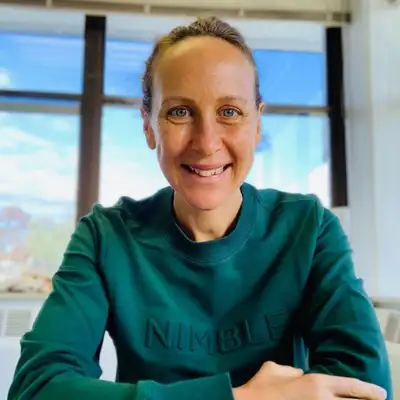
Dr Robert Kushner on GLP-1s, appetite biology and coming off the drug
Hey everybody, it's Mikki here. You're listening to Mikkipedia, and this week on the podcast, I speak to Dr. Robert Kushner. He is an obesity medicine physician, educator, researcher, and professor, and we discuss all about the nutrient sensor medications, specifically GLP-1 receptor agonists.
Dr. Kushner has over four decades of experience in the field of obesity medicine, and it was so great to chat to him about the biological disease of obesity, how obesity was viewed back when he started in the field as a bariatric surgeon, the eureka moment that occurred when the results of the initial Step 1 trial in 2021 revealed clinically and statistically significant weight loss,
and how that felt after decades of failed or
non-impactful pharmaceutical medications. We discussed responders versus non-responders,
the side effects of GLP-1s, the dose escalation story, when you know you need to go up,
when you can leave it as is, the other important and independent benefits of GLP-1 receptor agonists
coming off the medications and also discuss the need for some people to remain on them
indefinitely and the tension that this can create in the minds of those who do not want to rely on
pharmaceutical medication yet they have this disease of obesity so we discuss all of this
and a lot more actually in the podcast Dr Bob Kushner is a really affable interesting and
interested person to chat to and he really did a great job of just speaking as he would to one of
his patients and he's you know he's a great communicator and a lot of his job is in education
is presenting and just informing the public of this particular topic as it were. So Dr. Robert
Kushner is a globally recognized leader in the field of obesity medicine professor emeritus
of Northwestern University Feinberg School of Medicine.
He's a founder and first chair of the American Board of Obesity Medicine
that certifies physicians in the care of patients with obesity
and past president of the Obesity Society.
He's also the author or editor of 15 books, 56 book chapters,
and 230 original and review articles on obesity, obesity medicine,
lifestyle medicine, medical education, and nutrition.
and I have put links as to where you can find
Dr Kushner both online and his website
this is where you can find a number of his books
both for patients and clinicians
so he's really big on that clinician education
and also over on Instagram
where he's got a few posts there
so again just sharing really helpful information
Before we crack on into this interview, though, I would like to remind you that the best way to support Mikkipedia is to hit the subscribe button on your favorite podcast listening platform, leave us a five-star review, and share it with a friend.
These are no-cost ways to make Mikkipedia more visible in amongst literally thousands of other podcasts out there, so more people get to hear from the guests that I have on the show, like Dr. Robert Kushner.
All right, guys, enjoy this conversation.
I'm going to go for 30 seconds when I put it on social media, but other than that, yeah.
Okay, great.
Yeah, well, you look wonderful, so it doesn't matter.
As do you.
Well, that's hilarious. I literally just got in from a run, and it is so cold. Have you been to New Zealand, Bob?
I have. What favorite place?
Really?
One of my favorite places. I was there with another couple, and I have to tell you, this sounds terrible probably to you, but it reminded me of when I grew up in the 1950s.
I'm that old in the United States.
Really?
Just laid back. A lot of sheep, obviously, which we didn't have, but just laid back and nice people, and it was, I don't know.
I don't mind you were slower, but just calmer, and we had a wonderful time.
Yeah, well, I'm so pleased to hear that. When was that?
A long time ago. I don't remember.
Actually, I was invited to speak to the Australian Dietetic Association.
So I was there for that, and then went to New Zealand right away and spent the whole time.
We drove. We rented a car from Auckland all the way down to, is it Christchurch? No, no, it's farther.
Yeah, it could be.
Maybe Christchurch.
Yeah, yeah.
Queenstown. It was Queenstown.
Oh, Queenstown. Amazing.
Yeah, yeah. It was great.
I'm so pleased you got to see both the South and the North Island, and it is, I would say, before we crack on in, I would say I 100% agree with you.
On that regional, New Zealand is very laid back.
That's how I know. I'm in Auckland, and it's nowhere near as fast-paced probably as a lot of the cities in the States, but certainly, I'm so pleased that you had a great time.
Yeah, we did. I wish I remember when it was, but I remember it very well.
Well, it's interesting, actually, because, of course, my first question out the gate, Bob, is, I mean, gosh, you've been working in obesity medicine for almost four decades.
Yeah, it's a long time.
That's a long time.
Yeah. And I'm really curious, actually, so I did my Master's in obesity, and so, of course, I had to be over the obesity literature.
This was close to three decades ago, actually, when that was the case, and I know that things have changed, but I'm interested to know what clinicians at the time, like, what did they think the prevailing problem was with obesity?
Like, all the way back then, what were you thinking was the issue?
It's a good question. We knew at that time that excess body fat caused havoc throughout the whole body, but we didn't really understand the mechanisms of how obesity caused a variety of problems, from diabetes to heart failure to sleep apnea, metabolic syndrome, and so forth.
We didn't really know this. We've learned a lot about that.
We also did not understand the biology of appetite dysregulation back then.
We've...
All the tools...
We had, except for a few scattered fairly inactive or less effective medications.
What we had is behavioral counseling, a diet and physical activity.
It was heavily drawn on lifestyle management, and I think we felt that if we were able to control one's diet, bring the calories down, healthy, balanced dietary pattern, increase physical activity, we could start pushing back against the excess body fat or obesity.
It was very well known, however, that people regained their weight.
That was not a surprise to us, so we knew there were some mechanisms that made it difficult to keep the body weight off, but we didn't know about leptin at that time.
We didn't know what the lipostatic signal was that pushed back on or resisted long-term weight loss.
Our treatment was cognitive behavioral therapy.
Dietary counseling and physical activity and a smattering of medications that were fairly inactive.
One effective treatment was bariatric surgery because that was really developed in the 1970s.
I practiced as early as the 1980s, and that was our go-to treatment that was highly effective, but was reserved for individuals with really moderate to severe obesity, at least by BMI, complicated by other obesity-related complications.
Super interesting because, of course, obesity wasn't the disease that it is today.
You mentioned that you didn't know a lot about appetite dysregulation.
Did it just become more apparent that this was a really important feature that needed to be solved because of the increasing prevalence of obesity, do you think?
When I started practicing back then, there was a lot of epidemiologic data showing.
Look at BMI.
There was a lot of BMI on population prevalence data that the higher the BMI across the world was associated with a whole host of obesity-related complications in a curvilinear manner.
BMI, even today, signifies mostly excess body fat.
It's not excess muscle.
The linkage was there.
Increased BMI, increased body fat because of the relationship, and from epidemiologic point of view in cohort studies, increased risk.
Obesity complications, morbidity, multiple morbidity, and mortality.
So we knew it was a problem that had to be addressed.
The problem was we didn't have the tools to adequately address it, nor did we really understand the biology, as we've said, appetite dysregulation,
as well as the whole idea of lipotoxicity and adipokines, and what was it about the body fat that was resisting long-term weight maintenance.
In the early 1990s, when leptin was...
When leptin was discovered, that really started to open up the box to understand that lipostatic theory of something from fat tissues is signaling to the brain about what a normal body weight regulation should be.
Was that disappointing to discover that, in fact, leptin wasn't going to be the magic, I don't know, the panacea to the problem?
I'm curious, yeah.
Actually, I was involved in the leptin trial in the 1990s.
And we gave...
It was actually my very first trial as an assistant professor in which we randomized individuals to placebo or leptin injections.
And I recall vividly individuals coming in with big welts, you know, swelling around their knees and thighs because of the antigenicity.
They were having a large amount of swelling where the injection was.
And they would come in just, you know, limping, saying, I think it's working.
That's how desperate people were.
To have the medication, the hormone work.
And, of course, it turned out we published it in JAMA that it really was not effective enough.
What really...
Not only was the lack of effectiveness that stood out, but the side effects of the injection itself were really intolerable.
But we learned a lot from leptin as a biological signal and marker.
It just wasn't the therapeutic drug that we were looking for.
Yeah.
People talk a lot, Bob, about leptin resistance.
And is this something that you...
Do you think about a bit in the work that you do?
Obviously, people are aware of insulin resistance as a much more common thing that people would be familiar with.
But the idea of leptin resistance comes up with obesity too, right?
Yeah, it does come up.
And it's a way of understanding how leptin works from a biologic point of view.
So we know as people lose weight, body fat goes down.
Leptin signaling will increase appetite and change energy expenditure.
So it works very well.
It works very well on the lower side in order to increase body weight back up.
And that makes sense from a kind of a teleologic point of view.
We don't want to allow for starvation and malnutrition because we wouldn't survive as a species.
So it's really kind of developed to deal with the lack of food and drop of body weight and body fat as stores.
It doesn't work on the other side, we know.
That as you increase body weight and leptin goes up, it doesn't stop.
It doesn't stop you from eating.
It was never really designed from a biologic engineering point of view to prevent us from
eating too much food because that was never a problem for millennia.
It was the fact of malnutrition.
So it's our understanding.
So why is it that leptin goes up and we keep eating?
It doesn't stop us from stop eating.
And that's where that leptin resistance idea comes from.
We have high leptin levels yet people keep eating and have appetite.
So there's a signaling problem.
It's not getting through the brain into the brain.
And that's where some of that resistance is thought to occur in hypothalamus or other sites.
You know, like I imagine that across your career, I don't know, there must have been moments of it's just not working.
Like what, you know, like that, like, I don't know whether we can sort of do anything to stop the, stop what we're seeing out there.
Just, I don't know, in the environment, like I, I, I ask this of, of people who have been in your field for so long, like just looking around and just general population.
What it must feel like to see what, what it's like now versus what it was like 30 years ago when the obesity prevalence was so much lower.
Did you just sort of think, oh my God, like, I mean, this is just, we're fighting a losing battle.
Well, from a public health point of view, I think we're still fighting a losing battle because at least in the United States, we have this idea of, of independence.
And it's my choice of what I want to do instead of a collective effort that we have to get our food.
Supply under better control, increased physical activity, engineer physical activity back into daily life and so forth.
And it's not just United States, it's really Western world and elsewhere that obesity is going up.
But, but moving forward, you know, I think about this quite a bit that we had so many kinds of ineffective medications.
And I, as a physician, I, I'm not opposed to using medical intervention.
We do that with many chronic diseases.
And if you, if you think of obesity as a chronic disease, then you think about.
biologic interactions and treatments. But who knew all along that the secret sauce,
the answer was right within our gut, our gut hormones. So when that was identified,
that was kind of like a eureka moment. We're giving all these chemicals directly into the
brain that are not that effective and they have side effects. But if we just harness what's within
us already, GLP-1, GIP, glucagon, amylin, and so forth, and just use pharmacologic doses,
kind of like insulin for diabetes, that was really the broke open, really the understanding
of how we could treat this biologically and not just continue to ask people to reduce how much
food they're consuming and increase their physical activity against this biological force that we
that we knew was there, we just didn't really understand it.
So interesting.
And so when was that sort of eureka moment for you, Bob?
Because obviously you were involved in some of the most, I guess,
publicized studies on GLP-1 step, then the step extension, I think.
there were a number of step studies and then of course there was the select study as well that
looked at other outcomes. So but how early was this that you sort of came across GLP-1?
Well, you know, the first GLP-1
approved for obesity was loraglitide. It was kind of the first entry in the field, not very
effective, never really took off because, one, it had to be injected every single day, which is
kind of a burden for individuals. Even people that are frustrated and desperate to get their
weight under control, taking a daily injection is really quite a burden. And the return on
investment was fairly low. It was not that effective. The game-changing moment really was
step one that you mentioned, and that was published in New England Journal in 2021. And I had the
corresponding author for that study. But that's what really turned everything around. And I
remember being on the calls during COVID. So, you know, it was 2021. We weren't meeting in person.
And the drug sponsor, which is Novo Nordisk, revealed the results to the advisory board,
of which I was on. And that was the very first time that we saw an average weight loss of 15%
after 68 weeks. We never saw that before. And the chat on the Zoom was just,
oh my God, wow, can't believe it, game changer. Because prior to that step one, which you talked
about, which is the subcutaneous weekly semaglutide, which is very patient-centered and
doable, average weight losses of the centrally active medications, we call them first generation
or earlier medications, was really 6%, 7%, maybe 9% weight loss. And we always said as clinicians,
if we can have it, if we can identify or provide a weight loss of 10% or more, that was clinically
meaningful, not only to the prescriber, but to the patient. They could see a difference in quality
of life, function, feeling, moving around, and so on. And when it delivered an average of a 15%
weight loss, and one third of individuals lost 20% of their body weight, that was really a
aha moment or a game-changing moment, I think, for the obesity field.
I can imagine,
because I am remembering a lot of those obesity trials that I looked at when I looked at the
literature many years ago. But I remember thinking, gosh, this was intensive lifestyle,
low calorie. These people are out there walking, they're doing their cardio. And the report or the
published paper is saying this is a statistically significant result. But I'm thinking, these people
have obesity and they've lost three kilos. How meaningful is that to the actual individual?
In the study. So, can you refresh us on what standard of care might provide in terms of
percentage weight loss compared to what you saw in the trial? And also the liraglutide. Did you say
6% that they were seeing there?
Yeah. Liraglutide was about, and of course, averages are not everybody. I'm just using
average or mean to have the conversation and compare one drug to another. But the
ones were, liraglutide caused an average weight loss of 8% after about a year. And again,
because of the daily injection, 8% was really not that significantly better than other oral
medications that it really just never, it never really took off. But to have a 15% weight loss,
you could achieve it with lifestyle, but it was fleeting. And it wasn't an average weight loss.
The super responders would lose that much weight.
And as soon as they took their eye off the ball, in other words, stop tracking their diet,
weighing themselves daily, using all the cognitive behavioral strategies of stimulus control and
problem solving and everything else, they would start regaining their weight. The whole idea of
medication is that it biologically really pushes back against this metabolic adaptation that occurs
in which weight is regained. So, what was exciting is not only the average weight loss,
which I mentioned, which was about double or more than what we saw in the trial, but it was also
what we typically saw. But the people, individuals, participants maintain that weight loss while
they're on the medication. Okay. And what were your expectations going in? Like, as you were
sort of designing, setting up, and it was all sort of going ahead, did you have it in your mind as to
what you would expect? I mean, obviously, it was a delight and surprise what the result was,
but what did you think? Well, as a trialist in that,
we saw people losing that much weight. But if you're one of 40 sites around the world,
you don't know. And you don't know, of course, you're blinded. You don't know who's on a drug
or not. It was hard to tell. But to see all of 1,900 participants, that's how many people were
in the study, seeing average weight loss that much was really quite spectacular. And it was
really the first time we saw a medication that effective. And I also want to make a note that
we're moving away from just weight loss being the end all in obesity care. It's really about
gaining health. And I just want to emphasize that that game-changing moment was not just
the total weight loss. It was also the improvement in blood pressure, blood glucose,
the triglycerides,
hemoglobin A1C, to bring that down, CRP, which is inflammation, and an improvement in quality
of life for patient-reported outcomes. So everything moved in the right direction.
It really was a win-win for us as investigators and really for society because it really went
around the world. Game-changer was a moniker that was actually adopted as a medication for the first
time, having a significant weight loss that is clinically meaningful to the prescriber and to
the patient. These participants also received lifestyle intervention, didn't they? Nutrition
counseling and... Yeah, they did. So this is an important part because
people...
Prior to that medication, lifestyle really maintained as the cornerstone to treatment
of obesity. So if you took an earlier medication, so I'm talking about drugs like
phenylamine, topiramate, naltrexone, bupropion, even loraglutide. These are
medications that are in the first generation. You really needed a robust lifestyle management to
boost the effect of the medication. It was really in concert. Medication plus
intensive behavioral therapy is what got you the weight loss outcomes that were that meaningful.
From semaglutide on, what we're finding is that these drugs are so biologically active.
They do the heavy lifting. They do most of the work. So in the select trial, individuals met
with a dietician or a representative who did behavioral counseling once a month. That was it,
once a month for the trial.
Subsequent interventions like on trisepatide and others is even less involved, so less intense.
So the game is changing. The more biologically active the medication, it seems, the less
intensive the lifestyle counseling needs to be. So we're changing from quantity, like cut your
calories, track your diet, to more quality. So if you're...
If the medication's going to do the heavy lifting and you're going to be losing weight because you're
not eating as much, the question now turns to what should you be eating? How physically active
should you be obtaining? What is your sleep like? What is your stress management? So
individuals now, by taking these medications, have the bandwidth to pay attention to other
areas in their life because they don't have to spend all their time counting calories and bringing
down the amount of food they're consuming. The medication's doing that. So it's a very, very
effective way of doing that for them through appetite reduction.
Yeah, that's super interesting, isn't it? Because it's a shift in the conversations you would have
as a clinician with the people. It's not about, you must cut down on the food you're eating and
walk more or do whatever cardio. I imagine in a lot of cases, you have to make sure you're eating
and you're eating the foods that will long-term help with the overall outcomes of what you're
trying to achieve, right? Yeah, exactly.
The conversation has changed entirely. In my first part of my career before
the medication came out in 2021, I wouldn't really spend my time on behavioral counseling. That was
my entire visit. Are you tracking your diet? What are your calorie goals? How many steps are you
getting in every day? What are you doing to control your cravings? Are you keeping food
out of your environment, either workplace or in the kitchen? Are you slowing down your eating,
making sure your satiety cues catch up to your rate of eating? That's what we talked about.
You don't have to talk about that at all anymore because the medication reduces appetite, so
it reduces hunger, increases satiation and satiety, reduces food cravings, and reduces
food noise, right? Those incessant thoughts about food. That's what it does. The individuals
are relieved of the burden or the work of...
I got to get my weight down and I got to think about my food every single day. It has now shifted
to, are you eating? Are you going long periods without eating? Are you keeping yourself well
hydrated? When you eat, are you prioritizing fruits, vegetables, protein? Are you getting
enough of those foods? It's shifted entirely now. Bob, from that initial trial and, of course,
subsequent trials, were there any... What red flags were highlighted
in that initial research, which, of course, may have been blown up in the media or anything like
that? What can we chat about in that regard? Yeah. I think two things come to mind regarding
what we learned in the step one trial. One is that GLP-1-like medications, and there's many of them
now, we call them nutrient-stimulated hormone-based medications, share a common side effect profile.
It's GI side effects, nausea, vomiting, diarrhea, constipation, and heartburn.
Because of that, we have to start all these medications at the lowest dose and build up
slowly. We knew that from loraglitide, but we didn't really know how to combat it very well
until the select one trial. When we were in the trial itself, we were talking to patients and
learning from patients and told us that if they reduced greasy food, fatty food, stopped eating
before they feel full, make sure they have a dietary pattern planned out in advance, don't go to
restaurants and know what's in your food, don't work with a personal trainer the next morning when
you may not have been eating or feeling so well, increase your fiber, fruits and vegetables because
of potential constipation, we can significantly mitigate those side effects. That's where lifestyle
comes in right off the bat. In the first 16 weeks during the dose escalation, you want to reduce the
side effect profile primarily through diet. So we've learned that a
lot. I think one of the misunderstandings in social media is that these medications cause
hair loss, zumbic face. You lose fat in certain parts of your body. It causes
stomach to slow down so much that it can cause gastric paralysis. And they're not entirely true what
they're saying. To pull those apart, when someone loses a large amount of body weight,
And regardless of what the intervention is, whether it's diet, bariatric surgery, or medication,
you are likely to have thinning of your hair, skin may become a little dry, and you lose
fat from different parts of your body that we can't identify where, like face or shoulders
or abdomen.
So it's not that the medication's causing that, it's the fact that they're so effective
in weight loss that you're starting to see that.
And the medications do slow gastric emptying, so someone with gastroparesis, like an underlying
gastric emptying problem, you may not want to use it, but I don't know if any evidence
actually causes gastroparesis and the stomach is paralyzed, so we haven't seen that.
And so some of that kind of flies off as misinformation, like be careful because all of these hidden
dangers of these medications, you certainly need to know what you're doing, and you should
not be ordering it from a mail-order direct-to-consumer outlet.
Without any guidance and all, I think that's a mistake.
Yeah, absolutely.
And what about some of these more frightening sort of prospects?
I mean, I've seen things related to thyroid cancer, I've seen things related to pancreatic
cancer, pancreatitis, there's one other, and interestingly, of course, more recently, I've
been seeing reports in the media that these medications cause people to die, and I don't
know if you've seen that.
I've seen that stuff over there in the US, but I've seen news from the UK, and there've
been reports here.
So what do we know about the more, the riskier side of things?
So these STEP trials were basically to test efficacy, tolerability, and safety, right?
So now we're talking about what is the safety, and we need to be aware of who should not
take the medications, and if you do take the medications, what do you have to be concerned
about?
So we already know.
Did someone with a family history or personal history of medullary thyroid carcinoma, it's
not particularly common, but you need to ask for something called MEN2, which is an endocrine
neoplasia, multiple endocrine neoplasia, you should not be taking it.
So those are contraindications.
When you take the medication, there were some early signals of pancreatitis.
That really has not borne out very much, and we don't really find that very much.
Other types of thyroid cancer, we're not seeing very much.
It can cause gallbladder disorder or gallstones.
That we know.
And any rapid weight loss can cause gallstones, but we do need to be aware of that.
So if you're a patient thinking of going on this medication, you know you have gallstones.
You need to talk to your prescriber about whether it's safe, whether gallbladder should
be taken out, what kind of monitoring you should be doing.
The other, which I think is getting the biggest attention, rightfully so, is a change in body
composition.
The whole idea of muscle.
Mass, sarcopenia, and so forth.
So we're still learning more about it, but what is coming to light, and we think this
is going forward, is that any time you lose a significant amount of body weight through
diet, unhealthy diet in particular, bariatric surgery, or a highly effective medication,
you're going to be losing body fat and muscle mass.
On all of these interventions, you're losing more muscle, more fat than muscle mass.
But in some individuals who are vulnerable, elderly individuals, 65 years or older, some
with chronic kidney disease, other metabolic disorders, other disabilities, that amount
of muscle mass really may be excessive for them.
So you could develop sarcopenia, you could loss of function, may not be ambulating as
well, activities of daily living.
So we have to be watching for that.
But one more comment about that, and that is in all of the trials with these nutrient
stimulated hormone-based medications.
Because there's an interest in these patient-reported outcomes, there's always a quality of life
questionnaire that's administered throughout these trials.
And in every one of these trials that I'm familiar with, quality of life improves, particularly
physical function.
That's get up and stand, being able to move.
If you're on an airplane, you can put your suitcase up at the upper thing.
You can carry groceries.
You can walk faster.
Your gait is improved.
So even though individuals...
Even though individuals are losing muscle mass, it appears that function actually goes
up.
And that is an important observation because we don't look at function just by loss of
muscle mass.
We actually have to look at how people operate in the world.
And the reason we think that's improving is that individuals with severe obesity are likely
to have fatty infiltration of their muscles called myosteatosis.
So the muscle really isn't functioning as well because of the excess body.
Fat and inflammation.
And as one loses weight, even though the muscle mass is going down, it's likely it's becoming
healthier because you're pulling out the fat from the muscle and you're reducing inflammation.
So it kind of makes sense if you think about what's going on here.
But even having said that, there are individuals we have to pay attention to.
As I said, elderly individual, chronic kidney disease, other metabolic disorders.
I imagine, Bob, that a well-designed physical program,
for people who are at risk, will just help offset some of what you're describing, right?
So if they're given protocols for resistance-based training, depending on where they're starting
from, that's got to mitigate a lot of that.
Yeah, it does.
And we talk about physical activity and exercise, both resistance and aerobic, with everyone
who's on a GLP-1-like medication, particularly, though, for those who are vulnerable.
And that discussion needs.
to begin very early.
Now, knowing that someone who comes in with moderate to severe obesity may not be as functional
as they would like because of the excess burden of the weight and the effect on the knees
and so on.
But as they lose weight, they see themselves being able to do more.
And you need to be on them immediately and on an ongoing basis to become physically active.
A lot of individuals, because of social upbringing, their body weight, maybe the embarrassment
of being in a gym and self-awareness.
They may never have exercised much in their life.
So for a lot of them, they don't even know what to do.
So you really have to ask, what is their nutrition?
They're not only nutrition, but exercise literacy.
Do you know what resistance training is?
Do you know what to do?
Do you know what a set is?
Do you know how to isolate muscle groups?
Do you know how to use bands, free weights, machine weights?
And a lot of them don't.
So we really need to focus on that very early.
And that's all individuals, not just those that are vulnerable, as we talked about.
Yeah, no, I completely agree.
And another concept, when I chat to a lot of clients about this as well, is that people
don't, if you're in a state of sort of like fatigue a lot of the time due to your health
condition, you almost can't believe that being more active is going to actually give you
more energy, you know?
And I think there's a lot of that sort of psychological sort of mindset shift that needs
to come as to the real benefits of activity.
You're an active guy.
Aren't you both?
Yeah.
Well, yeah, I am.
I was just going to relay a personal story, which I don't often do, but your idea that
you're tired and why would physical activity make you feel better?
My wife and I have been ballroom dancing for 12 years and we do group classes at night.
You know, it's like at 6.30, 7 o'clock at night and we're tired from all, you know,
working all day and we go, we're dragging.
By the time we walk out of there an hour, an hour and a half later, we're wide awake.
So the whole idea that being tired means you're not going to,
uh, be able to,
be physically active.
It's just the opposite.
You, you become more energized and you don't know it unless you don't believe it until
you actually go through it.
A hundred percent, a hundred percent agree.
Um, Bob, you talked about dose escalation and like how important is it that, um, that
you do actually escalate the dose.
And I guess the reason I ask is that, you know, I've got clients and they've been on
the lowest dose of semaglutide for 22 weeks and is still losing weight.
So, um, I don't know if that's a good idea.
So, so how do we figure out whether or not you require that escalation?
Is it always the most appropriate move for people doing this?
Yeah, it's a very good question.
So all of the trials, we talked about the step, step one, but there's multiple step
trials, uh, in order to have these drugs go through regulatory approval, you have to follow
a protocol and it's usually stepped up every month, but that's different than clinical
care when you were in real world, uh, studies.
And when you use it in the real world, what we find is that, uh, you're not going to
you want to use a dose that's appropriate for that individual to find an individual who does
well in the lowest dose that is their dose, uh, versus someone who's not responding or not
responding enough, uh, then you want to dose escalate.
So when I work with clinicians, what we tell them is every month I have a touch point with
the patient.
What is your weight?
How are you feeling?
Are you tolerating it?
Okay.
What is your appetite?
What is your diet?
What's your physical activity?
And you could do that rapidly.
It's not an obstacle.
It's not an hour interview.
It's, it's like a check checklist, if you will.
And using shared decision-making, which we use throughout, uh, obesity care, we decide,
are you at the right dose because of tolerability or our goal setting, or should we be going up?
The key though, uh, is that you, you never started a high dose because you're going to
end up with GI side effects.
We call it maximal tolerated dose.
That's, that's kind of the term.
So you want to get someone on their maximum dose,
but it's tolerated and it's working for them.
Uh, the best analogy I could think of that it wasn't my idea.
Someone, one of my colleagues who said it is think of insulin.
Can you imagine you have diabetes and says, okay, we're going to start you on 10 minutes,
10 units of insulin, but every month we're going to go up 10 units.
Well, you would never do that, right?
You always balance it.
Like what's the dose for you.
So you want to think of it very S in a very similar manner.
Everyone is an individual.
We know from all the step trials and, and, and.
And a small trials for your appetite, there's a great deal of heterogeneity.
So it was a bell shaped curve, super responders and individuals who have a low amount of response.
The challenge is we do not know who's who, before we start the drug, we have no pretreatment
predictors.
The only predictors we have, we call process predictors.
In other words, I'm going to start John, the drug, we're going to see how you do.
And that's the only thing we have right now to determine what is the best dose for you.
Yeah.
And.
On that, um, Bob, I think I remember a couple of months ago, a study that had that showed
responders and non-responders from a genetic perspective, or there was, you know, shifts
in, or there were differences in that genetic makeup that might determine whether or not
someone responds or not.
Like, can you speak to any of that?
Uh, other than it's in the beginning, I think the direction is going that it's not ready
for prime time, but there are now, uh, in a ray of genetic studies looking at predictability.
And I, and I.
I think it's also helping us to understand heterogeneity, like why is it that, that someone
looks like you same age, you know, same height and weight, same gender, someone responds
to someone does not.
So we don't know what it is.
We think it is probably genetic or genetic, uh, pharmacogenetics that response.
There is an investigator at Mayo clinic here, Andres Acosta was looking at phenotypes, which
is also interesting looking at different biomarkers and phenotypes like gastric emptying, resting,
energy expenditure, psychological instruments to try to understand the best way.
I don't think any of these are really quite right for prime time, but it probably won't
be too far in the future that we will have a better understanding of predictability.
Like like we often have in cancer where they do a lot of markers, genetic markers, tumor
markers.
They do a lot of, um, of, uh, histology and genetics and forth to determine what's the
best chemotherapeutic agent for you.
They're way ahead of us.
Obesity is far behind.
We don't really know how to do precision treatment in some with obesity at this point.
Yeah, it's so interesting.
And I'm thinking of a few clients and I've got some clients where I really have to counsel
them on ensuring that they're actually eating the way that we were talking about earlier.
Uh, but I also have clients who now just appear to be eating a normal amount of food.
Do you know what I mean?
Like, like, for them the real benefit was potentially the food noise aspect. But I do also have clients
who never really talked about food noise, didn't
really even have a whole a big appetite for eating yet were quite overweight and in fact for them
like it sounds crazy but they're actually they are in fact eating possibly more than what they
were initially but it's having some it's obviously having a a um you know the desired effect like
do we know anything about you know those sort of different phenotypes phenotypes I guess yeah
well we don't know everything we need to but but what what what I've observed and has seen in trials
as well uh is that if you if you look at um eating questionnaires control of eating questionnaires
uh you know whether lick art scale or other measurements what you notice is when and this
is group data when an individual starts on the drug um caloric food intake goes down
hunger goes down cravings go down everything in the right direction and as individuals stay on
the drug and you give them the same instrument or questionnaire to fill out it shifts it starts
going back towards to where it was in other words my cravings are starting to you know to uh
increase my hunger is starting to increase my my fullness is starting to be reduced so
going all in the other direction but yet if you look at the weight curves they're flat
they're not regaining body weight and we see this a lot in trials and in clinical practice
and I see it myself and when I see someone like that and patients often come and go you know I'm
getting scared I go why are you getting scared because my my feelings I had before the drug
are coming back as I said hunger is going up craving is going back it I ask him then
but are you eating the same amount of food you did before in other words when you're when you're
hungry does it take the same amount of food and you're not regaining body weight and you're not
eating the same amount of food to quench your hunger and they generally will say no I you know
I I'm controlled with less food but I'm concerned I'm starting to get hungry again the same thing
with cravings so for most of the individuals the medication is allowing them to have a normal
appetite regulation which is normal to be hungry and full and I tell people it's almost like you
never have a feel like you have to go to the bathroom well that wouldn't be normal right
you're going to have you're going to have a sensation eating is normal but what the
medications I think is allowing people to do is to operate at a much lower level in their body
weight but still having normal regulation I do get hungry I do get full I still have cravings
but it's more moderated rather so the amplitude is smaller than it was before I don't really have
very many patients that are eating more than they did before the medication in general they're
eating less although they're still uh you know um maintaining their lower body weight yeah well it's
interesting because I say that and in fact maybe I what I what I mean is you know they're like they
wouldn't eat during the day they'd go buy on a coffee and then they'd get home and their husband
would have a packet of chips up so they'd just grab a few handfuls of chips and they'd go get
takeaways for dinner with their kids so possibly so quite probably the caloric intake was greater
um and now that they're focusing on breakfast lunch and dinner actually like the the food volume is a
lot more but in fact the caloric intake is is lower but also their energy has changed as well so
they're not feeling as sluggish so they're possibly moving more getting more of that non-exercise
activity plus now that they're at the gym as well so I suppose it's that whole sort of picture is
shifting yeah I think that is right and and you're you're actually pointing out how much we don't
know because those are great questions you know the pharmaceutical companies and those of us are
working with them have really been
focused so far on you know percent weight loss efficacy tolerability safety uh improvement in
cardiometabolic outcomes including mechanical outcomes like sleep apnea and arthritis of the
knees fatty liver disease you know that's where we're focusing in on inflammation there has been
less attention on the things that you and I are talking about right now quality of the diet uh
Sei with your physical activity is it really going up how many steps are you taking what is your
relationship with food we're starting to get there with the food noise Research but I think the shift
of the next several years is going to be much more patient focused in fact the patient advocacy
groups are now starting to raise their hand and say hey we need to be at the table when the trials
are being designed it's occurring the United States with the obesity action Coalition then
there's others around the world that are advocacy groups they're saying we need dead
be at the table when the research questions are being developed, because you're leaving us off
the table and we need to have more control in understanding what's going on. And I think
pharmaceutical companies and other investigators are really like-minded now. So we're going to
have expanded outcomes other than mean weight loss, categorical weight loss, cardiometabolic numbers.
And it makes sense, right, to begin exactly where this has begun, because if you don't
answer the real fundamental questions, then you wouldn't take it to that next step of having to
involve a wider sort of interest group. And interesting, Bob, as you were talking about
people who might come back to you and say, my cravings are increased, my hunger is increased.
That's not, I mean, we see this all the time, medication or not, the longer that you are
in a caloric restricted state, the more your appetite will
actually push back. And maybe that's just a function of just being on a diet.
Yeah. I tell people that is normal. I say, congratulations, you're starting to get
hungry again. Join everybody else.
But I always follow it up with, when you start eating, does it take as much food as before
to be satisfied? And really across the board, they go, well, no, I don't need anywhere near.
But they're still afraid because they've had a lifelong of weight loss and weight regain.
And it's like triggering. Once you start getting hungry,
again, their mind goes to, oh, here we go again. I'm going to regain all the weight.
And I have to remind them, we've changed it. You are now on something that is treating you
internally or biologically, which is the medication. And it's starting to control
some of those forces that caused your weight to go up. Now we know from trials,
the Surmount One extension trial is the best example where they took individuals with pre-diabetes
and they maintained the drug for three years.
And if you look at the trial date, you know, curves, the figures in the publications,
the weight is as stable as can be on average, three years out. Meaning if you stay on the drug,
we have very little evidence that tolerance is developing. You know, like we do with phentermine,
which is a stimulant. You have to take more and more of a stimulant to get the same effects.
Here you don't, you can maintain that weight. But the challenging data is that when you stop
the drug, which they did in this step one extension, over the next 17 weeks, they regained
about 7% of their body weight. In other words, they start regaining the weight. People are
disappointed to hear that.
But again, I tell them, if you had high blood pressure or diabetes, and those medical problems
were controlled with medication, what would you expect would happen if you stopped your diabetes
medication? Well, your diabetes would come back likely, as well as your blood pressure would go
back up. And that's where I kind of remind them that, you know, if you had high blood pressure,
that we are treating a chronic long-term condition. And that's for you. Not everyone in the country or
in the world needs medication. But for you, medication is really quite helpful. So we need
to come up with a game plan, combination of dietary patterns, physical activity, social
connections, accountability, everything else we could throw in there, along probably with some
medication to maintain your health long-term. And everything you're describing is pretty
much what almost anyone needs in order to maintain weight loss in the long term. But to your point,
there are just people who may require the medication for that time. Like, do we know,
do we have any data yet on people who, you know, people who come off and actually successfully
maintain that weight loss to the point where we'd be happy? Yeah, the kind of data that's coming out
now is coming from large healthcare systems, you know, where they mine their data,
like thousands of people in a healthcare system, and they're looking at records from the medical
electronic, you know, the electronic medical record and how many prescriptions are filled
and ordered. That's the data they're looking at. When you look at some of that data, there's a
hint that there are individuals who are able to keep their weight off without medication. So it
comes from this kind of, it's a remote observation from healthcare systems. But if you look at the
trial data, there is, there's a high likelihood you're going to be able to maintain that weight
or regain your weight. Now, I want to harken back, we talked before about before these medications
came out, what did the world look like? And we did have large behavioral trials like Look Ahead,
which was a diabetes trial, you know, no medication. It was, it was intensive behavioral
therapy. And if you look at those individuals, of those who lost 10% of their body weight,
about 40% kept their weight off of that group for about four years. That's the data we have.
Now, we don't know what 10-year data looks like.
And 15-year data, but we know from behavioral trials that there is a cohort that is able to
keep their weight off long-term. However, none of them took highly effective, you know, medications
early on, and we don't know what that looks like today. So we have hints from different data that
there are groups out there able to keep their weight off. I'm convinced there are. We just
don't know who they are. And we don't know how to identify them and really how to support them.
Bob, like here in New Zealand, over the last couple of years, the cost has come down
for these drugs there, but they're still out of the, out of reach for like, like a large section
of the people who would probably really benefit from them. Like, I mean, you don't have a crystal
ball, but do you have ideas about how the, what the cost might look like in five, 10 years time?
I can only say they're going to come down just because of market competition.
Market competition and generics. Those are the two, probably three things. One is market
competition. Number two, I said generics are coming out and generic drugs are available now
in many countries around the world of semaglutide and others, and also regulation, bringing the
cost down at the government level. So I think the prices will naturally come down. We're not at a
price point right now where the insurance companies and government finds a return on investment to,
to use the medication, which is challenging.
Disappointing. We know the, how, how effective these medications are on so many diseases,
particularly those that have had preexisting heart disease or heart attack or stroke. We know from the
select trial, you mentioned that a little bit earlier, that if you add semaglutide to standard
care for someone who had a previous heart attack, on average, you can reduce the risk of a second
heart attack or dying of cardiovascular disease by 20%. So that's, that's significant. So it could
be life-saving for an individual yet.
It's too expensive to give someone. Now that's really frustrating. So we have to find a way to
get the medication to those that would benefit the most and not hold it back because it costs too much.
Yeah. And Bob, actually, can we chat about what some of the select trials have found? And it's
more than the select trial. And I know that there are other trials that looked at fatty liver
disease, look at other, you know, a whole host of benefits and you've already spoken to some of them,
but can you just give us a broad picture of
where the,
these have been found to be beneficial?
Well, I'll mention a little bit more about the select trial because it was the second
game changer study. I had the ability to be on the, on the steering committee for it. So again,
kind of firsthand knowledge. And that was, that was a game changer because it was the very first
study in which we used a medication in individuals living with obesity or overweight who had
pre-existing heart attack, stroke, or peripheral arterial disease. Those are the three indications.
And we randomized them to semaglutide or to placebo, and none of them had diabetes. It's been
shown in diabetes for quite some time, but never individuals without diabetes. So over nearly a
four-year period of time, 17,000 individuals, a very robust study. I kind of, I buried the lead
already. It was a 20% reduction in developing a second heart attack, stroke, or dying of heart
disease in those that were given,
semaglutide. And I want to emphasize this was on top of standard care for someone that has
cardiovascular disease. They're on statin agents, they're on blood thinners if needed, or beta
blocker if needed, and other medications. So it's added on to standard therapy and there's still a
20% reduction. It's called residual risk. That was profound. And that, that, that information
went around the world as well. In addition to that, these medications,
I'm going to throw terzapatide in there as well, because that's another nutrient-stimulated
hormone-based medication. You've seen improvement in patients living with heart failure with
preserved ejection fraction, which is a very serious long-term complication. Improvement in
sleep apnea. So you could talk about quality of life, putting on a CPAP machine and the snoring
and the daytime somnolence, you know, sleepiness, that will reduce the number of apneic episodes
and even help get you off of a CPAP machine.
Been found to be helpful in reducing the symptoms and pain from knee osteoarthritis.
That's kind of a game changer itself. And the latest area is what you mentioned,
and that is MASH, which is steatohepatitis and fatty liver disease, that these medications are
showing an improvement in, in reducing the progression in developing fibrosis,
inflammation, and hopefully reducing the development of cirrhosis. That hasn't been
quite seen.
Those studies are still going on. But the number one cause of death in people with fatty liver
disease and MASH is cardiovascular. So we already know that it helps there. So these are these,
these, these obesity-related complications that really reduce the quality of life and increase
health expenditures in individuals living with obesity. So these are drugs that keep on giving,
you know, so it's not only weight loss, it's everything else. I'll add one more thing, Mikki,
because this is asked all the time,
is my improvement in these health-related problems due to weight loss alone? Or is there
something unique about the medication that's helping all these complications? And the answer
is both. We know that. So it's not only driving significant weight loss, 10%, 15% weight loss or
more, but we also know that independent of that weight loss, there's other mediators.
And we think most of it is reduced inflammation, reduced visceral fat, which is the belly fat,
and reduced adipokines that are secreted from the belly fat. So it's both of these actions is why
we're seeing the benefit across all these obesity-related complications.
Yeah. I've seen a lot on social media and the autoimmune area, Bob, with, with people
discussing things like microdosing these drugs helps improve symptoms around autoimmune conditions.
Do you, like, do you have any good knowledge around sort of that? I guess it's in the realm
of the inflammation.
Is there an immune-mediated response?
Well, we, well, we know CRP goes down as a C-reactive protein, as long as some of the
other interleukins, tumor necrosis factor. And so we know they go down. We think it's part of
an inflammatory cascade that's improving. And that is one of the reasons, for example, I did mention
psoriasis. We now know that if you add a drug like trisepatide or semaglutide to a psoriasis
regimen, you get further.
And that's interleukin 17. So we know that. But we also are seeing improvement in alcohol misuse
disorder. So now we're expanding the realm of, of the benefit. And that has to do not with
inflammation, I think, of cravings and reward centers, where you get alcohol, you, cigarette
smoking is another one. We are now also having observational studies, not randomized controlled
trials, but observational studies from healthcare systems that the development of cancers are going
down.
So again, that evidence is now not cause and effect because it's population. But I mean, if you could
tackle cardiovascular disease and cancer, you got the number one in two causes of death, you know,
in at least the Western world. That that's big.
Yeah, it is huge. And I guess, Bob, one of the pushbacks I see a lot on
these drugs or two actually is one. Yes, it's a, you know, it's, it's based on our own GLP-1 hormone,
but it's not the same.
And the doses are
super physiological. So people are, are, are questioning, I guess, you know, we have long
term data, but do we really have long term data? Like how long is long enough for us to know that
these are safe in the long time? And then we won't in 15 years be saying, Oh, God, do you remember
that one time we put those drugs and said that they were amazing? I'm not sure. So like, can you
speak to that fear that people have?
Sure. You bring up two points that I want to address. One is how long have these drugs been
available? Well, the very first GLP-1 drug was approved in 2005. So that's now what 21 years of
exposure, different GLP-1 has taken, you know, short acting, but it was a GLP-1 pharmacologic
dose. So that's 21 years of exposure across the world. So that's what I rely on. Now,
we haven't had that kind of exposure to high dose smaglutide, trisapatide and others,
but they're all in the GLP-1 realm.
So that's that one thing. Number two is in the trials that are being done. They're not as long
as people would like to see, but in the trials that are being done, select was almost four years.
Some of the other trials are one, two and three years. We are not seeing any safety signals that
are giving us a pause, but that's why we do post-surveillance observation. The other thing
we want to mention, and I agree with you completely, is that even though it's based off
mimicking naturally occurring
GLP-1, it is not natural. We're synthesizing it and giving it at super physiologic doses
back to individuals like insulin back in the arm or into the body, but usually,
although it's available now by oral administration. So biologically, it does work different than the
naturally occurring GLP-1 because the dose is so high. So that leads us to microdosing, which you
mentioned before, but I'm going to come back to that. We don't have any randomized controlled
trials, except,
one that's used in diabetes that looks at the benefit of microdosing. The hope is that you can
get the same benefits that we've seen in the trials, but with lower and lower doses. We don't
know that's actually true because it wasn't been studied. There was, however, one study that I cite
all the time because it's a well-conducted study. It was in individuals with diabetes. One group
was randomized to a normal dose escalation every month, just like the package insert,
and the other was microdosing.
So every week, they went up just a little bit. By the end of the study, they reached the same dose.
What was the difference? Tolerability. Individuals who microdosed had much better tolerability,
did not drop out, had much less nausea and side effects. So I can say, probably convincingly,
that microdosing will help with tolerance. But I can't say is that you're going to get the same
outcome that you're looking for from microdosing.
That really gets
in the world that we call optimization, right? The whole
world now wants,
I want to optimize my health, and I'm going to optimize it by taking a little testosterone,
and a little bit GLP-1, maybe a little estrogen if you're a woman, for other reasons.
We don't really know. Now you're in the area mostly of influencers and people who are kind of
guessing what they're doing. That all needs to be studied. Yeah, yeah, that makes so much sense, and
I — and I feel similarly. But I also want — I knew that people who might be listening might be thinking,
hang on, what about these things? Um, just — I'm mindful of
the time bob but i just have a couple more questions um just to finish up and i guess my
first one is you know like people a lot of people aren't comfortable with medication you know like
they really like they wish that there was a way that we could live in this world without having
pharmacological help they might have some i don't know preconceived notions about big pharma or
whatever um so um so this is a related question to that um to you know if someone is on a drug but
wants to come off is the utility in say extending the dose out the dose timing out so it's if they
can't microdose per se like can they extend out instead of taking every seven days they can take
it every 10 days and like is there utility in trying things like that with of course the
doctor's you know support
yeah well i want i want to i want to address first the whole idea of people don't want to
take medication and and i agree with you i think part of it is society and the bias that people
have that it it's up to me it's my responsibility i put weight on i know my behavior i'm eating too
much weight i'm not active enough i know i can turn this around and i think what they're missing
is that underpinnings that is this disease of obesity which is appetite dysregulation
you
i don't know how many people come in with high hemoglobin a1c or diabetes complications say
i should take care of diabetes by myself i mean they they understand they need medication for
diabetes but obesity may be a road too far i can i can control that but really both are
biologically underpinning so i actually spend time with people under explaining to them kind of the
in simple terms the biological nature of obesity regarding question about um long-term use we have
very little data on starting to emerge uh but what most people are doing in the real world
is extending the length of time between injections so instead of every seven days they're going to
every 10 days in part really it's for cost because it caught you know they're paying out of pocket
and they want to extend its use and a lot of individuals are finding a once every 10 day
injection seems to be effective enough to keep their weight off there's one study now using
triseptide
where they were on 15 milligrams and they randomized people down to five milligrams
and asking a question, can I go down to my dose? It turned out that individuals regained some of
their weight on the five milligram, not all of it, but they did regain some, the dose was not
high enough. So we're still, it's really kind of, we're using shared decision-making again.
It's, we're really working with patients about what is the best course of treatment for you,
given your own goals. If someone wants to go off medication, I never argue against this,
they're right. But I inform them, part of my sharing of information is that the data is
showing us that it's a lot harder to keep your weight off without medication. Everything you
told me when you first came in, I'm thinking of food, I have cravings, I don't get a full signal,
I pass by food, I always pick at it, that is likely to come back because that's biologically
driven. It's not a personality fault.
It's biologically driven, and we have something to treat that biologically.
And you mentioned right at the start that you sort of begun your career in bariatric surgery.
Is there still a place for surgery here with these new drugs and ever emerging new drugs?
I think the answer is yes, and they are reinventing themselves in a new world.
And I think the model of the comparator is cardiac surgery. People went to cardiac surgery
for bypasses, you know, and all kinds of valve replacements and so on.
But when interventional cardiology came in, putting in stents, you know, doing dilations and
so forth, people were not going to get cardiac surgery for the same reasons. So now they have
a tighter indication for who should go to cardiac surgery. And the same thing is now
occurring for bariatric surgery, depending on what your BMI is, what the complications are,
what your goals are. Are you one who would rather have a one,
and done surgery or take a medication once a week the rest of your life? That's a good question.
I'll go, you know what, I'm going to take the one and done. I don't know if I want to take a
medication the rest of my life. So there is a role for bariatric surgery. I think it's being
redefined more narrowly than anyone with a high BMI go to surgery.
I've also heard of cases of people having bariatric surgery and then reaching a point
where they're actually now also, you know, it might be two or three years post their
surgery, actually taking like a semaglutide to zepatide.
Yeah. Obesity is joining the modern world. I can't think of another chronic disease where
we don't use multi-modality, right? Multiple drugs, different mechanisms of action,
maybe for cancer, be radiation, surgery, chemotherapy, and so forth. Obesity is now
being practiced like other chronic diseases, multiple medications, multiple modalities,
depending upon the severity.
And so, Bob, finally, in terms of the research and the new medications coming out,
is there anything in particular that you're really excited about in the next couple of years?
Well, I tell people we are at the end of the beginning when it comes to these nutrient
stimulated hormone-based medications. GLP-1 seems to be the anchor drug because of the health
benefits, select trial, and so on. So most of the medications that are coming out,
in the near future, are going to have an anchor of a GLP-1, GLP-1-based, but GLP-1 with GIP,
glucagon, amyloid. So now we are going through the inventory of gut hormones
and looking at their independent effects at a pharmacologic dose and seeing what do you bring
to the table? What does it bring to the table in addition to GLP-1 or even instead of GLP-1?
So over the next five to 10 years, you're going to see a whole menu of options,
in our toolbox, to hopefully selectively use with our patients based on their severity,
the obesity, obesity-related complications, tolerability, where are they in the course
of their obesity treatment, which I think is going to be a very welcome addition for clinicians
and patients who instead of just saying, this is all we have, rather which medication at which
dose. So we're getting closer to precision medicine. Well, Bob, that's,
I mean, I find the whole area both fascinating and exciting, given what I knew about obesity and
the traction that you can make based purely on lifestyle alone. And none of this is
absent lifestyle changes. I've heard you talk on a number of podcasts and you're very,
and everyone in your space is very clear on that. This isn't not lifestyle,
everything of this comes alongside lifestyle as well.
Correct. Correct. It's not, it's not,
either or choice. It's both. Yeah. So Bob, thank you so much. Can you please just let the listeners
know where they can find out more of your work and information? Because I know you've got a couple
of books, both for clinicians and also patient-centered. Exactly. Well, if you go to
drrobertkushner.com, doctor is D-R, robertkushner.com, you can find podcasts, newsletters,
the books you just mentioned, Six Factors to Fit is for the Patient, and then the patient's
centered weight management is for the clinician. So if you have a, if you're a clinician and you
have a patient who likes bibliotherapy, likes to read along, this is a program for both you and
the patient. Yeah. Amazing. And in fact, that reminded me that I was, I can't recall the name
of the podcast, but I came across your podcast. I don't think you've been so active maybe of late
on it, but I really enjoyed a lot of the interviews that you did. And so I've been
listening to some back episodes of those. So thank you. You've got a lot of information.
Which is so valuable for me as a clinician as well. Bob, thank you so much for your time this
morning. I really appreciate it. Yeah. Thank you. It's delightful. Thank you for having me.
All righty. Hopefully you enjoyed that. I just loved chatting to him. I could have spoken to
him all day. Just such a knowledgeable and interesting man. And I'm really excited to
hear where this field goes. As you know, this is why I'm covering these topics over the next five
to 10 years. All right, guys, would love to know your thoughts. Hit me up. I'm over on Instagram
threads and X at Mikki Williden, Facebook at Mikki Williden Nutrition, or head to my website,
mikkiwilliden.com and sign up to my recipe portal access where you get access to over
1000 macro-friendly recipes to help take the thinking out of dinner for you. So that is over
on mikkiwilliden.com. Would love to have you as part of my tribe. All right, guys, you have the
best week. See you later.
Bye.